
人民币国际化

Search documents
电池相关ETF上涨;外资借道ETF增配中国资产丨ETF晚报
2 1 Shi Ji Jing Ji Bao Dao· 2025-09-03 10:49
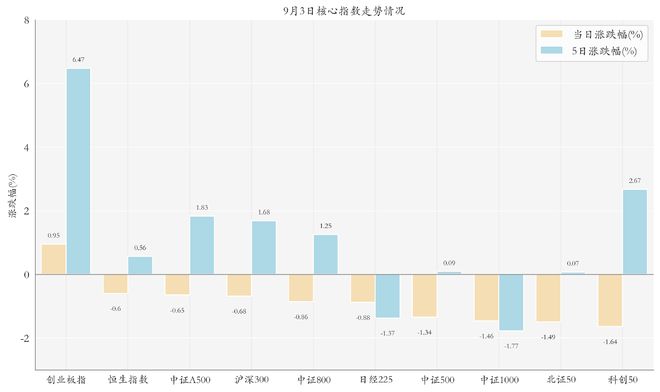
ETF Industry News - Multiple ETFs in the power equipment sector saw significant increases, with the storage battery ETFs from Guangfa (159305.SZ) and (159566.SZ) rising by 4.55% and 4.45% respectively, while the battery ETF (561910.SH) increased by 4.01% [1][10] - Foreign investment giants, including Barclays and UBS, have increased their holdings in ETFs significantly compared to the end of last year, indicating a growing confidence in the A-share market driven by the internationalization of the RMB and improving corporate earnings [2] Market Overview - The three major indices showed mixed results, with the Shanghai Composite Index down 1.16% to 3813.56 points, the Shenzhen Component Index down 0.65% to 12472.0 points, and the ChiNext Index up 0.95% to 2899.37 points [3] - Over the past five trading days, the ChiNext Index has performed the best with a gain of 6.47%, followed by the Sci-Tech Innovation 50 Index with 2.67% [3] Sector Performance - In today's sector performance, the comprehensive, communication, and power equipment sectors ranked highest with daily increases of 1.64%, 1.61%, and 1.44% respectively, while the defense, non-bank financials, and computer sectors lagged behind with declines of -5.83%, -3.05%, and -2.71% [5] - Over the past five days, the comprehensive, communication, and non-ferrous metals sectors have shown the best performance, with gains of 11.12%, 7.12%, and 5.35% respectively [5] ETF Market Performance - The overall performance of ETFs showed that commodity ETFs had the best average daily increase of 1.11%, while stock industry index ETFs had the worst performance with an average decline of -1.55% [7] - The top-performing ETFs today included the storage battery ETFs from Guangfa (159305.SZ) and (159566.SZ), and the battery ETF (561910.SH), with daily returns of 4.55%, 4.45%, and 4.01% respectively [10][11] Trading Volume of Different ETF Categories - The top three ETFs by trading volume today were the ChiNext ETF (159915.SZ) with a trading volume of 8.368 billion, the Sci-Tech Innovation 50 ETF (588000.SH) with 5.667 billion, and the Securities ETF (512880.SH) with 4.585 billion [13][14]

加快推进中国资本市场高水平制度型开放|资本市场
清华金融评论· 2025-09-03 10:18
Core Viewpoint - Accelerating the high-level institutional opening of China's capital market is essential for achieving high-quality development, emphasizing that "post-border rules are more important than border opening" [3][4][5]. Group 1: Significance of Institutional Opening - Institutional opening represents a new phase of China's opening-up, differing significantly from traditional commodity and factor flow openings [8][9]. - High-level institutional opening is necessary for building a socialist market economy, enhancing resource allocation efficiency, and supporting high-quality economic development [11]. - It is crucial for advancing the internationalization of the RMB and mitigating external shocks, thereby enhancing the attractiveness of RMB assets to foreign investors [12]. Group 2: Principles for Advancing Institutional Opening - The opening should follow the principles of "taking the initiative, facing international standards, being rooted in local conditions, focusing on market needs, promoting overall progress, and prioritizing safety" [14][13]. - Emphasizing the importance of understanding local conditions to avoid the pitfalls of blindly adopting foreign systems [17][18]. - The process should be market-driven, ensuring that there is demand, institutional capability, and regulatory oversight [19]. Group 3: Pathways for Stock Market Opening - The stock market is a key area for institutional opening, requiring improvements in issuance, trading, investment, and securities firms [22][23]. - Support for Chinese companies to list abroad and for foreign companies to list in China is essential for internationalization [24][25]. - Enhancements in the registration system and merger and acquisition processes are necessary to facilitate market activity [26][27]. Group 4: Pathways for Bond Market Opening - The bond market requires improvements in issuance, investment, and investor protection mechanisms [37][38]. - Enhancing the information disclosure mechanism and rating system is vital for increasing foreign investor confidence [39][40]. - Expanding the channels for foreign investment in RMB bonds and improving the legal framework for bondholder meetings and trustee management is necessary [43][44]. Group 5: Risk Prevention in Institutional Opening - The process of institutional opening must address risks such as institutional mismatch, information leakage, external shocks, malicious attacks, and financial sanctions [47][48]. - Emphasizing the importance of national security and the need for robust monitoring and regulatory frameworks to mitigate these risks [50][51][52]. - Developing a comprehensive response plan to potential financial attacks and enhancing the resilience of the financial system against sanctions is crucial [53][54]. Group 6: Conclusion - The high-level institutional opening of the capital market is vital for supporting economic development and enhancing market stability and competitiveness [56][57]. - A systematic approach is required to identify and address institutional weaknesses while ensuring that safety is prioritized throughout the opening process [58].
博时市场点评9月3日:两市涨跌不一,沪指跌1.16%
Xin Lang Ji Jin· 2025-09-03 08:07
Market Overview - The three major indices in the A-share market showed mixed performance, with the Shanghai Composite Index down by 1.16% and trading volume shrinking to less than 2.4 trillion yuan [1] - The margin trading balance also decreased by over 8.5 billion yuan, indicating a potential cooling of market risk appetite in the short term [1] Monetary Policy - In August, the People's Bank of China (PBOC) implemented significant liquidity injections, with a net injection of 300 billion yuan through Medium-term Lending Facility (MLF) and a net withdrawal of 160.8 billion yuan through Pledged Supplementary Lending (PSL) [2] - The PBOC's actions reflect a stance of "moderate easing" in monetary policy, aimed at maintaining ample liquidity in the banking system and supporting credit expansion [2] Tax Policy - The Ministry of Finance and the State Taxation Administration announced tax exemptions to support the transfer of state-owned equity and cash income to the social security fund, effective from April 1, 2024 [2][3] - These tax incentives are designed to lower operational costs for the receiving entities and enhance the long-term efficiency and profitability of the social security fund [3] Market Performance - As of September 3, the A-share market saw a decline in the Shanghai Composite Index and Shenzhen Component Index, while the ChiNext Index experienced a slight increase of 0.95% [4] - Among the sectors, only the comprehensive, communication, and electric equipment sectors saw gains, while defense, non-bank financials, and computer sectors faced significant declines [4] Fund Flow - The market turnover was recorded at 23.96 billion yuan, showing a decrease compared to the previous trading day, with the margin trading balance also declining [5]
净利润同比暴增94%,谁在领跑券商行业?
Sou Hu Cai Jing· 2025-09-03 06:49
Core Viewpoint - The A-share market remains active in the first half of 2025, driven by favorable policies and improved liquidity, leading to a recovery in the capital market and a general rebound in the performance of securities firms [2] Group 1: Company Performance - CITIC Securities achieved operating revenue of 33.039 billion yuan, a year-on-year increase of 20.44%, and a net profit attributable to shareholders of 13.719 billion yuan, up 29.8%, marking the best mid-year performance in the company's history [2] - China International Capital Corporation (CICC) reported operating revenue of 12.83 billion yuan, a year-on-year growth of approximately 44%, and a net profit attributable to shareholders of 4.33 billion yuan, up 94% [4][5] - Huatai Securities recorded operating revenue of 16.219 billion yuan, a 31% increase year-on-year, and a net profit of 7.549 billion yuan, growing by 42% [2] Group 2: Business Segments - CICC's asset management business reached a scale of 586.7 billion yuan, with public fund size at 220.2 billion yuan, reflecting a 6.2% year-on-year growth [6] - The private equity business of CICC managed assets of 489.8 billion yuan, maintaining the leading position among securities firms [7] - CICC's investment banking business performed strongly, leading the market with 13 Hong Kong IPO projects totaling 2.866 billion USD and 34 announced M&A transactions worth approximately 32.841 billion USD [7][8] Group 3: Strategic Initiatives - CICC established a branch in Dubai, becoming the first licensed Chinese securities firm in the Gulf region, enhancing its global business network [8][9] - The company actively promotes the internationalization of the RMB and supports cross-border investment and trade, with over 130 billion yuan in foreign capital introduced [9] - CICC's focus on green finance and technology finance has led to significant investments in renewable energy and innovative technology sectors, aligning with national strategies [9][10] Group 4: Wealth Management and Client Services - CICC's wealth management products reached a record scale of nearly 400 billion yuan, with a total client base of 9.39 million and total account assets of approximately 3.4 trillion yuan [10][11] - The company introduced innovative products like "ETF50 Hengxiang" to combine passive investment with professional allocation, enhancing long-term stable returns for clients [11] - CICC's approach to risk control and client education has strengthened its brand image and attracted high-end clients, reflecting a shift towards long-term asset management [12]


要放弃石油人民币?沙特王储竟把中国当底牌,中方14个字说明一切
Sou Hu Cai Jing· 2025-09-03 04:47
Core Insights - Saudi Arabia, under Crown Prince Mohammed bin Salman, is actively seeking economic diversification away from oil dependency, focusing on nuclear energy and other emerging sectors [1][10] - The negotiations between Saudi Arabia and the United States regarding nuclear energy cooperation have drawn significant attention, particularly due to the U.S. insistence on maintaining the dollar as the currency for oil trade settlements [1][3] - Saudi Arabia is considering collaboration with China in nuclear energy, indicating a strategic shift in its international partnerships [5][10] Summary by Sections Saudi Arabia's Strategic Shift - Saudi Arabia aims to diversify its economy and reduce reliance on oil, with a particular focus on nuclear energy development [1][10] - The country has been in discussions with the U.S. for several years regarding nuclear technology, but has faced stringent conditions that it finds unacceptable [3][5] U.S.-Saudi Negotiations - The U.S. has proposed five additional conditions for nuclear cooperation, including a ban on uranium enrichment and maintaining the dollar for oil transactions, which Saudi Arabia views as an attempt to preserve U.S. hegemony [3][5] - Following the 2023 BRICS summit, Saudi Arabia signaled its openness to invite Chinese companies for nuclear power plant construction [3][5] China's Role and Response - China has expressed a clear stance on the matter, emphasizing the importance of mutual benefit and respect for sovereign choices in development [8][12] - The signing of a nuclear cooperation memorandum between Saudi Arabia and China marks a significant step forward in their collaboration [8][12] Future Developments - By 2025, Saudi Arabia's nuclear energy plans are expected to make significant progress, with a focus on uranium enrichment and establishing a comprehensive nuclear energy framework [6][10] - The shift towards using the yuan for oil transactions is becoming increasingly evident, with over 40% of oil exports to China expected to be settled in yuan by March 2025 [6][10] Geopolitical Implications - The evolving international landscape is witnessing a decline in U.S. influence, creating opportunities for China to engage more deeply in the Middle East energy transition [12] - Saudi Arabia's balancing act between the U.S. and China reflects a broader trend of regional powers gaining strategic leverage amid changing global dynamics [12]

程实:人民币未现系统性偏离,内核稳定支撑走势稳健
Sou Hu Cai Jing· 2025-09-03 04:16
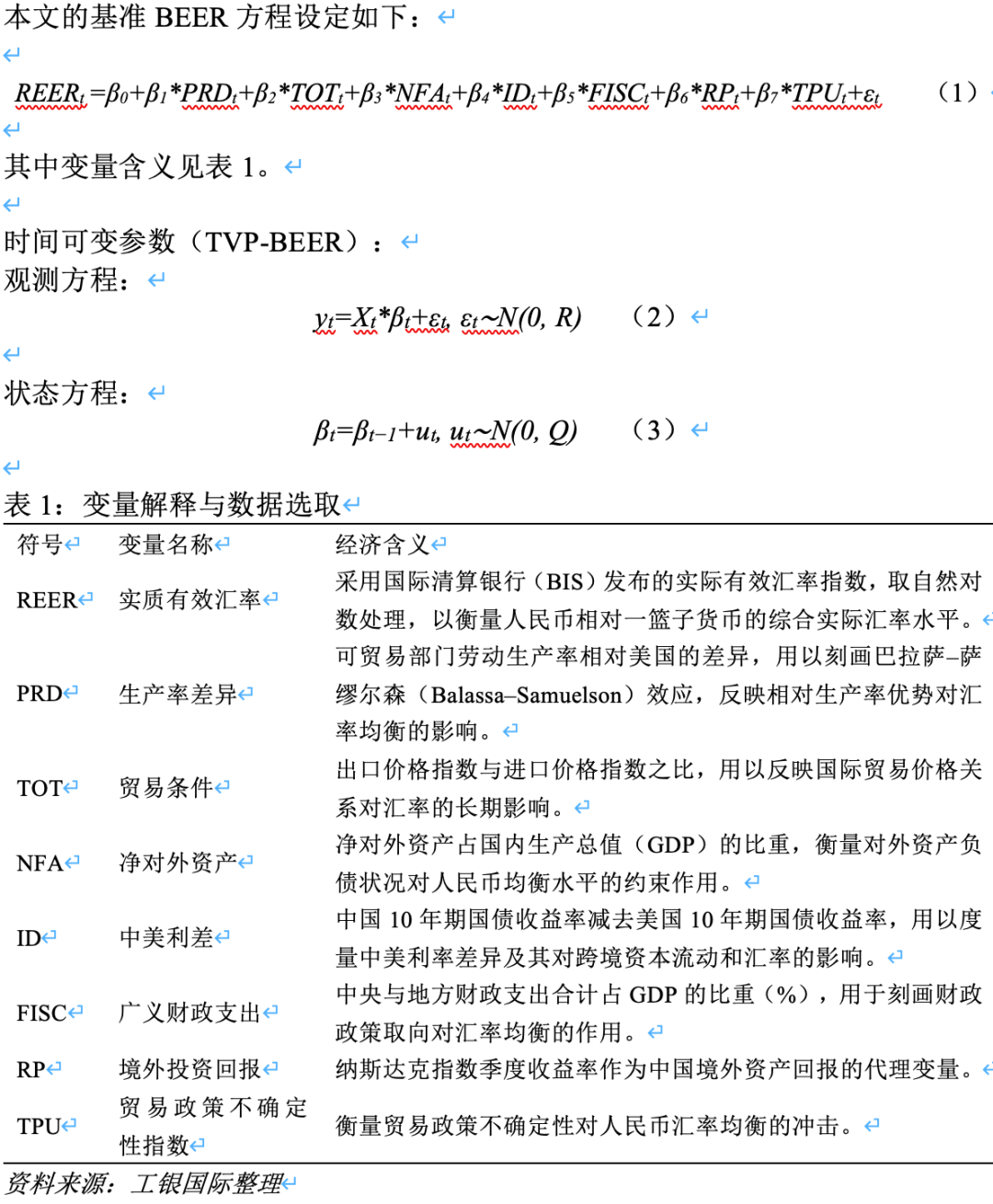
Core Viewpoint - The article presents a systematic assessment of the equilibrium exchange rate of the Renminbi (RMB) from 2010 to 2025 using a dynamic equilibrium measurement model (TVP-BEER), indicating that the RMB maintains inherent stability driven by economic fundamentals despite global financial fluctuations [1]. Summary by Sections RMB Equilibrium Exchange Rate Model Selection - The research identifies four main paths for equilibrium exchange rate studies, including the price benchmark method (PPP), fundamental equilibrium exchange rate (FEER), natural real exchange rate (NATREX), and the BEER method, each with its advantages and limitations [2][3][4]. Introduction of Time-Varying Parameters - The article emphasizes the selection of the BEER framework for estimating the RMB equilibrium exchange rate due to its empirical operability and explanatory power, while introducing time-varying parameters to better reflect the dynamic nature of economic conditions [4]. RMB Effective Exchange Rate Trends - The RMB's real effective exchange rate (REER) has shown phase characteristics over the past 15 years, with significant appreciation driven by productivity differences and improved trade conditions before 2010, followed by stability despite external shocks [7][8]. Comparison of Static and Dynamic Models - The static BEER model captures long-term trends but struggles during structural shifts and external shocks, while the TVP-BEER model provides a more accurate equilibrium estimate, maintaining a deviation of less than 0.5% from actual values during turbulent periods [8][11]. Factors Influencing RMB Equilibrium - The static BEER model indicates significant positive effects from productivity differences and trade conditions on the RMB equilibrium level, while net foreign assets and fiscal spending show negative coefficients, reflecting market concerns about potential risks [13]. Future Outlook for RMB - The RMB is expected to maintain a stable trajectory, supported by ongoing economic structural transformation, consumption upgrades, and steady progress in RMB internationalization, with limited risks of significant deviation from equilibrium [15][18].
全球投资者对A股市场的信心正在大幅提升,A50ETF(159601)布局价值凸显
Mei Ri Jing Ji Xin Wen· 2025-09-03 02:42
Core Viewpoint - The A-share market is experiencing fluctuations, with the MSCI China A50 Connect Index showing a decline of approximately 0.7%, despite positive sentiment from global investors due to the internationalization of the RMB and improving corporate earnings [1] Group 1: Market Performance - The A-share market opened high but saw a decline, with key stocks like Hengrui Medicine, Zhongji Xuchuang, and Zijin Mining leading the gains [1] - The MSCI China A50 Connect Index is closely aligned with the holdings of northbound funds, indicating a strong correlation in investment strategies [1] Group 2: Investor Sentiment - Institutions like UBS report a significant increase in global investor confidence in the A-share market, driven by favorable factors such as the internationalization of the RMB and a gradual recovery in corporate profits [1] - There is ample room for overseas funds to increase their allocations in A-shares, suggesting a positive outlook for future investments [1] Group 3: Index Composition - The MSCI China A50 Connect Index includes major sectors such as electronics, banking, food and beverage, non-bank financials, and power equipment [1] - The top ten constituents of the index are Zijin Mining, CATL, Industrial Fulian, Kweichow Moutai, Cambricon Technologies, BYD, Haiguang Information, Hengrui Medicine, Zhongji Xuchuang, and China Merchants Bank [1] Group 4: Investment Products - The A50 ETF (159601) closely tracks the MSCI China A50 Connect Index, providing a packaged investment option for 50 leading stocks, thus appealing to both domestic and international investors [1] - The MSCI China A50 Connect Index emphasizes liquidity and sector balance during its compilation, highlighting its significant large-cap characteristics compared to other "beautiful 50" indices [1]
紧抓人民币国际化机遇 银行优化跨境服务能力
Zhong Guo Jing Ying Bao· 2025-09-02 23:25
Core Viewpoint - The report by the China Banking Association indicates a steady increase in the internationalization of the Renminbi (RMB), providing significant opportunities for banks to engage in cross-border RMB business [1] Group 1: RMB Internationalization Progress - The RMB has become the fourth largest global payment currency as of November 2023, with cross-border RMB transactions reaching 52.3 trillion yuan in 2023 and projected to grow to 64.1 trillion yuan in 2024, both showing over 20% year-on-year growth [2] - The Cross-Border Interbank Payment System (CIPS) is expected to handle 175.5 trillion yuan in cross-border payments in 2024, marking a 42.6% increase [2] - By the end of 2024, the RMB is anticipated to rank as the third largest trade financing currency globally, following the US dollar and euro [2] Group 2: Opportunities for Banks - The internationalization of the RMB is creating business opportunities in cross-border RMB payments, settlements, and trade financing for commercial banks [4] - Banks are encouraged to enhance their internationalization efforts to meet diverse client needs and improve service effectiveness [4] - The report suggests that banks should leverage the RMB's internationalization to enhance their market-building and promotion roles [4] Group 3: Recommendations for Enhancing RMB Internationalization - The report recommends refining cross-border RMB facilitation policies and improving the management of cross-border RMB business for enterprises [5] - It suggests optimizing management mechanisms for key business areas related to RMB internationalization, including expanding the pilot scope for integrated currency pools [5] - Continuous improvement of the offshore RMB market is advised, including the development of investment and risk hedging tools [5]
外资巨头借道ETF增配中国资产
Shang Hai Zheng Quan Bao· 2025-09-02 18:34
Group 1 - Foreign investment giants are significantly increasing their holdings in ETFs, with Barclays Bank and UBS showing notable growth in the number of ETFs held compared to the end of last year [1][2] - Barclays Bank holds 200 ETFs as of mid-year, up from 135 at the end of 2024, with the highest valued ETFs being 华夏恒生互联网科技业 ETF, 易方达中证海外互联 ETF, and 华泰柏瑞恒生科技 ETF, valued at 1.19 billion, 1.15 billion, and 790 million respectively [1] - UBS ranks second in ETF holdings, with 141 ETFs as of mid-year, a significant increase from 57 at the end of 2024, with the highest valued ETF being 华泰柏瑞中证A500 ETF at 1.057 billion [2] Group 2 - There is a noticeable increase in overseas interest in Chinese assets, with Allianz Fund's CIO indicating that the Chinese market is increasingly viewed as an independent asset class [3] - Foreign investors are focusing on long-term factors when allocating to Chinese assets, emphasizing the importance of "predictability" and the sustainable development capability of China's entire system [3] - UBS's China head noted that investor confidence in the Chinese market has been steadily increasing this year, with a growing willingness among overseas investors to allocate to non-USD assets, particularly Chinese assets [3]


离岸人民币地方政府债券持续“上新”
Zheng Quan Ri Bao· 2025-09-02 16:27
Core Viewpoint - The issuance of offshore RMB local government bonds by regions such as Hainan and Guangdong is a strategic move to deepen reform and opening up, promote regional coordinated development, and enhance the internationalization of the RMB [2][4] Group 1: Bond Issuance Plans - Hainan plans to issue up to 5 billion RMB offshore local government bonds in Hong Kong by September 2025, with maturities of 3, 5, and 10 years, including sustainable development, blue, and aerospace-themed bonds [1] - Shenzhen also announced plans to issue up to 5 billion RMB offshore local government bonds in Macau and Hong Kong, with maturities set for 2, 3, 5, and 10 years [1] - Guangdong successfully issued 2.5 billion RMB offshore local government bonds in Macau, marking the fifth consecutive year of such issuances [1] Group 2: Investment Focus and Themes - The funds raised from Hainan's bond issuance will focus on marine protection, livelihood security, and aerospace-related research and infrastructure projects, aligning with the province's sustainable development goals [2][3] - Shenzhen's bonds will target projects related to climate change, clean transportation, and social welfare, including healthcare and education, promoting green and sustainable development [3][4] - The investment areas reflect a focus on emerging industries, ecological protection, and public welfare, which are expected to provide stable income and return mechanisms [4] Group 3: Strategic Implications - The issuance of these bonds not only serves project financing but also embodies a commitment to green development and social responsibility, aligning with international standards and promoting RMB internationalization [4] - The bond issuance practices in Guangdong and Hainan represent an innovative breakthrough in local government financing mechanisms and demonstrate the integration of local characteristics with national strategies [4]