人民币国际化

Search documents
宋雪涛:人民币升值的短期催化与长期重估
雪涛宏观笔记· 2025-09-02 15:20
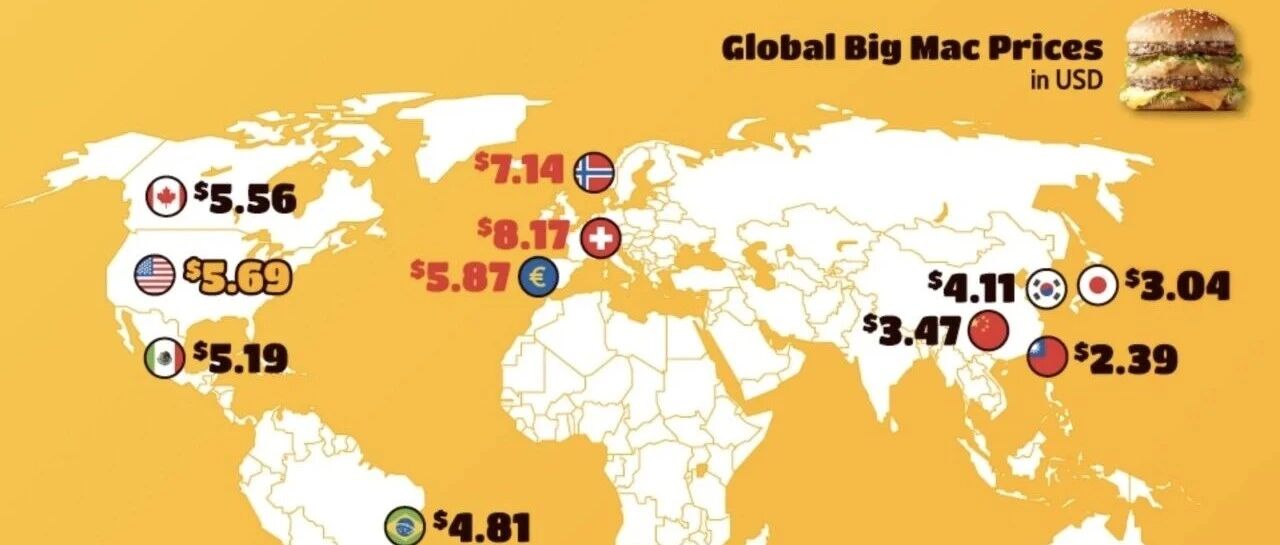
Core Viewpoint - The three pillars supporting the RMB exchange rate—China-US interest rate differential, policy risk premium, and purchasing power parity—are shifting favorably towards appreciation, with the central bank's midpoint guidance and foreign capital FOMO sentiment acting as additional catalysts [2][5]. Group 1: RMB Exchange Rate Dynamics - The RMB/USD exchange rate has experienced fluctuations this year, initially appreciating in a weak dollar environment, then depreciating due to tariff concerns, and recently regaining upward momentum [4]. - The current trend shows a convergence of the RMB midpoint, onshore, and offshore rates towards the 7.0 level, supported by both fundamental factors and event-driven catalysts [4][5]. Group 2: Interest Rate Differential - The narrowing of the China-US interest rate differential has been a fundamental basis for the RMB's appreciation over the past three months [6]. - Since July, the yield on China's 10-year government bonds has risen over 20 basis points to above 1.8%, while the US 10-year Treasury yield has decreased from 4.5% to around 4.2%, leading to a significant narrowing of the nominal interest rate differential by nearly 50 basis points [7]. - Adjusting for inflation, the actual interest rate differential has further narrowed, with China's low inflation levels contrasting with a slight rebound in US inflation [7][10]. Group 3: Policy Risk Premium - The policy risk premium for Chinese assets is decreasing, while it is rising for US assets due to concerns over the independence of the US Federal Reserve [10]. - The ongoing geopolitical tensions and the potential for a more stable RMB asset environment are contributing to a long-term reduction in China's sovereign risk premium [10]. Group 4: Purchasing Power Parity - The RMB is currently undervalued against the USD based on purchasing power parity (PPP), with the IMF indicating that 1 USD's purchasing power is equivalent to approximately 3.4 RMB [12]. - The long-standing undervaluation is attributed to limited capital account openness and concerns over China's economic transition risks, but the door for RMB revaluation is opening [12]. Group 5: Catalysts for RMB Appreciation - The central bank's midpoint rate has been set unusually strong, indicating an official expectation for RMB appreciation [18]. - Recent reports suggest the potential introduction of a RMB stablecoin, which could enhance the internationalization of the RMB and increase its attractiveness for foreign investment [20]. - Foreign capital is increasingly entering the A-share market, with significant inflows observed in August, driven by a shift in sentiment from trading to investing in Chinese assets [24]. - Export companies are accelerating their currency conversion as the cost of holding USD rises, contributing to RMB appreciation [25]. Group 6: Market Outlook - The weak dollar environment is expected to continue supporting RMB appreciation, although factors such as declining export expectations and the need for domestic demand recovery may influence the pace of appreciation [28].

人民币升值与资产走势
2025-09-02 14:41
Summary of Key Points from Conference Call Records Industry or Company Involved - The discussion primarily revolves around the **Chinese economy**, **RMB (Renminbi) exchange rate**, and the **impact of U.S. monetary policy** on global markets, particularly focusing on **A-shares** and **bond markets**. Core Points and Arguments 1. **Impact of U.S. Monetary Policy**: The Federal Reserve's loose monetary policy typically weakens the dollar and lowers U.S. Treasury yields, which is expected to benefit gold. However, recent market behavior has diverged from this logic, with the dollar showing signs of recovery and Treasury yields stabilizing around 4.25% [1][3][11]. 2. **RMB Appreciation**: The recent appreciation of the RMB is expected to boost market risk appetite, particularly in the context of de-dollarization. However, caution is advised regarding extreme events like the UK fiscal storm that could trigger global asset volatility, particularly affecting Hong Kong stocks [1][4][5]. 3. **External and Internal Influences**: The RMB's recent performance is influenced by both external factors (like the dollar and U.S. Treasury yields) and internal factors (such as domestic economic conditions). The stability of the dollar around 98 and Treasury yields around 4.2-4.25 has allowed for independent market movements [2][6]. 4. **Market Sentiment and Risk Appetite**: The RMB's appreciation is linked to increased market risk appetite, driven by a weak dollar and the ongoing U.S.-China economic dynamics. Historical extreme events should be considered, as they can lead to significant market adjustments [4][5][23]. 5. **Future RMB Exchange Rate Expectations**: The RMB is expected to appreciate further, potentially falling below 7 by year-end, driven by stronger-than-expected exports and anticipated Fed rate cuts. The central bank may intervene to prevent rapid fluctuations to protect export-oriented businesses [11][23]. 6. **Inventory Cycle and Economic Indicators**: Recent PMI data indicates a mixed picture, with supply-side strength but weak demand. Companies are preemptively stocking up due to concerns over rising prices, which may not reflect genuine demand recovery [9][10][12][13]. 7. **Stock and Bond Market Dynamics**: There has been a noticeable decoupling between stock and bond markets, with funds shifting from bonds to equities, leading to upward pressure on stock prices. This trend may face challenges if retail investors do not significantly enter the market [15]. 8. **Investment Strategy in Current Environment**: Suggested investment areas include financial insurance, gold, domestic coal, and photovoltaic sectors, as well as consumer services and innovative pharmaceuticals, which are sensitive to U.S. Treasury yields [18]. 9. **RMB Internationalization**: The discussion highlights the ongoing efforts towards RMB internationalization, including the development of stablecoins and digital RMB, with a focus on cross-border trade and financial infrastructure [22]. Other Important but Possibly Overlooked Content 1. **Potential Risks**: The potential for short-term declines in global risk appetite due to external shocks, such as political instability in France and fiscal issues in the UK, should be monitored closely [5][6]. 2. **Liquidity and Market Dynamics**: The central bank's response to potential hot money inflows could significantly impact liquidity and interest rates, affecting both the bond and equity markets [7][8]. 3. **Long-term Economic Policies**: The effectiveness of policy measures aimed at stabilizing the economy and promoting growth, particularly in infrastructure investment, remains a critical area of focus [19][20].
从日本到韩国,美国的金融屠刀从未失手!直到2015年碰上了中国!
Sou Hu Cai Jing· 2025-09-02 11:28
Core Viewpoint - The article argues that the relationship between China and the United States has reached an irreparable state due to China's rise threatening the U.S. financial hegemony, which is a strategic consensus among decision-makers in both countries [1][3]. Group 1: U.S. Financial Hegemony - The U.S. maintains its global dominance through three pillars: technological superiority, military deterrence, and financial hegemony, with the latter being the most crucial [3]. - The U.S. has created a "financial perpetual motion machine" through the dollar as the world currency, allowing it to easily exchange for goods from China, oil from the Middle East, and luxury items from Europe, leading to a comfortable lifestyle for its citizens for nearly half a century [3][5]. - The operational mechanism of U.S. financial hegemony involves a cycle where the Federal Reserve prints money, emerging market countries exchange real goods for dollars, and then U.S. financial entities manipulate these markets to extract wealth [5][7]. Group 2: Historical Context and Consequences - Historical examples, such as the 1990s Asian financial crisis, illustrate how the U.S. has leveraged its financial power to destabilize economies, leading to significant wealth transfer to American capital [7]. - The 2015 financial confrontation with China saw the U.S. attempt to short the yuan, resulting in a significant reduction of China's foreign reserves and stock market value, but China successfully defended its financial sovereignty [8][10]. - The ongoing initiatives like the Belt and Road Initiative and the internationalization of the yuan are seen as direct challenges to U.S. dollar dominance, indicating a fundamental conflict between the two nations [8][10]. Group 3: Future Implications - The article suggests that while there may be tactical easing in U.S.-China relations, the overarching trend of strategic confrontation is irreversible, marking a significant shift in global order [10].

天量居民存款,开始大规模离开银行…
商业洞察· 2025-09-02 09:36
Core Viewpoint - The article discusses the phenomenon of a significant outflow of deposits from banks in July 2025, termed as the "deposit migration," which has historical precedents and implications for wealth distribution and investment behavior in China [4][5]. Group 1: Historical Context of Deposit Migration - The first deposit migration occurred between 1999 and 2000, with a total outflow of 240 billion yuan, coinciding with the transition to the commodity housing market and a surge in stock market investments [6][7][9]. - The second migration took place from 2006 to 2007, with a cumulative outflow of 1.5 trillion yuan, driven by stock market reforms that led to a rapid increase in stock prices [10]. - The third migration in 2009 saw a smaller outflow of 350 billion yuan, influenced by government stimulus measures that boosted the stock market [12]. - The current migration in 2025 is characterized by a record outflow of 1.11 trillion yuan in July alone, indicating a significant shift in investment behavior [15]. Group 2: Current Migration Dynamics - In July 2025, both individual and corporate deposits saw substantial declines, with individual deposits decreasing by 1.11 trillion yuan and corporate deposits by 1.46 trillion yuan [15]. - The surge in non-bank financial institution deposits, which increased by 2.14 trillion yuan in July, suggests that funds are being redirected towards stock and fund investments [18][20]. - The stock market's rise from approximately 3,200 points to over 3,800 points has attracted significant capital inflows, as deposit interest rates have fallen below inflation rates, making bank deposits less appealing [21][20]. Group 3: Implications for Investment and Wealth Distribution - The article highlights that the current deposit migration is likely to lead to a substantial influx of capital into the stock market, as traditional investment avenues like real estate are no longer viable [29]. - Historical patterns indicate that each deposit migration has been accompanied by wealth creation opportunities, with the current migration expected to be the largest due to the scale of deposits reaching around 160 trillion yuan [29]. - The article posits that a thriving stock market could create a positive feedback loop, enhancing consumer confidence and providing sustainable returns for pension funds, thereby supporting the internationalization of the yuan [31][32].
南太平洋岛国人民币论坛在新西兰奥克兰举办
Ren Min Wang· 2025-09-02 05:48
Group 1 - The forum held in Auckland, New Zealand, on September 1, was part of the China Bank's global campaign for RMB internationalization by 2025, attracting representatives from central and commercial banks across the South Pacific [1][9] - Discussions at the forum focused on the economic outlook of China, the development of the RMB bond market, and cross-border payment and settlement mechanisms [3] - The Central National Debt Registration and Settlement Company presented on the open policies of the China Interbank Bond Market (CIBM) and how foreign financial institutions can invest in RMB bond products safely and conveniently [5] Group 2 - The President of China Bank (New Zealand) emphasized the bank's commitment to enhancing the use of RMB in the South Pacific region, improving cross-border payment efficiency, and reducing transaction costs [7] - Representatives from Fiji, Tonga, Samoa, Papua New Guinea, and the Cook Islands signed memorandums of cooperation with China Bank, covering areas such as RMB clearing account establishment and cross-border payment system access [9] - The forum is a significant initiative for China Bank to implement the national "Belt and Road" strategy and financial opening, establishing a new framework for RMB in the South Pacific region focusing on "payment + investment + cooperation" [9]


人民币只在中国才叫“人民币”,出国后就变了称呼?叫法让人意外
Sou Hu Cai Jing· 2025-09-02 05:08
Core Viewpoint - The article discusses the evolution of the Chinese currency, Renminbi (RMB), and its various international names, highlighting the significance of these names in reflecting China's economic rise and its perception on the global stage [1][5][10]. Group 1: Currency Names and Their Significance - CNY is the international standard code for Renminbi, signifying its formal identity in the global financial system and facilitating China's economic globalization [3][6]. - RMB, the English abbreviation for Renminbi, has seen a decline in usage but remains a historical marker of China's economic transformation and internationalization journey [8][10]. - The term "Yuan" carries cultural significance and reflects traditional Chinese values regarding currency, indicating a growing cross-cultural understanding of Renminbi [8][10]. Group 2: Economic and Cultural Implications - The diversity of names for Renminbi indicates an increase in China's discourse power within the global system, though it does not equate to total control [10]. - The evolution of these names is not coincidental; it results from a combination of economic strength, financial regulations, and international trust [10]. - Currency serves as a cultural symbol, embodying historical memories and cultural identity, reminding stakeholders of the importance of cultural values alongside economic pursuits [10].
设上合组织开发银行是摸索非美元结算网
日经中文网· 2025-09-02 03:15
Core Viewpoint - The establishment of the Shanghai Cooperation Organization (SCO) Development Bank is aimed at increasing RMB financing and exploring a non-USD settlement network, responding to emerging countries' needs for stable exchange rates and infrastructure financing [2][4][10]. Group 1: RMB Internationalization - As of July 2023, RMB accounted for 2.88% of international settlements, ranking sixth after USD, EUR, GBP, JPY, and CAD [6][7]. - Following the fall of the Trump administration's policies, there is a growing demand among emerging countries to reduce reliance on the USD and stabilize their currencies [6][10]. - The RMB's share in international settlements previously peaked at around 4.7% but fell below 3% by May 2025, indicating market concerns over geopolitical tensions affecting currency transactions [9]. Group 2: Development Bank's Purpose - The SCO Development Bank aims to provide a new source of development funding for emerging countries, enhancing China's influence as a leading player [5][10]. - The bank's establishment is seen as a response to the U.S. prioritizing its own interests, which has led to dissatisfaction among emerging nations [5][10]. - The bank's timeline and specific plans are still under discussion, but the potential for increased bad debt risks exists if large-scale funding is deployed [10]. Group 3: Economic Security and Risks - Expanding RMB transactions is crucial for China's economic security, allowing it to stabilize trade activities even under U.S.-led financial sanctions [10]. - The "Belt and Road Initiative" has faced challenges, with investment amounts dropping significantly post-2020 due to the pandemic, leading to increased concerns over bad debts [11]. - The total amount of "problem debts" from 2020 to 2022 reached $76.8 billion, a significant rise from $17 billion in the pre-pandemic period [11]. Group 4: Challenges to RMB Usage - The strict controls on RMB's cross-border flow and exchange difficulties hinder its internationalization [12]. - To enhance the RMB's presence, it is essential to relax capital controls, but current economic uncertainties and outflow pressures complicate this process [12].
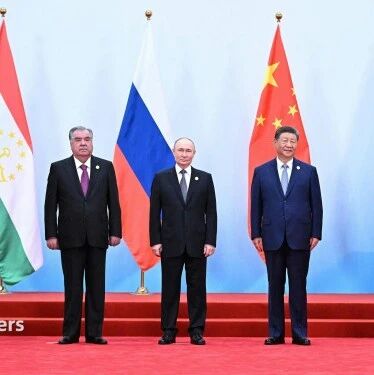
上合组织宣布加强数字经济发展,专家认为将有助于中国资本出海
Huan Qiu Wang· 2025-09-02 02:41
远东资信研究院副院长张林对此分析认为:"上合组织建立多边开发性金融平台,是上合组织银行联合 体功能升级,应对全球金融重构挑战的重要抓手","上合组织开发银行可成为现有国际金融体系的有益 补充,通过倡导多边开发性金融合作、扩大本币使用和推动成员国在基础设施、能源转型、数字经济等 关键领域的投融资合作,进一步增强新兴市场国家的集体议价能力和规则制定参与度。" 张林还具体分析提到,上合组织成员国既有能源出口国,也有制造业大国和新兴市场经济体,发展阶段 各异,但共同需求十分突出,比如基础设施互联互通、能源与绿色转型融资、本币结算与金融主权等 等,推动成立上合组织开发银行,既是回应区域经济发展痛点的金融安排,也是落实经济合作的重要抓 手。 张林还表示,上合组织开发银行支持上合组织国家和地区之间开展能源、交通、通信、农业等基础设施 和产业项目的投融资,有助于支持中国资本出海,通过扩大人民币在中亚、南亚的支付和储备功能,有 助于支持人民币惠及更多新兴经济体与发展中国家。 (文章为作者独立观点,不代表艾瑞网立场) 导语:通过扩大人民币在中亚、南亚的支付和储备功能,有助于支持人民币惠及更多新兴经济体与发展 中国家。 【环球网财 ...
南方东英丁晨 以金融创新架设“出海桥梁” 助力外资投资中国资产
Shang Hai Zheng Quan Bao· 2025-09-01 19:06
Core Viewpoint - Southern Eastern Asset Management has established a significant presence in global capital markets, focusing on connecting Chinese assets with international investors, particularly in emerging markets like Southeast Asia and the Middle East [1][5]. Group 1: Company Overview - Southern Eastern Asset Management was founded in Hong Kong in 2008 and has expanded its operations to Singapore and other regions over 17 years [1]. - As of the end of 2024, the company manages approximately $20 billion in assets and has launched 45 ETF products and 3 mutual funds in Hong Kong and Singapore [1]. - The company has listed the first Hong Kong stock ETF on the Saudi Arabian exchange, with an asset size nearing $1.4 billion [1]. Group 2: Financial Innovation and Product Development - Since launching the mutual ETF project in 2020, the company has intensified its financial innovation efforts, focusing on cross-border products [2]. - Southern Eastern Asset Management has participated in various ETF mutual recognition projects, successfully introducing Chinese-themed products to global markets, which have been well-received by institutional investors in Southeast Asia and the Middle East [2][3]. - The company aims to enhance its cross-border investment product system, facilitating the flow of capital between domestic and international markets [3]. Group 3: Investment Trends and Market Position - There is a growing interest among global investors in Chinese technology assets, with Southern Eastern's Hang Seng Technology ETF becoming a key investment vehicle [4]. - As of September 24, 2024, the Hang Seng Technology ETF had a size of HKD 30.68 billion, and by August 11, 2025, it surpassed HKD 53.68 billion, ranking first in Hong Kong's ETF market [4]. - The company is focusing on the demand from Middle Eastern investors for customized products that combine Chinese technology with local industry advantages [5]. Group 4: Strategic Goals and Future Plans - Southern Eastern Asset Management is committed to the core strategy of "Chinese assets, global allocation," aiming to innovate products and enhance service capabilities [6]. - The company plans to develop more thematic products focusing on emerging sectors like technology and green economy, leveraging policies like ETF mutual recognition [6]. - Future initiatives include collaborating with Middle Eastern sovereign funds and exploring the issuance of RMB-denominated products in Southeast Asia and the Middle East to support the internationalization of the RMB [6].
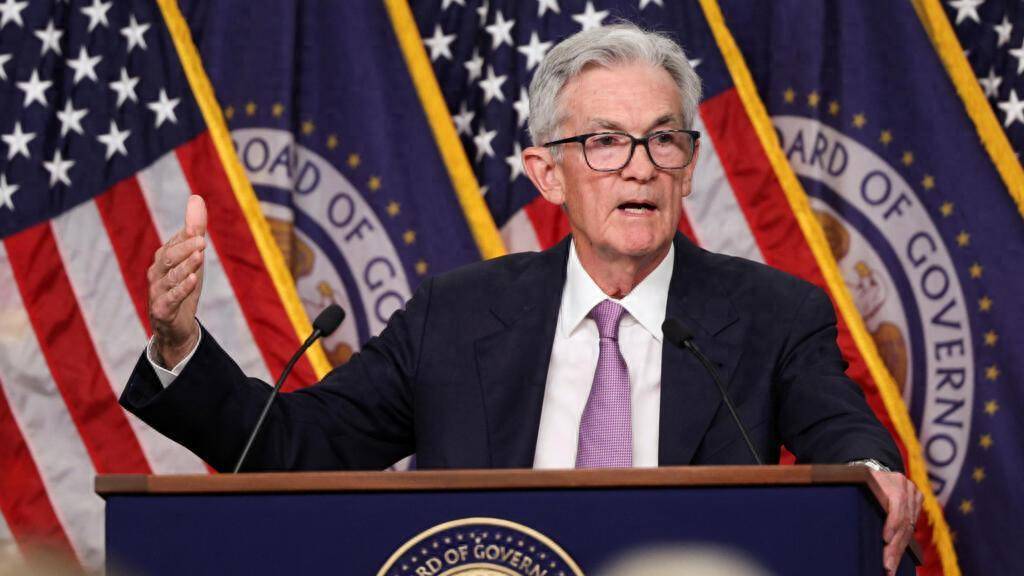
美联储宣布投降,特朗普逼宫成功,人民币却成最大赢家
Sou Hu Cai Jing· 2025-09-01 14:46
Group 1 - The Federal Reserve's shift from a hardline stance against inflation to a more accommodative approach under pressure from political figures like Trump indicates a significant policy change [1][5][9] - The probability of a rate cut in September surged to 86.9% following comments from Fed officials, signaling a potential capitulation to political pressure [5][9] - Trump's actions, including the dismissal of a Fed board member, have created substantial political pressure on the Fed to lower interest rates, which could save the U.S. government approximately $1 trillion in annual interest payments if rates drop to 1% [7][9] Group 2 - The depreciation of the U.S. dollar, with the dollar index falling from 110.17 to 97.77, has led to a significant appreciation of the Chinese yuan, which strengthened from 7.42 to 7.12 yuan per dollar [11][11] - The decline in U.S. interest rates has made the dollar less attractive, prompting capital to flow towards markets with higher yields, such as China, where economic recovery is evident [13][15] - Foreign investment in Chinese assets has surged, with a net increase of $10.1 billion in domestic stocks and funds in the first half of the year, reversing a two-year trend of net outflows [20][22] Group 3 - China's economic fundamentals are strong, with a 6.1% increase in exports from January to July, particularly to regions like the EU and Latin America, which helps mitigate declines in exports to the U.S. [22][24] - The Chinese government has increased its fiscal spending significantly, with a new debt quota up by 2.5 trillion yuan, enhancing economic growth potential [24] - The comparative stability and professionalism of China's monetary policy, in contrast to the politicization seen in the U.S., has made Chinese assets more appealing to global investors [26] Group 4 - The Federal Reserve's rate cuts provide the Chinese central bank with more policy space to lower financing costs for businesses, particularly in manufacturing and technology sectors [28][29] - While a stronger yuan may pose challenges for traditional exporters, the overall demand for Chinese goods may increase due to a stabilized U.S. economy [31][33] - The potential rise in commodity prices due to a weaker dollar could lead to increased costs for China, but moderate inflation may stimulate consumption and investment [35] Group 5 - The changes in monetary policy and capital flows present a unique opportunity for the internationalization of the yuan, with more central banks considering increasing their yuan asset allocations [39] - The evolving dynamics between the U.S. and China may lead to a new phase in economic relations, impacting investment strategies and market behaviors [39]