智能制造

Search documents
张林山:提升系统能力推动新型工业化
Jing Ji Ri Bao· 2025-10-24 00:01
Core Viewpoint - The press conference highlighted China's significant achievements in new-type industrialization during the "14th Five-Year Plan" period, showcasing the country's manufacturing sector's transition from quantity accumulation to quality leap and system capability enhancement [1][2]. Group 1: Achievements in Manufacturing - The manufacturing value added is expected to reach 8 trillion yuan, contributing over 30% to global manufacturing growth, maintaining the world's largest manufacturing scale for 15 consecutive years [1]. - China leads the world in the production of most of the 504 major industrial products, with over 230 top-level smart factories and 1,260 5G factories established [2]. - The digital economy has deeply integrated with the real economy, with 4.598 million 5G base stations and over 100 million device connections on key industrial internet platforms [2]. Group 2: Challenges in Manufacturing - The manufacturing sector faces challenges such as unilateralism and protectionism in the international environment, and unresolved core technology issues domestically [3]. - There is a need to enhance the resilience and security of supply chains, accelerate the upgrading of manufacturing, and improve the overall effectiveness of the innovation system [3]. Group 3: Future Directions - Emphasis on strengthening technological innovation leadership, increasing investment in basic research and frontier technology, and improving the innovation center network [3]. - The promotion of digital technology integration in manufacturing, expanding applications of 5G and industrial internet, and supporting small and medium enterprises in digital transformation [4]. - Commitment to green and low-carbon development, implementing energy-saving and carbon-reduction measures, and establishing a green manufacturing system [4]. Group 4: Industrial Ecosystem Optimization - The creation of a market-oriented, legal, and international business environment, fostering the development of quality enterprises, and enhancing policy coordination [5]. - Focus on cultivating talent in the industry and promoting an innovative and failure-tolerant social atmosphere to unleash the innovation potential of various business entities [5].
德国联邦统计局数据显示:今年前8月,中国再成德最大贸易国
Sou Hu Cai Jing· 2025-10-23 23:40
Core Insights - The trade dynamics between Germany and the U.S. have shifted significantly due to U.S. tariff policies, with China becoming Germany's largest trading partner again [1][2][5] Trade Dynamics - In the first eight months of the year, Germany's trade with China reached €163.4 billion, surpassing trade with the U.S. at €162.8 billion [2] - German exports to the U.S. have decreased by 7.4% year-on-year, totaling €99.6 billion, with a notable drop of 23.5% in August alone [2][4] - The decline in exports to the U.S. is attributed to reduced demand for traditional German goods such as automobiles, machinery, and chemicals due to U.S. tariffs [2][4] Sector-Specific Impacts - The automotive sector saw a 23.5% year-on-year decline in exports to the U.S. following the imposition of a 25% additional tariff on imported cars [4] - The machinery sector is also experiencing pessimism, with about one-third of surveyed companies rating the current situation as "bad" or "very bad," potentially leading to job cuts [4] Economic Outlook - Despite a slight increase in exports of pharmaceuticals, IT, and electronics, these gains are insufficient to offset losses in core industries [4] - The Ifo Institute's survey indicates a slight increase in optimism among exporters, but no sustainable improvement is evident [6] - Germany's economic growth forecast for this year is only 0.2%, with a more optimistic outlook of 1.3% for the next year, driven by domestic investments rather than overseas demand [6][7] Bilateral Trade Relations - China's trade with Germany has shown an 8.3% increase in imports, reaching €108.8 billion, while exports from China to Germany grew by 10.9% in September [5] - Analysts express concerns about Germany's increasing dependency on China, although they acknowledge the strong complementary nature of the economic relationship [5][7] - Future cooperation between Germany and China is expected to remain strong in traditional sectors as well as in green transformation, service trade, smart manufacturing, and digitalization [5][7]


行业龙头三年投500亿布局AI等赛道
Nan Fang Du Shi Bao· 2025-10-23 23:11
Core Insights - Midea Group plans to invest at least 50 billion yuan in R&D over the next three years, focusing on cutting-edge fields such as AI large models and embodied intelligence [10] - The Shunde district aims to establish itself as a world-class intelligent manufacturing hub, emphasizing the importance of private enterprises in driving economic growth [11][12] - Cloud-based water ecosystems and AI+IoT integration are key strategies for companies like Yunmi, which has seen a 70% growth rate in the first half of the year [11][13] Company Strategies - Midea's ToB business revenue is projected to reach 104.5 billion yuan in 2024, marking a significant growth avenue beyond its smart home appliances [12] - Yunmi has invested over 1 billion yuan in creating a smart water ecosystem, positioning itself for long-term success in the next decade [13] - Guangdong Tiantai Robot Co. has established national standards for robotic components, showcasing its commitment to innovation in the robotics sector [13] Market Expansion - Keda Manufacturing emphasizes the potential for overseas market expansion, particularly in Africa, South America, and North America, as domestic markets face challenges [14][15] - Yunmi is actively pursuing global markets, particularly in Southeast Asia and North America, under the banner of "Chinese Intelligent Manufacturing" [15] - Yizhiming plans to establish a global R&D center and manufacturing facilities to enhance its competitive position in the industry [15] Industry Trends - The shift from OEM to proprietary branding and eventual public listing is a notable trend among traditional industries, as exemplified by Hanhigh Group's recent IPO [16] - Shunde district has a robust pipeline for future listings, with 44 companies already listed and 13 more in the process, indicating a strong entrepreneurial ecosystem [16] - The focus is shifting from family-oriented business models to shareholder-driven approaches, encouraging companies to adapt to market demands [16] Economic Collaboration - The conference highlighted the importance of collaboration between government and enterprises to drive economic growth, with a diverse representation of businesses from various sectors [17][18] - The district's ambition to create world-class manufacturing and tourism destinations reflects a strategic vision for sustainable economic development [18]

2025中国国际矿业大会在天津举行
Sou Hu Cai Jing· 2025-10-23 15:30
Core Points - The 27th China International Mining Conference is being held in Tianjin, focusing on the theme "Mutual Integration, Co-construction, and Sharing" [2][4][7] - The conference features multiple exhibition areas covering the entire mining industry chain, including smart mining, geological survey/mining exploration equipment, heavy machinery, and supporting components [5][9][11] Group 1 - The event showcases advanced technologies such as hybrid wide-body mining trucks and intelligent inspection robots for flood control tunnels [4][7] - Attendees are introduced to fully electric unmanned mining vehicles, highlighting the industry's shift towards automation and sustainability [9][12] - The conference aims to promote collaboration and innovation within the mining sector, emphasizing the importance of shared resources and knowledge [2][14]
技术路线图3.0,中国汽车2040年这么干
Xin Lang Cai Jing· 2025-10-23 15:30
Core Insights - The article discusses the future of the Chinese automotive industry, projecting significant advancements in technology and market dynamics over the next 15 years, particularly focusing on the integration of electric and intelligent vehicles [2][4][5] Group 1: Market Projections - By 2040, approximately one-third of new passenger vehicles will still rely on internal combustion engines (ICE), while the penetration rate of new energy vehicles (NEVs) is expected to exceed 85%, with battery electric vehicles (BEVs) making up 80% of that [2][7] - The Chinese automotive market is projected to reach a production and sales volume of over 31 million units in 2024, with NEVs experiencing rapid growth from under 1.4 million units in 2020 to nearly 13 million units in 2024, increasing their market share from 5.4% to over 40% [11][13] Group 2: Technological Developments - The "Technology Roadmap 3.0" outlines three major breakthroughs: extending the timeline to include long-term goals for 2040, enhancing the structural framework to cover energy-saving, new energy, and intelligent connected vehicles, and aligning industry development with global changes [4][5][6] - The roadmap specifies that by 2030, the average fuel consumption of hybrid vehicles will decrease to 4.5L/100km, and further to 3.5L by 2040, indicating a strong focus on energy efficiency [9][10] Group 3: Intelligent Vehicles - By 2030, L2 level assisted driving will be widely adopted in passenger vehicles, with L3 and L4 levels expected to be implemented in urban and highway scenarios, respectively [19][21] - By 2040, nearly all new intelligent connected vehicles are anticipated to achieve L4 level autonomous driving, with L5 level vehicles beginning to enter the market, indicating a significant shift towards fully autonomous driving capabilities [21][22] Group 4: Industry Transformation - The automotive industry is transitioning towards becoming mobile intelligent entities, with a focus on four core technological areas: intelligent chassis, electronic and electrical information architecture, automotive chips, and vehicle operating systems [22][26] - The roadmap emphasizes the importance of smart manufacturing, aiming for 40% of companies to reach the highest level of intelligent manufacturing by 2040, integrating various aspects of production and supply [26]

聚焦硬件性能突破,海康机器人发布多款移动机器人新品
机器人大讲堂· 2025-10-23 14:37
Core Viewpoint - Hikrobot focuses on providing machine vision, mobile robots, and solutions globally, emphasizing industrial IoT, smart logistics, and intelligent manufacturing to drive innovation and smart upgrades in manufacturing processes [2]. Group 1: Product Launch and Innovation - On October 23, Hikrobot held an online product launch focusing on mobile robot hardware performance breakthroughs, introducing multiple new products across various lines such as lurking, fork, and container robots to meet customer demands in smart logistics [4][6]. - The company has developed a matrix of mobile robots covering multiple operational processes, enhancing production efficiency, safety, planning, and cost optimization [8]. Group 2: Product Features and Specifications - The second-generation lurking fork robot has significantly improved load capacity, space utilization, and cargo handling efficiency, with a new 1.5-ton model catering to mainstream needs and a 20% increase in handling efficiency through hardware and software optimization [10][11]. - The new F3 fork robot features a platform architecture upgrade, reducing wiring by 30% and components by 25%, offering various models for different handling tasks [13]. - The Q3S model, designed for low-height container handling, boasts the industry's thinnest body at 125mm, capable of carrying 600kg and running at 2m/s, with advanced features for dynamic positioning [15]. - The new STU container robot utilizes a dual-stage lifting mechanism, achieving speeds of up to 4m/s and a lifting height exceeding 20m, enhancing efficiency by over 20% in storage scenarios [16].
第24届汕头·澄海国际玩具礼品博览会举行
Zhong Guo Xin Wen Wang· 2025-10-23 11:47
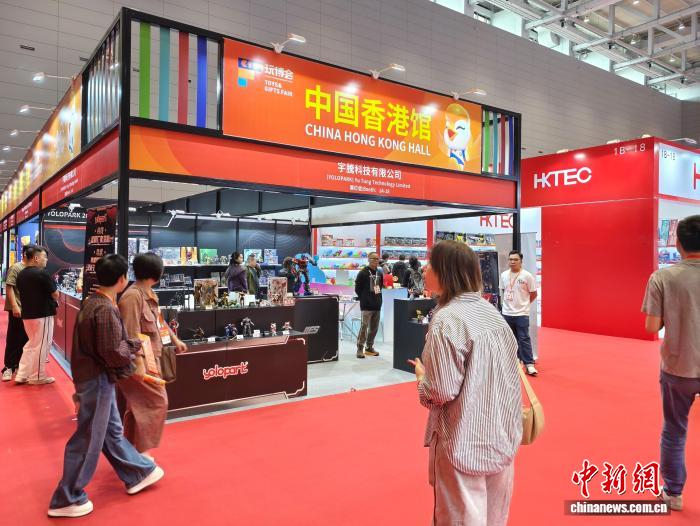
第24届汕头·澄海国际玩具礼品博览会举行 中新网汕头10月23日电 (记者 李怡青)第24届汕头·澄海国际玩具礼品博览会(以下简称"玩博会")10月23日 至26日在广东汕头举行,海内外2000多个品牌25万款玩具及相关产品参展。 第24届汕头·澄海国际玩具礼品博览会(以下简称"玩博会")10月23日至26日在广东汕头举行,海内外 2000多个品牌25万款玩具及相关产品参展。林大森 摄 本届展会亮点聚焦人工智能、智能制造与科技创新。与往年相比,新增了无人机、潮玩、AI玩具特色 展区,其中无人机展区有10家企业参展。主办方介绍,目前澄海无人机产业企业约200家,构建了覆盖 研发设计、精密制造、测试飞行等完整无人机产业链,产品涉及农业植保、地理测绘、物流配送及应急 救援等多个领域。 玩博会期间,泰国正大集团及来自美国、墨西哥等地采购商代表和内地采购商代表分别与本地供应商代 表签订协议,总意向金额达158亿元人民币。 巴基斯坦驻广州总领事馆商务参赞伊姆兰23日接受记者采访时说,汕头市澄海玩具协会与巴基斯坦玩具 贸易商协会已建立了良好的合作关系。中国是巴基斯坦最主要的玩具进口来源国,占据进口市场份额近 九成,希望未来 ...
上海不断优化开放政策及营商环境 外资企业迸发新活力
Sou Hu Cai Jing· 2025-10-23 11:32
Group 1: Foreign Investment in Shanghai - Shanghai Lujiazui Financial City hosts over 47,000 enterprises, contributing nearly half of the city's tax revenue with 1/7 of the city's foreign enterprises [1] - In the first five months of this year, nearly 2,500 new foreign enterprises were established in Shanghai, with actual foreign investment exceeding $7.6 billion [2] - Shanghai has become a hub for multinational companies' regional headquarters and foreign R&D centers, supported by policies like the Shanghai Foreign Investment Regulations [2] Group 2: Company Growth and Strategy - Huakin Technology, a company founded 20 years ago, aims to become a Fortune Global 500 company within five years, reporting a revenue of 83.9 billion yuan in the first half of 2025, with a growth rate of 113% [3] - The company invested 2.96 billion yuan in R&D in the first half of the year, aligning its growth trajectory with the development of China's electronic communication industry [3][4] - Huakin Technology's new strategic layout includes three core businesses and three emerging fields, focusing on robotics, software, and automotive electronics [3] Group 3: Supportive Business Environment - Schneider Electric has established a strong presence in Shanghai, recognizing it as a key market and supply chain base, benefiting from local talent and government support [5] - The company emphasizes a "China-centric" strategy, integrating R&D, production, supply, sales, and service to enhance its competitive strength [5] - The Shanghai government supports industrial development, as seen in Schneider's collaboration with local authorities to improve smart manufacturing levels [5] Group 4: Cross-Border E-commerce Growth - Shanghai has achieved significant growth in cross-border e-commerce, with an annual growth rate exceeding 35% since the 14th Five-Year Plan [8] - In 2024, the cross-border e-commerce cargo volume at Pudong Airport reached 477,700 tons, a 30% increase year-on-year, making it the leading airport for such cargo in China [8] - The Shanghai Airport Group has implemented a pilot program to facilitate the transportation of sensitive goods, enhancing the efficiency of cross-border e-commerce operations [9] Group 5: Logistics and Customs Innovations - The "linked unloading" model at Yangshan Port improves logistics efficiency by integrating customs clearance processes, reducing overall logistics costs for foreign trade enterprises [10] - The new model allows for expedited customs procedures, significantly decreasing the time required for goods to leave the port [10] - The collaboration between Yangshan Port and Haining Port exemplifies efforts to lower logistics costs and enhance operational efficiency in the supply chain [10]


通达创智(001368) - 001368通达创智投资者关系管理信息20251023
2025-10-23 10:48
Company Overview - Tongda Chuangzhi (Xiamen) Co., Ltd. is a national high-tech enterprise focused on R&D, production, and sales of consumer goods in sports outdoor, home living, and health care sectors [2][3]. - The company has established three production bases in Xiamen, Shishi, and Malaysia, and has formed long-term strategic partnerships with global leaders like Decathlon and IKEA [2][3]. Business Model and Clientele - The company operates a direct sales model, maintaining stable relationships with core clients, which include Decathlon, IKEA, Wagner, and YETI [8][16]. - Core clients contribute significantly to revenue, with Decathlon, IKEA, and Wagner being major European customers [10][16]. Financial Performance and Market Position - Since its A-share market debut in March 2023, the company has adhered to legal regulations and established a stable dividend policy to reward investors [3]. - The company has achieved a total of 246 national authorized patents, including 8 invention patents, and has received numerous quality certifications across various countries [3]. Strategic Development Goals - The company aims to become a trusted, sustainable strategic partner for clients, focusing on deepening existing client relationships and expanding into new markets [4][17]. - Plans include enhancing product offerings in three core areas: sports outdoor, home living, and health care, while also targeting new international and domestic brand clients [19][20]. Production and Technological Advantages - The company employs a multi-process production system, which is a key competitive advantage in meeting diverse client needs [12][13]. - It has implemented an intelligent manufacturing system, enhancing efficiency, quality, and cost control [13]. Risk Management and Adaptation Strategies - The company has taken proactive measures to mitigate risks associated with U.S. tariffs, focusing on expanding its production base in Malaysia to reduce dependency on single export markets [10][11]. - The company is also adjusting its investment plans to enhance production capacity in response to international client demands [11]. Industry Barriers and Competitive Landscape - The consumer goods industry is characterized by high market fragmentation, with many small to medium enterprises, while Tongda Chuangzhi stands out due to its strong R&D and production capabilities [14][20]. - Barriers to entry include customer loyalty, technological requirements, production processes, and certification standards, which pose challenges for new entrants [20][24]. Future Market Expansion Plans - The company plans to consolidate its existing customer base while exploring new product categories and expanding its reach to high-quality clients [18][19]. - It aims to leverage its core competencies to enhance market share and revenue growth in the evolving consumer goods landscape [15][19].
工信部|2025年度智能制造系统解决方案“揭榜挂帅”项目申报工作启动
机器人圈· 2025-10-23 10:09
Core Viewpoint - The Ministry of Industry and Information Technology and the State Administration for Market Regulation have jointly issued a notice to initiate the 2025 annual application for the "Leading the Way" project for intelligent manufacturing system solutions, focusing on digital transformation and intelligent upgrades in key industries such as raw materials, high-end equipment, consumer goods, and electronic information [2][4]. Group 1: Project Application - The 2025 project application aims to address the pain points in intelligent factory construction and cultivate specialized suppliers with core technologies in specific industries [3][4]. - Eligible applicants must be registered enterprises or research institutions in China with independent legal status, capable of forming joint applications [5][19]. - Each applicant can lead one project and cover up to three tasks related to intelligent manufacturing system solutions [30][32]. Group 2: Implementation and Evaluation - The application process involves online submission of materials by November 10, 2025, followed by a review by local industrial and information departments [7][32]. - The evaluation of already approved projects will be conducted by the Ministry of Industry and Information Technology and the State Administration for Market Regulation, ensuring that the solutions are advanced, applicable, and replicable [10][44]. - Successful applicants must complete their commitments within two years and request evaluation from their recommending units [8][32]. Group 3: Requirements and Standards - Applicants must demonstrate a solid foundation in technology innovation and application, with necessary facilities and successful case studies in relevant industries [5][20]. - The evaluation process includes submitting verification materials and undergoing a thorough review by experts to assess the completion of tasks and indicators [11][45]. - The project execution period is limited to two years, with an emphasis on promoting successful outcomes and experiences in the intelligent manufacturing sector [13][14].