
碳中和

Search documents
中国2035年新NDC目标公布,企业应该做好什么准备?
2 1 Shi Ji Jing Ji Bao Dao· 2025-09-30 09:35
Group 1: New NDC Goals - China's new Nationally Determined Contribution (NDC) targets a 7%-10% reduction in greenhouse gas emissions from peak levels by 2035, with a focus on achieving better results [1][2] - Specific goals include non-fossil energy consumption exceeding 30% of total energy consumption, wind and solar power capacity reaching 360 million kilowatts, and significant increases in forest carbon storage [1][3] Group 2: Corporate Responsibilities - Companies are seen as essential units in carbon reduction efforts, needing to assess their carbon emissions and implement effective reduction measures [2][5] - The transition from intensity control to total emissions reduction marks a historic shift in China's NDC approach [2][3] Group 3: Renewable Energy Development - The renewable energy sector, particularly wind and solar, is crucial for achieving the 2035 NDC goals, with a need for a 200% increase in installed capacity [6][7] - As of the end of 2024, China's wind and solar power capacity is expected to reach approximately 1.4 billion kilowatts, necessitating an additional 2.2 billion kilowatts by 2035 [7] Group 4: Carbon Management and Data - Establishing a comprehensive and transparent greenhouse gas emissions data system is critical for precise emissions reduction [5][9] - Companies like Didi are implementing carbon management tools to track emissions and identify reduction opportunities [10] Group 5: Industry Collaboration and Innovation - The wind power industry is encouraged to focus on high-quality development and innovative business models to enhance competitiveness and efficiency [11] - Cross-industry innovations, such as exploring hydrogen energy, are also being pursued to expand emission reduction pathways [10]

欧美日都重视降碳 侧重各有不同
Zhong Guo Qi Che Bao Wang· 2025-09-30 07:52
Core Insights - China has become the world's largest automobile exporter, with significant changes in the nature of exports and imports, particularly concerning carbon emissions and regulations [1] - The global focus on carbon emissions is driven by international agreements like the Paris Agreement and various national strategies, including China's dual carbon goals and the EU's carbon footprint regulations [1] Group 1: EU Regulations - The EU has implemented a battery regulation that mandates carbon footprint assessments for battery products, effective from 2023, which includes lifecycle carbon footprint calculations [4] - The regulation categorizes batteries into five types, each with specific requirements, and prohibits the sale of products exceeding carbon footprint limits in the EU market [4] Group 2: Japan's Policies - Japan has introduced a carbon footprint disclosure policy for power batteries, requiring manufacturers to disclose carbon emissions to qualify for government subsidies [6] - This phased approach aims to align with EU regulations, facilitating the sale of Japanese vehicles in the EU market [6] Group 3: US Legislation - The US Clean Competition Act imposes carbon fees on high-emission goods, including potential future inclusion of the battery industry, which could impact production costs [7][8] - The act aims to create a competitive advantage for cleaner products and encourage global carbon reduction efforts [7] Group 4: CBAM Mechanism - The EU's Carbon Border Adjustment Mechanism (CBAM) will require importers to report carbon emissions and potentially pay for emissions exceeding EU quotas starting in 2026 [9][10] - CBAM aims to equalize carbon costs between imported goods and local products, reducing carbon leakage and ensuring fair competition [9] Group 5: Industry Implications - The battery industry faces challenges due to diverse regulations across regions, which may complicate compliance for Chinese automobile exports [8][11] - The increasing focus on carbon footprint management in the battery sector may lead to future carbon tariffs, impacting cross-border manufacturing costs [11]


新能源板块延续涨势,储能电池ETF(159566)半日获近6000万份净申购
Mei Ri Jing Ji Xin Wen· 2025-09-30 06:58
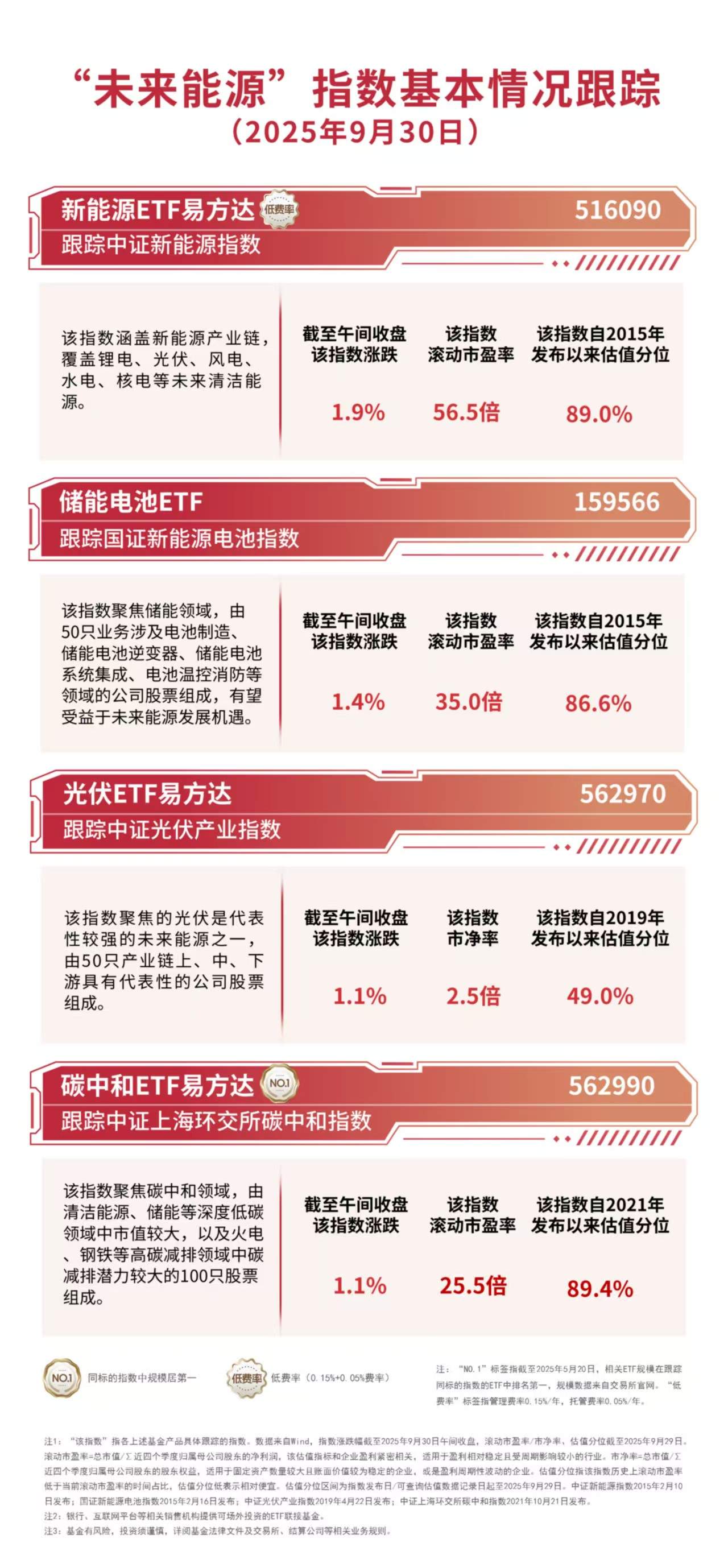
Group 1 - The E Fund New Energy ETF tracks the China Securities New Energy Index, which covers the entire new energy industry chain, including lithium batteries, photovoltaics, wind power, hydropower, and nuclear power [1] - As of the midday close, the index increased by 1.9% with a rolling market rate of 56.5 times, and it has an estimated value of 89.09 since its inception [1] - The Storage Battery ETF tracks the National Securities New Energy Battery Index, focusing on the energy storage sector, consisting of 50 companies involved in battery manufacturing, energy storage inverters, and system integration [1] - The index for the Storage Battery ETF rose by 1.4% with a rolling market rate of 35.0 times, and it has an estimated increase of 86.6% since its inception, indicating potential benefits from future energy development opportunities [1]
利和兴股价跌5.11%,鹏华基金旗下1只基金位居十大流通股东,持有266.62万股浮亏损失418.6万元
Xin Lang Cai Jing· 2025-09-30 05:35
Group 1 - The core point of the news is that Lihexing's stock price dropped by 5.11% to 29.18 CNY per share, with a trading volume of 1.704 billion CNY and a turnover rate of 29.03%, resulting in a total market capitalization of 6.821 billion CNY [1] - Lihexing, established on January 9, 2006, and listed on June 29, 2021, is based in Longhua District, Shenzhen, Guangdong Province, and specializes in the research, production, and sales of automation and intelligent equipment [1] - The company's main business revenue composition includes: intelligent manufacturing equipment (43.58%), electronic components (31.43%), specialized accessories (23.82%), and others (1.16%) [1] Group 2 - Among the top ten circulating shareholders of Lihexing, Penghua Fund's carbon neutrality theme mixed fund A (016530) reduced its holdings by 2.3173 million shares in the second quarter, now holding 2.6662 million shares, accounting for 1.41% of circulating shares [2] - The estimated floating loss for Penghua Fund's carbon neutrality theme mixed fund A today is approximately 4.186 million CNY [2] - The fund, established on May 5, 2023, has a latest scale of 2.08 billion CNY, with a year-to-date return of 112.74% and a one-year return of 185.13%, ranking 30th out of 8167 and 16th out of 8010 in its category, respectively [2]
驱动绿色能源与智能制造变革
Qi Lu Wan Bao· 2025-09-30 04:00
Core Viewpoint - Yantai Zhenghai Magnetic Materials Co., Ltd. plays a dual role as a "converter" and "innovation engine" in China's rare earth permanent magnet industry chain, driving innovation and transformation across multiple downstream sectors [1][2]. Group 1: Company Role in Industry - The company serves as a "core pillar" in the midstream manufacturing of the industry chain, converting strategic rare earth resources into high-performance neodymium-iron-boron permanent magnet materials, ensuring stable and efficient application of national strategic resources in modern industry and green economy [1]. - In 2024, the company was recognized by the Ministry of Industry and Information Technology as the "National Manufacturing Champion" for neodymium-iron-boron permanent magnets in the new energy vehicle sector [1]. Group 2: Technological Innovation - The company is a leader in technological innovation, having established an independent intellectual property system and developed three core technologies: "oxygen-free process," "fine crystal process," and "grain boundary diffusion technology," which significantly reduce the use of heavy rare earths and enhance overall product performance [2]. Group 3: Future Development Opportunities - Shandong province, as an industrial and economic powerhouse, has significant advantages for developing rare earth functional materials, including a major light rare earth resource base, strong downstream market demand in sectors like home appliance manufacturing and automotive industry, and favorable policy windows from the national "carbon peak and carbon neutrality" strategy [2]. - The company aims to seize these opportunities and continue driving innovation to support the green and intelligent transformation of manufacturing in Shandong province and across the nation [2].

行业聚焦:全球双离合变速箱油市场头部企业份额调研(附Top10 厂商名单)
QYResearch· 2025-09-30 03:34
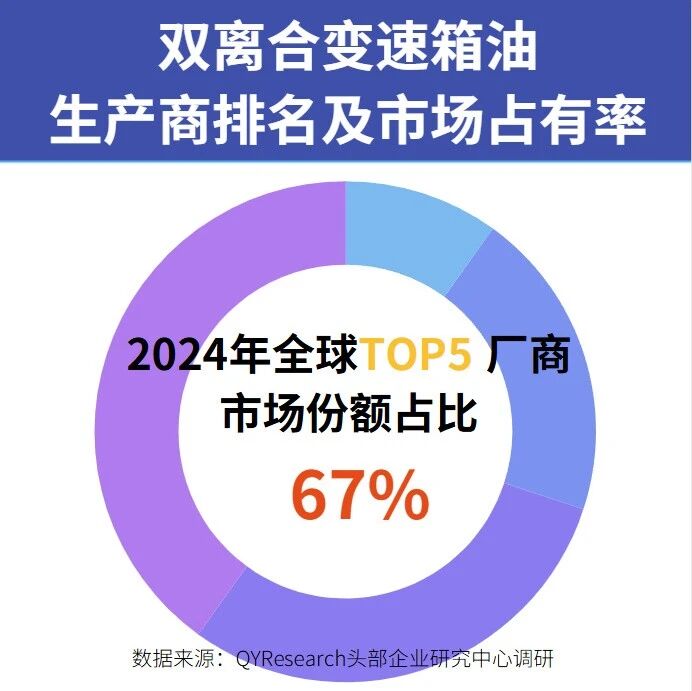
Core Viewpoint - The article discusses the growing demand for dual-clutch transmission fluid (DCTF) driven by the increasing penetration of dual-clutch transmissions in vehicles, alongside stringent fuel economy and carbon emission regulations globally [2][9]. Global Trends and Driving Factors - The market for dual-clutch transmission fluid is expanding due to the superior thermal management capabilities of dual-clutch transmissions, which enhances their market penetration [2]. - Stringent global fuel economy and carbon emission regulations are pushing for high-performance, low-viscosity DCTF products, leading to technological advancements and market growth [2]. - The global market for dual-clutch transmission fluid is projected to reach USD 703 million by 2031, with a compound annual growth rate (CAGR) of 3.2% in the coming years [2]. Competitive Landscape - The dual-clutch transmission fluid market is highly concentrated, dominated by major players such as ExxonMobil, Shell, and TotalEnergies, which hold approximately 67% of the market share [6][9]. - The leading companies leverage strong R&D capabilities and established relationships with major automotive manufacturers, creating significant technical barriers to entry for new competitors [2][9]. Product Segmentation - Wet dual-clutch transmission fluid is the dominant product type, accounting for about 70% of the market share [8][9]. - The market is segmented into various applications, including passenger vehicles and commercial vehicles [13]. Opportunities and Challenges - The rapid growth of hybrid vehicles, which often utilize dual-clutch technology, presents a significant opportunity for the dual-clutch transmission fluid market [11]. - Challenges include the impact of electric vehicles on traditional transmission markets, which may limit long-term demand growth [10]. - High-quality requirements for DCT fluids lead to substantial R&D and certification costs, posing barriers for new entrants [10]. Industry Development Insights - The increasing awareness of vehicle maintenance and the growing automotive ownership in emerging markets like Asia-Pacific are expected to drive stable growth in the aftermarket for dual-clutch transmission fluid [11].
可持续航空燃料行业突围之路在何方?
Zhong Guo Hua Gong Bao· 2025-09-30 03:23
Core Insights - The sustainable aviation fuel (SAF) industry is experiencing significant growth opportunities due to the global carbon neutrality trend, despite facing challenges such as high costs, limited raw material supply, and the need for improved standards [2][3]. Industry Developments - The establishment of the China Sustainable Aviation Fuel Industry Alliance and the launch of the first SAF industry-specific policy in Chengdu highlight the growing support for SAF development [2]. - Recent projects, such as the SAF raw material production and biomass energy research base in Chengdu and the full production of the Anhui Yisheng biodiesel and SAF project, indicate a proactive approach to expanding SAF capabilities [2]. Market Potential - SAF can reduce carbon dioxide emissions by 69% to 90% compared to traditional fuels, making it a viable path for the aviation industry's decarbonization [3]. - The demand for SAF in China is projected to reach 1.3 to 1.5 million tons by 2030, accounting for 2% to 3% of aviation fuel demand [4]. Challenges - The high cost of SAF, which is 2 to 7 times that of fossil-based jet fuel, remains the biggest challenge for the industry [5]. - The current production cost of SAF using HEFA technology ranges from 15,000 to 31,000 yuan per ton, significantly higher than traditional jet fuel prices [5]. - The collection rate of waste oils is below 50%, leading to potential raw material supply issues, with only 35,000 tons of SAF capacity currently built compared to 3.28 million tons planned [5]. Strategic Recommendations - Strengthening policy guidance and support at the national level is essential, including the establishment of a sustainable standard certification system and a clear roadmap for carbon reduction in the aviation sector [7]. - Enhancing raw material collection and management systems for waste oils and agricultural residues is crucial for ensuring a stable supply [7]. - Increasing investment in core SAF technology research and promoting collaboration between research institutions and enterprises can improve production efficiency and reduce costs [7][8]. Collaborative Efforts - The SAF industry should focus on establishing a stable supply chain through collaboration among raw material suppliers, producers, and end-users [8]. - The geographical layout of SAF production should consider proximity to raw material sources and consumption areas, particularly in regions like East China and Sichuan-Chongqing [8].
欧盟要玩赖!得到特朗普的承诺之后,决定对中国钢企征收50%关税
Sou Hu Cai Jing· 2025-09-30 02:50
Group 1 - The European Union (EU) plans to impose tariffs ranging from 25% to 50% on various Chinese steel and related products in the coming weeks, indicating a targeted approach towards China [3][5] - The EU aims to link public procurement contracts to the purchase of European products and implement quotas to encourage the prioritization of European electric vehicles [3][5] - The EU's recent trade agreement with the Trump administration has led to significant concessions, including the cancellation of retaliatory tariffs on certain U.S. industrial goods and a commitment to purchase U.S. energy and chips [5][7] Group 2 - The EU's steel imports have increased significantly, with imports accounting for one-fourth of total sales, and the share from China has also risen, leading to challenges for European steel companies [7][9] - European steel companies are struggling with declining profit margins and high costs associated with decarbonization efforts, making it difficult for them to compete without protective tariffs [7][9] - The EU's focus on imposing tariffs on Chinese steel exports may inadvertently harm its own downstream industries, particularly the automotive sector, which relies heavily on steel [12][14] Group 3 - The EU's proposed tariffs may not effectively address the underlying issues, as the majority of Chinese steel exports to Europe consist of lower-end products, while European firms excel in high-end steel production [9][10] - The EU's approach to tariffs is seen as a protectionist measure, with accusations of violating World Trade Organization (WTO) rules by using "substitute country prices" for tariff calculations [14][16] - The Chinese Steel Industry Association has indicated that it may pursue legal action through the WTO if the EU implements the new tariffs, and could retaliate against EU products such as wine and automobiles [16][18] Group 4 - The EU is encouraged to focus on collaboration with China to enhance technology and optimize energy structures rather than resorting to trade protectionism, which could further marginalize Europe in the global supply chain [18]
青山纸业跌2.11%,成交额3.41亿元,主力资金净流出846.20万元
Xin Lang Cai Jing· 2025-09-30 02:10
Group 1 - The core viewpoint of the news is that Qingshan Paper Industry's stock has experienced fluctuations, with a recent decline of 2.11% and a significant increase of 46% year-to-date [1] - As of September 30, Qingshan Paper's stock price is 3.72 CNY per share, with a total market capitalization of 8.336 billion CNY [1] - The company has seen a net outflow of main funds amounting to 8.462 million CNY, with large orders showing a buy of 48.112 million CNY and a sell of 53.276 million CNY [1] Group 2 - Qingshan Paper Industry, established on April 1, 1993, primarily engages in the production and sales of paper products, with paper accounting for 50.77% of its main business revenue [2] - The company operates in the light industry manufacturing sector, specifically in paper-making and special paper [2] - As of June 30, the number of shareholders is 97,200, a decrease of 4.29% from the previous period [2] Group 3 - Qingshan Paper has distributed a total of 321 million CNY in dividends since its A-share listing, with 175 million CNY distributed in the last three years [3] - As of June 30, 2025, Hong Kong Central Clearing Limited is the fifth-largest circulating shareholder, increasing its holdings by 10.81 million shares [3]

德业股份涨2.09%,成交额3.41亿元,主力资金净流出575.28万元
Xin Lang Cai Jing· 2025-09-30 02:07
Core Viewpoint - DeYe Co., Ltd. has shown significant stock price growth and strong financial performance in recent months, indicating a positive outlook for the company in the renewable energy sector, particularly in inverter and energy storage solutions [1][2]. Financial Performance - As of June 30, 2025, DeYe Co., Ltd. achieved a revenue of 5.535 billion yuan, representing a year-on-year growth of 16.58% [2]. - The net profit attributable to shareholders for the same period was 1.522 billion yuan, reflecting a year-on-year increase of 23.18% [2]. - The company has distributed a total of 4.238 billion yuan in dividends since its A-share listing, with 3.897 billion yuan distributed over the past three years [3]. Stock Market Activity - On September 30, 2023, DeYe Co., Ltd.'s stock price increased by 2.09%, reaching 77.08 yuan per share, with a trading volume of 341 million yuan and a turnover rate of 0.50% [1]. - The company's stock has risen by 31.28% year-to-date, with notable increases of 8.89% over the last five trading days, 22.00% over the last 20 days, and 40.30% over the last 60 days [1]. - The company has appeared on the "龙虎榜" (a list of stocks with significant trading activity) once this year, with the most recent appearance on September 5 [1]. Shareholder Composition - As of June 30, 2025, DeYe Co., Ltd. had 52,300 shareholders, an increase of 76.28% from the previous period, with an average of 17,284 circulating shares per shareholder, down by 20.57% [2]. - Major shareholders include Hong Kong Central Clearing Limited, which holds 32.2913 million shares, an increase of 9.4808 million shares from the previous period [3].
