人民币国际化

Search documents
中行在泰举行人民币国际化路演活动
人民网-国际频道 原创稿· 2025-08-27 01:52
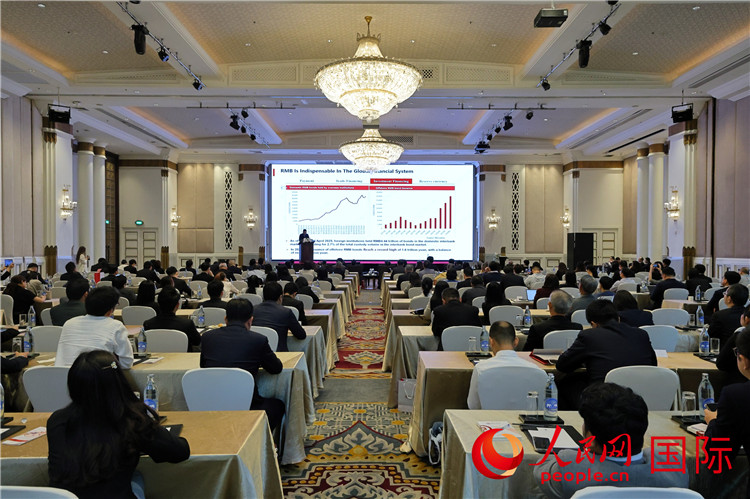
据介绍,作为首家入泰中资金融机构,中行近年来通过深化金融服务、加强产品创新、优化服务渠 道,助力中泰客户融入双边发展,并参与泰国央行数字货币桥项目,推动两国金融基础设施建设。未来, 中行将加快人民币在贸易投资、支付结算、保值增值等领域的场景建设,为中泰经贸发展贡献新力量。 活动现场。人民网记者 白元琪摄 人民网曼谷8月26日电 (记者白元琪)8月25日,中国银行在泰国曼谷举办人民币国际化路演活动,旨 在围绕两国央行本币互换协议与本币交易合作框架,进一步扩大人民币在泰推广使用。来自中国驻泰国大 使馆、泰国央行、泰国证交所以及中泰企业的200余名代表参加活动。 中国驻泰国大使馆公参张杰在致辞中表示,中泰两国互惠互利的合作关系是人民币业务在泰发展的基 础,中国银行在支持中泰企业投资及支付结算便利方面发挥了积极的促进作用。 活动期间,中行总行金融机构部副总经理于晓明围绕人民币国际化市场机遇作主题发言。中行总行多 部门及中银香港、中银基金专家,还分别就人民币国际化与中国外汇市场走势、中国经济与权益市场展望 等议题深入解读。中行泰国子行行长刘全雷分享了助力人民币在泰发展的实践经验。 ...


21社论丨美元体系不确定性加剧,人民币国际化或迎新机遇
21世纪经济报道· 2025-08-26 23:57
Group 1 - The core viewpoint of the article highlights the potential for the Federal Reserve to lower interest rates in the coming months despite ongoing inflation risks, leading to market volatility and uncertainty regarding future monetary policy [1][2] - The labor market is perceived as deceptive, with a stable unemployment rate masking a slowdown in labor participation and job demand, creating a "peculiar balance" [1] - Concerns about stagflation arise, characterized by stagnant economic growth and high inflation, with fears that the current administration's policies may exacerbate cost and price pressures [2] Group 2 - The potential loss of the Federal Reserve's independence raises concerns about aggressive interest rate cuts, influenced by political pressures from the current administration [2] - The onset of a rate-cutting cycle by the Federal Reserve may provide an opportunity for emerging markets, including China, to enhance monetary policy flexibility and lower financing costs [3] - The uncertainty surrounding the U.S. financial landscape could lead global capital to seek alternative safe assets, presenting an opportunity for the internationalization of the Chinese yuan [3][4] Group 3 - China should prioritize the development of cross-border investment and financing functions for the yuan, expanding its capital flow channels to meet the demand for alternatives to U.S. dollar assets [4] - There is a need for the yuan to transition from a settlement currency to a pricing currency, enhancing its influence in commodity pricing [4] - Establishing a resilient yuan system with global significance is essential, along with the development of a global payment and clearing network to support the internationalization of the yuan [4]
21社论丨美元体系不确定性加剧,人民币国际化或迎新机遇
Sou Hu Cai Jing· 2025-08-26 22:52
Group 1 - Federal Reserve Chairman Powell hinted at potential interest rate cuts in the coming months despite ongoing inflation risks, causing short-term market volatility [1] - The U.S. labor market appears deceptively stable, with a slowdown in labor participation and job demand contributing to a "peculiar balance" [1] - Concerns about stagflation arise as the market fears a combination of weak economic growth and high inflation, reminiscent of past economic conditions [2] Group 2 - The potential loss of Federal Reserve independence raises concerns about aggressive rate cuts, influenced by political pressures from the Trump administration [2] - The current economic environment may provide a window of opportunity for China and other emerging markets, as U.S. rate cuts could lower financing costs and enhance economic activity [3] - The uncertainty surrounding the U.S. dollar system may prompt a shift towards the internationalization of the renminbi, as global capital seeks safer assets [3]
央行国债交易操作的国际经验与中国路径
Xin Hua Cai Jing· 2025-08-26 22:08
Core Viewpoint - The People's Bank of China (PBOC) is gradually incorporating government bond trading into its monetary policy toolkit to manage liquidity and support economic growth, reflecting a cautious approach compared to major developed economies [1][5][8]. Group 1: Central Bank Bond Trading Practices - Major developed economies, including the US, Japan, and the Eurozone, have utilized government bond trading extensively as a tool for liquidity adjustment and quantitative monetary policy since the 2008 financial crisis [2][3]. - The scale of government bonds held by central banks in these economies has significantly increased, with the Federal Reserve holding $5.77 trillion in US government bonds by June 2022, accounting for 64.7% of its total assets [2][3]. - The Bank of Japan's bond holdings reached approximately $5.3 trillion by the end of 2020, representing 76.5% of its total assets, indicating aggressive bond purchasing strategies [2][3]. Group 2: China's Central Bank Strategy - The PBOC's bond trading strategy is characterized by caution, having only engaged in limited short-term bond trading in specific circumstances over the past decades [5][6]. - As of May 2025, the PBOC held approximately 2.4 trillion yuan (about $338.3 billion) in government bonds, which is significantly lower than the holdings of central banks in developed countries [13][14]. - The PBOC's bond trading is designed to be flexible and responsive, allowing for small-scale, short-term operations to maintain liquidity without causing significant market disruptions [9][14]. Group 3: Future Directions and Policy Focus - The PBOC is expected to maintain a steady pace of increasing its government bond holdings, with a focus on balancing liquidity needs and market stability [16][18]. - There is a need for the PBOC to align its bond trading operations with fiscal policy expansion and the overall economic growth trajectory, ensuring that bond supply meets market demand [19][20]. - The central bank's bond trading operations will likely remain limited by the overall supply of government bonds and the fiscal constraints on debt expansion [15][19].
深圳金融史,一个波澜壮阔的中国金融改革奇迹
Ge Long Hui· 2025-08-26 13:20
Core Insights - Shenzhen has transformed from a financial desert in 1979 to one of China's three major financial centers by 2024, with a GDP exceeding 36.8 trillion yuan and a financial industry value-added of over 470 billion yuan [2][5]. Group 1: Initial Creation and Exploration (1979-1990) - Shenzhen was designated as a "testing ground" for financial reform in 1979, leading to significant innovations in China's financial history [6]. - The establishment of the first foreign bank branch in China, the Nanyang Commercial Bank in 1982, marked a pivotal moment in breaking monopolies [8]. - The founding of China Merchants Bank in 1987 and the listing of Shenzhen Development Bank on the stock exchange created early capital market legends [8]. - The issuance of China's first stock by the Bao'an Investment Company in 1983 initiated the exploration of shareholding reform [10]. Group 2: Growth and Development (1990-2004) - The establishment of the Shenzhen Stock Exchange on December 1, 1990, marked a significant leap in Shenzhen's financial landscape [11][12]. - By the end of 2004, the Shenzhen Stock Exchange had 536 listed companies with a total market capitalization of 1.1 trillion yuan, reflecting exponential growth [15]. - Shenzhen became a hub for venture capital, with the establishment of Shenzhen Innovation Investment Group in 1999, investing over 2 billion yuan by 2004 [16]. Group 3: Adjustment and Transformation (2004-2019) - The introduction of the SME Board in 2004 provided a dedicated financing platform for small and medium enterprises [19]. - The launch of the ChiNext board in 2009 focused on innovative and growth-oriented enterprises, significantly boosting the entrepreneurial spirit [21]. - By 2019, the ChiNext had grown to nearly 800 companies with a total market capitalization exceeding 6 trillion yuan [21]. Group 4: Elevation and Leadership (2019-Present) - Shenzhen's financial sector has advanced to a higher level under national strategies, with over 400 companies listed through the ChiNext registration system by 2025 [26]. - The establishment of the Qianhai Shenzhen-Hong Kong Modern Service Industry Cooperation Zone has positioned it as a financial innovation pilot zone [23]. - By 2024, the digital yuan pilot program had over 300 million merchants accepting it, with transaction amounts surpassing 600 billion yuan [27]. Group 5: Achievements and Strengths - As of the end of 2024, Shenzhen's financial institutions held deposits of 135.78 trillion yuan and loans of 94.83 trillion yuan [29]. - The Shenzhen Stock Exchange had 2,852 listed companies with a total market value of 33.04 trillion yuan, ranking it third globally in trading volume [31]. - Shenzhen's financial industry added value reached 471 billion yuan in 2024, accounting for approximately 12.8% of its GDP [31].




降至2.12%,全球外汇储备中,人民币跌至第六!那前五名是谁呢?
Sou Hu Cai Jing· 2025-08-26 13:19
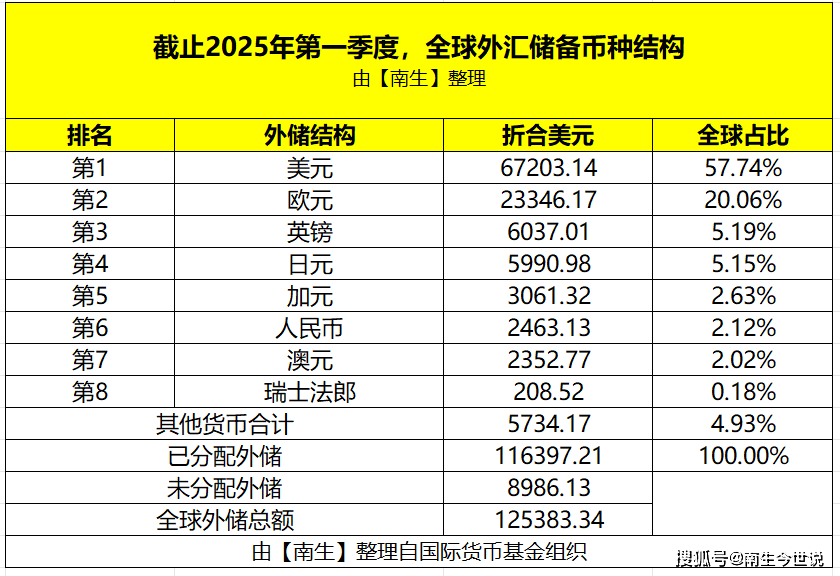
Core Viewpoint - The internationalization of the Renminbi (RMB) faces significant challenges, with its global reserve amount projected to decrease to 246.31 billion USD by the first quarter of 2025, representing only 2.12% of total global allocated foreign reserves [1][2][3]. Summary by Sections Current Status of RMB Internationalization - As of the first quarter of 2025, the RMB ranks sixth among global reserve currencies, with a total reserve of 246.31 billion USD, following the US dollar, euro, pound, yen, and Canadian dollar [2][3]. - The RMB's share in global allocated foreign reserves is significantly lower than that of the leading currencies, indicating a need for improvement in its international status [3]. Challenges to RMB Internationalization - The depth and breadth of China's financial markets are insufficient compared to major reserve currency issuers, limiting foreign investors' willingness to hold RMB assets [4]. - The RMB lacks sufficient influence in international payment and settlement systems, relying heavily on the SWIFT system, while its own CIPS system requires further development [4]. - Policy coordination and institutional guarantees are inadequate, with China's financial market lacking the maturity and transparency found in other major economies [4][6]. Future Strategies for RMB Internationalization - Deepening financial market reforms is essential, including enhancing the transparency and legal framework of RMB financial assets and expanding access for foreign investors [7][9]. - Improving the infrastructure for cross-border RMB usage, such as accelerating the development of the CIPS system and establishing local clearing arrangements with countries along the Belt and Road Initiative [7][9]. - Cultivating a RMB-denominated asset system by encouraging domestic companies to issue RMB-denominated bonds abroad and promoting RMB settlement in commodity trading [9]. - Strengthening international monetary cooperation, particularly with emerging economies, to enhance bilateral currency swap agreements and regional currency coordination [9][10]. - Gradually advancing capital account convertibility while ensuring macro-prudential management to prevent systemic financial risks [10][12]. Conclusion - The internationalization of the RMB is a complex process that requires a proactive approach, including open financial markets, improved infrastructure, and innovative financial products, to establish the RMB as a necessary global currency [12].
深圳金融史,一个波澜壮阔的中国金融改革奇迹
格隆汇APP· 2025-08-26 12:30
Core Viewpoint - Shenzhen has transformed from a financial desert in 1979 to one of China's three major financial centers by 2024, showcasing a remarkable journey of financial reform and innovation [4][5][8]. Group 1: Initial Creation and Exploration (1979-1990) - In 1979, Shenzhen, then known as Bao'an County, had a deposit balance of only 101 million yuan and a loan balance of 75 million yuan, with very few financial institutions [3][4]. - The establishment of the first foreign bank branch in China, the Nanyang Commercial Bank Shenzhen branch, occurred in 1982 [12]. - The founding of China’s first national bank, China Merchants Bank, in 1987 marked a significant milestone, alongside the listing of Shenzhen Development Bank [13]. - The first stock in New China was issued in 1983, raising 13 million yuan, which initiated the exploration of shareholding reform [16]. Group 2: Leap and Growth (1990-2004) - The establishment of the Shenzhen Stock Exchange on December 1, 1990, marked a historic leap for Shenzhen's financial sector [20]. - By the end of 2004, the Shenzhen Stock Exchange had 536 listed companies with a total market capitalization of 1.1 trillion yuan [24]. - Shenzhen became a hub for venture capital, with the establishment of Shenzhen Innovation Investment Group in 1999, which invested over 2 billion yuan by 2004 [26]. Group 3: Adjustment and Transformation (2004-2019) - The introduction of the SME Board in 2004 provided a dedicated financing platform for small and medium enterprises [31]. - The launch of the ChiNext board in 2009 focused on innovative and growth-oriented enterprises, significantly enhancing the connection between technology innovation and capital markets [33]. - By 2019, the number of companies on the ChiNext had grown to nearly 800, with a total market capitalization exceeding 6 trillion yuan [34]. Group 4: Elevation and Leadership (2019-Present) - Shenzhen's financial sector has been elevated under new national strategies, with over 400 companies listed on the ChiNext through the registration system by 2025 [40]. - The total number of companies on the Shenzhen main board is expected to approach 1,600 by July 2025, with a market capitalization nearing 40 trillion yuan [42]. - The implementation of the "Cross-Border Wealth Management Connect" in 2024 has led to significant participation from banks and increased cross-border transactions [44]. Group 5: Achievements and Strengths - By the end of 2024, Shenzhen's financial institutions had a total deposit balance of 13.5778 trillion yuan and a loan balance of 9.4830 trillion yuan [48]. - The Shenzhen Stock Exchange had 2,852 listed companies with a total market value of 33.04 trillion yuan, ranking it among the top globally [50]. - The insurance sector reported a premium income of 195.821 billion yuan in 2024, with total assets reaching 7.3 trillion yuan [51]. - Shenzhen's venture capital and wealth management sectors are among the strongest in China, with asset management exceeding 29 trillion yuan by 2024 [61].

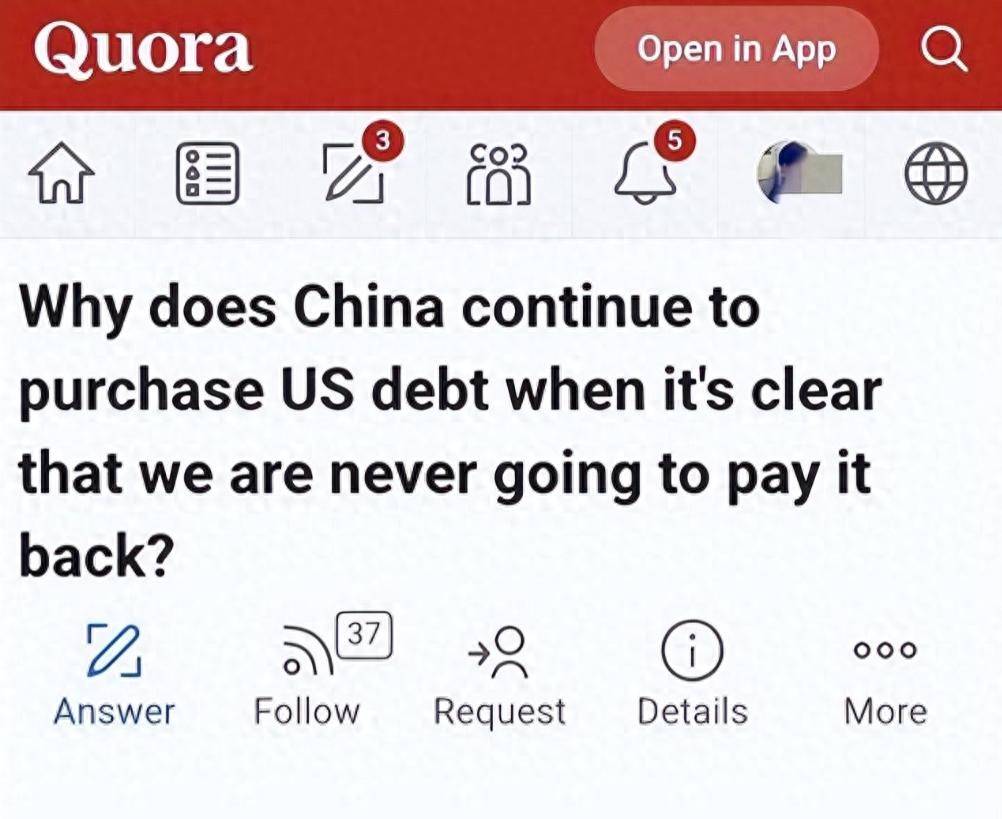
美论坛:为什么中国在明确我们不会偿还的情况下还要购买美债?
Sou Hu Cai Jing· 2025-08-26 11:31
Core Viewpoint - The article discusses the evolving dynamics of China's holdings of U.S. Treasury bonds, highlighting the shift from passive accumulation to a more strategic and diversified approach in response to changing global economic conditions and U.S. policy actions [1][12][27]. Group 1: Historical Context of China's U.S. Treasury Holdings - China's entry into the World Trade Organization in December 2001 marked the beginning of its rapid accumulation of foreign exchange reserves, primarily through exports to the U.S. [3] - By 2010, China's exports to the U.S. surged to $283.3 billion, up from $69.9 billion in 2002, reflecting an annual growth rate exceeding 20% [3] - The influx of U.S. dollars led to a significant increase in China's foreign exchange reserves, surpassing $4 trillion by 2013 [3][8] Group 2: The Appeal of U.S. Treasuries - During the 2000s, U.S. Treasuries were seen as the only viable safe asset for China, given the limited options in the global market [8][10] - The U.S. economy maintained a dominant position, with GDP accounting for over 25% of the global total and the dollar representing over 60% of global trade settlements [8] - The liquidity and government backing of U.S. Treasuries made them an attractive option for China, allowing for quick conversion to dollars when needed [9][10] Group 3: Changing Perceptions and Strategies - The perception of U.S. Treasuries as a "risk-free asset" has been challenged, particularly after the U.S. froze Russian assets in 2022, raising concerns about the political implications of holding U.S. debt [12][14] - As a result, global central banks began to diversify their reserves, with countries like India and Brazil reducing their dollar holdings [14][15] - China's response has been to gradually reduce its U.S. Treasury holdings by over $280 billion from 2022 to 2025, while maintaining market stability [17][19] Group 4: Diversification of Reserves - China is adopting a strategy of "gradual reduction and multi-faceted replacement," focusing on diversifying its foreign exchange reserves [19] - The share of gold in China's reserves increased from 3.1% in 2020 to 4.8% in 2025, as gold is viewed as a safe asset free from credit risk [19][21] - The internationalization of the renminbi is seen as a long-term alternative, with significant increases in renminbi settlements in trade with Russia and ASEAN countries [22][24] Group 5: Implications for Global Financial Order - The shift in China's strategy reflects a broader trend of diminishing U.S. dollar hegemony, as the U.S. actions have eroded the core appeal of U.S. Treasuries [27] - China's diversification efforts signal a transition from merely adapting to the dollar system to actively shaping a new global financial order [27]
推动上证综指近来屡创新高的资金面因素探究|资本市场
清华金融评论· 2025-08-26 10:30
Core Viewpoint - The article discusses the six core factors influencing stock market trends, focusing specifically on the capital market, which includes accelerated entry of insurance funds, a shift of household savings towards the stock market, active but controlled leverage funds, and a clear trend of foreign capital inflow [2][4]. Group 1: Capital Market Factors - Insurance funds are accelerating their entry into the market, with equity investment scale surpassing 4.7 trillion yuan as of August 22, 2025, an increase of 622.3 billion yuan from the end of last year. The current allocation ratio is only 20.1%, significantly below the regulatory cap of 50% [5]. - Household savings are beginning to shift towards the stock market, with a reduction of 1.1 trillion yuan in household deposits in July 2025, while non-bank deposits increased by 2.14 trillion yuan. This indicates a signal of fund activation [6]. - Leverage funds are active but with manageable risks, as the margin trading balance reached 2.048 trillion yuan as of August 14, 2025, the highest since July 2015, but with a lower leverage ratio of 80% compared to 50% in 2015 [6]. Group 2: Foreign Capital Inflow - There is a clear trend of foreign capital inflow, with northbound trading daily average turnover exceeding 200 billion yuan in July, a 36% increase month-on-month, and a net inflow of 2.7 billion USD for the month [7]. - Global allocation adjustments are occurring, as indicated by Federal Reserve Chair Powell's remarks on potential interest rate cuts, which may weaken the dollar and attract foreign investment into Chinese assets [7]. Group 3: Long-term Market Implications - If the A-share market can establish a "long bull slow bull" trend, it will significantly impact the Chinese economy and society by activating consumer momentum and enhancing economic recovery through wealth effects [9]. - A stable market environment will empower technological innovation and industrial upgrades by broadening financing channels for tech companies, supporting R&D investments [10]. - It will accelerate the internationalization of the renminbi, creating a closed loop of "trade-investment" in renminbi, making A-shares a core asset for foreign institutions [10].

通过俄罗斯向中方示好,印度这步棋下的妙,要干就对美国干票大的
Sou Hu Cai Jing· 2025-08-26 04:23
Group 1 - The article discusses the escalating trade conflict between the United States and India, initiated by President Trump's decision to impose a 50% tariff on Indian goods, marking one of the highest tariffs in global trade history [1] - In response, Indian Prime Minister Modi froze $3.6 billion in U.S. military purchases and imposed a 150% punitive tariff on bourbon whiskey from Kentucky, targeting Trump's voter base [1] - The Indian economy is significantly impacted, with 70% of products exported to the U.S. facing the new tariffs, leading to increased costs for Indian manufacturers and exporters [4] Group 2 - India is shifting its economic strategy by initiating oil transactions with Russia settled in RMB, importing 1.8 million barrels of Russian oil daily, which is a direct response to U.S. tariffs [3] - The Indian government is also seeking closer ties with China, as evidenced by the resumption of direct flights and easing restrictions on Chinese investments, indicating a strategic pivot towards China amidst U.S. pressures [4][6] Group 3 - The cooperation between India, Russia, and China is becoming a strategic reference for India, with bilateral trade between China and Russia surpassing $250 billion and a significant increase in the use of local currencies for trade [8] - India's collaboration with Russia is seen as a move to promote the internationalization of the RMB, indirectly challenging the dominance of the U.S. dollar in global trade [11] Group 4 - The article highlights a broader trend among developing countries to collectively reshape trade orders in response to unilateralism, with India positioning itself as a key player in this new dynamic [13]