
AI技术

Search documents
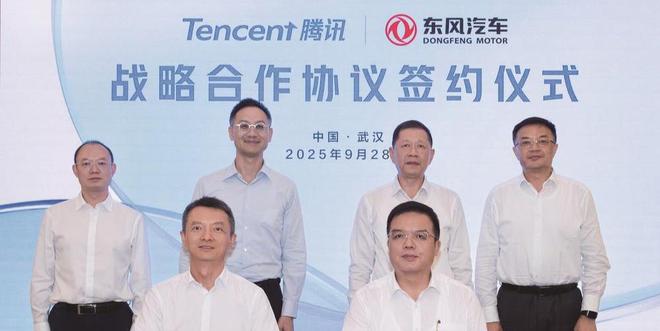
东风汽车与腾讯达成战略合作,聚焦智能驾驶与智能座舱
Jing Ji Guan Cha Wang· 2025-09-29 07:35
Core Insights - Dongfeng Motor Group Co., Ltd. and Tencent Computer Systems Co., Ltd. signed a strategic cooperation agreement to enhance collaboration in smart driving and intelligent cockpit innovation [2] Group 1: Strategic Partnership - The signing ceremony took place in Wuhan, attended by key representatives from both companies, including Dongfeng's Chairman Yang Qing and Tencent's Senior Executive Vice President Tang Daosheng [2] - The agreement aims to leverage Dongfeng's expertise in research, production, and marketing alongside Tencent's technological strengths in intelligence and digitalization [2] Group 2: Focus Areas - The partnership will focus on the integration of AI technology and the digital transformation of enterprises [2] - Both companies will work together to advance innovations in smart driving and intelligent cockpit systems [2]



江西博微:以AI技术创新为核心驱动 推进电力系统持续升级
Zheng Quan Shi Bao Wang· 2025-09-29 06:40
Group 1 - The forum "Exploring New Paths in Electric Power Construction" focused on innovation in power engineering management, cost optimization, and the overall control of engineering costs in the context of new power systems [1] - The event was co-hosted by several organizations, including Jiangxi Bowei New Technology Co., Ltd., highlighting collaboration within the industry [1] - The forum aimed to inject intellectual momentum into the high-quality development of the industry through in-depth discussions and experience sharing [1] Group 2 - Jiangxi Bowei proposed a development plan centered on "leading without relying on super-large computing power" for AI expert model transformation, targeting the downstream ToB application layer [2] - The company focuses on key technologies such as data engineering, CAD drawing recognition, and expert models to empower the engineering construction sector [2] - Bowei aims to contribute to the construction of new power systems and the achievement of dual carbon goals through AI technology innovation [2] Group 3 - Jiangxi Bowei is a wholly-owned subsidiary of the listed company Ligon Energy Technology (002322) and has established a development pattern focusing on five major business areas, including digital power and digital construction [2] - The company has maintained its status as a high-tech enterprise and has received various national recognitions, including AAA credit rating and being named a leading enterprise in the power industry information technology [3] - Bowei's engineering cost software ranks first in national sales within the power industry, indicating its leadership in the sector [2][3]

蒙玺投资李骧:发力“全频段Alpha”,量化行业迎来“精耕细作”时代
Zhong Guo Ji Jin Bao· 2025-09-29 06:33
Core Insights - The essence of quantitative investment lies in the accumulation and iteration of talent and technology, aiming for engineering success through meticulous refinement of each module [1] - The company positions itself as a performance-driven and technology-focused quantitative investment firm, reflecting the "fine-tuned development" of China's quantitative industry [1][2] - The future strategy includes continuous iteration of strategies and technologies to create a "strictly controlled style of full-spectrum Alpha," aiming to become a robust quantitative investment institution with an international perspective [1][5] Company Development - Founded by Li Xiang in 2016, the company has grown from focusing on low-latency trading to managing over 15 billion yuan in assets, emphasizing a long-term approach [2] - The company has established a centralized research team structure to enhance collaboration and avoid redundant research, akin to an industrial production line [3] - The adoption of AI and non-linear models since 2020 has significantly improved predictive capabilities, with the establishment of an AI Lab in 2025 [3][4] Investment Strategy - The company is focusing on "strictly controlled style of full-spectrum Alpha," which encompasses multiple markets, products, and time frames to capture diverse sources of excess returns [5][6] - The strategy aims to reduce style exposure and volatility, with a diverse product line including market-neutral, index-enhanced, and quantitative stock selection strategies [6] - The company is also expanding its overseas business, indicating a strategic focus on international markets [7] Industry Context - The quantitative investment sector in China is experiencing a resurgence, with total assets under management surpassing 1 trillion yuan, driven by increased trading activity [8] - The industry has evolved through different phases, with a shift towards purer Alpha strategies following a period of adjustment [8][9] - The competitive landscape necessitates a focus on "fine-tuned operations" to iterate strategies and enhance performance, as domestic quantitative investment still lags behind international standards [9]
合合信息拟于港交所主板上市,旗下启信慧眼赋能金融机构轻松应对洗钱风险
Quan Jing Wang· 2025-09-29 06:01
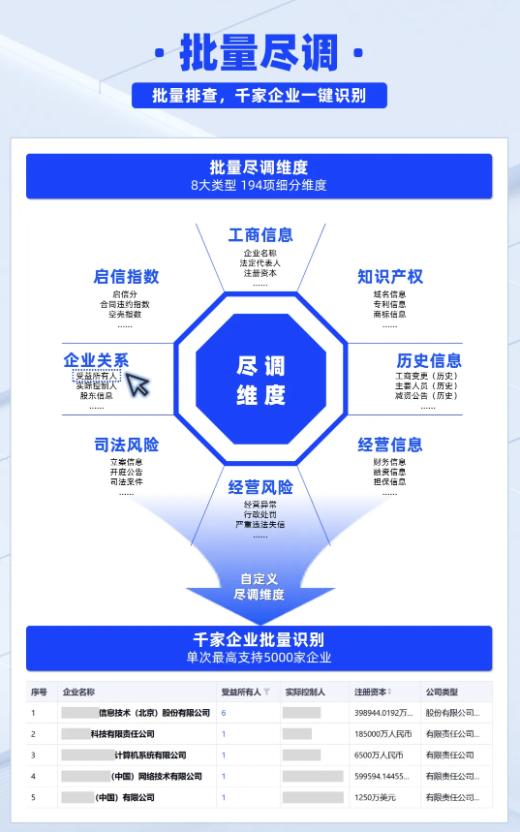
Core Viewpoint - The article discusses the launch of a one-stop solution for "Beneficial Owner" by Qixin Huayan, aimed at enhancing anti-money laundering (AML) compliance for financial institutions amidst evolving regulatory requirements [1][6]. Group 1: Solution Features - Qixin Huayan's solution automates the identification, reporting, and monitoring of beneficial owners, aligning with the new regulations under the "Beneficial Owner Information Management Measures" [1]. - The system utilizes vast commercial data and AI technology to deeply explore corporate relationships, providing a comprehensive list of beneficial owners along with key information such as ownership type and shareholding ratio [1]. - The "Batch Due Diligence" feature allows for the simultaneous screening of up to 5,000 companies, significantly reducing the time required for due diligence from weeks to minutes [1]. Group 2: Compliance Management - The "Due Diligence Report" feature aggregates results from various regulatory documents, generating standardized reports that enhance compliance management and reduce errors due to personal experience differences [3]. - The reports assist financial institutions in meeting internal documentation needs and improve the accuracy of regulatory submissions [3]. Group 3: Risk Monitoring - The "Risk Warning" module monitors nearly 200 types of risk events related to beneficial owners, allowing financial institutions to set "beneficial owner changes" as high-risk events for real-time alerts [3][4]. - The system can notify institutions of changes in beneficial ownership, enabling them to conduct independent verifications and assess the stability of control [4]. Group 4: Market Position and Future Plans - Qixin Huayan's solution represents a technological innovation that reduces costs and increases efficiency in AML efforts, providing systematic support for financial institutions facing regulatory challenges [6]. - The parent company, Hehe Information, has submitted an application for a mainboard listing on the Hong Kong Stock Exchange, aiming to leverage capital market resources to strengthen its technological advantages in commercial big data and intelligent decision-making [6].
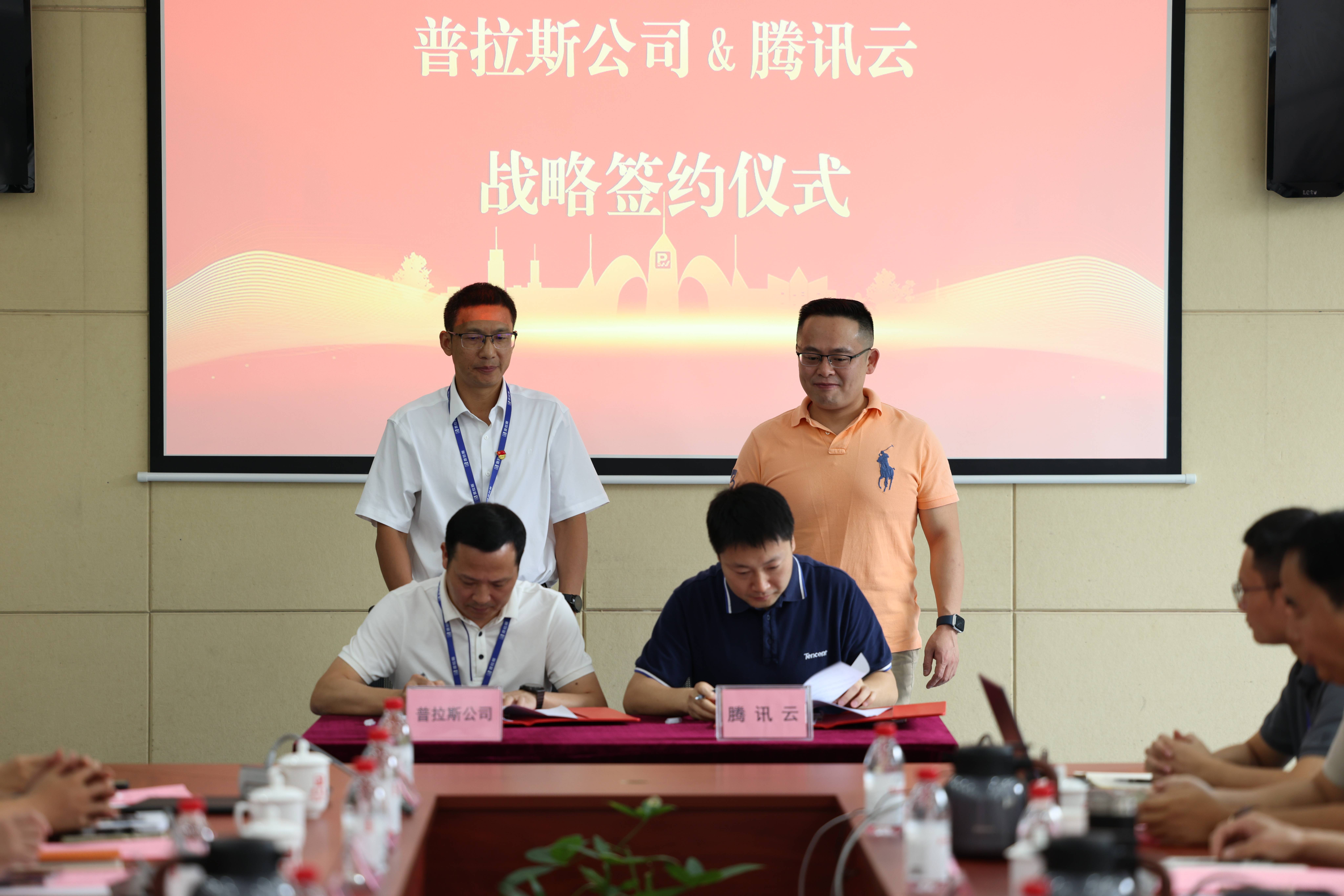
普拉斯与腾讯云深化战略合作,联合打造“AI+智慧包装”行业新标杆
Sou Hu Cai Jing· 2025-09-29 04:41
Core Viewpoint - Sichuan Yibin Plus Packaging Materials Co., Ltd. (referred to as "Plus") has announced a deepened strategic cooperation with Tencent Cloud to leverage Plus's expertise in smart packaging and Tencent's leading AI technology, aiming to establish a new benchmark in the "AI + Smart Packaging" industry [1][6]. Group 1: Company Overview - Plus is a wholly-owned subsidiary of Yibin Wuliangye Co., Ltd. and is a leader in the smart packaging industry, focusing on six core markets: alcoholic beverages, condiments, dairy products, healthcare products, daily chemicals, and home decoration [6]. - The company integrates packaging design, research and development, production, and anti-counterfeiting, covering areas such as smart packaging, smart production, high-end anti-counterfeiting, full-chain traceability, channel management, and integrated marketing [6]. Group 2: Previous Collaborations - Since 2019, Plus has collaborated with Tencent on various aspects including cloud infrastructure, code platform construction, and business security, establishing a digital tracking system that covers the entire product lifecycle for Wuliangye [6]. Group 3: AI Integration - Plus has proposed an "AI + Strategy," integrating AI into core business areas such as manufacturing, research and development, marketing, logistics, and customer service, aiming to enhance quality and efficiency across the packaging industry [6][9]. - Quality inspection is identified as a core application scenario for Plus's AI transformation, utilizing Tencent's AI development capabilities to create deep learning models for defect detection, achieving millisecond-level precision [7]. Group 4: Impact of AI Quality Inspection - The implementation of AI quality inspection has significantly improved detection efficiency and accuracy, reducing the loss rate of major defects to 0% and general defects to 0.003% [7]. - The application of AI quality inspection has led to a 75% reduction in the number of inspectors needed per shift, allowing human resources to be redirected to more creative tasks [7]. Group 5: Future Directions - The ongoing collaboration will focus on AI cloud infrastructure, AI quality inspection models, and AI agent applications, reinforcing the technological partnership between Plus and Tencent [9]. - The partnership aims to drive the intelligent transformation of the entire packaging industry, with Tencent Cloud continuing to support the digital transformation needs of the manufacturing sector [9].
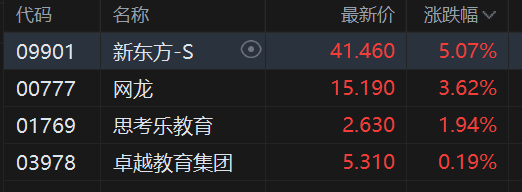
港股异动丨在线教育股普涨 网龙一度飙涨超12%刷新阶段新高 思考乐教育涨2%
Ge Long Hui A P P· 2025-09-29 03:57
Group 1 - The online education sector in Hong Kong has seen a general increase, with stocks like NetDragon rising over 12% to reach a new high, New Oriental up over 5%, and Thinking乐 Education increasing by 2% [1] - Recent positive developments in online education are attributed to policy support, technological empowerment, and industry regulation, including the significant impact of the "14th Five-Year Plan" for educational digitalization [1] - The "County High School Revitalization Action Plan" is promoting the allocation of digital resources to county-level schools, providing a long-term and stable growth outlook for the industry [1] Group 2 - Daiwa has raised the target price for New Oriental to HKD 49, anticipating increased shareholder returns and noting improvements in K-9 student retention rates for the autumn term [1] - NetDragon is recognized for its stable cash-generating business and its active use of AI technology to empower its second growth curve in education, with current market focus on its AI effectiveness and overseas expansion [1] - Thinking乐 Education received a boost this month with Fidelity International and its affiliates increasing their holdings by 950,000 shares, valued at approximately HKD 2.146 million [1]

3D打印行业深度汇报:消费级需求方兴未艾,重点关注高性价比PLA耗材
2025-09-28 14:57
Summary of 3D Printing Industry Conference Call Industry Overview - The global 3D printing market is expected to exceed $110 billion by 2034, with a compound annual growth rate (CAGR) of 18% over the next decade, and the materials segment may grow at over 20% [1][3] - The market size for 3D printing is projected to be approximately $21.9 billion in 2024, with the highest share from printing services (46%), followed by equipment (27%), materials (20%), and software (6%) [1][2] Consumer 3D Printing Market - The consumer 3D printing market is rapidly expanding, with the market size expected to grow from $1.5 billion in 2020 to $4.1 billion in 2024, reflecting a CAGR of about 28% [1][4] - Entry-level consumer 3D printers (priced below $2,500) are the only category experiencing shipment growth, with a projected year-on-year increase of 26% in 2024 [1][4] Key Drivers of Growth - The consumer 3D printing industry is driven by two main factors: 1. Price reduction, with mainstream brands seeing a 60% decrease in prices over the past three years, now ranging between 2,000 to 3,000 RMB [5] 2. Advances in AI technology that have significantly lowered the barriers to using modeling software, facilitating easier access for consumers [5] Material Focus: PLA - PLA (Polylactic Acid) is the most common material in consumer 3D printing, known for being environmentally friendly and easy to use, making it suitable for beginners [6] - Domestic demand for PLA in China is expected to reach 120,000 tons by the end of 2024, a 50% year-on-year increase, with significant demand from the 3D printing sector [6][12] - PLA is highlighted for its cost-effectiveness compared to other materials, making it well-positioned to meet the rapidly growing demand [6][12] Competitive Landscape - The entry-level consumer 3D printer market is dominated by Chinese companies, including Creality 3D, Tiertime Technology, ZOTAC, and Smart 3D, which collectively hold over 90% market share [2][8] - Industrial-grade 3D printing is primarily used in high-end manufacturing sectors such as aerospace, medical devices, and automotive, with different technological routes compared to consumer-grade [2][6] Downstream Applications - Key downstream applications for 3D printing include aerospace, healthcare, and automotive sectors, as well as educational institutions, small businesses, and home DIY users [7] Investment Opportunities - Companies with potential in PLA production and related fields include: 1. **Haizheng Biomaterials**: Plans to complete a 75,000-ton project by 2025 and has developed specialized resins for the 3D printing sector [14] 2. **Kingfa Sci & Tech**: A leader in modified plastics with an annual production capacity of 30,000 tons of PLA resin [14] 3. **Jialin Technology**: Focused on PLA filament production, has entered the supply chain of leading industries [14] Conclusion - The consumer 3D printing market is at a pivotal growth point, driven by technological advancements and price reductions, with PLA materials expected to play a crucial role in meeting the increasing demand [5][6][12]
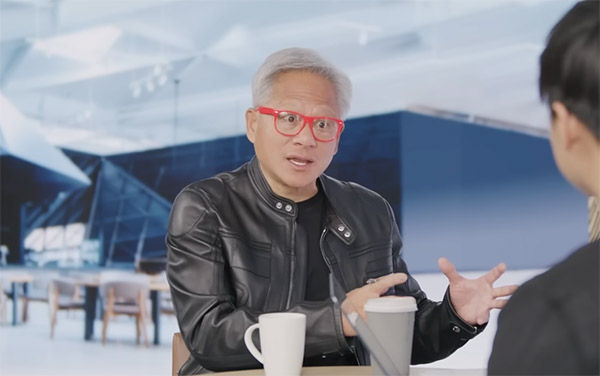
黄仁勋:中国仅落后美国“几纳秒”,我们必须参与竞争
Xin Lang Cai Jing· 2025-09-28 13:27
Core Viewpoint - The article discusses the ongoing competition between the U.S. and China in the semiconductor industry, highlighting the challenges faced by U.S. companies like NVIDIA due to export restrictions and the resilience of Chinese firms in developing their own technologies [1][3]. Group 1: U.S. Government Actions - The U.S. government has implemented a series of export restrictions aimed at curbing the development of China's semiconductor industry [1]. - Earlier this year, the U.S. government prohibited NVIDIA from exporting the H20 chip to China until the company agreed to pay 15% of its sales in China to the U.S. government [3]. Group 2: NVIDIA's Position - NVIDIA's CEO Jensen Huang stated that China is only "a few nanoseconds" behind the U.S. in the semiconductor field, emphasizing the need for competition in the global market [1]. - Huang believes that allowing U.S. tech companies to compete in China would enhance U.S. economic success and geopolitical influence [1]. - NVIDIA has faced declining demand for its specially designed AI chips for China, with major Chinese tech firms refusing to place orders for the RTX6000D chip [4]. Group 3: Chinese Companies' Response - In response to U.S. restrictions, Chinese companies are actively developing alternative AI chips to capture market share previously dominated by NVIDIA [3]. - Huawei has announced a three-year product iteration roadmap for its Ascend AI chips, aiming to meet the growing demand for computing power [3]. - Major Chinese internet companies like Alibaba, Tencent, Baidu, and ByteDance are increasing their investments in chip research and design to gain greater control over the supply chain [3]. Group 4: Regulatory Challenges - NVIDIA is under investigation by Chinese regulators for potential antitrust violations, with the Chinese government expressing concerns over the safety and environmental impact of its H20 chip [4]. - Huang has responded to the investigations by emphasizing the importance of the Chinese market and the need for dialogue to resolve issues [4]. - The Chinese government has reiterated its opposition to discriminatory practices in trade and technology against specific countries [4].

“中国仅落后‘几纳秒’,我们必须参与竞争”
Guan Cha Zhe Wang· 2025-09-28 12:21
Core Viewpoint - The article discusses the ongoing challenges and developments in the semiconductor industry, particularly focusing on the competition between the U.S. and China, highlighting the potential of Chinese companies in the chip sector despite U.S. export restrictions [1][3]. Group 1: U.S. Export Restrictions and Responses - The U.S. government has implemented a series of export restrictions aimed at curbing the development of China's semiconductor industry [1]. - NVIDIA's CEO Jensen Huang stated that China is only "a few nanoseconds" behind the U.S. in chip technology, emphasizing the need for U.S. tech companies to compete in the Chinese market to enhance American influence [1][3]. - Huang believes that allowing U.S. technology firms to compete globally, including in China, would maximize economic success and geopolitical influence for the U.S. [1][3]. Group 2: Developments in Chinese Semiconductor Industry - In response to U.S. restrictions, Chinese companies are actively developing domestic alternatives to NVIDIA's AI chips, aiming to capture market share previously held by NVIDIA [3]. - Major Chinese tech firms such as Huawei, Alibaba, Tencent, and ByteDance are increasing their investments in chip research and design to gain greater control over their supply chains [3][4]. Group 3: Challenges Faced by NVIDIA - NVIDIA has faced declining demand for its specially designed "reduced-spec" AI chips for the Chinese market, with major Chinese clients refusing to place orders [4]. - The company is also under scrutiny for security vulnerabilities and potential antitrust violations, with Chinese authorities conducting investigations into NVIDIA's practices [5]. - Huang emphasized the importance of the Chinese market for the tech industry, stating that the U.S. should ensure access to AI technology globally, including in China [5].
千里科技董事长印奇:千里科技核心业务板块已完成初步布局
Xin Lang Ke Ji· 2025-09-28 11:50
新浪科技讯 9月28日晚间消息,今日举办的AI重庆智驾之夜暨千里科技品牌发布会上,千里科技董事长 印奇指出,"随着AI技术与汽车的不断融合,整个汽车产业正处于一个历史性的转折点,在这个趋势 下,千里科技启动了以AI+车为核心的业务转型,经过一年多时间的探索,千里在几个核心业务板块都 完成了初步布局。" 印奇指出,在智驾领域,千里科技的一个核心技术判断是——智驾系统将进入到一个以AI大模型能力 驱动的全新的阶段。因此,我们需要用最好的AI技术,去重新定义智能辅助驾驶的行业新标准。(文 猛) 责任编辑:何俊熹 ...
