
两重项目

Search documents
申万宏源:首予中国铁建(01186)“增持”评级 报表优化与分红提升
智通财经网· 2025-12-17 03:31
Group 1 - The core viewpoint of the report is that China Railway Construction (01186) is rated as "Overweight" with stable industry investment expectations for 2026, supported by local government debt resolution and the implementation of key projects [1] - Despite pressures in infrastructure and other sectors, new order signing showed positive growth in the first three quarters of 2025, particularly in emerging businesses like green environmental projects, indicating a continuous optimization of the company's structure [1] - The company has a substantial backlog of contracts amounting to 8.10 trillion yuan, ensuring long-term stable growth [1] Group 2 - The company's financial situation is improving, with operating revenue of 728.4 billion yuan in the first three quarters of 2025, a year-on-year decrease of 3.9%, and a net profit of 14.8 billion yuan, down 5.6% year-on-year [2] - The company has implemented a three-year plan to control financial metrics, resulting in a significant reduction in cash outflow and an improvement in the aging structure of accounts receivable [2] - The proportion of accounts receivable aged within one year has increased from 67.97% in 2022 to 75.27% in the first half of 2025, indicating better cash flow management [2] Group 3 - The H-shares of China Railway Construction are trading at a significant discount compared to A-shares, with H-share PE (TTM) at 3.6X and PB at 0.25X, while A-shares are at 5.5X and 0.43X respectively [3] - The dividend yield for H-shares is more attractive at 5.93% compared to 3.87% for A-shares, with cash dividends distributed from 2021 to 2024 showing a consistent increase [3] - The company has maintained a stable dividend payout ratio, indicating a commitment to returning value to shareholders [3]

国家发展改革委投资研究所研究员吴亚平:拓展有效投资空间 促进投资止跌回稳
Shang Hai Zheng Quan Bao· 2025-12-16 18:42
Core Viewpoint - The Central Economic Work Conference emphasizes the need to stabilize investment and enhance the scale of central budget investments, while optimizing the management of local government special bonds and stimulating private investment vitality [1] Group 1: Investment Strategy - The focus is on combining goal-oriented and problem-oriented approaches, balancing long-term institutional construction with short-term policy adjustments to promote effective investment recovery and economic growth [1] - The importance of planning and feasibility studies for major projects is highlighted, with a call for local governments to make project planning a regular investment management practice [2] Group 2: Urbanization and Rural Revitalization - There is significant potential for investment in urbanization and rural revitalization, with a need to address the mismatch in housing supply and demand, particularly for new residents and young people [3] - Investment in infrastructure such as underground pipelines, consumer infrastructure, and urban renewal projects is encouraged to enhance living conditions and meet housing demands [3] Group 3: Agricultural Investment - Encouragement for industrial capital to invest in rural areas, supporting local financing platforms and real estate developers in agricultural and rural economic projects [4] - The integration of existing policies and new investments is expected to yield a multiplier effect on investment efficiency, with projections for investment growth to exceed 2% next year [4]
中央明确推动投资止跌回稳 哪些政策工具可以期待
Di Yi Cai Jing· 2025-12-12 04:41
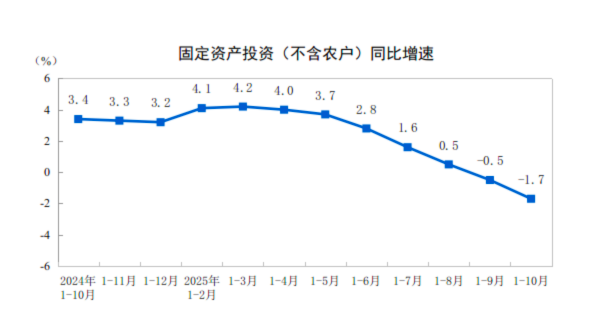
Group 1 - The central economic work conference emphasized the need to "maintain domestic demand as the main driver and build a strong domestic market," with a clear directive to "promote investment stabilization" [1] - Fixed asset investment growth turned negative from September, with a further decline in October, influenced by factors such as the real estate market adjustment and declining investment returns [1][3] - A series of policies, including the issuance of 500 billion yuan in new policy financial tools and an additional 200 billion yuan in special bonds, aim to support investment growth [1][3] Group 2 - From January to October, national fixed asset investment (excluding rural households) reached 4,089.14 billion yuan, a year-on-year decrease of 1.7%, with private fixed asset investment down by 4.5% [3] - Real estate development investment fell by 14.7% year-on-year, significantly impacting overall investment growth, which was down by 3 percentage points due to this decline [3][4] Group 3 - Despite the slowdown in investment growth, the investment structure is optimizing, with high-tech industries experiencing rapid growth, such as aerospace manufacturing investment increasing by 19.7% and information services by 32.7% [4] - Clean energy investments, including solar, wind, nuclear, and hydropower, collectively grew by 10.4% year-on-year [4] Group 4 - The conference highlighted the importance of increasing investment to strengthen the real economy, promote technological and industrial innovation, and address regional development imbalances [5] - The "Two Heavy" projects, which focus on major national strategies and key area security capabilities, are identified as crucial for expanding effective investment [6] Group 5 - The role of new policy financial tools will continue to be emphasized, with expectations for increased fiscal spending in areas such as social security, education, and healthcare in 2026 [7] - Measures to stimulate private investment include 13 policy initiatives aimed at improving access and addressing barriers for private enterprises [8] Group 6 - The National Development and Reform Commission plans to enhance the effectiveness of policies promoting private investment, including support for technology-driven enterprises and infrastructure REITs [9]

中央明确推动投资止跌回稳,哪些政策工具可以期待
Di Yi Cai Jing· 2025-12-12 03:56
Group 1: Economic Policy and Investment Strategy - The Central Economic Work Conference emphasized the need to increase central budget investment and optimize the implementation of "two heavy" projects to stabilize investment growth [1][6] - A series of policies, including the issuance of 500 billion yuan in new policy financial tools and an additional 200 billion yuan in special bonds, aim to support investment in infrastructure and stimulate private investment [1][8] Group 2: Investment Trends and Performance - From January to October, fixed asset investment (excluding rural households) reached 4,089.14 billion yuan, a year-on-year decrease of 1.7%, with private fixed asset investment down by 4.5% [3] - Real estate investment saw a significant decline of 14.7% year-on-year, which negatively impacted overall investment growth by 3 percentage points [3][4] Group 3: Sectoral Investment Growth - Despite the overall slowdown, certain high-tech sectors experienced rapid investment growth, such as aerospace manufacturing (up 19.7%) and information services (up 32.7%) [4] - Clean energy investments, including solar, wind, nuclear, and hydropower, collectively grew by 10.4% year-on-year [4] Group 4: Private Investment and Policy Support - The government aims to effectively stimulate private investment, which is crucial for growth and employment, with measures to enhance access and support for private enterprises [8][9] - The National Development and Reform Commission plans to improve the effectiveness of policies promoting private investment, including facilitating financing for technology-driven enterprises [9]
【广发宏观王丹】从EPMI数据看9月经济
郭磊宏观茶座· 2025-09-22 12:29
Core Viewpoint - The September EPMI (Emerging Industry Purchasing Managers Index) increased by 4.6 points to 52.4, indicating a seasonal recovery typical of autumn, although the absolute level remains historically low [1][6][24]. Group 1: EPMI and Industry Trends - The EPMI's increase aligns with the seasonal average of 4.5 points from 2014 to 2024, with the number of industries in the expansion zone rising from 2 to 4 [1][6][7]. - Despite the improvement, the absolute EPMI value of 52.4 is the second lowest for September in history, down 0.9 points from the previous year [6][24]. Group 2: Supply and Demand Indicators - Key supply and demand indicators showed improvement: production volume, product orders, and export orders increased by 7.8, 6.5, and 6.8 points respectively [2][9]. - The production-to-demand ratio turned positive, with an average of 0.7 for the first three quarters of 2025, indicating an improvement in supply-demand balance compared to previous years [9][10]. - Price indicators also improved, with purchase prices and sales prices rising by 0.8 and 0.2 points respectively, although the growth rate has slowed compared to July and August [9][12]. Group 3: Employment and Financing Environment - The EPMI loan difficulty index decreased by 0.9 points, suggesting a more favorable financing environment for emerging enterprises due to increased credit support and coordinated fiscal and monetary policies [15][16]. - Employment indicators have shown a two-month recovery, with a 2.6-point increase in September, indicating stronger demand for jobs in new industries during the graduation season [15][16]. Group 4: Sector Performance - In September, the highest absolute economic performance was observed in the new generation information technology and energy-saving environmental sectors, driven by demand growth related to AI computing power and domestic substitution [19][20]. - The new energy vehicle sector also saw a month-on-month increase in economic performance, with retail sales growing by 6% year-on-year and 10% month-on-month [19][20]. - The performance of traditional sectors varied, with some industries like petroleum asphalt and automotive tires showing increased operating rates, while others like high furnace and PVC saw declines [23][24]. Group 5: Economic Outlook - The third quarter has shown signs of continued economic slowdown, with September data being crucial for short-term economic assessment [24]. - The EPMI data suggests a neutral economic outlook, with seasonal recovery not extending the trends observed in July and August, indicating that achieving annual growth targets will require further policy support [24].

今年超长期特别国债发行进度已近90%
Zheng Quan Ri Bao· 2025-09-17 16:09
Core Viewpoint - The issuance of ultra-long-term special government bonds in China is accelerating, with a total planned issuance of 1.3 trillion yuan in 2025, aimed at supporting key projects and enhancing economic growth [1][2]. Group 1: Issuance Details - The recent competitive bidding for the second tranche of the ultra-long-term special government bonds has been completed, with a total face value of 35 billion yuan for a 20-year fixed-rate bond [1]. - As of now, the overall issuance scale of ultra-long-term special government bonds has reached 1,148 billion yuan, achieving 88.3% of the planned issuance for the year [1]. Group 2: Economic Impact - The issuance of ultra-long-term special government bonds has positively influenced economic structure optimization, market confidence, and debt risk mitigation [2]. - The funds from these bonds have accelerated the implementation of strategic projects, boosted investment growth, and supported domestic demand expansion [2]. Group 3: Sectoral Support - The funds allocated for the "two heavy" projects and "two new" policies have shown significant effects, with retail sales of household appliances and communication equipment increasing by 28.4% and 21.1% year-on-year, respectively [2]. - Investment in equipment and tools has also increased by 14.4% year-on-year, contributing to a 2.1 percentage point rise in fixed asset investment [2]. Group 4: Future Outlook - The ultra-long-term special government bonds are expected to further support key sectors, with a focus on project alignment, funding allocation, and regulatory oversight to ensure effective utilization of funds [3]. - There is a need for a comprehensive regulatory mechanism to monitor the distribution and use of funds, ensuring they are deployed safely and efficiently [3].
2025年1—7月份固定资产投资规模继续扩大
Zhong Guo Chan Ye Jing Ji Xin Xi Wang· 2025-08-25 07:15
Group 1 - National fixed asset investment (excluding rural households) reached 288,229 billion yuan from January to July, with a year-on-year growth of 1.6% [1] - Equipment purchase investment showed significant growth, increasing by 15.2% year-on-year, which is 13.6 percentage points higher than the overall investment growth rate, contributing 2.2 percentage points to total investment growth [2] - Manufacturing investment grew rapidly, with a year-on-year increase of 6.2%, 4.6 percentage points higher than the overall investment growth, contributing 1.5 percentage points to total investment growth [3] Group 2 - Infrastructure investment increased by 3.2% year-on-year, contributing 43.0% to total investment growth, which is an increase of 6.0 percentage points compared to the first half of the year [4] - Green energy investment surged by 21.5% year-on-year, contributing 1.4 percentage points to total investment growth, with solar, wind, nuclear, and hydropower investments collectively growing by 21.9% [5] - High-tech service industry investment rose by 6.2% year-on-year, with a share of 5.1% in total service industry investment, an increase of 0.4 percentage points from the same period last year [6] Group 3 - Project investment (excluding real estate development) grew by 5.3% year-on-year, 3.7 percentage points higher than the overall investment growth rate, with private project investment (excluding real estate) increasing by 3.9% [7] - The focus for the next phase includes implementing government investment tools effectively, promoting high-quality "two重" construction, and accelerating the development of high-end, intelligent, and green manufacturing [7]
广发证券:7月经济数据边际放缓的两个源头
Xuan Gu Bao· 2025-08-15 10:00
Core Viewpoint - July economic data shows signs of slowdown, with only exports accelerating while industrial, service, consumption, investment, and real estate sales all underperformed compared to previous values, indicating a divergence in internal and external demand [1][6]. Economic Data Summary - Actual GDP index estimated to be approximately 5.02% year-on-year based on industrial value added and service production index, and about 4.79% when estimated using industrial value added and retail sales [1][6]. - Exports increased by 7.2% year-on-year, surpassing the previous value of 5.9% [6]. - Industrial value added grew by 5.7%, down from 6.8% previously, with a month-on-month seasonal adjustment of 0.38% [1][7]. - Service production index rose by 5.8%, lower than the previous 6.0% [6]. - Retail sales (社零) increased by 3.7% year-on-year, down from 4.8% previously, with a month-on-month seasonal adjustment of -0.14% [2][10]. - Fixed asset investment showed a cumulative year-on-year growth of 1.6%, down from 2.8%, with a single-month year-on-year decline of -5.2% [3][13]. - Real estate sales decreased by 8.0% year-on-year, compared to a previous decline of 5.4% [4][15]. Sector-Specific Insights - In the industrial sector, coal production growth saw a significant decline, while new industry products like smartphones and robots also experienced a slowdown [7][8]. - Retail sectors such as dining and tobacco continue to show low growth, with automotive sales turning negative for the first time in five months [2][10]. - Fixed asset investment in manufacturing, infrastructure, and real estate all showed notable declines, with real estate investment down by 17.2% year-on-year [3][15]. - Real estate data indicates a continued slowdown in sales, new construction, and investment, with significant declines in various metrics [4][15][16]. Policy and Market Outlook - The overall economic indicators suggest the emergence of a "slowdown zone," which aligns with market expectations [5][18]. - Recent macroeconomic policies are focused on supporting service consumption, particularly through interest subsidies for personal and business loans [5][18]. - The continuation of "two重" policies and real estate policies is deemed crucial for stabilizing the economy [5][18].

奋勇争先,决战决胜“十四五”丨“两重”项目建设“加速跑”
Xin Hua Wang· 2025-08-12 06:06
Group 1: Infrastructure Development - The construction of Yichang North Station is progressing well, with the main structure completed, and the project entering the final stages [1] - The Wuhan-Yichang section of the Yangtze River High-speed Railway, spanning 313 kilometers, is the first project to commence, facilitating a high-speed rail loop connecting Wuhan, Xiangyang, and Yichang [1] - The National Development and Reform Commission has allocated over 300 billion yuan to support the third batch of "two重" construction projects by 2025, indicating that the 8 trillion yuan project list for this year has been fully issued [1] Group 2: Economic Impact - The Hami-Chongqing ±800 kV UHVDC transmission project has been completed, providing a third direct current channel for electricity transmission from Xinjiang to Chongqing, with an investment of 28.6 billion yuan [3] - The project has generated over 10,000 jobs in construction and 30,000 jobs in related sectors, significantly boosting regional economic development [3] - Infrastructure investment increased by 4.6% year-on-year in the first half of the year, outpacing overall investment growth by 1.8 percentage points [3] Group 3: Technological Innovation - The construction of the Changtai Yangtze River Tunnel is utilizing advanced technologies such as intelligent tunneling and geological forecasting, with domestic shield machines capturing nearly 70% of the global market share [4][5] - The Jinsha River Silver River Hydropower Station's unit 3 has achieved the largest single capacity in Asia at 65 megawatts and the largest turbine diameter in the world at 7.95 meters [4] - The development of new technologies and products in engineering construction is accelerating, enhancing the upgrade of industries such as construction machinery and intelligent equipment [5]
优结构提质量步伐加快 有效投资蓄能稳步攀升
Zhong Guo Fa Zhan Wang· 2025-07-21 06:54
Group 1: Infrastructure Investment - The Wuhan Metro Line 12, with a total length of 59.9 kilometers, has successfully completed its construction, enhancing urban connectivity in Wuhan [1] - National fixed asset investment reached 248,654 billion yuan in the first half of the year, showing a nominal growth of 2.8% year-on-year, while the actual growth, after adjusting for price factors, was 5.3% [1] - Infrastructure investment grew by 5.5% year-on-year, serving as a stabilizing factor for the economy amid external fluctuations [2][4] Group 2: Major Projects and Government Support - The Beijing Urban Sub-center Station, Asia's largest underground transportation hub, is nearing completion, with 95% of the main construction finished [3] - The "Two Heavy" projects in Gansu Province have seen significant progress, with 493 projects planned and a total investment of 1,045.33 billion yuan [3] - The National Development and Reform Commission has allocated over 300 billion yuan to support the third batch of "Two Heavy" construction projects, totaling 800 billion yuan for 1,459 projects [4] Group 3: Manufacturing and Technological Upgrades - Manufacturing investment increased by 7.5% year-on-year, driven by technological upgrades and new industries [7] - High-tech manufacturing sectors, such as aerospace and computer equipment, saw substantial investment growth of 26.3% and 21.5%, respectively [7] - The "Two New" policies have effectively supported the recovery of consumer spending and the modernization of traditional industries [7][8] Group 4: Regional Investment Trends - Investment growth in central and western regions outpaced that of eastern regions, with central regions growing by 3.2% and western regions by 4.8% [9] - The shift of industries from east to west is becoming a long-term trend, supported by policies like "Western Development" and "Central Region Acceleration" [9] - The data reflects the release of policy dividends, although challenges remain for the long-term transformation of the northeastern region [9] Group 5: Real Estate Market Dynamics - The real estate sector is experiencing a decline in investment, with land transaction volumes down to 2.8 million square meters, only 61% of the new housing transaction volume [10] - Despite the downturn, there are signs of stabilization in the market, with new policies expected to support the real estate sector in the second half of 2025 [11] - The reduction in new land development and ongoing inventory clearance are seen as necessary for achieving a balanced supply-demand dynamic in the real estate market [10][11]
