
中国速度

Search documents
速度是一切!汽车大厂都在“学中国”
Hua Er Jie Jian Wen· 2025-12-25 00:30
传统汽车制造商开发一款新车通常需要四年甚至更长时间,但在中国,这一周期平均仅为18到20个月。 如今,西方车企正奋力追赶这一速度。 一场围绕"速度"的竞赛正在全球汽车行业激烈展开。从福特到大众的西方传统汽车巨头们正以前所未有 的力度,借鉴中国同行快速、低成本的车型开发模式。 最新动态显示,福特已选择雷诺作为合作伙伴,在欧洲共同生产小型电动汽车,而后者已成功将其新车 型的开发时间缩短至两年以内。德国大众也已将在中国生产的新款电动汽车开发周期,在传统四年多的 基础上缩短了30%。日产与其中国合作伙伴东风共同开发的N7电动轿车,在耗时约两年后于今年在中 国上市,并将于明年开始出口。 这一系列行动的背后,是全球车企高管们的共识:在技术快速迭代、消费者品味多变以及地缘政治引发 供应链动荡的当下,速度已成为生存的必要条件。更快的开发周期不仅能跟上市场节奏,还能通过缩短 工程时间来显著降低成本,从而提升价格竞争力。 "中国速度":从四年到两年 福特欧洲负责人Jim Baumbick指出,比亚迪等中国车企通过使用更多通用零部件来提升速度,而将主要 的创新集中在软件和数字技术上。雷诺的经验则更具代表性,其在上海设立了拥有约15 ...
大众汽车35亿美元豪赌中国研发 能否夺回失守的市场份额?
Zhi Tong Cai Jing· 2025-12-15 07:01
Core Viewpoint - Volkswagen is making a significant investment of €3 billion (approximately $3.5 billion) to establish its largest R&D base outside Germany in Hefei, China, as it seeks to regain market share in the competitive Chinese automotive market, which has seen a dramatic shift in consumer preferences and competition dynamics [1][3]. Group 1: Investment and Strategy - Volkswagen's investment in Hefei marks a strategic shift from its previous model of directly importing overseas-developed vehicles and technology to focusing on developing models specifically for Chinese consumers [1][3]. - The company aims to develop vehicles that may never be sold in Europe but could be exported to the Middle East and Southeast Asia, indicating a tailored approach to meet local market demands [3][4]. Group 2: Market Dynamics - The Chinese automotive market has transformed significantly over the past five years, with electric vehicles now accounting for about half of new car sales, and consumers expecting advanced digital features [5][6]. - Volkswagen's market share has been challenged by local competitors like BYD and Geely, necessitating a rapid response to maintain its position [5][6]. Group 3: Competitive Pressure - The speed of product development is critical in the Chinese market, with local electric vehicle companies launching new models in 12 to 18 months, compared to the 3 to 5 years typically required by global automakers [6][7]. - Volkswagen has decentralized decision-making to local teams in China to accelerate product development and respond more effectively to market changes [7][8]. Group 4: Knowledge Exchange - There is a growing recognition among foreign automakers that they can learn from Chinese companies, particularly in terms of quickly translating ideas into products and reducing development costs [7][8]. - A survey indicated that nearly half of the responding companies expect Chinese competitors to become leaders in innovation within the next five years, highlighting the shifting landscape of the automotive industry [8].
“中国速度”引海外网民点赞 北京“一夜修路”的背后
Xin Hua She· 2025-12-06 09:32
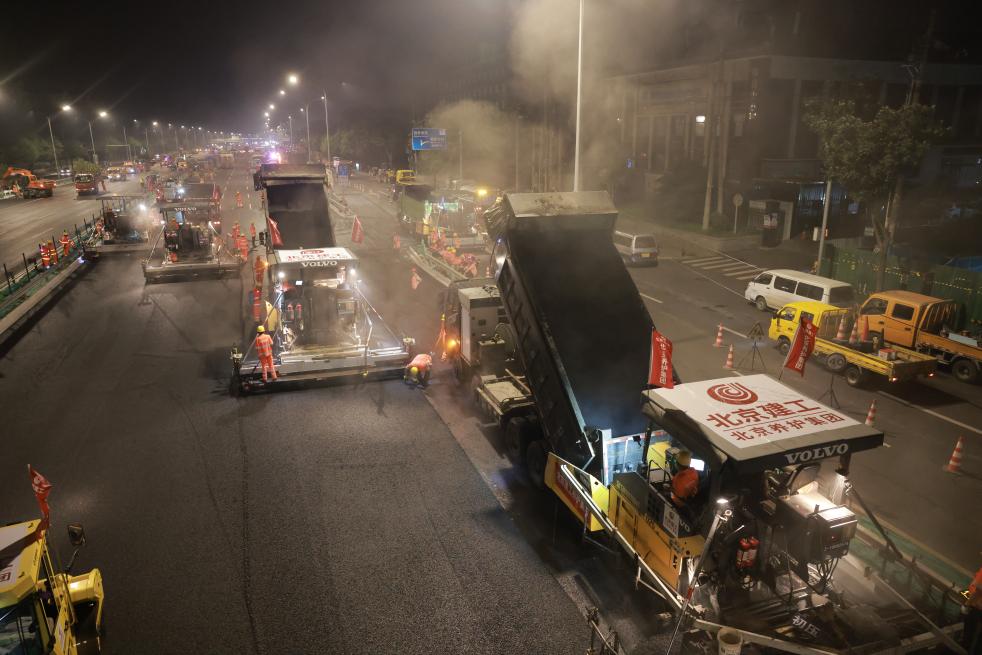
新华社北京12月6日电(记者 张骁、郭沛然)外交部发言人毛宁近日在海外社交媒体上分享了一段北京城市环路大修和环境提升工作的视 频。视频中,10余公里的北京西北四环路,在6个小时的夜修中成功摊铺8000吨沥青。第二天黎明时分,新路准时通车。这引发了海内外网民的广 泛关注,大量网民在评论区点赞。 很多北京司机是看到新闻后才察觉到北京四环路已大修过了,而在毛宁账号下的评论区,一些海外网民留言:"在我的国家,这要干几个 月。"为什么北京修路要这么快? 被海外网民点赞的高效背后,还有哪些要素值得"被看见"? "中国速度",本身是一种民生温度。 较长时间以来,城市道路大修工程往往因跨部门作业,导致路面反复"开口",施工围挡拆了又装,群众叫苦不迭。这次道路大修中,北京以 机制创新的方式实现"一次施工、多重提升"。 图为道路大修现场。新华社发 北京建立了横跨交通、城管、园林、水务、交管,以及属地政府的一体化协作机制。除直接提升道路本身通行品质,还增设了紧急停车带、 拓宽了关键匝道、优化了出入口的加减速车道,并同步实施了周边绿化等环境提升工作。 这是系统性治理观在发挥作用。现场作业前,政府内部先统筹联动,有效压缩了部门间、专业 ...

视频|中国外交部发言人毛宁点赞北京四环路大修工程:“中国速度”就在北京!
Xin Lang Cai Jing· 2025-12-05 06:52
炒股就看金麒麟分析师研报,权威,专业,及时,全面,助您挖掘潜力主题机会! 来源:北京交通 新浪声明:此消息系转载自新浪合作媒体,新浪网登载此文出于传递更多信息之目的,并不意味着赞同 其观点或证实其描述。文章内容仅供参考,不构成投资建议。投资者据此操作,风险自担。 责任编辑:宋雅芳 责任编辑:宋雅芳 炒股就看金麒麟分析师研报,权威,专业,及时,全面,助您挖掘潜力主题机会! 来源:北京交通 新浪声明:此消息系转载自新浪合作媒体,新浪网登载此文出于传递更多信息之目的,并不意味着赞同 其观点或证实其描述。文章内容仅供参考,不构成投资建议。投资者据此操作,风险自担。 ...
东西问丨穆拉图·特肖梅:中国式现代化如何为全球治理注入新动力?
Zhong Guo Xin Wen Wang· 2025-12-04 11:32
Core Viewpoint - The interview with former Ethiopian President Mulatu Teshome highlights how Chinese-style modernization injects new momentum into global governance, emphasizing development as a common language for South-South cooperation [3][5]. Group 1: China's Development Plans - Mulatu Teshome expresses particular interest in the "14th Five-Year Plan," viewing it as a systematic agenda focused on high-quality development through innovation, high technology, and artificial intelligence [6][8]. - He believes that the "14th Five-Year Plan" is historically significant and aims to lay a solid foundation for China's future, which will also profoundly impact the global economy [6][8]. Group 2: Agricultural Cooperation - Teshome emphasizes the importance of agriculture for many African countries and notes the challenges they face, such as insufficient modernization and outdated technology [8]. - He highlights China's role in enhancing agricultural productivity and resilience in Africa through technology sharing, infrastructure improvement, and support for production materials, aiming for sustainable development [8][11]. Group 3: Global Governance Initiatives - Teshome asserts that there are no fundamental challenges between China and global South countries, as both share solid common interests that drive global peace and development [11]. - He praises China's global governance initiatives, which promote dialogue and cooperation over conflict, providing new solutions to global issues and contributing to a more just and reasonable global governance system [11].

快时代,慢功夫 齐泽凯书写大众品牌中国新答卷
Zhong Guo Qi Che Bao Wang· 2025-10-22 04:38
Core Insights - The article discusses the strategic transformation of Volkswagen in the Chinese market under the leadership of Dr. Kai Ze, emphasizing the shift from "German manufacturing" to "Chinese speed" in innovation and product development [4][5][11] Group 1: Leadership and Strategy - Dr. Kai Ze has taken on significant roles within Volkswagen, including Vice President of Products and Strategy in China and CEO of Volkswagen Passenger Cars in China, overseeing a base of 46 million users [1] - The company has adopted a strategy of "In China, for China," which is reflected in its product planning and the establishment of the largest R&D center outside Germany [5][7] Group 2: Market Dynamics and Innovation - China is leading global innovation, particularly in smart electric vehicle technology, with a projected penetration rate of over 50% for new energy vehicles by 2024 [4] - Volkswagen's approach includes deep collaboration with local companies like Horizon and Xpeng, moving beyond simple technology procurement to joint R&D [5][7] Group 3: Product Development and Efficiency - The restructuring of the organization has granted the Chinese team more decision-making power, aiming to reduce product launch cycles by 30% and optimize costs by 40% [7] - The introduction of the CEA electronic architecture is a core part of Volkswagen's strategic transformation, enhancing software update efficiency and reducing complexity [9] Group 4: Brand Positioning and Consumer Trust - Volkswagen emphasizes reliability and quality over speed in a competitive market, with a focus on long-term consumer trust [11][15] - The shift from an incremental market to a replacement market in China highlights the increasing importance of brand trust, with 65% of sales coming from replacement users [11] Group 5: Future Product Plans - Volkswagen plans to launch 21 new energy models in China by 2027, expanding to 31 models by 2029, indicating a strong commitment to the Chinese market [15] - The company is also exploring the introduction of classic models like ID. Buzz, focusing on adapting products to better fit the local market rather than simply importing them [13] Group 6: Balancing Innovation and Tradition - Volkswagen is committed to both digitalization and electrification while maintaining its fuel vehicle business to fund new technologies [15] - The company aims to find a balance between global innovation and local adaptation, ensuring that its core brand values are preserved while meeting market demands [15]

“全球最快高铁”,CR450动车组,创纪录!
Mei Ri Jing Ji Xin Wen· 2025-10-20 07:09
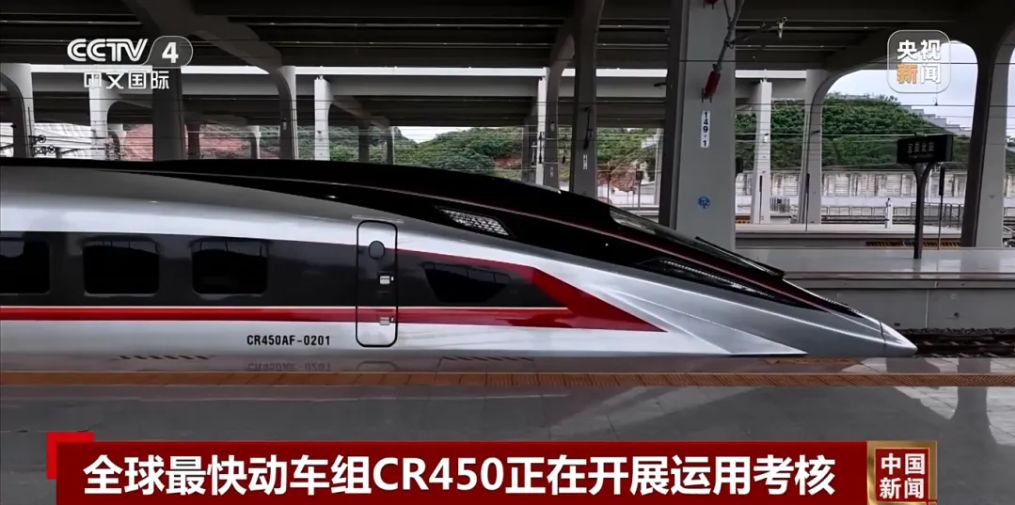
Core Viewpoint - The CR450 high-speed train, known as the "world's fastest high-speed train," is undergoing various tests to achieve operational readiness, having already set new speed records and demonstrating significant improvements in design and efficiency [1][3][6]. Group 1: Speed and Performance - The CR450 train has achieved a single-unit speed of 453 km/h and a relative crossing speed of 896 km/h during tests [1][3]. - The train is currently undergoing operational assessments on the Shanghai-Chongqing-Chengdu high-speed railway, requiring a total of 600,000 kilometers of testing to qualify for passenger service [3][6]. Group 2: Design Innovations - The CR450 features a 15-meter long streamlined nose, which is 2.5 meters longer than the CR400 train, resulting in reduced aerodynamic drag [4]. - The train's body has been lowered by 20 cm and its weight reduced by 50 tons, leading to a 22% decrease in overall resistance [5][6]. - The acceleration from 0 to 350 km/h takes only 4 minutes and 40 seconds, compared to 6 minutes and 20 seconds for the current CR400 model, marking a time reduction of 100 seconds [5]. Group 3: Technological Advancements - The CR450 has achieved a 20% reduction in energy consumption and a 4% increase in traction efficiency compared to its predecessor [6]. - The train represents a significant advancement in China's high-speed rail technology, showcasing a comprehensive top-level indicator system for trains operating at 400 km/h [7][8]. Group 4: Future Developments - Comprehensive testing closer to operational conditions is planned for the CR450 on the Chengdu-Chongqing line in 2024 [6]. - The CR450 is part of a broader initiative to develop a series of high-speed trains with independent intellectual property rights, adaptable to various operational environments [8].
中国人闯沙特
投资界· 2025-10-19 07:44
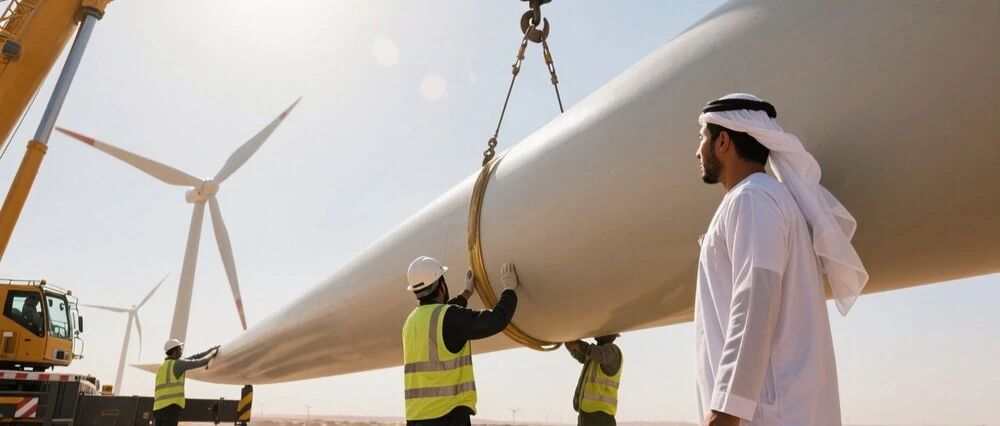
Core Viewpoint - The article discusses the cultural clash between Chinese workers and Saudi labor practices in the context of large-scale projects in Saudi Arabia, highlighting the differences in work ethics, labor conditions, and the impact of local regulations on foreign workers [4][5][9]. Group 1: Labor Culture Clash - Chinese workers in Saudi Arabia work under extreme conditions, often exceeding 12 hours a day, with monthly earnings around 28,000 RMB, which is double the domestic salary for similar roles [7][8]. - The work ethic of Chinese laborers is driven by a belief that "time is money," leading to a high-pressure environment to meet deadlines, contrasting sharply with the more relaxed approach of local Saudi workers who adhere to religious practices and shorter work hours [5][9]. - The Saudi labor market is characterized by a high percentage of foreign workers, with approximately 15.7 million expatriates, making up 44.4% of the total population, which creates a unique dynamic in labor relations [5][9]. Group 2: Economic and Social Implications - The "Kafala" sponsorship system in Saudi Arabia creates a significant divide between local and foreign workers, leading to disparities in pay and working conditions based on nationality [11][12]. - Local Saudi workers enjoy substantial benefits due to oil wealth, including high starting salaries and extensive vacation time, which can lead to a lack of motivation among the youth [13]. - The article highlights the psychological impact of wealth on Saudi youth, with a significant percentage experiencing mental health issues, indicating a disconnect between material wealth and personal fulfillment [13]. Group 3: Business Strategies and Adaptations - Chinese companies are adapting to local labor laws by initially hiring a large number of Saudi workers to meet regulatory requirements, then selectively retaining the most capable individuals for critical roles [19][20]. - There is a growing trend among Chinese firms to respect local customs and integrate local practices into their operations, such as adjusting work schedules around prayer times [19][20]. - Successful partnerships in the region often rely on local connections and trust-building, as exemplified by the collaboration between Chinese companies and established local businesses [15][16]. Group 4: Future Outlook - The article concludes that mutual respect and understanding between Chinese enterprises and Saudi society are essential for overcoming cultural barriers and achieving sustainable business success [22]. - The experiences of companies like JD Logistics and Sinopec in adapting to local conditions serve as examples of how cross-cultural collaboration can lead to shared benefits [20][21].

当中国“卷王”遇见“松弛感”沙特工人
虎嗅APP· 2025-10-15 09:50
Core Viewpoint - The article discusses the cultural clash between Chinese workers and Saudi labor practices in the context of large-scale construction projects in Saudi Arabia, highlighting the differences in work ethics, labor conditions, and the impact of local regulations on foreign labor [2][3][4]. Group 1: Labor Dynamics - Saudi Arabia has approximately 15.7 million foreign residents, making up 44.4% of the total population, with foreign labor being crucial to the economy [3]. - Chinese workers in Saudi Arabia often work over 12 hours a day under extreme conditions, earning around 28,000 RMB per month, which is double the domestic salary for similar positions [5][6]. - The work culture in Saudi Arabia is influenced by religious practices, with local employees adhering to a more relaxed schedule, including multiple prayer breaks and shorter working hours during Ramadan [6][7]. Group 2: Wage Disparities - The article highlights a significant wage gap based on nationality, with Western experts earning up to five-digit salaries in USD, while experienced Chinese engineers earn between 3,000 to 8,000 USD per month [11]. - South Asian workers earn significantly less, with monthly salaries ranging from 200 to 600 USD, illustrating a stark contrast in living conditions and opportunities based on nationality [11][10]. Group 3: Cultural Integration Challenges - The "Kafala" sponsorship system in Saudi Arabia creates a divide between local and foreign workers, limiting the autonomy of foreign laborers [9][10]. - Chinese companies are adapting by localizing their workforce and respecting local customs, such as prayer times, to improve integration and productivity [17][18]. Group 4: Business Environment - Business operations in Saudi Arabia heavily rely on personal networks and relationships, making it essential for foreign companies to establish local partnerships to succeed [14][15]. - The article emphasizes the need for Chinese companies to adapt their business strategies to the local context, moving away from a purely efficiency-driven approach to one that respects local customs and practices [22][21].
财经观察:“中国速度”重塑韩国美妆“第二增长曲线”
Huan Qiu Shi Bao· 2025-10-10 22:55
Core Insights - The South Korean beauty industry is refocusing on China as a key strategic market for its "second growth curve" amid improving South Korea-China relations [1] - Many South Korean companies are struggling in the Chinese market due to rapid technological changes and increasing competition, with a strong emphasis on "complete localization" to succeed [1][3] - The decline in South Korean cosmetic exports to China is notable, with projections indicating that by mid-2025, the export share will fall below 20% for the first time [2] Group 1: Market Dynamics - The number of new South Korean brands entering Tmall International has seen significant growth, with a 110% increase in the second quarter of this year compared to the previous year [2] - The South Korean cosmetics market in China has experienced a downturn since 2021, with exports dropping from over 50% to a projected decline below 20% by 2025 [2][3] - The rapid product development cycle in China, termed "Chinese speed," allows local brands to quickly adapt and innovate, posing a challenge to South Korean brands [4] Group 2: Strategic Adjustments - Major South Korean beauty companies are restructuring and investing heavily to regain market share in China, with Amorepacific reporting a 23% year-on-year sales increase in the Greater China region [7] - Companies like Amorepacific are enhancing local production capabilities to better align with market demands and consumer preferences [7][8] - The emphasis on localization is critical, with companies needing to adapt their supply chains and product offerings to meet the unique tastes of Chinese consumers [8] Group 3: Future Outlook - The collaboration between South Korean and Chinese brands is seen as mutually beneficial, with both markets influencing each other's trends and consumer preferences [11] - South Korean brands are expected to continue focusing on skincare and makeup products for the Chinese market, leveraging the vast potential of this consumer base [11] - The goal is to elevate "C-Beauty" to global recognition, with significant production capabilities established in China, accounting for 50% of total output for some companies [11]