低价策略

Search documents
直击进博会|专访宜家中国副总裁阮林娟:加码低价策略,并不意味着持续走低价路线
Zhong Guo Jing Ying Bao· 2025-11-09 14:54
Core Viewpoint - IKEA China is focusing on its new brand positioning "Home Gives Life More" at the 8th China International Import Expo, emphasizing sustainable and high-quality home living solutions for Chinese consumers [1] Group 1: Strategic Initiatives - IKEA China has introduced the "Growth+" strategy, which aims to leverage its long-standing expertise as a "home living expert" to provide tailored solutions for local consumers [1][2] - The company has formed a strategic partnership with Huajian Technology to support the "Good House" initiative, offering diverse home products and solutions to meet the demand for higher quality housing [2] - IKEA is also launching age-friendly products designed for the elderly, enhancing safety and convenience in daily living [2] Group 2: Localization Efforts - Over its 27 years in the Chinese market, IKEA has continuously adapted to changes in consumer preferences, including the establishment of a design and manufacturing center in Shenzhen and a design ordering center in Beijing [3] - The company is experimenting with smaller store formats in key cities like Shenzhen and Beijing, tailoring product offerings to local community needs [3] Group 3: Pricing Strategy - IKEA China is committed to a low-price strategy, planning to invest 160 million yuan to launch over 150 lower-priced products by the 2026 fiscal year [3][4] - The company emphasizes that the low-price strategy does not mean a shift to a consistently low-price model but aims to provide affordable products while maintaining quality and sustainability [4] - IKEA continues to gather insights on consumer needs through field visits, adapting to the evolving demand for quality living experiences among Chinese consumers [4]
刘强东要干拼多多的活儿,没想到和抖音掐起来了?
Sou Hu Cai Jing· 2025-11-05 23:33
Core Viewpoint - JD.com is aggressively pursuing a low-price strategy by implementing a "full network price comparison" initiative, rewarding users for identifying lower prices on other platforms, which is seen as a preparation for the upcoming Double Eleven shopping festival [2][3][5]. Group 1: Price Strategy - JD.com has introduced a reward of 1 million JD beans (approximately 10,000 RMB) for users who provide evidence of lower prices on other platforms, showcasing its commitment to price competitiveness [2][5]. - The initiative aims to reshape consumer perception of JD.com as a low-price platform, enhancing market share and user loyalty through direct price adjustments during live broadcasts [3][5]. - The "buy expensive double compensation" rule has been revised to lower barriers for price comparison, indicating JD.com's determination to compete on price in response to rivals like Pinduoduo and Taobao [10][14]. Group 2: Competitive Landscape - Other platforms, such as Douyin, are also focusing on low prices for the Double Eleven festival, indicating a broader trend in the e-commerce sector towards price competition [6][7]. - Allegations of JD.com enforcing a "choose one" policy, which restricts merchants from offering lower prices on competing platforms, have emerged, highlighting the intense competitive dynamics in the market [8][9]. Group 3: Financial Performance - JD.com's second-quarter report showed a revenue of 356.7 billion RMB, a year-on-year increase of 22.40%, but net profit significantly declined to 61.78 million RMB, down 51.14% from the previous year [12][14]. - The company's financial struggles, with rising revenue but falling profits, have prompted a reevaluation of its pricing strategy to attract price-sensitive consumers while maintaining quality assurance [14]. Group 4: Strategic Implications - JD.com's low-price strategy is supported by its efficient supply chain management, which allows for sustainable pricing without heavy reliance on subsidies [14]. - The initiative is part of a broader transformation towards digital manufacturing, aiming to attract a wider user base and support new business growth [14].



鸣鸣很忙更新招股书 门店数量突破1.6万家
Sou Hu Cai Jing· 2025-10-29 09:12
Core Insights - Mingming Hen Mang Group, a leading player in the snack retail industry, has updated its prospectus, reporting a rapid growth in performance and a significant increase in store count [1][2]. Group 1: Company Performance - As of June 30, 2023, Mingming Hen Mang Group has 16,783 stores, with 99.9% being franchise stores [2]. - The company achieved a GMV (Gross Merchandise Volume) of 41.1 billion yuan in the first half of the year, representing an 86.9% increase year-on-year [2]. - Revenue for the first half of 2023 reached 28.124 billion yuan, up 86.5% compared to the same period last year, while adjusted net profit was approximately 1.035 billion yuan, reflecting a 265.5% increase [2]. - The company has maintained a compound annual growth rate (CAGR) of 203% in revenue from 2022 to 2024, with adjusted net profit growing at a CAGR of 234.6% during the same period [3]. Group 2: Market Position and Strategy - Mingming Hen Mang Group is recognized as the largest chain retailer in the domestic market for leisure food and beverages, according to international consulting firm Frost & Sullivan [2]. - The company offers a wide range of products, with 3,605 SKUs in stock as of June 30, 2023, of which approximately 25% are custom products developed in collaboration with manufacturers [2]. - The average price of the company's products is about 25% lower than similar products in offline supermarket channels, contributing to its competitive pricing strategy [3]. Group 3: Challenges and Future Outlook - The company faces challenges related to rising costs in rent, labor, and logistics, which impact its profit margins [5]. - The snack retail industry is entering a more competitive phase, requiring companies to focus on supply chain efficiency and the development of high-margin proprietary products for long-term profitability [7]. - Analysts suggest that the company must avoid over-reliance on the franchise model and focus on brand establishment and product expansion to succeed in the evolving market landscape [6][7].
把童颜针从万元打到2999元,是否真的能搅动医美市场?
Qi Lu Wan Bao· 2025-10-24 09:49
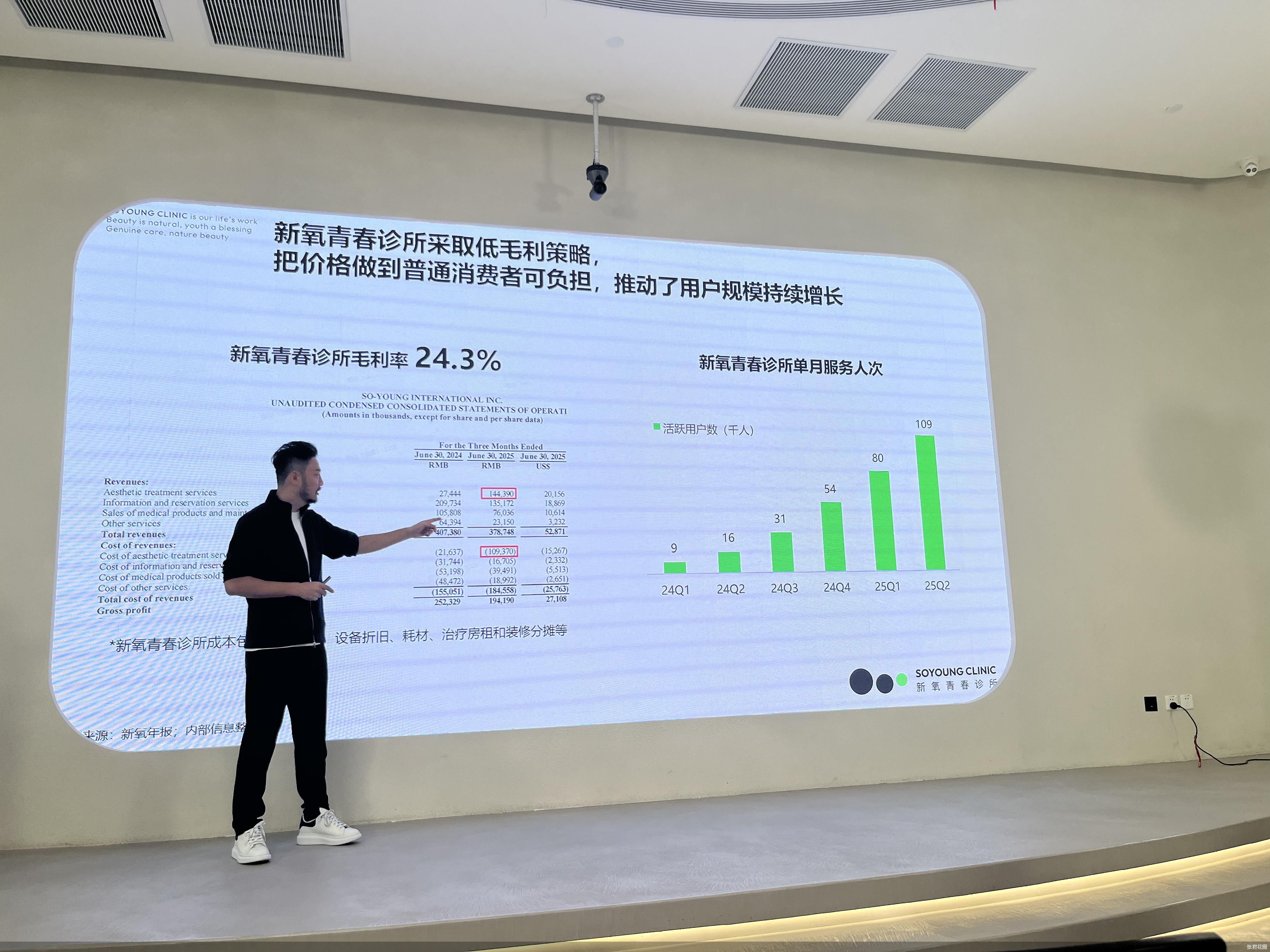
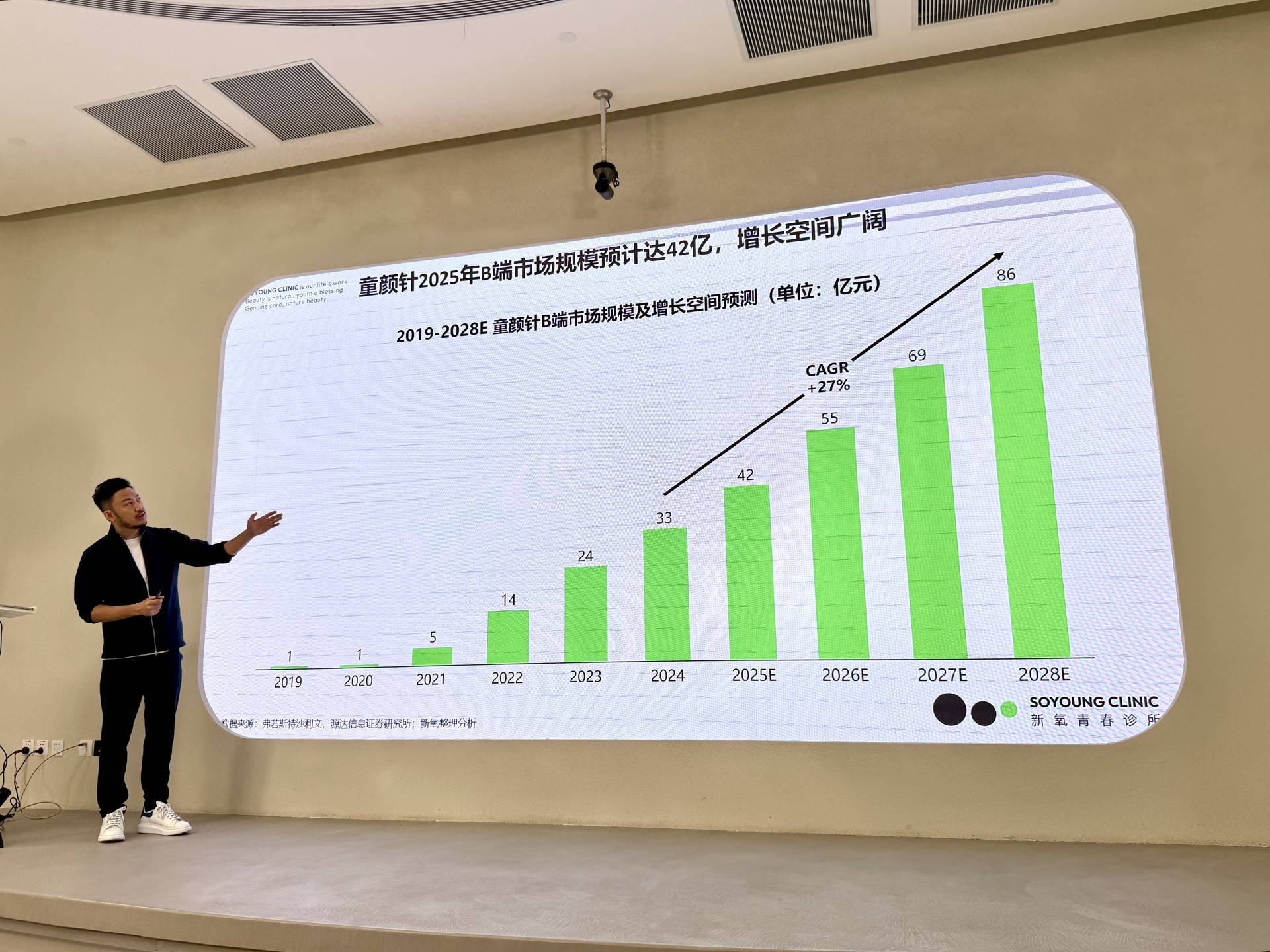
Core Viewpoint - The introduction of a low-priced "童颜针" (youthful needle) by the medical beauty platform 新氧 (SoYoung) at a price of 2999 yuan has sparked significant discussion in the medical beauty industry, challenging the long-standing high price barrier while raising concerns about quality and industry dynamics [1][5][12]. Pricing Strategy - 新氧's new product is priced at 2999 yuan, significantly lower than the average market price of 12800 yuan in China and even lower than prices in neighboring countries [1][3]. - The company aims to disrupt the high-price market by leveraging scale effects and a low-margin strategy, eliminating middlemen and directly collaborating with upstream manufacturers [4][11]. - The cost structure of traditional high-priced "童颜针" indicates that raw material costs account for only 10%-20%, while marketing and channel expenses can take up 30%-40% [3][4]. Market Dynamics - The market for "童颜针" is rapidly growing, with projections estimating the B-end market size to reach 4.2 billion yuan by 2025, up from 500 million yuan in 2021 [1][12]. - The introduction of low-priced options may lead to increased competition, with the potential for a price war among smaller clinics, while larger institutions may benefit from their scale and operational capabilities [10][12]. Quality Concerns - The low pricing strategy has raised questions about the reliability and quality of the product, especially given the quality control issues faced by the manufacturing partner, 西宏生物 (Xihong Bio) [8][12]. - Concerns have been voiced that some medical institutions may cut costs in operational processes to maintain profitability, potentially compromising quality [8][10]. Industry Transformation - 新氧's pricing strategy is seen as a potential disruptor in the medical beauty industry, which is currently experiencing a cycle of high costs leading to high prices, driving consumers towards unregulated options [12][13]. - The company's offline business is emerging as a new growth point, with a significant increase in revenue from its chain clinics, which have grown to 40 locations and are expected to reach 50 by year-end [15]. - Despite the aggressive transformation, 新氧 has faced challenges, with overall revenue declining by 7% year-on-year to 379 million yuan, and a net loss of 36 million yuan reported [15].


新氧童颜针跌破3000元,“青春诊所”距离盈利还要多久
Bei Jing Shang Bao· 2025-09-24 13:17
Core Viewpoint - The launch of the new "Miracle Tongyan 3.0" by Xinyang at a price of 2999 yuan marks a significant price drop in the market for Tongyan injections, which typically exceed 10,000 yuan, establishing a new low price point in the industry [1][4]. Pricing Strategy - Xinyang's pricing strategy is based on obtaining pricing authority from upstream manufacturers, allowing them to offer competitive prices [6][7]. - The previous versions of Tongyan injections were priced at 4999 yuan and 5999 yuan, indicating a trend of progressively lowering prices [4][9]. Market Context - The current market for Tongyan injections includes several high-priced products, with manufacturers like Saint Boma and Kanjie Pharmaceuticals pricing their products between 12,800 yuan and 14,800 yuan [4][9]. - The trend of decreasing prices for Tongyan injections is expected to continue, driven by market demand and product effectiveness [5]. Company Performance - Xinyang's clinics have achieved monthly profitability at the store level, although overall profitability is still pending due to the costs associated with middle and back-end operations [9]. - The company plans to expand its clinic network significantly, aiming for over 50 locations by the end of 2025, with a long-term goal of establishing a presence in 100 cities [9]. Financial Growth - Xinyang reported a substantial increase in revenue from its light medical beauty chain business, with a year-on-year growth of 551.4% in Q1 2025, reaching 98.8 million yuan [10]. - In Q2 2025, revenue from beauty treatment services also saw a significant increase of 426.1%, totaling 144.4 million yuan [10].
低价尝试曾遭厂商断货!新氧开打2999元“童颜针”,低价策略能否打破医美困局?
Sou Hu Cai Jing· 2025-09-24 09:59
Core Viewpoint - The internet medical beauty platform, New Oxygen, has launched its new "Miracle Youth 3.0" at a price of 2999 yuan, significantly lower than the previous market average of over 10,000 yuan, aiming to disrupt the high-price cycle in the medical beauty industry [1][4]. Group 1: Pricing Strategy and Market Position - New Oxygen's price reduction strategy is intended to shift the medical beauty industry from a "seller's market" to a "mass consumer" market, making compliant medical beauty services more accessible [1][5]. - The CEO of New Oxygen, Jin Xing, believes that lowering prices is crucial to eliminate "black medical beauty" practices in China, as high prices drive consumers to seek unregulated services [6][7]. - The company aims to achieve a healthy operational model in the medical beauty industry by demonstrating that high profits are not necessary for sustainability [5][6]. Group 2: Market Growth and Potential - The market for "youthful needles" is rapidly expanding, with projections indicating that the B-end market size will reach 4.2 billion yuan by 2025, up from 500 million yuan in 2021 [4]. - New Oxygen's focus on "youthful needles" is based on their clear treatment principles and effective results, positioning it as a long-term growth area in the medical beauty sector [4][5]. Group 3: Business Transformation and Challenges - New Oxygen's offline chain business has become a significant revenue source, with a 426.1% year-on-year increase in revenue from this segment, surpassing online business for the first time [8]. - Despite the growth in offline business, the company faced a 7% decline in overall revenue in Q2, resulting in a net loss of 36 million yuan, attributed to a decrease in the number of medical service providers on its subscription platform [1][8]. - The company is actively working to reduce its reliance on suppliers by customizing products and exploring the development of its own medical beauty brand [9].
4元1杯的雪王柠檬水断货,其他茶饮凭啥躲过一劫?
首席商业评论· 2025-09-24 03:50
Core Viewpoint - The recent shortage of lemon water at Mixue Ice City highlights significant risks within the industry, particularly related to supply chain vulnerabilities and reliance on single-source raw materials [2][6][21]. Group 1: Supply Chain Issues - Multiple stores of Mixue Ice City have reported unavailability of lemon water, with staff confirming that the product is out of stock and expected to remain so for several days [2]. - The shortage is attributed to a sharp increase in lemon prices, with the average wholesale price reaching 15 RMB per kilogram, nearly doubling compared to the same period last year [4]. - Mixue Ice City has a significant dependency on lemons from specific regions, with over 70% of its supply sourced from Sichuan and Chongqing, making it vulnerable to climate-related disruptions [12]. Group 2: Financial Impact - The ice-fresh lemon water is a key product for Mixue Ice City, with annual sales exceeding 1 billion cups, translating to a revenue of approximately 4 billion RMB, which constitutes 13% of the company's total revenue of 14.87 billion RMB for the first half of 2025 [6][9]. - The company's low-price strategy, exemplified by the 4 RMB price point for lemon water, has pressured its supply chain, making it difficult to absorb rising costs when supply shortages occur [14][20]. Group 3: Competitive Landscape - Other tea brands have managed to avoid similar shortages by diversifying their supply sources and utilizing different lemon varieties that are less susceptible to climate impacts [16]. - Brands like Heytea and Starbucks employ global sourcing strategies and local processing to mitigate risks associated with supply chain disruptions [18]. - The contrasting business models and capital structures of competitors allow them to maintain higher profit margins, enabling them to better manage cost increases compared to Mixue Ice City, which has a lower gross profit margin of 31.6% [20]. Group 4: Broader Industry Implications - The lemon crisis reflects a broader conflict between capital concentration and diverse consumer demands, revealing the fragility of Mixue Ice City's single-capital model [21]. - The future of the tea beverage industry may shift from mere store expansion to a focus on controlling the entire supply chain, including cultivation and processing [21].

罗永浩宣布将测评市面在售预制菜 强调不会直播带货;新石器宣布第1万台无人车交付|未来商业早参
Mei Ri Jing Ji Xin Wen· 2025-09-23 23:17
Group 1: New Technologies and Innovations - New Stone Technology announced the delivery of its 10,000th unmanned delivery vehicle, marking the world's first fleet of this scale and indicating a significant shift from technology validation to large-scale commercialization in the unmanned delivery industry [1] - New Stone's achievement demonstrates the reliability of technology and commercial viability, significantly reducing costs through scale, providing a model for industry profitability [1] - The industry competition is currently focused on road rights and cost, with New Stone leading due to its advantages in road rights across hundreds of cities and a cost of approximately 70,000 yuan, although competitors like Momo and Jiushi have achieved lower pricing [1] Group 2: Consumer Goods and Market Trends - Luo Yonghao announced plans to evaluate pre-packaged meals available on the market, emphasizing a neutral stance by not engaging in live commerce, which could enhance consumer trust in the industry [2] - This initiative comes at a critical time for the industry, potentially pushing companies to strengthen quality control and shifting competition from price wars to brand trust [2] Group 3: Pricing Strategies in the Beauty Industry - New Oxygen launched its new product "Miracle Youth 3.0" at a price of 2,999 yuan, aiming to address high prices and rampant black market practices in the medical beauty industry [3] - The introduction of this competitively priced product targets the issue of inflated prices in the market, potentially leading to a more rational pricing system [3] - However, the low pricing strategy may trigger a price war in the industry, necessitating New Oxygen to ensure service quality while exploring sustainable business models [3] Group 4: E-commerce and Brand Expansion - Alibaba's AliExpress launched the "Super Brand Going Global Plan," aiming to achieve higher sales at half the cost of Amazon, directly challenging Amazon's dominance in the mid-to-high-end brand market [4] - In the first half of the year, AliExpress saw a 70% year-on-year increase in new brands, with over 500 brands doubling their sales and more than 2,000 brands expanding into new overseas markets [4] - This initiative signifies a shift from a focus on cost-effectiveness to targeting the mid-to-high-end market, reshaping the landscape of cross-border e-commerce and prompting a shift towards refined operations and cost control [4]


晚点独家丨阿里速卖通转移战略重心,要和亚马逊在全球抢夺头部品牌
晚点LatePost· 2025-09-23 13:58
Core Viewpoint - The article discusses the competitive landscape of the "Four Little Dragons" of overseas e-commerce, namely Shein, Temu, TikTok Shop, and Alibaba's AliExpress, highlighting their strategic shifts and focus on brand differentiation in response to market challenges [4][6]. Group 1: Strategic Shifts - The "Four Little Dragons" have refocused on their core strengths: AliExpress aims to learn from Amazon and enhance brand offerings, Temu emphasizes low prices, Shein focuses on deep fashion, and TikTok Shop continues to leverage short video and live streaming content [4]. - AliExpress plans to launch a Brand+ section featuring over 2,000 competitively priced quality brands, providing increased exposure and price protection services in key markets like the US, Germany, and France [5][6]. Group 2: Market Positioning - AliExpress's initial goal is to surpass Amazon in transaction volume for top brands in specific markets, although no clear timeline has been set for this objective [5]. - Temu has set a GMV growth target of over 30% by 2025, focusing on expanding into European markets and resuming marketing efforts in the US [6][8]. Group 3: Competitive Challenges - The global tariff increases have prompted a reevaluation of low-price strategies, with AliExpress recognizing the need for differentiation to avoid price wars [6][7]. - Shein is concentrating on more profitable fashion categories, while both AliExpress and Shein are adopting localized strategies to collaborate with local businesses [7]. Group 4: Brand Development - AliExpress is targeting top Chinese brands on Amazon, inviting them to shift their focus to its platform, with a strategy to offer lower operational costs and better service experiences compared to Amazon [7][8]. - The platform has seen significant growth in brand partnerships, with a reported 70% increase in brand entries by mid-2025, indicating a strong focus on brand development [8][9]. Group 5: Success Stories - Several Chinese brands on AliExpress have shown impressive sales growth, such as Laresar vacuum cleaners with 250,000 units sold, and Magcubic projectors with over 2 million units shipped annually [9].

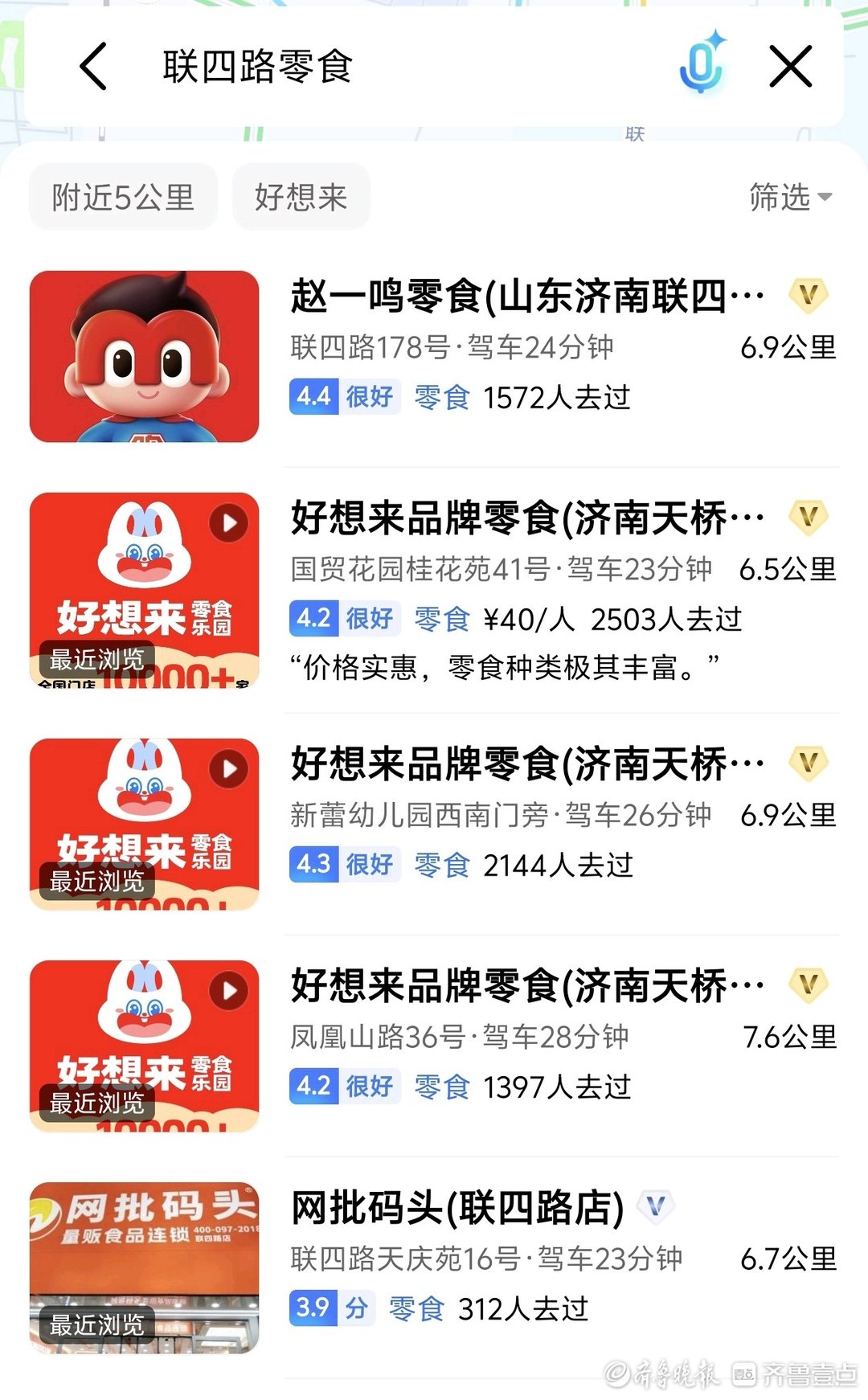
济南多家“好想来”闭店,“万店神话”能否继续
Qi Lu Wan Bao Wang· 2025-09-22 14:33
Core Viewpoint - The rapid expansion of the snack retail brand "Haoxianglai" is facing challenges, as evidenced by the closure of multiple stores in Jinan and a significant slowdown in new store openings by its parent company, Wancheng Group [1][5]. Group 1: Store Closures and Market Conditions - "Haoxianglai" has closed three stores in Jinan, with reports indicating that store density is too high in the area [2][5]. - The company has seen a dramatic decrease in new store openings, with only 1,468 new stores in the first half of 2025 compared to 9,776 in 2024 [5]. - The parent company reported a total of 259 store closures in the first half of 2025, surpassing the total for the entire previous year [5]. Group 2: Pricing Strategies and Market Competition - The brand employs a low-price strategy to attract customers, which has led to a competitive environment where many snack retailers are forced to lower prices [6][8]. - The low-price approach is facilitated by a simplified supply chain model that reduces operational costs [6]. - Major competitors like "Three Squirrels" have also adopted aggressive pricing strategies, resulting in revenue growth but a significant drop in net profit [7]. Group 3: Industry Trends and Future Outlook - The rapid expansion of snack stores has led to market saturation, with "Haoxianglai" opening 15,000 stores and another competitor, "Zhaoyiming," also surpassing 10,000 stores [12]. - Experts suggest that the current market dynamics reflect a necessary adjustment phase, where companies must align their resources and management capabilities for sustainable growth [12][13]. - The industry is shifting from a focus on quantity of stores to differentiation in products and supply chain efficiency, as brands seek to establish a competitive edge beyond just low prices [13][14].