因地制宜

Search documents
新一年,全力“拼经济”!(每周经济评论)
Ren Min Ri Bao· 2026-01-13 22:18
Group 1 - In 2026, China's economy is expected to achieve a strong start, driven by optimized supply-demand structure and policy benefits, with significant growth in consumption sectors such as tourism and retail [1] - During the New Year holiday, domestic travel reached 142 million trips, with total spending of 84.789 billion yuan, and Hainan's duty-free sales on New Year's Day increased by 93.8% year-on-year [1] - The government is actively promoting consumption and investment through various initiatives, including the allocation of 62.5 billion yuan in national subsidies and the launch of new drug listings in the national medical insurance catalog [1] Group 2 - The "Fifteenth Five-Year Plan" emphasizes the importance of adapting economic strategies to local conditions, which is crucial for achieving high-quality and sustainable development [2] - Local governments are focusing on leveraging their unique resources and capabilities to avoid homogenization and promote coordinated development, ensuring that economic policies align with regional strengths [2] - The new year has seen local leaders actively engaging in economic activities, with approximately 150 government events focused on economic development within the first week of 2026 [1][2] Group 3 - Coastal regions are enhancing their outward-oriented economic advantages, with Hainan Free Trade Port focusing on high-end shopping, healthcare, and education [3] - Inland regions are pushing for industrial upgrades and regional collaboration, with initiatives in Hubei and Chongqing aimed at fostering innovation and economic integration [3] - The new year calls for translating strategic plans into detailed implementation plans, emphasizing both immediate action and long-term commitment to economic growth [3]
张玉莲:激活乡村内生动力
Jing Ji Ri Bao· 2026-01-13 00:22
Core Viewpoint - Rural revitalization is a significant task for the great rejuvenation of the Chinese nation, with Jinggangshan serving as a vibrant window to observe the practice of Chinese-style modernization in rural areas [1] Group 1: Jinggangshan's Development Path - Jinggangshan has transitioned from being a poverty-stricken area to a model for rural revitalization, showcasing the practical application of Chinese-style modernization theories at the grassroots level [1] - The core value of Jinggangshan's approach lies in its "precise policy implementation methodology" and "resource integration capability tailored to local conditions," addressing the question of "what to do after poverty alleviation" through deepened reform and innovation [1] Group 2: Strategies for Rural Revitalization - The establishment of a modern industrial system that integrates "red" (revolutionary heritage) and "green" (ecological sustainability) development is a key strategy, which includes innovative organizational mechanisms that connect farmers to broader markets [1] - The strategy involves reshaping the brand system to transform resource advantages into developmental advantages, promoting a unified regional public brand of "Jinggangshan" and enhancing cultural tourism integration [1] - Strengthening Party leadership is emphasized to convert "spiritual strength" into "governance effectiveness," ensuring that farmers not only improve their economic status but also enhance their cultural and intellectual development [1] Group 3: Differentiated Revitalization Paths - The experience of Jinggangshan suggests the importance of "precise and pragmatic" strategies, advocating for a "classification method" for rural areas to avoid a one-size-fits-all approach [2] - For villages rich in cultural tourism and ecological resources, the focus should be on strengthening the tourism industry and establishing mechanisms for ecological compensation to achieve sustainable development [2] - The need to promote "two-way flow" between urban and rural areas is highlighted, aiming to reduce the opportunity cost for talent moving to rural areas and making them hubs for urban innovation elements [2] Group 4: Institutional Optimization - To advance rural modernization, a robust institutional framework is necessary, characterized by strong risk resistance, clear property rights, and efficient governance [2] - Encouraging a diversified economic system and new business models, such as courtyard and cloud economies, is essential for enhancing development resilience [2] - Deepening property rights reform to grant farmers substantial rights is crucial for motivating their participation in rural revitalization efforts [2]
学习贯彻党的二十届四中全会精神 | “人民至上”:从治水之道中汲取的治国理政智慧
Xin Lang Cai Jing· 2026-01-12 06:39
Core Insights - The article emphasizes the importance of water management wisdom in governance, highlighting the historical significance of the Dujiangyan irrigation system as a model for modern governance practices [1][9][10] Group 1: Principles of Water Management - "People-oriented" is a fundamental principle in water management and governance, reflecting the integration of Marxist historical perspectives and Chinese philosophies [1][4] - The concept of "因地制宜" (adaptation to local conditions) is crucial for effective decision-making in water management, ensuring that strategies are based on specific local realities [2][3][4] - "顺势而为" (going with the flow) is highlighted as a systematic approach to water management, emphasizing the need to respect natural laws and utilize modern technology [5][6] Group 2: Modern Governance and Development - The article discusses the necessity of integrating regional differences into high-quality development strategies, transforming these differences into comparative advantages [4][8] - The "十五五" (14th Five-Year Plan) emphasizes the importance of localized strategies while maintaining a unified national framework, allowing for optimal solutions tailored to local conditions [4][10] - The governance approach must focus on achieving the fundamental interests of the people, ensuring that development outcomes are shared and evaluated based on public satisfaction [9][10] Group 3: Cultural and Historical Context - The concept of "天人合一" (harmony between humans and nature) is presented as a characteristic of Chinese culture, advocating for a holistic view of water management that considers ecological balance [7][8] - Historical water management practices, such as those from ancient figures like Da Yu, are cited as foundational to understanding contemporary governance challenges [5][7] - The article concludes that the wisdom derived from water management practices can guide modern governance, contributing to the realization of a prosperous society [10]
人民日报刊发第五篇钟才平署名文章|宏观经济
清华金融评论· 2026-01-11 08:38
Group 1 - The core viewpoint emphasizes the importance of improving people's livelihoods as a driving force for economic development, highlighting the need to expand domestic demand and create a strong domestic market as a foundation for economic growth [3][4][5]. - The article discusses the significant potential for high-quality development in the real estate sector, noting that while urban housing stock is substantial, many residents still have unmet housing needs, particularly in terms of quality and location [4][5]. - It highlights the changing consumer preferences towards service consumption, with a notable increase in per capita service consumption expenditure from 5,000 yuan to 13,000 yuan between 2013 and 2024, indicating a shift towards experiential and emotional consumption [5][6]. Group 2 - The article outlines the necessity of creating a virtuous cycle of employment, income, consumption, and investment, emphasizing the importance of stabilizing employment and increasing income to boost consumption [7]. - It stresses the need for coordinated efforts to promote both consumption and investment, suggesting that they are interdependent and should work together to enhance the domestic market's growth and stability [8][9]. - The article calls for increased investment in sectors that align with new consumer demands, such as healthcare and cultural tourism, to better meet the needs of the population [10][11]. Group 3 - The article discusses the implementation of more proactive macroeconomic policies, including fiscal and monetary measures, to support economic stability and growth, with a focus on enhancing the effectiveness of these policies [25][26]. - It emphasizes the importance of precise and effective fiscal policies, advocating for increased government spending on key projects and social welfare to stimulate economic activity [26][27]. - The article also highlights the need for flexible monetary policies that adapt to changing economic conditions, ensuring liquidity and supporting the real economy [28][29].


连续三日,人民日报刊发钟才平文章|宏观经济
清华金融评论· 2026-01-09 09:22
Core Viewpoint - The articles emphasize the importance of "adapting to local conditions" in economic work, highlighting its role in achieving high-quality development and effective governance in China [2][3][4]. Group 1: Economic Strategy and Development - The concept of "adapting to local conditions" is a key method advocated by Xi Jinping, applied across various sectors including poverty alleviation, rural revitalization, and ecological governance [3][4]. - The current economic environment during the 14th Five-Year Plan period requires tailored approaches to address unique regional challenges, avoiding one-size-fits-all solutions [3][4]. - The emphasis on local adaptation is crucial for achieving high-quality development and addressing the imbalances between urban and rural areas [4][5]. Group 2: Economic Performance and Projections - China's economy is projected to grow by approximately 5% in 2025, with a total economic output expected to reach 140 trillion yuan [7][10]. - The manufacturing sector shows positive trends, with significant growth in high-tech manufacturing and equipment manufacturing, outpacing overall industrial growth [10][11]. - Despite challenges from international trade tensions, China's overall exports increased by 5.4% in dollar terms, demonstrating resilience [8][10]. Group 3: Policy Implementation and Governance - The articles stress the need for effective macroeconomic policies, including a more proactive fiscal policy and a flexible monetary policy to support economic recovery [15][18]. - There is a focus on enhancing the efficiency of fiscal spending, with a significant budget allocation of 29.7 trillion yuan for public expenditure in 2025 [17]. - The importance of aligning various policies to avoid contradictions and ensure cohesive economic governance is highlighted [19][20].

劈柴不照纹,累死劈柴人
Liao Ning Ri Bao· 2026-01-09 01:04
Core Viewpoint - The article emphasizes the importance of adhering to economic principles and understanding the underlying patterns of supply and demand, industry upgrades, and market fluctuations to avoid pitfalls in economic development [1]. Group 1 - The economic environment is complex and requires decision-makers to have patience and strategic determination to navigate challenges effectively [1]. - There is a warning against hasty actions driven by short-term gains without a solid understanding of local resources and market conditions, which can lead to project failures and financial losses [1]. - The article highlights the need for decision-makers to balance urgency with careful analysis to maintain a stable and predictable business environment [2]. Group 2 - Key principles for effective economic work include being pragmatic and adapting to local conditions, respecting the vitality of market entities, and ensuring a fair and transparent business environment [2]. - It is crucial to avoid ineffective approaches such as overgeneralization or excessive intervention, which can lead to misallocation of resources [2]. - Successful economic management relies on strategic methods rather than brute force, emphasizing the importance of understanding local realities and respecting objective laws [2].
连续两日,人民日报刊发钟才平文章
财联社· 2026-01-08 03:10
Core Viewpoint - The articles emphasize the resilience and growth of the Chinese economy, highlighting the importance of high-quality development and adaptability in response to international challenges [2][4]. Group 1: Economic Performance and Growth - The Chinese economy is expected to grow by around 5% in 2025, with a total economic output reaching 140 trillion yuan, maintaining its position among the world's major economies [4]. - Exports to ASEAN and the EU increased by 14.6% and 8.9% respectively in the first 11 months of 2025, while exports to the US decreased by 18.3%, yet total exports in dollar terms still grew by 5.4% [3][4]. Group 2: Industrial and Technological Advancements - The added value of equipment manufacturing and high-tech manufacturing industries grew by 9.3% and 9.2% respectively, outpacing overall industrial growth by 3.3 and 3.2 percentage points [4]. - High-tech product exports, particularly integrated circuits, reached 1.29 trillion yuan, marking a 25.6% increase [5]. Group 3: Policy and Reform Initiatives - The implementation of the Private Economy Promotion Law and the expansion of the negative list for market access are part of ongoing reforms to enhance the business environment [5]. - The establishment of a unified national market and the promotion of free trade zones are key steps in advancing high-level opening-up [5]. Group 4: Environmental and Social Progress - Significant improvements in environmental quality were noted, with PM2.5 concentrations in the Beijing-Tianjin-Hebei region dropping to 31 micrograms per cubic meter, a 54% decrease from a decade ago [6]. - Social security spending as a percentage of GDP has doubled from 4% in 2012 to approximately 8% now, aligning with levels seen in middle-income countries [6]. Group 5: Future Outlook and Confidence - The manufacturing purchasing managers' index rose to 50.1 in December, indicating expansion, while industrial profits increased by 0.1% year-on-year in the first 11 months [7]. - The leadership of Xi Jinping and the centralized guidance of the Party are seen as crucial for overcoming challenges and ensuring the sustained momentum of economic development [7].

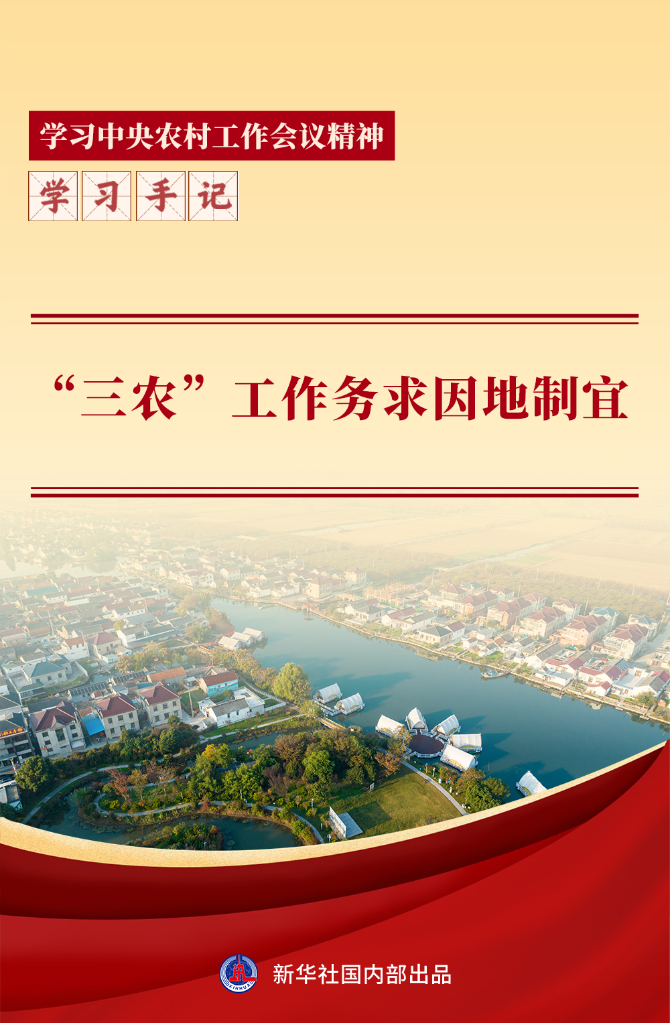
学习手记丨“三农”工作务求因地制宜
Xin Hua She· 2026-01-08 00:16
Core Viewpoint - The central theme of the article emphasizes the importance of the "localized approach" in rural development, as highlighted by President Xi Jinping during the recent Central Rural Work Conference, aiming to enhance rural governance and improve living conditions for farmers [5][6]. Group 1: Principles of Rural Development - The principle of "localized approach" is repeatedly stressed as a methodology for rural work, which should be tailored to local conditions and needs [5][6]. - The "Ten Thousand Projects" initiated in 2003 serves as a successful model for rural environment improvement, demonstrating the effectiveness of localized strategies [5][6]. - The article underscores the necessity of avoiding "performance projects" and "image projects" that do not align with the actual needs of farmers, ensuring that initiatives are practical and beneficial [5][6][8]. Group 2: Specific Examples and Applications - The article cites the example of rural toilet renovations, where President Xi has consistently advocated for a localized approach, recognizing the diverse conditions across different regions [6][7]. - It highlights the need for scientific assessment in determining which villages to preserve, renovate, or consolidate, emphasizing the importance of respecting farmers' opinions and local characteristics [7][9]. - The article notes that rural development should not mimic urban planning but should focus on improving living conditions while preserving the unique cultural and environmental aspects of rural areas [7][9]. Group 3: Future Directions - The "14th Five-Year Plan" suggests further advancing the construction of livable and workable beautiful villages, emphasizing the need for localized strategies that align with farmers' demands [9]. - Continuous exploration of new paths and methods is encouraged to create a modernized vision of rural development across the country [9].
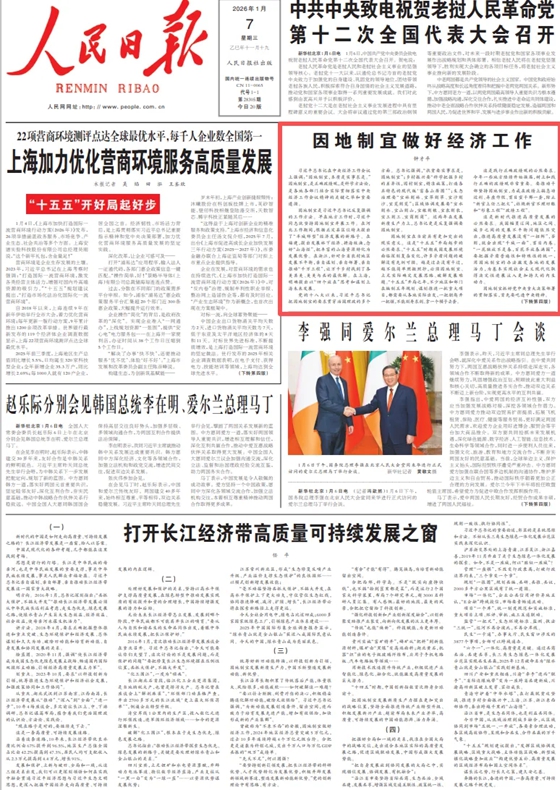
人民日报钟才平文章来了
Ren Min Wang· 2026-01-07 02:49
Core Viewpoint - The article emphasizes the importance of "tailoring economic work to local conditions," which is a principle advocated by General Secretary Xi Jinping, highlighting its significance in implementing national economic policies effectively [2][3]. Group 1: Implementation of Localized Economic Strategies - "Tailoring to local conditions" is described as a scientific methodology and a key approach for various regions and departments to implement the spirit of the Central Economic Work Conference [2]. - Xi Jinping has consistently applied this principle in various regions, such as proposing new economic development models in Hebei and promoting unique local economic strategies in Fujian and Zhejiang [2][3]. - The article stresses that the current complex development environment necessitates localized strategies, especially as the country enters the "14th Five-Year Plan" period [3]. Group 2: High-Quality Development and Governance - The article argues that localized strategies are essential for achieving high-quality development, as they address the imbalances between different regions and urban-rural areas [3]. - It highlights the need for a correct view of performance, urging local officials to avoid short-termism and superficial achievements [3][4]. - The article calls for a comprehensive understanding of national policies and the importance of aligning local actions with broader national goals [4]. Group 3: Practical Considerations for Local Governance - The article outlines the necessity of adhering to market-oriented and legal principles while optimizing the business environment to enhance local economic vitality [4]. - It emphasizes the importance of leveraging local advantages and conducting thorough research to identify unique development paths [4][5]. - The need for a differentiated assessment and incentive mechanism is highlighted to ensure effective implementation of localized strategies [5].
政策如何“开门红”?(国金宏观张馨月)
雪涛宏观笔记· 2026-01-06 09:35
Core Viewpoint - The article emphasizes that the 2026 policy will focus on investment as a key driver to achieve a strong economic start, with state-owned enterprises playing a crucial role in infrastructure investment [4][5][8]. Investment Policy Focus - The 2026 policy aims to leverage investment to stimulate economic growth, particularly in infrastructure, as fixed asset investment has been experiencing negative growth since the second half of 2025 [5][6]. - The government plans to implement major projects that can drive overall economic activity and support current demand [7]. Infrastructure Investment - The focus for 2026 will be on infrastructure construction, including projects like parking lots, charging stations, and urban renewal, with a significant increase in investment in social welfare sectors such as elderly care and healthcare [7][8]. - The National Development and Reform Commission has allocated 220 billion yuan for early-stage construction projects, supporting various sectors including urban underground utilities and ecological restoration [7]. Role of State-Owned Enterprises - State-owned enterprises are expected to take the lead in implementing major infrastructure projects, ensuring robust support for traditional infrastructure updates and new infrastructure development [8]. Financial Support for Investment - There is substantial financial backing for the investment initiatives, including 500 billion yuan in new policy financial tools and 200 billion yuan for project construction debt limits [9]. - The government is also focusing on resolving local fiscal difficulties and ensuring that necessary funds are available for investment projects [11]. Local Fiscal Management - The article highlights the shift in local fiscal management from merely ensuring basic services to also addressing debt repayment and clearing outstanding payments to businesses [11]. - The emphasis is on a sustainable fiscal approach that considers local conditions and avoids one-size-fits-all solutions [12][13]. Performance Evaluation and Policy Implementation - The importance of a differentiated evaluation system for local governments is stressed, aiming to ensure that performance metrics align with long-term sustainable growth rather than short-term gains [14]. - The article suggests that local governments will adopt a more balanced approach to development, focusing on their unique strengths and capabilities [15].