
央企重组

Search documents
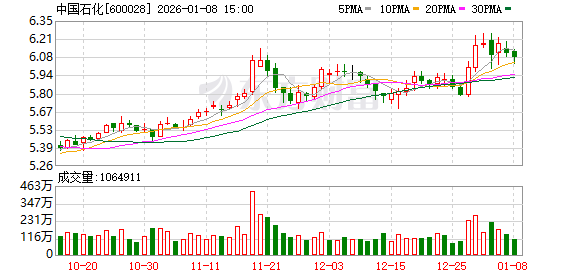
央企重组大动作 中国石化与中国航油实施重组
Qi Huo Ri Bao Wang· 2026-01-08 17:05
Core Viewpoint - The restructuring of China Petroleum & Chemical Corporation (Sinopec) and China Aviation Oil Group is a strategic move aimed at enhancing competitiveness in the aviation fuel industry and promoting green transformation in the aviation sector [2]. Group 1: Company Overview - China Aviation Oil is the largest integrated aviation fuel service provider in Asia, involved in procurement, transportation, storage, testing, sales, and refueling [2]. - Sinopec is recognized as the world's largest refining company and the leading aviation fuel producer in China [2]. Group 2: Strategic Implications - This reform represents a strategic and professional consolidation of central enterprises, responding proactively to international competition and the need for green transformation [2]. - The merger is expected to lower aviation fuel supply costs and enhance the competitiveness of China's aviation fuel industry [2].


两大央企重组,影响多大?最新解读来了
券商中国· 2026-01-08 14:58
Core Viewpoint - The merger between China Petroleum & Chemical Corporation (Sinopec) and China Aviation Oil Group aims to enhance national aviation energy supply security, promote green and low-carbon transformation in aviation energy supply, and establish a world-class aviation energy supplier [1][2]. Group 1: Company Overview - Sinopec is the largest refined oil and petrochemical product supplier in China, the world's largest refining company, and the second-largest chemical company, with a comprehensive energy industry chain [2]. - China Aviation Oil is the largest integrated aviation fuel service provider in Asia, involved in procurement, transportation, storage, testing, sales, and refueling of aviation fuel [2]. Group 2: Market Potential - The demand for aviation kerosene in China is projected to reach approximately 50 million tons by 2030, with an average annual growth rate of around 4% during the 14th Five-Year Plan period [2]. - According to S&P forecasts, China's aviation fuel consumption is expected to grow to 75 million tons by 2040 [2]. Group 3: Synergies and Competitive Position - The merger is expected to create significant synergies by leveraging integrated refining and aviation fuel supply systems, reducing intermediate links, and lowering supply costs [3]. - Currently, China's aviation fuel production, sales, and refueling operations are fragmented across different companies, which limits overall competitiveness compared to international integrated oil and gas companies [3]. Group 4: Green Transformation - The merger will facilitate the high-quality development of sustainable aviation fuel (SAF) industry, with Sinopec being the first in Asia to have independent R&D and commercial production of bio-jet fuel [3]. - China Aviation Oil plays a crucial role in the promotion and ecological construction of SAF, and the merger will enhance collaboration in this area [3]. Group 5: Strategic Context - This merger marks the first central enterprise-level restructuring case entering the 14th Five-Year Plan, aligning with the government's push for strategic and professional mergers and acquisitions [4]. - The State-owned Assets Supervision and Administration Commission (SASAC) emphasizes the importance of integrating key technologies, market channels, and strategic resources through mergers [4].
两大央企重组获批,新“巨无霸”诞生了!
Ge Long Hui· 2026-01-08 14:25
Core Viewpoint - The restructuring of China Petroleum & Chemical Corporation (Sinopec) and China Aviation Oil Group has created a super energy entity, significantly reshaping the aviation fuel industry in China [1][3]. Group 1: Company Overview - Sinopec is the world's largest refining company and the leading aviation fuel producer in China, controlling 40% of domestic aviation fuel production capacity and having technological advantages in sustainable aviation fuel (SAF) [3]. - China Aviation Oil is Asia's largest aviation fuel service company, monopolizing 95% of the aviation fuel sales network and providing a comprehensive supply chain from procurement to airport refueling [3]. - The merger transforms the relationship between the two companies from "buyer and seller" to a unified entity, streamlining the production and refueling process [3]. Group 2: Market Context - Global aviation fuel demand is projected to reach 389 million tons in 2025, with a year-on-year growth of 3.9%, while domestic demand is expected to exceed 40 million tons during the 14th Five-Year Plan period, with an average annual growth rate of 4% [5]. - The restructuring addresses key bottlenecks in the industry, such as redundancy in intermediate links and high costs, which have hindered development [5]. Group 3: Strategic Implications - This restructuring is part of a broader trend of professional integration among state-owned enterprises, with six groups of ten companies having undergone strategic mergers during the 14th Five-Year Plan [5]. - The merger is expected to enhance the efficiency of state capital allocation and position China's aviation fuel industry to compete with international giants like Shell and ExxonMobil [5]. Group 4: Impact on A-shares - Two types of stocks are highlighted for attention: Sinopec, which will benefit from stable aviation fuel sales and high-value-added business opportunities, and sustainable aviation fuel (SAF) concept stocks, such as HXN Energy and Longkun Environment, which will benefit from the merger's acceleration of SAF promotion [5].
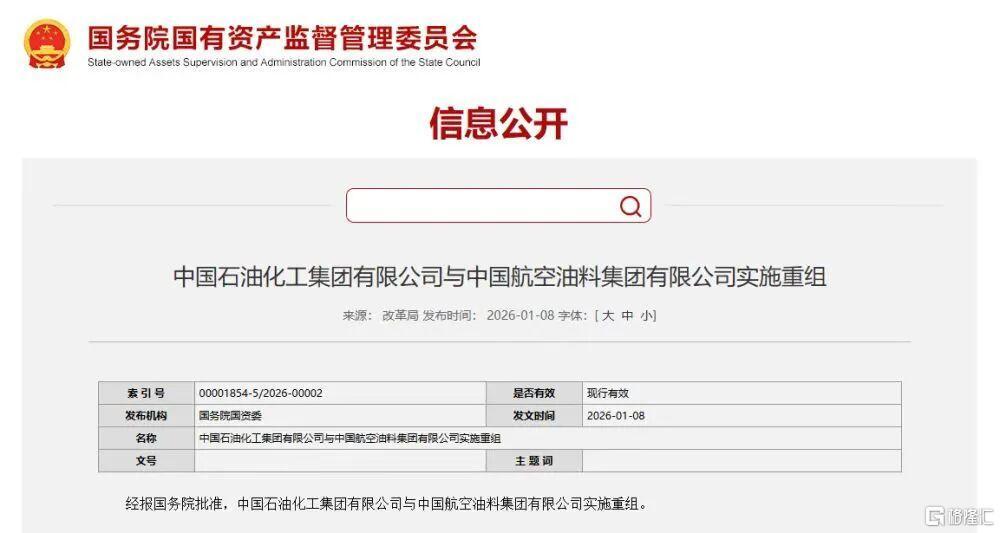
2026央企重组打响“第一枪”!能源“巨无霸”来了!
IPO日报· 2026-01-08 14:02
Core Viewpoint - The restructuring of China Petroleum & Chemical Corporation (Sinopec) and China Aviation Oil Group (China Aviation Oil) marks a significant transformation in China's energy sector, creating a comprehensive energy giant that integrates the entire supply chain from crude oil refining to aviation fuel supply, impacting the aviation transport industry and national energy security strategy [2][6]. Group 1: Restructuring Details - The restructuring is officially recognized as the first major move in the 2026 state-owned enterprise (SOE) restructuring initiative, aiming to create a more integrated and competitive energy company [2][10]. - Sinopec is the world's largest refining company and the second-largest chemical company, while China Aviation Oil is the largest aviation fuel service provider in Asia, covering procurement, transportation, storage, and sales [5][6]. - The merger aims to transition China Aviation Oil from a trade-focused entity to a production and supply integrated energy company, enhancing resource allocation and reducing redundant investments [6][7]. Group 2: Market Context and Demand - The demand for aviation kerosene is expected to rise significantly, with China projected to become the world's largest aviation population by 2025, making aviation kerosene the only growth segment in the country's refined oil consumption structure [7]. - Ensuring a stable supply of aviation fuel is critical for national economic stability and public transport systems, and the restructuring is designed to create a closed-loop system that enhances supply chain stability and bargaining power [7][9]. Group 3: Competitive Landscape - Major international aviation fuel service providers, such as Shell, BP, and ExxonMobil, have significant advantages in scale, product quality, and infrastructure, highlighting the need for Chinese companies to enhance their competitive capabilities through this merger [9]. - The restructuring is part of a broader trend in the "14th Five-Year Plan," where state-owned enterprises are optimizing their structures and focusing on strategic security and public service through market-oriented mergers [10].
油气领域两大央企联手,今年首例央企重组落地
Di Yi Cai Jing· 2026-01-08 13:59
Core Viewpoint - The strategic merger between China Petroleum & Chemical Corporation (Sinopec) and China Aviation Oil Holding Company marks a significant event in the new round of state-owned enterprise (SOE) restructuring, aimed at enhancing competitiveness in the oil and gas sector and facilitating green transformation [1][2][3] Group 1: Merger Details - The merger is a response to international competition and aims to optimize the layout of state-owned capital, avoiding homogeneous competition [2][3] - Sinopec is the world's largest refining company and the second-largest chemical company, while China Aviation Oil is Asia's largest integrated aviation fuel service provider [1][2] - The merger is expected to create synergies that enhance the overall competitiveness of the aviation fuel industry in China [2][3] Group 2: Industry Impact - The restructuring aligns with the forecast that China's aviation fuel consumption will grow from 39.28 million tons in 2024 to 75 million tons by 2040 [2] - The integration of Sinopec's sustainable aviation fuel (SAF) production capabilities with China Aviation Oil's distribution network is anticipated to accelerate the commercialization of green aviation fuel [3] - The merger is part of a broader trend of strategic and professional restructuring among SOEs, which is expected to continue during the 14th Five-Year Plan period [4][5] Group 3: Future Directions - The State-owned Assets Supervision and Administration Commission (SASAC) plans to further promote strategic and professional restructuring among SOEs to enhance operational efficiency and competitiveness [4][5] - Future efforts will focus on optimizing business layouts, integrating resources, and enhancing innovation capabilities within the industry [5]
大动作!中石化中航油官宣重组
Xin Hua Wang· 2026-01-08 10:57
据了解,中国航油是亚洲最大的集航空油品采购、运输、储存、检测、销售、加注于一体的航空运输服 务保障企业,主营业务主要涉及航油、石油、物流、国际和通航五大板块。中国石化是全球第一大炼油 公司和我国第一大航油生产商。 业内人士认为,此项改革是中央企业战略性、专业化重组整合的布局落子,也是应对国际竞争与绿色转 型的主动作为,有望助力降低航空燃料供应成本,增强我国航空燃料产业竞争力,促进航空业绿色低碳 转型。 央企重组大动作!中国石化与中国航油实施重组 国务院国资委8日发布消息,经报国务院批准,中国石油化工集团有限公司与中国航空油料集团有限公 司实施重组。 国有经济布局优化和结构调整,是做强做优做大国有资本和国有企业的内在要求。近年来,中央企业战 略性、专业化重组整合"加速跑"。"十四五"时期,6组10家企业实现战略性重组,新组建设立9家中央企 业,一系列专业化整合扎实开展,有效提高了国有资本的配置和运行效率。 来源:新华社 ...
周二停牌!600058,重大资产重组
Sou Hu Cai Jing· 2025-12-29 22:52
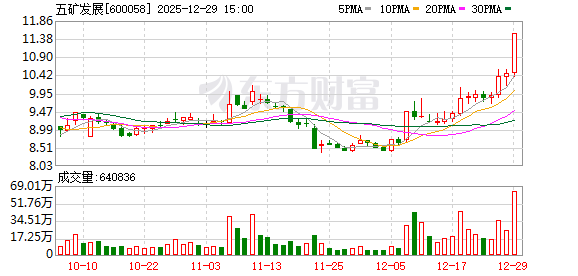
Group 1 - The core point of the news is the restructuring of assets within the "Wukuang system," specifically the integration of mining assets by Wukuang Development, which has led to a significant increase in its stock price, reaching a market value of 12.348 billion yuan [1][6] - Wukuang Development will suspend trading of its shares starting December 30, 2025, as part of the major asset restructuring plan [1][12] - The restructuring aims to enhance the quality of listed companies and fulfill historical commitments made by the actual controller, China Minmetals [6][11] Group 2 - Wukuang Mining's total asset value is reported to be 19.5 billion yuan, with a resource control total exceeding 4 billion tons, including six operating mines and three under construction [4] - The company has a production capacity of 16 million tons of iron ore and 6 million tons of iron concentrate annually [4] - The restructuring is part of a broader strategy to consolidate black metal mining assets, which has been a commitment since 2008 [6][7] Group 3 - Another listed company within the "Wukuang system," China Metallurgical Group Corporation (China MCC), is also actively pursuing asset integration, having received shareholder approval for asset sales [8][10] - The asset sales involve significant transactions, including the sale of 100% equity in MCC Real Estate for 31.237 billion yuan and other related assets for 29.44 billion yuan [10] - The restructuring efforts are aimed at optimizing business structures and reducing operational uncertainties, aligning with the high-quality development goals of state-owned enterprises [10]


周二停牌!600058 重大资产重组
Shang Hai Zheng Quan Bao· 2025-12-29 15:42
Group 1 - The core point of the news is the restructuring of assets within the "Wukuang system," specifically the integration of assets by Wukuang Development, which plans to acquire mining assets from its controlling shareholder, China Wukuang Co., Ltd. [2][7] - Wukuang Development announced that it will purchase equity stakes in Wukuang Mining and Luzhong Mining through asset swaps, issuance of shares, and cash payments, while raising supporting funds [2][5] - Following the announcement, Wukuang Development's stock price surged, reaching a market capitalization of 12.348 billion yuan by the end of trading on December 29 [2] Group 2 - As of October 2025, Wukuang Mining has total assets of 19.5 billion yuan and controls over 4 billion tons of resources, with an annual production capacity of 16 million tons for iron ore and 6 million tons for iron concentrate [5] - The restructuring is part of a broader initiative to enhance the quality of listed companies and fulfill historical commitments made by the actual controller, China Wukuang, during previous financing rounds [7] - Another listed company within the "Wukuang system," China Metallurgical Group Corporation (China Zhongye), is also actively pursuing asset integration, having received shareholder approval for asset sales on the same day [7][10]
中国神华1336亿重组夯实能源安全基石 煤炭资源扩容64.72%强化全产业链布局
Chang Jiang Shang Bao· 2025-12-21 23:21
Core Viewpoint - China Shenhua's significant asset restructuring aims to enhance its strategic position as a coal integration platform under the State Energy Group, addressing industry competition and optimizing its resource capabilities [2][4][6]. Group 1: Transaction Overview - China Shenhua plans to acquire 100% equity of 12 companies from the State Energy Group for a total consideration of 1,335.98 billion yuan, which includes cash payments of 935.19 billion yuan and share payments of 400.8 billion yuan [3][4]. - The transaction involves companies across various sectors, including electricity, coal, chemicals, and logistics, with a total assessed value of 1,436.75 billion yuan [3][4]. - The company will also raise up to 20 billion yuan from no more than 35 specific investors to cover transaction costs and fees [3]. Group 2: Competitive Landscape - The acquisition aims to resolve long-standing competition issues between China Shenhua and the State Energy Group, as both entities have signed multiple agreements since 2005 to avoid overlapping business interests [4]. - Post-transaction, the competitive commitments will be largely fulfilled, reducing potential business overlaps and enhancing the integrated operational framework of China Shenhua [4][6]. Group 3: Resource and Capacity Enhancement - Following the acquisition, China Shenhua's coal reserves will increase to 684.9 billion tons, a growth rate of 64.72%, while its recoverable coal reserves will rise to 345 billion tons, marking a 97.71% increase [6][7]. - The coal production capacity is expected to reach 5.12 billion tons, reflecting a 56.57% growth [6][7]. - Financial projections indicate that after the restructuring, China Shenhua's revenue and net profit will increase by 27.27% and 11.56%, respectively, with total assets rising by 40.99% [8]. Group 4: Financial Performance and Commitments - The 12 target companies are projected to generate revenues of 1,137.86 billion yuan and net profits of 66.87 billion yuan in 2023, with similar figures for subsequent years [7][8]. - Performance commitments have been established, requiring certain companies to achieve specified net profits over the next several years, ensuring accountability and financial viability post-acquisition [8].


国资重拳整合,电投能源百亿收购白音华煤电获批, 又一场百亿级能源资产整合拉开序幕
3 6 Ke· 2025-12-17 23:40
Group 1 - The core viewpoint of the news is that the restructuring of state-owned enterprises (SOEs) in China's energy sector is accelerating, exemplified by the acquisition of the Baiyinhu Coal Power by Inner Mongolia Power Investment Energy [1][2] - The acquisition aims to create a complete coal power industry chain, enhancing the coal self-supply rate of the company and improving operational efficiency [2][4] - The restructuring aligns with the policy direction of the State-owned Assets Supervision and Administration Commission (SASAC) to concentrate quality assets in listed companies, which has led to an increase in SOE restructuring cases [3][6] Group 2 - The acquisition is expected to improve the company's market competitiveness and resource allocation efficiency in the eastern Inner Mongolia region [4][5] - The integration of coal and power operations is anticipated to provide significant operational advantages, including better cost control and flexibility in energy supply [5][6] - The ongoing energy transition and the dual goals of ensuring energy security while promoting green development are driving the need for such integrated models in the industry [5][6] Group 3 - The approval from SASAC reflects a comprehensive policy framework supporting the optimization of capital structures in SOEs, facilitating asset integration [3] - The market generally responds positively to compliant and rigorous restructuring plans, with energy companies that have completed significant asset restructurings showing better long-term performance than the industry average [3][6] - Future trends indicate that the pace of integration in the energy sector will continue to accelerate, with potential for cross-sector collaborations, especially in emerging fields like renewable energy and energy storage [6]
