智能网联技术

Search documents
数据调查:车载音乐市场发展趋势分析及“十五五”投资战略可行性评估预测报告(2026版)
Sou Hu Cai Jing· 2025-12-26 01:30
Core Viewpoint - The car music market in China is experiencing significant growth driven by increasing vehicle ownership and the popularity of smart connected technologies, with a projected market size of 35.08 billion yuan by 2025 [6][8]. Group 1: Market Dynamics - The demand for in-car music services is rising, with users increasingly seeking high-quality music content and personalized services, leading to innovation and diversification in business models [6]. - By 2025, the top three channels for listening to in-car music will be Bluetooth playback from mobile phones (43.74%), self-downloaded in-car software (40.40%), and pre-installed in-car software (38.41%) [6]. - The user preference for diverse sound effects (66.91%) and the optimization of music layering and spatial quality (46.35%) indicates a shift towards a focus on audio quality beyond basic stability [6]. Group 2: User Behavior - The primary scenarios for using in-car music software include weekend leisure outings (54.18%), long-distance travel (50.63%), and daily commuting (39.67%), highlighting the importance of music in enhancing travel experiences [8]. - Male users prefer self-downloaded in-car software (41.70%) and pre-installed software (41.33%), while female users favor Bluetooth playback (44.69%), indicating different usage patterns based on gender [10]. Group 3: Future Outlook - The penetration rate of connected vehicles is expected to reach 77% by 2025, with the integration of 5G technology and the development of the Internet of Vehicles promising further growth in the in-car music market [6]. - The industry is anticipated to see a shift towards paid subscriptions and personalized recommendations as key profit drivers, with in-car music becoming more closely integrated with daily life scenarios [6].

年末车市订单遭“疯抢”
财联社· 2025-12-04 06:39
在2025年进入尾声、2026年即将到来的关键期,叠加购置税政策调整、明年订单提前释放等因素的国内车市迎来一波"抢单"热潮。 据财联社记者不完全统计, 选择"自掏腰包"为年内锁单消费者补贴购置税的品牌数量已近20个, 除前述外还包括奇瑞汽车、极氪、蔚来、理 想、广汽丰田等。 主机厂密集"兜底",归因为车辆购置税政策即将于2026年调整。根据两年前出台的《关于延续和优化新能源汽车车辆购置税减免政策的公 告》,2024年、2025年连续两年新能源汽车免征车辆购置税后,未来两年将实施减半征收车辆购置税的政策,其中每辆新能源乘用车减税 额不超过1.5万元。 有业内人士分析称,行业普遍预期2026年一季度国内车市将承压,主机厂此举属于未雨绸缪。 "除明年购置税从全免调整为减半征收外,很多 车企将这一波'兜底'政策截止日期定在'2026年2月14日',也是在将部分订单释放至明年一季度,以求届时完成平稳过渡。" 12月4日,深蓝汽车推出购置税"兜底"政策,即2025年12月31日前锁单深蓝全系车型,因非客户原因导致车辆2026年开票交付、且在 2026年2月14日(含)前提车,可享受深蓝跨年购置税差额补贴。 除深蓝汽车外, ...
拥抱万亿级消费大市场 汽车产业迎广阔新机遇
Xin Hua She· 2025-11-30 13:54
Group 1 - The demand for "large space and multiple seats" among family users is driving the hot sales of new energy MPVs, with three-row seating providing comfortable travel for the whole family [1] - The new implementation plan aims to create three trillion-level consumption fields and ten hundred-billion-level consumption hotspots by 2027, with smart connected vehicles being one of the key areas [1] - The plan emphasizes enhancing the adaptability of supply and demand, encouraging the development of innovative products and experiences in the smart connected new energy vehicle sector [1] Group 2 - China's new energy vehicle production has seen a leap from approximately 1.4 million units in 2020 to over 13 million units in 2024, with the market size expanding significantly [2] - By October 2025, new energy vehicle sales accounted for 51.6% of total new car sales, marking a significant milestone [2] - The automotive industry is upgrading its supply side to meet the growing and diverse consumer demands, with a complete smart connected vehicle industry system established [3] Group 3 - The average range of pure electric passenger vehicles is nearing 500 kilometers, with battery costs reduced by 30%, lifespan increased by 40%, and charging speed improved by over three times [3] - Companies are focusing on personalized markets, with new models like the Leap Motor Lafa5 targeting the 100,000 yuan price range, combining aesthetics, performance, and intelligence [3] - The establishment of over 8,400 charging and battery swap stations globally by NIO supports a comprehensive energy service system for various travel needs [3] Group 4 - The next steps include promoting automotive circulation and consumption reforms, expanding the second-hand car market, and enhancing the automotive aftermarket, including modifications, rentals, and camping [4]
从油电博弈到生态竞争智能化进一步“破圈”
Zhong Guo Zheng Quan Bao· 2025-11-21 20:09
Core Insights - The 23rd Guangzhou International Auto Show showcases 93 global debut vehicles and a total of 1,085 vehicles, with 58% being new energy models, indicating a shift towards comprehensive electrification and intelligent competition in the automotive industry [1][2] - From next year, the purchase tax for new energy vehicles will be halved, prompting consumers to accelerate purchases before year-end, further strengthening the dual-driven market of new energy and exports [1][2] - The penetration rate of new energy vehicles in the domestic passenger car market has reached 57.8%, with various brands focusing on niche markets to alleviate range anxiety through technological innovation [2][3] Industry Trends - The competition has evolved from focusing on single functionalities to a system-level competition involving "chips + software + ecosystem," reflecting a trend towards integrated smart mobility solutions [5][6] - Traditional luxury brands like Mercedes-Benz and BMW are enhancing their electric vehicle offerings, while domestic brands leverage their full industry chain advantages to push for both technological accessibility and high-end breakthroughs [3][4] - Core supply chain companies, including those in battery and intelligent solutions, are becoming significant players in the industry, with a notable increase in exhibitors at the auto show [4][5] Market Dynamics - The auto show serves as a critical platform for companies to showcase their achievements and strategize for the upcoming year, potentially boosting year-end sales [6][7] - The event is expected to set the tone for the automotive market trends in the following year, emphasizing efficiency, intelligence, and alignment with consumer needs [7]
财联社汽车早报【11月18日】
Xin Lang Cai Jing· 2025-11-18 00:54
Group 1: New Energy Vehicle Exports - In October 2025, China's new energy vehicle exports reached 256,000 units, marking a year-on-year increase of 99.9% and a month-on-month increase of 15.4% [1] - From January to October 2025, new energy vehicle exports totaled 2.014 million units, reflecting a year-on-year growth of 90.4% [1] Group 2: Automotive Investment Growth - Automotive investment growth is projected to reach 17.5% in 2025, significantly higher than other manufacturing sectors [2] - In October 2025, total vehicle production was 328,000 units, with new energy vehicle production at 171,000 units, representing a year-on-year increase of 19% and a penetration rate of 52% [2] Group 3: GAC Group Leadership Changes - GAC Group announced the appointment of He Xianqing as General Manager and Wang Dan as Chief Accountant, marking a significant leadership change aimed at reform [3] Group 4: Geely Automotive Financial Performance - Geely Automotive reported a third-quarter revenue of 89.19 billion yuan, a year-on-year increase of 27%, and a net profit of 3.82 billion yuan, up 59% year-on-year [4] Group 5: XPeng Motors Financial Results - XPeng Motors reported third-quarter revenue of 20.38 billion yuan, a year-on-year increase of 102%, with a net loss of 380 million yuan [6] - The total vehicle deliveries for the third quarter reached 116,007 units, a 149.3% increase compared to the same period in 2024 [6] Group 6: Leap Motor Financial Performance - Leap Motor achieved a net profit of 150 million yuan in the third quarter of 2025, marking consecutive quarters of profitability [8] - The company delivered 173,852 vehicles, a 101.8% increase year-on-year, with revenue of 19.45 billion yuan, up 97.3% [8] Group 7: Future Product Plans of XPeng Motors - XPeng Motors plans to launch seven new models in 2026, including three super electric range-extended products in the first quarter [11] Group 8: BMW iX3 Production Plans - BMW's new generation iX3 is set to be produced in 2026, featuring advanced driving assistance technologies, with extensive testing already underway [12]



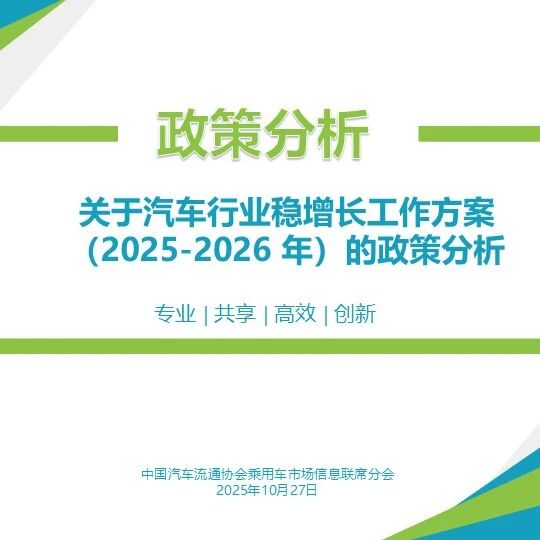
【政策综述】关于汽车行业稳增长工作方案(2025-2026年)政策分析
乘联分会· 2025-11-13 08:40
Core Viewpoint - The article discusses the "Automobile Industry Stabilization and Growth Work Plan (2025-2026)" issued by eight ministries, aiming to promote stable growth and high-quality development in the automotive sector through multi-departmental collaboration [4][5]. Background and Implementation Significance - The 2025-2026 work plan is a response to the complex external environment and domestic challenges faced by the automotive industry, following the success of the previous 2023-2024 plan which aimed for a total vehicle sales target of approximately 27 million units in 2023, with a 3% year-on-year growth [7][8]. - The plan emphasizes the automotive industry's role as a "ballast stone" for economic growth, focusing on quality improvement, technological advancement, and green transformation to meet both domestic and international challenges [9]. Key Policy Measures Expanding Domestic Automobile Consumption - The plan includes measures to accelerate the market expansion of new energy vehicles (NEVs), with a target of promoting over 700,000 NEVs in public sectors across 25 pilot cities [11]. - It also aims to enhance automotive consumption through trade-in programs and support for second-hand vehicle sales, alongside promoting smart connected vehicle applications [11]. Improving Supply Quality - The plan emphasizes technological innovation to stimulate demand, with policies aimed at enhancing product performance and fostering internationally competitive Chinese brands [12]. - It includes upgrading standards for NEVs and related technologies, ensuring supply chain stability, and promoting digital transformation within the industry [12]. Optimizing Industry Development Environment - The plan outlines the need for improved infrastructure, including charging facilities, and regulatory reforms to streamline vehicle production and management [13]. - It aims to enhance competition order within the industry and strengthen recycling and utilization management for end-of-life vehicles [12]. Enhancing International Cooperation - The plan encourages automotive exports by supporting companies in developing products suited for international markets and improving financial services for exports [14]. - It also promotes collaboration in setting international standards and participating in global automotive forums [14]. Support Measures - The plan highlights the importance of coordinated efforts among various departments and emphasizes the need for monitoring and talent development to support the automotive industry's growth [15]. - It aims to create a robust policy framework that aligns with future demands and fosters innovation [15]. Overall Analysis - The work plan provides a clear roadmap for the automotive industry, balancing growth targets with quality improvements and international expansion [16]. - It sets ambitious sales targets for NEVs, projecting 15.5 million units by 2025, while ensuring that the automotive sector contributes positively to the overall economy [16].
兴民智通与北汽集团签署战略合作协议
Zheng Quan Shi Bao· 2025-11-12 18:38
Core Insights - The company, Xingmin Zhitong, has signed a strategic cooperation agreement with BAIC Group to collaborate in the fields of new energy vehicle technology research and development, vehicle sales, and resource sharing [2][3]. Group 1: Technical Collaboration - The partnership will focus on wheel product innovation, establishing a joint technical mechanism to enhance raw material systems, optimize product structures, and refine key manufacturing processes [2]. - In smart connected technology development, both parties aim to create a deep technical cooperation mechanism to upgrade next-generation in-vehicle intelligent systems, focusing on vehicle communication evolution and developing hardware and software for 5G and future 6G [2][3]. Group 2: Platform Development and Operations - The companies plan to jointly build a "computing power + data + model" collaborative system to support BAIC's rapid implementation of intelligent driving, smart cockpits, and intelligent manufacturing [3]. - They will integrate chip-level security solutions and digital twin technology to innovate data elements, reduce operational costs, and enhance operational efficiency [3]. Group 3: Business Model Innovation - Xingmin Zhitong will leverage its subsidiaries' expertise to explore new scenarios and applications for vehicle owners, such as creating an integrated emergency rescue model using satellite communication and drones [3]. Group 4: Sales and Procurement - The companies will promote each other's brands and products, with Xingmin Zhitong planning to purchase no less than 200 vehicles from BAIC Group's brands over the next three years [4]. Group 5: Industry Standards and Capital Cooperation - They will collaborate on industry standards, utilizing Xingmin Zhitong's experience in standard formulation to participate in key research projects and promote innovation results [4]. - The partnership will also focus on strategic emerging fields like vehicle networking security and low-altitude economy, aiming to establish an industrial fund and participate in project investments [4].

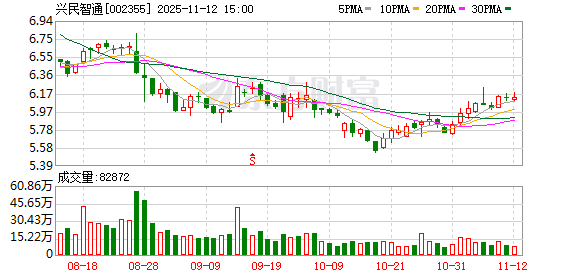
兴民智通:与北汽集团签订战略合作协议
Ge Long Hui A P P· 2025-11-12 11:23
Core Viewpoint - The company, Xingmin Zhitong, has signed a strategic cooperation agreement with BAIC Group to collaborate in the fields of new energy vehicle technology research and development, as well as vehicle sales [1] Group 1: Cooperation Details - The cooperation will include innovation and optimization of wheel products, joint development of intelligent connected technologies, and co-construction and operation of platforms [1] - Xingmin Zhitong plans to purchase no less than 200 vehicles from BAIC Group's brands (including Xiangjie, Jihu, Beijing Off-road, Foton, etc.) within three years [1]
【港交所IPO】赛力斯:“A+H”双平台共振,领航豪华新能源赛道高质量发展
Sou Hu Cai Jing· 2025-11-05 10:58
Core Viewpoint - The successful listing of Seres Group on the Hong Kong Stock Exchange enhances its international financing channels and brand image, establishing a dual-platform structure that supports diversified capital and R&D investments [9][11]. Company Overview - Seres Group, listed under the stock code 09927, aims to leverage its H-shares to optimize its capital structure and increase R&D investments, with approximately 70% of the funds raised allocated for cutting-edge technology development [3][9]. Financial Performance - In 2024, Seres Group's revenue reached 145.176 billion, a year-on-year increase of 305.04%, with a net profit of 5.946 billion, marking a turnaround to profitability [11]. - For the first three quarters of 2025, revenue continued to rise to 110.534 billion, with a net profit of 5.312 billion, reflecting a growth of 31.56% [11]. - The company's total assets exceeded 121.506 billion, and net assets reached 27.803 billion, representing increases of 28.76% and 126.70% respectively [11]. Product and Market Strategy - The Wanjie brand serves as a core growth engine, with cumulative deliveries exceeding 800,000 units by September 2025, setting records in the luxury electric vehicle segment [12]. - Seres is focused on building a strong technological moat, investing in advanced technologies such as the Magic Cube technology platform and intelligent safety systems, aligning with the trend of "software-defined vehicles" [14]. Capital Market Engagement - The H-share listing has restructured the valuation system towards global standards, connecting with global investors and establishing a new valuation paradigm of "Chinese innovation + international capital" [11]. - The company secured commitments from 22 cornerstone investors, raising approximately 826 million USD (around 64.21 billion HKD) [15]. Future Outlook - Seres plans to expand its overseas network through various strategies, including joint ventures and acquisitions, focusing on markets in the Middle East, Europe, Central America, and South America [16]. - The company aims to enhance its global brand influence and establish a comprehensive service system covering sales and charging networks [16].

《节能与新能源汽车路线图3.0》明确,到2040年新能源汽车渗透率达80%以上丨快讯
Hua Xia Shi Bao· 2025-10-23 08:56
Core Viewpoint - The "Roadmap 3.0" for energy-saving and new energy vehicles has been officially released, showcasing a significant evolution in perspective, content, and framework compared to previous versions, emphasizing forward-looking, systematic, scientific, inheritable, open, and public welfare principles [2] Group 1: Overall Goals - The roadmap sets seven overarching goals, including achieving peak carbon emissions in the automotive industry by around 2028, ahead of national commitments, and reducing emissions by over 60% from peak levels by 2040 [3] - It aims for over 80% penetration of new energy vehicles by 2040, accelerating the full electrification of the automotive industry [3] - The development of a mature and comprehensive infrastructure ecosystem for intelligent connected vehicles is targeted, with large-scale application of high-level autonomous driving products [3] - The roadmap envisions China becoming a global leader in automotive technology innovation, with original innovation capabilities leading worldwide [3] - It seeks to establish a modern automotive industry cluster characterized by innovation, data-driven approaches, collaboration, resilience, safety, and sustainability, achieving high-end, intelligent, and green development [3] - The global competitiveness of Chinese brands is expected to significantly improve, with key component enterprises deeply integrated into the global industry system [3] Group 2: New Energy Technology - The roadmap predicts that within the next 5-15 years, new energy vehicles will become mainstream, with a steadfast commitment to electrification [4] - By 2040, the penetration rate of new energy passenger vehicles is expected to exceed 85%, with battery electric vehicles (BEV) accounting for 80% [4] - The application scenarios for new energy commercial vehicles are projected to expand from urban and short-distance to medium and long-distance, with a penetration rate of around 75% by 2040 [4] - Fuel cell vehicles are anticipated to grow from thousands to hundreds of thousands and eventually to over 4 million units by 2040 [4] Group 3: Intelligent Connected Technology - The roadmap indicates that intelligent connected vehicles will enter a rapid market development phase over the next 5-15 years [4] - By 2030, L2 and above intelligent connected passenger vehicles are expected to be fully popularized in new cars, with market penetration rates for L2 and above commercial vehicles exceeding 50% and 85% by 2030 and 2035, respectively [4] - By 2035, over 70% of passenger vehicles with L3/L4 capabilities and over 35% of commercial vehicles with L4 capabilities are projected [4] - New sales of L4 autonomous operational vehicles are expected to reach tens of thousands by 2030 and millions by 2035, with L4 vehicles fully popularized in new intelligent connected cars by 2040 and L5 vehicles beginning to enter the market [4]