
流动性危机

Search documents
2026年2月6日,黄金比特币美股一夜全崩,超过43万人一夜爆仓,爆掉近21亿美元
Sou Hu Cai Jing· 2026-02-07 04:19
Core Viewpoint - The financial markets experienced a significant crash on February 6, 2026, driven by a sudden shift in monetary policy expectations, high leverage trading, and a retreat of risk aversion, leading to widespread sell-offs across various asset classes [1][8]. Group 1: Precious Metals - Silver prices plummeted over 19% in a single day, marking the most severe drop in five years, with domestic futures contracts hitting the limit down [1] - Gold prices fell below the critical psychological level of $4,800 per ounce, reaching a low of $4,780, with a daily decline of 4.08% [3] Group 2: Energy Markets - WTI crude oil futures dropped over 2%, falling below $64 per barrel, while Brent crude also declined over 2%, losing the $68 mark [3] Group 3: Stock Markets - The Dow Jones index fell nearly 600 points, a decrease of approximately 0.97%, while the Nasdaq composite index saw a deeper drop of 1.39% [3] - Major tech companies, including Apple, Microsoft, Alphabet, and Nvidia, all experienced declines, exacerbated by disappointing earnings reports [3] Group 4: Cryptocurrency Market - Bitcoin's price fell below the critical support level of $70,000, dropping to $67,000 with a maximum decline of over 12% within 24 hours [4] - Over 430,000 investors were liquidated, with total losses amounting to $2.069 billion [4] Group 5: Key Negative Factors - The first factor was a 180-degree shift in expectations regarding the Federal Reserve, with potential hawkish leadership signaling a faster reduction of the balance sheet and prolonged high interest rates [5] - The second factor involved high leverage among investors, particularly in precious metals and cryptocurrencies, which led to forced liquidations as margin requirements were raised [6] - The third factor was a retreat of risk aversion and tightening liquidity, as geopolitical tensions eased and investors sold off positions in gold and silver to cover losses in other markets [6] Group 6: Market Dynamics - The market exhibited characteristics of liquidity drying up, with a lack of buying depth leading to significant sell orders being executed at lower prices [7] - Uncertainty in U.S. economic data, including a delay in the non-farm payroll report and rising layoff announcements, contributed to market apprehension [7] - The overall environment indicated a tightening of global liquidity, with major central banks signaling a shift away from ultra-loose monetary policies [7]


马斯克或成黄金的“黑天鹅”?
Sou Hu Cai Jing· 2026-02-07 01:16
Core Insights - Tom Lee, co-founder and research head of Fundstrat Global Advisors, presents a scenario where Elon Musk disrupts the global financial system, suggesting that gold is not only a "Lindy effect" asset but also tied to demographic trends [3][4][5] - Lee emphasizes that gold's value is significantly influenced by population structure, noting that preferences tend to shift across generations [6] - Fundstrat's research indicates that gold's total valuation ranges from $29 trillion to $34 trillion, comparable to the market capitalization of the seven largest tech companies at approximately $21 trillion [6] Gold and Demographics - Lee argues that gold's appeal is particularly strong among the Baby Boomer generation, while Generation X is more inclined towards hedge funds and alternative investments [6] - He highlights that the total amount of gold above ground could fit into a swimming pool, indicating its relative scarcity [7] Risks and Space Exploration - Lee identifies a potential "black swan" event where Musk discovers a gold-rich asteroid, which could lead to him becoming a central bank governor [5][10] - He notes that all gold on Earth originated from extraterrestrial events, suggesting that space companies might find more gold in the future [8][9] Gold Price Trends - According to Fundstrat, gold prices may have already peaked, as historical data shows that gold typically reaches a 150% increase before a downturn [11][12] - Lee points out that a significant drop in gold prices on January 30, where it fell by 9%, aligns with historical patterns indicating a peak [12][13] Historical Context of Gold Price Fluctuations - The article outlines six major historical downturns in gold prices, emphasizing that each was preceded by significant market events or shifts in investor sentiment [14][22] - Key factors contributing to these downturns include Federal Reserve interest rate hikes, liquidity crises, and shifts in market preferences away from gold [22]

避险资产异动!黄金暴跌、原油跳涨:一个被误读的"危机信号"
Sou Hu Cai Jing· 2026-02-06 10:25
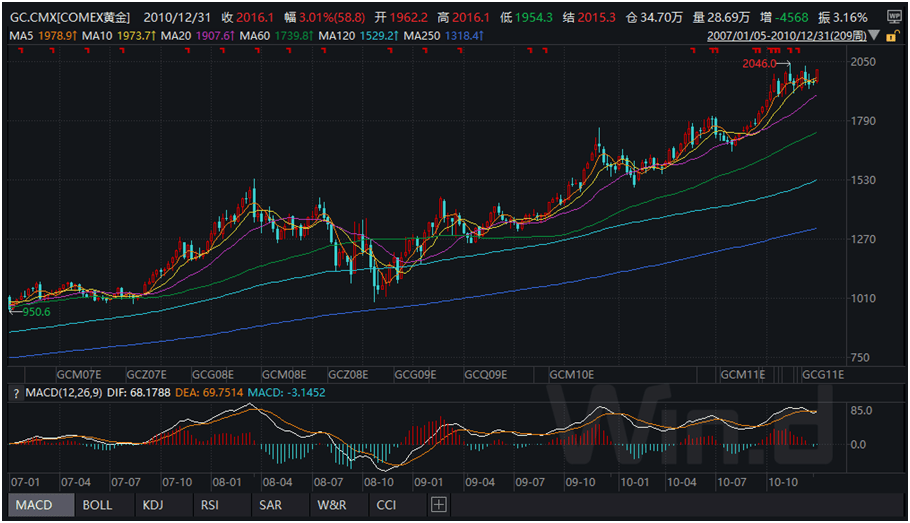
Core Viewpoint - The recent sharp decline in gold and silver prices after a rapid increase has raised concerns among investors about a potential liquidity crisis in the U.S. [1] Group 1: Historical Context and Market Behavior - Precious metals like gold and silver are traditionally viewed as safe-haven assets, particularly during geopolitical conflicts or negative external shocks, leading to price increases [1] - Historical data shows that during the 2008 financial crisis, gold prices fell by one-third before recovering due to government intervention through monetary policy [1][4] - The relationship between gold prices and financial crises is evident, as seen during the 2008 crisis when investor panic led to increased cash holdings and a subsequent drop in gold prices [4][6] Group 2: Current Market Dynamics - The recent price drop in gold and silver is attributed to three main factors: profit-taking after a high volatility period, adjustments in margin requirements by CME, and the nomination of a hawkish Federal Reserve chair candidate [7][8][9] - The adjustment in margin requirements increased pressure on high-leverage speculators, contributing to the price correction [8] - The nomination of Kevin Walsh, who advocates for "rate cuts and balance sheet reduction," may influence market sentiment and asset prices, particularly in relation to oil prices [9] Group 3: Investment Strategies and Future Outlook - The significant price correction in precious metals does not necessarily indicate an imminent liquidity crisis, and current investment strategies can continue to be executed [11] - Investors holding positions in gold and silver futures should prepare for volatility and consider reducing leverage while maintaining a safety margin [11] - Monitoring oil prices is recommended, as they may exhibit an inverse relationship with precious metal prices leading up to the new Federal Reserve chair's official appointment [11]
CA Markets:美联储政策转向或加速资产再定价
Sou Hu Cai Jing· 2026-02-06 03:00
Core Viewpoint - The global financial market is at a critical juncture, with the Federal Reserve's monetary policy changes being a core variable influencing market dynamics. The divergence between the Fed's hawkish stance and the market's dovish expectations is causing significant volatility across various asset classes [1][18]. Group 1: Federal Reserve Policy and Market Expectations - The Federal Reserve is currently in a "hawkish wait-and-see" position, which is the root cause of market volatility and asset repricing. The Fed's recent statements emphasize the need to maintain high interest rates until inflation stabilizes at the 2% target [2][4]. - In January 2026, the Fed decided to keep the federal funds rate unchanged at 3.50%-3.75%, signaling a pause in the rate-cutting cycle and removing language that suggested progress on inflation, which has led to a shift in market expectations [2][5]. - Market participants are betting on a rate cut in June 2026, with a probability of 68%, while the expectation for a March rate cut has dropped to 17.1%, indicating a significant shift in sentiment [6]. Group 2: Market Reactions and Asset Volatility - The divergence between Fed policy and market expectations has led to dramatic fluctuations in global asset markets, particularly in the U.S. Treasury market, where the 10-year Treasury yield fell from 4.3% to 3.8%, marking a significant drop [7]. - The tech sector has experienced a sell-off, with the Nasdaq 100 index declining over 4% in three consecutive trading days, reflecting concerns over tightening liquidity and high valuations in the tech space [8][9]. - The S&P 500 index is approaching a critical support level at 4800 points, and a breach of this level could trigger further panic selling, indicating a potential spiral downwards [10]. Group 3: Asset Repricing Trends - The tightening liquidity environment is expected to accelerate the repricing of global assets, with a fundamental shift in asset allocation logic anticipated. The Fed's uncertain policy direction will be a key driver of this process [11]. - The U.S. Treasury market is expected to experience continued volatility, with yields likely to trend lower as the market anticipates a rate cut in June, potentially stabilizing around 3.6%-3.8% [11]. - The stock market is expected to see increased differentiation, with high-valuation tech stocks facing ongoing pressure while value stocks and defensive sectors may attract more investment [12]. Group 4: Investment Opportunities and Strategies - The A-share and H-share markets are showing valuation advantages, potentially becoming a safe haven for international funds amid declining global risk appetite [13]. - Investors are advised to focus on structural opportunities in oil and industrial commodities, which are expected to benefit from global economic recovery and geopolitical tensions [12][13]. - A balanced approach to U.S. equities is recommended, with a shift away from high-valuation tech stocks towards value stocks and defensive sectors to mitigate risk [14].
国泰海通:市场波动加剧 建议2月超配AH股、美股、原油与工业商品
智通财经网· 2026-02-05 22:38
Core Viewpoint - The liquidity crisis is intensifying market volatility, accelerating the repricing of major asset classes, while global equities and commodities may still present performance opportunities. The recommendation is to overweight AH shares, US stocks, crude oil, and industrial commodities in February [1][2]. Group 1: Strategic Asset Allocation Framework - The company has developed an "all-weather" asset allocation framework consisting of Strategic Asset Allocation (SAA), Tactical Asset Allocation (TAA), and Major Event Review Adjustments to guide investment decisions [2]. - SAA aims to diversify macro risks and set long-term allocation benchmarks to ensure portfolio robustness, while TAA uses quantitative methods to identify assets with superior short-term risk-return characteristics and adjusts portfolio weights accordingly [2]. - The final step involves subjective review of major events to calibrate and supplement quantitative results [2]. Group 2: Equity Asset Recommendations - Multiple factors support the performance of Chinese equities, recommending an overweight in A/H shares. The upcoming economic work conference and the expectation of further expansion in the broad deficit suggest a more proactive economic policy [3]. - The Federal Reserve is expected to lower interest rates in December, and the stable appreciation of the RMB provides favorable conditions for monetary easing in early 2026, enhancing market risk appetite [3]. - The "Goldilocks" scenario is emerging, favoring US stock performance, with the US economy showing resilience despite marginal cooling, and corporate earnings expectations potentially supporting upward movement in US stock indices [3]. Group 3: Bond Asset Recommendations - The recommended bond allocation weight for February 2026 is 35.00%, including long-term and short-term government bonds [4]. - Structural monetary policy may strengthen the allocation to government bonds, as the imbalance between financing demand and credit supply remains a reality, but the trend of rising risk appetite may lead to a rebalancing of asset allocations [4]. - The US economy is cooling but not stalling, with a moderate decline in the labor market and favorable conditions for reducing inflationary pressures, suggesting a potential decline in US Treasury yields [4]. Group 4: Commodity Asset Recommendations - The recommended commodity allocation weight for February 2026 is 12.50%, with an overweight in crude oil and industrial commodities [5]. - The geopolitical situation in the Middle East is intensifying, suggesting an overweight in crude oil, as global demand remains relatively weak, and OPEC+ has decided to continue production cuts [5]. - Demand expectations for industrial commodities are being revised upward, with structural demand driven by construction, electric grids, and electric vehicles, indicating a potential supply-demand imbalance for industrial metals like copper [5].

国泰海通|策略:市场波动加剧,权益商品迎配置良机
国泰海通证券研究· 2026-02-05 14:00
Core Viewpoint - The report suggests that the liquidity crisis is intensifying market volatility, which will accelerate the repricing of major asset classes. Global equities and commodities may still present performance opportunities, recommending an overweight in AH shares, US stocks, crude oil, and industrial commodities for February [1]. Group 1: Strategic Asset Allocation (SAA) and Tactical Asset Allocation (TAA) - The "all-weather" asset allocation framework consists of SAA, TAA, and adjustments based on significant events, providing a comprehensive guide for investment decisions. SAA diversifies macro risks and sets long-term allocation benchmarks for portfolio stability, while TAA identifies short-term risk-return characteristics to adjust portfolio weights for enhanced returns [1]. - The report emphasizes that the liquidity crisis will lead to accelerated repricing of major asset classes, with global equities and commodities likely to perform well despite unchanged fundamental pricing factors [1]. Group 2: Equity Allocation Recommendations - For February 2026, the recommended equity allocation weight is 47.50%, with overweight positions in A-shares (10.00%), Hong Kong stocks (10.00%), and US stocks (17.50%). European and Japanese stocks are set at standard weights of 5.00% each [2]. - Multiple factors support the performance of Chinese equities, suggesting an overweight in A/H shares due to an expected expansion of the fiscal deficit and more aggressive economic policies. The anticipated interest rate cut by the Federal Reserve and the stable appreciation of the RMB provide favorable conditions for monetary easing in China [2]. - The report indicates that the "Goldilocks" scenario is emerging, which is beneficial for US stock performance, as the US economy shows resilience despite marginal cooling, with corporate earnings expectations likely to support upward movement in US stock indices [2]. Group 3: Bond Allocation Recommendations - The recommended bond allocation weight for February 2026 is 35.00%, with allocations to long-term (7.50%) and short-term (10.00%) government bonds, as well as long-term (7.50%) and short-term (10.00%) US Treasury bonds [3]. - Structural monetary policies are expected to strengthen the allocation towards government bonds, as the imbalance between financing demand and credit supply remains a reality. The trend of rising risk appetite may lead to a rebalancing of asset allocations by households and enterprises [3]. - The report notes that while the US economy is converging, it is not in a downturn, with a moderate cooling labor market and declining energy prices contributing to lower inflationary pressures. However, geopolitical tensions and the US government's actions may weaken the creditworthiness of US Treasuries [3]. Group 4: Commodity Allocation Recommendations - The recommended commodity allocation weight for February 2026 is 12.50%, with standard allocations to gold (5.00%) and overweight positions in crude oil (3.75%) and industrial commodities (3.75%) [4]. - The report suggests an overweight in crude oil due to escalating geopolitical tensions in the Middle East, which may provide temporary support for oil prices despite weak global demand [4]. - Industrial commodities are expected to benefit from revised demand forecasts and sustained trading momentum, with copper experiencing supply-demand imbalances driven by construction, electric grid modernization, and electric vehicle demand [4].

币圈凛冬
Bei Jing Shang Bao· 2026-02-05 13:48
Core Viewpoint - The cryptocurrency market is experiencing a significant downturn, with Bitcoin and Ethereum prices plummeting, leading to a "crypto winter" that has resulted in substantial losses for investors and a sharp decline in market capitalization [1][5]. Price Movements - Bitcoin's price fell below $70,000, reaching a low of $69,922, marking a 44% drop from its peak of $126,000 four months ago [2][3]. - Ethereum's price decreased to $2,086, down nearly 56% from $4,711 four months prior [3]. - Other cryptocurrencies like XRP, SOL, and DOGE have also seen severe declines [4]. Market Capitalization - As of February 5, the total market capitalization of cryptocurrencies is $2.39 trillion, a decrease of approximately 43% from $4.19 trillion in early October [5]. Causes of the Downturn - The recent market crash is attributed to a typical process of risk asset deleveraging and revaluation, exacerbated by concentrated liquidations and liquidity discounts [5]. - A significant single-day crash on October 11, 2025, saw over $19 billion liquidated, affecting approximately 1.64 million investors [5]. - The downturn is also linked to macroeconomic changes and the impact of leverage in the market, which amplifies volatility [6]. Liquidation Events - In the latest downturn, over 205,430 investors were liquidated, with a total liquidation amount of $955 million, equivalent to 66 billion yuan [7]. - The phenomenon is described as a "long squeeze," where the breach of key support levels triggers automatic liquidations, leading to further price declines [7]. Risks Associated with Leverage - High-risk leveraged trading magnifies market volatility, leading to significant losses for investors when prices move unfavorably [8]. - Key risks include liquidity issues, counterparty risks, and potential system congestion during extreme market fluctuations [8]. Future Outlook - The cryptocurrency market remains sensitive to macroeconomic policies and liquidity expectations, with potential for further declines if concerns about tightening liquidity persist [9]. - Analysts suggest that if macroeconomic uncertainties ease and leverage is sufficiently cleared, the market may enter a phase of stabilization and recovery [9].

中金公司刘刚:本轮黄金大回调不意味着见顶,黄金大趋势没有被逆转
Xin Lang Cai Jing· 2026-02-05 01:44
炒股就看金麒麟分析师研报,权威,专业,及时,全面,助您挖掘潜力主题机会! 来源:资本深潜号 作者 | 徐行 编辑 | 袁畅 最近一周黄金、白银等贵金属价格进入历史级波动,贵金属行情是否结束?此时是"倒车接人"还是顶部 挣扎?该如何分析大类资产的表现逻辑? 2月3日,中金公司首席海外策略分析师刘刚在一个场合以"当黄金超过5500"为主题,分享了对最近黄金 等贵金属急涨、暴跌的剧烈震荡的看法。 这一关键时候的及时分析,吸引了大量关注。 基于"可资借鉴"的角度,我们予以实录(演讲以第一人称,略有删改)。 金句: 1、黄金价格在突破5500以后出现了明显回调,从结果上看这只是偶然,但这种结果本身有重要意义。 2、自上个世纪80年代以来,黄金价格从未出现过一个月内上涨25%,或一天跌幅超过10个百分点的情 形,最近的市场表现是前所未见的。 3、造成金价暴涨的原因之一,是黄金早已超越传统基本面定价。传统模型以实际利率作为持有黄金的 机会成本和时间成本,以通胀作为黄金抵御风险的价值来源,若按此类模型定价,黄金根本不应涨到这 么高。 4、判断是否出现流动性危机有一个非常简单的指标:看美元指数,只要出现全球性流动性危机,美元 ...

全球金融市场48小时内少见巨震:黄金单日暴跌近20%,白银闪崩35%,韩国股市直接熔断,特朗普急找中国谈石油
Sou Hu Cai Jing· 2026-02-03 16:53
2026年1月底,全球金融市场在48小时内经历了前所未有的剧烈震荡。 黄金价格单日跌幅高达12.92%,跌破4500美元/盎司;白银更是出现史诗级闪崩,盘 中暴跌35.89%,创下四十年未见的极端行情。 与此同时,韩国综合股价指数暴跌超过5%,触发熔断机制,交易暂停5分钟,整个亚洲金融市场随之陷入恐 慌。 这场震荡导致全球超过27万个交易账户爆仓,贵金属市场短短两天内蒸发近10万亿美元财富。 加密货币市场同样未能幸免,比特币单日暴跌近7%,全网爆 仓金额超过16亿美元。 从贵金属到大宗商品,从股票市场到数字资产,跨品类资产的共振下跌让市场恐慌情绪达到极点。 韩国股市的熔断不仅反映了单一市场问题,更是全球金融体系结构性调整的体现。 韩国股市高度依赖半导体等少数行业,外资持股比例高,当全球流动性 收紧时,这种结构性脆弱性被放大。 算法交易在市场下跌时自动执行止损指令,形成"下跌—平仓—再下跌"的恶性循环,加速了市场崩溃。 印尼股市在此之前已出现大幅下跌,表明危机从欧美市场向亚洲蔓延的趋势。 这种跨市场联动效应与2008年金融危机初期场景高度相似,但当前全球金融 市场的杠杆水平更高、交易工具更复杂,跨市场联动性更强 ...
沪上两大交易所调整贵金属风控参数
Zheng Quan Ri Bao· 2026-02-03 16:40
南开大学金融学教授田利辉在接受《证券日报》记者采访时表示,此举的必要性在于构建预防外部极端 风险向内传导的"缓冲垫"与"防火墙"。在国际国内市场深度联动的当下,若国内涨跌停板制度过窄,一 旦外盘出现"价格跳空",极易导致合约流动性瞬间枯竭,引发交易中断和风险无序堆积。两大交易 所"提保扩板",正是通过主动扩大价格弹性空间、提高资金门槛以前置性化解潜在的流动性危机。 2月2日和3日,上海黄金交易所(以下简称"上金所")接连发布公告称,根据市场风险状况,对白银延期 合约的交易保证金水平和涨跌停板比例进行调整。2月3日,上海期货交易所(以下简称"上期所")发布通 知,2月4日收盘结算时起,调整白银期货涨跌停板幅度和交易保证金比例;同日,上金所发布通知,拟 对黄金部分合约交易保证金水平和涨跌停板比例进行调整。 田利辉认为,"提保"直接提高了交易保证金比例,其本质是增加投机交易的资金成本,能从源头过滤掉 部分风险承受能力不足的投机盘,为市场强制降温。 前述期货公司负责人表示,对于从业人员而言,不建议投资者在极端行情下放大杠杆,因为这意味着其 自身承受波动能力的下降。适度提高保证金,虽增加了持仓成本,但对投资者而言其实是 ...