电网升级

Search documents
中资矿业密集并购扩版图 紫金55亿加元刷新单笔纪录 洛阳钼业40天完成巴西三座金矿交割
Jin Rong Jie· 2026-02-04 23:45
Group 1 - The global mining merger and acquisition activity is increasing, with Chinese mining companies notably expanding their presence through acquisitions of quality non-ferrous mineral resources [1] - Luoyang Molybdenum has made two significant acquisitions in gold assets within eight months, including the purchase of Lumina Gold and a 100% stake in three Brazilian gold mines from Equinox Gold Corp, adding a total of 501.3 million ounces of gold resources [1] - Zijin Mining announced a record acquisition of Canadian United Gold for CAD 5.5 billion, while Shengda Resources completed a cash acquisition of a 60% stake in Yichun Jinshi Mining for CNY 500 million [1] Group 2 - Non-ferrous mineral prices are at high levels, driving record profits for leading mining companies; Luoyang Molybdenum expects a net profit of CNY 20 billion to CNY 20.8 billion for 2025, a year-on-year increase of 47.8% to 53.7% [2] - Zijin Mining anticipates a net profit of CNY 51 billion to CNY 52 billion for the same period, with a year-on-year growth of 59% to 62%, benefiting from rising prices and production volumes of core mineral products [2] - The global mining industry is consolidating, with Rio Tinto and Glencore in preliminary talks to create the largest mining company to expand copper production, and Anglo American and Teck Resources initiating a merger to rank among the top five copper mining companies [2]


中美差距再扩大,美国发电量超2.2万亿度,再看中国,差得太远
Sou Hu Cai Jing· 2026-02-03 15:44
Core Insights - The U.S. Energy Information Administration reported that U.S. electricity generation in the first half of 2025 reached 2.2 trillion kilowatt-hours, a 4% year-on-year increase, driven primarily by solar energy capacity additions [2] - In contrast, China's electricity generation during the same period exceeded 4.84 trillion kilowatt-hours, more than double that of the U.S., reflecting differences in industrial foundations and energy development strategies [7] Group 1: U.S. Electricity Generation - U.S. electricity generation is primarily supported by natural gas, which accounts for 40%, while coal contributes 15%, indicating that fossil fuels make up nearly 60% of the energy mix [4] - The aging power grid poses significant challenges, with many transmission lines over 50 years old, leading to inefficiencies and limiting the integration of renewable energy [5] - By 2030, over $700 billion will be needed for grid upgrades, which will likely be passed on to consumers through higher electricity prices [5] Group 2: China's Electricity Generation - China's electricity generation reached a record 4.84 trillion kilowatt-hours in the first half of 2025, with a 3.7% year-on-year increase, driven by manufacturing upgrades and new infrastructure [7] - Non-fossil fuel energy sources accounted for nearly 60% of China's electricity generation, with solar and wind energy making up 59.2% of the total installed capacity [7] - China's new energy storage capacity reached 94.91 million kilowatts, representing over 40% of the global total, showcasing its early strategic investments in energy infrastructure [7] Group 3: Comparative Analysis - The growth logic of electricity generation differs significantly between the U.S. and China, with the U.S. relying on a fragmented grid and data centers for growth, while China adopts a more stable and comprehensive approach [9] - In terms of per capita electricity consumption, China has surpassed 7,000 kilowatt-hours, indicating a transition to developed country status, while the U.S. faces issues of inefficiency and waste [9] - The long-term outlook for the U.S. indicates a projected 3% increase in electricity demand by 2026, but challenges remain due to delayed grid upgrades and rising electricity prices [11] Group 4: Future Developments - China is investing 4 trillion yuan to upgrade its energy infrastructure, effectively addressing energy transmission bottlenecks through high-voltage networks [11] - Breakthroughs in nuclear fusion technology and the operationalization of new hydropower and nuclear projects in China are expected to significantly enhance energy supply capabilities [12] - The ongoing green transition in China is evidenced by a 2% year-on-year reduction in carbon emissions and a steady decline in coal-fired power generation [12] Group 5: Strategic Implications - The divergence in energy strategies between the U.S. and China highlights a fundamental difference in development philosophies, with the U.S. focusing on short-term gains and China prioritizing long-term infrastructure development [14] - The sustained gap in electricity generation between the two countries underscores China's strengthening position in the global energy landscape, which is crucial for future industrial resilience [14] - Control over electricity generation is seen as a key driver of economic development, with the ability to manage energy resources translating into a competitive advantage for future growth [14]


未知机构:板块转发国金电新电网大涨国内变压器工厂爆单重申看好电力设备出口-20260203
未知机构· 2026-02-03 02:15
Summary of Conference Call Notes Industry Overview - The transformer manufacturing sector in China is experiencing a surge in demand, with factories in Guangdong and Jiangsu operating at full capacity, and some orders for data center projects extending to 2027 [1] - The delivery cycle for the U.S. market has increased from 50 weeks to 127 weeks, indicating a significant backlog in supply [1] Core Insights and Arguments - The demand side is exceeding expectations due to the initiation of new energy construction and grid upgrades since 2023, alongside an anticipated AI boom in 2025 that is accelerating data center development [1] - On the supply side, there is a rigid production capacity, and delays in expansion plans from overseas manufacturers are contributing to a high dependency on electric transformers [1] - The industry has faced long periods of low profit margins prior to 2023, leading to a reduction in production capacity and a loss of skilled labor [1] - Major companies like Siemens Energy and Hyundai Electric are experiencing delays in capacity expansion due to postponed training for technical personnel [1] Additional Important Points - China's transformer production capacity accounts for 60% of the global market, with delivery cycles being less than one-fifth of that of European and American companies, which aligns with the urgent need for AI computing power and data center construction [2] - A review of current expansion plans from overseas manufacturers indicates that by 2030, there will still be a 10% shortage of electric transformers in Europe and the U.S., suggesting continued benefits for domestic companies from overseas orders [2] Investment Recommendations - Suggested investments include high-voltage equipment exports and components from companies such as Siyi Electric, TBEA, and Huaming Equipment [2] - Domestic investment opportunities are identified in companies like Pinggao Electric, China West Electric, XJ Electric, and Guodian NARI [2]


帮主郑重:订单排到2027!这个被忽视的“电力心脏”,正掀起一场静默革命
Sou Hu Cai Jing· 2026-02-01 09:42
Core Insights - The transformer industry is experiencing a significant surge in demand, with a notable increase in exports by nearly 36% last year, reaching 64.6 billion yuan, and a factory in Jiangsu having orders booked until the end of 2027 [1][4] Group 1: Industry Drivers - The internal driver for this demand surge is the rapid development of AI computing infrastructure in China, particularly the "East Data West Computing" initiative, which requires advanced transformers to support the high power demands of AI data centers and supercomputing centers [3][4] - Externally, there is a global need for energy transition and grid upgrades, with developed countries facing urgent demands to modernize aging power grids and integrate renewable energy sources, which also require robust transformers [4] Group 2: Competitive Advantage - China's transformer industry has developed a comprehensive global advantage in technology, cost, and delivery capabilities, as evidenced by the export of a fully insulated ultra-high voltage transformer to North America, marking a shift from low-end to high-end product exports [4] - The industry's evolution reflects a broader trend in Chinese manufacturing, transitioning from a cost-based competitive edge to a systemic advantage based on technology, supply chain efficiency, and timely delivery [4] Group 3: Investment Opportunities - Investors are encouraged to identify infrastructure opportunities that support emerging technologies, such as transformers, which are essential for AI and computing advancements [5] - There is a strong emphasis on the potential of manufacturing sectors that can leverage China's industrial advantages while meeting overseas demand, as demonstrated by the 36% growth in transformer exports [5] - The visibility of orders extending to 2027 serves as a strong indicator of sustained demand and profitability for companies in this sector, providing a more reliable metric than short-term stock price fluctuations [5] Group 4: Future Considerations - The industry raises questions about which high-end manufacturing sectors may exhibit similar systemic advantages and export potential in the future, such as industrial robots or CNC machine tools, warranting ongoing observation [6]

小金属回调整理,稀有金属ETF(562800)聚焦板块投资机遇,资金关注度不减
Xin Lang Cai Jing· 2026-01-30 03:18
Core Viewpoint - The rare metals sector is experiencing a correction, with the China Rare Metals Theme Index dropping by 8.85% as of January 30, 2026, driven by global inflation expectations and geopolitical tensions that enhance the monetary and security attributes of rare metals [1]. Group 1: Market Performance - The three major A-share indices opened lower, with significant declines in rare metals, particularly led by Zhongke Magnetic and other companies like Zhuhai Group and Xiyang Co. [1]. - The top ten weighted stocks in the China Rare Metals Theme Index account for 59.54%, including companies like Luoyang Molybdenum, Northern Rare Earth, and Ganfeng Lithium [1]. Group 2: Supply and Demand Dynamics - The supply side is constrained by resource limitations and tightening policy regulations, while the demand side benefits from the synergy of new energy, high-end manufacturing, and strategic security needs [1]. - Structural demand driven by AI computing infrastructure, grid upgrades, and solid-state battery industrialization is expected to elevate the price center of various rare metals, transitioning them from cyclical commodities to strategic assets [1]. Group 3: Investment Tools - The rare metals ETF (562800) tracks the China Rare Metals Theme Index, providing a convenient tool for investors looking to gain exposure to the rare metals sector [1]. - Investors can also consider the rare metals ETF linked fund (014111) to explore investment opportunities in the rare metals sector [2].
市场快讯:沪铜拉升突破11万元/吨
Ge Lin Qi Huo· 2026-01-29 11:34
Report Summary 1) Reported Industry Investment Rating - Not provided 2) Core Viewpoints of the Report - On January 29, 2026, the main contract of Shanghai copper futures, CU2603, rose rapidly from 103,000 yuan to around 109,000 yuan starting at 10:15 and broke through the 1.1 million - yuan mark in the afternoon, with a daily increase of nearly 8% [2] - Copper is a core raw material for the new - energy revolution, power - grid upgrading, and AI data centers, and its inclusion in key mineral or strategic reserve lists by the US, EU, and China provides strong support for copper prices [2] - The Fed's decision to maintain the federal funds rate and Chairman Powell's remarks led to a rise in London spot gold and silver, and copper prices followed to reach new highs [4] - Expectations of interest - rate cuts and tariffs in 2026 are the core macro - drivers for the upward movement of copper prices [4] 3) Summary of Relevant Content Market Performance - The main contract of Shanghai copper futures, CU2603, had a significant increase on January 29, 2026, with a daily increase approaching 8% [2] - London spot gold and silver rose rapidly after the Fed's decision, and copper prices followed to reach new highs [4] Fundamental Factors - Copper is a key raw material for multiple important fields and is included in key mineral or strategic reserve lists, which supports copper prices [2] Macroeconomic Factors - The Fed maintained the federal funds rate between 3.5% and 3.75% on January 29, 2026, and Chairman Powell's remarks affected market pricing [4] - Expectations of interest - rate cuts and tariffs in 2026 are driving copper prices up [4] Inventory Changes - LME copper European inventory decreased from nearly 70,000 tons in April 2025 to 13,850 tons [4] - COMEX copper inventory increased from less than 100,000 short tons in April 2025 to 572,300 short tons [4]
市场快讯:沪铜拉升突破11万元/吨
Ge Lin Qi Huo· 2026-01-29 06:57
1. Report Industry Investment Rating - No relevant information provided 2. Core Viewpoints of the Report - On January 29, 2026, the main contract of Shanghai copper futures, CU2603, rapidly rose from 103,000 yuan to around 109,000 yuan starting at 10:15 and broke through the 110,000 yuan mark in the afternoon, with a daily increase of nearly 8% [2] - Copper is the core raw material for the new - energy revolution, power grid upgrade, and AI data centers, and is included in the key mineral or strategic reserve lists of the US, the EU, and China, and its security demand strongly supports copper prices [2] - On the early morning of January 29, the Fed announced to keep the federal funds rate target range unchanged at 3.5% - 3.75%, in line with market expectations. Powell's remarks triggered a re - pricing of inflation structural pressure and policy independence, causing London spot gold and silver to rise rapidly and copper prices to reach new highs [4] - The expectations of interest rate cuts and tariffs in 2026 have become the core macro - driving forces for the upward movement of copper prices. The LME copper inventory in Europe has continuously decreased from nearly 70,000 tons since April 2025 to 13,850 tons, while the COMEX copper inventory has continuously increased from less than 100,000 short tons since April 2025 to 572,300 short tons [4] 3. Summary by Related Catalogs Market Movement of Shanghai Copper - The main contract of Shanghai copper futures, CU2603, rose rapidly from 103,000 yuan to around 109,000 yuan starting at 10:15 on January 29, 2026, and broke through 110,000 yuan in the afternoon, with a daily increase of nearly 8% [2] Factors Affecting Copper Prices - Copper is a key raw material for new - energy, power grid, and AI, and its security demand supports prices [2] - The Fed's decision to keep interest rates unchanged and Powell's remarks led to price increases in gold, silver, and copper [4] - The expectations of interest rate cuts and tariffs in 2026, along with changes in LME and COMEX copper inventories, drive copper prices upward [4]
新建82座、扩容10座 “十五五”杭州电网大升级
Hang Zhou Ri Bao· 2026-01-29 03:22
保供与服务也同步升级。杭州将深化政电企协同机制,通过虚拟电厂聚合资源、推广车网互动技 术,力争需求侧响应能力达最大负荷的5%以上。以"供电可靠性全国最优"为目标,打造城西科创大走 廊等高可靠性示范区,升级"电等企业"服务体系,创新"AI+办电"模式,为"296X"先进制造业集群提供 定制化服务。 绿色发展是此次规划的重点之一。杭州电网将推动配电网智能化升级,提升分布式新能源、储能及 电动汽车的接入能力,助力全市新能源装机达1200万千瓦、新型储能突破200万千瓦,让电能占终端能 源消费比重提升至45%左右;同时,构建电碳协同体系,服务零碳园区、乡村建设,助力杭州建设国家 首批碳达峰试点城市。 记者从国网杭州供电公司获悉,"十五五"期间,杭州电网将迎来大规模扩容升级,规划新建82座、 扩容10座110千伏及以上输变电工程,新增变电容量达3300万千伏安,相当于新建8个以上卢森堡电网, 建设规模稳居浙江首位,为杭州"后亚运、2万亿、超大城市"发展注入强劲电能。 当前杭州正处于城市能级跃升关键期,电力需求持续攀升。据预测,2030年全市全社会最高用电负 荷将达3400万千瓦左右,用电量超1450亿千瓦时。随着人工智 ...
基金早班车丨有色金属ETF规模破千亿,供需共振引公募密集加码
Jin Rong Jie· 2026-01-26 00:52
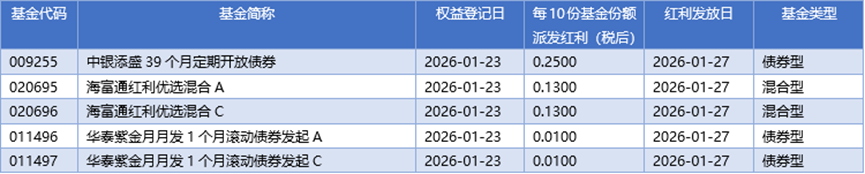
Group 1 - The core viewpoint of the articles highlights significant capital inflow into the non-ferrous metals sector, with related ETFs (excluding gold) seeing a net inflow exceeding 36 billion yuan this year, pushing the total scale beyond 100 billion yuan [1][2] - The demand-supply mismatch, coupled with the needs for new energy and grid upgrades, has led to notable price elasticity in copper, aluminum, and rare earths, prompting funds to quickly position through ETFs [1][2] - Multiple public funds are actively applying for new products, indicating a continuous increase in the toolization of investment strategies, which has become a key focus for institutions during the recovery phase of the year [1][2] Group 2 - As of January 23, 2026, there were no new fund launches, but five funds announced dividends, primarily bond funds, with the highest dividend being 0.25 yuan per 10 fund shares from the Bank of China’s 39-month regular open bond fund [2][4] - Data shows that seven private equity firms have either newly entered or returned to the 10 billion yuan tier this year, indicating a growing trend in the private equity sector, with stock long strategies being particularly popular [2] - Foreign investment firms, including BlackRock and Fidelity, reported that several of their products had net value increases exceeding 50%, with a strong focus on high-quality technology assets expected to lead value reassessment in the upcoming year [3]
“破铜烂铁”到投资新宠!铜价为何起飞?铜条能"火"多久?
Sou Hu Cai Jing· 2026-01-22 13:55
深圳商报·读创客户端记者 肖晗 "再也不敢说'破铜烂铁'了。" "不是金银买不起,只是铜更有性价比。" "一顿饭钱,入手不亏,一起发癫。" 伴随铜价突破历史高位,近期投资铜条突然走红。"水贝惊现铜条""部分水贝市场已禁售铜条"等词条, 在短短数日内接连打进各社交媒体热榜。铜条投资真火了吗?这把火能烧多久? 线下:公开陈列难觅踪迹商户低调接单 社交媒体上, 众多网友晒出标重1000g,纯度为999.9的"投资铜条""财富铜条",成为网络"围观"焦点。 而线下市场,投资铜条踪迹并不十分易寻。 1月21日下午,记者实地走访深圳水贝金座、水贝银座、水贝兴龙、水贝壹号等交易市场,均未在门店 看到公开陈列的"投资铜条"。 在水贝兴龙,一名商家告诉记者,水贝还是以贵金属和珠宝交易为主,实际销售铜条的商户占比还是比 较低。该商家以金饰销售为主,目前没有跟风卖铜条的计划。但如果记者想要入手,也有卖家推荐。目 前柜台没有实物展示,可以先加微信咨询交易。另一名商家则告诉记者,目前购买投资铜条需排单发 货,最低1公斤起售,下单后大概3-7天发出。 在水贝银座门口,记者遇到商户张先生正在"出货"。小推车上100根铜条,闪耀着玫瑰金的光 ...