稳预期

Search documents
一揽子政策公布后,财政部重磅定调:2026年财政总体支出力度“只增不减”
Hua Xia Shi Bao· 2026-01-20 08:39
Core Viewpoint - The Chinese government is implementing a series of proactive fiscal policies aimed at promoting high-quality economic and social development, with a focus on increasing overall fiscal expenditure and optimizing its structure for better efficiency and stronger economic momentum [2][14]. Fiscal Policy and Expenditure - In 2026, the overall fiscal expenditure will continue to increase, ensuring that the fiscal deficit, total debt scale, and expenditure remain at necessary levels, with a commitment to "only increase, not decrease" [2][14]. - The fiscal deficit rate for 2025 is set at around 4%, an increase of one percentage point from the previous year, with new government debt reaching 11.86 trillion yuan, up by 2.9 trillion yuan from the previous year [3][4]. Debt Management - The government maintains a relatively low debt-to-GDP ratio compared to the average of G20 countries, despite increasing deficits and debt issuance [4]. - In 2025, measures will be taken to replace 2 trillion yuan of hidden debt and allocate 800 billion yuan in new special bonds to support local government finances, thereby reducing the average interest cost of local debts by over 2.5 percentage points [6][7]. Support for Consumption and Investment - A special long-term government bond issuance of 1.3 trillion yuan in 2025 will support consumption and promote the sale of green, low-carbon, and intelligent products, with an expected sales boost of approximately 2.6 trillion yuan [5]. - Policies will be introduced to stimulate consumption through personal consumption loans and support for new consumption models, as well as adjustments to tax refund policies for duty-free shops [5]. Support for SMEs and Innovation - A new loan interest subsidy policy for small and micro enterprises will focus on 14 key industrial chains, including new energy, automotive, and medical equipment [8][9]. - The government will provide risk-sharing funds to support bond issuance for private enterprises and private equity investment institutions, mitigating investor losses [10]. Pension and Social Security - In 2025, the central government will allocate approximately 1.2 trillion yuan for basic pension insurance subsidies, with a 2% increase in pension levels for retirees [11]. Tax System and Market Development - The government aims to improve the local tax system to support the construction of a unified national market, including clarifying fiscal responsibilities and enhancing tax regulations [12]. Technological Innovation and Investment - The government will support the National Venture Capital Guidance Fund to invest in early-stage, small, long-term, and hard technology projects, promoting innovation in key industries [19]. - Financial support will be provided for technology innovation loans, with the central bank offering re-loan support to facilitate the transformation of manufacturing and digitalization of SMEs [20][21]. Export Tax Policy Changes - The cancellation of export tax rebates for solar and electronic products starting April 1, 2026, is expected to promote efficient resource utilization and address "involution" in competition [17].
12月一线城市新房成交量大涨
Xin Lang Cai Jing· 2026-01-20 04:49
Core Viewpoint - The 2025 real estate market in China is still undergoing adjustments, but positive factors are accumulating, indicating potential recovery in 2026 [1][8]. Price Trends - In December 2025, new and second-hand home prices in first-tier cities fell by 0.3% and 0.9% month-on-month, with the decline narrowing by 0.1 and 0.2 percentage points compared to the previous month [1][9]. - The first-tier cities are seen as important indicators of the real estate market, with signs of a potential stop in the price decline [3][10]. - Shanghai showed a relatively better performance, with new home prices rising by 0.2% in December 2025, making it the only first-tier city with an increase [3][10]. Sales Performance - In 2025, the sales area of new commercial housing decreased by 8.7%, and sales revenue fell by 12.6% compared to the previous year [5][12]. - The sales growth rate remains negative, but the decline is less severe than in 2024, indicating some support from both supply and demand sides [1][12]. - By the end of 2025, the total unsold housing area was 76,632 million square meters, an increase of 1.6% year-on-year, but a decrease of 1.0% compared to November [12]. Market Expectations - The policy environment is signaling a clear intention to stabilize market expectations, with measures such as extending the housing tax refund policy and lowering commercial property down payment ratios [1][14]. - Analysts expect that the effects of various favorable policies will further be released in 2026, leading to positive adjustments in real estate indicators [1][14]. - The importance of managing market expectations is emphasized, with calls for maintaining policy strength to avoid market volatility [14].
12月一线城市新房价格仅上海上涨
2 1 Shi Ji Jing Ji Bao Dao· 2026-01-19 04:45
记者丨李莎 编辑丨周上祺 2026年1月19日,国家统计局发布2025年12月70城房价数据。 数据显示,2025年12月一线城市新房、二手房价格降幅均收窄。其中新建商品住宅销售价格环比下降 0.3%,降幅比上月收窄0.1个百分点;二手住宅销售价格环比下降0.9%,降幅比上月收窄0.2个百分点。 在一线城市中,上海房价表现相对较好。2025年12月,上海新房价格环比上涨0.2%,成为当月一线城 市中唯一一个新房价格上涨城市。上海二手房价格环比下降0.6%,降幅较上月有所收窄,月度降幅与 深圳持平,表现好于其他两个一线城市。 张波认为,在新房市场,上海144平方米以上大户型的热销,印证了市场改善性需求的韧性。二手房价 格降幅收窄,说明需求端观望情绪正在逐步消解。 二三线城市房价仍有待改善。2025年12月,二线城市新房和二手房价格环比分别下降0.4%和0.7%,降 幅较上月均扩大0.1个百分点;当月三线城市新房价格环比下降0.4%,降幅与上月相同,二手房价格下 降0.7%,降幅扩大0.1个百分点。 58安居客研究院院长张波向21世纪经济报道记者表示,这意味着一线市场止跌回暖信号有所增强。 广东省住房政策研究中心 ...
2026年楼市在“稳预期”的政策信号中开启 1月成楼市关键观察期
Zheng Quan Shi Bao Wang· 2026-01-06 23:24
人民财讯1月7日电,刚刚过去的2025年,一线城市的楼市在分化与调整中也呈现出一些亮点。2026年楼 市在"稳预期"的政策信号中开启,在业内人士看来,1月成为楼市政策以及市场走向的关键观察期。 受访的一线地产中介人士均认为,二手房成交量反弹的背后是政策松绑、以价换量以及刚需需求释放同 频共振的结果,当前新房市场的问题在于控制"量",二手房市场的问题在于提振房价。受访的多位购房 者也表示,目前最为关心的还是深圳楼市政策是否还会跟进优化,特别是会不会在1月推出新政。 元旦假期期间,记者在深圳市场走访时发现,大多数新房项目的价格变化不大,改善需求的购房者逐渐 成为主力;二手房市场依旧属于以价换量,刚需群体正成为主力。深圳贝壳研究院数据显示,2025年深 圳300万元以下房源成交占比高达45%,较2024年提升8.5个百分点,刚需成交占比持续攀升,成为支撑 市场交易的核心力量。 一线城市的市场表现一直被视为楼市的"风向标"。证券时报记者梳理2025年一线城市的楼市成交数据发 现,二手房市场的表现相对更为抢眼。其中,上海二手房成交量接近25.4万套,创下近4年来新高。深 圳二手房共成交6.82万套,同比增长5.7%,其 ...
稳预期信号持续强化 1月成楼市关键观察期
Zheng Quan Shi Bao· 2026-01-06 18:24
刚刚过去的2025年,一线城市的楼市在分化与调整中也呈现出一些亮点。2026年楼市在"稳预期"的政策 信号中开启,在业内人士看来,1月成为楼市政策以及市场走向的关键观察期。 一线城市的市场表现一直被视为楼市的"风向标"。证券时报记者梳理2025年一线城市的楼市成交数据发 现,二手房市场的表现相对更为抢眼。其中,上海二手房成交量接近25.4万套,创下近4年来新高。深 圳二手房共成交6.82万套,同比增长5.7%,其中住宅成交5.62万套,同比增长3.2%。 由此可见,购房者对楼市政策的变动依旧敏感。据中指研究院监测,2025年全国有超230省市(县)出台 楼市政策约630条。就在去年年底,财政部、税务总局发布《关于个人销售住房增值税政策的公告》, 明确个人(不含个体工商户中的一般纳税人)将购买不足2年的住房对外销售的,按照3%的征收率全额缴 纳增值税。有业内人士认为,近年来中央层面出台多项房地产税收减免或调整政策,涉及契税、个人所 得税、增值税等,减税对有购房需求的家庭特别是一线城市的购房者来说,相当于节省了一大笔开支, 楼市交易已经进入"低税费时代"。价格的适度回归与政策端的持续宽松形成呼应,既降低了刚需购房 ...


国家定调了!北京打响楼市松绑第一枪,2026将着力稳定房地产市场
Sou Hu Cai Jing· 2025-12-26 19:14
Core Viewpoint - Beijing's real estate market is experiencing a significant policy adjustment aimed at stimulating consumption and addressing housing needs, particularly for non-local residents and families with multiple children [3][5][42]. Policy Adjustments - The new policy, effective immediately, focuses on key areas such as purchase restrictions, credit, and housing provident fund adjustments [3][5]. - The requirement for non-local families to purchase homes within the Fifth Ring has been reduced from three years of social security or tax payments to two years, and outside the Fifth Ring, it has been further relaxed to one year [7][9]. - Families with two or more children are now allowed to purchase an additional property within the Fifth Ring, addressing their housing needs [10][12]. Financial Implications - Financial institutions will no longer differentiate between first and second homes, implementing a unified mortgage interest rate, which is currently around 3.2% [14]. - The minimum down payment for second homes using the housing provident fund has been reduced from 30% to 25%, easing the financial burden on homebuyers [14][16]. Market Dynamics - The adjustment in land auction processes aims to lower the barriers for companies to acquire land, potentially increasing new housing supply [16]. - Compared to other cities, Beijing's policy changes are not the most aggressive, but they serve as a significant signal for national market trends [20][22]. Broader Context - The adjustments reflect a broader trend of easing restrictions in major cities, with other cities like Guangzhou and Shenzhen already implementing more lenient policies [20][26]. - The policy changes are designed to balance the local market with surrounding areas, avoiding excessive pressure on neighboring cities [28]. Future Outlook - The overall impact of these policy changes on the housing market remains uncertain, as many potential buyers are still hesitant due to concerns about falling prices and income stability [30][32]. - The long-term goal of these adjustments is to stabilize housing prices and ensure that the real estate market serves the public's housing needs effectively [40][42].
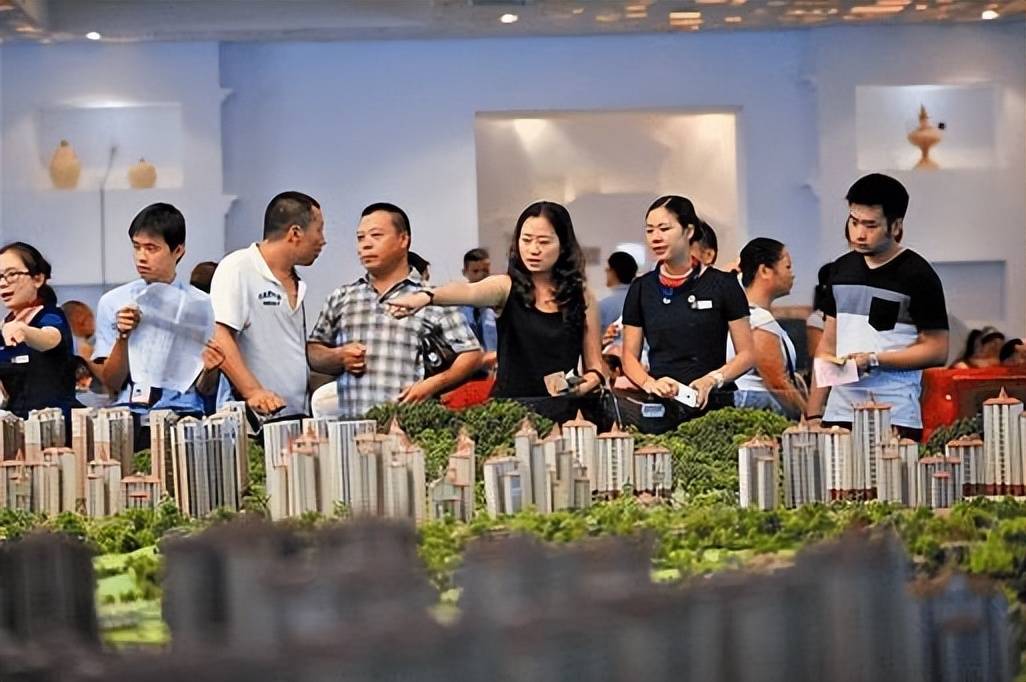
主动作为 奋力攻坚全力以赴完成好全年目标任务
Xin Lang Cai Jing· 2025-12-25 22:30
Group 1 - The meeting emphasized the need to focus on key industries, enterprises, and projects to address shortcomings and tap into potential for economic recovery [2] - There is a strong push for industrial development, with increased efforts in attracting investment, project investment, and optimizing the business environment [2] - The real estate market is targeted for improvement through the creation of high-quality, diverse housing products and enhanced marketing efforts [2] Group 2 - The meeting called for unified action among all levels of government to meet the economic and social development goals set by the municipal committee [2] - Safety inspections and risk management are prioritized as the New Year and Spring Festival approach to ensure public safety and stability [2]
全力推进“四稳”工作
Xin Lang Cai Jing· 2025-12-21 19:38
Group 1 - The core focus of Xining Economic and Technological Development Zone is on stabilizing employment, enterprises, markets, and expectations through precise and practical measures, resulting in over 11,400 new jobs created, 7.2 billion yuan in enterprise financing, and 29.5 billion yuan in industrial chain cooperation funds [1][2] Group 2 - Xining Development Zone prioritizes employment stability by establishing a comprehensive support system that includes policy empowerment, service protection, and integration of industry and education, with over 102,600 training sessions conducted [2] - The zone implements a "one-on-one" enterprise liaison system to dynamically assess employment needs, creating a precise employment ledger covering over 130 enterprises [2] - To support enterprises, the zone has classified assistance for 155 industrial enterprises, addressing 21 issues related to production factors and policy implementation [2] Group 3 - Xining Development Zone aims to enhance market vitality by optimizing the business environment and focusing on modern industrial systems, with a clear development path and key project oversight mechanisms in place [3] - The zone is accelerating the construction of 69 ongoing projects and 13 key projects with a total investment of 5.56 billion yuan [3] - A risk prevention mechanism has been established, monitoring 130 key enterprises to identify and mitigate potential risks, thereby enhancing confidence in enterprise development and regional economic resilience [3]
2025年不买房,5年后会后悔还是庆幸?看看马光远怎么说
Sou Hu Cai Jing· 2025-12-17 14:13
Core Viewpoint - The real estate market has shifted dramatically, with the previous boom giving way to declining prices, leading to uncertainty about whether to buy or wait until 2025. The economist Ma Guangyuan emphasizes the importance of understanding the "three differentiations" in the market to make informed decisions about real estate investments [1][3]. Group 1: Differentiation in the Market - Urban Differentiation: There will be a stark contrast in real estate performance between core cities and small counties. Major cities like Beijing and Shanghai are expected to maintain or slowly appreciate in value due to strong job markets and population influx, while small counties may see their properties lose value significantly [4]. - Regional Differentiation: Even within the same city, property values will vary greatly by location. Properties in prime areas will remain resilient, while those in less desirable locations may experience steep declines in value [5]. - Product Differentiation: The gap between high-quality and low-quality properties will widen. Newer, well-located homes will attract buyers, while older, poorly maintained properties will struggle to sell [7]. Group 2: Underlying Issues in the Market - Population Structure: The aging population and declining birth rates are leading to fewer potential homebuyers, which will negatively impact demand and property values, especially in less populated areas [9]. - Saturated Demand: The housing supply has largely met demand, with many capable buyers already having purchased homes. This leaves a gap for those who cannot afford to buy, further limiting market growth [11]. - Inventory Pressure: Excessive inventory in certain areas, particularly where population growth is stagnant, is leading to prolonged periods of unsold properties, which will continue to depress prices [12]. Group 3: Practical Advice for Buyers - For current homeowners: It is advisable to sell underperforming assets in declining markets, particularly in small counties, while considering the quality and location of properties in core cities [13]. - For potential buyers: Focus on high-quality properties in areas with strong population growth and economic stability, avoiding low-quality or remote properties that may not appreciate in value [15]. - Overall market strategy: The emphasis should be on making informed decisions based on market realities rather than speculation, as the market is expected to stabilize rather than experience dramatic fluctuations [16].
三问“非银后备支持机制”
Jing Ji Guan Cha Wang· 2025-12-17 12:48
Core Viewpoint - The People's Bank of China (PBOC) emphasizes the need for a moderately loose monetary policy to stabilize economic growth and financial markets while addressing financial risks in non-bank financial institutions [2][14][23] Group 1: Monetary Policy and Economic Stability - The PBOC plans to continue implementing a moderately loose monetary policy, focusing on expanding domestic demand and optimizing supply [2][14] - In 2026, a key focus will be on preventing and resolving financial risks in critical areas to maintain financial stability [14][23] - The PBOC aims to balance economic growth, structural adjustments, and financial risk prevention to promote high-quality economic development [14][23] Group 2: Non-Bank Financial Institutions - The PBOC's new proposal to provide liquidity support to non-bank financial institutions in specific scenarios has garnered attention [15][16] - Non-bank financial institutions, such as securities firms and asset management companies, hold significant market shares and are more susceptible to market fluctuations [16][17] - The liquidity issues faced by non-bank financial institutions are critical, as they can lead to market dysfunction during periods of stress [17][21] Group 3: Mechanism for Liquidity Support - The PBOC's liquidity support mechanism is designed to address potential market failures rather than directly influencing asset prices [18][21] - This mechanism aims to ensure that the financing chain for non-bank financial institutions remains intact during periods of market stress [18][23] - The concept of "specific scenarios" refers to market conditions characterized by price jumps, sudden financing contractions, and passive selling [20][23] Group 4: Implications for Market Functionality - The liquidity support framework is intended to prevent systemic disruptions in the market, ensuring that liquidity issues do not escalate into broader financial crises [21][23] - The PBOC's approach reflects a shift towards enhancing the resilience of the financial system rather than merely stimulating it [24][25] - Establishing a clear framework for addressing extreme market conditions is crucial for maintaining market confidence and stability [24][25]