
表外融资

Search documents
2026美股展望:AI泡沫的内部熔点与外部拐点
智通财经网· 2025-12-13 01:35
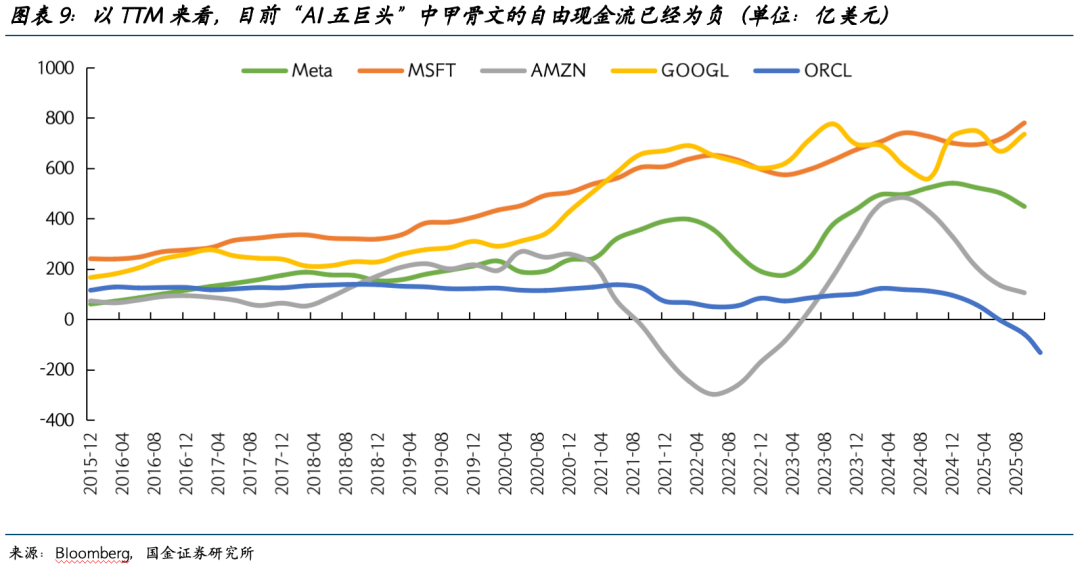
Core Viewpoint - The U.S. stock market in 2025 faced significant challenges from tariff impacts, fiscal shifts, and industrial trends, yet demonstrated resilience post-shock, particularly with the influence of AI investments and favorable monetary policies [1][2]. Group 1: AI Investment and Market Dynamics - The scale and concentration of AI investments today far exceed those during the 2000 tech bubble, indicating that issues with major AI companies could have catastrophic effects on the financial and tech ecosystems [2]. - The current AI investment landscape is characterized by a consensus among market participants, with various stakeholders motivated to inflate the bubble, including tech firms, financial institutions, and media [3]. - The potential bursting of the AI bubble could create a fertile ground for new innovations, similar to the aftermath of the 2000 internet bubble, where excess infrastructure became affordable for future growth [3][4]. Group 2: Industry Structure and Profitability - The AI industry is segmented into three layers: chip manufacturers, cloud service providers, and model developers, with profitability and cash flow varying significantly across these segments [5][7]. - Chip manufacturers, exemplified by Nvidia, are currently enjoying high profitability due to strong demand for AI chips, while cloud service providers like Amazon and Microsoft have established resilient business models [7]. - Model developers face intense competition and higher costs, with companies like OpenAI incurring substantial R&D expenses, leading to a notable disparity in profitability across the AI value chain [7][8]. Group 3: Financial Health and Capital Expenditure - The capital expenditure of major AI firms has surged, with the top five AI companies collectively spending $105.77 billion in Q3 2025, a 72.9% increase year-over-year, raising concerns about cash flow sustainability [9]. - The average capital expenditure to cash flow ratio for these firms reached 75.2%, indicating a significant strain on financial health as they continue to invest heavily in AI [9][12]. - Companies like Oracle are facing challenges with negative free cash flow, relying on external financing to support their capital expenditures [9][13]. Group 4: Risks from Financing Structures - The reliance on off-balance-sheet financing and complex investment structures among tech giants poses significant risks, as these methods can obscure true financial health and lead to systemic vulnerabilities [16][17]. - Historical precedents suggest that such opaque financing practices can lead to major financial crises, raising concerns about the potential for similar outcomes in the current AI investment landscape [18]. Group 5: Political and Economic Influences - Political uncertainty, particularly surrounding the upcoming elections, is expected to impact liquidity and market sentiment, potentially exacerbating vulnerabilities in the AI narrative [19][21]. - The interplay between political decisions and monetary policy will be crucial in shaping the future of AI investments and the broader stock market, with potential implications for economic stability [20][21].






2026美股展望:AI泡沫的内部熔点与外部拐点(国金宏观陈瀚学)
雪涛宏观笔记· 2025-12-13 00:57
Core Viewpoints - The fragility of capital expenditure will manifest through deteriorating liquidity, with potential financial risks arising from interconnected transactions and off-balance-sheet financing. The "political-liquidity-narrative" framework is identified as a key source of external volatility [2] Group 1: AI Investment Bubble - Many believe that there is no bubble in the AI investment sector, citing the healthy revenue and cash flow of tech giants compared to the dot-com bubble era. However, this comparison overlooks fundamental differences in scale and concentration of AI investments today [7] - The value of AI in enhancing productivity across industries will take a long time to materialize, as organizational and process changes lag behind technological advancements. AI currently serves more as a predictive tool rather than a decision-making replacement [9] - Despite the long-term nature of AI's impact on productivity, investment in AI has become a market consensus, driven by various stakeholders including tech companies, financial institutions, and media [10] Group 2: Capital Expenditure Vulnerability - From Q3 2025, capital expenditures among major tech firms investing heavily in AI reached $105.77 billion, a 72.9% year-on-year increase. This surge raises concerns about cash flow sustainability, with the average Capex/CFO ratio rising by 29.7 percentage points to 75.2% [24] - Projections indicate that by Q2 2027, the average Capex/CFO ratio for these firms could reach 95.9%, nearing the peak levels seen during the dot-com bubble [25] - The potential for negative free cash flow could deepen vulnerabilities, particularly for firms like Meta, which may face a cash flow crisis by Q4 2026 [32] Group 3: Financial Risks from High Leverage and Off-Balance-Sheet Financing - In the first 11 months of the year, the total issuance of corporate bonds by hyperscaler companies reached $103.8 billion, significantly exceeding previous years. This surge has led to increased bond spreads and heightened financial risk [39] - Companies like Meta are employing off-balance-sheet financing strategies to manage massive capital needs while maintaining favorable financial statements. This approach poses significant risks, especially if technology bubbles burst or market conditions shift [42][43] Group 4: Political Uncertainty and Liquidity Risks - The sustainability of the AI narrative is closely tied to liquidity conditions, which have been bolstered by recent interest rate cuts. However, political uncertainties, particularly surrounding upcoming elections, could tighten liquidity and impact market sentiment [44][48] - The interplay between political decisions and liquidity will likely lead to increased volatility in the stock market, particularly for AI-related investments [50]
国金证券:AI投资确属泡沫 但对美国而言存在其合理性
Di Yi Cai Jing· 2025-12-10 23:59
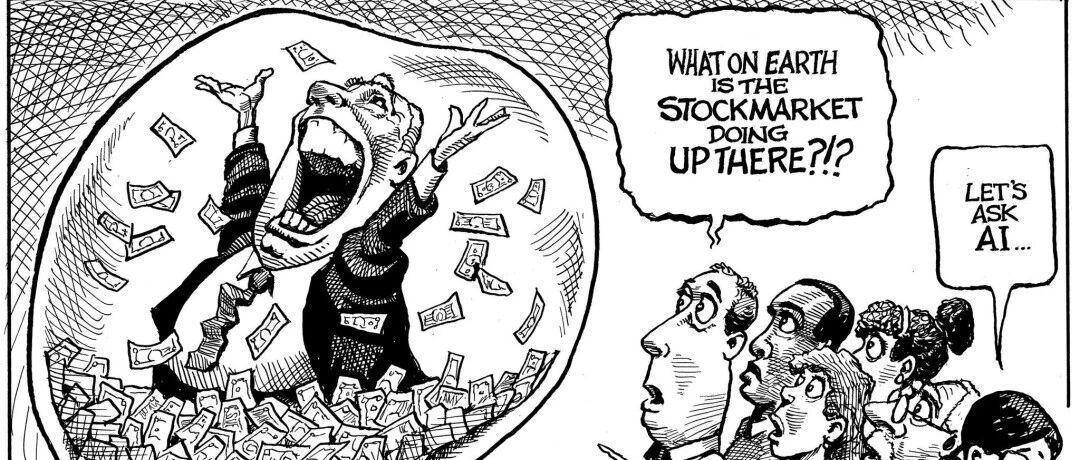
Core Viewpoint - The AI investment sector is identified as a bubble, yet it holds a certain rationality for the United States [1] Group 1: Industry Vulnerabilities - The fragility of the AI industry chain is increasingly evident, highlighting issues such as insufficient information disclosure and weak capital expenditures [1] - High leverage and off-balance-sheet financing amplify risks, with particular attention needed on the opacity of private credit and implicit guarantees related to off-balance-sheet liabilities [1] Group 2: External Risks - The liquidity uncertainty stemming from the 2026 U.S. midterm elections is a key external risk contributing to the bubble [1]

Meta2026困局,千亿资本开支压顶,表外融资能否续命?
Sou Hu Cai Jing· 2025-12-03 05:03
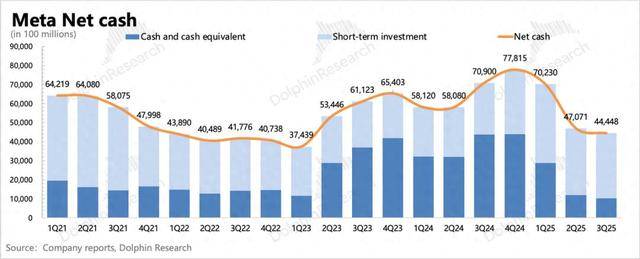
Core Viewpoint - Meta has announced a plan to issue $30 billion in corporate bonds, significantly increasing its debt levels compared to previous years, indicating potential financial distress and a need for liquidity [1][2]. Financial Situation - The company’s cash reserves have decreased from over $70 billion last year to approximately $44 billion, a nearly 40% drop [4]. - Meta's capital expenditure plan for 2026 is projected to exceed $120 billion, creating a clear cash flow gap [5][6]. - The current cash reserves of $44 billion are insufficient to cover the anticipated capital expenditures, raising concerns about the company's financial health [6]. Capital Expenditure and Revenue - Capital expenditures now account for 38% of Meta's revenue, a significant increase from previous years where it never exceeded 20% [9]. - The company is facing a situation where its spending is outpacing revenue growth, leading to potential financial strain [9]. Financing Strategies - In addition to bond issuance, Meta has engaged in off-balance-sheet financing with BlueOwl, amounting to $27.3 billion, which carries a high implicit interest rate of 10.7% [10][11]. - This off-balance-sheet financing allows Meta to manage short-term cash flow pressures but at a high cost, as it effectively acts as a form of high-interest debt [14][15]. Future Projections - Meta's projected capital expenditures for AI capabilities are substantial, with an estimated $200 billion needed for GPU deployments by 2028 [18]. - The anticipated decline in profit margins due to increased capital expenditures and depreciation pressures could lead to a 3 percentage point drop in profit margins by 2027 [21]. - The company is at a critical juncture, needing to balance investment in technology with maintaining profitability [23]. Conclusion - Meta's shift from a cash-rich company to one reliant on debt and off-balance-sheet financing highlights significant changes in its financial strategy and raises questions about its future sustainability [23][25].

“变相担保”却“不并表”!Meta数据中心“表外融资”站得住脚吗?
Hua Er Jie Jian Wen· 2025-11-25 00:49
Core Insights - Meta is employing structured financing to achieve seemingly contradictory financial reporting goals, aiming to build a $27 billion AI data center while avoiding significant debt on its balance sheet [1] - The company has established a joint venture with Blue Owl Capital, retaining a 20% stake while Blue Owl holds 80%, and has sold a record $27.3 billion in bonds to investors [1] - Meta claims it will not consolidate the joint venture's financials, thereby keeping the substantial assets and liabilities off its balance sheet [1] Group 1: Financial Structure and Accounting Treatment - Meta's accounting treatment relies on the variable interest entity (VIE) structure, which requires it to consolidate the joint venture if it is deemed the "primary beneficiary" [3] - The determination of control is contentious, as Blue Owl controls the board, but Meta possesses greater operational expertise in running data centers [3] - Meta's actual risk exposure is significant, as it retains operational control and bears the risks of cost overruns and delays [4] Group 2: Lease Structure and Implications - The transaction is structured as a lease, with Meta set to lease the data center starting in 2029 for an initial term of four years, with options to renew [5] - This short-term lease structure allows Meta to classify it as an "operating lease," minimizing recognized lease liabilities [5] - Meta must assert that future renewals are not "reasonably assured," a subjective judgment that conflicts with the long-term nature of AI infrastructure investments [5] Group 3: Logical Paradox in Accounting Assumptions - Meta's accounting approach creates a logical paradox, as the assumptions about lease renewals and the guarantee obligations are mutually exclusive [6] - Investors must accept conflicting assumptions regarding Meta's decision-making power, the lease duration, and the likelihood of fulfilling its guarantee obligations [6] - This situation reflects a complex financial engineering exercise rather than an accurate representation of economic reality [6]
AI烧钱烧到“藏债”?巨头拉华尔街搞暗操作,万亿缺口快兜不住了
Sou Hu Cai Jing· 2025-11-16 13:49
Core Insights - The AI industry is facing significant financial challenges despite its perceived success, with major companies like Meta, OpenAI, and xAI resorting to complex financing strategies to manage their substantial debts [1][20]. Financing Strategies - Meta's financing strategy involved a partnership with Blue Owl, where Meta contributed $13 billion for a 20% stake while Blue Owl invested $30 billion for 80%, leading to a $270 billion bond issuance that Meta does not directly account for on its balance sheet [3][5]. - OpenAI's Stargate data center project, in collaboration with Oracle and SoftBank, relies on a $380 billion bank loan, with ongoing concerns about the remaining $50 billion in loans that have yet to be sold [5][7]. - xAI's financing has escalated to $220 billion, with increased debt interest rates reflecting rising risks associated with their chip purchases [9][10]. Market Risks - The AI-related debt levels are unprecedented, with a significant increase in the scale of debt compared to previous credit cycles, raising concerns about the sustainability of these financial structures [12][18]. - The rapid evolution of AI technology poses a risk that current assets may depreciate quickly, potentially leading to bad debts if the market shifts [14][20]. Funding Gaps - The projected funding requirement for AI data centers has risen from $5 trillion to $5.2 trillion, with the funding gap expanding from $1.4 trillion to $1.6 trillion, indicating a critical financial shortfall [16][18]. - Private credit institutions have become more selective, reducing their lending to AI projects by 30% and demanding higher collateral, reflecting a cautious approach to financing in the sector [16][18]. Conclusion - The AI sector's reliance on complex financing and off-balance-sheet strategies may not be sustainable in the long term, as the industry must focus on genuine technological advancements and sustainable business models rather than temporary financial maneuvers [20].
巨头“变着法子”表外融资,这三笔“AI巨额融资”如此“创新”,整个华尔街都盯着
3 6 Ke· 2025-11-13 04:00
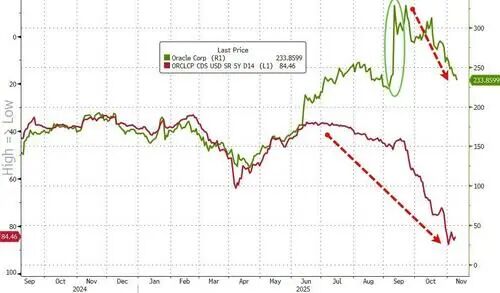
Core Insights - Tech giants are collaborating with Wall Street to fund the costly AI arms race through unprecedented off-balance-sheet financing arrangements [1][2] - Recent large-scale transactions reveal a trend of transferring astronomical debt and risk away from balance sheets to appease investor concerns about an AI bubble [1][2] Group 1: Financing Structures - Meta's financing for the Hyperion data center is described as a "Frankenstein" structure, combining elements of private equity, project financing, and investment-grade bonds [3] - Meta's debt has doubled after issuing $30 billion in bonds last year, prompting the need for a financing method that does not increase its own liabilities [3] - The financing involves Blue Owl Capital investing approximately $3 billion for 80% equity in a joint venture, while Meta retains 20% with a $1.3 billion investment [3][4] Group 2: OpenAI's Financing Challenge - OpenAI's Stargate data center project has a total cost of $38 billion, challenging Wall Street's underwriting capabilities due to its unprecedented scale [5] - The financing is structured through traditional project loans, with Oracle signing a 15-year lease to repay the loan, which is secured by the data center assets [5][7] - The loan's interest rate is approximately 6.4%, nearly two percentage points higher than Oracle's comparable bonds, reflecting the high-risk nature of the investment [7] Group 3: xAI's High-Leverage Financing - xAI, led by Elon Musk, has a financing plan to purchase chips for its Colossus 2 data center, requiring $18 billion for 300,000 NVIDIA chips [8][9] - The financing tool involves selling private equity and leveraging billions in debt, with Apollo Global Management assisting in arranging the debt [9] - The debt interest rate is as high as 10.5%, with potential additional returns based on chip performance, raising concerns about a market bubble [9] Group 4: Capital Demand in AI Industry - The emergence of these transactions highlights the immense capital demand within the AI industry, with JPMorgan strategists warning that $5 trillion will be needed for AI data center construction over the next five years [10][13] - There is an estimated $1.4 trillion funding gap even if all available credit markets are fully utilized, indicating a significant reliance on private credit and government funding [13][15]
巨头“变着法子”表外融资!这三笔“AI巨额融资”如此“创新”,整个华尔街都盯着
华尔街见闻· 2025-11-12 10:12
Core Insights - The article discusses how tech giants are collaborating with Wall Street to secure unprecedented off-balance-sheet financing for the costly AI arms race [1][2] - Innovative financial arrangements are designed to transfer astronomical debt and risk away from balance sheets to alleviate investor concerns about an AI bubble [2][6] - Recent large-scale transactions involving Meta, OpenAI, and xAI reveal a trend of high-risk capital games surrounding AI infrastructure development [3][8] Group 1: Financing Trends - Meta's financing scheme for a massive data center in Louisiana, named Hyperion, is described as a "Frankenstein" financing model that combines elements of private equity, project financing, and investment-grade bonds [9] - Meta's urgent need for financing arose after its CEO Mark Zuckerberg warned of significant AI spending increases, leading to a market value loss of approximately $300 billion [5][4] - OpenAI's Stargate data center project, with a total cost of $38 billion, is challenging Wall Street's underwriting limits due to its unprecedented scale [13][14] Group 2: Specific Transactions - Meta's financing involves a joint venture where Blue Owl Capital invests $3 billion for 80% equity, while Meta retains 20% with a prior investment of $1.3 billion [10][11] - OpenAI's project financing is structured through a traditional loan model, with a five-year loan interest rate of approximately 6.4%, which is nearly two percentage points higher than similar bonds from Oracle [17][19] - xAI's financing plan aims to purchase chips for a super data center, with a total requirement of $18 billion for 300,000 NVIDIA chips, utilizing a high-leverage financing structure [20][21] Group 3: Market Implications - The AI industry's capital demands are immense, with estimates suggesting a $1.4 trillion funding gap even if all available credit markets are fully utilized [29] - JPMorgan's strategists warn that the construction boom for AI data centers could require at least $5 trillion over the next five years, potentially draining every credit market [29][31] - The emergence of these financing transactions indicates that tech giants are innovating in their funding strategies, which may just be the beginning of a broader trend [31]

巨头“变着法子”表外融资!这三笔“AI巨额融资”如此“创新”,整个华尔街都盯着
美股IPO· 2025-11-12 04:03
Core Insights - The article discusses innovative financing strategies employed by tech giants like Meta, OpenAI, and xAI to fund their AI infrastructure projects, highlighting the risks and complexities involved in these arrangements [3][4][11]. Group 1: Meta's Financing Strategy - Meta has designed a "Frankenstein" financing scheme for its Hyperion data center, combining private equity, project financing, and investment-grade bonds, allowing it to avoid increasing its own debt [4][5]. - The financing involves Blue Owl Capital investing approximately $3 billion for 80% equity in a joint venture, while Meta retains 20% with an initial investment of $1.3 billion [4]. - The joint venture issued $27 billion in bonds due in 2049, with a high interest rate of 6.58%, significantly above the 5.5% yield of similar bonds from Meta's peers [5]. Group 2: OpenAI's Stargate Project - OpenAI, in collaboration with Oracle and SoftBank, is undertaking the Stargate data center project with a total cost of $38 billion, challenging Wall Street's underwriting capabilities due to its unprecedented scale [6][8]. - The financing structure is traditional, with Oracle signing a 15-year lease to repay loans secured by the data center assets, but the scale of the loan is significantly larger than typical [6]. - The loan has a five-year term with an interest rate of approximately 6.4%, which is nearly two percentage points higher than similar bonds from Oracle [8]. Group 3: xAI's Chip Financing - xAI, led by Elon Musk, has developed a high-leverage financing plan to purchase chips for its Colossus 2 data center, requiring $18 billion for 300,000 NVIDIA chips [9][10]. - The financing tool, Valor Compute Infrastructure, is set up by Antonio Gracias and involves selling private equity and leveraging debt from private credit funds [9]. - The debt interest rate is as high as 10.5%, with potential additional returns based on chip performance, raising concerns about the risk of creating a market bubble [10]. Group 4: Broader Market Implications - The surge in AI-related financing reflects a massive capital demand, with estimates suggesting that the construction of AI data centers could require at least $5 trillion over the next five years [14][15]. - There is a projected funding gap of $1.4 trillion, indicating that private credit and possibly government funding will be necessary to fill this void [14][15]. - The complexity and scale of these financing arrangements signal a transformative shift in how tech companies are approaching capital raising in the AI sector [3][11].

双线资本科恩警告:AI融资热潮藏隐忧,固定收益投资者需谨慎
Zhi Tong Cai Jing· 2025-11-07 07:08
Core Viewpoint - Fixed income investors should exercise caution when funding the AI boom, as the long-term profitability of these projects remains uncertain [1][2]. Group 1: Investment Trends - Technology companies are currently experiencing a surge in borrowing from both private and public debt markets, with significant bond issuances from major firms like Alphabet and Meta Platforms [1][2]. - Morgan Stanley predicts that large cloud computing companies will invest approximately $3 trillion in infrastructure projects by 2028, with a substantial portion of this funding still needing to be raised through debt [2]. Group 2: Market Concerns - There are concerns regarding new financing structures, such as off-balance-sheet financing, and the potential for overcapacity leading to losses in related industries like power and chemicals [1][2]. - The overall supply in the credit market is insufficient, leading investors to be willing to accept more bonds despite the high issuance volume [3]. Group 3: Private Credit Market - The private credit market is seen as having lower liquidity and transparency, failing to provide sufficient extra returns to compensate for these drawbacks [3]. - Clients of DoubleLine Capital who have invested heavily in private credit are expressing disappointment and are more interested in finding alternative solutions to diversify their investment risks [3].