贫富分化

Search documents
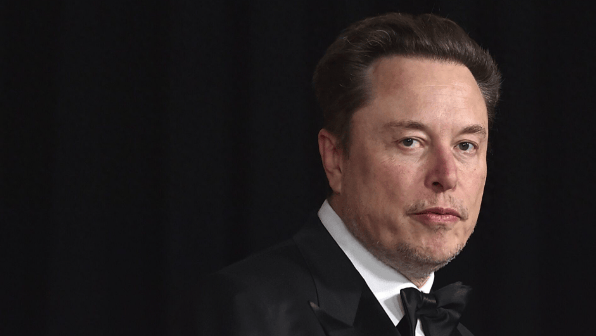
【特稿】美媒:马斯克或成万亿富豪凸显美国贫富分化
Xin Hua She· 2025-11-07 09:48
Core Points - Elon Musk's $1 trillion compensation plan approved by Tesla shareholders highlights the growing wealth disparity in the U.S. [1] - The plan sets ambitious performance targets for Musk over the next decade, with potential rewards of nearly $1 trillion in Tesla stock if all 12 goals are met [1] - The approval of Musk's compensation plan coincides with a political shift in New York, reflecting public frustration with the current economic system [1] Group 1 - Musk's potential to become the world's first trillionaire has sparked discussions about wealth inequality and the struggles of the working class in New York City [2] - Comparatively, Musk's potential earnings far exceed those of other top executives, such as Satya Nadella and Tim Cook, who earned approximately $79 million and $75 million respectively last year [2] - Opposition from non-profit organizations highlights concerns that Musk's compensation plan may set a precedent for excessively high CEO pay in the future [2]

经济学家警告:未来十年有超70万亿美元遗产传承,将加剧贫富分化
Sou Hu Cai Jing· 2025-11-06 18:30
Core Insights - The upcoming G20 meeting in Johannesburg, South Africa, is set against the backdrop of a looming "inheritance tsunami," with over $70 trillion in wealth expected to be passed down over the next decade, primarily benefiting the wealthiest families and exacerbating wealth concentration [1][3][19] - A report led by Nobel laureate Joseph Stiglitz reveals that over 80% of countries are experiencing widening wealth gaps, with 83% of nations meeting the World Bank's definition of high inequality [1][5][19] - The report highlights that the richest 1% captured 41% of all new wealth created from 2000 to 2024, while the bottom 50% received only 1% [1][3][5] Wealth Inequality and Its Implications - The concentration of wealth is shifting society from "meritocratic capitalism" to "hereditary capitalism," undermining social mobility and economic efficiency [3][5] - High inequality correlates with a sevenfold increase in the likelihood of democratic decline, as evidenced by rising support for populist parties in various countries [7][9][19] - The erosion of trust in democratic institutions is linked to economic disparities, where ordinary citizens feel disenfranchised while elites control resources [9][11] Global Response to Inequality - There is a significant divide among G20 nations regarding approaches to wealth redistribution, with emerging economies advocating for stronger global wealth regulation, while some developed nations express concerns over market intervention [13][19] - The implementation of inheritance taxes is contentious, with countries like France and Japan facing capital flight due to high tax rates, while others like the U.S. have high exemption thresholds that allow wealth to bypass taxation [15][17] - Developing countries face additional challenges, including low coverage of inheritance taxes and resistance from elite classes, which complicates efforts to address inequality [17][19] Proposed Solutions - Experts suggest establishing a permanent monitoring body under the G20, similar to the IPCC, to systematically track inequality trends and assess their socio-economic impacts [19][21] - South African President Cyril Ramaphosa is positioning the G20 meeting as a platform to prioritize inequality on the international agenda, aiming to foster global cooperation [19][21] - The potential establishment of an inequality monitoring committee has garnered support from several G20 members, indicating a growing consensus on the need for coordinated action [21][23]

美国银行:美国贫富分化差距加大
Huan Qiu Shi Bao· 2025-09-18 22:40
Economic Disparity - The economic status of high-income individuals in the U.S. is better than ever, while low-wage earners are experiencing a decline in wealth [1] - The income growth for the lowest third of earners has dropped to 0.9%, the lowest level since 2016, while the highest third has seen an increase of 3.6%, the highest since November 2021 [1] - This disparity is reflected in consumption growth, with low-income households experiencing only 0.3% growth in August, compared to 2.2% for high-income households [1] Labor Market Trends - The cooling labor market is a significant factor contributing to the widening income gap between the rich and the poor [1] - During the pandemic, low-wage workers saw rapid wage increases due to labor shortages, which temporarily narrowed the gap with wealthier individuals [1] - The current economic environment shows a slow rise in unemployment and a significant slowdown in job growth, adversely affecting low-income families [1] Wealth Creation - A booming stock market and strong performance in the technology and finance sectors are generating substantial wealth, leading to the creation of new millionaires and billionaires [2] - This wealth creation is contributing to a parallel reality in American life, highlighting the growing economic divide [2]

AI时代,最危险的不是体力劳动者,而是“好学生”
Hu Xiu· 2025-09-03 00:05
Group 1 - The discussion focuses on the changes and new opportunities in the AI sector as observed by an entrepreneur and investor in Silicon Valley [1] - Key topics include the future of programmers and which levels will be replaced first in the AI era [1] - The necessity of systematic computer science education in the context of rapidly lowering programming barriers is questioned [1] Group 2 - The concept of a future hybrid "builder" role is introduced, highlighting the cross-disciplinary skills required [1] - Soft skills that will serve as a core competitive advantage for humans relative to AI are identified [1] - The potential evolution of wealth disparity and Universal Basic Income (UBI) in response to productivity gains from AI is discussed [1] Group 3 - Future education should prioritize developing skills that differ from traditional rote learning [1] - The importance of personal branding in an era of highly standardized AI outputs is emphasized [1]
认真给大家聊一聊中国经济
Sou Hu Cai Jing· 2025-08-20 15:07
Economic Overview - The article discusses the prediction by US Treasury Secretary that the Chinese economy is on the verge of collapse due to the real estate sector's hard landing, but argues that this view is misguided [1][16] - Current issues in the Chinese economy include declining real estate, massive local debt, overcapacity, declining birth rates, and income inequality [1][16] Economic Fundamentals - China's economic fundamentals are strong, with the highest trade surplus and foreign exchange reserves globally, as well as the lowest central government debt ratio [1][16] - The total household savings in China is approximately 160 trillion yuan, with net savings around 80 trillion yuan, indicating a strong capacity to endure economic fluctuations [1][2] Real Estate Market - The real estate market in China has seen a decline for four years, with some areas experiencing a 50% drop in prices, but this has not led to a panic sell-off as seen in the US [4][5] - The stability in the Chinese real estate market is attributed to the high cash flow and savings of the population, which prevents a hard landing [17][18] Urbanization and Debt - China's rapid urbanization has led to a significant increase in local government debt, exceeding 100 trillion yuan, as cities expanded quickly to accommodate rural populations [12][13] - The government is now focusing on controlling new debt and revitalizing existing assets to manage this debt effectively [20][21] Policy Responses - The government is addressing issues such as local debt, overcapacity, and declining birth rates through various policies, including limiting urban expansion and promoting orderly exit of excess capacity [22][23] - Recent initiatives to boost birth rates include financial subsidies for families and free preschool education [23][24] Economic Transition - The article emphasizes that the challenges faced by the Chinese economy are a result of rapid development and that solutions will take time, with gradual improvements expected over the next few years [47][61] - The shift in resource allocation from manufacturing to consumer support is underway, indicating a transition in economic strategy [44][46] Comparison with the US - The US economy also faces significant challenges, but its strong monetary policy and the ability to print dollars provide a buffer against economic crises [50][52] - The article suggests that while both economies have their issues, China's economic fundamentals remain robust compared to the US, which may face greater internal instability [62][63]
付鹏谈香港楼市:从财富绑定到社会撕裂的深层危机
2025-08-11 14:06
Summary of Key Points from the Conference Call Industry Overview - The discussion primarily revolves around the **Hong Kong real estate market** and its socio-economic implications. Core Insights and Arguments 1. The perception that Hong Kong is a small place leading to high property prices is misleading; local residents have actively resisted development due to vested interests in maintaining high property values [1][2] 2. The intertwining of interests between real estate developers and the government has led to a situation where residents are trapped by high property prices, resulting in a collective reluctance to support further development [2] 3. The impact of the 1997 Asian Financial Crisis is significant; many individuals who were young during the crisis are now in their 50s and 60s, having borne the brunt of the real estate bubble's consequences [3] 4. The concept of housing as a means of achieving happiness is questioned; the rising property values have not translated into improved quality of life for many residents, particularly those in the middle and lower classes [4] 5. The financial burden on residents is exacerbated by stagnant wages and high debt levels, leading to a culture of thriftiness and reliance on second-hand markets [6] 6. The phenomenon of deflation in basic goods and inflation in financial assets creates a disparity where the lower-income population struggles while the wealthy benefit from rising asset prices [7][8] 7. The social fabric is strained as the younger generation feels disconnected from the affluent lifestyle of the wealthy, leading to a growing resentment towards the rich [15][18] 8. The influx of mainland Chinese buyers has intensified social tensions, contributing to a K-shaped economic divide between the wealthy and the rest of society [15][16] Other Important but Potentially Overlooked Content 1. The historical context of housing debt in Hong Kong reveals a cycle of financial distress, where many residents are trapped in a cycle of debt repayment without hope of recovery [12] 2. The cultural differences in coping with financial distress between Western and Asian populations highlight a unique aspect of Hong Kong's socio-economic challenges [5] 3. The monopolization of various sectors by a few wealthy families limits opportunities for innovation and entrepreneurship among the youth [14] 4. The emotional and psychological impact of financial instability on families, particularly those with a history of debt, shapes the current socio-economic landscape [16][17]
“新宏观”框架分享——我所经历和研究的十年宏观
2025-08-05 15:42
Summary of Key Points from Conference Call Industry or Company Involved - The discussion primarily revolves around the global macroeconomic environment, trade dynamics, and the implications for various industries, particularly focusing on China and the U.S. manufacturing sector. Core Points and Arguments 1. **Global Trust System Erosion**: The global trust in the dollar and U.S. Treasury bonds has weakened due to trade frictions and foreign reserve freezes, prompting countries to diversify their asset allocations and reduce reliance on the dollar [1][5][10]. 2. **Rising Wealth Inequality**: Increasing wealth disparity is leading to heightened social tensions, which could result in political forces shifting internal conflicts outward, posing global risks [1][6][8]. 3. **U.S. Trade Frictions**: The U.S. has initiated trade tensions to secure its economy, reduce dependence on foreign core products, and revive domestic manufacturing to boost employment [1][9]. 4. **China's Resource Security**: China is focusing on enhancing the security of its core resources, including commodities and technology, to achieve self-sufficiency in its supply chains [1][10]. 5. **Shift in China's Social Contradictions**: The primary social contradiction in China has shifted to the growing needs for a better life versus unbalanced development, leading to a policy focus on addressing these imbalances [1][11][12]. 6. **Real Estate Cycle Impact**: The real estate cycle has reached a turning point since 2018, significantly affecting China's interest rate system and necessitating a reevaluation of strategies [1][14][15]. 7. **Investment Strategy in Low Inflation**: In a low inflation environment, preserving capital should be the main goal for wealth allocation, favoring stable assets and high-dividend opportunities [2][19]. 8. **Changes in Global Asset Pricing**: The global asset pricing paradigm has shifted, with countries reassessing their relationships with the U.S. and becoming more cautious in their investments in U.S. debt [1][18]. 9. **Long-term Investment Opportunities**: High-dividend assets and export-oriented investments are highlighted as valuable in the current economic climate, particularly in sectors like innovative pharmaceuticals and solar modules [22]. 10. **New Consumption Trends**: Emerging consumption trends, such as value-driven and emotional purchases, are identified as having significant market potential [23]. 11. **Technological Innovation**: Technological advancements are expected to lower production costs and create substantial investment opportunities, despite not significantly increasing inflation [24]. 12. **Adjustment of Investment Thinking**: A shift in investment thinking is necessary to adapt to the new macroeconomic framework, moving away from traditional stimulus measures and focusing on high-quality development [25]. 13. **Optimistic Outlook on China's Economy**: There is a positive outlook on China's economic prospects, driven by the competitiveness of its manufacturing sector and the potential for significant investment opportunities [26]. Other Important but Possibly Overlooked Content - The discussion emphasizes the need for a comprehensive understanding of historical, political, and international relations factors to navigate the changing macroeconomic landscape effectively [25].
暴力事件频出 美国政治极化撕裂民主外衣
Zhong Guo Qing Nian Bao· 2025-07-16 00:02
Group 1 - The article highlights the increasing political violence in the U.S., with recent incidents raising concerns about a disturbing "new normal" [1][2] - Political polarization between the Democratic and Republican parties is intensifying, eroding the foundations of American democracy [1][2] - Key areas of contention include immigration policy, energy policy, and social welfare, with significant differences in approaches between the two parties [1][2][3] Group 2 - The article discusses the impact of Trump's policies, which have exacerbated class divisions and led to a decline in social mobility and trust in government [2][3] - A significant increase in threats against members of Congress has been reported, with over 9,400 threats in 2024, more than double the number from a decade ago [2][3] - The federal government has increased the budget for the Capitol Police to $833 million in response to rising violence, nearly double the $464 million budget from 2020 [2][3] Group 3 - The rise of generative artificial intelligence is noted as a factor that could further polarize society and influence election outcomes [3][4] - The spread of misinformation and the creation of "information silos" are contributing to the escalation of violence and political extremism [3][4] - A survey of political scientists indicates a belief that the U.S. is moving towards a form of authoritarianism, with concerns about the erosion of democratic norms [4][5] Group 4 - The article emphasizes the need for bipartisan cooperation to address economic inequality and political violence, which are seen as root causes of societal division [5][6] - Restoring public trust in institutions and bridging social divides are identified as critical challenges for the U.S. government [6]
特朗普签署“大而美”法案,美社会贫富分化加剧,中国新能源获益
Sou Hu Cai Jing· 2025-07-08 09:16
Core Points - The article discusses the implications of Trump's recently signed "Big and Beautiful" bill, which has sparked significant public protests and criticism regarding its impact on income inequality and economic policies [3][6][10] - The bill is criticized for exacerbating wealth disparity, with the top 10% of earners benefiting significantly while the bottom 10% face substantial losses [10][12] Economic Impact - The "Big and Beautiful" bill includes a corporate tax cut of 14 percentage points and a personal income tax reduction of only 2.6%, alongside cuts to social welfare programs [10][12] - The Congressional Budget Office (CBO) estimates that the lowest income households will lose approximately 10,000 RMB annually, while the top earners will gain up to 12,000 USD, highlighting the widening wealth gap [10][12] Public Response - Protests erupted on July 4th, traditionally a day of independence, as citizens expressed dissatisfaction with Trump's policies, particularly regarding poverty and economic inequality [6][8] - The protests reflect a broader discontent with the current administration's handling of economic issues, leading to calls for change [6][8] International Relations and Technology - The article warns that Trump's policies may inadvertently support China's rise, particularly in renewable energy and technology sectors, as the U.S. lags behind in these areas [12][14] - Concerns are raised about the restrictions on the battery industry and U.S.-China cooperation, which could hinder American companies' innovation and competitiveness [14][16] Notable Figures - Thomas Friedman criticizes Trump's approach, suggesting it fails to recognize the future trends in global technology and energy, potentially allowing China to take the lead [12][16] - Elon Musk is mentioned as a prominent critic of the bill, although he has not taken significant action against it despite previous conflicts with Trump [16]

最后通牒已下,马斯克对2.5亿人发誓,誓要让特朗普付出惨痛代价
Sou Hu Cai Jing· 2025-07-03 12:16
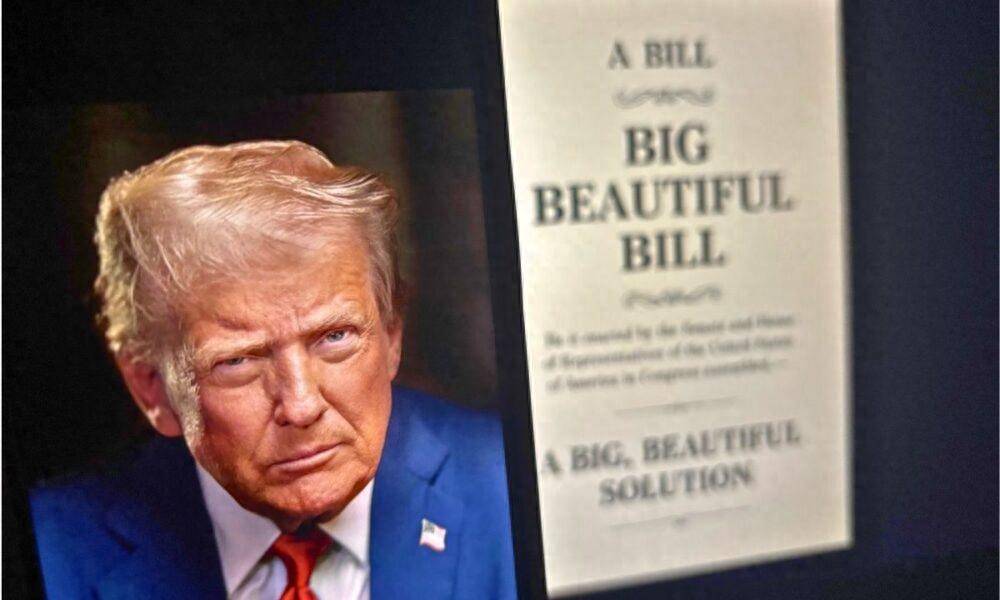
Group 1: Legislative Impact - The "Big and Beautiful" bill, proposed by Trump, plans to reduce taxes by $4 trillion over the next 10 years, significantly impacting the U.S. tax system [1][3] - The bill is expected to increase the federal government's debt by nearly $3.3 trillion over the next decade, exacerbating the already high debt levels [3][4] - The bill primarily benefits the wealthiest Americans while cutting healthcare and social welfare for low-income families, leading to a projected 4% income reduction for the poorest households [4][7] Group 2: Tesla's Position - Tesla, a key player in the electric vehicle market, has historically benefited from consumer tax credits, which are set to be eliminated under the new bill, potentially costing the company about $1.2 billion annually [3][4] - The cancellation of tax incentives could hinder consumer demand for electric vehicles, negatively affecting Tesla's sales performance and market position [7][9] Group 3: Political Dynamics - Musk's opposition to the bill has led to a public confrontation with Trump, who perceives Musk's criticism as a challenge to his political authority [6][9] - Trump's response includes insinuations that Musk's opposition is driven by self-interest due to his company's reliance on government subsidies [6][9] - The internal divisions within the Republican Party regarding the bill could impact their unity and voter support in upcoming elections [7][9] Group 4: Broader Economic Implications - The increase in U.S. debt from the bill could lead to instability in global financial markets and affect the credibility of the U.S. dollar [9] - The hindrance of the U.S. renewable energy sector may slow down global energy transition efforts, providing opportunities and challenges for other countries in the renewable space [9]