
资本招商

Search documents
资本招商专项行动结硕果 南通今年新设基金超30只
Xin Hua Ri Bao· 2025-12-16 23:03
Core Insights - The 2025 Nantong Investment Conference and the Shanghai Stock Exchange Multi-Level Capital Market High-Quality Development Conference opened on December 16, showcasing a series of partnerships between Nantong and national funds [1] - Nantong has actively integrated national strategic capital and top-tier innovative resources, resulting in over 30 new funds established this year with a total scale exceeding 50 billion yuan [1] Group 1 - Nantong has launched a capital招商专项行动 to create a collaborative investment environment, focusing on a "fund + industry + project" development model [1] - The city has established new industry investment and venture capital funds tailored to local strengths, extending capital's reach into key areas of technological innovation and industrial development [1] Group 2 - Supported by these funds, Nantong has attracted over 130 new capital investment projects this year, with a planned investment amount exceeding 30 billion yuan, including 11 projects with investments over 1 billion yuan [2] - The projects span high-tech and strategic emerging industries, including the transformation of research outcomes from prestigious universities and the incubation of national-level specialized and innovative "little giant" enterprises and unicorns [2]
今年,国资LP热衷于做基石投资
母基金研究中心· 2025-12-11 08:53
基石投资对于地方国资的吸引力正在加强。 据不完全统计,今年上半年, 地方国资参与港股基石投资的规模实现 "量价齐升" 。从参与主 体数量来看较 2 0 2 4年同期增长3 3%;总投资金额较去年同期上涨6 6%。可以预计,今年全年 的数据大概率会超越历年平均水平,成为高峰。 "地方国资参与基石投资,基本上都不是追求财务回报的目的,更多是为了地方产业转型升级 发展的诉求。还有就是基石投资具备明确的退出渠道和预期,让一些之前因为退出难这两年谨 慎出手的国资机构愿意去参与流动性更好的基石投资。"某国资机构人士韩博(化名)对母基 金研究中心表示。 基石投资者是指港股 IPO时在公开募集之前作为战略投资者申购公司股票的机构投资者,主要 是大型机构投资者、大型企业集团以及知名富豪或其所属企业。 基石投资者按 IPO发行价格 购买预先约定数量的股票,并接受6—1 2个月的锁定期 。 港股 IPO的投资者主要可以分为三类,除基石投资者外,还有参与公开发售的散户投资者,以 及在路演、询价阶段参与国际配售的锚定投资者,主要参与方为资金实力雄厚的专业投资者。 从投资顺序上,基石投资者最先参与发行认购,锚定投资者次之,最后是散户投资 ...


靳海涛:中国创投往何处去
Xin Lang Cai Jing· 2025-12-04 07:49
Core Insights - The annual China Private Equity Annual Conference will be held from December 2-5, 2025, in Shenzhen, focusing on observing China's technological innovation [2][18] - The chairman of Qianhai Ark Asset Management shared insights on the strategic role of venture capital and the development trends in China's venture capital landscape [2][19] Group 1: National Strategic Demand - Innovation is a core development strategy for every country, with two main paths: innovation investment-driven strategy and traditional investment-driven strategy [3][20] - Countries like the US, Israel, and China exemplify the innovation investment-driven strategy, which supports small enterprises and disruptive technologies, leading to significant capital inflow into the tech innovation sector [3][20] - In contrast, countries like Japan and Russia follow a traditional investment-driven strategy, relying on conventional financing channels and often missing out on technological advancements [4][20] Group 2: Impact of Venture Capital on China's Economy - Since the emergence of venture capital in 1999, China's GDP has grown over 13 times, with venture capital contributing more than 43% to this growth [5][21] - Venture capital has played a crucial role in nurturing high-quality enterprises, with over 90% of companies listed on the Sci-Tech Innovation Board and over 50% on the ChiNext Board being supported by venture capital [5][22] - The sector has significantly contributed to the development of key industries, including semiconductors, renewable energy, communication, transportation technology, artificial intelligence, and biomedicine [6][22] Group 3: Five Key Investment Directions - The first direction is the "short board" process, focusing on technological breakthroughs to ensure supply chain security and autonomy, with over 2 billion yuan invested in semiconductor companies [7][24] - The second direction is the digitalization process, which aims to transform traditional industries using digital technology, with significant investments in projects like 聚玻网 and autonomous driving [7][24] - The third direction is the carbon neutrality process, which has evolved from being finance-driven to policy-driven and now demand-driven, with investments in emerging technologies [7][25] - The fourth direction is the health sector, shifting from symptomatic treatment to root cause resolution, with predictions that China will lead in biopharmaceuticals in the next 7-8 years [7][26] - The fifth direction is consumer upgrade, emphasizing the importance of consumer sectors in economic growth and the need for investment support [7][26] Group 4: Recommendations for Future Development - The industry should focus on "early, small, and future" investments, promoting "patient capital" as a fundamental requirement for a healthy venture capital ecosystem [11][28] - There is a need to optimize the capital source structure in the venture capital industry, aiming for a balanced approach involving government capital, financial capital, and family wealth [12][29] - Emphasis should be placed on post-investment management and support, moving away from solely chasing "blockbuster" investments [12][30] - The development of S funds and follow-up funds is crucial for creating a sustainable innovation investment ecosystem [12][30] - A balanced support for various industries is essential to avoid over-concentration and to foster innovation across sectors [12][31]
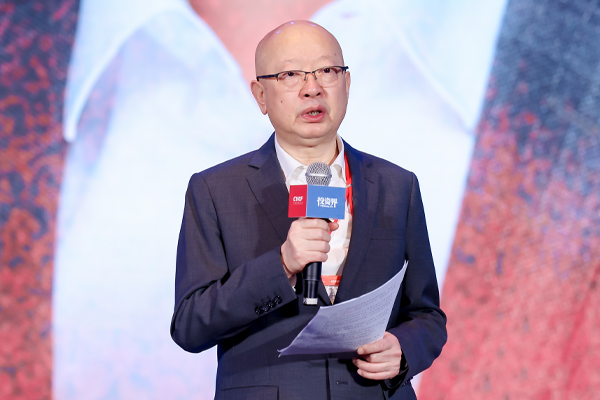
前海方舟董事长靳海涛:看好“五大进程”投资机会
Xin Lang Cai Jing· 2025-12-03 15:03
Core Insights - The 25th China Private Equity Annual Conference highlighted five key processes for venture capital funds to focus on, which are expected to yield good investment returns [1][3] Group 1: Five Key Processes - The first process is the "short board" process, aimed at addressing critical supply chain issues to ensure safety and self-control [1][3] - The second process is the digital transformation process, which involves using digital technology to reform traditional industries and alter work and life scenarios [1][3] - The third process is the carbon neutrality process, emphasizing the importance of transitioning energy structures [1][3] - The fourth process is the "big health" process, where significant changes in China's biomedicine sector, particularly in gene and cell innovation, are attracting investment [1][3] - The fifth process is the consumption upgrade process, which supports economic growth and enhances the quality of life, with consumption enterprises continuously evolving and deserving capital market support [1][3] Group 2: Market Outlook and Recommendations - The first recommendation is to "invest early, invest small, invest in the future," promoting the development of "patient capital" [2][4] - The second recommendation suggests optimizing the sources of capital for private equity investments [2][4] - The third recommendation indicates that private equity finance and capital attraction are becoming important means for local governments to transition from land finance, necessitating changes in commercial strategies and product designs of venture capital institutions [2][4] - The fourth recommendation emphasizes the need for venture capital institutions to focus more on post-investment management and services, adhering to a "30% investment, 70% management" principle [2][4] - The fifth recommendation calls for the development of S funds and follow-up funds from central to local levels to create a sustainable innovation investment ecosystem [2][4] - The sixth recommendation advocates for a diverse approach, where venture capital funds and capital markets support balanced development across various industries [2][4] - The seventh recommendation stresses the importance of maintaining a healthy secondary market, supporting IPOs of innovative enterprises and participating in mergers and acquisitions [2][4]
长三角新势力:衢州资本撬动产业雄心
2 1 Shi Ji Jing Ji Bao Dao· 2025-11-13 14:58
Core Insights - Quzhou is transforming its historical significance as a transportation hub into a modern industrial powerhouse, attracting significant investment and showcasing a successful model for emerging cities in China [1][2]. Investment and Industrial Development - Quzhou has hosted its third industrial capital investment conference, attracting over 300 industry professionals, indicating strong interest in its industrial growth [1]. - The city has developed six key industrial chains: new materials, new energy, integrated circuits, high-end equipment, life health, and specialty paper, demonstrating a clear strategic focus on promising sectors [2][3]. - Quzhou's government has effectively utilized its existing industrial advantages to integrate cutting-edge technologies like AI, enhancing its manufacturing capabilities [2]. Competitive Advantages - The new materials industry in Quzhou has become a competitive strength, with the city being the only domestic base for both fluorine and silicon industries, creating a comprehensive product system [3]. - Fluorine materials are critical for future industries such as quantum technology and hydrogen energy, positioning Quzhou as a key player in these sectors [3]. - Quzhou is also the largest cobalt material base globally and has established a complete supply chain for lithium battery components, further solidifying its position in the new energy sector [4]. Innovative Business Models - Quzhou has adopted a "capital investment" model, leveraging state-owned capital to guide resource allocation and attract broader social capital [6][10]. - The city has created a unique "innovation zone" model, establishing "science and technology flying zones" in major cities to facilitate R&D and industry transformation [5]. Strategic Acquisitions - Quzhou's state-owned enterprises have made strategic acquisitions to enhance their industrial chain, including significant investments in companies like Xinhai Zhongbao and leading photovoltaic firms [7][8]. - The city has invested 2.5 billion yuan in a computing power center, marking a significant step in enhancing its AI infrastructure [8][9]. Future Goals - By 2026, Quzhou aims to achieve a fund cluster scale of 100 billion yuan and attract 200 billion yuan in social capital, with a target of 30 listed companies [10]. - The local government is focused on creating a favorable business environment, aiming to be a key hub for industrial development in the region [11][15].
长三角新势力:衢州资本撬动产业雄心
21世纪经济报道· 2025-11-13 14:51
Core Viewpoint - Quzhou is transforming its historical advantages into a robust foundation for high-quality development, emerging as a vital hub for industrial capital and providing a model for other late-developing cities in the Yangtze River Delta and nationwide [2][3]. Investment Attraction - The Quzhou Industrial Capital Investment Conference attracted over 300 investment professionals from various sectors, indicating strong interest in the region's industrial potential [3]. - Quzhou has made significant strides in industrial development, becoming a new investment hotspot due to its achievements in various sectors [5]. Industrial Development Strategy - Quzhou has implemented a strategy focused on "Industrial Strengthening and Prosperity," leading to the establishment of six key industrial chains: new materials, new energy, integrated circuits, high-end equipment, life health, and specialty paper [5][6]. - The local government has a clear vision for industrial development, targeting promising sectors and leveraging existing industrial advantages alongside cutting-edge technologies like AI [5][6]. New Materials Industry - The new materials industry has become a competitive strength for Quzhou, with a complete industrial chain in organic fluorine and silicon materials [6][7]. - Fluorine materials are crucial for future industries such as quantum technology and new energy vehicles, positioning Quzhou as a key player in these sectors [7]. New Energy Sector - Quzhou is the largest cobalt materials base globally and has developed a complete supply chain for lithium battery components, supported by major companies like Huayou Cobalt and Juhua Group [7][8]. Electronic Information Industry - Quzhou has established itself as a base for electronic chemical materials and integrated circuits, contributing to its reputation in the electronic information sector [8]. High-end Biopharmaceuticals - The city has developed a unique "R&D in Shanghai, production in Quzhou" model, creating significant biopharmaceutical industry growth through innovative operational strategies [10]. Capital Investment Model - Quzhou has pioneered a "capital investment" model, utilizing state-owned capital to attract and guide key industrial resources, thereby enhancing the local economy [11][12]. - The city has successfully expanded its industrial fund cluster from 15 billion to over 100 billion yuan, aiming to leverage social capital for further development [15]. Government Support and Services - Quzhou's government has been recognized for its efficient service in creating a favorable business environment, ranking high in national evaluations of business conditions [18][19]. - The local government actively engages with businesses to address their needs, ensuring a supportive ecosystem for industrial growth [22][24]. Future Outlook - Quzhou aims to become a critical hub for industrial chain enterprises, focusing on enhancing its competitive advantages and attracting more investments [25][26].



不拼产能拼生态,宜宾凭什么成为动力电池产业的“长期主义者”?
2 1 Shi Ji Jing Ji Bao Dao· 2025-11-13 10:33
Core Insights - Yibin is transforming from a traditional coal and liquor-based economy to a new ecosystem focused on digital economy and green energy, particularly in the power battery and photovoltaic industries [1][2] - The city is leveraging exhibition economy to drive industrial agglomeration and urban upgrading, achieving a significant milestone where 1 in every 10 power batteries globally is produced in Yibin [1][3] - Yibin's strategy for 2025 emphasizes "scene construction" to promote future industrial agglomeration, aiming to enhance the quality and efficiency of industrial development [3][4] Industrial Development - Yibin's power battery production accounts for over 16% of China's total and 10% of the global market, with a 46% increase in production and a 14% increase in output value in the first three quarters of 2025 [3][4] - The city is implementing the "Electric Yibin" project, creating ten demonstration application scenarios for electric vehicles and energy storage, achieving over 10% electrification rate for vehicles and nearly 14,000 public charging interfaces [4][5] - Yibin's storage industry is rapidly developing, with a dedicated industrial park and significant projects like the 100MW/200MWh energy storage stations, positioning the city as a key player in the new energy storage landscape [5][6] Innovation and Policy - Yibin is adopting innovative policies to support the development of the storage industry, including a unique funding mechanism that encourages collaboration between government, enterprises, and research teams [9][10] - The city is transitioning from traditional policy-driven investment to a more integrated approach that combines capital, industry, and exhibition economies, resulting in a cumulative signing of nearly 300 billion yuan from the World Power Battery Conference [10][11] - Yibin's government is actively fostering collaboration with surrounding cities to enhance the regional supply chain and support the development of a trillion-yuan lithium battery industry cluster in Sichuan [11]
江西构建招商引资新体系
Jing Ji Ri Bao· 2025-10-09 22:36
Core Insights - Jiangxi Province is innovating its investment attraction strategies by utilizing modern industrial guidance funds and focusing on "chain-based" approaches to enhance economic development [1][2] - The province aims to transition from traditional land and policy competition to a more market-oriented, professional, and ecological investment attraction model [1][2] Investment Attraction Strategies - Jiangxi is implementing a new investment attraction framework that emphasizes precision and quality over quantity, supported by recent government guidelines [2] - The province is moving towards a digital and precise investment attraction phase, integrating key information into a visual and intelligent decision support system [2][3] Project Signings and Investments - A recent investment conference resulted in 13 projects being signed, with a total investment amount of 10.276 billion yuan [1] - As of August, Jiangxi has signed 31 investment projects with a total contract amount of 21.908 billion yuan, with 64.5% of these projects involving listed companies and high-tech enterprises [3] Innovative Funding Models - The "dual GP" fund model in Ganzhou is facilitating active project sourcing and has successfully attracted investments totaling 250 million yuan in high-end intelligent equipment projects [4] - Jiangxi is encouraging the establishment of market-oriented funds to attract various types of capital for strong projects [4] Industry-Specific Initiatives - Xinfeng County has developed an industry chain investment map focusing on the electronic information sector, successfully attracting 33 listed companies [3] - The province is leveraging its rare earth resources to develop a comprehensive industry chain, enhancing its competitive advantage in the rare earth sector [5][6] Environmental Optimization - Jiangxi is enhancing its business environment by implementing a negative list for market access and promoting "internet + government services" to streamline processes for businesses [8] - The province has introduced an "experience officer" system to monitor and improve the business environment based on feedback from entrepreneurs and professionals [8]
一字涨停!600208,拟切入半导体赛道
Shang Hai Zheng Quan Bao· 2025-08-13 11:53
Group 1 - The core point of the news is that Quzhou Development plans to acquire 95.4559% of Xian Dao Electronics Technology Co., Ltd. (Xian Dao Electric) for an estimated total of 114.55 billion yuan, marking a strategic move into the semiconductor sector [1][4]. - The acquisition will be financed through a share issuance to no more than 35 specific investors, raising up to 3 billion yuan [5]. - Xian Dao Electric, established in 2017, specializes in advanced PVD sputtering targets and evaporation materials, with a strong performance forecasted for the next few years, expecting net profits of 252 million yuan in 2023 and 444 million yuan in 2024 [5][6]. Group 2 - Quzhou Development's stock price has shown significant volatility, increasing over 60% from a low of 2.56 yuan on June 19 to 4.12 yuan on July 29 [4]. - The company aims to reduce its reliance on traditional real estate by entering high-tech industries, particularly in semiconductors and new displays [6][15]. - The acquisition is seen as a way to optimize capital efficiency and enhance sustainable operational capabilities [6]. Group 3 - Xian Dao Electric's previous attempts to go public through an IPO faced challenges, leading to a shift towards being acquired by Quzhou Development [7][10]. - The failed acquisition attempt by Guangzhi Technology, which was also targeting Xian Dao Electric, faced regulatory scrutiny and market concerns, making Quzhou Development's approach more favorable [11][13]. - Quzhou Development's strategic focus has shifted towards technology industries, aligning with local government initiatives to attract companies in new materials and semiconductor sectors [15][16].

长三角“资本招商”日趋活跃 产业整合成核心逻辑
Shang Hai Zheng Quan Bao· 2025-08-04 18:52
Group 1 - The core viewpoint of the articles highlights the increasing trend of state-owned enterprises (SOEs) in the Yangtze River Delta region engaging in mergers and acquisitions (M&A) to promote local industrial integration and development, shifting from financial investments to deep industrial integration [1][2][3] - In 2025, there have been 17 cases of SOEs directly or indirectly participating in the acquisition of A-share listed companies, with over half of the targets in the machinery, electronics, petrochemicals, and computer sectors, indicating a focus on regional resource optimization and industrial collaboration [1][2] - The current wave of M&A is driven by local governments' strategies to enhance industrial clusters, aiming to strengthen, supplement, and extend the industrial chains [1][2][3] Group 2 - SOEs are utilizing specialized M&A funds to strategically invest in or take control of "chain leader" companies, thereby enhancing local industries and releasing synergistic effects [2][3] - A notable example is the strategic investment by a Shanghai biomedical M&A fund in MicroPort Medical, which aims to support the development of the biomedical sector and attract talent and technological breakthroughs [2][3] - The trend of cross-provincial acquisitions is evident, with SOEs from Jiangsu, Anhui, and Zhejiang acquiring companies in Guangdong and Chongqing, showcasing an upgraded model of "capital attraction + industrial attraction" [5][6] Group 3 - The integration of high-quality scientific and technological assets into SOEs through M&A not only facilitates strategic upgrades for these companies but also optimizes the industrial layout for local SOEs [6] - Data indicates that most of the listed companies acquired by SOEs in the Yangtze River Delta this year have market values below 10 billion yuan, with 10 companies valued under 5 billion yuan and 7 between 5 billion and 10 billion yuan [5][7] - The approach of using M&A as a tool for local industrial development serves as a model for other regions, promoting resource integration and enhancing local industrial chains [3][5]