逆周期和跨周期调节

Search documents
中国社科院金融所:以政策支持和改革创新推动经济稳中向好
Zhong Guo Jing Ying Bao· 2026-01-31 05:25
Core Insights - The report from the Chinese Academy of Social Sciences indicates a shift in economic policy direction for 2026, moving from "strengthening extraordinary counter-cyclical adjustments" to "increasing counter-cyclical and cross-cyclical adjustment efforts" [1] Group 1: Policy Adjustments - The adjustment aims to create policy space for the turning point in the Sino-US economic and financial cycles, shifting monetary policy from total stimulus to structural optimization to avoid widening interest rate differentials [1] - The balance between stabilizing growth and preventing risks is emphasized, with a focus on the impact of government debt expansion on long-term fiscal sustainability and the rising macro leverage ratio [1] - The approach combines short-term demand management with long-term structural reforms, aiming to smooth short-term economic fluctuations while addressing systemic issues [1] Group 2: Recommendations - The report suggests a dual approach of policy support and reform innovation to effectively release domestic demand potential [2] - It advocates for high-quality urban renewal as a means to stabilize and boost investment [2] - The report calls for innovative macroeconomic governance strategies to accelerate the repair of microeconomic entities' balance sheets [2]
“宣宣”学习笔记(120)丨韩文秀解读中央经济工作会议精神
Sou Hu Cai Jing· 2026-01-23 14:37
Core Viewpoint - The Central Economic Work Conference outlines the economic work for 2026, emphasizing the need for a stable and progressive economy while leveraging advantages and addressing challenges [2][3]. Summary by Sections Economic Performance and Outlook - The Chinese economy is expected to grow by approximately 5% year-on-year in 2025, maintaining its position as the largest engine of global economic growth [3]. Key Principles for Economic Work - The conference identifies five essential principles for economic work: 1. Fully explore economic potential 2. Combine policy support with reform and innovation 3. Balance flexibility and regulation 4. Integrate investment in physical assets and human resources 5. Strengthen internal capabilities to face external challenges [4][5]. Focus Areas for 2026 - Eight key tasks for 2026 include: 1. Prioritize domestic demand and build a robust domestic market 2. Drive innovation and cultivate new growth drivers 3. Tackle reforms to enhance high-quality development 4. Promote cooperation and openness in multiple fields 5. Foster coordinated development between urban and rural areas 6. Lead with "dual carbon" initiatives for a comprehensive green transition 7. Focus on improving people's livelihoods 8. Safeguard against risks in critical sectors [6]. Economic Characteristics and Strategies - China's economy is characterized by significant flexibility, internal circulation, and self-reliance, with a focus on expanding consumption and investment, developing technology and industries, and promoting urban-rural integration [8][9]. - The relationship between "flexibility" and "regulation" is crucial for enhancing economic governance, ensuring that market order is maintained while stimulating productivity [10][11]. Employment and Social Policies - Employment is highlighted as a fundamental aspect of people's livelihoods, with a need to prioritize policies that stabilize and enhance job quality, particularly for key groups such as recent graduates and migrant workers [12]. Resilience and Innovation - The emphasis is placed on strengthening the real economy and enhancing independent innovation capabilities to navigate international competition and challenges effectively [13].


2026年稳投资政策或加码
2 1 Shi Ji Jing Ji Bao Dao· 2026-01-20 23:15
Economic Performance Overview - In 2025, China's GDP is projected to exceed 140 trillion yuan, achieving a growth rate of 5.0% at constant prices, meeting the annual target despite challenges from U.S. tariff policies and the transition of old and new economic drivers [1] - The economic growth rate for 2025 was 5.4% in Q1, followed by a decline to 5.2%, 4.8%, and 4.5% in subsequent quarters, ultimately stabilizing at 5.0%, consistent with the growth rate of 2024 [1] Consumption Insights - Social retail sales growth reached 3.7% in 2025, slightly above the 3.5% growth in 2024, with goods consumption growing by 3.8%, surpassing the restaurant revenue growth of 3.2% for the first time in three years [1] - The increase in consumption was driven by the expansion of the "old-for-new" policy, which significantly boosted durable goods consumption [2] Export Dynamics - Exports in 2025 grew by 5.5% in USD terms, despite the impact of U.S. tariff policies on global trade [2] - China's trade diversification strategy has been effective, with the country becoming a major trading partner for over 150 nations, focusing on high-tech and high-value-added products as the main drivers of export growth [2] Investment Trends - Fixed asset investment in 2025 saw a decline of 3.8%, with infrastructure investment down by 2.2% and real estate development investment down by 17.2% [2] - The decrease in investment is attributed to the weakening of old economic drivers, particularly in the real estate market, while investments in high-tech manufacturing and services remained robust [2] Policy Measures and Future Outlook - The Central Economic Work Conference in 2025 emphasized "stabilizing and recovering investment," proposing measures such as increasing central budget investment and optimizing local government bond usage [3] - For 2026, it is anticipated that investment growth will rebound due to policy support and base effects, with consumption continuing to play a crucial role [3] - The government plans to shift from broad "old-for-new" subsidies to more targeted measures, alongside initiatives to increase urban and rural residents' income, which will further stimulate consumption [3] - Export resilience is expected to continue, supported by improved global economic forecasts and China's strong manufacturing capabilities [3][4]
国家发改委:进一步清理消费领域不合理限制措施
Xin Jing Bao· 2026-01-20 05:21
Core Viewpoint - The National Development and Reform Commission (NDRC) aims to further eliminate unreasonable restrictions in the consumption sector and establish management methods that adapt to new consumption formats, accelerating the cultivation of new consumption growth points [1][2]. Group 1: Reform and Policy Coordination - The macro policy focuses on counter-cyclical adjustments to stabilize the economy, while reform measures aim to streamline systems and enhance internal motivation [1]. - There will be a continued implementation of a more proactive fiscal policy and moderately loose monetary policy, enhancing the efficiency of policy execution and integrating existing and new policies for better counter-cyclical and cross-cyclical adjustments [1]. - The coordination between reform and consumption investment policies will involve relaxing access and optimizing regulation to eliminate unreasonable restrictions in the consumption sector [1]. Group 2: Industry and Innovation Policy Coordination - Industry policies will focus on quality supervision and standard guidance to promote industrial upgrading, while also ensuring a unified national market and regulating local government economic promotion behaviors [2]. - The development of new productive forces requires corresponding new production relationships and institutional supply, emphasizing the need for coordinated reforms in market access and resource allocation [2]. - The concept of "scenes" as a new policy tool will be utilized to validate both technical products and business models, with support for pilot projects in suitable regions [2].
有色金属行业周报(2026.1.12-2026.1.18):有色板块25年业绩快报亮眼,关注业绩释放打开上行空间-20260119
Western Securities· 2026-01-19 07:15
Investment Rating - The report indicates a positive outlook for the non-ferrous metals sector, highlighting strong performance and potential for upward momentum in earnings [1][4][5]. Core Insights - The non-ferrous metals sector has shown significant growth, with notable increases in net profits for companies like Northern Rare Earth and Luoyang Molybdenum [4][5]. - The report emphasizes the impact of macroeconomic factors, including U.S. inflation rates and China's monetary policy adjustments, on the industry [2][3][17]. - The ongoing demand for rare earth products and the strategic importance of metals like tungsten and lithium are highlighted as key investment opportunities [51][52][53]. Summary by Sections Market Performance - The non-ferrous metals sector outperformed the Shanghai Composite Index by 3.48 percentage points, with a weekly increase of 3.03% [10]. - Key stocks such as Hunan Silver and Silver Industry saw significant gains, while others like Youyan Powder Materials faced declines [10]. Key Focus Areas - U.S. CPI increased by 2.7% year-on-year in December 2025, influencing market expectations for interest rate adjustments [16]. - The People's Bank of China announced measures to support economic growth through monetary policy, which may benefit the non-ferrous metals sector [17][18]. - China's foreign trade reached a record high of 45.47 trillion yuan in 2025, indicating robust demand for exports [19]. Company Performance - Northern Rare Earth expects a net profit increase of 116.67% to 134.60% in 2025, driven by effective inventory management and increased sales [20][21]. - Luoyang Molybdenum anticipates a net profit growth of 47.80% to 53.71%, attributed to rising product prices and effective cost control [22]. Metal Prices and Inventory Changes - Industrial metals like copper and aluminum are experiencing price fluctuations, with copper prices at $12,803 per ton and aluminum at $3,134 per ton [23][25]. - Lithium carbonate prices have risen to 153,100 yuan per ton, reflecting strong demand in the energy metal sector [44]. Strategic Metals - Tungsten prices are on the rise, with strategic initiatives in place to support the industry, including government policies aimed at enhancing the rare earth supply chain [51][52][53].
扩内需、优供给,防风险、稳预期——持续营造良好货币金融环境
Jing Ji Ri Bao· 2026-01-18 22:17
Core Viewpoint - The 2026 work meeting of the People's Bank of China emphasizes the implementation of a moderately loose monetary policy to support high-quality economic development and financial market stability, while enhancing macro policy coordination and risk prevention measures [1]. Monetary Policy Implementation - In 2025, the moderately loose monetary policy showed effectiveness through various measures, including lowering reserve requirements and interest rates to reduce overall financing costs [2]. - The 2026 monetary policy will focus on flexible and efficient use of tools, with an emphasis on the effective transmission of policies and maintaining a stable financing environment [3]. Support for Real Economy - The meeting proposed specific measures to enhance financial services for the real economy, including optimizing the structural monetary policy tool system and increasing support for key areas such as technology innovation and small and micro enterprises [4]. - The overall trend for 2026 is expected to be "increased quantity and reduced price" in terms of structural tools, promoting financial resources towards high-quality development [4]. Risk Prevention and Management - The focus for 2026 will be on the prudent resolution of financial risks in key areas, including managing financing platform debts and enhancing risk identification in small financial institutions [7]. - The People's Bank of China aims to strengthen macro-prudential management and improve regulatory enforcement to ensure financial stability [7]. High-Level Opening Up - The meeting highlighted the importance of expanding high-level financial openness to enhance international competitiveness, including optimizing mechanisms for bond and currency exchanges and supporting the construction of international financial centers [8]. - The People's Bank of China is expected to maintain the stability of the RMB exchange rate while deepening financial reforms and coordinating global macro policies [8].
央行开年即送货币金融政策大礼包支持实体经济!其中4项具体举措昨晚落地 今年降准降息还有空间
Xin Lang Cai Jing· 2026-01-16 00:06
Core Viewpoint - The People's Bank of China (PBOC) and the State Administration of Foreign Exchange (SAFE) announced a series of monetary policies aimed at supporting high-quality development of the real economy, including interest rate cuts and adjustments to loan requirements for commercial properties [1][10]. Group 1: Monetary Policy Measures - The PBOC introduced eight specific monetary policy measures, including lowering the rates of structural monetary policy tools and reducing the minimum down payment ratio for commercial property loans [1][10]. - A 0.25 percentage point reduction in various structural monetary policy tool rates was announced, with the one-year re-lending rate decreasing from 1.5% to 1.25% [2][11]. - The PBOC will increase the quota for agricultural and small business re-lending by 500 billion yuan and establish a separate re-lending quota of 1 trillion yuan for private enterprises [2][11]. - The quota for re-lending for technological innovation and technological transformation will be increased from 800 billion yuan to 1.2 trillion yuan, expanding support to high R&D investment private SMEs [2][11]. Group 2: Support for Specific Sectors - The PBOC will merge the existing private enterprise bond financing support tool and the technological innovation bond risk-sharing tool, providing a total re-lending quota of 200 billion yuan [3][12]. - The scope of carbon reduction support tools will be expanded to include energy-saving renovations and green upgrades, guiding banks to support comprehensive green transitions [3][12]. - The minimum down payment ratio for commercial property loans will be lowered to 30% to support the commercial real estate market [3][12]. Group 3: Future Monetary Policy Outlook - The PBOC indicated that there is still room for further cuts in reserve requirement ratios and interest rates, with the average reserve requirement ratio currently at 6.3% [4][14]. - The PBOC plans to maintain liquidity and promote low financing costs through various measures, including transparent loan cost disclosures [4][14]. - The PBOC will flexibly conduct government bond trading operations to ensure a suitable monetary environment for government bond issuance [6][15]. Group 4: Exchange Rate and Foreign Exchange Market - The RMB is expected to continue to fluctuate within a dual-directional range, maintaining elasticity, with recent appreciation against the USD due to improved Sino-US trade relations [7][16]. - The foreign exchange market in China has seen record trading volumes, with a significant increase in the hedging ratio for enterprises, reaching 30% in 2025 [8][17]. - The SAFE will continue to enhance monitoring of cross-border capital flows and improve macro-prudential management to maintain stability in the foreign exchange market [8][17].
2025年人民币贷款增加16.27万亿元 货币金融政策支持实体经济有力有效
Jing Ji Ri Bao· 2026-01-15 21:30
Group 1 - The People's Bank of China (PBOC) reported that the total social financing scale for 2025 is projected to reach 35.6 trillion yuan, an increase of 3.34 trillion yuan compared to 2024 [1] - By the end of December 2025, the balance of RMB loans is expected to be 271.91 trillion yuan, reflecting a year-on-year growth of 6.4% [1] - The PBOC plans to continue implementing a moderately accommodative monetary policy in 2026, with a focus on supporting the economy's recovery [1] Group 2 - The PBOC will introduce two main policy measures: a 0.25 percentage point reduction in various structural monetary policy tool rates, and enhancements to structural tools to support economic transformation [2] - The average statutory deposit reserve ratio for financial institutions is currently 6.3%, indicating room for further reserve requirement ratio cuts [2] - The PBOC has noted that the net interest margin for banks has stabilized at 1.42% over the past two quarters, providing a basis for potential interest rate cuts [2] Group 3 - In 2025, the foreign exchange market in China saw a trading volume of 42.6 trillion USD, with the corporate foreign exchange hedging ratio reaching a historical high of 30% [3] - The State Administration of Foreign Exchange (SAFE) has implemented 28 measures to support stable foreign trade development and enhance cross-border investment and financing reforms [3] - Total cross-border income and expenditure for enterprises and individuals reached 15.6 trillion USD in 2025, marking a nearly 10% increase from 2024 [3] Group 4 - The SAFE will continue to strengthen monitoring of cross-border capital flows and enhance the resilience of the foreign exchange market [4] - The PBOC maintains a clear and consistent exchange rate policy, emphasizing the market's decisive role in exchange rate formation [4]
央行出台八项政策 降准降息仍有空间
Sou Hu Cai Jing· 2026-01-15 21:02
Group 1 - The People's Bank of China (PBOC) has lowered the interest rates of various structural monetary policy tools by 0.25 percentage points and increased the quota for technological innovation and technological transformation re-loans from 800 billion to 1.2 trillion yuan [1] - The PBOC aims to enhance the effectiveness of credit support in key areas by adjusting structural monetary policy tools and increasing support for economic structural transformation [1] - The PBOC plans to implement a series of measures, including increasing the quota for agricultural and small enterprise re-loans, expanding carbon reduction support tools, and enhancing support for service consumption and elderly care [1] Group 2 - The PBOC has indicated that there is still room for further reductions in the reserve requirement ratio (RRR) and interest rates, with the current average RRR at 6.3% [2] - The PBOC has established a 500 billion yuan re-loan for service consumption and elderly care, aiming to meet diverse financing needs in the consumption sector [2] - As of the end of November 2025, the balance of consumer loans, excluding personal housing loans, reached 21.2 trillion yuan, indicating a significant increase in consumer financing [2] Group 3 - The PBOC will continue to guide financial institutions to innovate products and services that align with consumption scenarios, focusing on industries closely related to people's livelihoods, such as accommodation, catering, tourism, and childcare [3] - The PBOC aims to create a suitable monetary environment to promote reasonable price recovery, with the Consumer Price Index (CPI) showing a year-on-year increase of 0.8% as of December last year [3][4] - The PBOC will consider stabilizing economic growth and promoting reasonable price recovery as key aspects of its monetary policy, continuing to implement a moderately loose monetary policy [4]

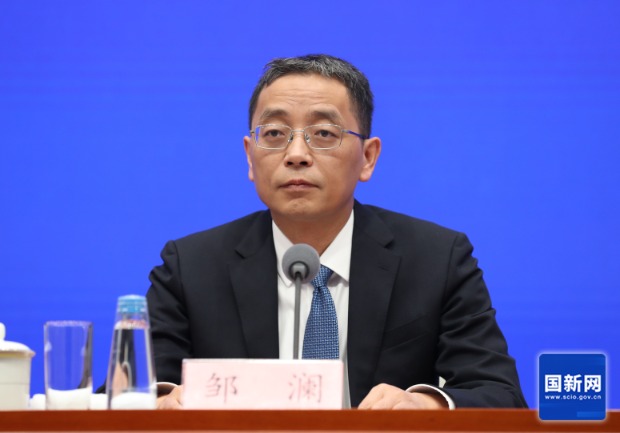
中国人民银行副行长邹澜:2026年降准降息还有一定空间
Xin Hua Cai Jing· 2026-01-15 14:48
Core Viewpoint - The People's Bank of China (PBOC) indicates that there is still room for further reductions in reserve requirements and interest rates to support high-quality economic development in 2026 [1][3]. Group 1: Monetary Policy Insights - The average statutory deposit reserve ratio for financial institutions is currently 6.3%, suggesting potential for a reduction in reserve requirements [3]. - The PBOC has noted that external constraints are relatively stable, with the RMB exchange rate being stable and the USD in a rate-cutting cycle, which does not impose strong constraints on monetary policy [3]. - Internally, the net interest margin for banks has stabilized at 1.42% over the past two quarters, indicating a favorable environment for potential interest rate cuts [3]. Group 2: Financing Cost Management - The PBOC plans to continue comprehensive measures to maintain low overall financing costs in society, including promoting transparency in loan costs through "loan clarity papers" for enterprises [3]. - Efforts will be made to reduce assessment, guarantee, and other intermediary financing costs to alleviate the financial burden on businesses and optimize the financing environment [3]. - The PBOC emphasizes the importance of effective execution and supervision of interest rate policies to ensure smooth transmission of these policies [3]. Group 3: Future Monetary Policy Direction - Looking ahead to 2026, the PBOC will implement moderately accommodative monetary policies in line with the central economic work conference's decisions, focusing on both stock and incremental policy effects [3]. - There will be an increased emphasis on counter-cyclical and cross-cyclical adjustments to create a conducive monetary and financial environment for stable economic growth and high-quality development [3].