防范化解金融风险

Search documents
降准降息仍是政策工具选项,央行明年工作准备这么干
Di Yi Cai Jing· 2025-12-12 15:04
Group 1: Monetary Policy Direction - The People's Bank of China (PBOC) emphasizes the continuation of a moderately loose monetary policy to support key areas such as domestic demand, technological innovation, and small and micro enterprises [1][4] - The central bank outlines five main directions for its work in the coming year, including improving the central bank system and preventing financial risks in key areas [1][6] Group 2: Monetary Policy Framework - The PBOC aims to construct a scientific and robust monetary policy system, focusing on dynamic assessment and enhancement of the monetary policy framework [2][3] - Experts suggest that the monetary policy should balance short-term and long-term goals, as well as internal and external factors, to ensure effective financial support for high-quality development [2][3] Group 3: Tools and Implementation - The central bank plans to utilize various monetary policy tools, including reserve requirement ratio (RRR) cuts and interest rate reductions, to maintain liquidity and support the real economy [4][5] - There is an emphasis on flexible and efficient policy implementation, with a focus on balancing multiple objectives to improve the quality and long-term effects of monetary policy [4][5] Group 4: Financial Risk Management - The PBOC identifies the prevention and resolution of financial risks in key areas, such as real estate and small financial institutions, as a critical task moving forward [6] - The central bank is committed to market-oriented and legal principles in addressing risks associated with financing platforms and small financial institutions [6]
金融党建圳先行 | 深圳资产管理有限公司:党建助力金融风险化解,盘活资产彰显专业担当
Xin Lang Cai Jing· 2025-12-12 14:22
Core Viewpoint - The 20th Central Committee's Fourth Plenary Session approved the "Suggestions on Formulating the 15th Five-Year Plan for National Economic and Social Development," which sets the direction for high-quality financial development in Shenzhen [1][20]. Group 1: Political Leadership and Learning - The company prioritizes political construction, utilizing various learning methods to study Xi Jinping's latest important speeches and fostering a strong learning atmosphere through dedicated columns on their public platform [2][21]. - A structured learning matrix is established, integrating theoretical learning into daily practices, ensuring continuous engagement among party members [2][21]. Group 2: Leadership Role in Key Projects - The company plays a crucial leadership role in major project reviews and investments, ensuring alignment with national strategies and regional economic stability [5][23]. - Party members take on exemplary roles in project advancement, particularly in areas like non-performing asset management and real estate project support, contributing to high-quality economic development [5][23]. Group 3: Risk Management and Real Estate Solutions - The company actively responds to calls for real estate risk mitigation, focusing on urban renewal and policy housing, and collaborates with local governments and various departments to address challenges faced by stakeholders [9][27]. - Innovative financial solutions are implemented to restructure historical debts and attract new funding, achieving both economic and social benefits, recognized with the "2024 Best Case Award" in the national AMC industry [9][27]. Group 4: Project Revitalization and Community Support - The company engages in project revitalization efforts, employing innovative models to resolve risk conflicts, particularly in the real estate sector, and successfully isolates debt risks while achieving multi-party benefits [12][30]. - Initiatives are taken to support local governments and financial institutions, ensuring that community needs are met while promoting economic stability [12][30]. Group 5: Strategic Investment in Emerging Industries - The company embraces its political and social responsibilities by investing in emerging industries such as robotics and artificial intelligence, aligning with national strategic goals [16][34]. - Collaborative investment strategies are employed to address liquidity challenges faced by companies, enhancing the overall production capacity in Shenzhen [16][34]. Group 6: Future Directions - The company plans to continue its involvement in local financial risk management, focusing on Shenzhen's strategic emerging industries and contributing to the development of the Guangdong-Hong Kong-Macao Greater Bay Area [18][35].

多项重点业务管控失序?成都银行725万罚单敲响内控警钟
Nan Fang Du Shi Bao· 2025-12-10 08:33
Core Viewpoint - Chengdu Bank and its 15 branches were fined a total of 7.25 million yuan due to multiple core business management violations, highlighting vulnerabilities in its management system [2][3] Summary by Sections Regulatory Actions - Chengdu Bank's main issues were identified as imprudent management in loan, deposit, discount, and bill businesses, with the total fine amounting to 7.25 million yuan, including 900,000 yuan for the head office and 6.35 million yuan for 15 branches [3] - The penalties also included warnings and fines for 13 responsible individuals, totaling 730,000 yuan, indicating a shift towards personal accountability in regulatory enforcement [3][4] Financial Performance - Chengdu Bank, established in 1996, is the largest legal bank in Sichuan Province, achieving record performance in 2024 with total assets of 1.25 trillion yuan, deposits of 880 billion yuan, and loans of 740 billion yuan, marking four consecutive years of over 100 billion yuan growth [5] - However, the bank faces challenges such as slowing growth and imbalanced business structure, with revenue growth rates declining from 22.54% in 2021 to 5.9% in 2024 [5][6] Risk Management and Compliance - The bank's high customer concentration is concerning, with the top ten loan clients accounting for 38.31% of net capital, significantly higher than peers like Jiangsu Bank and Nanjing Bank [6] - The regulatory environment is tightening, with nearly 1,000 fines issued to banks in 2025 alone, emphasizing the need for improved internal controls and compliance mechanisms [7][8]
浦发银行又承接一村镇银行“村改支”提速
2 1 Shi Ji Jing Ji Bao Dao· 2025-11-27 00:29
Core Viewpoint - The rapid restructuring of rural banks under Shanghai Pudong Development Bank (SPDB) is a response to regulatory demands for financial risk mitigation, with several rural banks being dissolved and their assets transferred to SPDB branches [1][2]. Group 1: Recent Developments - As of November 2023, multiple rural banks under SPDB have been approved for dissolution, with their assets and liabilities being taken over by SPDB [1]. - A total of six rural banks have been dissolved this year, transitioning to branches of SPDB [1]. - The restructuring includes the acquisition of banks in various regions, such as Dalian, Yunnan, and Xinjiang, with new branches being established in their place [1]. Group 2: Financial Performance - By the end of 2024, the 28 rural banks established by SPDB will have total assets of 40.221 billion yuan, with deposits of 33.186 billion yuan and loans of 22.439 billion yuan [2]. - The number of clients served includes 1.4332 million settlement customers and 54,900 loan customers, with an average loan amount of 408,800 yuan [2]. - In 2024, these banks are projected to generate operating income of 693 million yuan, but will incur a net loss of 69 million yuan [2]. Group 3: Industry Outlook - Experts predict an acceleration in the structural reorganization of rural banks, leading to a gradual decrease in their numbers [3]. - There is a call for guiding policies to help rural banks refocus on their core missions and effectively manage risks while supporting rural revitalization and small enterprises [3]. - The importance of small and medium-sized banks is emphasized, with recommendations for differentiated regulatory support and incentives for banks that effectively manage rural bank investments [3].

【早知道】央行:实施好适度宽松的货币政策;商务部:在大力提振消费等方面出台更多细化措施
Sou Hu Cai Jing· 2025-11-12 00:03
人民财讯11月12日电,【摘要】央行:实施好适度宽松的货币政策。商务部:在大力提振消费等方面出 台更多细化措施。金融监管总局:有效防范化解重点领域金融风险,全面加强金融监管。国家发改委: 鼓励地方按照中试特点,探索简化项目建设前置要件审批程序。抖音电商开展酒水虚假营销专项治理。 国内首条12寸硅光芯片流片平台投用。外交部:敦促欧盟为中国企业提供公平、透明、非歧视的营商环 境。商务部部长王文涛与德国联邦经济和能源部部长赖歇举行视频会谈。中央农办、农业农村部:要严 守农村宅基地管理法律政策底线红线,坚决落实"两个不允许"要求。 ...
金融监管总局:有效防范化解重点领域金融风险 全面加强金融监管
Zheng Quan Shi Bao Wang· 2025-11-11 12:01
人民财讯11月11日电,11月11日,金融监管总局举行学习贯彻党的二十届四中全会精神专题宣讲电视电 话报告会,党委书记、局长李云泽作宣讲报告。李云泽指出,要始终坚持党中央对金融工作的集中统一 领导,持之以恒推进全面从严治党,牢牢把握防风险、强监管、促高质量发展工作主线,有效防范化解 重点领域金融风险,全面加强金融监管,优化金融机构体系,统筹做好金融"五篇大文章",推动金融强 国建设取得新的重大进展。 ...
工商银行嘉峪关分行:精准施策助企纾困服务实体共促发展
Xin Lang Cai Jing· 2025-11-07 03:07
Core Viewpoint - A real estate company in Jiayuguan has fully repaid a real estate development loan from the Industrial and Commercial Bank of China (ICBC), marking a successful resolution of financial support and risk management efforts by the bank [1] Group 1: Loan Repayment and Financial Support - The real estate company had faced significant financial pressure due to industry downturns and reduced market demand, leading to seven loan extensions over the years [1] - The full repayment of the loan principal and interest reflects ICBC Jiayuguan Branch's commitment to supporting enterprises and mitigating financial risks [1] Group 2: Bank's Strategy and Future Plans - ICBC Jiayuguan Branch emphasizes a tailored approach to financial support, avoiding a one-size-fits-all strategy in loan management [1] - The bank plans to continue enhancing its financial services, aligning with national macroeconomic policies, and focusing on high-quality development goals [1]


潘功胜重磅发声,提出六个方向
2 1 Shi Ji Jing Ji Bao Dao· 2025-10-28 15:45
Core Viewpoint - The People's Bank of China (PBOC) emphasizes the importance of maintaining a stable financial environment to support the real economy and enhance financial regulation, reform, and openness, while preventing financial risks [2][5][10]. Group 1: Monetary Policy - The PBOC plans to implement a moderately loose monetary policy to support economic recovery, including measures such as interest rate cuts and reserve requirement ratio reductions [4][5]. - By September 2025, loans in technology, green, inclusive finance, elderly care, and digital economy sectors have seen significant year-on-year growth rates of 11.8%, 22.9%, 11.2%, 58.2%, and 12.9% respectively, all exceeding the overall loan growth rate [4]. Group 2: Financial Regulation and Reform - The PBOC aims to enhance financial services for the real economy, focusing on sectors like technology innovation, consumption, small and micro enterprises, and foreign trade [5][8]. - A comprehensive macro-prudential management system will be established to improve the transmission mechanism of monetary policy and support structural reforms in the financial supply side [5][11]. Group 3: Financial Openness - The PBOC is advancing high-level financial openness, promoting the internationalization of the Renminbi (RMB), and enhancing its functions in pricing, payment, investment, and reserve [7][8]. - The RMB has become the largest currency for cross-border payments in China and ranks among the top three currencies for trade financing and payments globally [7]. Group 4: Risk Prevention - The PBOC has made significant progress in mitigating financial risks, particularly in small and medium-sized financial institutions, with a notable reduction in the number of financing platforms and their debt levels by 71% and 62% respectively from March 2023 to September 2025 [10][11]. - Future efforts will focus on monitoring systemic financial risks and supporting the market-oriented transformation of financing platforms [11].
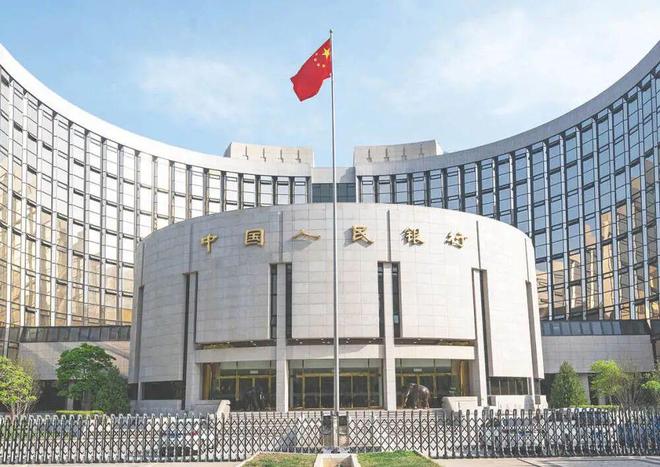
【金融街发布】中国人民银行行长潘功胜:大力整治金融机构无序非理性竞争 不断增强监管质效
Xin Hua Cai Jing· 2025-10-28 13:17
Core Viewpoint - The People's Bank of China (PBOC) has reported significant progress in financial work since November 2024, emphasizing the importance of a stable monetary policy to support the real economy and enhance financial services [1][2]. Monetary Policy Execution - The PBOC has implemented a moderately loose monetary policy since 2025, including measures such as reserve requirement ratio (RRR) cuts and interest rate reductions to support technology innovation, consumption, small and micro enterprises, and stabilize foreign trade [1][2]. - As of September 2025, loans in key sectors such as technology, green finance, and digital economy have seen substantial year-on-year growth rates, with technology loans increasing by 11.8% and green loans by 22.9% [2]. Financial Market Stability - The Chinese financial market has withstood significant external shocks, with improved expectations and confidence among market participants [1][2]. - The PBOC has explored various monetary policy tools to maintain market stability, particularly during the global financial market turbulence in April 2025 [1]. Financial Reform and Opening Up - A comprehensive cross-border payment system for the Renminbi has been established, with the currency becoming the largest for cross-border payments in China and ranking among the top three globally for trade financing [2]. - The PBOC is committed to enhancing international financial cooperation and maintaining national financial security [2]. Risk Management - The PBOC has utilized mergers, market exits, and other strategies to reform and mitigate risks in small and medium-sized financial institutions, resulting in a significant reduction in the number of financing platforms and their debt levels [2]. Future Work Considerations - The PBOC plans to continue implementing a moderately loose monetary policy and enhance financial regulation to improve the quality of financial services [3][4]. - There is a focus on providing high-quality financial services to key sectors, including technology innovation and small enterprises, while ensuring policy coordination across fiscal, monetary, and industrial domains [3][4]. Structural Reforms - The PBOC aims to deepen supply-side structural reforms in finance, improve the central bank's system, and enhance the macro-prudential management framework [4][5]. - Efforts will be made to promote the internationalization of the Renminbi and maintain financial security through systematic monitoring and risk assessment [4][5].

国务院关于金融工作情况的报告
第一财经· 2025-10-28 12:38
Core Viewpoint - The report emphasizes the importance of financial work in supporting high-quality economic development and maintaining financial stability, guided by the principles set forth by the central leadership [2][3]. Financial Work Progress and Achievements - Since November 2024, the financial system has focused on stabilizing and improving support for the real economy, enhancing financial regulation, and deepening financial reform and opening up, achieving new results [3]. - Monetary policy measures have been implemented, including a package of significant monetary policy measures introduced in May 2025, resulting in a year-on-year growth of 8.7% in social financing scale and 8.4% in broad money supply by September [3]. - By September 2025, the total assets of financial institutions exceeded 520 trillion yuan, with a capital adequacy ratio of 15.36% and a non-performing loan ratio of 1.52% for commercial banks, indicating a stable financial environment [4][5]. Financial Support for the Real Economy - From November 2024 to September 2025, A-share IPOs raised 91.8 billion yuan, with 86% from private enterprises and 92% from strategic emerging industries [6]. - Loans for technology, green, inclusive, elderly, and digital economy sectors grew significantly, with year-on-year increases of 11.8%, 22.9%, 11.2%, 58.2%, and 12.9% respectively by September 2025 [6]. Financial Reform and Opening Up - The reform of financial institutions has deepened, with state-owned banks successfully raising 520 billion yuan for capital replenishment [7]. - The cross-border payment system for the renminbi has been established, with the renminbi becoming the largest currency for cross-border payments in China and ranking third in the IMF's Special Drawing Rights basket [8]. Risk Prevention and Mitigation - Measures have been taken to resolve risks in small and medium-sized financial institutions, with a 71% decrease in the number of financing platforms and a 62% reduction in operating financial debt by September 2025 compared to March 2023 [9]. - The real estate market is being supported through macro-prudential management, with new loans of 2.2 trillion yuan facilitated through a "white list" mechanism [9]. Future Work Considerations - The focus will be on implementing a moderately loose monetary policy to support economic recovery, enhancing financial regulation, and providing high-quality financial services to key sectors [11][12]. - Continued efforts will be made to deepen financial supply-side structural reforms and promote the internationalization of the renminbi [13][14].