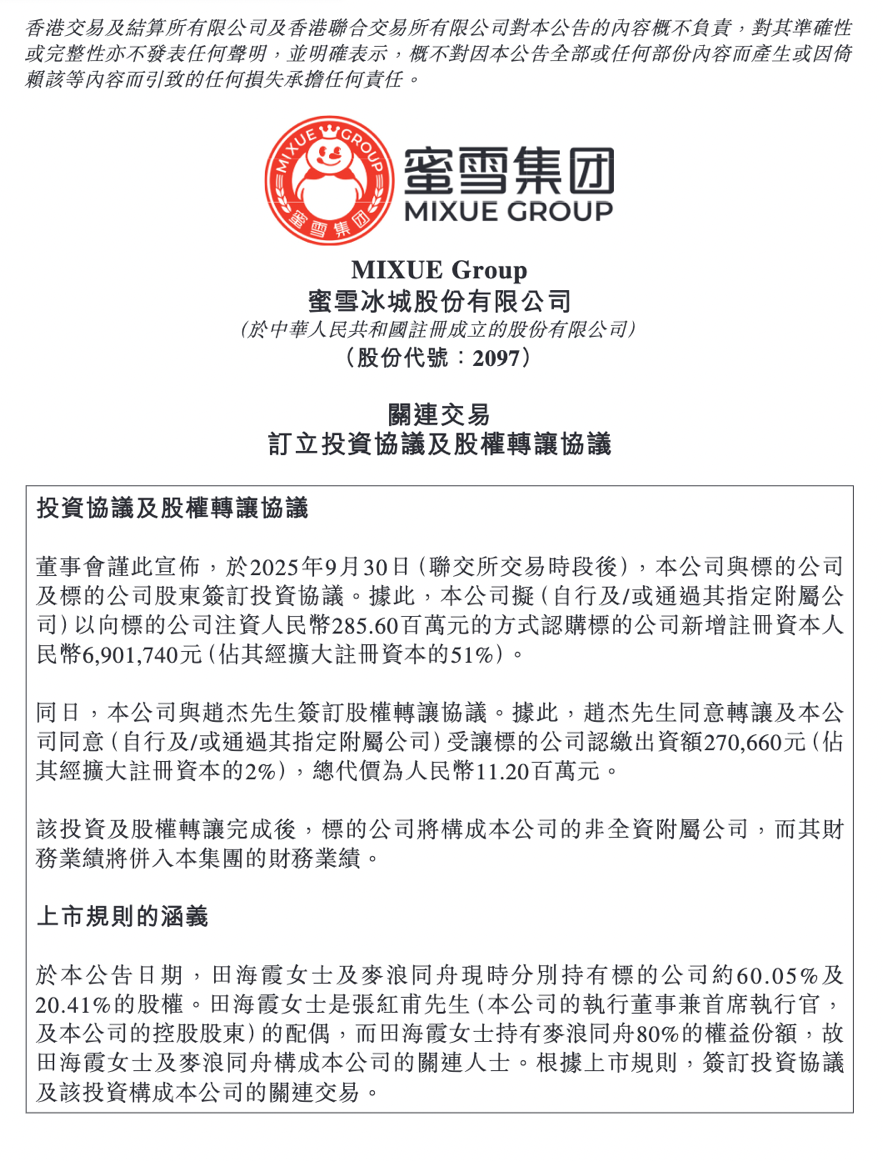
高质平价

Search documents
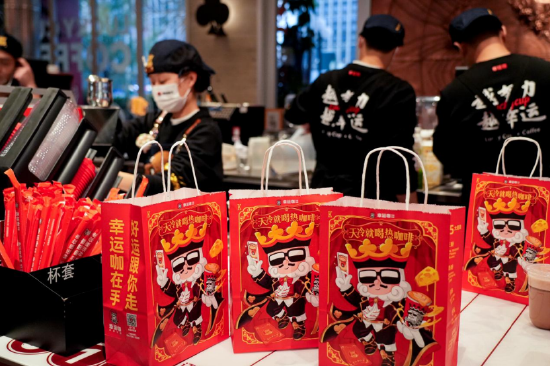
幸运咖破万店 5.9元咖啡的逆袭与隐忧
Xin Lang Cai Jing· 2025-12-03 07:21
Core Insights - Luckin Coffee has achieved a significant milestone by surpassing 10,000 stores globally, becoming the third domestic coffee chain to join the "10,000-store club" after Luckin and Kudi [1][8] - The rapid expansion from approximately 4,600 stores at the beginning of the year to over 10,000 in just 10 months indicates an average of more than 16 new stores opening daily, showcasing an impressive growth rate [1][8] Expansion Strategy - The journey to 10,000 stores is attributed to a well-calculated business strategy and market opportunities, with a pivotal shift occurring in 2020 when the brand clarified its "high-quality and affordable" positioning, targeting the lower-tier market and student demographics [2][9] - Leveraging the supply chain of its parent company, Mixue Ice Cream, Luckin Coffee benefits from significantly lower core raw material costs, with coffee beans sold to franchisees at no more than 70 yuan per kilogram, compared to the industry average of over 120 yuan per kilogram, representing a nearly 40% discount [2][9] - In May 2025, Mixue Group signed a 4 billion yuan procurement agreement for agricultural products, primarily coffee beans, further enhancing cost control and risk management capabilities [2][9] Franchise Model - The lightweight franchise model is a key driver of Luckin Coffee's rapid expansion, with a "no revenue sharing" policy for single-store franchises, significantly reducing management costs for franchisees [3][10] - The initial investment for a single store is approximately 127,000 yuan, which is lower than Kudi's 220,000 yuan and higher thresholds set by Luckin [3][10] - In 2025, Luckin Coffee introduced support policies in major cities, allowing for total reductions of up to 34,000 yuan per store, further lowering the entry barrier for franchisees [3][11] Product Strategy - Luckin Coffee has effectively captured the tastes of young consumers, with the "Coconut Latte" launched in March 2022 becoming a core bestseller, generating over 1 billion yuan in sales and exceeding 100 million cups sold by October 2025 [3][11] - The company launched 47 new products in 2025, continuously enriching its product line to meet diverse consumer demands [3][11] Challenges and Concerns - Despite the rapid expansion, Luckin Coffee faces unprecedented profitability pressures and operational challenges, particularly in first-tier cities where high rental costs are eroding franchisee profit margins [4][12] - The average daily sales required for breakeven in first-tier city stores is around 300 cups, significantly higher than the industry average, with many franchisees reporting unsatisfactory operating conditions [4][12] - Product quality and brand perception are identified as weaknesses, with younger consumers expressing dissatisfaction with the taste of Luckin's coffee compared to competitors like Luckin and Kudi [4][12] Supply Chain and Market Dynamics - Fluctuations in supply chain costs pose a threat to Luckin Coffee's low-price model, with Arabica coffee futures prices rising by 118.57% over the past year [5][13] - The reduction of delivery subsidies since July 2025 has intensified profitability pressures, particularly for brands reliant on online traffic [5][13] - Franchisees have raised concerns about inadequate regional protection policies, leading to internal competition and customer base dilution [5][13] Market Outlook - The coffee market's competitive landscape will not favor a single model but will require a dynamic balance between price, quality, scale, profitability, expansion, and sustainability [6][14]
价格战打不死霸王茶姬
3 6 Ke· 2025-12-01 00:20
前段时间,一份忧喜参半的财报,给上市半年的霸王茶姬浇了盆冷水。 一边是收入规模与盈利能力出现下滑。今年三季度,霸王茶姬营收同比下滑9.4%,经调净利润同比下降22%。 另一边,部分经营指标却稳中有升,其闭店率连续三季度保持0.3%[1],远低于行业2%-10%;注册会员数同比增长36.7%至2.2亿,今年前三季度累计增加 了4500万名新会员。 即使是放在热点不断的新式茶饮市场,霸王茶姬都是相当特别的存在。它曾用最短的时间跻身全国前三大营收规模的茶饮品牌,是六大新茶饮公司里,唯 一选择在纳斯达克上市,挑战苛刻的华尔街的那一个。 这种特殊性赋予了其远超于同行的市场关注度。财报发布后,霸王茶姬遭遇的诘问总结起来就一句话——高增长的时代是否已经结束? 但如果拆解霸王茶姬的财报与其这一年的业务动作,会发现一个截然不同的答案。 不打价格战 今年上半年,六大茶饮上市公司的收入总额超过300亿,占整个茶饮市场规模近十分之一。 茶饮市场已经进入饱和的存量竞争阶段。前一年各茶饮企业都曾出现单店收入/GMV增速赶不上门店增速的情况,好在今年有外卖大战,为失速边缘的茶 饮行业兜了一次底。 同行的快反衬出了霸王茶姬的慢。今年其开店计 ...


平价咖啡将诞生新万店品牌,咖啡市场进入“质价比”时代?
Xin Lang Ke Ji· 2025-10-31 08:04
Core Insights - The Chinese fresh coffee market is undergoing a significant transformation, shifting from a "brand premium" focus to a "quality-price ratio" emphasis, particularly in first-tier cities [1][3] - Starbucks is facing unprecedented competition from affordable coffee brands like Luckin Coffee, Kudi, and others, which are gaining dominance in this emerging market [1][3] Market Dynamics - The Chinese coffee market is projected to exceed 500 billion yuan by 2030, driven by three key industry variables: the entry of tea brands lowering coffee prices, low market concentration, and evolving consumer perceptions [3][5] - Consumers are increasingly willing to pay for quality rather than brand, leading to a trend where price equality becomes essential [3][5] Competitive Landscape - Starbucks' average price per cup is around 30 yuan, while competitors like Luckin Coffee and Kudi offer prices ranging from 4.5 to 16 yuan, creating a significant price gap that challenges Starbucks' competitive advantage [3][4] - Brands like Luckin Coffee have successfully attracted younger consumers by offering "low-price, high-quality" products, reshaping consumer perceptions of coffee pricing [3][4] Brand Performance - Luckin Coffee's "Coconut Latte" has achieved sales exceeding 300 million yuan, with over 30 million cups sold, showcasing its strong market presence [4] - The brand has expanded rapidly, with over 9,000 stores, doubling its scale since the beginning of the year, and has opened its first overseas store in Malaysia [4][5] Consumer Behavior - There is a notable shift in consumer behavior, with many opting for affordable coffee options, indicating a change in the perception of coffee consumption from a luxury to a daily necessity [5][6] - The demand for reasonably priced, quality coffee is consistent across different market segments, suggesting that the "high-quality, low-price" model has long-term potential [5][6] Supply Chain and Operational Efficiency - Luckin Coffee's competitive edge lies in its supply chain management, which includes significant production capacity and cost control, allowing it to maintain quality at lower prices [6] - The brand's operational model serves as a blueprint for the coffee industry, emphasizing the importance of supply chain foundations, product-market fit, and targeted expansion [6]
中国餐饮,到底要不要学日本?
3 6 Ke· 2025-10-24 13:14
Core Insights - The Chinese restaurant industry is facing significant challenges in 2025, with declining consumer spending and increased competition leading to a difficult market environment [1] - Despite the overall downturn, several Japanese restaurant brands, such as Salariya and Sushi Lang, are experiencing growth in China, indicating potential opportunities within the market [1][2] Industry Trends - Japanese restaurant brands are thriving in China, contrasting sharply with the struggles of local brands, suggesting a need for local businesses to learn from their strategies [2] - The concept of "learning from Japanese dining" is gaining traction, with the idea that Japan's past consumption patterns may reflect China's current trends [2][4] Consumption Era Analysis - Japan's consumption history is categorized into four eras, each reflecting different consumer priorities, from state-centered to individual-centered consumption [3] - The current Chinese market appears to be mirroring Japan's consumption evolution, with shifts towards value-oriented and health-conscious dining [4] Key Strategies from Japanese Brands - "Extreme Cost Performance" is a critical strategy, with brands like Yoshinoya achieving growth through high value-to-price ratios during economic downturns [6][7] - "Extreme Single Store" operations focus on efficiency, with Salariya exemplifying this through rapid service and low labor costs [8] - "Extreme Supply Chain" management has transformed Japanese dining, emphasizing efficiency and cost reduction through centralized kitchens and advanced logistics [9][10] Market Dynamics - Japan's restaurant industry has a significantly higher chain rate (50.8%) compared to China's (24%), indicating room for growth in the latter [11] - The Japanese restaurant sector has adapted to economic downturns by focusing on consumer behavior changes, prioritizing efficiency and cost management [12] Future Directions - The emergence of the "Fifth Consumption Era" emphasizes well-being and emotional value in consumer choices, suggesting a shift in focus for restaurant brands [13][28] - The trend towards "high-quality affordable" dining is becoming essential, as brands must balance cost, quality, and consumer experience [16][30] Technological Innovations - The rise of automation and smart kitchen technologies, such as cooking robots, is transforming the efficiency of restaurant operations, potentially reducing labor costs significantly [17][18][20] - The integration of technology in dining experiences is expected to enhance operational efficiency and customer satisfaction [19] Market Segmentation - The Chinese dining market is increasingly characterized by niche offerings, catering to specific demographics such as the elderly and single consumers [23][24] - Emotional value and unique dining experiences are becoming key drivers of consumer choices, with brands focusing on creating memorable environments [26][28] Conclusion - The Chinese restaurant industry is undergoing profound changes, with a need for adaptation to new consumer behaviors and market conditions, emphasizing the importance of innovation and strategic learning from successful international models [31][32]
蜜雪冰城的6元风,刮到了啤酒圈
36氪· 2025-10-22 00:46
Core Viewpoint - The article discusses the recent acquisition of Fulu Family by Mixue Group for 297 million yuan, marking its entry into the beer industry, and highlights the potential for growth and market expansion in this sector [3][7][18]. Summary by Sections Acquisition Details - Mixue Group has acquired 51% of Fulu Family's expanded registered capital for 285.6 million yuan and an additional 2% stake for 11.2 million yuan, making Fulu Family a non-wholly owned subsidiary [7][20]. - Fulu Family operates 1,200 stores primarily in lower-tier markets, with a focus on affordable fresh beer [8][9]. Product Offering and Pricing - Fulu Family's main products include fresh beer, milk beer, tea beer, and fruit beer, with prices starting at 5.9 yuan per pound for fresh beer [12][18]. - The pricing strategy aligns with Mixue Group's focus on providing high-quality, affordable products, with a core price point of around 6 yuan [6][12]. Market Position and Strategy - Fulu Family's stores are located in less urbanized areas, similar to Mixue's strategy of targeting lower-tier markets [11][12]. - The acquisition aims to enhance Mixue Group's product portfolio, creating a synergy between fresh tea, coffee, and beer offerings [18][28]. Business Model and Operations - Fulu Family's operational model involves a simplified process where staff serve fresh beer directly from cold storage, allowing for quick service [17][18]. - The business primarily relies on a franchise model, similar to Mixue's approach, focusing on low initial investment and lightweight operations [29][30]. Financial Performance and Challenges - Fulu Family reported a loss of 1.5277 million yuan in 2023, with a projected net profit of only 1.0771 million yuan in 2024, indicating challenges in achieving profitability [37][38]. - The beer market's dynamics differ significantly from the tea beverage sector, raising questions about the sustainability of Fulu Family's low-price strategy [36][38].

平价现磨咖啡激战正酣,质价比成破局关键丨新消费观察
Sou Hu Cai Jing· 2025-10-17 11:40
Core Insights - The Chinese fresh coffee market is experiencing new growth driven by both scale expansion and quality upgrades, with the sales of Luckin Coffee's "Coconut Latte" surpassing 300 million yuan and sales exceeding 30 million cups as of early October 2023 [2] - The fresh coffee market in China is projected to exceed 120 billion yuan, with the overall market size reaching 150 billion yuan, indicating a shift towards fresh coffee becoming a mainstream consumption choice [2] - The competition in the coffee industry has evolved from price wars to value wars, with leading brands like Luckin and Kudi leveraging digital operations and scale effects to maintain their leadership [3] Market Trends - The "Coconut Latte" has become a best-selling product for Luckin Coffee, with cumulative sales reaching 71.19 million cups by March 23, 2025, reflecting consumer preferences for "light and sweet" flavors [2] - The market share of fresh coffee is expected to rise from less than 40% to over 80%, with "high-quality and affordable" positioning being a key driver of industry growth [2] - The industry is witnessing a shift towards differentiated competition among brands, with Starbucks focusing on its "third space" concept while expanding its presence in lower-tier markets [3] Company Developments - Luckin Coffee has over 8,700 stores nationwide and continues to grow rapidly, supported by strong product innovation and a high-quality, affordable business model [3] - JD.com announced the launch of "Seven Fresh Coffee" at the 2025 Global Technology Explorers Conference, aiming to open 10,000 stores in three years, indicating a strategic move to capture offline consumer engagement through coffee [3]
蜜雪集团(02097):收购福鹿家53%股权,进一步拓宽品牌矩阵
Hua Yuan Zheng Quan· 2025-10-14 01:00
Investment Rating - The investment rating for the company is "Buy" (maintained) [5] Core Views - The acquisition of a 53% stake in Fulu Family further expands the brand matrix of the company [5] - The beer industry has a large market size and consumer base, with increasing demand for high-quality and diverse products, which is expected to open up opportunities in the fresh beer market [8] - The company is expected to leverage its existing supply chain advantages and franchisee strengths to enhance its brand presence in the fresh beer sector [8] Financial Performance and Forecast - Revenue projections for the company are as follows: - 2023: 20,302.47 million RMB - 2024: 24,828.87 million RMB (growth of 22.29%) - 2025E: 30,443.21 million RMB (growth of 22.61%) - 2026E: 36,691.03 million RMB (growth of 20.52%) - 2027E: 42,410.49 million RMB (growth of 15.59%) [6] - Net profit forecasts are as follows: - 2023: 3,137.34 million RMB - 2024: 4,436.50 million RMB (growth of 41.41%) - 2025E: 5,425.05 million RMB (growth of 22.28%) - 2026E: 6,586.02 million RMB (growth of 21.40%) - 2027E: 7,670.19 million RMB (growth of 16.46%) [6] - The price-to-earnings (P/E) ratios for the upcoming years are projected as follows: - 2025E: 26.88 - 2026E: 22.14 - 2027E: 19.01 [6] Company Overview - The company has acquired a 51% stake in Fulu Family for an investment of 286 million RMB, with the acquisition expected to enhance its brand portfolio [8] - Fulu Family operates approximately 1,200 stores across 28 provinces in China, primarily using a franchise model for expansion [8] - The company aims to maintain a high-quality and affordable product positioning in the fresh beer market, which includes a diverse product range [8]
2.97亿元!蜜雪冰城,要卖啤酒了
Sou Hu Cai Jing· 2025-10-11 07:50
Core Insights - The article discusses the recent investment agreement between Mixue Group and Xianpi Fulujia, where Mixue Group will acquire a 53% stake in Xianpi Fulujia for a total of 297 million yuan, marking its expansion into the fresh beer market [1][2]. Investment Details - Mixue Group will inject 297 million yuan into Xianpi Fulujia, acquiring 51% of its expanded registered capital, along with an additional 2% from independent third-party shareholders [1]. - After the transaction, Xianpi Fulujia will become a non-wholly owned subsidiary of Mixue Group [2]. Company Background - Xianpi Fulujia was founded in 2021, focusing on providing freshly brewed beer products, including various types such as fresh beer, fruit beer, tea beer, and milk beer [3]. - As of August 2025, Xianpi Fulujia is projected to have around 1,200 stores across 28 provinces in China, making it the leading brand in the fresh beer chain store segment [7]. Market Positioning - The acquisition aligns with Mixue Group's strategy of offering "high-quality and affordable" products, expanding its product matrix to include fresh beer alongside tea and coffee [8][10]. - Xianpi Fulujia's pricing strategy is competitive, with most products priced between 5.9 yuan and 9.9 yuan, significantly lower than the industry average [10]. Strategic Advantages - The partnership allows Xianpi Fulujia to leverage Mixue Group's extensive cold chain logistics and marketing resources, enhancing product quality and supply chain efficiency [12]. - The acquisition is seen as a strategic move to tap into the underdeveloped fresh beer market, which is identified as a blue ocean opportunity with significant growth potential [13][15]. Industry Trends - The fresh beer segment is gaining traction as consumer preferences shift towards quality and experience, with the market expected to grow from 10 billion yuan in 2020 to over 100 billion yuan by 2025 [15]. - Xianpi Fulujia is recognized as a pioneer in the fresh beer category, being the first brand in China to receive national certification for "fresh beer" [15]. Consumer Engagement - Xianpi Fulujia's store locations are strategically chosen in community areas and dining hotspots, catering to the demand for convenient, on-the-go consumption [17]. - The brand's focus on product innovation and seasonal offerings aims to keep the consumer experience fresh and engaging, enhancing customer loyalty [17].

蜜雪冰城卖啤酒,斥资3亿买下“老板娘”的鲜啤福鹿家
Guo Ji Jin Rong Bao· 2025-10-10 12:36
Core Viewpoint - Recently, Mixue Group announced plans to acquire a 53% stake in the operating entity of the fresh beer brand "Xianpi Fulujia" for a total transaction price of 297 million RMB, marking its entry into the fresh beer market and expanding its product portfolio to include alcoholic beverages alongside its existing tea and coffee brands [1][10]. Group 1: Company Overview - Xianpi Fulujia, founded in 2021, is a leading brand in the affordable craft beer market, offering products priced between 6 to 10 RMB per 500ml, including classic fresh beer, fruit beer, and tea beer [3][7]. - The brand has rapidly expanded, achieving a thousand-store scale by June 2023 and opening 638 new stores in the last 90 days, totaling approximately 1,200 locations nationwide, making it the largest fresh beer chain in China [6][7]. - Xianpi Fulujia's business model is similar to Mixue's, focusing on a "rural encircling cities" expansion strategy, with nearly 60% of its stores located in third-tier cities and below [7][9]. Group 2: Financial Performance - In 2023, Xianpi Fulujia reported a loss of 152,770 RMB, but is projected to turn a profit in 2024 with a net profit of 107,090 RMB [8]. - As of August 31, 2023, the company had an unaudited net asset of approximately 19.52 million RMB and total assets of about 92.7 million RMB [7][8]. Group 3: Market Context - The entry into the fresh beer sector is seen as a strategic extension for Mixue Group, aligning with the projected growth of the craft beer market in China, which is expected to reach a market size of 130 billion RMB by 2025, with a penetration rate increasing from 6.8% to 17.2% [10]. - The competitive landscape for craft beer is intense, with many entrants but no clear market leader, presenting both opportunities and challenges for Mixue Group as it seeks to leverage synergies with its existing brand values of "high quality and affordability" [10].
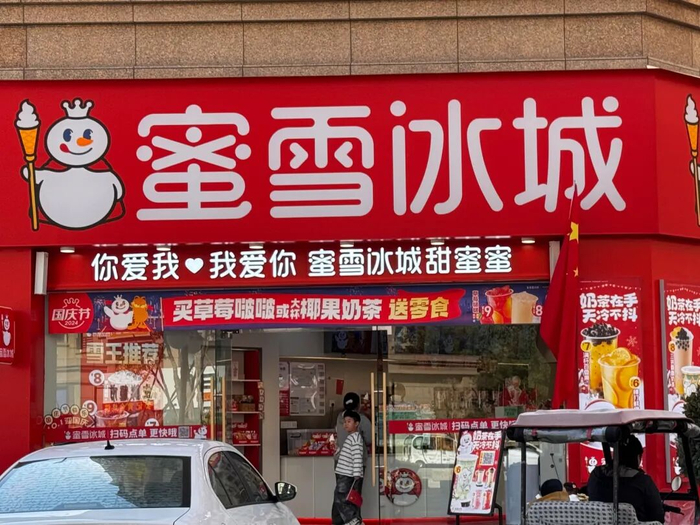
14个月从100家开到1000家门店,蜜雪冰城为何买下这家精酿啤酒商
Xin Lang Cai Jing· 2025-10-07 05:35
Core Viewpoint - The acquisition of craft beer brand Fulu by Mixue Ice City expands the latter's business scope into the craft beer sector, enhancing its potential for growth and synergy with existing brands [1][5]. Group 1: Acquisition Details - Mixue Ice City announced on October 1 that it acquired a 53% stake in Fulu for a total of 297 million yuan, making Fulu a non-wholly-owned subsidiary of Mixue [1]. - The acquisition is seen as a strategic move to capitalize on the growth opportunities in the craft beer industry and to build a more influential global food and beverage brand [5]. Group 2: Business Model and Strategy - Fulu's business model is characterized by a "high quality, low price" strategy, with prices ranging from 5.9 yuan to 9.9 yuan per cup, significantly lower than industry averages [7][20]. - The company focuses on precise location selection, cost control, and a low-price strategy to drive sales volume in the craft beer market [8]. Group 3: Market Position and Expansion - Fulu has rapidly expanded to approximately 1,200 stores across 28 provinces, utilizing a "rural encircling urban" strategy to penetrate both lower-tier cities and major urban areas [13][18]. - The craft beer market in China is projected to grow significantly, with estimates suggesting an increase from 10 billion yuan in 2020 to over 100 billion yuan by 2025, indicating a robust growth trajectory for brands like Fulu [11]. Group 4: Product Offering and Consumer Trends - Fulu offers a diverse product line, including fresh beer, fruit beer, and tea beer, with a commitment to introducing new flavors regularly to attract consumers [11][12]. - The brand aims to position craft beer as a daily consumer product rather than a social product, similar to the positioning of milk tea [20][21].