数实融合

Search documents
商务部等7部门开展“东绸西固”工作:到2028年全国茧丝绸总产值突破3000亿元
Shang Hai Zheng Quan Bao· 2025-11-17 19:14
Core Viewpoint - The Ministry of Commerce and seven other departments have issued a notice to promote the "East Silk, West Solid" initiative in the silk industry, aiming to enhance the modern industrial system and create new international competitive advantages by coordinating resources and capacities across eastern, central, and western regions of China [1][2]. Group 1: Industry Development Goals - By 2028, the eastern region aims to establish around 10 leading enterprises with revenues exceeding 10 billion yuan, cultivate over 20 well-known brands with independent intellectual property rights, and ensure that high-end silk product exports account for over 50% of the region's total [1]. - The central and western regions are expected to develop high-quality silk industry clusters, nurturing more than 10 leading enterprises with revenues exceeding 500 million yuan, and achieving a production share of high-quality silk, cocoons, and fabrics of over 75% [1]. - The overall goal is to surpass a total output value of 300 billion yuan for the silk industry nationwide [1]. Group 2: Key Challenges and Solutions - Despite being a global leader in the silk industry, China faces challenges such as unstable raw material supply, significant production and processing shortcomings, high market and trade risks, and weak product collaboration and branding [2]. - The "East Silk, West Solid" initiative is seen as a deepening and upgrading of the previous "East Mulberry, West Transfer" project, focusing on regional division of labor to transition from raw material supply to value co-creation [2]. Group 3: Strategic Tasks and Coordination - The notice outlines three main areas with nine key tasks, including extending the industrial chain in the western regions, enhancing technological leadership in the eastern regions, and promoting coordinated development between the two [3]. - The collaborative model of "Eastern Innovation - Western Manufacturing" aims to address high costs in the east and low added value in the west, while also providing a new paradigm for upgrading traditional industries through breakthroughs in key technologies [3]. Group 4: Market Expansion and New Applications - The silk industry can leverage high-end consumption and cultural integration by developing silk co-branded products, non-heritage derivatives, and high-end custom clothing, as well as promoting the "Silk + Cultural Tourism" model [4]. - There is potential to expand into emerging application fields, encouraging silk materials to enter medical beauty and biomaterials sectors, thus breaking traditional clothing limitations [4].
加快建设数字经济创新发展先行省 2025天府数字经济大会将于18日举行
Si Chuan Ri Bao· 2025-11-15 01:49
11月14日,记者从省发展改革委获悉,2025天府数字经济大会将于11月18日在成都举行。来自全国 数字经济领域的知名专家学者和企业家等将齐聚成都,共享数字四川建设机遇,助力四川加快建设数字 经济创新发展先行省。 近年来,四川认真落实数字中国战略部署,不断夯实数字四川发展基础,切实提高数字四川发展质 量。2024年,四川数字经济核心产业增加值达5351.7亿元、占GDP的比重提升至8.3%,电子信息产业实 现营业收入16853亿元、规模保持中西部第一。 2025天府数字经济大会筹备工作由省发展改革委(省数据局)、省委网信办、经济和信息化厅指 导,大会由四川省数字经济研究中心主办、中国联通四川省公司承办。(记者 张守帅 邵明亮) 举办天府数字经济大会是贯彻落实省委省政府关于建设网络强省、数字四川决策部署的一项重要举 措。自2022年以来,大会已成为数字四川建设成果发布、数实融合发展成效展示、数字化技术与应用交 流合作的重要平台。本次大会以"数启新程·HUI见数字未来"为主题,设置数据大讲堂、数据发布厅、数 据朋友圈等环节,4家企业负责人将以路演的方式发布和分享重要产品(方案),《四川省算力发展蓝 皮书》、"数字 ...
国家统计局工业司首席统计师孙晓解读10月份工业生产数据
Guo Jia Tong Ji Ju· 2025-11-14 07:03
Core Insights - The overall industrial production in China is stable with significant growth in various sectors, indicating a solid advancement towards high-quality development [1] Group 1: Industrial Production Overview - In the first ten months of the year, the industrial added value for large-scale industries increased by 6.1% year-on-year, surpassing the previous year's growth by 0.3 percentage points [1] - In October, the industrial added value grew by 4.9% year-on-year, with a month-on-month increase of 0.17% after seasonal adjustments [1] - Among the three major sectors, manufacturing increased by 4.9%, while mining and electricity, heat, gas, and water production and supply grew by 4.5% and 5.4%, respectively [1] - Out of 41 major industrial categories, 29 experienced year-on-year growth, resulting in a growth coverage of 70.7% [1] - Of the 623 major industrial products tracked, 313 saw an increase in production, representing a growth coverage of 50.2% [1] Group 2: Equipment Manufacturing Sector - The added value of large-scale equipment manufacturing increased by 8.0% year-on-year, accounting for 36.1% of the total industrial output, which is an increase of 1.5 percentage points compared to the entire year of 2024 [2] - All eight industries within equipment manufacturing reported growth, with the automotive and electronics sectors leading at growth rates of 16.8% and 8.9%, contributing 22.8% and 19.3% to the overall industrial growth, respectively [2] - The railway, shipbuilding, and aerospace sectors have maintained double-digit growth since December 2024, with a growth rate of 15.2% in October [2] - High-end equipment products are steadily developing, with production increases of 71.3% for railway locomotives, 21.4% for civil steel ships, and 16.9% for generator sets [2] Group 3: Emerging Industries and Digital Integration - The integration of the real economy and digital economy is deepening, with high-tech manufacturing and digital product manufacturing increasing by 7.2% and 6.7% year-on-year, respectively, both exceeding the overall industrial growth by 2.3 and 1.8 percentage points [3] - Specific sectors such as electronic materials, integrated circuits, and smart vehicle equipment saw substantial growth rates of 35.5%, 33.7%, and 28.4%, respectively [3] - The rapid development of "artificial intelligence+" has led to production increases of 34.0% for servers and 17.7% for integrated circuits; the robotics sector is also thriving, with production of robot reducers and industrial robots increasing by 4.6 times and 17.9%, respectively [3] Group 4: Traditional Industries - The petroleum processing industry saw an 8.1% year-on-year increase in added value, with the biofuel processing sector growing by 19.1%, contributing 1.9 percentage points more than the same period in 2024 [4] - The chemical fiber industry grew by 7.3%, with bio-based materials manufacturing increasing by 26.3%, contributing 13.3 percentage points more than the same period in 2024 [4] - Other traditional industries also showed positive growth, with chemical and coal industries increasing by 7.1% and 6.5%, respectively; non-ferrous and ferrous metal mining grew by 6.2% and 5.9% [4] - The long-term positive conditions and trends for China's industrial economy remain unchanged, although challenges such as insufficient effective demand and pressure on corporate profits persist [4]
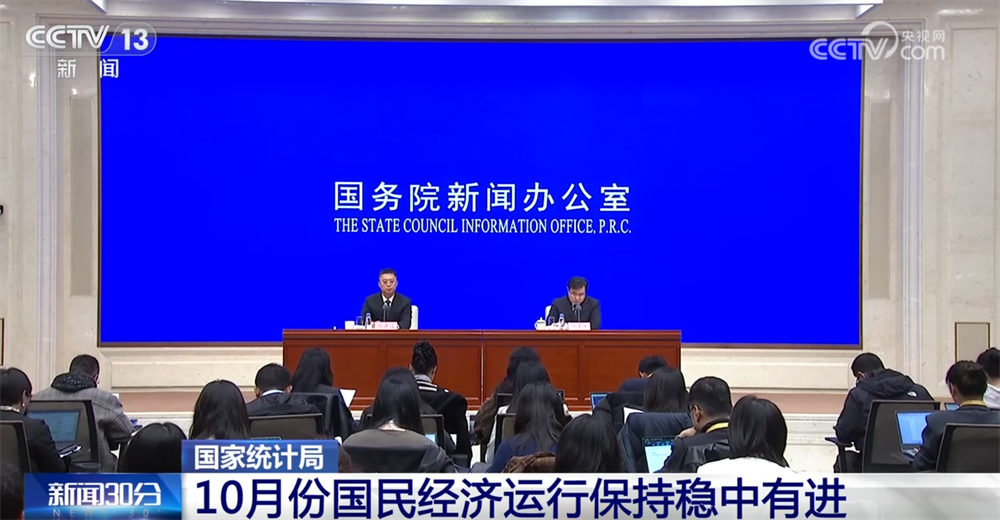
从10月份主要经济指标透视国民经济运行“稳”+“进”
Yang Shi Wang· 2025-11-14 05:25
Economic Overview - The national economy maintains a stable and progressive development trend, with production supply remaining stable and overall employment conditions being steady [1] Production and Supply - Agricultural production is performing well, with expectations for a bumper grain harvest for the year [3] - Industrial production remains stable, with a year-on-year increase of 4.9% in the added value of industrial enterprises above designated size in October, supported significantly by an 8% increase in the added value of equipment manufacturing [5] Service Sector - The service sector shows steady growth, with a year-on-year increase of 4.6% in the service production index in October, and continuous expansion in market sales [7] Consumer Market - The special actions to boost consumption are showing significant effects, with retail sales of consumer goods in October increasing by 2.9% year-on-year. The sales of goods related to the "old for new" consumption policy are growing rapidly. From January to October, the retail sales of services increased by 5.3%, outpacing the growth rate of goods retail sales [9] Employment and Prices - The employment situation remains generally stable, and there are positive changes in prices [11] Industrial Prices and High-tech Manufacturing - The decline in industrial producer prices has narrowed for three consecutive months. High-tech manufacturing is performing well, with a year-on-year increase of 7.2% in the added value of high-tech manufacturing enterprises above designated size, continuing to outpace overall industrial growth. The added value of digital product manufacturing also increased by 6.7% year-on-year, indicating a steady advancement in the integration of digital and real economies [13]

事关消费、就业、物价……最新数据公布→
Jin Rong Shi Bao· 2025-11-14 04:35
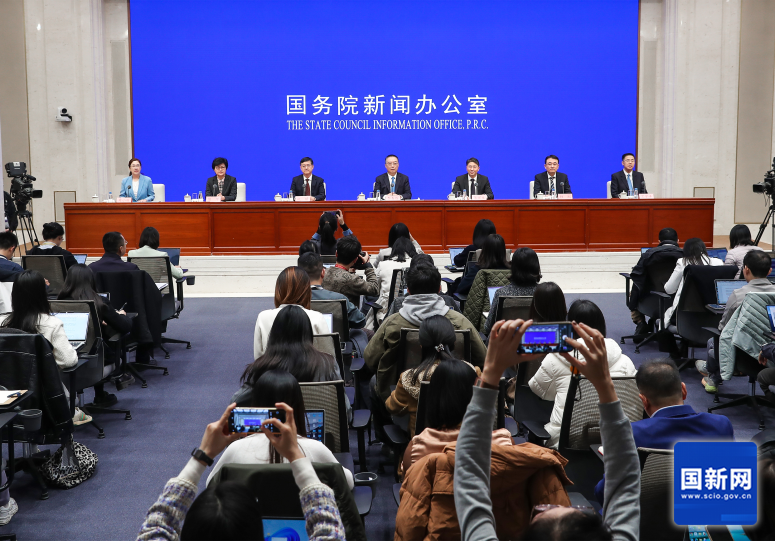
Economic Overview - The national economy is generally stable with a trend of steady progress, characterized by stable production supply, overall employment stability, improved prices, and the cultivation of new growth drivers [1] Production and Supply - Agricultural production is favorable with an increase in autumn grain area and continuous improvement in yield, indicating a promising harvest for the year [3] - Industrial production remains stable, with a 4.9% year-on-year increase in the added value of industrial enterprises above designated size in October, supported significantly by an 8% increase in equipment manufacturing [3] - The service sector shows steady growth, with a 4.6% year-on-year increase in the service production index for October, influenced by the combined effect of the National Day and Mid-Autumn Festival [3] Market Sales - Retail sales continue to expand, with total retail sales of consumer goods reaching 46,291 billion yuan in October, a 2.9% year-on-year increase [4] - Notable growth in retail sales of communication equipment and cultural office supplies, with increases of 23.2% and 13.5% respectively [4] - Service retail sales from January to October grew by 5.3%, outpacing the growth of goods retail sales [4] Employment Situation - The urban survey unemployment rate decreased to 5.1% in October, down 0.1 percentage points from the previous month, marking two consecutive months of decline [5] - The unemployment rate for migrant agricultural workers is notably lower at 4.5%, down 0.2 percentage points from the previous month [5][6] Price Trends - Consumer prices have shifted from decline to increase, with a 0.2% year-on-year rise in October, compared to a 0.3% decline in the previous month [7] - The core Consumer Price Index (CPI), excluding food and energy, rose by 1.2%, with the increase rate expanding for six consecutive months [7] - The Producer Price Index (PPI) saw a narrowing decline of 2.1% year-on-year in October, indicating a positive trend [7] Transformation and Upgrading - High-tech manufacturing continues to grow, with a 7.2% year-on-year increase in added value for high-tech manufacturing enterprises above designated size in October [8] - The export of high-tech products increased by 7.3% in the first ten months [8] - The modern service industry is performing well, with significant growth in information transmission and software services, as well as leasing and business services [8] Investment and Foreign Trade - Fixed asset investment decreased by 1.7% year-on-year from January to October, but the investment structure is optimizing [9] - Manufacturing investment grew by 2.7%, accounting for 25.6% of total investment, an increase of 1.1 percentage points from the previous year [9] - Total import and export volume increased by 3.6% year-on-year in the first ten months, with exports growing by 6.2% [10] - In October, total import and export volume grew by 0.1% year-on-year, with imports increasing by 1.4% [10]
多地出招推动冰雪“冷资源”变“热发展”
Zheng Quan Ri Bao· 2025-11-13 17:09
Core Insights - The recent initiatives by multiple regions in China, including Beijing and several provinces, aim to boost ice and snow consumption, aligning with the trends of national fitness and seasonal tourism [1][2] - The ice and snow economy is recognized as a vital avenue for expanding domestic demand and achieving high-quality service consumption [2] - Significant policy support has led to a notable increase in participation and spending in ice and snow activities, with millions more engaging in these activities compared to previous seasons [2] Group 1: Policy Initiatives - Various local governments are implementing measures such as issuing ice and snow consumption vouchers totaling 1 billion yuan in Jilin Province to stimulate spending in skiing, tourism, and related sectors [1] - The State Council has released multiple documents emphasizing the promotion and expansion of ice and snow consumption, indicating a strong governmental focus on this sector [2] Group 2: Economic Impact - The National Sports Administration reported that during the 2024-2025 ice and snow season, approximately 292 million residents participated in ice and snow sports, marking a participation rate of 20.61%, an increase of about 27.44 million participants from the previous season [2] - The total consumption related to ice and snow activities exceeded 187.5 billion yuan, reflecting a year-on-year growth of over 25% [2] Group 3: Future Development Strategies - Experts suggest that enhancing the ice and snow industry is crucial for upgrading consumption quality, advocating for innovation in equipment and services to meet consumer demands [3] - Recommendations include lowering participation barriers, improving experience quality, and expanding outreach through targeted promotions and digital engagement strategies [3]
13条利好措施激发民间投资活力
Jin Rong Shi Bao· 2025-11-12 01:01
民间投资迎政策利好。 11月10日,国务院办公厅公布《关于进一步促进民间投资发展的若干措施》(以下简称《若干措 施》),在扩大市场准入、促进公平竞争、打通市场堵点、强化支持保障等方面提出13项针对性政策举 措,以进一步激发民间投资活力、促进民间投资发展,被称为"民间投资13条"。 "13项政策举措从扩大市场准入、促进公平竞争、促进数实融合、优化投资融资支持等多个维度, 进一步促进民间投资高质量发展,其颁布实施正逢其时。" 国家发展和改革委员会经济体制与管理研究 所副所长、研究员祁玉清表示。 扩大准入范围 《若干措施》进一步扩大了民间投资准入范围。具体来看,《若干措施》明确,对需报国家审批 (核准)的具有一定收益的铁路、核电等重点领域项目,鼓励支持民间资本参与,对具备条件的项目, 民间资本持股比例可在10%以上。对各地方规模较小、具有盈利空间的城市基础设施领域新建项目,鼓 励民间资本参与建设运营。 "这项政策对鼓励支持民间资本参与重点领域项目建设提出了明确要求,充分释放了促进民间投资 发展的信号。"在11月11日,国家发展改革委举行的专题新闻发布会上,国家发展改革委固定资产投资 司副司长关鹏介绍。 关鹏表示,相 ...
2026 年新通用顶级域申请将启:中国企业如何破解全球化中的 “域名掣肘”?
Huan Qiu Wang Zi Xun· 2025-11-11 02:33
Core Insights - ICANN has officially confirmed that the new round of applications for new generic top-level domains (gTLD) will open in April 2026, providing new opportunities for Chinese enterprises in the internet infrastructure sector [1] Group 1: Domain Industry Development - The total number of registered domains in China has exceeded 30 million, with over 20 million ".CN" domains, ranking first globally among country code top-level domains [2] - The perception of domains has evolved from merely being "network entry points" to being recognized as core components of global digital branding, reflecting an awakening of digital sovereignty awareness among enterprises [2][4] - Increased network security risks have led enterprises to prioritize domain management as a critical aspect of their overall security framework [2] Group 2: Policy Support - National policies are providing clear guidance for the development of the domain industry, with the Ministry of Industry and Information Technology revising the "Internet Domain Name Management Measures" and releasing standards for "Chinese Domain Name Technical Requirements" [3] Group 3: Comparative Analysis - In the first round of gTLD applications in 2012, Chinese enterprises applied for only 41 domains, accounting for less than 4% of the global total, while major foreign companies like Google and Amazon applied for 46 and 55 domains respectively [4] - The gap in understanding the strategic value of top-level domains has been identified as a core reason for this disparity, with many Chinese enterprises previously believing that having a ".com" domain was sufficient [4] Group 4: Strategic Importance of gTLDs - Top-level domains are considered scarce and exclusive strategic resources, essential for supporting next-generation internet technologies like 5G and AI [5] - Unified top-level domains can enhance brand identity and user trust, particularly for enterprises expanding globally [5][6] - The management of top-level domains is crucial for maintaining cybersecurity and ensuring service stability in cross-border operations [6] Group 5: Future Outlook - The strategic value of top-level domains is increasingly recognized as Chinese enterprises accelerate their global expansion [6] - Top-level domains serve as a bridge between digital and physical business operations, enhancing international brand competitiveness [7] - The China Internet Association is actively supporting enterprises in navigating the upcoming application window and advocating for fair competition in global domain governance [7]
22类场景开放,新商机“藏”在哪?区域经济如何乘势而上?
Bei Jing Shang Bao· 2025-11-10 14:11
Core Viewpoint - The implementation of the "Implementation Opinions" by the State Council aims to accelerate the cultivation and opening of application scenarios, creating significant business opportunities through deep integration of technology and industry, precise matching of supply and demand, and collaborative innovation of systems and elements [2][3][4]. Group 1: Key Areas of Focus - The "Implementation Opinions" focus on five main areas and 22 key sectors for scenario cultivation and opening, which include creating new application scenarios in emerging fields, upgrading existing industries, and enhancing social governance and public services [3][4]. - The initiative aims to transform "test fields" into "new industry accelerators," facilitating the development of standardized solutions from advanced technologies [4]. Group 2: Government and Industry Collaboration - The government encourages state-owned enterprises to lead by example in opening their core business scenarios to attract participation from private enterprises and research institutions [6][7]. - The emphasis on collaboration aims to create a fair and efficient allocation of resources, enabling social capital and private enterprises to engage in scenario construction [6][8]. Group 3: Regional Economic Development - The initiative provides a "shortcut" for regional economies to leverage their unique advantages, allowing them to transform scenario advantages into industrial cluster advantages [9][10]. - Regions are encouraged to develop differentiated application scenarios based on their comparative advantages, such as "smart manufacturing + industrial internet" in the Yangtze River Delta and "AI + consumption" in the Guangdong-Hong Kong-Macau Greater Bay Area [10].

游戏展会背后的游戏经济密码
腾讯研究院· 2025-11-10 11:08
Core Viewpoint - The gaming industry is experiencing significant growth, with offline gaming events becoming key drivers of economic and cultural influence, showcasing a vibrant ecosystem that connects various sectors and demographics [2][36]. Group 1: Growth of Gaming Events - The number and scale of gaming-themed offline events have significantly increased, with over 400,000 attendees at ChinaJoy and nearly 800 companies participating, including traditional brands entering the youth market [2][7]. - Major gaming exhibitions like Tokyo Game Show and Gamescom have seen substantial participation, with the latter attracting 35.7 million visitors from 128 countries, highlighting the global appeal of gaming [2][4][12]. - The rise of independent games is notable, with the number of independent game exhibitors at BW increasing more than threefold compared to four years ago, reflecting the diverse and dynamic nature of the gaming industry [4][5]. Group 2: Technological Integration - Gaming exhibitions are becoming platforms for showcasing future digital technologies such as AI, XR, and cloud computing, with events like ChinaJoy introducing innovative experiences like smart entertainment robots and brain-machine interfaces [5][27]. - The integration of cutting-edge technologies is driving new productivity in the gaming sector, with companies like NVIDIA presenting advanced rendering technologies and AI solutions at these events [5][27]. Group 3: Cross-Industry Collaboration - Non-gaming companies are leveraging gaming exhibitions to tap into Gen Z culture, with brands like Old Fengxiang and Yadi launching co-branded products to connect with younger consumers [7][27]. - The presence of global brands such as LEGO and Disney at gaming events underscores the economic value of the "gaming plus" cross-industry model, enhancing brand visibility and engagement [7][27]. Group 4: Economic Impact - Gaming events are becoming vital for urban economies, generating significant ancillary spending in areas like food, accommodation, and transportation, with ChinaJoy alone driving approximately 661 million yuan in surrounding service consumption [39][40]. - The gaming industry is projected to reach a global market revenue of $188.8 billion by 2025, with a user base of 3.6 billion gamers, indicating a robust growth trajectory [36][38]. Group 5: Cultural Significance - Gaming is increasingly recognized as a cultural cornerstone for youth, fostering community and identity through unique cultural practices and social interactions at events [40][42]. - Events like ChinaJoy and KPL finals are not only entertainment spectacles but also serve as platforms for cultural expression and community building among young audiences [40][42].