
电动化

Search documents
9系双旗舰重塑50万级豪华市场,极氪的“破壁”方法论
Jing Ji Guan Cha Wang· 2026-01-16 10:58
Core Insights - The Chinese luxury car market is undergoing significant changes, with traditional luxury brands experiencing a decline in sales while domestic brands like Zeekr are gaining market share [1][2][3] Group 1: Market Dynamics - In 2025, traditional luxury brands saw a decline in imported car sales, with some brands experiencing a drop of over 60% year-on-year due to inventory pressure and slow electrification [2] - Conversely, Chinese high-end brands such as Zeekr, NIO, and Li Auto are steadily increasing their market share in the 300,000 to 500,000 yuan price range [2] - The shift in consumer perception among high-net-worth individuals in China is a key driver of this change, moving from valuing brand history to prioritizing technological advancement and smart experiences [3] Group 2: Product Innovation - The Zeekr 9X is recognized for its technological superiority over traditional luxury SUVs, achieving over 1,000 kilometers of range and exceptional performance through its 900V architecture [4] - The Zeekr 009 has also established itself as a leader in the MPV segment, demonstrating the brand's understanding of luxury beyond vehicle categories [5] Group 3: Global Expansion - Zeekr is transitioning from merely exporting products to a comprehensive global strategy that includes localizing products, channels, and services in various markets [7] - The brand has received international recognition, being praised as a leading global brand from China, indicating a shift from manufacturing to intelligent manufacturing and branding [8] Group 4: Strategic Integration - Zeekr's integration with its parent company Geely has allowed it to focus on long-term product development and user experience without the pressures of short-term profitability [9] - This integration provides Zeekr access to Geely's extensive resources, enhancing its ability to compete in the luxury market [9] Group 5: User Engagement - Zeekr has initiated a "communication transparency revolution," making key information accessible to users and inviting them to supervise service processes [11] - The brand's "mystery experience officer" program engages users in the feedback process, ensuring quality control from the customer's perspective [12] Group 6: Brand Evolution - Zeekr has successfully transitioned from a nascent brand to a significant player in the luxury market, showcasing that Chinese automotive brands can achieve high market scale and brand value [13]
销量下滑,却高调争“第一”,一汽奥迪真的翻身了吗?
Xin Jing Bao· 2026-01-16 07:57
转自:贝壳财经 一汽奥迪的销量颓势,会延续到2026年吗?燃油豪华车市场第一的含金量又有多高?@新浪眼 全文>> 表面上来看,奥迪似乎是打了一场漂亮的翻身仗。不过,仔细看来却是另一番风景。一汽奥迪在华57万 的年度销量,仍是连续第二年下滑,且自2020年来首次跌破60万辆。 同时,在电动化和智能化如火如荼的当下,传统豪华汽车品牌的竞争力正在下降,市场份额不断被蚕 食。面对严峻的形势,BBA们也在积极转型以求增长。 #一汽奥迪销量连续两年下滑#【销量下滑,却高调争"第一",一汽奥迪真的翻身了吗?】#一汽奥迪自 宣销冠数字迷局#一汽奥迪躺着赚钱的日子,正在渐行渐远。 近日,一汽奥迪发布了2025年的销量数据,宣称燃油车销量时隔六年重回燃油豪华车市场第一。消息传 出后引发广泛关注,并一度登上了微博热搜。 ...
新闻1+1丨产销十七连冠 中国汽车下一步怎么走
Yang Shi Xin Wen· 2026-01-16 06:46
Group 1 - The core viewpoint of the articles highlights that China's automotive industry is set to achieve record production and sales figures in 2025, with production reaching 34.53 million vehicles and sales at 34.40 million vehicles, marking a year-on-year growth of 10.4% and 9.4% respectively, maintaining its position as the world's largest automotive market for 17 consecutive years [1][3][11] - The production and sales of new energy vehicles (NEVs) are projected to reach 16.63 million and 16.49 million units respectively in 2025, reflecting a year-on-year growth of 29% and 28.2%, indicating strong government support and technological advancements in the NEV sector [3][5][11] - The Chinese automotive industry is undergoing a significant transformation, focusing on enhancing core competitiveness and creating new growth opportunities amidst increasing competition and market saturation [1][5] Group 2 - The rapid development of NEVs is attributed to advancements in technology, a shift in consumer preferences towards sustainable vehicles, and supportive government policies that favor NEVs over traditional fuel vehicles [13][15] - The industry is witnessing a shift towards smart and connected technologies, with many NEVs adopting "AI+" models to enhance user experience and operational efficiency [11][14] - The export of NEVs is accelerating due to rising global demand, favorable policies in various countries, and the increasing competitiveness of Chinese NEVs in international markets [15][16] Group 3 - The average range of NEVs in China is nearing 500 kilometers, with over 12.82 million charging stations established, and fast-charging technology enabling 80% charge in just 15 minutes [13][11] - The introduction of a licensing system for the export of pure electric passenger vehicles aims to enhance brand image and international competitiveness, ensuring better service and support for overseas customers [16][17] - Predictions for 2026 suggest stable high-level sales of approximately 34.75 million vehicles, supported by favorable policies and a steady international market [18]

智能化迎来全球共振与产业加速,智能车ETF泰康(159720)红盘上涨1.25%,三花智控涨超6%
Xin Lang Cai Jing· 2026-01-16 06:01
Group 1 - The core viewpoint is that the smart electric vehicle (EV) sector is undergoing significant transformation, with a strong emphasis on the globalization of components and the rise of autonomous driving technologies, which are expected to enhance market penetration by 2026 [1][2] - The smart electric vehicle ETF, TaiKang (159720), has shown a 1.25% increase, tracking the CSI Smart Electric Vehicle Index, which rose by 1.17%, indicating strong performance among key component stocks [1] - The report highlights that the automotive chip sector is becoming a critical technological barrier, with ongoing domestic replacement strategies and rapid growth in the new energy vehicle market supporting the automotive parts industry [2] Group 2 - The ETF covers key aspects of smart driving, with the top ten weighted stocks accounting for over 58%, allowing investors to mitigate individual stock volatility while benefiting from overall industry growth [3] - The industry is expected to experience a positive cycle driven by technological breakthroughs, policy support, and scale expansion, positioning the smart car ETF as a long-term beneficiary [3] - The report anticipates that by 2025, the trend of intelligent driving will solidify, with significant advancements in high-level autonomous driving technologies and increased market penetration expected by 2026 [1][2]


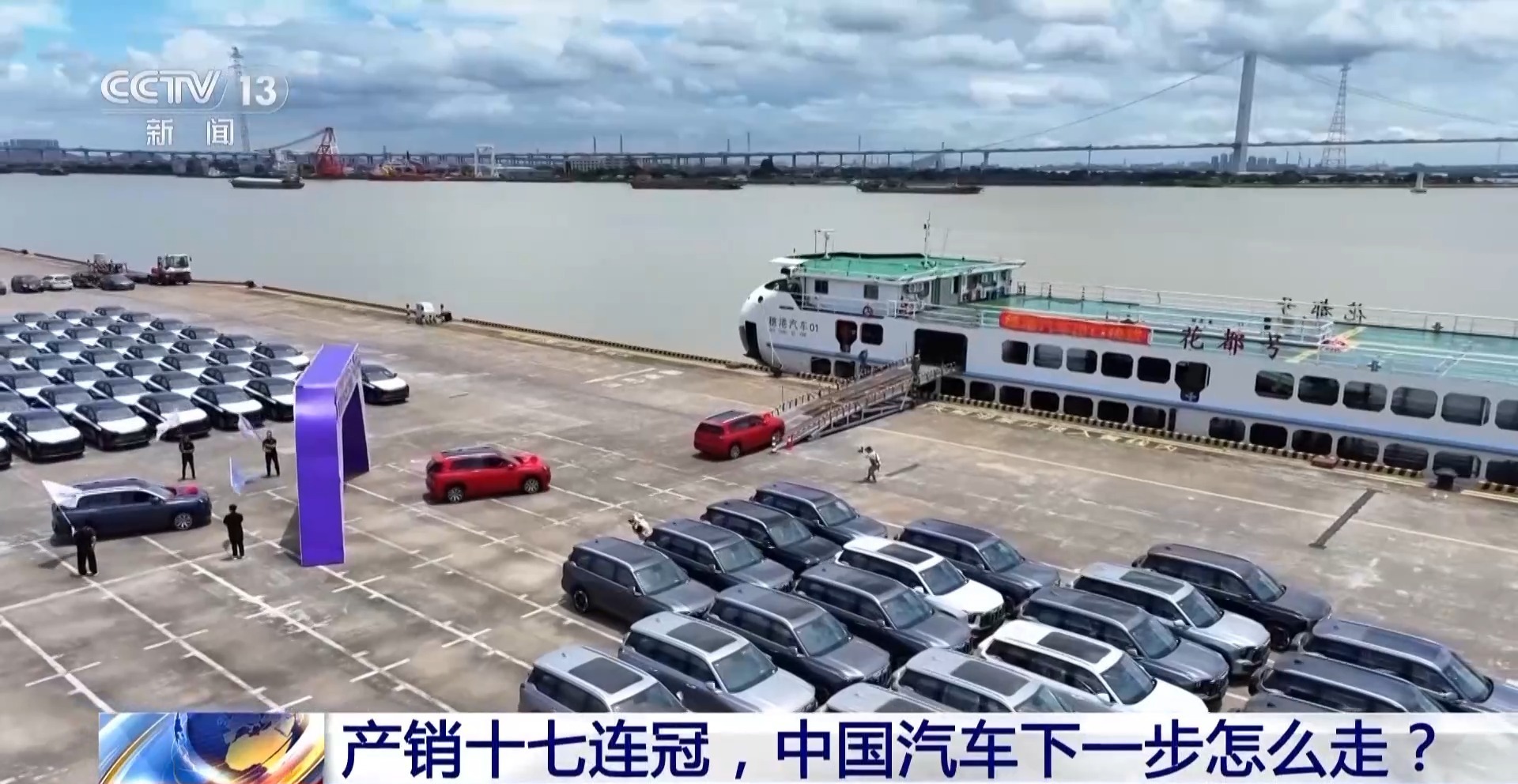
新闻1+1|产销十七连冠,中国汽车下一步怎么走?
Yang Shi Wang· 2026-01-16 03:42
Core Insights - The Chinese automotive industry is projected to achieve record production and sales of 34.53 million and 34.40 million vehicles respectively in 2025, marking a year-on-year growth of 10.4% and 9.4%, maintaining its position as the world's largest market for 17 consecutive years [1][2] - The industry is undergoing a significant transformation, focusing on overcoming homogenization and creating new growth opportunities [1] Industry Performance - During the 14th Five-Year Plan period, the automotive sector has maintained production and sales above 30 million units for three consecutive years, with revenue surpassing 10 trillion yuan, and exports ranking first globally [4] - New energy vehicles (NEVs) have seen production and sales of 16.63 million and 16.49 million units respectively, reflecting year-on-year growth of 29% and 28.2% [4] Technological Advancements - The industry is rapidly advancing in electric, intelligent, and connected technologies, with NEVs becoming the dominant force in the domestic market [4] - Significant R&D investments are being made in battery technology, including the development of solid-state batteries, which offer higher safety, energy density, longevity, and faster charging compared to traditional lithium-ion batteries [6] Market Dynamics - NEVs have surpassed 50% in the sales ratio compared to traditional fuel vehicles, driven by improved product competitiveness, changing consumer perceptions, and supportive government policies [8] - The average range of NEVs in China is nearing 500 kilometers, with over 12.82 million charging stations established, and fast-charging technology enabling 80% charge in 15 minutes [6] Export Growth - The rapid growth in NEV exports is attributed to increasing global demand, favorable policies in various countries, and the rising competitiveness of Chinese NEVs [12] - Chinese automotive companies are actively pursuing international markets, enhancing their global presence and brand image [17] Future Outlook - The forecast for 2026 anticipates stable high-level sales of approximately 34.75 million vehicles, with domestic demand expected to remain robust and international markets continuing to grow [20]
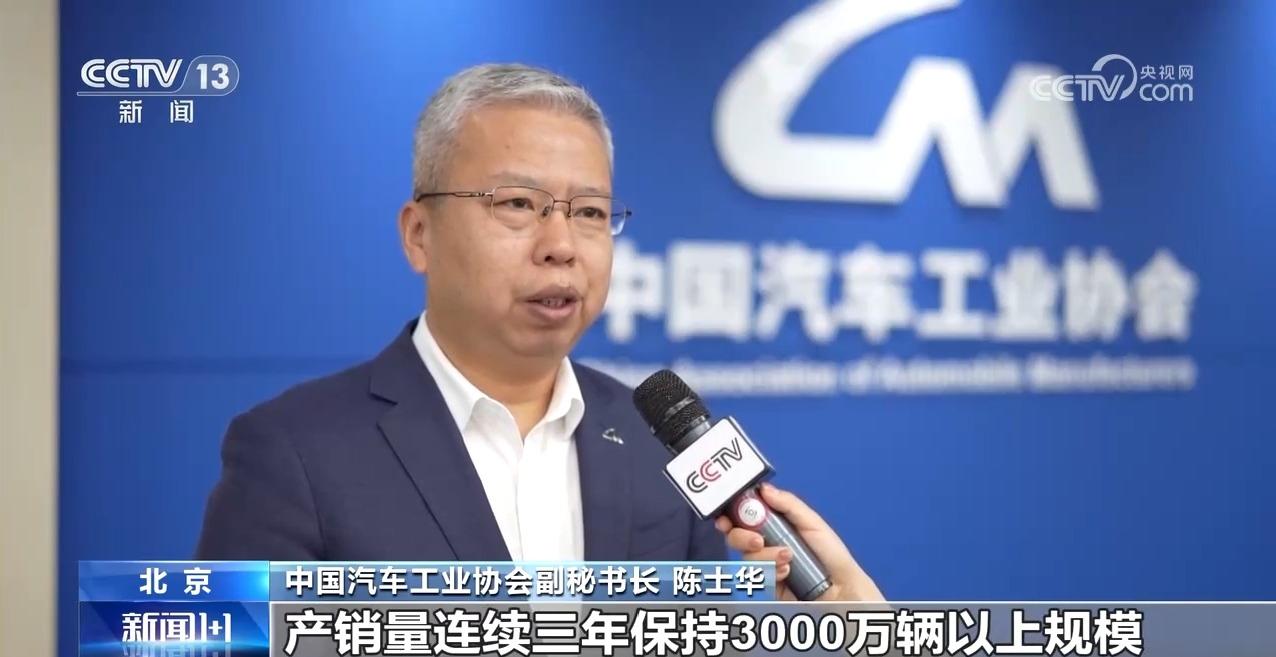
产销十七连冠 中国汽车下一步怎么走
2 1 Shi Ji Jing Ji Bao Dao· 2026-01-15 23:05
Core Insights - The Chinese automotive industry is projected to achieve record production and sales figures of 34.53 million and 34.40 million vehicles respectively by 2025, marking a year-on-year growth of 10.4% and 9.4%, maintaining its position as the world's largest market for 17 consecutive years [1][2] Industry Overview - During the 14th Five-Year Plan period, the automotive sector has seen significant breakthroughs, with production and sales consistently exceeding 30 million units for three consecutive years and revenue surpassing 10 trillion yuan [2] - The integration of electrification, intelligence, and connectivity is accelerating, establishing a competitive advantage for the industry [2] New Energy Vehicles (NEVs) - NEVs are expected to reach production and sales of 16.63 million and 16.49 million units respectively in 2025, reflecting year-on-year growth of 29% and 28.2%, driven by continuous policy support and technological advancements [4][6] - Chinese brands have captured nearly 70% of the passenger car market, with NEVs becoming the dominant force in the domestic market [6] Industry Initiatives - The automotive industry has initiated measures to promote fair competition and healthy development, including product consistency checks and support for companies to adhere to 60-day payment commitments [8] - Increased R&D investments by NEV companies are leading to multiple technological breakthroughs [8] Battery Technology - Research is accelerating in solid-state battery technology, which offers higher safety, energy density, longevity, and faster charging compared to conventional lithium-ion batteries [10] AI and Smart Connectivity - An increasing number of NEVs are adopting "AI+" models, leveraging vehicle networking for enhanced intelligence [12] Market Dynamics - The average range of NEVs in China is approaching 500 kilometers, with 12.82 million charging stations established, and fast-charging technology enabling 80% charge in 15 minutes [14] - NEVs have surpassed 50% in terms of sales replacement of traditional fuel vehicles, attributed to technological advancements, changing consumer perceptions, and supportive policies [14] Strategic Focus Areas - Key areas for industry advancement include enhancing technological capabilities, evolving business models beyond vehicle sales, and pursuing international market opportunities [15] - The rapid growth of NEV exports is driven by improved product competitiveness, changing consumer preferences, and favorable policies [15][19] Future Projections - The automotive market is expected to maintain a high level of stability in 2026, with projected sales of 34.75 million vehicles, supported by policy optimizations and sustained international demand [18]
宇通客车:公司将通过四项举措应对行业竞争
Zheng Quan Ri Bao Zhi Sheng· 2026-01-15 12:09
Core Viewpoint - Yutong Bus is implementing strategies to enhance its competitiveness in the industry by focusing on market demand and customer needs [1] Group 1: Strategies to Address Industry Competition - The company will strengthen research and analysis of market demand to deeply understand customer needs and develop differentiated products and solutions that align with customer operations [1] - Yutong Bus aims to accelerate the development of large and medium-sized buses towards electrification, intelligent networking, and high-end features to improve product competitiveness [1] - The company plans to enhance customer relationships by assisting clients in exploring new development models and improving operations to support order conversion [1] - Yutong Bus is actively seizing opportunities in niche markets such as high-end business vehicles, airport shuttle buses, and trackless trams [1]

汽车产业竞争力源自硬实力
Ren Min Ri Bao· 2026-01-15 09:10
Core Viewpoint - The continuous advancement of electrification technology, accelerated application of cutting-edge technologies, and the implementation of anti-involution measures have led to sustained growth in China's automotive production and sales, reflecting the strong resilience and dynamic momentum of the economy under pressure [7]. Group 1: Automotive Production and Sales Growth - China's automotive production and sales have maintained a scale of over 30 million units for three consecutive years, ranking first globally for 17 years [7]. - In 2025, the production and sales of new energy vehicles (NEVs) are expected to reach 16.626 million and 16.49 million units, respectively, representing year-on-year growth of 29% and 28.2% [9]. - NEVs accounted for 47.9% of total new car sales in 2025, indicating a significant shift towards electric vehicles [9]. Group 2: Technological Advancements in Electrification - By 2025, the average range of pure electric passenger vehicles in China is projected to approach 500 kilometers, with fast-charging technology allowing for 80% charge in 15 minutes [8]. - The introduction of solid-state batteries is moving towards mass production by 2027, and a unique "super electric hybrid technology" is being widely adopted [9]. - Exports of NEVs are expected to reach 2.615 million units in 2025, doubling year-on-year, with passenger vehicle exports at 2.532 million units and commercial vehicle exports at 83,000 units [9]. Group 3: Advancements in Intelligent Driving - R&D investment in intelligent driving technology has reached 10 billion yuan, with Huawei's ADS 5 transitioning from technical validation to mass production adaptation [10]. - Over 60% of new passenger vehicles sold in China are equipped with L2-level assisted driving features, and the first L3-level conditional autonomous driving vehicles have received approval [10]. - The automotive industry is becoming a key carrier for the commercialization of advanced technologies such as semiconductors and artificial intelligence [10]. Group 4: Industry Transformation and Anti-Involution Measures - Anti-involution measures have been implemented to address issues like price wars and unfair competition, leading to a 4.4% profit growth in the automotive industry from January to October 2025 [11]. - The industry is shifting from resource-dependent, low-cost competition to a focus on technological innovation and value upgrading, with flagship models gaining market recognition [11]. - High-end domestic brands such as AITO, Li Auto, and Zeekr have seen sales growth exceeding 40% year-on-year in 2025 [11].
大众集团2025年整体稳健 中国市场销量下滑8%持续承压
Xi Niu Cai Jing· 2026-01-15 09:02
Core Insights - Volkswagen Group reported a slight decline in global vehicle deliveries for 2025, with over 8.98 million units delivered, a decrease of 0.55% compared to 2024 [2] - The company demonstrated strong growth in the electric vehicle segment, delivering approximately 983,100 pure electric vehicles in 2025, marking a 32% year-on-year increase and accounting for 10.9% of total global sales, up 2.7 percentage points [2] Market Performance - In China, Volkswagen Group faced ongoing challenges, with new car deliveries exceeding 2.69 million units in 2025, reflecting an 8.0% decline year-on-year, marking the second consecutive year of decline [2] - Despite the challenges in the Chinese market, Volkswagen maintained a strong presence in the fuel vehicle sector, delivering over 2.57 million units, capturing more than 22% of the Chinese fuel vehicle market [2] Product Strategy - Volkswagen Group has a comprehensive plan for the Chinese market, aiming to launch over 20 electric and hybrid models by 2026, incorporating advanced technologies [3] - From 2027 to 2030, the company plans to expand its electric vehicle lineup significantly, with over 30 electric models expected by 2027 and a total of around 50 new energy models by 2030, including approximately 30 pure electric vehicles [3] - The company is also focused on building localized smart driving technology capabilities, with its CARIAD China unit collaborating with Horizon to develop advanced driver assistance systems, with the first self-developed SoC set to support L3 and above autonomous driving features in Volkswagen's vehicles in China [3]
双破3400万辆!2025中国汽车产销再登顶 新能源+全球化成增长双引擎
Qi Lu Wan Bao· 2026-01-15 02:47
Core Insights - The Chinese automotive industry is projected to achieve significant growth in 2025, with production and sales reaching 34.53 million and 34.40 million units respectively, marking year-on-year increases of 10.4% and 9.4% [1] - New energy vehicles (NEVs) are expected to dominate the market, with a near 70% market share for Chinese brands and a threefold increase in export scale over five years [1] Group 1: Market Growth Drivers - The robust growth of the automotive market in 2025 is attributed to a combination of policy support, technological advancements, supply upgrades, and improved infrastructure [2] - Policies promoting new energy and technology are being reinforced, with a notable initiative from nine departments to encourage green consumption, which stabilizes market expectations and supports industry development [2] - The automotive industry's revenue has surpassed 10 trillion yuan over the past five years, laying a solid foundation for the anticipated growth in 2025 [2] Group 2: Technological and Supply Chain Developments - The integration of electrification, intelligence, and connectivity is accelerating, with L3-level autonomous driving vehicle licenses expected to be issued by December 2025, marking a shift from testing to mass production [2] - The supply side is seeing a surge in new vehicle launches across all market segments, with passenger vehicle production and sales reaching 30.27 million and 30.10 million units, reflecting year-on-year growth of 10.2% and 9.2% [2] Group 3: Infrastructure and Demand - By the end of 2025, the total number of charging facilities for NEVs in China is expected to exceed 6 million, with over 95% coverage in rural areas, alleviating consumer concerns and facilitating NEV adoption [3] Group 4: Sector-Specific Highlights - NEVs are projected to be the core growth driver, with production and sales reaching 16.63 million and 16.49 million units respectively, reflecting year-on-year increases of 29% and 28.2% [4] - The export volume of Chinese vehicles is expected to reach 7.10 million units, a year-on-year increase of 21.1%, with NEV exports doubling to 2.62 million units, accounting for 36.5% of total exports [4] Group 5: Brand Competitiveness - The market share of Chinese brand passenger vehicles is anticipated to reach 69.5% in 2025, a 4.3 percentage point increase from 2024, indicating a shift from a focus on cost-effectiveness to technological and brand advantages [5] Group 6: Future Outlook - The automotive industry is expected to maintain steady growth in 2026, supported by the smooth transition of policies and the deepening of green consumption initiatives [6] - The penetration rate of NEVs is likely to increase further, with advancements in intelligent connected technologies and continued growth in NEV exports [7]