中国资产重估

Search documents
恒生科技指数ETF(513180)跌幅持续拉大,机构:或迎来景气和估值改善双击
Mei Ri Jing Ji Xin Wen· 2025-07-29 02:37
Group 1 - The Hong Kong stock market experienced a decline, with the Hang Seng Technology Index dropping over 1.5%, and major tech stocks such as NIO, Bilibili, Alibaba Health, SenseTime, Horizon Robotics, Baidu, and Kuaishou seeing significant losses [1] - Huatai Securities highlighted in a recent report that the Hong Kong tech sector may lead a third round of asset revaluation in China, following a previous revaluation driven by the DeepSeek market at the beginning of the year [1] - The report indicates that after a rapid increase, negative pressures have emerged in the third quarter, but recent marginal changes suggest that the intensity of these pressures is milder than expected [1] Group 2 - As of July 28, the latest valuation (PETTM) of the Hang Seng Technology Index ETF (513180) was 21.58 times, which is below 79% of the time since the index was launched on July 27, 2020, indicating that the technology sector remains historically undervalued [2] - The high elasticity and growth characteristics of the Hang Seng Technology Index suggest it has greater upward momentum, making it an attractive option for investors without a Hong Kong Stock Connect account to access core Chinese AI assets [2]
A股关键变盘窗口来了,7月29日,股市将迎来新变局?
Sou Hu Cai Jing· 2025-07-29 00:42
Group 1 - The China Securities Regulatory Commission (CSRC) is piloting a pre-review mechanism for IPOs aimed at high-quality technology companies, signaling a potential shift in market dynamics [1] - The A-share market is at a critical turning point, with a potential breakthrough of the 3674-point resistance level that could trigger bullish sentiment [1] - The market's current performance indicates strong risk appetite and capital support, with a focus on policy direction and incremental information as new catalysts for growth [3] Group 2 - Major indices showed mixed performance, with the Shanghai Composite Index fluctuating around the 3600-point mark, indicating a consolidation phase [5] - As of the market close, the Shanghai Composite Index rose by 0.12%, the Shenzhen Component increased by 0.44%, and the ChiNext Index gained 0.96%, suggesting a stable market environment [7] - The market is expected to maintain its current trend as long as trading volume remains above 1.5 trillion, with investor sentiment being a key factor influencing market movements [7]

受益全球资本再平衡 中国资产重估正当时
Zhong Guo Zheng Quan Bao· 2025-07-27 21:07
Group 1: Market Overview - The global capital rebalancing trend is shifting from US stocks to non-US markets, creating a significant window for value reassessment in A-shares and Hong Kong stocks [1][4] - As of July 15, 2023, Korean investors have traded over $5.4 billion in Chinese mainland and Hong Kong stocks, making China the second-largest overseas investment destination for them, following the US [4][5] Group 2: Investment Strategy - The investment strategy of Fidelity Fund, led by Zhang Xiaomu, focuses on growth stocks, particularly in sectors benefiting from global capital rebalancing and China's economic transformation [1][2] - Zhang Xiaomu's internal assessment in August 2022 deemed A-shares as "gold mines," leading to a strategic shift from value stocks to growth stocks in the Fidelity fund portfolio [2][3] Group 3: Performance Metrics - Fidelity Fund's equity products achieved a return of 12.24% in the first half of 2023, ranking first among foreign public funds and within the top 10 in the overall market [1][2] Group 4: Sector Focus - Zhang Xiaomu emphasizes the "one super three strong" investment direction, identifying artificial intelligence as the super track, alongside aerospace, low-altitude economy, and innovative consumption as key sectors [1][7] - The current valuation of the Hong Kong market, with a price-to-earnings ratio just above 10, presents a significant advantage compared to other major markets, indicating a favorable investment environment [6] Group 5: Future Outlook - The market is expected to maintain a growth-oriented trend, with a focus on sectors that align with China's economic transformation and innovation [7][8] - The "engineer dividend" and "scientist dividend" are anticipated to drive China's global competitiveness, presenting investment opportunities in innovative sectors [8]
3600点!这次A股能站稳吗?公募这样预判
天天基金网· 2025-07-25 12:37
Group 1 - The A-share index has been on the rise since April 2025, with the Shanghai Composite Index reaching 3605.73 points on July 24, 2023 [1] - Major broad-based indices have shown significant increases, with the North China 50 Index rising by 39.86% and other indices like the CSI 1000 and CSI 500 also experiencing notable gains [1] Group 2 - Huaxia Fund indicates that structural risks are accumulating but no clear turning point has been observed; the market is currently in a main upward trend with strong risk appetite and capital support [2] - Recent meetings have released positive signals for expanding domestic demand and "anti-involution" policies, boosting market sentiment; upcoming policy changes may act as new catalysts for market performance [2] - Long-term views suggest that the trend of asset revaluation in China remains unchanged, supported by global capital rebalancing and accelerated industrial upgrades [2] - Great Wall Fund maintains a cautiously optimistic short-term outlook, suggesting that while the market may still be in an upward trend, defensive positioning is necessary to avoid excessive chasing of highs [2]

重回3600点!最新解读
天天基金网· 2025-07-24 05:09
点击链接→《 天天基金放大招了!狂撒百万体验金,真金白银等你来拿! 》,在文章评论区 参与互动,有机会赢888元! 近期,A股市场表现强劲。沪指自7月9日成功突破3500点后,连续9个交易日稳守 这一 关 口,且不断刷新年内高点。 7 月2 3 日 ,沪指、上证50 指数 等盘中突破3600、2800点,续写新篇章。 本轮指数突破有何独特之处?后续走势将如何展开? 在基金公司看来,当前市场或仍处于上涨趋势中,不能轻易言顶。与以往相比,此次行情基 础更为扎实,市 场赚钱效应有望逐步扩散。 多因素驱动 此次行情基础更为扎实 业内认为,近期市场的上涨是多重利好因素共同推动的结果。 对于近期的上涨,长城基金认为有几个驱动因素:一是 " 反内卷 " 政策不断深化。 从 去年7 月 中央 政治局会议首次提到 " 反内卷 " 到现在已有一年时间,范围不断扩大,从上游资源 品、"新三样"到快递、航空等,而不是像上一轮供给侧改革主要集中在传统行业的去产能。 " 反内卷 " 政策的推出及执行,有望上修PPI和A股盈利预期。 二是世界级超级工程—总投资达1.2万亿元的雅鲁藏布江下游水电项目宣布开工,对顺周期板 块的情绪拉动较大,一 ...
港股科技板块引动第三轮中国资产重估 中金力推联想、中芯国际等
Ge Long Hui· 2025-07-24 03:56
Group 1: Market Overview - The public fund holdings data for Q2 2025 shows a steady increase in the electronics sector and a significant rise in the communications sector holdings [1] - The initial market revaluation driven by DeepSeek was interrupted by tariff disturbances in April, but since May, the revaluation has been led by finance, consumption, and pharmaceuticals, pushing the Hang Seng Index back to 24,000 points [1] - Despite recent upward trends, the third quarter has brought expected negative pressures, though recent marginal changes indicate that the pressure is milder than market expectations [1] Group 2: Sector Analysis - The semiconductor sector saw a slight decrease in holdings, but strong demand for computing power has boosted PCB holdings [1] - In the consumer electronics sector, uncertainty regarding tariffs has led to a decline in supply chain holdings [1] - The communications and security sectors have seen an increase in holdings, with the optical communication industry benefiting from overseas demand for computing power [1] Group 3: Future Outlook - The Hong Kong stock market is expected to reach new highs in the second half of 2025, with three key sectors being promoted: semiconductors and components, consumer electronics, and communications/security [3] - The semiconductor sector is anticipated to experience clear demand growth, driven by the positive cycle of AI and increased capital expenditure from overseas model manufacturers [3] - Structural opportunities are expected to dominate the market, with a focus on sectors benefiting from AI applications and hardware [3] Group 4: Stock Recommendations - Recommended stocks in the semiconductor sector include Hengxuan Technology, Rockchip, Shenzhen South Circuit, SMIC A/H, and Huahong Semiconductor [4] - In the consumer electronics sector, attention is drawn to the trend of AI hardware upgrades, particularly in AI mobile hardware and wearable devices [4] - For the communications/security sector, recommended stocks include Lenovo Group, Zhongji Xuchuang, Ruijie Networks, Guangxun Technology, and Yiyuan Communication, focusing on the sustained demand for computing power [5][6]

全球资金聚焦中国资产 外资A股持仓规模近2.4万亿元
Mei Ri Jing Ji Xin Wen· 2025-07-23 15:06
Group 1 - South Korean investors have significantly increased their investment in Chinese assets, with a total trading volume exceeding $5.4 billion (approximately 38.8 billion RMB) in A-shares and Hong Kong stocks as of July 15, making China the second-largest overseas investment destination for them after the U.S. [1] - Sovereign wealth funds globally are also increasing their allocation to Chinese assets, with around 60% of Middle Eastern sovereign wealth funds planning to increase their investment in China over the next five years [1]. Group 2 - As of July 21, foreign institutional investors have shown interest in 3,449 A-shares, with a total market value of approximately 2.4 trillion RMB [2]. - Notable companies attracting foreign investment include CATL, which has 40 foreign institutional investors holding shares worth approximately 153.08 billion RMB, and Kweichow Moutai, with 81 foreign investors holding shares valued at around 102.71 billion RMB [2]. Group 3 - Foreign investors favor dividend stocks and companies representing emerging industries, such as Yangtze Power, which has a high dividend yield of 3.21% and has distributed a total of 209.2 billion RMB in dividends since its listing [3]. - Companies like CATL are recognized for their growth potential in the new energy sector, aligning with China's economic transformation [3]. Group 4 - In 2024, Shuanghuan Transmission's revenue from its new energy vehicle gear business reached 3.37 billion RMB, a year-on-year increase of 51.21% [4]. - Siyuan Electric's net profit grew by 45.7% in the first half of the year, indicating strong performance in the new power system sector [4]. Group 5 - The continuous influx of foreign capital into Chinese assets is attributed to the steady recovery of the Chinese economy, with improving economic indicators providing a solid foundation for market stability [5]. - Analysts expect a gradual recovery in A-share corporate earnings, which could enhance market confidence and drive valuation increases [5][6]. Group 6 - The restructuring of the international monetary order is leading to a reallocation of global funds, with Chinese assets benefiting from this shift [6]. - Current risk premiums for A-shares and Hong Kong stocks are at historically low levels, suggesting strong valuation attractiveness if U.S. Treasury yields are no longer the primary pricing anchor [6][7].


重回3600点!最新解读
Zhong Guo Ji Jin Bao· 2025-07-23 13:15
【导读】沪指盘中突破3600点,基金公司解读后市投资机会 在基金公司看来,当前市场或仍处于上涨趋势中,不能轻易言顶。与以往相比,此次行情基础更为扎 实,市场赚钱效应有望逐步扩散。 多因素驱动 7月23日,沪指、上证50指数等盘中突破3600、2800点,续写新篇章。 本轮指数突破有何独特之处?后续走势将如何展开? 业内认为,近期市场的上涨是多重利好因素共同推动的结果。 对于近期的上涨,长城基金认为有几个驱动因素:一是"反内卷"政策不断深化。从去年7月中央政治局 会议首次提到"反内卷"到现在已有一年时间,范围不断扩大,从上游资源品、"新三样"到快递、航空 等,而不是像上一轮供给侧改革主要集中在传统行业的去产能。"反内卷"政策的推出及执行,有望上修 PPI和A股盈利预期。 二是世界级超级工程—总投资达1.2万亿元的雅鲁藏布江下游水电项目宣布开工,对顺周期板块的情绪 拉动较大,一定程度上可支撑指数上行。 三是中国资产重估大趋势不改,积极因素不断累积,包括世界多极化趋势、美国例外论受到质疑,中国 新质生产力出现高光时刻和国内丰富的政策工具储备等。 近期,A股市场表现强劲。沪指自7月9日成功突破3500点后,连续9个交 ...
重回3600点!最新解读
中国基金报· 2025-07-23 13:06
【导读】沪指盘中突破3600点,基金公司解读后市投资机会 中国基金报记者 张燕北 孙晓辉 近期,A股市场表现强劲。沪指自7月9日成功突破3500点后,连续9个交易日稳守 这一 关 口,且不断刷新年内高点。 7 月2 3 日 ,沪指、上证50 指数 等盘中突破3600、2800点,续写新篇章。 本轮指数突破有何独特之处?后续走势将如何展开? 在基金公司看来,当前市场或仍处于上涨趋势中,不能轻易言顶。与以往相比,此次行情基 础更为扎实,市 场赚钱效应有望逐步扩散。 多因素驱动 此次行情基础更为扎实 业内认为,近期市场的上涨是多重利好因素共同推动的结果。 对于近期的上涨,长城基金认为有几个驱动因素:一是 " 反内卷 " 政策不断深化。 从 去年7 月 中央 政治局会议首次提到 " 反内卷 " 到现在已有一年时间,范围不断扩大,从上游资源 品、"新三样"到快递、航空等,而不是像上一轮供给侧改革主要集中在传统行业的去产能。 " 反内卷 " 政策的推出及执行,有望上修PPI和A股盈利预期。 二是世界级超级工程—总投资达1.2万亿元的雅鲁藏布江下游水电项目宣布开工,对顺周期板 块的情绪拉动较大,一定程度上 可 支撑指数上行 ...

上证综指盘中突破3600点!业内人士:白酒、券商或存补涨机会
Bei Jing Shang Bao· 2025-07-23 10:34
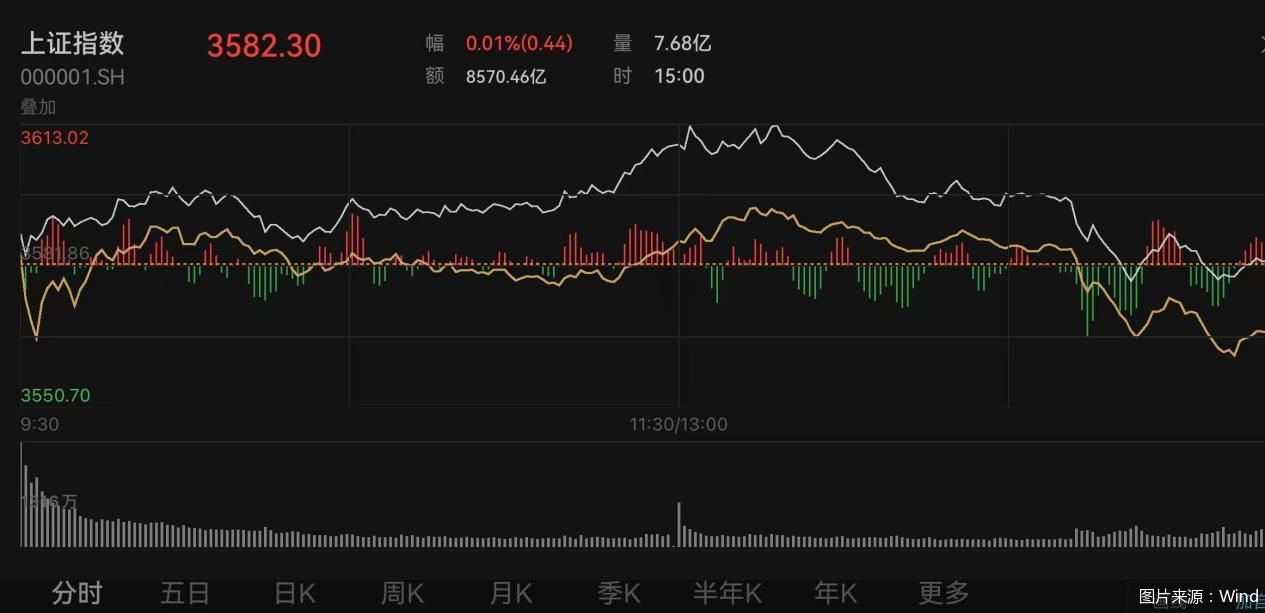
Market Overview - The Shanghai Composite Index reached a new high for the year, surpassing 3600 points and peaking at 3613.02 points on July 23, just 10 trading days after breaking 3500 points [1][3] - The Shenzhen Component Index also hit a new high, reaching 11158.22 points on the same day [1][3] - Despite the initial surge, the A-share indices showed mixed performance by the end of the trading day, with the Shanghai Composite closing at 3582.3 points, a slight increase of 0.01% [3] Driving Factors - The recent market rally is attributed to several factors, including the ongoing "anti-involution" policies that have been in effect since July 2024, which are expected to positively impact PPI and A-share earnings [4] - A significant investment of 1.2 trillion yuan in the Yarlung Tsangpo River downstream hydropower project has also boosted market sentiment, supporting the upward movement of indices [4] - The overall trend of asset revaluation in China continues, with positive factors accumulating, such as the shift from traditional economic drivers to new economic dynamics [4] Financial Sector Performance - The financial sector, particularly brokerage stocks, played a crucial role in the market's rise, with all 49 brokerage and brokerage-related stocks rising on July 23 [5] - Notably, Guosheng Financial reached its daily limit up, while the overall brokerage index increased by 1.02% [5] - Recent earnings forecasts indicate that 31 listed brokerages reported positive net profits for the first half of the year, with some firms expecting their net profits to double year-on-year [5] Market Trends and Future Outlook - Market hotspots have been concentrated in sectors such as robotics, new consumption, and innovative pharmaceuticals, with respective year-to-date increases of 28.69%, 24.88%, and 12.6% [6] - Analysts suggest that the market may continue to experience rotation among sectors, with the potential for the Shanghai Composite Index to break the 2024 high of 3674.4 points [6][7] - The "anti-involution" policy is expected to drive positive momentum in cyclical sectors, while traditional consumer stocks may also see a resurgence [7]