
美元贬值

Search documents
粤开宏观:人民币汇率持续升值:原因、影响及展望
Yuekai Securities· 2025-12-25 08:12
Exchange Rate Trends - The RMB to USD exchange rate appreciated by 4% in 2025, while the USD index fell by 9.7%, indicating that the depreciation of the USD is a primary driver of the RMB's strength against the USD[2] - As of December 25, 2025, the offshore RMB to USD exchange rate broke 7.0, with the onshore rate close to the same threshold[10] Factors Driving RMB Appreciation - Four main factors are driving the RMB's appreciation against the USD: the weakening USD index, a strong Chinese stock market, increased demand for currency settlement by export enterprises, and the People's Bank of China's (PBOC) guidance for a reasonable appreciation of the RMB against the USD[2] - The PBOC has utilized a counter-cyclical factor to stabilize the RMB against a basket of currencies, leading to a controlled appreciation against the USD[14] Impact on Exports - Concerns exist that the RMB's appreciation against the USD may negatively impact Chinese exports; however, the actual effective exchange rate against a basket of currencies is more critical for export performance[3] - Despite the nominal appreciation of the RMB against the USD, the nominal effective exchange rate has decreased by 3.5%, indicating a competitive pricing advantage for Chinese goods in international markets[2] Future Outlook - The RMB is expected to maintain a strong trend against the USD in 2026, with 6.8 identified as a potential key level, although there may be risks of short-term corrections[4] - Export enterprises are advised to focus on their core business and utilize foreign exchange hedging strategies to mitigate risks associated with exchange rate fluctuations[4] Risks - Potential risks include unexpected external shocks and an accelerated appreciation of the RMB beyond expectations, which could impact corporate operations and financial markets[5]
宏观点评:人民币升值的原因、展望及影响-20251225
Minmetals Securities· 2025-12-25 05:11
Group 1: Currency Appreciation Factors - The recent appreciation of the RMB against the USD is attributed to a 1.2% increase from November 24 to December 23, approaching the "7" mark[1] - The depreciation of the USD, with a 2.3% drop in the USD index, has led to a passive appreciation of the RMB[7] - Strong export performance, with a cumulative year-on-year growth of 5.4% until November, supports the RMB's appreciation[8] Group 2: Future Outlook and Impacts - The trend of RMB appreciation is expected to continue, driven by narrowing interest rate differentials between China and the US[13] - China's significant trade surplus, exceeding $1 trillion in the first 11 months, necessitates RMB appreciation[8] - The appreciation of the RMB enhances the attractiveness of Chinese assets, potentially increasing foreign capital inflow[17] - Export-oriented companies may face challenges due to reduced competitiveness, while import-oriented firms could benefit from lower costs[17] Group 3: Risks and Considerations - Risks include potential underperformance of the Chinese economy and unexpected tightening of US monetary policy[18] - Diplomatic pressures may arise from the expanding trade surplus, necessitating a balanced approach to currency appreciation[16]
破7!人民币大幅升值,有人年初存美元如今倒亏钱
Mei Ri Jing Ji Xin Wen· 2025-12-25 04:01
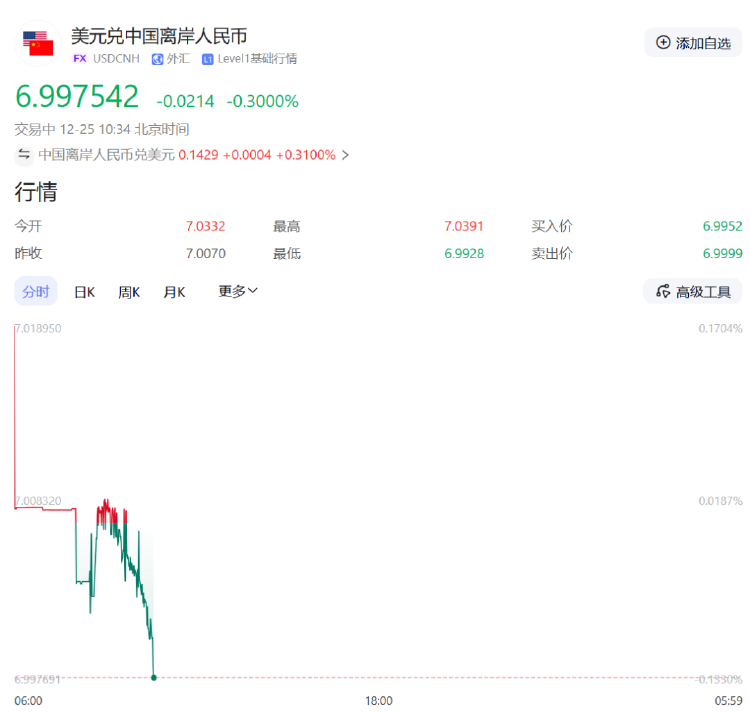
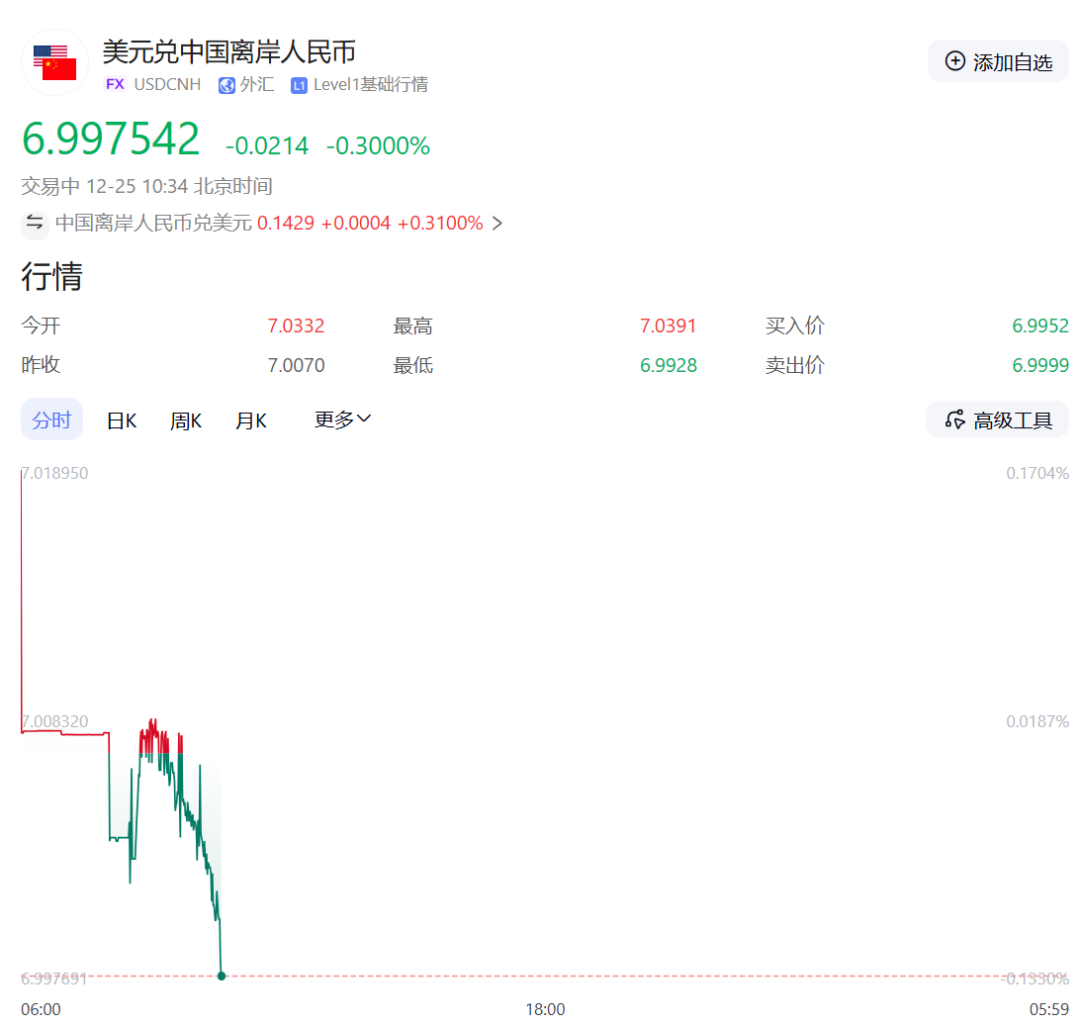
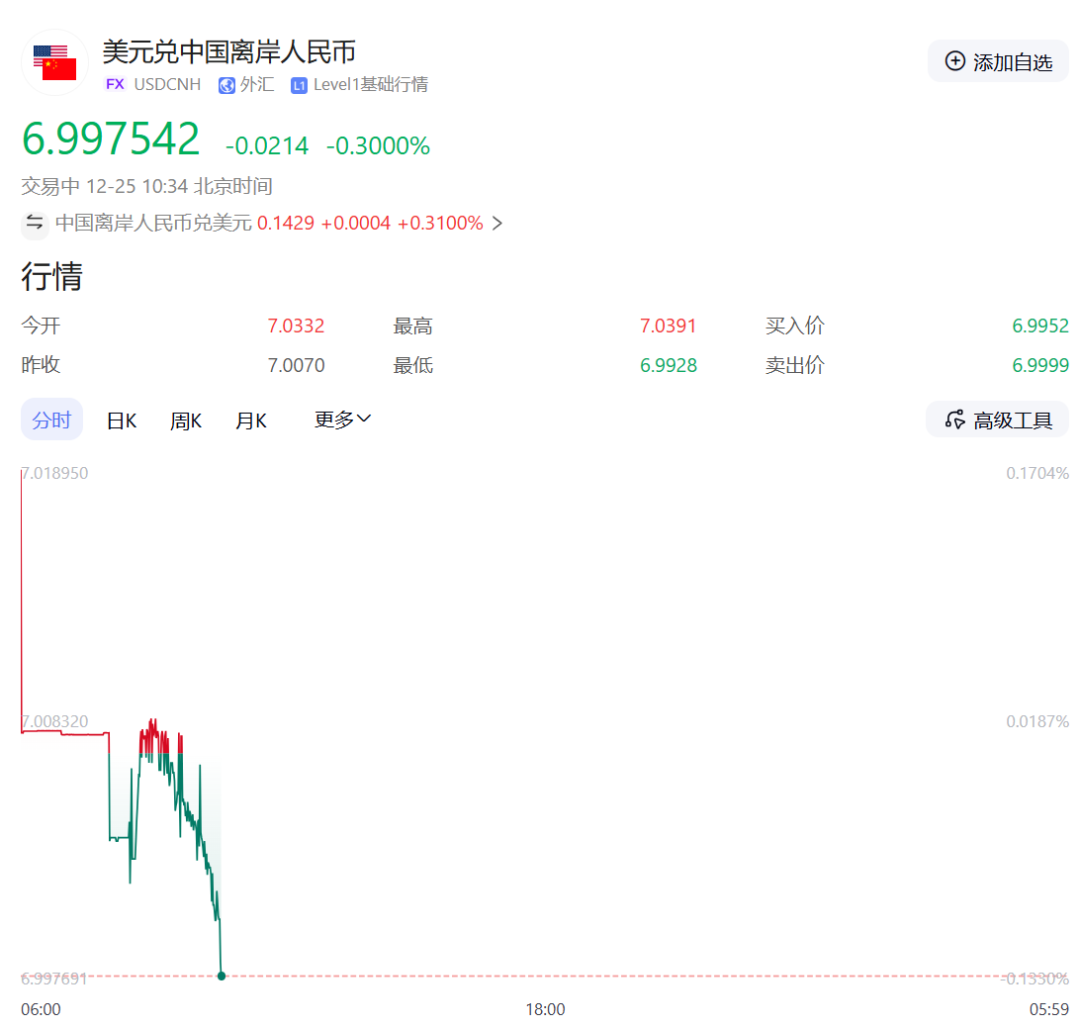
"我的好几个同事、同学,今年买A股收益率普遍很不错,有20%、30%的,还有50%以上的,感觉我买了 美国国债错过了一个亿。"李敏调侃自己说。 不过,好消息是,对留学家庭来说,人民币兑美元升值降低了留学成本。郭瑛(化名)的孩子今年8月刚 去美国读研,六七月份的时候换汇成本还要7.18到7.2。"马上要缴下学期的学费了,还有孩子的生活费也 要提早准备。我刚才查了一下,现在换汇成本是7.0288,如果换10万美元,跟六七月份比可以节省人民币 1.7万元左右。" 值得注意的是,自特朗普再次上台以来,美元指数大幅下跌,意味着美元对全球主要货币出现大幅贬值。 每日经济新闻消息,12月25日,离岸人民币兑美元汇率升破7.0大关。 | 美元兑中国离岸人民币 FX USDCNH 國外汇 ■ Level1基础行情 | | | | | 4 添加自选 | | --- | --- | --- | --- | --- | --- | | 6.997542 -0.0214 -0.3000% | | | | | | | 交易中 12-25 10:34 北京时间 | | | | | | | 与 中国离岸人民币兑美元 0.1429 +0.00 ...

破7!人民币大幅升值,有人年初存美元,如今倒亏钱!
Mei Ri Jing Ji Xin Wen· 2025-12-25 03:51
专题:离岸人民币升破7关口 为2024年以来首次!影响几何? 热点栏目 自选股 数据中心 行情中心 资金流向 模拟交易 客户端 每经编辑|段炼 12月25日,离岸人民币兑美元汇率升破7.0大关。 | 今开 | | 7.0332 | | 最高 | 7.0391 | 买入价 | | 6.9952 | | --- | --- | --- | --- | --- | --- | --- | --- | --- | | 昨收 | | 7.0070 | | 最低 | 6.9928 | 卖出价 | | 6.9999 | | 分时 | 日K | | 更多い | | | | 6 高级工具 | | 今年以来,人民币兑美元整体震荡上扬态势。2024年12月31日收盘,离岸人民币兑美元汇率为7.3368。 有人年初存美元,如今倒亏钱 人民币的大幅升值,也使得美元存款成了"负收益"。杭州市民张凯(化名)手头上有1万多美元外汇,今年2月份一部分美元(8400美元)办了13个月的定 期存款,到期利率为2.8%,到期收益254.8美元。如果按目前的汇率计算,本金加利息相当于人民币60596元;而年初的时候,8400美元相当于61629元人 ...
去年9月以来首次!离岸人民币兑美元升破7.0大关
Sou Hu Cai Jing· 2025-12-25 03:45
Core Viewpoint - The offshore RMB has strengthened against the USD, breaking the "7" threshold for the first time since September 2024, with the exchange rate reaching 6.9993 as of December 25, 2023 [1] Group 1: Reasons for RMB Strengthening - The offshore RMB has appreciated by 4.6% against the USD this year, with a significant rise since November 21, 2023, when it was around 7.11 [2] - Factors contributing to the RMB's appreciation include reduced external pressures, enhanced internal resilience, precise policy adjustments, and shifting market expectations, particularly due to the Federal Reserve entering a rate-cutting cycle [2][3] - The Chinese economy's resilience, improved economic data, and increased foreign investment in Chinese assets have bolstered the RMB, alongside seasonal demand for currency exchange by enterprises [3] Group 2: Market Dynamics and Predictions - Current market views suggest that the recent appreciation is linked to year-end currency exchange demands, but some analysts argue that it is primarily driven by central bank adjustments and changes in the USD environment [4] - Analysts predict that the trend of a weaker USD will continue into 2026, providing a favorable external environment for the RMB, with expectations of moderate appreciation [3] Group 3: Impacts of RMB Appreciation - The recent RMB appreciation is seen as beneficial for the Chinese stock and bond markets, enhancing the attractiveness of RMB-denominated assets for foreign investors [5] - For export enterprises, the appreciation may reduce exchange profits, while import costs will decrease, suggesting a need for businesses to manage currency risk effectively [6] - The appreciation has led to negative returns for some USD deposits when converted back to RMB, highlighting the impact on individual investors [7][8]
破7!人民币大幅升值,有人年初存美元,如今倒亏钱
Mei Ri Jing Ji Xin Wen· 2025-12-25 03:28
Core Viewpoint - The recent appreciation of the Chinese yuan against the US dollar has led to negative returns for dollar deposits, impacting individuals and families with foreign currency holdings [2][3][6]. Group 1: Currency Exchange Trends - The offshore yuan has shown a significant upward trend against the US dollar, with the exchange rate reaching 7.3368 by December 31, 2024 [1]. - Since November 21, the yuan has been steadily rising from around 7.11, with expectations of breaking the 7 mark increasing [6]. - The yuan's appreciation is attributed to a combination of external pressures easing, internal economic resilience, and market expectations shifting [7]. Group 2: Impact on Individuals and Families - Individuals holding dollar deposits have experienced losses due to the yuan's appreciation, with one case showing a loss of 1,033 yuan on an 8,400 dollar deposit [2]. - Families with children studying abroad benefit from the yuan's strength, as it reduces the cost of tuition and living expenses in foreign currencies [3][8]. Group 3: Market Implications - The appreciation of the yuan is expected to positively influence the Chinese stock and bond markets, enhancing the attractiveness of yuan-denominated assets [8]. - Increased demand for yuan due to seasonal currency exchange needs from businesses is contributing to the currency's strength [7].
破7!人民币大幅升值 有人年初存美元 如今倒亏钱!投资者:身边有人买A股收益率50% “感觉我买美国国债错过一个亿”
Mei Ri Jing Ji Xin Wen· 2025-12-25 03:24
Core Viewpoint - The significant appreciation of the Chinese yuan against the US dollar has led to negative returns for USD deposits, impacting individuals and their investment choices [2][3]. Group 1: Currency Exchange Trends - The offshore yuan has shown a strong upward trend against the US dollar, with the exchange rate reaching 7.3368 by December 31, 2024 [1]. - Since November 21, the yuan has been steadily appreciating against the dollar, with market expectations for the yuan to potentially break the 7.0 mark [4][5]. - The recent appreciation of the yuan is attributed to a combination of external pressures easing, internal economic resilience, and seasonal demand for currency exchange as the year-end approaches [6][7]. Group 2: Impact on Investments - The appreciation of the yuan has made USD deposits less attractive, as demonstrated by individuals experiencing losses when converting back to RMB [2]. - Investors in Chinese assets, particularly in the stock and bond markets, may benefit from the yuan's appreciation, which enhances the attractiveness of RMB-denominated assets [7]. - The current exchange rate environment is seen as favorable for families needing to exchange currency for education expenses abroad, as the cost has decreased significantly compared to earlier in the year [3][6].
破7!人民币大幅升值,有人年初存美元,如今倒亏钱!投资者:身边有人买A股收益率50%,“感觉我买美国国债错过一个亿”
Mei Ri Jing Ji Xin Wen· 2025-12-25 03:19
有人年初存美元,如今倒亏钱 人民币的大幅升值,也使得美元存款成了"负收益"。杭州市民张凯(化名)手头上有1万多美元外汇,今年2月份一部分美元(8400美元)办了13个月的定 期存款,到期利率为2.8%,到期收益254.8美元。如果按目前的汇率计算,本金加利息相当于人民币60596元;而年初的时候,8400美元相当于61629元人 民币。也就是说,按人民币计价的话,张凯的8400美元不但没赚到钱,反而亏1033元人民币。 张凯的朋友李敏(化名)因为孩子在国外留学,前几年换了不少美元,其中一部分暂时购买了美国长期国债,一年的收益有将近5%。"有一笔5万美元左 右的国债,大部分是在汇率7.2左右换的。"李敏说。按5%的利率计算,5万美元本金加利息一共是52500美元,按目前人民币计价的话相当于367573.5元; 而当初的5万美元的换汇成本是360480元人民币。也就是说,在享受美国国债5%高收益的情况下,按人民币计价,这一年李敏5万美元的收益只有7093.5 元人民币,收益率1.97%,仅略高于一年期人民币定期存款。 "我的好几个同事、同学,今年买A股收益率普遍很不错,有20%、30%的,还有50%以上的,感觉我 ...
人民币盘中突破7.01 2026年有望延续温和升值
Sou Hu Cai Jing· 2025-12-24 23:27
Core Viewpoint - The recent strengthening of the Renminbi (RMB) is attributed to a weaker US dollar, a decline in the dollar index by nearly 10%, and strong domestic equity market performance attracting foreign capital inflows. The RMB is expected to maintain a strong position against the USD in the short term and is projected to appreciate moderately by 2026 [1][2]. Group 1: Factors Contributing to RMB Strength - The RMB has shown a trend of moderate appreciation throughout the year, with the offshore RMB starting at 7.27 against the USD and reaching a low of 7.42879 in April before rebounding as the Federal Reserve's interest rate cuts became clearer [2]. - As of December 24, the offshore RMB broke through 7.01, reaching a low of 7.00621, while the dollar index hovered around 97.8, indicating a continued decline in the dollar's value [2][3]. - Increased corporate demand for currency settlement near year-end has contributed to the seasonal strengthening of the RMB, with historical data showing that the settlement surplus typically peaks before the Spring Festival [3]. Group 2: Economic and Market Implications - The strong performance of the Chinese stock market has attracted cross-border capital inflows, providing additional support for the RMB's appreciation [3]. - The resilience of the domestic economy has been recognized by international financial institutions, leading to upward revisions in growth forecasts for China, which has increased foreign interest in the market [3]. - The RMB's appreciation is expected to positively impact the capital markets, potentially boosting stock valuations, as historical studies indicate that a 0.1% increase in the exchange rate can enhance stock valuations by 3% to 5% [6].
Gold prices break another record to cap a monster run in 2025
Yahoo Finance· 2025-12-24 13:51
Core Insights - Gold prices have surged to over $4,500 an ounce, marking a 70% increase in 2025, coinciding with a rally in stock prices [1][2] Group 1: Economic Factors - Investors are optimistic about the U.S. economy's strength into 2026, expecting corporate earnings to remain stable and anticipating Federal Reserve rate cuts, which lower the opportunity cost of holding gold [2] - Elevated inflation and concerns regarding the political independence of institutions like the Federal Reserve have driven demand for gold as a hedge against uncertainty [3][4] Group 2: Market Dynamics - Central banks have significantly increased gold purchases as they diversify reserves and reduce reliance on the U.S. dollar, contributing to gold's price rise [4] - Inflows into gold-focused ETFs have increased, indicating renewed interest from investors who previously favored growth stocks during tech booms [5] Group 3: Currency Influence - The weakness of the U.S. dollar has made gold cheaper for international buyers, enhancing its appeal as a safe-haven asset [6] - Other precious metals have also risen, but gold remains the primary choice for investors seeking safety and hedging opportunities [6] Group 4: Investment Sentiment - The current demand for gold reflects a "flight to safety," positioning it as one of the best investments of 2025 [7]