货币政策

Search documents
重申灵活高效降准降息债券收益率或因资金和风偏推动继续震荡下行:经济目标增速软性下调,原油价格飙升或引发海外滞涨预期
Zhong Tai Qi Huo· 2026-03-09 05:07
Report Information - Report Title: Economic target growth rate is softly lowered, and the surge in crude oil prices may trigger overseas stagflation expectations - Reiterate flexible and efficient reserve requirement ratio cuts and interest rate cuts, and bond yields may continue to fluctuate downward driven by funds and risk appetite [1] - Report Date: March 8, 2026 - Author: Li Rongkai, Macro Team of Zhongtai Futures Research Institute - Contact Information: TEL 13361063969, Email lirk@ztqh.com Investment Rating - Not provided in the document Core Views - Reiterate flexible and efficient reserve requirement ratio cuts and interest rate cuts, and bond yields may continue to fluctuate downward driven by funds and risk appetite [6] Summary by Directory 01 Logic and Strategy (P3 - 4) - Reiterate flexible and efficient reserve requirement ratio cuts and interest rate cuts, and bond yields may continue to fluctuate downward driven by funds and risk appetite [6] 02 Macro Main Asset Fund Flow Changes (P5 - 6) - Domestic bond yields decline, US bond yields rise, and the US dollar index strengthens. In the equity market, both domestic and overseas markets weaken, and commodities rise significantly, especially crude oil, European routes, and agricultural products [12] 03 Recent Macroeconomic Data Analysis and Review (P7 - 13) - **Domestic**: The manufacturing PMI in February declined more than expected, mainly due to seasonal factors. As the Spring Festival factors fade and temperatures rise, the probability of the PMI rebounding in March is high, but it is still difficult to rise to 50%. Special attention should be paid to the impact of crude oil supply shocks on downstream production [30][31] - **Overseas**: The most important economic data released this week in the United States is the unexpectedly cold February non - farm payrolls report. This report forms a stagflation combination with the tense Middle East situation, putting the Fed in a dilemma. The market's expectations for the Fed's interest rate cuts this year have changed, with the first cut postponed from June to September and the number of cuts reduced from 3 to 2. The ISM non - manufacturing PMI reached 56.1, the highest in more than three years, indicating strong expansion in the service sector [31] - **Geopolitical Risks**: The conflict in the Middle East has escalated into a war, and the passage of the Strait of Hormuz has been severely受阻. Gulf countries will be forced to cut production due to capacity limitations, and overseas downstream refineries will face maintenance and shutdowns. The impact of the Strait of Hormuz's passage situation on the macro - economy is greater than the war itself, but this is difficult to predict [31] 04 Fundamentals Analysis and Bond Futures and Spot Index Monitoring (P14 - 24) - **Fundamentals**: The central bank's large - scale withdrawal in the open market has not affected the overall loose and stable fund prices. Bank interbank certificate of deposit rates and SHIBOR1Y rates continue to decline slowly. There may be room for further decline in 1 - year fund rates in the future. The central bank governor's statement on monetary policy is generally neutral. The statement on anti - involution goes beyond traditional credit policy guidance, and future monetary and credit injections will be more targeted [8][41] - **Bond Market**: Bond yields fluctuate within a reasonable range, with the 10 - year Treasury bond yield stable around 1.8%, and corporate bond issuance costs remaining low. The bond market was strong this week due to the impact of risk - aversion sentiment. If the central bank continues to conduct large - scale liquidity injections, it is possible that the interbank certificate of deposit rate will continue to move towards 1.5%, which is beneficial to medium - and long - term bonds [8] 05 Equity Broad - based Index Fundamentals, Liquidity, and Futures and Spot Index Monitoring (P25 - 31) - **Fundamentals**: Analyzed the ROE, EPS, and PE of major broad - based indexes, including the Shanghai Composite Index, Shenzhen Component Index, ChiNext Index, etc., to reflect the fundamentals of the equity market [97][100][102] - **Liquidity**: Tracked the trading volume, margin trading balance, and turnover rate of the equity market, as well as the net purchase of southbound funds, to understand the liquidity situation of the equity market [117][122][125] 06 Macroeconomic Medium - Term Fundamentals Tracking and Monitoring (P32 - 51) - **Fiscal Revenue and Expenditure**: Analyzed the year - on - year changes in fiscal revenue and expenditure, fiscal expenditure progress, and land transfer revenue and expenditure of local governments [153][155][157] - **Bond Financing and Fund Supply and Demand**: Studied the relationship between social financing, M2, M1, and the issuance and financing of government bonds [161][162][163] - **Economic Fundamentals - Real Estate**: Monitored real - estate - related indicators such as land transaction area, housing sales area, housing prices, and real - estate development investment to understand the real - estate market situation [170][180][181] - **Inflation Tracking**: Tracked inflation indicators such as the CPI, PPI, and prices of key commodities to understand the inflation situation [193][204][207] - **Industrial Production and Inventory Tracking**: Monitored industrial production indicators such as steel output, iron water production, and factory operating rates, as well as inventory levels of various industries, to understand the industrial production and inventory situation [213][224][230] 07 Macroeconomic Long - Wave Fundamentals Tracking and Monitoring (P52 - 53) - Not provided in the document Other Important Information - **Central Bank Meetings and Policies**: The 2025 December Central Political Bureau Meeting and the 2025 December Central Economic Work Conference emphasized the implementation of more proactive fiscal policies and moderately loose monetary policies, and put forward requirements in various aspects such as economic development, industrial policies, and risk prevention [334][336][337] - **US Fed Meeting**: The December 2025 Fed meeting had a relatively hawkish stance on economic forecasts, dot plots, and interest rate cut rhythms, but was relatively dovish on the balance between inflation and employment [332][333] - **US Tariff Policies**: The US trade war strategy may have a major turning point. The US's use of IEEPA to impose tariffs on foreign products is difficult to continue, and the new tariff measures based on the 122nd article of the 1974 Trade Act also face legal risks. There may be a long - term refund battle, and the US may turn to more traditional trade - war tools [342][344][347] - **Public Offering Fund Sales New Regulations**: Compared the old and new regulations on the sales fees of public offering funds, including subscription fees, redemption fees, sales service fees, and client maintenance fees [340]
2026年03月09日申万期货品种策略日报-国债-20260309
Shen Yin Wan Guo Qi Huo· 2026-03-09 04:05
2026年03月09日申万期货品种策略日报-国债 | | | | | 申银万国期货研究所 唐广华(从业资格号:F3010997;交易咨询号:Z0011162) | | | | | | | --- | --- | --- | --- | --- | --- | --- | --- | --- | --- | | | | | | tanggh@sywgqh.com.cn 021-50586292 | | | | | | | | | TS2606 | TS2609 | TF2606 | TF2609 | T2606 | T2609 | TL2606 | TL2609 | | | 昨日收盘价 | 102.496 | 102.524 | 106.110 | 105.955 | 108.535 | 108.530 | 112.78 | 112.49 | | | 前日收盘价 | 102.502 | 102.524 | 106.115 | 105.940 | 108.545 | 108.540 | 112.77 | 112.49 | | | 涨跌 | -0.006 | 0.000 | -0.005 | 0.015 | -0. ...
原油、燃料油、低硫燃料油、液化石油气、线性低密度聚乙烯、聚丙烯、纯苯、苯乙烯、PTA、对二甲苯、PVC、乙二醇、瓶片期货将上攻涨停板铂、钯期货将震荡偏弱
Guo Tai Jun An Qi Huo· 2026-03-09 01:52
1. Report Industry Investment Rating - No information provided in the report regarding industry investment rating 2. Core Views of the Report - Through macro - fundamental and technical analysis, the report forecasts the price trends, resistance levels, and support levels of various futures contracts on March 9, 2026, and the trends of continuous contracts in March 2026 [2][6] - The report also summarizes the performance of various futures on March 6, 2026, and provides information on macro - economic policies, international events, and their impacts on the market [24][8] 3. Summaries by Relevant Catalogs 3.1 Futures Market Forecast - **Stock Index Futures**: On March 9, 2026, IF2603, IH2603, IC2603, and IM2603 are expected to be weakly volatile. In March 2026, their continuous contracts are also expected to be weakly volatile [2][31] - **Treasury Bond Futures**: On March 9, 2026, T2606 and TL2606 are expected to be in a volatile consolidation state [2][52] - **Precious Metal Futures**: On March 9, 2026, AU2604 is expected to be in a volatile consolidation, AG2606 is expected to be weakly volatile, PT2606 and PD2606 are expected to be weakly volatile. In March 2026, the continuous contracts of gold are expected to be widely volatile, while those of silver, platinum, and palladium are expected to be weakly volatile [2][59][67] - **Base Metal Futures**: On March 9, 2026, CU2604 is expected to be weakly volatile, AL2604, AO2605, ZN2604, NI2605, and other contracts are expected to be strongly volatile. In March 2026, the continuous contracts of copper, zinc, nickel, and tin are expected to be weakly volatile, while those of aluminum are expected to be strongly and widely volatile [2][80][88] - **Energy and Chemical Futures**: On March 9, 2026, SC2604, FU2604, LU2604, PG2604, and other contracts are expected to be strongly volatile and have a high probability of reaching the daily limit. In March 2026, their continuous contracts are also expected to be strongly volatile and may reach new highs [2][144][149] - **Agricultural Futures**: On March 9, 2026, M2605, Y2605, P2605, and other contracts are expected to be strongly volatile [2][197][200] - **Shipping Futures**: On March 9, 2026, EC2604 is expected to be strongly volatile [2][203] 3.2 Macro - economic Information - The central bank will implement a moderately loose monetary policy, use various policy tools flexibly and efficiently, and maintain sufficient liquidity in the market [8][51] - The CSRC will deepen the reform of the ChiNext, optimize the refinancing mechanism, and improve the stability mechanism of the Chinese - characteristic market [10] - The National Development and Reform Commission plans to set up a national - level merger fund, and the Ministry of Finance will implement a more proactive fiscal policy [11] 3.3 International Situation - The conflict in the Middle East has led to a significant increase in oil prices, and the shipping in the Strait of Hormuz has almost stopped. The market is worried about the supply of global energy [16][143] - The US non - farm employment data in February was weak, and the market is worried about the risk of stagflation [17]
每日债市速递 | 本周央行公开市场将有2776亿元逆回购到期
Wind万得· 2026-03-08 22:50
Group 1: Open Market Operations - The central bank conducted a 448 billion yuan 7-day reverse repurchase operation on March 6, with a fixed rate of 1.40%, resulting in a net withdrawal of 2,242 billion yuan for the day, and a total net withdrawal of 13,634 billion yuan for the week [1][3]. Group 2: Funding Conditions - The interbank market remains loose, with the weighted average interest rate of DR001 rising nearly 5 basis points to around 1.32%. Overnight quotes on the anonymous click system (X-repo) also increased to 1.3%, although the supply of funds remains ample [3]. Group 3: Interbank Certificates of Deposit - The latest transaction for one-year interbank certificates of deposit among major banks is around 1.557%, unchanged from the previous day [7]. Group 4: Bond Market Overview - The yields on major interbank bonds showed slight differentiation, with long-term bonds being relatively weak. Specific yield changes include a decrease of 0.60% for 14-year government bonds and an increase of 0.90% for 7-year bonds [9]. Group 5: National Development and Reform Commission Initiatives - The National Development and Reform Commission plans to implement several strategic projects during the 14th Five-Year Plan period, including major energy and transportation infrastructure investments exceeding 1 trillion yuan [13]. Group 6: Monetary Policy Tools - The central bank will flexibly and efficiently utilize various monetary policy tools, including reserve requirement ratio cuts and interest rate reductions, to guide and regulate interest rates and promote low financing costs [13]. Group 7: Fiscal Policy Highlights - The Ministry of Finance announced record-high fiscal expenditures exceeding 30 trillion yuan, with new government bond issuance reaching 11.89 trillion yuan, marking the largest effort in recent years [14]. Group 8: Capital Market Development - The China Securities Regulatory Commission aims to enhance the stability of the capital market and improve the mechanisms for cross-cycle and counter-cyclical adjustments, supporting innovative enterprises in the capital market [14].


如何看待油价对债市冲击?
GOLDEN SUN SECURITIES· 2026-03-08 15:29
1. Report Industry Investment Rating No information provided in the content. 2. Core Viewpoints of the Report - Current oil price and price changes have limited impact on the bond market, and the bank - led allocation market remains the main trend, which may be more obvious after the end of the quarter [6][23] - The current price increase does not drive the improvement of corporate profits, and monetary policy has difficulty in responding to exogenous price changes, so the overall impact on interest rates is limited [6][23] - The lack of financing demand and high savings willingness lead to an increase in deposits and a decline in loan growth. Banks are still in an asset - shortage environment, which will lead to loose funds and restrict the upper limit of interest rates [6][23] - Near the end of the quarter, the pressure of indicators and capital fluctuations may restrict the bank's bond - allocation rhythm and cause small market disturbances. But after the end of the quarter, the seasonal slowdown of credit will widen the asset gap, and the bank's allocation demand may be stronger, driving interest rates further down [6][23] - Leveraging and riding are stable strategies to increase returns, and the capital gains from extending duration may be more significant after the end of the quarter [6][23] 3. Summary by Related Catalogs 3.1 Bond Market Performance This Week - The bond market fluctuated this week, with long - term bonds slightly adjusted and short - term bonds declining significantly. The yields of 10 - year and 30 - year treasury bonds rose by 0.6bps and 0.9bps to 1.78% and 2.28% respectively, while the yield of 1 - year treasury bonds fell by 3.1bps to 1.29%. The yields of 3 - year and 5 - year secondary perpetual bonds fell by 2.3bps and 0.2bps to 1.86% and 2.08% respectively, and the yield of 1 - year AAA certificates of deposit fell by 2.5bps to 1.55% [1][9] 3.2 Impact of the US - Iran Conflict on Oil Prices - The current focus of the global capital market is the US - Iran conflict. As the conflict intensifies, oil prices have soared. The Brent crude oil price has risen from $71.1 per barrel last weekend to $94.4 per barrel, with a weekly increase of more than 30%, the highest weekly increase this century. After the Russia - Ukraine war, Brent crude oil once rose from $99.6 per barrel on February 25, 2022, to a maximum of $137.7 per barrel on March 8, 2022, with a cumulative increase of 38%, but then gradually declined. Due to the lack of signs of easing in the current US - Iran conflict, the market is worried that the long - term conflict may keep energy prices at a high level [1][9] 3.3 Impact of Oil Price Increase on the Domestic Bond Market - In the short term, the US - Iran war has led to a sharp rise in oil prices, causing a general adjustment in the global capital market, which reduces risk appetite and drives funds into the bond market, helping the bond market recover in the short term. But in the medium term, the market is more worried that the rise in oil prices will push up inflation from the cost side, affect monetary policy, and thus create adjustment pressure on the bond market [2][10] - Considering the improvement trend of CPI and PPI in the past few months, the market is more worried about the pressure of rising prices on the bond market. Especially for PPI, the year - on - year PPI in January was - 1.4%. If the subsequent PPI month - on - month is 0, the year - on - year PPI will turn positive in May. Considering factors such as the recent rise in oil prices, the month - on - month is more likely to be above 0, and PPI may turn positive in April or May [2][10] 3.4 Analysis of the Impact of Price Increase on Interest Rates - The K - shaped price increase may mean that it has no obvious pressure on interest rates. Currently, price increases are concentrated in a few industries such as non - ferrous metals, and the PPI of other industries has not risen. The price increases of non - ferrous metals and oil are more input - type, which mainly raises the costs of domestic enterprises. Therefore, during the recovery of PPI, corporate profits have not improved, and there has been no corresponding increase in financing demand [3][13] - For this input - type price change, the domestic monetary policy's regulatory ability is relatively limited. The changes in non - ferrous metals and oil prices are more exogenous, so the monetary policy may choose a response similar to the increase in pork prices in 2019 and will not tighten because of this [3][13] - Even in the 1970s, when the oil crisis significantly pushed up inflation, its impact on interest rates was not as significant as that on prices. During the two oil crises in the 1970s, the international crude oil price soared, and the Brent crude oil price rose from $1.2 per barrel at the end of 1970 to $40.5 per barrel at the end of 1979. Affected by this, the inflation of economies such as the US and Japan increased significantly. However, due to the limited improvement in corporate profitability and the relatively restrained response of monetary policy, the increase in interest rates was significantly lower than that in inflation [4][18] 3.5 Importance of Asset Gap in the Current Bond Market - The most important factor in the current bond market is the asset gap. This year, the overall financing demand is weak, and residents face increased uncertainty during the economic transformation, with relatively low risk appetite. This leads to a high increase in deposits and a decline in loan growth. For banks, this means a continuous widening of the asset gap [5][21] - Banks need to increase bond allocation or inter - bank capital lending to match. This will form a stable allocation force in the bond market, restricting the upward space of bond interest rates, and create a continuous loose capital pattern, bringing stable leveraged returns [5][21] - Near the end of the quarter, the bank's bond - allocation rhythm may slow down slightly under the influence of indicator pressure, and there may be small fluctuations in funds. But after mid - March, the bank's bond - allocation demand is expected to recover, and combined with the traditional credit off - season in April, the bond - allocation demand may be stronger, and funds are expected to be looser after the quarter [5][21]
银行资负跟踪20260308:淡化数量型目标,强调利率调控和结构性支持
GF SECURITIES· 2026-03-08 15:17
Investment Rating - The industry investment rating is "Buy" [2] Core Insights - The report emphasizes the shift from quantitative targets to interest rate regulation and structural support, highlighting the importance of maintaining a stable economic growth and reasonable price recovery through flexible monetary policy tools [14][15][18] - The central bank's monetary policy remains moderately loose, with a focus on promoting low comprehensive financing costs for society and optimizing the structural monetary policy tool system [14][18] - The report anticipates cautious adjustments in interest rates and reserve requirements, with a comprehensive approach to monetary policy tools to ensure liquidity remains balanced [18] Summary by Sections 1. Emphasis on Interest Rate Regulation and Structural Support - The report notes a significant focus on fiscal policy, maintaining a deficit rate of 4% and increasing the deficit scale to 5.89 trillion yuan, with special bonds issued to support state-owned banks [14] - The central bank plans to utilize a variety of monetary policy tools, including reverse repos and medium-term lending facilities, to ensure liquidity remains ample and aligns with economic growth expectations [15][16] 2. Central Bank Dynamics and Market Interest Rates - The central bank conducted 161.6 billion yuan in 7-day reverse repos at an interest rate of 1.40%, with a net withdrawal of 156.34 billion yuan overall [19] - Market interest rates showed slight fluctuations, with the 1-day and 7-day rates at 1.32% and 1.41%, respectively, indicating a mixed trend in liquidity [20] 3. Bank Financing Tracking - The report indicates that the total outstanding amount of interbank certificates of deposit (CDs) is 18.77 trillion yuan, with an average issuance rate of 1.68% [24] - There were no new issuances of commercial bank bonds during the period, with the total outstanding amount at 3.36 trillion yuan [24]
政策周度观察:经济增速目标下限拓展至4.5%,千亿资金支持财政金融协促内需-20260308
East Money Securities· 2026-03-08 13:09
Policy Weekly Observation - The economic growth target's lower limit has been expanded to 4.5%, with a funding support of 100 billion yuan for fiscal and financial collaboration to stimulate domestic demand [9][11] - The government work report outlines key economic targets for the year, including a GDP growth of 4.5%-5%, an urban unemployment rate of around 5.5%, and over 12 million new urban jobs [11][12] - The fiscal policy includes a deficit rate planned at around 4%, with a deficit scale of 5.89 trillion yuan, issuance of long-term special bonds of 1.3 trillion yuan, and local government special bonds of 4.4 trillion yuan [11][12] - The monetary policy will continue to be moderately loose, utilizing various tools such as reserve requirement ratio cuts and interest rate reductions to maintain the stability of the RMB exchange rate [11][12] Specific Policy Summary - The government will implement a package of six policies to promote domestic demand, including enhancing consumer choice and providing financial support to enterprises [14] - The policies aim to optimize the loan interest subsidy policy, allowing consumers more autonomy in selecting services and increasing the upper limit for subsidies [14] - The establishment of a special guarantee plan for private investment and the implementation of three subsidy policies are also part of the strategy to reduce costs for enterprises [14] Economic and Trade Policy - The central bank will continue to implement a moderately loose monetary policy, focusing on stabilizing economic growth and ensuring reasonable price recovery [12][14] - The government emphasizes the importance of dialogue and negotiation in resolving international tensions, particularly in the Middle East, to maintain regional stability [12][14]
国债期货周报-20260308
Guo Tai Jun An Qi Huo· 2026-03-08 11:34
Report Industry Investment Rating - Not provided Core Viewpoints - This week, the Treasury bond futures market was affected by the Iran war and global risk appetite, showing a slight recovery followed by continuous fluctuations. The Two Sessions continued the moderately loose tone of monetary policy, but in the future, more emphasis may be placed on "price" tools rather than "quantity". At the same time, the Two Sessions made price recovery the focus of this year's work. In the medium term, due to reasons such as the relatively restrained monetary policy of the central bank, the change in inflation expectations, the orientation of medium - and long - term funds entering the market, and the unfalsifiable expectations of the 15th Five - Year Plan, the view of a generally bearish and fluctuating trend is maintained [1][3]. Summary by Directory 1. Weekly Focus and Market Tracking - The Treasury bond futures market was affected by the Iran war and global risk appetite, showing a slight recovery followed by continuous fluctuations. The Two Sessions continued the moderately loose tone of monetary policy, with more emphasis on "price" tools in the future. Price recovery was made the focus of this year's work. In the medium term, a generally bearish and fluctuating trend is expected [1][3]. - This week, the Treasury bond futures market showed a pattern where the short - end was relatively strong and the long - end was stage - differentiated. The yield curve was steep in the middle of the week and then gradually flattened. The short - term capital market remained loose, and the market had strong expectations that the central bank would maintain liquidity stability [5]. 2. Liquidity Monitoring and Curve Tracking - Not provided in detail, only the figure "Liquidity Monitoring and Curve Tracking" is mentioned [10]. 3. Seat Analysis - In terms of the daily change in net long positions by institutional type, private funds increased by 0.23%, foreign capital increased by 0.55%, and wealth management subsidiaries increased by 0.94%. In terms of weekly change, private funds increased by 3.15%, foreign capital increased by 5.57%, and wealth management subsidiaries increased by 7.21% [12].
——债券周报20260308:债市面临多大的通胀压力?-20260308
Huachuang Securities· 2026-03-08 11:08
1. Report Industry Investment Rating No relevant content provided. 2. Core Views of the Report - Geopolitical tensions, especially the escalation of the US - Iran conflict, have led to increased inflation concerns. Rising oil prices mainly affect PPI, with a relatively limited impact on CPI, and the long - term impact on the bond market is controllable, but short - term inflation expectations may cause fluctuations [1][25][33]. - The Two Sessions set a clear macroeconomic tone, including promoting high - quality development in the 14th Five - Year Plan, implementing proactive fiscal policies, maintaining moderately loose monetary policies, and strengthening financial supervision [34][38][39][42]. - In the bond market strategy, the short - end has limited downward space, while the long - end suggests holding existing assets and preferring elastic varieties for new funds [2][3][50][61]. 3. Summary by Relevant Catalogs 3.1 Geopolitical Driven Inflation Concerns 3.1.1 US - Iran Tensions and Market Volatility - The escalation of the US - Iran conflict has increased risk - aversion sentiment, causing significant fluctuations in the equity and commodity markets. Oil prices have soared, with Brent and WTI crude futures exceeding $90 per barrel. The CSI 300 has fallen 1.1%, and energy and defensive sectors have performed relatively well [11][13]. 3.1.2 Impact of Oil Prices on Inflation and the Bond Market - Oil prices mainly affect PPI, with a 10% adjustment in oil prices potentially driving a 0.35 - percentage - point change in PPI, and a relatively small impact on CPI (usually within 0.1 percentage points). If oil prices remain high, PPI may turn positive in April [15][16][22]. - In the long run, the impact of rising oil prices on the bond market is controllable, but short - term inflation expectations may cause fluctuations, especially when PPI breaks through critical points [25][29]. 3.2 Two Sessions Tracking 3.2.1 Macroeconomic Tone - The 14th Five - Year Plan focuses on high - quality development. The expected GDP growth rate of 4.5% - 5% is achievable. In consumption, there are measures for commodity and service consumption, as well as targeted policies for the sinking market. Investment will increase government investment and promote the construction of "six networks" and key areas. A national - level merger fund will be established to develop six new pillar industries and six future industries [34][35][37]. 3.2.2 Fiscal Policy - The proactive fiscal policy is reflected in both the scale of funds and policy synergy. In 2026, fiscal spending, new government bonds, and central - to - local transfer payments have reached new highs. A 100 - billion - yuan package of policies to promote domestic demand through fiscal - financial cooperation has been introduced [38]. 3.2.3 Monetary Policy - The moderately loose monetary policy will continue, with comprehensive use of short -, medium -, and long - term policy tools. The central bank will strengthen the implementation and supervision of interest rate policies, and the exchange rate is at a medium - level range. It is also studying a liquidity support mechanism for non - bank institutions in specific situations [39][40]. 3.2.4 Financial Supervision - Two measures will be introduced soon: deepening the reform of the Growth Enterprise Market and optimizing the refinancing mechanism. The goal is to guide industry institutions to focus on their main businesses and develop in a standardized way [42]. 3.3 Bond Market Strategy 3.3.1 Short - end Bonds - After the Spring Festival, the capital situation has remained loose, but the central bank's liquidity injection has been relatively restrained. The short - end bond market has limited downward space, with the 1 - year national and joint - stock bank certificates of deposit potentially reaching a "resistance level" at 1.55%. The credit spread of bonds with a maturity of less than 5 years has been compressed to a historical low [2][50][52]. 3.3.2 Long - end Bonds - The 10 - year Treasury bond is likely to remain within the range of 30 - 50bp above the OMO rate. The US - Iran situation may affect market risk appetite, and inflation expectations may rise due to rising oil prices. For coupon collection, convex - type bonds can be considered, such as 5 - year China Development Bank bonds for the medium - short term, 8 - year Export - Import Bank of China bonds for the long term, and 15 - 20 - year local government bonds for insurance funds. Existing assets can be held, and new funds can be invested in more liquid and elastic varieties [54][58][61]. 3.4 Interest - rate Bond Market Review 3.4.1 Capital Market - The central bank has significantly net -回笼 funds through OMO, but the capital market has remained balanced and loose [62][64][65]. 3.4.2 Primary Market Issuance - The net financing of Treasury bonds has decreased, while the net financing of policy - financial bonds, local government bonds, and inter - bank certificates of deposit has increased [75][77][78]. 3.4.3 Benchmark Changes - The term spreads of Treasury bonds and China Development Bank bonds have both widened, with short - end bonds performing better than long - end bonds [68][79][80].
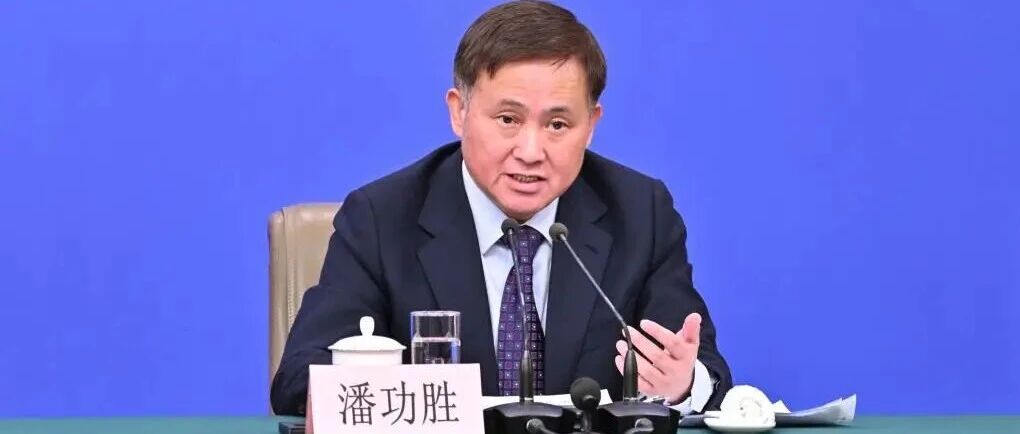
潘功胜:无意通过汇率贬值获取贸易竞争优势|宏观经济
清华金融评论· 2026-03-08 06:38
Core Viewpoint - The People's Bank of China (PBOC) emphasizes the implementation of a moderately loose monetary policy to support stable economic growth and financial stability, while gradually shifting focus from quantity-based to price-based monetary policy tools [4][5][8]. Monetary Policy Considerations - Since 2025, the PBOC has implemented a moderately loose monetary policy, introducing various measures to support stable growth and financial market stability, including a 0.25 percentage point reduction in structural monetary policy tool rates and a 1 trillion yuan special relending for private enterprises [4][5]. - As of January 2026, social financing scale increased by 8.2% year-on-year, and broad money (M2) grew by 9%, with new corporate and personal housing loan rates at historical lows of approximately 3.2% and 3.1% respectively [5][6]. Structural Adjustments - The PBOC plans to focus structural monetary policy tools on expanding domestic demand, supporting technological innovation, and aiding small and micro enterprises, with structural tools amounting to approximately 5.5 trillion yuan, representing about 11% of the central bank's total assets [6][8]. Exchange Rate Management - The PBOC maintains that there is no intention to devalue the yuan for trade advantages, emphasizing the importance of market forces in exchange rate determination and the need for stability in the yuan's value [7][8]. - The yuan appreciated against the US dollar by nearly 4.5% in 2025, reflecting a stable position among major currencies [10]. Financial Risk Management - The PBOC reports that financial institutions are generally healthy, with a capital adequacy ratio of 15.5% and a non-performing loan ratio of 1.5% as of the end of last year, indicating strong risk resilience [10][11]. - The PBOC aims to balance economic growth and risk prevention, focusing on resolving key financial risks, particularly in financing platforms and small banks, while maintaining a crackdown on illegal financial activities [11][12]. Financial Market Stability - The PBOC will continue to monitor and manage the bond and capital markets to ensure stability, with a focus on maintaining low financing costs for enterprises and supporting the capital market's resilience [11][12]. Financial Sector Opening - Since 2025, the PBOC has made significant progress in financial sector opening, including enhancing foreign investment access and promoting the internationalization of the yuan, with over 10 trillion yuan in domestic RMB financial assets held by foreign entities [13][14]. - The PBOC is committed to further expanding high-level financial openness, enhancing transparency and predictability in financial policies, and supporting the development of offshore RMB markets [15][16].