
价值投资

Search documents
回首来时路,重温广发基金2025年投教足迹
Zhong Guo Zheng Quan Bao· 2026-01-26 04:33
Core Insights - The fund industry is progressing steadily in 2025, driven by deepening reforms and innovation, enhancing market resilience and vitality [2] - The company is committed to improving investor financial literacy through diverse educational content and innovative communication methods [2] Group 1: Understanding Funds - The company has developed a comprehensive fund investment knowledge system to help investors understand funds, rules, risks, and investment philosophies [3] - Various educational materials have been created to meet the learning needs of different groups, including strategies for regular investment and asset allocation [4] Group 2: Legal Awareness - The company actively promotes capital market laws and regulations to help investors understand their rights and how to exercise them [6] - Educational initiatives include explaining fund trading rules and dispute resolution mechanisms [6] Group 3: Risk Awareness - The company emphasizes risk management by providing warnings and guidance on suitable investment choices for investors [7] - Specialized videos have been produced to explain the principles of investor suitability [7] Group 4: Investment Philosophy - The company promotes rational, value, and long-term investment philosophies through various media, including podcasts and educational programs [9] Group 5: Capital Market Policy Promotion - The company has focused on promoting capital market policies, including modern capital market construction and public fund industry reforms [11][12] - Initiatives include timely updates on policy measures and explanations of the delisting mechanisms for listed companies [12] Group 6: Pension Education - The company has developed a systematic approach to pension education, enhancing residents' investment capabilities for retirement [15] - A tiered content system has been established to cover essential pension investment knowledge [16] Group 7: Anti-Fraud Education - The company has implemented a comprehensive anti-fraud education mechanism, conducting various activities to raise public awareness of investment risks [19][20] - Efforts include community outreach and collaboration with educational institutions to disseminate anti-fraud knowledge [21] Group 8: Expansion of Educational Outreach - The company has expanded its educational outreach to regions such as Macau and various provinces, promoting financial literacy across different demographics [23][24] - Activities have been tailored to various educational levels, from primary schools to universities, to foster financial intelligence [25] Group 9: Recognition and Awards - The company has received multiple awards for its educational products and activities, highlighting its commitment to investor education and community engagement [27]


险资密集落子私募基金,长线资本抢占产业投资风口
Bei Jing Shang Bao· 2026-01-25 10:25
Core Insights - Insurance capital is increasingly flowing into the primary market, driven by the dual forces of regulatory policies promoting long-term investments and a low-interest-rate environment [1][4] - China Life announced a partnership to establish a private equity fund focusing on artificial intelligence and related applications, with a total investment of 4 billion yuan [3][4] - Since 2025, there has been a surge in insurance capital entering the private equity market, with significant investments in sectors like renewable energy and biomedicine [4][5] Investment Trends - Insurance funds are actively investing in private equity, with a focus on hard technology sectors such as artificial intelligence, integrated circuits, and renewable energy [5][6] - The investment strategy aligns with national strategic directions, emphasizing high growth potential and technological barriers, which are expected to yield stable long-term returns [5][6] - The insurance sector is encouraged to support venture capital through diversified investment tools, enhancing the development of long-term and patient capital [5][6] Future Outlook - Predictions indicate that insurance capital will expand its investment scope to include more hard technology and livelihood-related industries by 2026 [6] - There is an expectation for deeper collaboration models, potentially enhancing direct investment capabilities or linking with industrial capital [6] - Insurance capital is likely to focus more on niche sectors, strengthening research and investment capabilities to navigate uncertainties while adjusting investment rhythms and exit strategies [6]


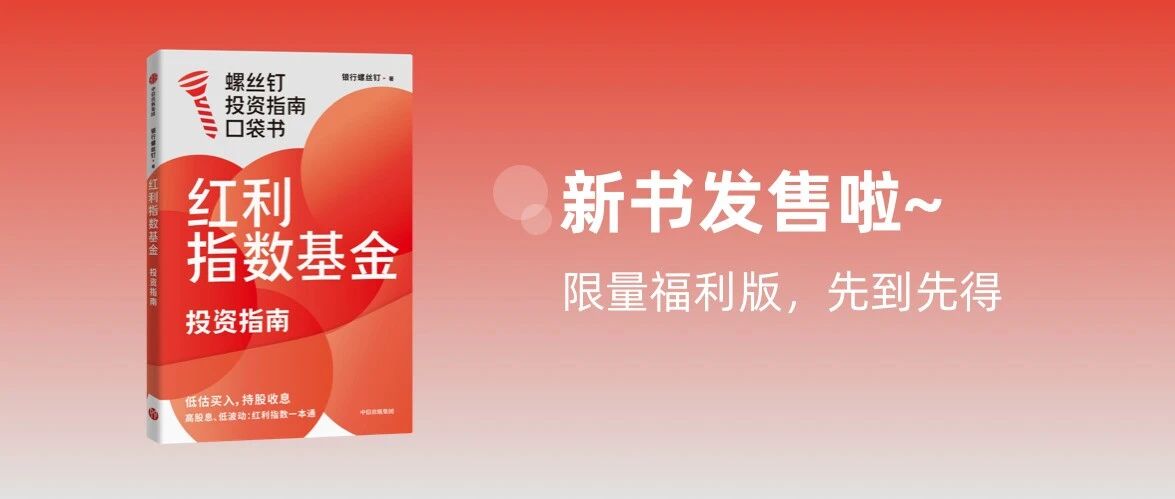
红利策略,在A股有效吗:《红利指数基金投资指南》告诉你 | 螺丝钉带你读书
银行螺丝钉· 2026-01-24 13:53
Core Viewpoint - The article introduces the new book "Dividend Index Fund Investment Guide," highlighting the growing interest in dividend index funds due to the declining interest rates in the RMB environment [2][9][10]. Group 1: Book Introduction - The book is the first in the "Pocket Book" series by the company in collaboration with CITIC Publishing [3][4]. - The pocket book format is designed to be compact, allowing readers to finish it in about an hour, making reading easy and pressure-free [5]. - Upon its release, the book quickly topped the investment category on JD.com [6][7]. Group 2: Market Context - In recent years, RMB interest rates have been continuously declining, with deposit rates below 1% and long-term pure bond yields around 1.8%-2% [10][11]. - The rental yield from real estate is also low, while the dividend yield from dividend index funds is around 4%-5%, providing a decent cash flow [11][12]. Group 3: Investment Strategies - Investment strategies such as value, dividend, and growth have developed over the past decades, with notable figures like Benjamin Graham, the founder of value investing, influencing many investors [14][15][20]. - Warren Buffett, a disciple of Graham, emphasizes low valuation investments, often buying excellent companies at low price-to-earnings ratios [22][23]. Group 4: Effectiveness of Dividend Strategies - The effectiveness of dividend strategies in the A-share market is evidenced by the performance of the CSI Dividend Index, which has shown significant growth since its inception in 2004 [32][36]. - By the end of 2025, the CSI Dividend Index is projected to reach 5,503 points, with total returns including dividends reaching 11,522 points, reflecting an annualized return of around 12% [36][37]. Group 5: Challenges in Dividend Investing - Dividend strategies are not consistently effective every year, with performance varying significantly across different periods [40][41]. - The A-share market exhibits style rotation, often switching between growth and value styles, which can impact the performance of dividend indices [43][44]. - Many investors lack the patience to hold through market fluctuations, which can hinder their success in dividend investing [46][50].
公募重磅新规落地!有色金属大涨,诞生多只“翻倍基”
Zhong Guo Ji Jin Bao· 2026-01-24 11:11
Group 1: Regulatory Changes - The China Securities Regulatory Commission (CSRC) has officially implemented new guidelines for public fund performance benchmarks, which are essential for defining product positioning and investment strategies [1][2] - The new guidelines aim to address issues such as the lack of systematic regulations and significant deviations from performance benchmarks by actively managed equity funds, thereby enhancing long-term value investment in the public fund industry [2] Group 2: Fund Performance - In the fourth quarter of 2025, public funds experienced a loss of 110.1 billion yuan, marking the first loss since the fourth quarter of 2024, with equity, mixed, and QDII funds being the primary contributors to this loss [3] - Despite the fourth quarter losses, public funds achieved a total profit of 26,041.07 billion yuan for the entire year of 2025, with equity funds being the largest profit contributors [3] Group 3: Market Trends - The resource sector has seen significant growth, with the non-ferrous metal sector rising by 89.38% in 2025, leading to strong performance in related equity funds [7] - Fund managers are optimistic about the valuation of the non-ferrous metal sector, indicating that quality assets in precious and minor metals are worth attention [7] Group 4: Fund Issuance and Investor Sentiment - The public fund issuance has seen a strong start in 2026, with 82 new funds launched and several funds being oversubscribed, reflecting strong demand for equity assets [11] - Factors contributing to this trend include favorable policies, reduced investment costs, and a low-interest-rate environment prompting a shift of funds from deposits to equity funds [11] Group 5: Financial Data and Trends - As of the end of the fourth quarter, the total management scale of public funds reached 37.63 trillion yuan, an increase of 1.18 trillion yuan from the previous quarter [9] - Shenzhen's financial sector reported a total deposit balance of 14.63 trillion yuan, reflecting a year-on-year growth of 7.8% [10] Group 6: Institutional Developments - Huatai Securities has undergone significant personnel changes, electing a new chairman and appointing new leadership for its asset management division [12][13] - HSBC has successfully entered the public fund custody business in China, marking a significant expansion for foreign banks in this sector [20]

基金大事件|公募重磅新规落地!有色金属大涨,诞生多只“翻倍基”
中国基金报· 2026-01-24 10:54
Group 1 - The core viewpoint of the article is the introduction of new regulations for public funds in China, specifically the "Guidelines for Performance Comparison Benchmarks of Publicly Raised Securities Investment Funds," which aims to address issues such as style drift and enhance long-term value investment in the public fund industry [1][4]. - The new guidelines are expected to strengthen benchmark constraints, directly addressing industry pain points and improving investor satisfaction [4]. - In the fourth quarter of 2025, public funds experienced a loss of 110.1 billion yuan, marking the first loss season since the fourth quarter of 2024, with stock, mixed, and QDII funds being the main contributors to the losses [5][6]. Group 2 - The Ministry of Finance released several policy documents aimed at optimizing various loan subsidy policies, which are seen as significant positive developments for the market [7]. - The Shanghai Futures Exchange announced adjustments to the price limits and trading margins for certain futures contracts, indicating regulatory changes in the commodities market [8]. - The resource sector saw significant growth, with the non-ferrous metals sector rising by 89.38% in 2025, leading to substantial gains for related equity funds [9]. Group 3 - The total management scale of public funds reached 37.63 trillion yuan by the end of the fourth quarter, reflecting a growth of 1.18 trillion yuan from the previous quarter [14]. - The People's Bank of China announced a 900 billion yuan medium-term lending facility (MLF) operation to maintain liquidity in the banking system [21]. - The first China ETF listed in Singapore, marking a significant step in the internationalization of China's capital markets [28]. Group 4 - The recent trend of fee reductions in public funds continues, with several funds announcing fee cuts to lower investment costs for investors [19][20]. - The Shenzhen financial sector reported a stable growth in total financial volume, with deposits reaching 14.63 trillion yuan, a year-on-year increase of 7.8% [15]. Group 5 - The recent personnel changes at Huatai Securities, including the election of a new chairman and management team, indicate a strategic shift within the company [18]. - The private equity sector is seeing active discussions on investment strategies, with notable figures emphasizing the importance of value investing and the potential of AI technology [31][35].
I Picked 3M as a Top Value Stock for 2025, But Is It Still a Great Value Today?
The Motley Fool· 2026-01-24 10:30
Core Viewpoint - 3M has shown strong performance in 2025 despite challenging market conditions, making its stock attractive for investors [1] Group 1: Company Performance - 3M's stock price increased by 24% in 2025, outperforming the S&P 500 index, which gained 16.4% [3] - The company achieved organic sales growth of 2.1% in 2025, which was at the low end of management's guidance of 2% to 3% [3] - Operational improvements under CEO Bill Brown have led to better key metrics, including on-time deliveries and overall equipment effectiveness [4][6] Group 2: Operational Improvements - Key operational metrics have improved significantly from 2024 to 2025, including: - On-time in full deliveries (OTIF) increased from 87% to over 90% [5] - Overall equipment effectiveness (OEE) rose from 60% to 63% [6] - Cost of poor quality decreased from 7% to 6% [6] - New Product Vitality Index (NPVI) improved from 11% to 13% [6] - New product launches increased from 169 to 284, with expectations of 350 in 2026 [6] - Operating profit margin expanded to 23.4% in 2025 compared to 21.4% in 2024 [6] Group 3: Future Outlook - Management's guidance for 2026 indicates a modest organic sales growth of 3%, amid a decelerating industrial production index [7] - Earnings-per-share guidance for 2026 is set between $8.50 and $8.70, with implied free cash flow guidance of at least $4.6 billion [9] - The stock is valued at 18.1 times earnings and 18 times free cash flow for 2026, which are considered attractive for a mature industrial company [9][10] - A low double-digit return on the stock is anticipated, with potential for better performance if economic conditions improve [10]


如何看待盘面波动?价值投资者的几个特点|猫猫看市
Zheng Quan Shi Bao Wang· 2026-01-24 07:25
Core Viewpoint - The article discusses the characteristics of value investors, emphasizing their indifference to market price fluctuations and focus on fundamental business performance instead [1][2]. Group 1: Characteristics of Value Investors - Value investors are unaffected by price volatility in the capital market, as they prioritize fundamental changes over price changes [1][2]. - Price increases or decreases do not alter the underlying value of a company, as the fundamentals remain unchanged regardless of market fluctuations [2][3]. - The joy for value investors comes from the growth of fundamentals rather than price changes, leading to a different emotional response compared to ordinary investors [2][3]. Group 2: Investment Behavior - Value investors tend to avoid monitoring stock price movements frequently and do not rely on past price trends when making trading decisions [4]. - The focus on reasonable cost-performance ratios during transactions allows value investors to engage in trading without being influenced by prior stock price behavior [4]. - This approach simplifies the investment process, making it more enjoyable and less stressful for value investors compared to the general market [4].
4100点该如何决策?以自己睡得着觉的方式,赚能力圈内的钱
雪球· 2026-01-23 13:01
Core Viewpoint - The A-share market is at a critical juncture in early 2026, with the Shanghai Composite Index breaking through 4100 points and a record daily trading volume exceeding 3.9 trillion yuan, indicating a heated market sentiment [4]. Group 1: Market Dynamics - Regulatory measures are being implemented to cool down the market, including increasing financing ratios and reducing large-cap ETF holdings, which raises concerns among investors about potential market corrections similar to those seen in 2015 and 2021 [5]. - Investors face a dilemma between holding onto their investments or exiting the market, with the fear of missing out on potential long-term gains versus the risk of significant downturns [6]. Group 2: Holding vs. Exiting - Holding onto investments (referred to as "hard support") offers the potential for long-term gains if the market enters a slow bull or long bull phase, but it also comes with psychological stress and the risk of panic selling during downturns [8]. - Exiting the market ("running away") provides certainty and safety, allowing investors to preserve gains and have liquidity to buy during market corrections, but it carries the risk of missing out on future opportunities [10]. Group 3: Balanced Approach - A balanced strategy of reducing exposure without completely exiting the market is suggested, allowing for dynamic adjustments based on individual risk tolerance and financial goals [12][13]. - Investors are encouraged to establish a regular rebalancing mechanism to manage risk and avoid emotional decision-making, while also optimizing their asset allocation to include high-dividend and undervalued assets for better defensive positioning [15][16]. Group 4: Conclusion - The current market environment is characterized by high trading volumes and regulatory interventions, indicating accumulated risks. A rational approach focusing on gradual adjustments and maintaining a comfortable investment strategy is recommended [19].

振江股份:公司正依规持续对接社保、保险等长期资金,优化信息披露与市值管理
Zheng Quan Ri Bao Wang· 2026-01-23 12:40
Core Viewpoint - The company is actively engaging with long-term funds such as social security and insurance to optimize information disclosure and market value management, aiming to guide value investment and protect shareholder rights [1] Group 1 - The company is responding to investor inquiries on its interactive platform [1] - The company is focusing on compliance while connecting with long-term funding sources [1] - The company emphasizes the importance of value investment and shareholder rights protection [1]

金融行业双周报:社融边际变化,融资杠杆主动调整,保险预定利率企稳-20260123
Dongguan Securities· 2026-01-23 11:38
Investment Ratings - Banking: Overweight (Maintain) [1] - Securities: Market Weight (Maintain) [1] - Insurance: Overweight (Maintain) [2] Core Insights - The report highlights that the financing leverage is being actively adjusted, with the insurance preset interest rate stabilizing. The recent increase in margin requirements from 80% to 100% aims to promote long-term healthy development in the current market environment [2][47]. - The report indicates that the average margin balance has exceeded 2.7 trillion yuan in recent trading days, reflecting an accelerated pace of leveraged funds entering the market [2][47]. - The insurance preset interest rate research value for Q4 2025 is 1.89%, with a buffer of 14 basis points before triggering a downward adjustment [3][48]. Summary by Sections Market Review - As of January 22, 2026, the banking, securities, and insurance indices have experienced declines of -5.20%, -2.43%, and -7.46%, respectively, while the CSI 300 index decreased by -0.29% [11]. - Among the sub-sectors, Changshu Bank (+4.14%), Pacific Securities (+3.35%), and China Life (-4.29%) showed the best performance [11]. Valuation Situation - As of January 22, 2026, the PB ratio for the banking sector is 0.70, with state-owned banks, joint-stock banks, city commercial banks, and rural commercial banks having PB ratios of 0.75, 0.57, 0.69, and 0.61, respectively [21]. - The securities sector's PB valuation is 1.47, indicating potential for valuation recovery [25]. Recent Market Indicators - The 1-year MLF operation rate is 2.0%, with the 1-year and 5-year LPR at 3.0% and 3.50%, respectively [30]. - The average daily trading volume of A-shares is 26,971.78 billion yuan, showing a decrease of 21.33% compared to the previous week [36]. Industry News - The People's Bank of China has decided to lower the re-lending and re-discount rates by 0.25 percentage points to enhance the effectiveness of structural monetary policy tools [42]. - The China Insurance Industry Association held a meeting discussing the preset interest rates for life insurance products, confirming the current research value at 1.89% [42]. Company Announcements - Notable announcements include Ningbo Bank reporting a revenue of 71.968 billion yuan for 2025, a year-on-year increase of 8.01% [45]. - China Pacific Insurance reported a premium income of 258.115 billion yuan for 2025, reflecting an 8.1% growth [45]. Weekly Perspectives - The banking sector is advised to focus on regional banks with strong performance certainty, such as Ningbo Bank, Hangzhou Bank, and Changshu Bank [46]. - The securities sector is recommended to pay attention to firms with restructuring expectations, including Zheshang Securities and Guolian Minsheng [47]. - The insurance sector should focus on companies with leading premium growth, such as China Pacific Insurance and China Life [48].