
全球化

Search documents
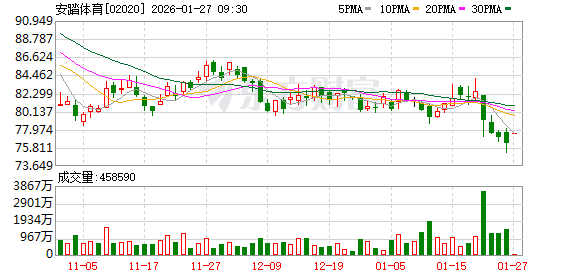
安踏收购彪马29%股权:成为单一最大股东,暂未有要约收购计划
2 1 Shi Ji Jing Ji Bao Dao· 2026-01-27 01:28
Core Viewpoint - Anta Group has reached an agreement to acquire a 29.06% stake in Puma SE from the Pinault family's investment company Groupe Artémis for €1.5 billion, marking a significant milestone in Anta's strategy of "single focus, multi-brand, globalization" [2] Group 1: Acquisition Details - The transaction is expected to be completed by the end of 2026, pending regulatory approvals and customary closing conditions [2] - The acquisition will be funded entirely from Anta's internal cash reserves [2] - Anta's Chairman, Ding Shizhong, emphasized the importance of respecting Puma's management culture and governance structure post-acquisition [2] Group 2: Financial Implications - Anta stated that the acquisition price is appropriate based on Puma's brand influence and will not affect the dividend distribution for 2025 [3] - Puma's sales decreased by 10.4% to €1.9557 billion in Q3 2025, with wholesale business down 15.4% to €1.3857 billion, while direct-to-consumer (DTC) sales grew by 4.5% to €570 million [7] Group 3: Strategic Outlook - Anta is confident in Puma's long-term value and potential, believing that Puma's recent stock price does not reflect its brand value [9] - Anta's acquisition strategy focuses on brands with strong value and potential for strategic transformation, as well as investing in high-potential emerging brands [9] - Anta's globalization strategy includes three steps: establishing international brands in China, managing global brands, and promoting the Anta brand internationally [10] Group 4: Operational Model - Anta employs a decentralized governance model where each brand's CEO is responsible for profitability, allowing for strategic consensus while maintaining brand uniqueness [13] - The company adheres to a principle of "acquisition without replacement," trusting existing management teams of international brands to maintain operational effectiveness [13] - Anta's approach is seen as a reference for the domestic sports market and corporate development amid fluctuations [14]


安踏集团宣布收购彪马29.06%的股权
Xin Lang Cai Jing· 2026-01-27 00:58
Core Viewpoint - Anta Sports Products Limited has announced an agreement to acquire a 29.06% stake in Puma SE from Groupe Artémis for €1.5 billion, marking a significant step in its strategy of "single focus, multi-brand, globalization" [1] Group 1: Transaction Details - The transaction is expected to be completed by the end of 2026, pending regulatory approvals and customary closing conditions [1] - The funding for the acquisition will come entirely from Anta Group's internal cash reserves [1] Group 2: Strategic Considerations - Anta Group's Chairman, Ding Shizhong, emphasized the long-term value and potential of the Puma brand, believing that its recent stock price does not fully reflect this value [1] - The company aims to collaborate with Puma while respecting its management culture and independent governance structure, with plans to appoint suitable representatives to the supervisory board post-transaction [1] - Anta Group currently has no plans to initiate a takeover bid for Puma [1]
移卡丨以基础业务为本,逐浪全球支付蓝海
Sou Hu Cai Jing· 2026-01-26 23:45
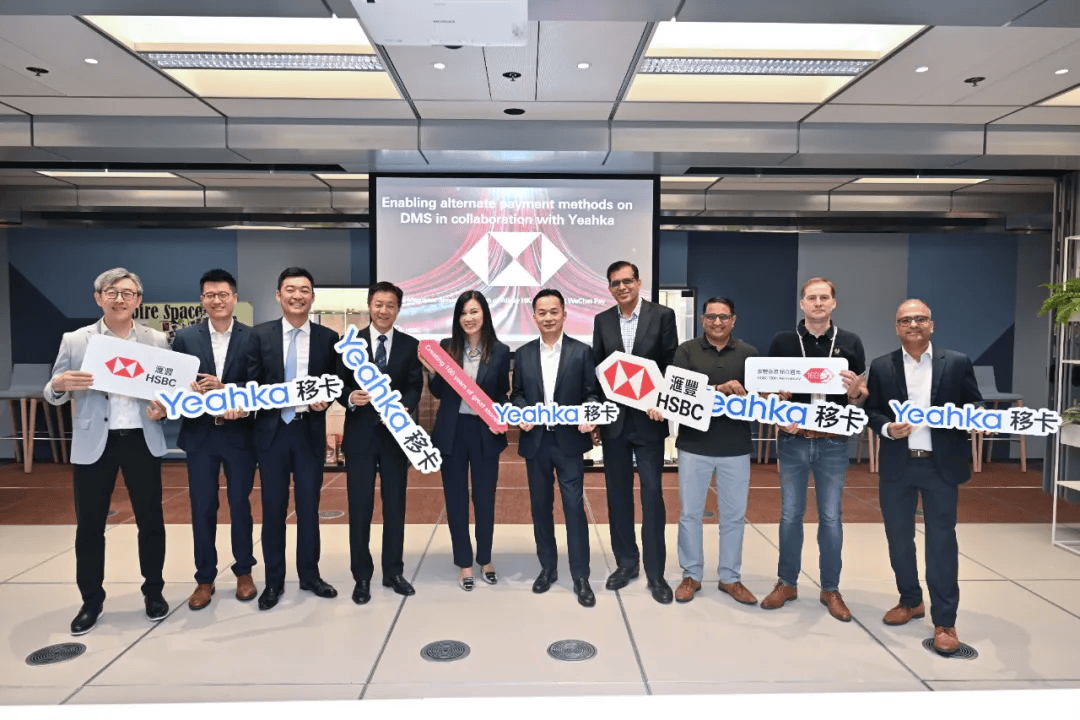
Core Insights - The article emphasizes that the international expansion of Chinese companies, such as Yika, is a strategic response to domestic market saturation and aligns with the global digital economy trend [1][3] - Yika's growth trajectory showcases its ambition in the payment sector, leveraging opportunities presented by market changes to enhance its global presence [3][4] Group 1: Company Development - Yika has been recognized as a "Shenzhen Headquarters Enterprise" by the Shenzhen Development and Reform Commission, marking a significant milestone in its global expansion strategy [3] - The company has evolved from a local entity to an international technology company with a global business footprint, supported by its comprehensive payment services and merchant solutions [3][4] - In the first half of 2025, Yika's overseas transaction volume surpassed 1.5 billion RMB, exceeding the total for the previous year, indicating strong growth and global operational synergy [3] Group 2: Market Strategy - Yika has successfully enhanced HSBC's Digital Merchant Services in Hong Kong by integrating additional payment methods, which has bolstered its confidence in expanding overseas [4] - The company has diversified its offerings from card-based payments to electronic wallets and AI applications, maintaining a focus on user experience and reliable technology [4] - Yika tailors its services to different market regulatory environments and cultural practices, enhancing its product flexibility and competitiveness [4]
MSCI:全球化在重启,而非倒退
Xin Lang Cai Jing· 2026-01-26 11:44
Group 1 - The core viewpoint is that the restructuring of investment risks and opportunities has become a global phenomenon, with investors reassessing these factors more urgently than ever before [1] - The rapid development of generative artificial intelligence (AI) is redefining the essence of finance and investment, with Asia-Pacific companies investing a higher percentage of their annual revenue in digital technology and generative AI compared to their North American and European counterparts [1] - Generative AI and other advanced technologies are expanding investment areas that previously attracted only a few investors, such as the private equity market, with MSCI predicting that by 2030, approximately one-sixth of global investable funds will flow into private equity [1] - Private equity assets are becoming mainstream, with a significant increase in allocation plans among wealth management institutions in the Asia-Pacific region, where 55% plan to increase private equity asset allocation in the coming years [1] Group 2 - Globalization is being rebooted rather than reversed, which holds extraordinary significance for the Asia-Pacific region [2] - According to McKinsey Global Institute data, 18 out of the 20 fastest-growing trade corridors globally are located in Asia, and 13 out of the 20 largest trade corridors are also situated there [2] - The current trend is not de-globalization but re-globalization, with trade volumes continuing to rise while trade patterns are being restructured, influenced by geopolitical competition and the reorganization of global supply chains [2]

三一海工举行2026全球客户峰会暨电智新品发布会
Zheng Quan Ri Bao· 2026-01-26 06:39
Group 1 - The core event was the SANY Marine Heavy Industry's 2026 Global Customer Summit and Electric Intelligence Product Launch held in Zhuhai, Guangdong, focusing on the green and intelligent development of container and bulk cargo handling [1] - SANY showcased the world's first remote-controlled front lift and unmanned flatbed joint operation demonstration, highlighting its innovative capabilities in the industry [1][2] - The company emphasized its ongoing commitment to the "globalization, digitalization, and low-carbon" strategy to drive industry transformation and create greater value for customers [1][2] Group 2 - SANY Marine Heavy Industry introduced comprehensive solutions for container and bulk cargo handling, including five categories of container handling products and six categories of bulk cargo handling products, aimed at enhancing operational efficiency through electrification and intelligence [2] - The company celebrated the delivery of its 10,000th front lift to Anhui Port and the 1,118th large port machine to APMT, underscoring its market leadership and customer trust [2] - Looking ahead, SANY plans to continue its focus on globalization, digitalization, and low-carbon strategies, leveraging technological innovation and reliable product services to collaborate with partners for mutual success [2]

从达沃斯论坛看世界格局的变化
2026-01-26 02:50
Summary of Key Points from the Conference Call Industry or Company Involved - The discussion primarily revolves around the implications of the recent Davos Forum and the geopolitical dynamics involving the United States, Europe, and other nations, particularly in the context of international trade and diplomacy. Core Points and Arguments 1. **Davos Forum Insights**: The recent Davos Forum highlighted significant geopolitical tensions, with major powers exerting influence over smaller nations, reflecting a complex international landscape that may shape global dynamics by 2026 [1][2][3]. 2. **Trump's Participation**: Trump's attendance at the Davos Forum was characterized as an attempt to disrupt the proceedings, where he boasted about U.S. economic achievements and criticized European nations for their reliance on American military and economic support [3][4][5]. 3. **Economic Performance Claims**: Trump claimed strong economic growth in the U.S. for Q3 and Q4, attributing it to his administration's policies, while also expressing grievances about not receiving a Nobel Peace Prize for his diplomatic efforts [3][4]. 4. **Geopolitical Demands**: Trump expressed intentions to claim Greenland and criticized European nations for their perceived lack of gratitude towards U.S. contributions to global security, framing it as a historical debt owed to the U.S. [6][7][8]. 5. **Tariff Strategy**: The use of tariffs as a tool for negotiation was emphasized, with Trump threatening to impose tariffs on European nations that opposed U.S. demands, reflecting a return to protectionist policies reminiscent of historical figures like McKinley [5][6][7]. 6. **New International Order Proposal**: Trump proposed the establishment of a new international organization, potentially sidelining existing structures like NATO, to better align global governance with U.S. interests [8][9]. 7. **European Reactions**: The response from European leaders was mixed, with some expressing anger and others showing reluctance to confront the U.S. directly, indicating a potential shift in transatlantic relations [12][14][15]. 8. **Canada's Position**: Canadian leaders, particularly Carney, called for middle powers to unite against the dominance of larger nations like the U.S. and to establish new global rules that protect their interests [17][20][21]. 9. **Technological and Energy Concerns**: Discussions included the need for technological advancements and energy independence, with figures like Musk emphasizing the importance of renewable energy and criticizing tariffs that hinder technological progress [31][32][33]. 10. **Globalization Critique**: The narrative around globalization was challenged, with claims that the existing international order is failing and that nations must adapt to a new reality where economic interdependence is weaponized [17][30]. Other Important but Possibly Overlooked Content - **Historical Context**: Trump's rhetoric often invoked historical precedents, suggesting that the U.S. has historically protected Europe and is now seeking compensation for that support [6][7][11]. - **Internal U.S. Dynamics**: The internal political landscape in the U.S. was also a factor, with Trump's statements aimed at solidifying his support base by portraying a strongman image [11][12]. - **Environmental and Energy Policy**: The conversation touched on the rising costs of energy in Europe compared to the U.S., highlighting the challenges faced by European industries due to regulatory burdens and high energy prices [26][27][28]. - **Technological Competition**: The competition in technology, particularly in AI and renewable energy, was noted as a critical area where Europe is lagging behind the U.S. and China, raising concerns about future competitiveness [27][28][29]. This summary encapsulates the key themes and arguments presented during the conference call, reflecting the complex interplay of international relations, economic policies, and the evolving global landscape.
劳费尔与他的《马铃薯的全球史》
Xin Lang Cai Jing· 2026-01-25 23:27
Core Viewpoint - The historical significance of plant migration, particularly the potato, highlights its role in shaping agricultural practices, dietary structures, and cultural exchanges between regions, especially between the East and West [2][3][6]. Group 1: Historical Context of Plant Migration - The introduction of foreign plants has enriched Chinese agriculture and diet, linking closely with people's livelihoods and social life [2][3]. - The potato, originating from South America, is now a staple food in China, with the country leading the world in both production and planting area [3][6]. - The research on the potato's global history, particularly by Berthold Laufer, emphasizes its impact on globalization and cultural exchanges [3][4]. Group 2: Contributions and Limitations of Laufer's Work - Laufer's work, particularly "The American Plant Migration: The Potato," is considered a foundational text in the study of plant migration and its historical implications [4][6]. - While Laufer's research is extensive, it has been critiqued for its Eurocentric focus, neglecting the roles of other regions, including Asia [7][8]. - The recent translation of Laufer's work into Chinese aims to make this significant research more accessible to Chinese readers, although it still has limitations in addressing the contributions of China to the global history of the potato [6][8].
西方国家“走近中国”,不值得大惊小怪
Xin Lang Cai Jing· 2026-01-25 17:15
Core Viewpoint - The article discusses a trend among Western countries to strengthen cooperation with China, seen as a response to unilateralism and hegemony, marking a significant shift in international relations [1][2]. Group 1: Trends in International Relations - Leaders from countries like Canada, South Korea, and Germany are increasingly expressing willingness to engage with China, indicating a growing trend of cooperation [1]. - The recent Davos Forum highlighted "Chinese opportunities" as a key topic, reflecting a widespread desire for deeper collaboration with China [2]. Group 2: Misconceptions about China - Various narratives, such as "China's opportunism" and "China's second shock," are criticized as forms of "China threat theory," rooted in Cold War thinking [2]. - These narratives suggest that countries must choose between aligning with the U.S. or China, distorting the reality of international cooperation [2]. Group 3: Shift Towards Multilateralism - The article emphasizes that countries are not merely choosing China but are aligning with the broader trend of multilateralism and cooperation for mutual benefit [3]. - The push for cooperation among nations, including the expansion of BRICS and ASEAN's non-alignment policy, signifies a shift away from unilateralism [3]. Group 4: Future of International Order - The recognition of interdependence in globalization suggests that the future international order will be more inclusive and less binary [4]. - As more countries break free from Cold War mentalities, the international landscape is expected to evolve towards a more equitable and multipolar system [4].
赛力斯康波达沃斯发声,全球汽车产业需对话共建
Zhong Guo Jing Ying Bao· 2026-01-25 13:56
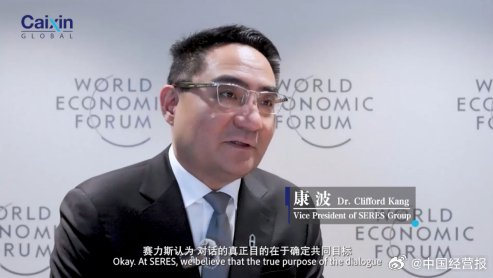
Core Viewpoint - The global automotive industry has reached a stage where "dialogue and co-construction" are essential for sustainable development and collaboration [1][2]. Group 1: Globalization and Industry Trends - The automotive industry is undergoing a deep restructuring of global supply chains, influenced by geopolitical factors, technological barriers, and market fragmentation [1]. - The transition from unilateralism and zero-sum games to mutual respect and dialogue is crucial for long-term development and cross-border cooperation [1]. - The Chinese new energy vehicle (NEV) industry has experienced rapid development over the past five years, shifting its competitive logic from electrification to intelligence, system capabilities, and user experience [2]. Group 2: Company Strategy and Achievements - The company has focused on embedding itself deeply into the global industrial system, enhancing collaboration with world-class suppliers, technology partners, and users [2]. - The brand "Wenjie" has achieved significant market validation, with cumulative deliveries exceeding 1 million units, and the Wenjie M9 leading the luxury car market in its price segment for 21 consecutive months [3]. - The company aims to continue its focus on globalization, brand premiumization, and AI integration, while expanding its high-end brand presence overseas and fostering innovation through collaboration with global partners [3].

九号公司智能电动车国内累计出货量突破1000万台
Zheng Quan Ri Bao Zhi Sheng· 2026-01-25 13:37
Core Insights - Ninebot Limited has achieved a significant milestone with its smart two-wheeled electric vehicles, surpassing a cumulative shipment of 10 million units in China [1] - The company is transitioning from a "vehicle sales" model to a "full-cycle user companionship" approach, enhancing its service and user operation systems [1] Group 1: Service Experience Enhancements - Ninebot is upgrading its nationwide terminal stores, transforming them from traditional sales points to "Ninebot Experience Centers" that integrate experience, sales, and service [1] - The company is constructing a standardized management system for integrated sales and service [1] - A tiered service system is being developed, leveraging the Ninebot travel app and backend systems [1] Group 2: Safety and Technology Advancements - Ninebot is committed to improving the safety performance of its products and is promoting the adoption of advanced safety technologies [1] - High-end safety features such as millimeter-wave radar, ABS (Anti-lock Braking System), and TCS (Traction Control System) will gradually be available across more vehicle models [1] Group 3: Strategic Upgrades - Ninebot has announced a strategic upgrade centered on "dual brands, globalization, and electric-to-oil" [1] - The smart electric vehicle business will operate under the dual brands "Ninebot" and "Segway," aiming to enter global markets [1]