汽车电动化

Search documents
【2025Q2业绩综述】国内/电动化承压,全球化/智能化可圈可点
东吴汽车黄细里团队· 2025-09-01 14:15
Investment Highlights - The automotive industry is at a crossroads, with the end of the electric vehicle (EV) dividend and the dawn of automotive intelligence, while robotics innovation is in its early stages [4][7] - The recommendation is to increase the allocation of "dividend style" investments in the second half of the year [4][7] Dividend & Good Pattern Main Line - Recommended stocks include: - Buses: Yutong Bus - Heavy Trucks: China National Heavy Duty Truck Group (A-H) and Weichai Power - Motorcycles: Chunfeng Power and Longxin General - Auto Parts: Fuyao Glass, Xingyu Co., New Spring Co., and Jifeng Co. [4][7] AI Intelligence Main Line - Preferred passenger vehicles include Hong Kong stocks: XPeng Motors (W), Li Auto (W), and Xiaomi Group (W); A-shares: Seres, SAIC Motor, and BYD - Preferred auto parts include: Horizon Robotics (W), China Automotive Technology & Research Center, Desay SV, Berteli, and Heiseman Intelligent [4][7] AI Robotics Main Line - Preferred auto parts include: Top Group, Precision Forging Technology, Fuda Co., Xusheng Group, and Aikodi [4][7] Passenger Vehicle Market Overview - The passenger vehicle market is experiencing a mixed performance, with AI applications rising and internal competition increasing [9][28] - In Q2 2025, retail, export, and wholesale volumes for passenger vehicles increased by 14%, 15%, and 14% year-on-year, respectively [9][33] - The overall market remains in a high prosperity phase, despite some regions suspending trade-in subsidies [9][33] Heavy Truck Market Overview - The heavy truck market is seeing an upward trend in sales, with Q2 2025 wholesale sales increasing by 18.3% year-on-year [12] - The industry is expected to benefit from the implementation of the National IV policy and the high growth of non-Russian exports [12] Bus Market Overview - The bus market is experiencing overall good performance, with Yutong Bus achieving significant market share despite export delivery schedule impacts [13] - The second half of 2025 is expected to see a resonance of domestic and foreign demand, driven by the trade-in policy [13] Motorcycle Market Overview - The motorcycle market is characterized by high demand for large-displacement models and strong export performance, with Q2 2025 exports increasing by 22% year-on-year [14][15] - Performance among manufacturers is varied, with Chunfeng and Longxin showing strong results while Qianjiang faced declines [14][15] Auto Parts Market Overview - The auto parts sector is showing resilience, with revenue growth driven by increased production in the passenger vehicle and new energy vehicle sectors [19] - Companies with strong competitive positions and effective management are better able to navigate cost pressures and maintain profitability [19] Robotics Market Overview - The robotics sector is experiencing mixed performance, with some companies like Aikodi and Fuda showing strong results due to favorable market conditions [20][21] - The second half of 2025 is anticipated to be a catalytic period for the robotics sector, particularly with the release of new models [20][21]


汽车电子2025Q2业绩综述:国内、电动化承压,全球化、智能化可圈可点
Soochow Securities· 2025-09-01 11:37
Investment Rating - The report suggests a structural allocation strategy in the automotive sector, emphasizing a shift towards "dividend style" investments in the second half of 2025 [3]. Core Insights - The automotive industry is at a crossroads, with the electric vehicle (EV) boom nearing its peak and the smart vehicle sector still in its early stages. Historical transitions in 2011 and 2018 indicate potential for structural market opportunities [3]. - The report highlights a mixed performance across different segments, with passenger vehicles showing strong retail and export growth, while heavy trucks and buses are experiencing a rise in demand due to policy support [4][7][8]. - The overall financial indicators for the automotive sector improved in Q2 2025, but the performance of leading passenger vehicle manufacturers fell short of expectations due to intensified competition and pricing pressures [4]. Summary by Sections Passenger Vehicles - The passenger vehicle sector experienced a high growth phase, with retail, export, and wholesale figures increasing by 14%, 15%, and 14% year-on-year respectively in Q2 2025. This growth was supported by a low base from the previous year [4][30]. - Despite the overall positive growth, the penetration rate of new energy vehicles remained below expectations, influenced by competitive pricing strategies from traditional fuel vehicle brands [4][31]. - Leading companies like BYD and Great Wall Motors showed strong export performance, particularly in non-Russian markets [4][30]. Heavy Trucks - The heavy truck segment saw a slight increase in wholesale sales, with a year-on-year growth of 18.3% in Q2 2025, driven by the effectiveness of trade-in policies [7]. - The report anticipates continued growth in the heavy truck sector due to supportive government policies and a recovering market after a prolonged downturn [7]. Buses - The bus sector's performance was mixed, with leading companies like Yutong achieving excess returns despite overall market challenges. The report suggests that the second half of 2025 may see improved demand due to policy incentives [8]. Motorcycles - The motorcycle industry experienced significant growth in exports, particularly in the large displacement segment, with a year-on-year increase of 22% in Q2 2025. However, domestic sales showed a decline [9]. - The report indicates a favorable outlook for exports, with the potential for continued growth in the overseas motorcycle market [9]. Components - The component sector displayed resilience, with varying performance across companies. The report notes that companies with strong management and competitive structures are better positioned to navigate cost pressures [14]. - The report emphasizes the importance of cost reduction and efficiency improvements as key trends in the component sector [13]. Robotics - The robotics segment showed a mixed performance, with some companies benefiting from structural changes while others faced challenges due to market conditions. The report highlights the potential for growth in the human-robot collaboration space [15].



半导体行业最后的明珠正破土而出!闻泰科技净利猛翻3倍,现金流大涨61%
Ge Long Hui A P P· 2025-09-01 10:56
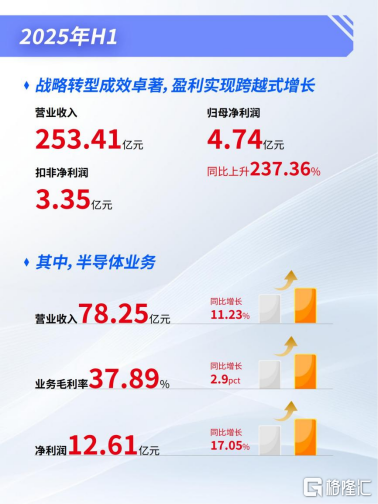
Core Viewpoint - Wentech Technology has reported impressive interim results, indicating a significant recovery in the semiconductor industry, suggesting that the company's potential is just beginning to be recognized [1] Financial Performance - The company achieved operating revenue of 25.341 billion yuan and a net profit attributable to shareholders of 474 million yuan, marking a nearly 2.2 times increase [1] - The semiconductor business generated revenue of 7.825 billion yuan with a gross margin of 37.89%, and a net profit of 1.261 billion yuan, showing a quarter-on-quarter growth trend [2][4] - The net cash flow from operating activities increased by 61.28% year-on-year to 4.261 billion yuan, indicating improved financial health [3] Strategic Transformation - The company has successfully divested non-core ODM businesses, focusing entirely on the semiconductor sector, which is expected to enhance its growth potential [2][5] - The strategic shift has led to a clearer asset structure and improved cash flow, allowing for continued investment in the semiconductor business [3] Growth Drivers - The semiconductor business is showing clear signs of acceleration, with revenue and net profit increasing by 11.23% and 17.05% year-on-year, respectively [4] - The company is positioned to benefit from high-pressure products, with new high-voltage GaN devices being integrated into automotive applications [5][6] - The company is expanding production capacity, with significant advancements in its 12-inch wafer fab and plans for further production lines [5] Market Position and Future Outlook - Wentech holds the third-largest share in the global power device market and is well-positioned to capitalize on the growing demand for power chips in the automotive sector [6] - The company is also tapping into the AI and energy revolution, with a strong product lineup in SiC and GaN technologies, which are essential for modern applications [6][7] - The ongoing strategic transformation and focus on high-growth areas suggest that the company may be on the verge of significant value re-evaluation in the semiconductor industry [2][7]

德尔股份:持续关注和跟进国内整车厂出海建设生产基地的发展趋势
Zheng Quan Shi Bao Wang· 2025-09-01 09:10
Core Viewpoint - 德尔股份 has shown significant growth in its performance, particularly in the electric vehicle sector, driven by innovative product development and a global expansion strategy [1][2]. Group 1: Company Overview - 德尔股份 initially focused on automotive steering pumps and has gained high market recognition and share in this field [1]. - The company has diversified its product line to include transmission oil pumps, electronic pumps, electro-hydraulic steering pumps, motors, and hydraulic retarders, enhancing revenue and economic efficiency [1]. - In 2017, 德尔股份 acquired German company Kakuisi, adding noise, vibration, and harshness (NVH), thermal insulation, and lightweight products to its portfolio, marking the beginning of its global expansion [1]. Group 2: Financial Performance - In the first half of 2025, 德尔股份 achieved operating revenue of 2.441 billion yuan, a year-on-year increase of 6.72% [1]. - The net profit attributable to shareholders reached 50.87 million yuan, reflecting a substantial year-on-year growth of 178.09% [1]. Group 3: Market Strategy - The company's revenue growth in the first half of the year was primarily driven by a 74.1% increase in revenue from supporting electric vehicle products, which improved the overall revenue structure [2]. - 德尔股份 has established partnerships with numerous well-known automotive manufacturers, including Mercedes-Benz, BMW, Porsche, Audi, Volkswagen, Ford, General Motors, and others, positioning itself as a strategic partner for global automakers [2]. Group 4: Globalization and Supply Chain - The company has developed a localized supply chain system in the European and American markets, enabling "local R&D, local production, and local supply" [3]. - This global production layout helps mitigate tariff impacts and reduces reliance on a single market, thereby diversifying risks [3]. - 德尔股份 is also monitoring the trend of domestic automakers establishing production bases abroad, leveraging its established capacity in the European and American markets to meet related product demands [3]. Group 5: Solid-State Battery Development - The company is focusing on solid-state battery technology, primarily using oxide electrolyte technology, which has demonstrated high safety and performance in various tests [3]. - 德尔股份' solid-state batteries are designed to operate effectively at high temperatures and are produced using mature coating processes, facilitating mass production [3]. - Potential downstream customers for the solid-state batteries include new energy vehicle manufacturers, with applications also being explored in humanoid robots, two-wheeled electric vehicles, energy storage, and consumer products [3].

从“大6座”到“大三排”,家庭出行需求下的SUV进化论
Zhong Guo Qi Che Bao Wang· 2025-09-01 01:03
Core Insights - The "large three-row" SUV segment is rapidly gaining popularity, replacing the previously favored "large six-seat" SUVs due to changing consumer preferences for space, comfort, and smart features [2][3][4] - The shift in family structures and increased consumer budgets are driving the demand for "large three-row" SUVs, which are seen as more suitable for modern family needs compared to traditional "large six-seat" SUVs and MPVs [4][6] Market Trends - The "large three-row" SUVs can accommodate seven passengers with a more spacious third row, enhancing comfort and usability compared to "large six-seat" SUVs, which often leave the third row underutilized [3][4] - The introduction of advanced features in "large three-row" SUVs, such as independent climate control and entertainment options for the third row, significantly improves the passenger experience [7][10] Technological Advancements - The market is witnessing a transition towards pure electric models, with innovations in electric vehicle architecture addressing the shortcomings of traditional "large three-row" SUVs [6][9] - Consumer research indicates that 60% of "large three-row" SUV users prioritize "quiet space" and "practicality," making pure electric models increasingly attractive [6] Future Outlook - The market for "large three-row" SUVs is expected to grow, with projections indicating that by 2025, approximately 58% of new SUVs will be pure electric, while the share of range-extended and plug-in hybrid models will be around 32% [9] - The evolution of smart features in SUVs is becoming a key differentiator, with advanced sensor systems enhancing safety and driving assistance capabilities [10]

汽车“制动革命”来了?京西智行谨慎应对EMB量产热
Jing Ji Guan Cha Wang· 2025-08-30 05:20
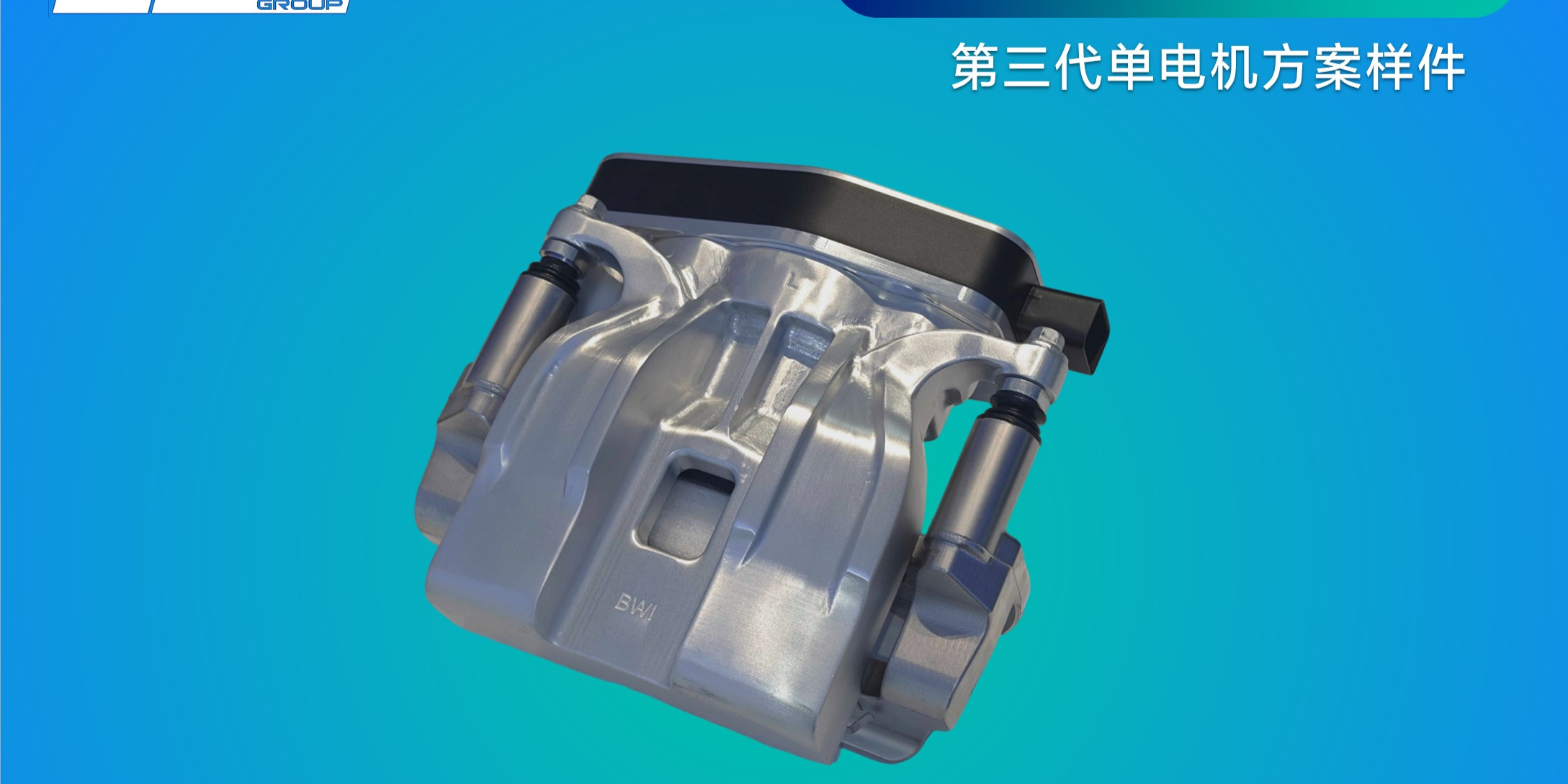
Core Viewpoint - The development of electric smart vehicles is significantly transforming traditional automotive components, particularly in suspension and chassis systems, with a growing focus on new components like Electro-Mechanical Brakes (EMB) [2][3]. Company Overview - Jingxi Zhixing, formerly known as Jingxi Heavy Industry, was established in 2009 through the acquisition of Delphi's global suspension and brake business. It was rebranded in 2025 and is a rare Chinese-controlled global automotive parts company with multiple R&D and production bases in China, North America, and Europe [3]. - The company specializes in advanced products such as magnetorheological suspension systems, air suspension, and EMB, leveraging its prior experience in traditional hydraulic braking systems [3]. EMB Technology Insights - EMB operates by converting electrical signals into mechanical braking force using motors, reducers, and ball screw mechanisms, differing from traditional hydraulic systems. It offers high response speed and control precision but faces challenges like thermal decay and electronic compatibility [5][8]. - The demand for EMB is driven by the need for high performance in electric vehicles, which require precise and efficient braking systems due to their heavier weight and advanced driving features [8]. Market Dynamics - The transition from hydraulic to EMB systems presents technical challenges, including high costs, which currently limit EMB adoption to high-end models. Many manufacturers are still using a mix of braking systems [9][12]. - The competitive landscape for EMB is intensifying, with several players entering the market. Jingxi Zhixing believes its extensive experience in braking systems provides a competitive edge that is difficult for newcomers to match [11][12]. Production and Commercialization Challenges - The high initial investment and long development cycles for EMB technology pose significant barriers to rapid commercialization. The company estimates that the development costs could reach several hundred million yuan over three years, with a cautious approach to mass production timelines [12]. - Jingxi Zhixing anticipates that EMB and hydraulic systems will coexist for at least the next decade, with significant cost reductions expected in the production of non-caliper components within 5 to 7 years [12]. Future Outlook - The company is optimistic about the potential of EMB but remains cautious about the timeline for mass production, predicting that overseas clients may see production by 2029, while domestic clients might achieve it by 2026 [12].
买爆爱马仕的成都人,对豪华车失去兴趣了?
Xin Lang Cai Jing· 2025-08-30 01:41
Core Viewpoint - The Chengdu Auto Show, traditionally a significant event in the southwest car market, is experiencing a decline in importance, particularly with the absence of luxury brands and a shift in consumer purchasing behavior [1][2][3]. Group 1: Attendance and Exhibitor Trends - The 2025 Chengdu Auto Show featured 120 brands and over 1,600 models, but more than 20 brands, primarily luxury ones, were absent, indicating a loss of interest from car manufacturers [1][2]. - Notable luxury brands such as Porsche, Rolls-Royce, and Lamborghini did not participate, marking a significant change from previous years when luxury cars were a highlight of the event [1][2]. Group 2: Market Dynamics - Chengdu has become a major consumer market, with a retail sales total exceeding 1 trillion yuan in 2023, and luxury goods sales growing over 100% annually [2]. - Despite the high demand for luxury cars, the sales of these vehicles have been declining, with luxury car retail volume dropping by 20% year-on-year in July 2025 [3][4]. Group 3: Shifts in Consumer Behavior - Consumers are increasingly favoring electric and new energy vehicles, leading to a competitive landscape where domestic brands are gaining traction in the luxury market [4][6]. - The traditional appeal of luxury brands is waning among younger consumers who prioritize technology and value over brand prestige [6][14]. Group 4: Economic Considerations - The costs associated with participating in auto shows, including venue rental and setup, are prompting many brands to reconsider their participation, focusing instead on cost-cutting measures [7][12]. - The perception of auto shows as a primary sales channel is diminishing, with consumers now preferring to gather information online and purchase directly from dealerships [12][14].


雷克萨斯新车价格下探到30万元以内,奇瑞携31款车亮相成都车展|一周车闻
Di Yi Cai Jing· 2025-08-30 01:28
Group 1 - Chengdu International Auto Show officially opened on August 29 [1][2] - Chery showcased 31 models under the theme "Chinese Cars, Global Champions," highlighting advanced technologies such as range extension technology [2] - Geely's self-developed Shield Brick battery passed extreme tests, enhancing vertical integration capabilities in battery manufacturing [3] Group 2 - Lexus launched the new NX model with a starting price of 299,800 yuan, aiming to cater to diverse consumer needs [4] - G700 from Zhongheng received significant attention at the Chengdu Auto Show, with over 10,782 orders placed within three hours of global blind booking [5] - Jietu's Mountain Sea L7 PLUS was officially launched with a pure electric range of 220 km and a comprehensive range of 1,700 km, achieving 27,000 orders within 24 hours [6][7] Group 3 - The pre-sale of the Bingguo S from SAIC-GM Wuling started with a price range of 68,800 to 81,800 yuan, targeting the small electric vehicle market [8] - GAC Trumpchi's Xiangwang S9 Qian Kun began pre-sale at a starting price of 259,900 yuan, featuring advanced driving assistance systems [9] - Dongfeng Honda's new Ailey Shen was launched with four versions priced between 249,800 and 303,800 yuan, focusing on hybrid technology [10] Group 4 - Hyundai's 2026 model of the Parisian SUV began pre-sale with a price range of 293,800 to 363,800 yuan, featuring a 2.5T hybrid system [11] - Great Wall Motors launched the new Tank 500 with prices ranging from 335,000 to 375,000 yuan, emphasizing its upgraded intelligent features [12][13] - The extreme pre-sale of the small electric SUV, Extreme Fox T1, started with a price range of 68,800 to 93,800 yuan, targeting the A0-level electric vehicle market [14]
华域汽车(600741):业绩稳健 股权收购加码电动智能化
Xin Lang Cai Jing· 2025-08-30 00:53
Core Viewpoint - The company reported a steady revenue growth in H1 2025, with a revenue of 84.68 billion yuan, a year-on-year increase of 9.6%, and a net profit attributable to shareholders of 2.88 billion yuan, a year-on-year increase of 0.7% [1] Group 1: Financial Performance - In Q2 2025, the company achieved a revenue of 44.30 billion yuan, with a year-on-year and quarter-on-quarter increase of 10.0% and 9.7% respectively, and a net profit of 1.61 billion yuan, reflecting a year-on-year increase of 0.8% and a quarter-on-quarter increase of 27.0% [1] - The company's H1 2025 gross margin decreased by 0.7% year-on-year to 11.4%, but improved in Q2 with a gross margin of 11.9%, showing a quarter-on-quarter increase of 1.05 percentage points [3] - The revenue from the interior and exterior trim segment in H1 2025 increased by 10.9% to 61.55 billion yuan, driven by the subsidiary's smart cockpit business [2] Group 2: Customer Base and Market Position - The revenue from non-SAE customers increased to 65.5% in H1 2025, up 3.3 percentage points from the full year of 2024, indicating an improvement in customer structure [2] - Major clients include leading domestic manufacturers such as BYD, Seres, Geely, Xiaomi, Chery, and Xpeng, which collectively accounted for 22% of total revenue from the top ten customers [2] Group 3: Strategic Initiatives - The company is pursuing cost reduction and efficiency improvement, with sales, management, and R&D expense ratios showing varied changes in H1 2025 [3] - The acquisition of a 49% stake in SAIC Qingtao for 200 million yuan marks the company's entry into the solid-state battery sector, aiming for synergy with electric drive and thermal management businesses [3] - A subsidiary plans to acquire a 5.3% stake in Lianchuang Automotive Electronics for no more than 155 million yuan, which is expected to enhance the company's full-stack service capabilities [3] Group 4: Profit Forecast and Valuation - The company maintains profit forecasts for 2025-2027 at 7.11 billion yuan, 7.81 billion yuan, and 8.71 billion yuan respectively, with a target price of 30.60 yuan based on a 13.6x PE for 2025 [4]

江淮皮卡悍途PHEV/EV全球上市,管理体系持续对标华为
Zhong Guo Jing Ji Wang· 2025-08-30 00:22
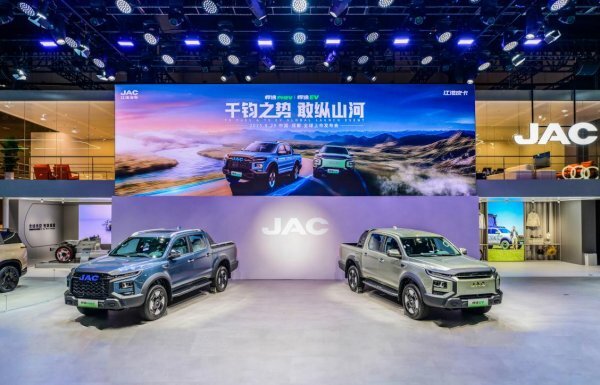
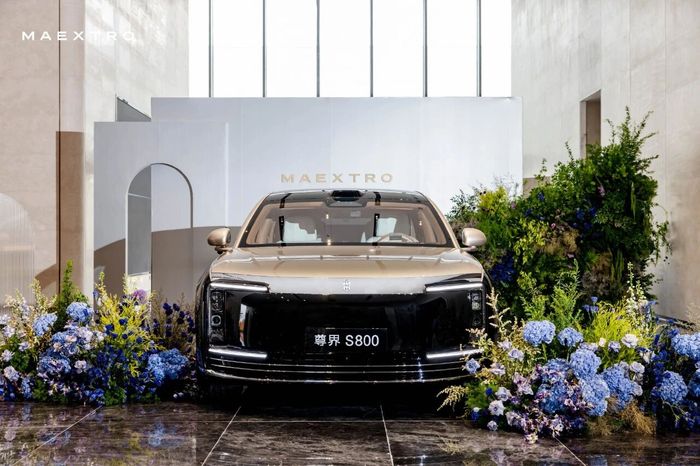
Core Insights - Jianghuai Automobile showcased multiple key models and technological achievements at the 2025 Chengdu Auto Show, including the global launch of the new energy pickup trucks, Hantu PHEV and Hantu EV, with starting prices of 159,800 yuan and 199,800 yuan respectively [1] - The company introduced the user brand "ING+" and initiated four major user programs aimed at creating a co-creation and sharing lifestyle platform, reflecting a shift in consumer trends from utility vehicles to lifestyle companions [1] - Jianghuai's collaboration with Huawei was highlighted, particularly with the launch of the ZunJie S800, which has received over 12,000 pre-orders within 87 days of its release, marking a significant breakthrough in the ultra-luxury smart electric vehicle sector [3][5] Product and Technology Development - The ZunJie S800 features advanced technologies such as the HUAWEI ADS 4 intelligent driving system, Tuling Longxing digital chassis, and an 800V high-voltage architecture, supported by the ZunJie Super Factory, recognized as a national-level intelligent manufacturing benchmark [5][9] - The Hantu PHEV, as the world's first thousand-torque electric hybrid pickup, boasts a maximum torque of 1000 N·m, an electric range of 100 kilometers, and a total range exceeding 1000 kilometers, while the Hantu EV Glory Edition is the first non-bearing pure electric four-wheel drive pickup in China with a CLTC range of over 500 kilometers [7][9] Strategic Partnerships and Investments - Jianghuai Automobile is committed to dual-track strategies of independent innovation and open collaboration, with R&D investment reaching 2.216 billion yuan in the first half of 2025, a year-on-year increase of 34.47%, accounting for 11.44% of revenue [9][10] - The company has expanded its strategic partnership with Huawei, signing a cooperation agreement in June to work on smart automotive solutions, digital transformation, and green low-carbon initiatives, aiming to drive the electric, intelligent, and connected development of the automotive industry [9][10]