
行业自律

Search documents
中国动力电池产业的短板在哪里
董扬汽车视点· 2025-05-25 08:13
Core Viewpoint - The Chinese power battery industry, despite its current scale and technological advancements, faces significant shortcomings in ecosystem strength and influence, which could hinder its future development and competitiveness on a global scale [1][3]. Group 1: Current Status and Challenges - China's new energy vehicle industry is leading globally in both technology and scale, which has propelled the power battery industry to a trillion-yuan scale, surpassing typical manufacturing sectors [1]. - The industry lacks strong bargaining power with upstream and downstream sectors, as evidenced by the high lithium carbonate prices impacting battery development and the inability to ensure quality and safety in energy storage projects [1][2]. - There is a weak influence on government policies, with industry players struggling to understand and adapt to policy directions, indicating a lack of strategic foresight [2]. - The industry is characterized by intense price competition leading to low profitability, with some top global companies still incurring losses, which has resulted in reduced R&D investments [2][3]. - The international environment is unstable for the industry, with the U.S. government actively excluding Chinese battery companies and Europe exhibiting a defensive stance towards them [2][3]. Group 2: Recommendations for Improvement - Establish a robust research capability to understand global and national economic policies, similar to major international automotive companies [3][4]. - Develop a strong industry association to enhance cohesion and address common challenges, transitioning from initial innovation alliances to formal industry associations [4]. - Create effective channels for lobbying the government to influence policy decisions that support the industry, similar to practices in other major economies [5]. - Implement industry self-regulation mechanisms to combat detrimental competition and ensure a healthy market environment [5][6]. - Strengthen the intellectual property system to protect innovations and establish a competitive order, including mechanisms for technology sharing and international patent strategies [6]. - Foster a positive online environment to manage public perception and educate stakeholders about battery safety and industry developments [6][7]. - Actively build favorable international relationships with key production and application countries to support the global battery supply chain [7].


不是我在等,是行业在等:魏建军的孤勇与时代回响
Jing Ji Guan Cha Bao· 2025-05-23 17:04
2025年5月,魏建军再一次站上行业话题的中心。这一次,是因为他的一句"不该上这个牌桌"。 (原标题:不是我在等,是行业在等:魏建军的孤勇与时代回响) 两年前的"技术争端事件"曾让他饱受争议。当时舆论滔天,结果却迟迟未见。如今他再提这件事,是在 另一个时点。不是出于控诉,而是一种更深的无奈。 "不是我在等,是行业在等。"他说。等一个说得清楚的真相,等一个可以照见未来的答案。 这句话,是对行业的不忍,也是对自我的解剖。 魏建军,也许不是唯一的"发声者",但他让这场讨论有了最早的回音。 于是他一边稳住长城的盈利线,一边不断呼吁行业回归常识。他知道这条路走起来很难。"如果一个产 业不允许说真话,这个产业迟早要出事。"他曾说。 如今,这种声音正在获得回响。国家发改委开始强调"行业自律",中汽协连续发文聚焦反内卷,媒体与 舆论也开始反思"增长崇拜"。魏建军的观点,不再是"特立独行",而是渐成共识的某种前奏。 魏建军过去是个寡言的人,他或许并不喜欢麦克风,但他知道,要充分的适应新媒体的节奏,况且很多 话现在必须要说。 在企业家普遍谨慎发声的时代,他的坦率显得格外珍贵。他曾公开表态:"宁愿被骂,也不愿看到中国 制造在全球被 ...

魏建军提问,行业观望,消费者承担后果
Jing Ji Guan Cha Bao· 2025-05-23 06:30
Core Insights - The automotive industry is at a critical juncture, facing systemic issues that question its reliability and trustworthiness [1][2][5] - Price wars and unsustainable business practices are leading to a collective credit overdraw within the industry, impacting brand value and profit margins [3][4] - There is a call for greater transparency and accountability, with suggestions for independent audits to establish a consensus on true profits and costs [4] Group 1 - The industry is waiting for a definitive answer regarding its bottom line, with stakeholders including users, peers, and supply chains all anticipating clarity [1] - The automotive sector is experiencing growth in sales, exports, and stock prices, yet systemic concerns such as cost-cutting pricing strategies and unsustainable business models are emerging [1][2] - The metaphor of "the Evergrande of the automotive industry" suggests that significant underlying issues exist, even if they have not yet resulted in a crisis [2] Group 2 - Trust is a central issue, as pricing adjustments and delivery delays raise questions about the industry's credibility among consumers and investors [3] - The current pricing strategies are damaging brand value and profit margins, with drastic price reductions indicating deeper mathematical and economic problems [3] - Companies are engaging in practices that may not be sustainable, driven by the need to maintain favorable financial reports and secure financing [3][4] Group 3 - The industry is urged to shift from aggressive growth strategies to a focus on recalibrating its credit structure and ensuring reliability [5] - There is a recognition that the automotive industry is not a fast-moving consumer goods sector; it has broader implications for safety, energy consumption, and urban systems [4] - The conversation around self-regulation and industry standards is beginning, but it has not yet become a mainstream value [4]
额敏县市场监督管理局开展民生领域广告专项行动
Zhong Guo Shi Pin Wang· 2025-05-21 11:21
Group 1 - The core viewpoint of the articles emphasizes the importance of strengthening advertising regulation in the livelihood sector to maintain a fair advertising market and protect consumer rights [1][2] - The regulatory focus is on key industries related to daily life, such as medical, pharmaceutical, and food sectors, aiming to combat false advertising and misleading consumer practices [1] - The regulatory approach includes a "double random, one public" platform for inspections, ensuring a systematic and transparent oversight process [1] Group 2 - A total of 27 business entities were inspected, resulting in 3 immediate rectification notices issued for non-compliant advertising content [2] - The next steps involve the local market supervision authority focusing on consumer protection and creating a safe consumption environment, while enhancing the integrity of the advertising market [2] - The initiative includes promoting legal awareness among business operators regarding advertising laws to strengthen industry self-discipline [1][2]
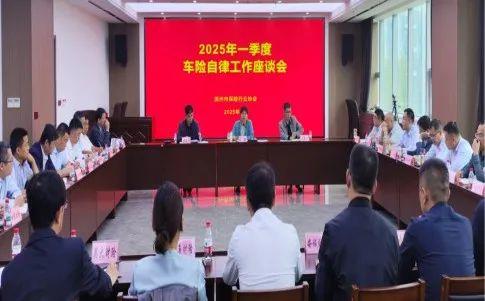
滨州市保险行业协会召开2025年1季度财产险自律工作座谈会
Qi Lu Wan Bao Wang· 2025-05-13 03:21
Group 1 - The meeting focused on implementing the regulatory spirit of the Shandong Financial Regulatory Bureau and aimed to standardize market order [2][3] - Participants learned about the key points of the regulatory work and industry development direction from the speech of Xu Yanfeng at the 2025 property insurance regulatory work meeting [3] - The meeting provided a detailed report on the operation of the property insurance market in Binzhou for Q1 2025, analyzing issues in both auto and non-auto insurance markets and proposing corresponding suggestions [3] Group 2 - Six companies, including PICC Property and Casualty Binzhou Branch and Pacific Insurance Binzhou, shared experiences on business expansion, risk management, and customer service [3] - The association emphasized the importance of legal compliance in operations, particularly in the auto insurance sector, and the need for self-discipline and service quality improvement [3] - The Binzhou Association will strengthen supervision of self-regulatory compliance and take serious actions against non-compliant companies to create a better market environment for stable development [3]
光大银行呼和浩特分行与中国人民银行内蒙古自治区分行进行工作会晤
Zhong Guo Jin Rong Xin Xi Wang· 2025-05-12 09:39
Core Viewpoint - The meeting between the leadership of Everbright Bank Hohhot Branch and the People's Bank of China Inner Mongolia Branch focused on enhancing financial services to support the real economy and implementing regional development tasks [1][2]. Group 1: Meeting Highlights - The leadership of Everbright Bank Hohhot Branch expressed gratitude for the support received from the People's Bank of China [1]. - Both parties discussed various topics including financial innovation, industry self-regulation, and data sharing [1]. - The Hohhot Branch reported stable operational performance in the first four months of 2025, with a decrease in focus amount and focus rate [1]. Group 2: Future Directions - The People's Bank of China acknowledged the Hohhot Branch's efforts and encouraged continued collaboration in policy alignment and resource allocation towards effective credit, green finance, and inclusive finance [2]. - A consensus was reached to establish a regular communication mechanism to enhance cooperation in policy transmission, risk prevention, product innovation, and data sharing [2]. - The Hohhot Branch aims to optimize its work plan in line with the guidance from the People's Bank of China to become a benchmark for financial services in supporting high-quality regional development [2].

双星新材(002585) - 002585双星新材投资者关系管理信息20250509
2025-05-09 08:12
Group 1: Company Performance and Stock Issues - The company's stock price has significantly declined, currently far below its net asset value, raising concerns about its investment value and the lack of action from major shareholders regarding buybacks and increases [1][2][29]. - The company has conducted multiple buybacks and is considering further actions, but specific plans are still under research [1][2][29]. - The company reported a gross margin of only 3.86% in Q1 2025, despite stable product prices, indicating challenges in profitability [2][3]. Group 2: Industry Competition and Market Dynamics - The BOPET industry is experiencing intense competition, with some new entrants engaging in price wars despite a self-regulatory declaration aimed at reducing internal competition [2][3]. - The company is positioned as a leading player in the BOPET market, with a comprehensive product range, but is currently facing short-term fluctuations due to industry capacity releases [2][3][4]. - The market demand for BOPET products is expected to grow at over 10% annually, driven by domestic replacements of imports and expanding applications [4][10]. Group 3: Product Development and Future Outlook - The company aims to achieve a production capacity of 500 million square meters for MLCC release films within the year, with a projected market value based on product structure [4][10]. - There are ongoing efforts to develop new products, with 32 new product and technology development projects planned for the year [8][10]. - The company is exploring strategic collaborations with leading battery manufacturers to enhance its market position [6][10]. Group 4: Financial Health and Management Responses - The company's asset-liability ratio was reported at 32.12% at the end of Q1 2025, indicating a healthy financial status despite recent challenges [10]. - Management emphasizes the need for maintaining operational stability and innovation to navigate the current market environment [10]. - The company is committed to improving investor relations and enhancing communication with stakeholders to rebuild confidence [5][10].

中国氮肥工业协会倡议:加强行业自律,让利与农
news flash· 2025-05-09 03:01
Core Viewpoint - The Chinese Nitrogen Fertilizer Industry Association has issued an initiative to stabilize the domestic fertilizer market and ensure agricultural production, in response to speculative capital driving up fertilizer prices due to information asymmetry and market expectations since April 30 [1] Group 1: Price Adjustments - Key nitrogen fertilizer companies are urged to reduce urea ex-factory prices within three days to not exceed the levels prior to May 6, with a maximum increase of 100 yuan per ton compared to the end of April prices [1] - Non-compliance with this self-regulatory initiative may result in suspension of membership services and other policy consequences for the offending companies [1] Group 2: Industry Self-Regulation - The association emphasizes the need for industry self-regulation to ensure orderly and healthy urea exports, discouraging low-price competition that undermines the market [1] - Actions that contribute to "involution" and aggressive price competition for international market share will not be recognized by the association [1] Group 3: Sustainable Development - The collective effort is aimed at achieving sustainable and healthy development within the nitrogen fertilizer industry [1]
钢铁业首次反“内卷” 中钢协将警示6家“卷王”
Zhong Guo Jing Ying Bao· 2025-05-06 14:54
Group 1 - The China Iron and Steel Association (CISA) will warn six companies with negative cash flow in their main steel business for 2024 and Q1 2025, despite increasing crude steel production, to address "involution" and vicious competition in the industry [1][2] - CISA Secretary-General Jiang Wei emphasized the need for industry self-discipline and collective efforts to face risks and challenges, aiming for stable economic growth and high-quality development [1][2] - The recent document from the Central Committee and State Council outlines specific measures to rectify "involution" and vicious competition, including the establishment of a price supervision system by industry associations [2] Group 2 - The steel industry is experiencing a significant oversupply, with crude steel production reaching 25,933 million tons in Q1 2025, a year-on-year increase of 155 million tons, while apparent consumption decreased by 286 million tons [3] - Jiang Wei noted that the rapid growth in supply and declining demand has disrupted the fragile supply-demand balance, leading to a continuous decline in steel prices [3] - Steel exports surged to 1,045.6 million tons in March, a 5.7% year-on-year increase, driven by domestic exporters' concerns over potential future trade measures and U.S. tariff policies [3]
TCL科技(000100) - 2025年4月29日投资者关系活动记录表
2025-04-29 14:00
Group 1: Financial Performance - In 2024, TCL achieved a revenue of 164.8 billion yuan, with a net profit of 1.56 billion yuan, and a net operating cash flow of 29.5 billion yuan, representing a year-on-year growth of 16.6% [1] - In Q1 2025, TCL reported a revenue of 40.1 billion yuan, a 0.4% increase year-on-year, and a net profit of 1.01 billion yuan, showing a significant growth of 322% [4] - The operating cash flow for Q1 2025 reached 12.1 billion yuan, up 83% year-on-year [4] Group 2: Semiconductor Display Business - In 2024, the semiconductor display segment generated 104.3 billion yuan in revenue, a 25% increase, with a net profit of 6.23 billion yuan, improving by 62.4% [2] - In Q1 2025, the semiconductor display business achieved 27.5 billion yuan in revenue, an 18% increase, and a net profit of 2.33 billion yuan, reflecting a 329% growth [4] - The average size of televisions increased by approximately 1.5 inches in Q1 2025, driving demand for larger panels [4][6] Group 3: New Energy and Semiconductor Materials - In 2024, the global photovoltaic installation maintained growth, but prices continued to decline, leading to losses across the industry [2] - TCL Zhonghuan reported a revenue of 28.4 billion yuan, a 52% decrease, with a net profit of -9.82 billion yuan [3] - In Q1 2025, TCL Zhonghuan's revenue was 6.1 billion yuan, with a net profit of -1.906 billion yuan, showing a 49% improvement compared to the previous quarter [4] Group 4: Market Trends and Outlook - The display industry is expected to see a stable supply-demand relationship, with the global LCD production capacity in mainland China projected to reach 88% by 2025 [6] - The demand for large-size panels is driven by both terminal sales and average size increases, with significant growth potential in the global market [6] - The "trade-in" policy is expected to boost demand across various product categories, including televisions, enhancing the trend towards larger screens [8] Group 5: OLED Business Development - TCL is focusing on high-end and differentiated strategies in the OLED market, with significant improvements in market share for flexible OLED panels [10] - The T4 production line is expected to maintain high operational efficiency, contributing to the overall improvement of the OLED business [10] Group 6: Depreciation Trends - Most of the 8th generation production lines have completed depreciation, but a slight increase in depreciation is expected in 2025 due to new capacity coming online [11] - The depreciation-to-revenue ratio is anticipated to decrease as new high-value production lines drive rapid revenue growth [11]
