
美元信用

Search documents
黄金资产还值得配置吗?
Guo Ji Jin Rong Bao· 2025-09-05 15:37
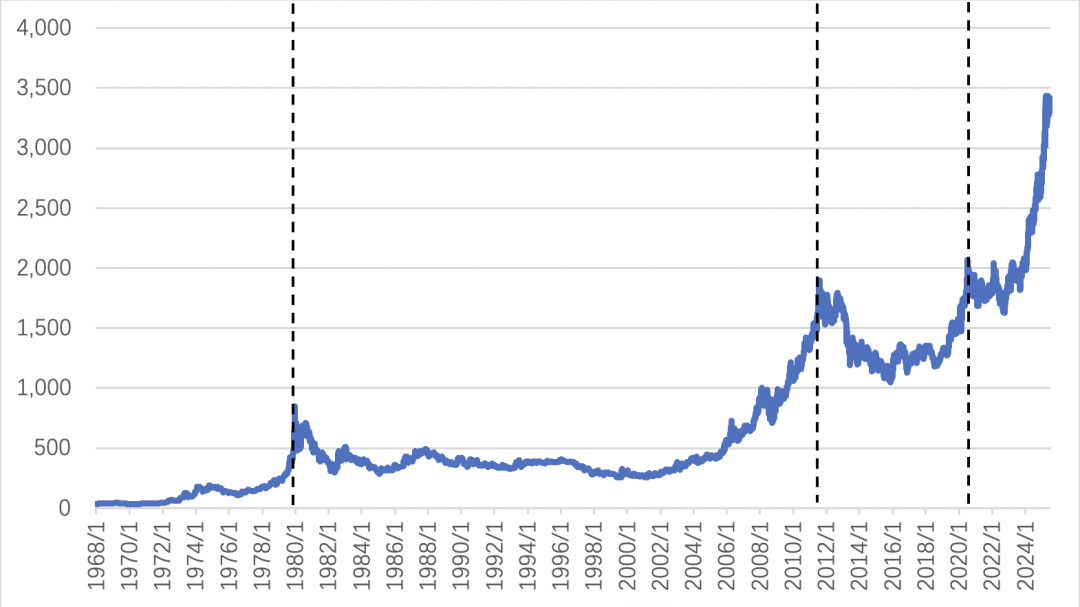
Core Drivers - Since the end of 2022, gold prices have been on a significant upward trend, driven by its unique attributes as a "super-sovereign currency" that serves multiple functions including commodity, currency, safe-haven asset, and investment vehicle [1][3] - The increase in gold prices is primarily influenced by demand rather than supply, with central bank purchases and international investments being the main sources of demand since late 2022 [2][3] Geopolitical Risks - Geopolitical tensions, such as the Russia-Ukraine conflict and recent escalations in the Middle East, have heightened international risk aversion, leading to increased gold purchases as a safe-haven asset [3][4] - The ongoing conflicts have consistently pushed gold prices higher, with notable spikes during significant military actions [4][5] Economic Factors - Global inflation rates have surged, with a median inflation rate reaching 9.4% in 2022, prompting investors to turn to gold as a hedge against inflation [5][6] - The U.S. Federal Reserve's interest rate hikes have not sufficiently curbed inflation, maintaining a high inflation environment that supports gold's appeal [5][6] U.S. Dollar Dynamics - The weakening of the U.S. dollar's status as a key currency has led to increased interest in gold, as it is viewed as a zero-credit-risk asset amidst concerns over U.S. debt levels and fiscal sustainability [7][8] - The trend of "de-dollarization" among various countries is accelerating, with many nations diversifying their reserves and increasing gold holdings [8][9] Future Outlook - Predictions for gold prices are optimistic, with estimates suggesting prices could reach $3,500 per ounce by 2025, and potentially exceed $4,000 by 2026 [18][20] - The ongoing geopolitical risks, economic conflicts, and inflationary pressures are expected to drive gold prices higher in the medium to long term, reinforcing its value as a strategic asset [10][21]

黄金资产还值得配置吗
Sou Hu Cai Jing· 2025-09-05 15:19
Core Viewpoint - The recent surge in gold prices since the end of 2022 is driven by multiple factors, including geopolitical risks, economic conflicts, and the weakening of the dollar's credit status, leading to increased demand for gold as a safe-haven asset and inflation hedge [1][12]. Group 1: Key Drivers of Gold Price Increase - Gold's unique attributes as a "super-sovereign currency" allow it to serve multiple functions, including as a commodity, currency, and investment vehicle, which differentiates its pricing logic from other assets [2][3]. - Historical data shows that gold production has remained stable at 3,500 to 4,000 tons annually, with demand primarily driven by central bank purchases, investment, jewelry, and industrial uses [3][4]. - The demand for gold has significantly increased since the third quarter of 2022, with global investment demand rising from 104 tons per quarter to 477 tons by the second quarter of 2025, making it the second-largest demand source after central bank purchases [3][4]. Group 2: Geopolitical and Economic Factors - Geopolitical tensions, such as the Russia-Ukraine conflict and recent Middle Eastern conflicts, have heightened international risk aversion, leading to increased gold purchases [4][5]. - Global inflation rates have surged, with the median inflation rate reaching 9.4% in 2022, prompting investors to turn to gold as a hedge against inflation [6][11]. - The U.S. national debt has exceeded $37 trillion, with interest payments projected to reach $1.4 trillion, raising concerns about the dollar's long-term purchasing power and increasing demand for gold [9][17]. Group 3: Future Outlook for Gold Prices - Predictions from financial institutions suggest that gold prices could rise to $3,500 per ounce by 2025, with long-term forecasts indicating potential prices of $4,000 to $6,000 per ounce by 2029 [19][20][22]. - The ongoing geopolitical risks and economic conflicts are expected to sustain upward pressure on gold prices, with a shift in focus from inflation hedging to risk aversion [11][12]. - China's demand for gold is projected to increase, driven by its status as the largest gold consumer and producer, with significant growth in investment demand [18].
美国111年历史上首次!特朗普向美联储下刀,美媒说了句大实话
Sou Hu Cai Jing· 2025-09-04 23:37
Core Viewpoint - The recent dismissal of Federal Reserve Governor Lisa Cook by President Trump marks an unprecedented intervention in the Fed's independence, raising concerns about the stability of the U.S. dollar and the global financial system [1][4]. Group 1: Market Reactions - Following the dismissal, the U.S. Treasury market reacted sharply, with the yield spread between 2-year and 30-year bonds reaching its widest point in three years, indicating market concerns over potential interest rate cuts due to political factors [3]. - The long-term bond yields increased, suggesting that investors are demanding higher returns to compensate for anticipated inflation and policy instability [4][5]. Group 2: Legal and Political Implications - The legal basis for Trump's action is ambiguous, as the term protection for Fed governors is designed to insulate monetary policy from political pressures, and the definition of "just cause" for dismissal is under scrutiny [5][9]. - The European Central Bank's President Lagarde expressed that the loss of Fed independence would have global repercussions, highlighting the interconnectedness of financial systems [4][6]. Group 3: Broader Economic Impact - The erosion of the Fed's independence could lead to a loss of credibility in U.S. monetary policy, prompting investors and foreign central banks to reconsider their dollar-denominated assets [6][12]. - The potential shift in U.S. monetary policy could affect global capital flows, particularly in emerging markets, leading to increased volatility and inflationary pressures [9][12]. Group 4: Strategic Considerations - Trump's motivations appear to be linked to creating a favorable economic environment for his political agenda, which may compromise the Fed's ability to operate independently [8][10]. - The ongoing tension between economic policy and political influence raises concerns about the long-term stability of the U.S. dollar as a global reserve currency [12].

Juno markets 官网:美元动摇,黄金狂飙,美联储引起的避险风暴
Sou Hu Cai Jing· 2025-09-04 08:45
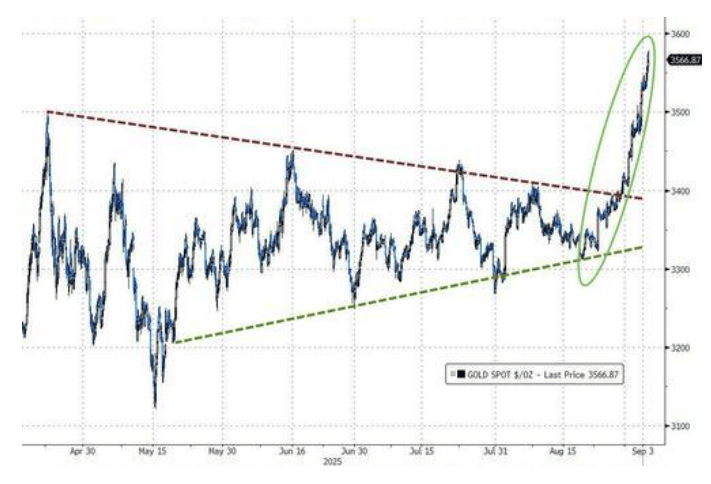
Group 1 - The core viewpoint is that gold is gaining prominence as a safe haven asset amid concerns over the dollar's credibility and rising inflation, with gold prices surpassing $3,500 per ounce, marking a historic high and outperforming stocks and bonds this year [2] - Central banks are driving record demand for gold, reflecting a shift in market sentiment regarding the independence of the Federal Reserve [2][3] - The current gold price, adjusted for inflation, is nearing its highest level since the 1980s, coinciding with political pressures on the Federal Reserve to maintain low interest rates [3] Group 2 - Historical parallels are drawn to the 1970s when political pressure led to a significant depreciation of the dollar and a 300% increase in gold prices, suggesting a potential repeat of this scenario if the Federal Reserve lowers rates amid rising prices [3] - Major financial institutions like UBS, Citigroup, and Goldman Sachs are optimistic about gold's future, with forecasts suggesting prices could reach $4,000 per ounce by 2026 [3] - Current ETF holdings in gold are still below the peaks seen in 2020 and 2022, indicating that there is still room for growth in gold investments [3]
黄金的宏观逻辑与择时
2025-09-02 14:41
Summary of Key Points from Conference Call Industry Overview - The macroeconomic landscape is shifting from a dollar-centric system to a more diversified currency framework, influenced by changes in China's economic model and a slowdown in technological iteration, which is impacting global profit distribution and diminishing the dollar's credibility, thereby enhancing gold's safe-haven value [1][3][4]. Core Insights and Arguments - **Shift in Economic Models**: China's transition from a manufacturing-based economy to a consumption-driven model is reducing reliance on debt expansion, challenging the U.S. model that maintains dominance through trade deficits and capital surpluses [1][4][7]. - **U.S. Interest Rate Dilemma**: The U.S. faces a complex decision regarding interest rate cuts; lowering rates could lead to a stock market crash, particularly in tech sectors, while not cutting rates may necessitate increased fiscal stimulus, both scenarios potentially weakening the dollar [1][5][9]. - **Long-term Gold Investment Logic**: The long-term investment rationale for gold is closely tied to the pace of U.S. debt expansion. As the U.S. struggles to maintain its global dominance, gold's importance as a safe-haven asset is expected to rise [2][3][11]. - **Impact of Globalization Changes**: The evolving global landscape, particularly China's enhanced role in the supply chain and the failure of Moore's Law, is reshaping the profit distribution paradigm, leading to a reassessment of dollar credibility and impacting commodity prices, including gold [4][9]. - **Inflationary Pressures**: If the U.S. opts for rate cuts, it may revive global manufacturing but could also trigger inflation, complicating the economic landscape further [6][9][10]. Additional Important Insights - **Volatility as an Investment Indicator**: A volatility index below 20 is considered a favorable buy signal for gold, indicating that market trading funds have been largely consumed, suggesting a potential price increase [2][12]. - **Performance of Gold Stocks**: Gold stocks have shown strong performance during periods of reduced volatility, with their profitability significantly improving, which could lead to higher valuations, similar to trends observed in the coal industry [2][13]. - **Future Gold Price Trends**: In the current uncertain macroeconomic environment, gold is expected to perform well due to its safe-haven characteristics. If the U.S. cuts rates, industrial metals and silver may become more attractive, while a failure to cut rates could lead to a recession, further strengthening gold's position [10][11].
在黄金暴涨之后白银也疯了
Sou Hu Cai Jing· 2025-09-02 07:09
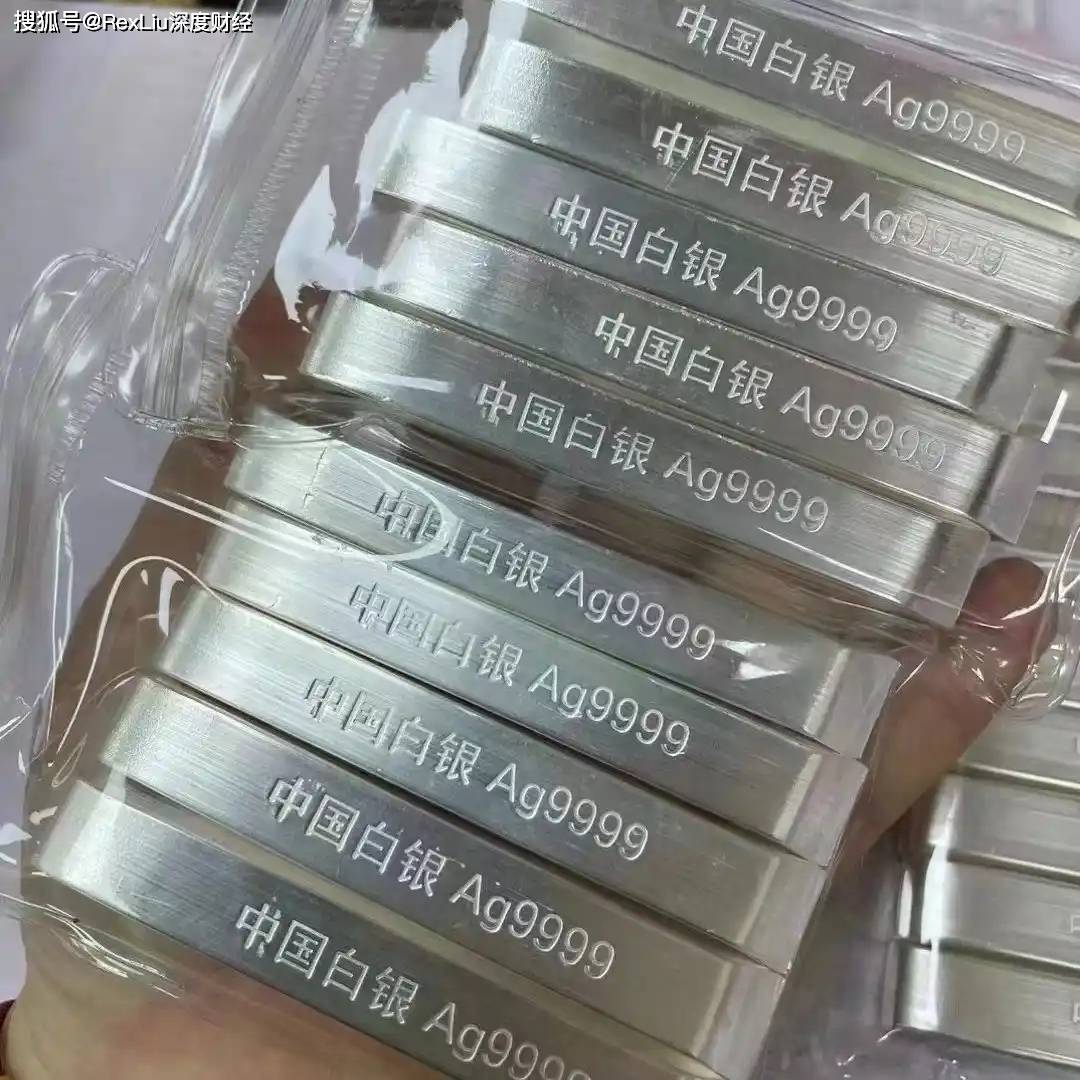
Group 1: Market Overview - The global precious metals market has seen a significant surge, with spot silver prices surpassing $40 per ounce, marking a 14-year high and a year-to-date increase of over 40% [2] - Gold prices have also reached new heights, with COMEX gold futures hitting $3,557 per ounce, a historical peak [2] - The primary catalysts for this price surge include strong expectations for interest rate cuts by the Federal Reserve and heightened geopolitical risks [2] Group 2: Factors Influencing Silver Prices - Silver serves as both a precious metal and a critical industrial material, with industrial demand significantly supporting silver prices [3] - The explosive growth of the photovoltaic industry is a key driver, with global new solar installations expected to exceed 600 GW in 2024, leading to a surge in silver usage for solar paste [3] - The World Silver Association predicts a silver supply shortage of 117 million ounces by 2025 due to demand outpacing supply [3] Group 3: U.S. Policy and Silver Market - The U.S. Geological Survey has classified silver as a strategic resource, with the U.S. currently relying on imports for 64% of its silver supply [3] - There are potential plans for the U.S. government to impose tariffs of up to 50% on silver to protect domestic supply chains, with a report expected in October 2025 to outline specifics [3] Group 4: Historical Context and Trends - The current gold bull market has seen prices rise 170% since 2019, with historical bull markets driven by factors such as the collapse of the Bretton Woods system and the 2008 financial crisis [5][6] - The gold-silver ratio currently stands at 88, indicating that gold is relatively expensive compared to silver, which historically signals a potential for silver price increases [4] Group 5: Investment Strategies - Investors are encouraged to consider various methods for participating in precious metals, including purchasing gold and silver ETFs for better liquidity and ease of trading [7] - Diversification is advised, with a recommendation to allocate investments in both gold and silver while avoiding concentrated bets [8]
国际金价持续回暖 黄金ETF(518880)成交显著活跃
Sou Hu Cai Jing· 2025-09-02 06:10
Core Viewpoint - Recent international gold prices have shown a significant recovery, with COMEX gold futures prices surpassing $3,500 per ounce as of September 2 [1] Group 1: Market Performance - The largest commodity ETF in the domestic market, the Gold ETF (518880), has recently exhibited notable activity, with a single-day increase of over 2% on September 1, marking the highest daily gain in over three months [1] - The trading volume of the Gold ETF exceeded 6 billion yuan in a single day for the first time in two months [1] Group 2: Factors Influencing Gold Prices - The anticipated initiation of a new interest rate cut cycle by the Federal Reserve in September is expected to benefit gold due to a more accommodative monetary environment [1] - Ongoing global macroeconomic uncertainties since the beginning of the year have led to increased interest in gold as a hedge against macro risks [1] - Concerns regarding the sustainability of dollar assets have arisen due to high levels of debt and deficits, prompting other countries to reconsider their exposure to dollar-denominated assets [1] - Gold exhibits low correlation with various asset classes, attributed to differing pricing logic, which allows it to effectively diversify risk [1]
人民币汇率:为何加速升值
Haitong Securities International· 2025-09-01 13:34
Group 1: Currency Appreciation Dynamics - The current appreciation of the RMB is primarily driven by holders of foreign exchange (cross-border capital, foreign trade enterprises), while domestic investors remain cautious, as evidenced by the high "Shanghai gold premium" [1] - The RMB exchange rate has experienced two phases: the first phase from April to June was characterized by a collapse in USD credit, while the second phase in July and August saw a return to the significance of the USD-CNY interest rate differential [6] - The report highlights a persistent "three-price divergence" among the gold purchasing power parity, offshore price, and central bank's middle rate, indicating differing expectations between foreign and domestic investors [10] Group 2: Investor Behavior and Central Bank Management - Foreign investors are more focused on the volatility of USD assets and investment returns, leading to increased demand for RMB assets during the USD credit deterioration [16] - Domestic investors, who are typically currency exchangers, are more sensitive to USD yields, which explains the high "Shanghai gold premium" during the USD credit collapse [20] - The central bank has successfully managed expectations by adjusting its operations in the swap market and guiding the middle rate, which has led to increased optimism among domestic investors [22] - The report anticipates that the central bank's guidance may lead the offshore price to rise to a range of 7.0-7.1 [22]
周周芝道 - 中国当前所处周期阶段
2025-09-01 02:01
Summary of Key Points from the Conference Call Industry and Company Overview - The discussion primarily revolves around the **Chinese economy and stock market**, focusing on the divergence between economic data and stock performance, as well as the implications for various sectors, particularly new and traditional economies. Core Insights and Arguments 1. **Divergence Between Stock Market and Economic Data** The Chinese stock market is performing strongly despite weak economic indicators, suggesting that liquidity is favoring stocks over other asset classes, particularly in technology and innovation sectors [1][4][5] 2. **Impact of Global Market Sentiment** Global market sentiment has shifted, with non-US assets benefiting from a recovery in risk appetite, particularly after the trade war fears did not materialize as expected [1][6] 3. **Strong Export Performance** China's exports have exceeded expectations, particularly to regions like Africa, the Middle East, and Latin America, which has helped offset declines in demand from developed countries [1][8][11] 4. **Importance of Exports for Economic Stability** Exports are crucial for China's economic growth and asset pricing, especially for real estate in lower-tier cities, where income growth is tied to export performance [1][10][15] 5. **Structural Changes in the Economy** There is a significant structural divergence between new and old economies in China, with emerging sectors like technology showing robust growth, which is not fully captured by aggregate economic data [1][7][9] 6. **Future Economic Outlook** The outlook for 2025 indicates potential pressures on exports, but a rebound in global demand is expected in 2026, which may lead to a bear market in bonds and a recovery in the stock market [1][17] 7. **PMI vs. Actual Export Performance** The discrepancy between PMI data and actual export performance can be attributed to the differing impacts on small versus large enterprises, with larger firms being less affected by trade tensions [1][12] 8. **Risks in the Capital Market** The capital market is currently pricing in economic weakness, and any changes in core variables, such as export performance, could lead to a more severe contraction in risk appetite than previously anticipated [1][13][14] 9. **Real Estate Market Dynamics** The real estate market, particularly in third and fourth-tier cities, is stabilizing, but its recovery is heavily dependent on export performance and overall economic growth [1][10][18] 10. **Investment Opportunities** Short-term investment strategies should focus on new economy sectors, as traditional sectors may only see opportunities after a broader economic recovery is confirmed [1][24] Other Important but Overlooked Content - The discussion highlights the potential for a significant shift in the investment landscape as global economic conditions evolve, particularly with the anticipated easing of US monetary policy and its effects on global demand [1][3][17][20] - The need for close monitoring of macroeconomic indicators and policy changes is emphasized, as these will play a critical role in shaping market dynamics in the coming months [1][20]
贵金属日报-20250828
Guo Tou Qi Huo· 2025-08-28 10:37
Report Investment Ratings - Gold: ★★★, indicating a clearer long trend with a relatively appropriate investment opportunity currently [1] - Silver: ★★★, indicating a clearer long trend with a relatively appropriate investment opportunity currently [1] Core View - Overnight, the US dollar fluctuated sharply, and precious metals oscillated at high levels. Trump's dismissal of Fed officials this week intensified concerns about the Fed's independence and impacted the US dollar's credit. International gold and silver are in an oscillating trend, continuing to test the upper key resistance. The medium - term strategy maintains a long - buying approach on pullbacks. Attention should be paid to the revised value of the US Q2 GDP and weekly initial jobless claims data today [1] Other Summaries Fed - related - Biesent called for an internal review of the Fed and said it would surely know in the fall who Trump would choose as the Fed chair. Williams said the policy remains moderately tight, inflation is gradually falling, and every meeting is absolutely "real - time" [1] Tariff - related - The White House trade advisor said that if India stops buying Russian oil, it can get a 25% tariff discount. India hopes that the US will reconsider the decision to impose a 25% tariff on it. Biesent said many things India does are "performative." The EU plans to accelerate the legislative process before this weekend to fully cancel tariffs on US industrial products to meet Trump's requirements. Japanese Economic Revitalization Minister Akazawa Ryosei visited the US again, urging the US to implement the auto tariff reduction agreement [2]