
能源转型

Search documents
两年超5GWh!楚能新能源锁定合孚智能储能产品供应大单
Zhong Guo Qi Che Bao Wang· 2026-02-06 08:36
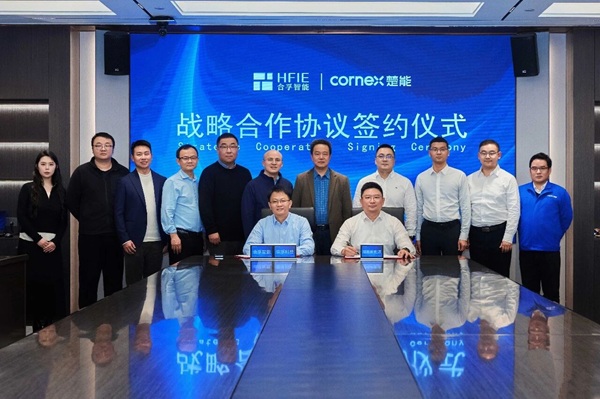
Core Insights - Chuangneng New Energy Co., Ltd. and Hefei Hefei Smart Energy Co., Ltd. have signed a strategic cooperation agreement to enhance collaboration in the energy storage industry and global market expansion [1][3][4] Group 1: Strategic Partnership - The signing ceremony was attended by key executives from both companies, including Chuangneng's Chairman Dai Deming and Hefei Smart's Chairman Xia Maoqing, indicating a strong commitment to long-term cooperation [1][3] - The agreement aims to leverage the core advantages of both companies to establish a stable and mutually beneficial partnership in the global energy storage market [3][4] Group 2: Product Supply and Goals - Chuangneng will supply over 5 GWh of energy storage products to Hefei Smart within the next two years, supporting its domestic and international market deployment [3][4] - Chuangneng's energy storage products will cover various scenarios, including residential, commercial, and grid-side applications, ensuring comprehensive technical support and lifecycle service [3][4] Group 3: Technological Strengths - Hefei Smart chose Chuangneng as a strategic partner due to its leading technological innovation, large-scale intelligent manufacturing capabilities, and stringent quality control processes [4] - Chuangneng's self-developed energy storage battery products, such as the 314Ah and 100Ah models, have received multiple international certifications, meeting diverse performance requirements for various storage scenarios [4] Group 4: Industry Impact - This strategic cooperation represents a key move for both companies in aligning their efforts towards global energy transition trends and accelerating the large-scale application of energy storage systems [4] - The partnership aims to contribute to the development of a clean, low-carbon, and sustainable energy future through innovative solutions [4]


3月19-20日 常州!2026锂电关键材料及应用市场高峰论坛
鑫椤锂电· 2026-02-06 08:15
Core Viewpoint - The lithium battery industry is poised for a significant growth cycle in 2026, characterized by strong demand recovery, accelerated global expansion, and disruptive technological advancements, leading to a "spiral rise" in both volume and price [3]. Group 1: Market Predictions - Global lithium battery production is expected to reach 2297 GWh by 2025, with a growth rate of 34.6% in 2026. The shipment growth rate for energy storage cells is projected to be as high as 70%, driven by both domestic and international demand [5]. - There is a notable supply gap in the effective production capacity of battery cells and various materials, making supply chain stability and efficiency crucial for capitalizing on this growth opportunity [5]. Group 2: Conference Details - The 2026 Lithium Key Materials and Applications Market Summit will be held on March 19-20, 2026, in Changzhou, Jiangsu, organized by Xinluo Information [4]. - The summit will focus on two main topics: in-depth discussions on cutting-edge technologies and market supply-demand dynamics, and B2B procurement matchmaking to connect top battery manufacturers and material suppliers [6]. Group 3: Key Topics and Speakers - The conference will feature discussions on lithium carbonate futures and options, market volatility responses from lithium battery companies, and the potential of global lithium resources in 2026 [7][8]. - Other topics include the strategic resource competition in nickel and cobalt supply, the development opportunities presented by solid-state batteries, and the current market trends for various battery materials [8][9].






美丽中国先行区建设视角下的能源转型问题
Zhong Guo Neng Yuan Wang· 2026-02-06 07:57
Core Viewpoint - The construction of beautiful China pilot zones is a key part of building a demonstration model for beautiful China, serving as an important tool for advancing the initiative and a crucial support for establishing a new framework for beautiful China construction [1] Group 1: Action Plans and Goals - By December 2025, China will implement action plans for beautiful China pilot zones in key regions such as Beijing-Tianjin-Hebei, the Yangtze River Delta, and the Guangdong-Hong Kong-Macao Greater Bay Area, outlining goals and action roadmaps for energy clean and low-carbon transformation [1][2] - The Beijing-Tianjin-Hebei region aims to optimize energy structure and establish a low-carbon transformation pilot zone, while the Yangtze River Delta will create a new energy system that promotes mutual support and sharing [1][2] - The Guangdong-Hong Kong-Macao Greater Bay Area is focused on building a clean and low-carbon energy system, contributing to the development of a green and low-carbon bay area [1][2] Group 2: Implementation Pathways - Different regions have distinct focuses for energy clean and low-carbon transformation, with Beijing-Tianjin-Hebei targeting a reduction in coal consumption and an increase in renewable energy share [2] - The Yangtze River Delta emphasizes internal and external collaboration, promoting wind power and green energy projects while controlling coal consumption [2] - The Guangdong-Hong Kong-Macao Greater Bay Area is leveraging its open frontiers to develop offshore wind power and green hydrogen industries, aiming for zero-emission transport corridors and zero-carbon airports [2] Group 3: Systematic Engineering Approach - The construction of beautiful China pilot zones is a systematic project that integrates energy production and consumption revolutions, focusing on sustainable development, ecological quality improvement, and carbon neutrality [2][3] - The approach includes exploring differentiated energy transformation paths based on regional characteristics and resource endowments [3] Group 4: Energy Equipment Manufacturing - The transition to clean and low-carbon energy creates market demand for traditional clean energy technologies and promotes the development of new technologies and products [4] - Emphasis is placed on developing advanced energy equipment and new energy sources, including green hydrogen and sustainable aviation fuels [4] Group 5: Infrastructure Development - There is a need to enhance energy infrastructure with a focus on environmental and carbon emission evaluations, aiming to build a modernized power grid and smart microgrids [5] - The development of charging, hydrogen refueling, and other infrastructure for new energy vehicles is essential for supporting the transition [5] Group 6: Pollution Reduction and Carbon Management - Implementing coal consumption reduction and exploring fossil energy substitution mechanisms are critical for managing total fossil energy consumption [6] - The goal is to achieve 100% green energy in certain sectors and establish recycling systems for solar panels and batteries to reduce carbon footprints [6] Group 7: Institutional Innovation - Optimizing the operation mechanisms of coal power and enhancing the synergy between operational indicators and pollution reduction are necessary for effective energy transition [7] - The establishment of a carbon footprint management system and the promotion of green finance are vital for supporting clean energy investments [7]
现货黄金反弹!湖南黄金涨停,有色ETF汇添富(159652)翻红涨1%,盘中资金涌入!近10日“吸金”近3亿元!
Xin Lang Cai Jing· 2026-02-06 06:35
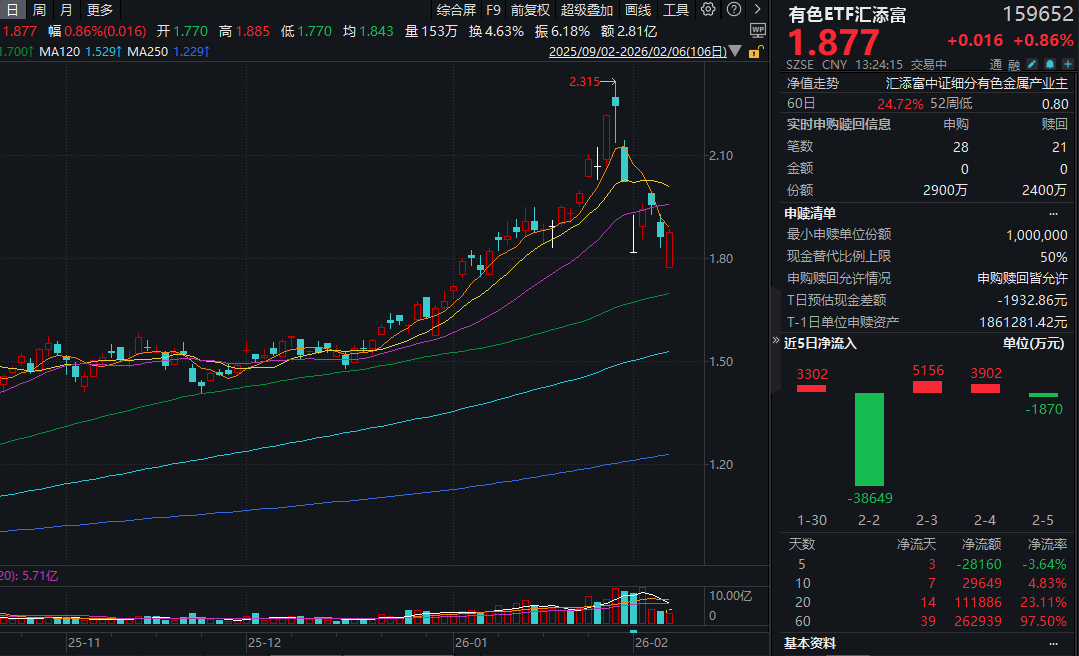
Group 1 - Spot gold and silver experienced a "V-shaped" rebound, with gold increasing by 1% and silver rising over 2% after initial declines of more than 2% and 8% respectively [1] - The non-ferrous sector saw a corresponding rise, with the ETF Huatai-PineBridge (159652) gaining nearly 1% and attracting nearly 10 million yuan in net inflows during the session, totaling close to 300 million yuan over the past 10 days [1] - The China Securities Galaxy believes that the recent price corrections in gold and silver are normal profit-taking actions after reaching historical highs, which may help to release overheated market sentiment [2] Group 2 - In January, the China Logistics and Purchasing Federation reported that the commodity price index rose for the ninth consecutive month, reaching a three-and-a-half-year high, with a month-on-month increase of 6.3% to 125.3 points [3] - Among 50 monitored commodities, 33 saw price increases, with lithium carbonate, refined tin, and refined nickel leading with month-on-month increases of 48.4%, 20.2%, and 19.5% respectively [3] - The non-ferrous metals price index rose significantly by 9.9% month-on-month, driven by factors such as international monetary policy and geopolitical influences [3] Group 3 - Recent pricing logic for non-ferrous metals is shifting from short-term supply and demand to broader macroeconomic factors, benefiting from ongoing fiscal expansion and liquidity in major economies [4] - The copper market is characterized by both supply and demand constraints, with limited new mine production and ongoing supply disruptions, while demand is driven by energy transition and AI industries [4] - The non-ferrous sector is highlighted as having significant investment value due to favorable macroeconomic conditions, with the Huatai-PineBridge ETF (159652) being recommended for its comprehensive exposure to various metal sectors [4][5] Group 4 - The Huatai-PineBridge ETF (159652) has a leading concentration of core strategic commodities such as copper, gold, aluminum, lithium, and rare earths, with a top five stock concentration of 38% [8] - The ETF's index has shown superior performance since 2022, with a cumulative return leading its peers and a lower maximum drawdown, indicating a better investment experience [10] - The index's price increase is driven by earnings rather than valuation expansion, with a current PE ratio of 26.27, down 52% from five years ago, suggesting a favorable valuation [10]

全球可再生能源就业达1660万!增速骤降至 2%-3%,光伏仍是 “最大雇主”
Zhong Guo Neng Yuan Wang· 2026-02-06 06:29
Core Insights - The report by IRENA and ILO indicates that while global renewable energy employment is projected to exceed 16 million in 2024, the growth rate has significantly slowed to 2%-3%, a stark contrast to previous years' double-digit growth rates [1][2][3] Employment Growth Trends - Global renewable energy employment is expected to reach 16.6 million in 2024, continuing to support the green economy and job stability [2] - The employment growth rate for 2024 is estimated at 2.3%-2.5%, marking one of the lowest levels in recent years, and is attributed to profound changes in industry development stages and structures [2][3] Sector Contributions - Solar photovoltaic (PV) remains the dominant sector, providing over 7.2 million jobs in 2024, accounting for more than 40% of total renewable energy employment [2] - The report highlights that the growth in employment is not due to reduced market demand but reflects changes in the industry structure and technological advancements [2][3] Regional Insights - China is identified as a key contributor to global renewable energy employment, with over 4.2 million jobs in solar PV, representing nearly 60% of global solar employment [4] - In 2024, China's renewable energy employment slightly decreased, primarily due to increased labor productivity and the effects of economies of scale [4] - China accounted for over 80% of new renewable energy capacity in Asia, significantly supporting global growth, while employment in the EU, Brazil, India, and the US showed limited growth [4] Challenges and Constraints - The slowdown in employment growth is influenced by factors such as increased automation, which reduces the need for human labor in manufacturing and operations [3][6] - Delays in grid infrastructure and lengthy project approval processes also hinder job creation in certain regions [3][6] Policy Recommendations - The report emphasizes the need for enhanced policy coordination and international cooperation to address employment challenges in the renewable energy sector [7] - It suggests that countries should align trade, industry, and labor policies to create a balanced development environment, focusing on investment in grid infrastructure and skill training [7]
欧瑞博与深圳燃气达成战略合作 为“双碳”目标下能源转型注入强劲动能
Sou Hu Wang· 2026-02-06 06:21
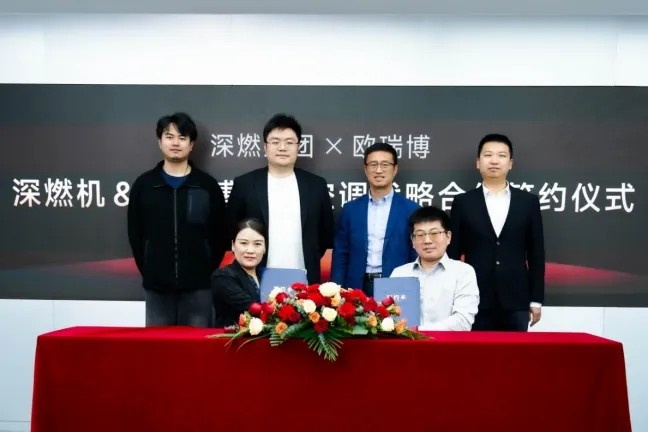
Core Insights - Eurob and Shenzhen Gas Group have established a strategic partnership focusing on the "Eurob & Shenranji" dual-brand integrated air conditioning project, which will involve customized R&D, production, and comprehensive market promotion [1][3]. Group 1: Company Overview - Shenzhen Gas, a state-owned listed company in Shenzhen, is a leading comprehensive energy service provider in China, focusing on urban gas, integrated energy, and smart energy development [3]. - Eurob has been deeply engaged in the smart living sector and has launched an integrated air conditioning product featuring heat recovery technology, recognized as a pioneer in smart integrated air conditioning and the top seller of new-generation central air conditioning in China [3]. Group 2: Product Innovation - The global first home energy storage integrated air conditioner, ES400, will be launched in 2025, designed to efficiently store free electricity at a lower cost and smaller size, aligning with the national "dual carbon" strategy and new power system construction [5]. - The excellence in product innovation and technology application of integrated air conditioning serves as a crucial foundation for the deepening cooperation and joint development of the dual-brand project [5]. Group 3: Technical Synergy - Eurob possesses solid technical expertise in smart control, heat recovery, phase change energy storage, and whole-house energy management systems, while Shenzhen Gas has a strong foundation in gas-electric coupling technology, enhancing system efficiency and optimizing energy costs [7]. - The complementary technical routes of both companies provide robust support for constructing an efficient, stable, and low-carbon home energy system [7]. Group 4: Market and Channel Strategy - Eurob has a mature online marketing system and a complete smart home ecosystem operation capability, while Shenzhen Gas benefits from a wide-reaching offline service network and a strong local user base, offering unique advantages in terminal reach and installation operations [7]. - The collaboration between the two companies will accelerate the widespread adoption of high-quality comprehensive energy solutions [7].

加拉·杰比莱特矿区将新建200兆瓦太阳能电站
Shang Wu Bu Wang Zhan· 2026-02-06 05:33
《曙光报》2月3日报道,阿尔及利亚国家电力集团代理首席执行官萨马德表示,加拉.杰比莱特铁矿已 按照近、中期的前瞻性规划获得工程建设所需的电力供应,即通过配置30千伏和60千伏的涡轮机与两台 变压器进行供电,为后续建设一座装机200兆瓦的太阳能发电站作准备。该电站还将配备相当于其发电 能力25%的储能,预计将在今年年底投入生产并开始供电。 据悉,该规划不仅包括为矿区供电,还涵盖未来所有相关设施与活动,以及该地区可能出现的居民聚居 区供电需求。他强调,此举属于国家在能源转型、增强能源主权与能源安全、实现可持续发展方面的战 略框架,阿政府计划到2035年实现可再生能源发电1.5万兆瓦的目标,今年年底可再生能源装机预计将 达到3200兆瓦。 萨马德强调,国家电力集团正通过全国性前瞻计划开展电网维护,确保供电连续性,以应对诸如天气波 动、自然灾害以及非法破坏等突发情况。预计在未来几天内投入运行的国家电网控制中心将有助于提升 对电网的监测与维护水平,并可在不进行断电的情况下,使用全球最新技术开展检修与管理。 在加强能源安全方面,他提到阿正努力筹备通过海底电缆向意大利和西班牙出口电力。此外,未来拟实 现北部与南部及更南部地 ...

马国油发布三年战略路线图
Zhong Guo Hua Gong Bao· 2026-02-06 03:34
Core Insights - Petronas aims to maintain a domestic production of nearly 2 million barrels of oil equivalent per day while solidifying its position in liquefied natural gas (LNG) and positioning carbon capture and storage (CCS) as a key growth pillar for the future [1] Group 1: Upstream Strategy - The upstream business remains the cornerstone of Petronas' strategy, focusing on enhanced exploration in both new and existing basins, accelerating the evaluation of recent oil and gas discoveries, and prioritizing the development of resilient low-cost projects to sustain production [1] - Upstream operations are being redesigned to align with the company's "net zero by 2050" pathway, embedding carbon reduction measures directly into project designs [1] - Petronas expresses ambition to establish Malaysia as a regional CCS hub, which aligns with its traditional strategies of enhancing recovery rates and deepwater development, showcasing a dual consideration of maintaining oil and gas cash flow while laying the groundwork for transformative infrastructure [1] Group 2: Natural Gas and LNG Strategy - Natural gas and LNG are central to Petronas' mid-term energy transition strategy, focusing on optimizing existing infrastructure to ensure energy security, including the large-scale Bintulu LNG complex and floating LNG facilities [1] - The company plans to expand regasification capacity, build a third floating LNG facility, and upgrade pipeline networks in the future [1] Group 3: International Expansion - On the international front, Petronas is advancing LNG growth projects in Canada and Suriname, while diversifying supply through imports from Australia and potentially the Middle East [2]
古巴国家主席:将推进能源转型应对美国石油封锁
Xin Hua She· 2026-02-06 01:29
新华社哈瓦那2月5日电(记者蒋彪)古巴国家主席迪亚斯-卡内尔5日在一场记者会上说,古巴将采取一 系列措施,推动国家能源结构转型,提升可再生能源在电力生产中的比重,应对美国对古巴的新一轮石 油封锁。 ...
山西省政协委员吴建光:以特色产业突围促资源优势转化
Zhong Guo Xin Wen Wang· 2026-02-06 00:49
Core Viewpoint - Shanxi Province is focusing on transforming its abundant resources such as coal, coalbed methane, and wind and solar energy into industrial and developmental advantages through comprehensive energy reforms [1] Group 1: Energy Strategy - Shanxi is the first province in China to implement a comprehensive reform pilot for energy revolution [1] - The province aims to explore new paths for deep integration of characteristic industries with energy transition, particularly through the "comprehensive energy+" service model [1] Group 2: Industry Focus - The proposal emphasizes leveraging the energy consumption side, with a specific focus on the Baijiu (Chinese liquor) industry towns like Fenyang Xinghuacun as breakthrough points [1] - The integration of energy resources with local industries is seen as a key strategy for enhancing economic development in Shanxi [1]