
产业升级

Search documents
苏州市纪委监委第九派驻纪检监察组孟令公
Xin Hua Ri Bao· 2026-02-07 20:02
纪检监察机关护航经济发展,核心是找准监督与服务的结合点,聚焦科技创新、产业升级这些市委市政 府的中心工作,把监督嵌入重大项目评审、大额资金分配、关键政策落实的全过程,以高质量监督营造 风清气正的发展环境。 作为联系发改委、科技局、工信局等重要经济部门的派驻纪检监察组,开展监督工作必须精准,不能大 水漫灌,也不能浅尝辄止。必须懂业务、知风险、察细节,着力找准可能影响公平公正和资金绩效 的"瘀点"与"堵点"。围绕助力打造一流营商环境,我们聚焦项目评审、经费使用等关键环节,通过列席 重要会议、现场监督检查、专项督查回访等方式,精准防范"人情评审""经费挪用"等风险,推动建 立"阳光评审""全程留痕"机制,让优质项目脱颖而出。同时,秉持"监督为民、服务为企"理念,推动职 能部门简化工作流程、压缩办理时限,推动惠企政策直达快享,以精准有力的政治监督为苏州高质量发 展提供坚实保障。 ...
安徽:能势提升奋力向前
Shang Hai Zheng Quan Bao· 2026-02-07 16:04
Group 1: Innovation and Technology Development - Anhui's regional innovation capability remains in the top tier nationwide, with significant advancements in technology innovation, particularly in quantum information, fusion energy, and deep space exploration [2][3] - The province has invested over 40 billion yuan in major scientific projects and has seen its fiscal spending on science and technology exceed 50 billion yuan for three consecutive years, marking a historic leap [3][4] - Reforms in research funding management have saved researchers 15%-30% of their time, significantly enhancing innovation efficiency [4] Group 2: Automotive Industry Growth - Anhui's automobile production reached 3.6865 million units, and new energy vehicle production hit 1.7941 million units, both ranking first in the country [5][6] - The province has transformed from a traditional agricultural base to a significant player in the automotive industry, with a complete automotive industry chain valued at over 1.5 trillion yuan [6] - A 18 billion yuan fund has been established to support the new energy and intelligent connected vehicle sectors, fostering innovation and project development [7] Group 3: Foreign Trade and Investment - Anhui became the first province in central China to surpass 1 trillion yuan in foreign trade, achieving a total import and export value of 1,013.56 billion yuan with a year-on-year growth of 17.3% [9][10] - The province's actual foreign investment reached 15.33 billion yuan, growing by 23.9%, the highest growth rate in the country [10] - The province has developed a competitive modern manufacturing cluster that supports foreign trade growth and attracts high-end foreign investment [11] Group 4: Global Connectivity and Open Economy - Anhui has launched over 1,000 China-Europe freight trains, connecting to 179 international stations, and has established six comprehensive bonded zones, the highest in central China [12] - The province's free trade zone has introduced 23 innovative institutional results, with 56 being national firsts, enhancing its open economy and attracting global companies [12] - Anhui's strategic positioning and open policies are reshaping its economic landscape, contributing to China's modernization efforts [12]
逐绿而兴,向新跨越——石家庄循环化工园区“十四五”转型跃升记
Xin Lang Cai Jing· 2026-02-07 06:21
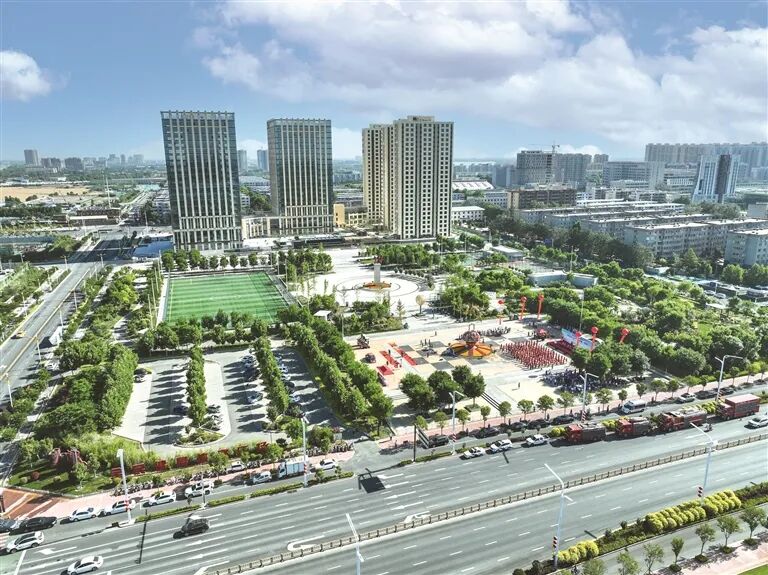
Core Viewpoint - The Shijiazhuang Circular Chemical Park is undergoing a significant transformation, evolving from a traditional industrial base to a modern, high-quality chemical materials hub, integrating innovation, green development, and collaboration to support low-carbon urban construction [1][18]. Group 1: Industrial Transformation - The park is transitioning from a low-end to a high-end value chain, driven by a "second entrepreneurship" approach, aiming for high-quality development amidst market fluctuations and environmental constraints [3]. - The park has completed a significant upgrade from its initial version to a 3.0 version, establishing five industrial chains and focusing on the development of new chemical materials [3][18]. - A total investment of 220 billion yuan is planned for the green transformation project, which will enhance the integration of biomedicine, new-generation electronic information technology, and new chemical materials [3][18]. Group 2: Infrastructure Development - The park's area has expanded from 9.77 square kilometers to 15.04 square kilometers, providing additional industrial land for upgrades and reducing land costs to 300,000 yuan per mu, the lowest in the region [4]. - A 23 billion yuan energy island project is set to reduce gas costs for enterprises from approximately 350 yuan/ton to 160 yuan/ton, enhancing economic and green benefits [5]. - The logistics system has been improved with the launch of a 30 billion yuan international logistics park, which is expected to reduce logistics costs by over 30% [6]. Group 3: Safety and Innovation - The park has been recognized as a model for smart chemical parks, implementing a data-driven safety management system that monitors over 1,200 data points for production and safety [10]. - An AI model for risk monitoring has been developed, allowing for early warnings of potential risks, significantly enhancing proactive safety management [11]. - The establishment of a shared experimental center aims to facilitate the transition from laboratory results to small-scale production, supporting over 20 projects and achieving significant technological advancements [12]. Group 4: Ecosystem and Collaboration - The park is fostering a collaborative ecosystem where enterprises can efficiently utilize resources, exemplified by the transformation of by-products into high-value chemicals [14]. - Key projects are being introduced to build a modern chemical materials industry cluster, ensuring long-term vitality and competitiveness [15]. - The park aims to create a new industrial landscape by integrating chemical new materials with biomedicine and electronic information industries, promoting collaborative innovation [15][18].

展望2026|做强中国制造硬实力
Jing Ji Ri Bao· 2026-02-07 02:54
Core Viewpoint - China's manufacturing sector is poised for significant growth and transformation during the "14th Five-Year Plan" period, focusing on stability, advancement, innovation, and vitality to enhance its global competitiveness and high-quality development [1][15]. Group 1: Stability - The reasonable growth of China's manufacturing output is essential for solidifying the economic foundation and supporting the quality enhancement of the industry [2]. - Key industrial provinces play a crucial role in stabilizing industrial growth, contributing 80% of the industrial added value [2]. - The focus on stabilizing key industries, such as automotive and electronics, is vital for maintaining industrial economic growth [2][3]. - The strategy emphasizes maintaining a reasonable proportion of the manufacturing sector in GDP to enhance competitiveness and resilience [3]. Group 2: Advancement - The effective enhancement of quality in China's manufacturing will strengthen core competitiveness and promote high-quality development [5]. - The growth rates for major manufacturing sectors, such as equipment and high-tech manufacturing, are projected to exceed the overall industrial growth rate, indicating successful high-end transformation [5][6]. - The push for digital transformation in manufacturing is highlighted as a key strategy for improving quality and efficiency [6][7]. - The integration of artificial intelligence in manufacturing processes is expected to enhance productivity and innovation [7][8]. Group 3: Innovation - The cultivation of new productive forces through technological innovation is essential for driving sustainable growth in the manufacturing sector [9][12]. - The focus on emerging industries, such as new energy vehicles and quantum information, is critical for future economic development [9][10]. - Traditional industries will undergo significant upgrades, leveraging new technologies to enhance their competitiveness and sustainability [10][11]. - The establishment of a robust innovation ecosystem is necessary to facilitate the transformation of technological advancements into practical applications [12][14]. Group 4: Vitality - The integration of technological and industrial innovation is crucial for enhancing the dynamism of China's manufacturing sector [12][13]. - Increasing high-quality technological supply and fostering enterprise-led innovation are key strategies for stimulating growth [13][14]. - The development of a national service network for technology transfer is essential for bridging the gap between research and market application [13][14]. - The emphasis on collaborative innovation across various sectors will enhance the overall effectiveness of the manufacturing industry [14][15].
瞭望·治国理政纪事|加快建成中部地区崛起的重要战略支点
Xin Hua She· 2026-02-07 02:19
Core Viewpoint - Hubei is positioned as a crucial strategic support point for the rise of the central region, emphasizing its unique geographical advantages, abundant resources, and solid development foundation, as highlighted by President Xi Jinping during his visit in November 2024 [4][5][6]. Economic Growth - By 2025, Hubei's economic output is expected to stabilize at 6 trillion yuan, with a year-on-year growth of 5.5%, surpassing the national growth rate by 0.5% [5][31]. - The province has maintained a leading growth rate nationally and within the central region, playing a key role as a major economic province [5][31]. Technological Innovation - Hubei is focusing on critical technologies and future industries, aiming to establish itself as a "World Optics Valley" with significant achievements in technology, including the first urban optical remote sensing satellite and the first atomic quantum computer in China [5][10]. - The province's comprehensive technology innovation index and regional innovation capability index rank seventh nationally, with improvements noted from the previous year [10]. Manufacturing Industry - The "51020" advanced manufacturing industry cluster in Hubei is strengthening, with five pillar industries reaching a scale of one trillion yuan, and six advantageous industries approaching 500 billion yuan [17]. - Hubei's manufacturing sector is characterized by a robust industrial base, with a focus on upgrading traditional industries and fostering new and future industries [14][17]. Agricultural Development - Hubei is enhancing its supply capacity for essential agricultural products, with a projected grain output of 55.824 billion jin in 2025, maintaining a stable production level for 13 consecutive years [2][31]. - The comprehensive output value of the province's ten key agricultural industry chains is expected to reach 1.19 trillion yuan [2]. Transportation Infrastructure - Hubei has developed a comprehensive transportation network, achieving high-speed rail connectivity across cities, with significant increases in port cargo throughput and international air cargo volume [2][23]. - The province's strategic location allows it to serve as a key hub for domestic and international trade, enhancing its role in the national economy [22][24]. Environmental Sustainability - Hubei is committed to ecological protection and green transformation, with initiatives to upgrade its chemical industry and improve environmental quality [19][20]. - The province has implemented measures to ensure industrial development aligns with ecological safety, contributing to national ecological security [20]. Open Economy - Hubei is enhancing its role in domestic and international markets, with a focus on building an open economy that leverages its transportation advantages [22][25]. - The province's foreign trade is projected to reach 834.01 billion yuan in 2025, with a year-on-year growth of 18.2%, leading in both trade volume and service exports in the central region [27].
2026年中国高纯三氯化硼行业产业链、市场规模及发展趋势研判:先进制程驱动行业开展“纯度”竞赛,攻克合成与痕量杂质核心技术成行业决胜关键[图]
Chan Ye Xin Xi Wang· 2026-02-07 01:32
Industry Overview - The high-purity boron trichloride (BCl₃) industry in China is at a critical development stage characterized by domestic substitution and industrial upgrading. The market size is projected to reach 3.222 billion yuan in 2024, representing a year-on-year growth of 6.72% [1][7] - The purity requirements for gases in advanced semiconductor processes have evolved from 5N to 5N5, 6N, and even higher levels, necessitating continuous advancements in core technologies such as anhydrous synthesis and trace impurity analysis and removal [1][7] Industry Chain - The upstream of the high-purity boron trichloride industry includes raw materials such as boron ore, chlorine gas, catalysts, adsorbents, organic solvents, and inert gases, along with production equipment like high-temperature reactors and distillation towers. The midstream involves the manufacturing of high-purity boron trichloride, while the downstream applications span semiconductor, display panels, photovoltaics, quantum computing, and new energy batteries [4] - In 2024, China's boron ore production is expected to be approximately 340,000 tons, reflecting a year-on-year increase of 13.33%. The production of high-purity boron trichloride relies on industrial-grade boron trichloride, which is derived from the reaction of boron compounds with chlorine gas [5] Market Size - The high-purity boron trichloride industry is experiencing a dual focus on domestic substitution and industrial upgrading. The market size is anticipated to reach 3.222 billion yuan in 2024, with a growth rate of 6.72% compared to the previous year [1][7] - The increasing demand for high-purity gases in semiconductor manufacturing processes is driving stable and rigid demand for high-purity boron trichloride, as it is essential for dry etching and ion implantation processes [7] Key Companies' Performance - Domestic companies like Dalian Kolid have achieved industrialization of 6.5N grade (99.99995% purity) products, which are successfully applied in advanced processes such as 12-inch 3nm technology, positioning them as key players in domestic substitution [8][9] - China Shipbuilding (Handan) Parit Special Gases Co., Ltd. reported a revenue of 1.607 billion yuan in the first three quarters of 2025, marking a year-on-year increase of 14.90%, with a net profit of 245 million yuan, up 3.98% [8] - Hubei Heyuan Gas Co., Ltd. reported a revenue of 1.232 billion yuan in the first three quarters of 2025, reflecting a year-on-year growth of 3.32%, while its net profit decreased by 1.86% to 58 million yuan [8] Competitive Landscape - The technical barriers in the high-purity boron trichloride market are continuously rising, with purity and stability becoming critical competitive factors. Companies must overcome challenges related to trace impurity analysis and removal to meet the increasing purity demands of advanced semiconductor processes [9] - Leading companies are adopting a dual strategy of vertical integration and horizontal expansion to enhance customer loyalty and adapt to complex market demands. This includes extending their capabilities in synthesis and purification technologies while diversifying into high-end product categories [10] - The market concentration is accelerating amid the domestic substitution trend, with a shift in market share towards a few technologically advanced leading companies. This consolidation is expected to result in a clear stratification of the market, with a few domestic leaders dominating the high-end market while smaller firms focus on niche segments [11]


一起挑大梁 一起促发展
Xin Lang Cai Jing· 2026-02-06 22:00
Group 1 - The core viewpoint of the articles emphasizes the importance of strong governance and practical actions to achieve the development goals set for the "14th Five-Year Plan" period, highlighting the need for a proactive and responsible approach from government officials [1][2][6] - The articles stress the significance of aligning local development strategies with actual conditions and community needs, advocating for tailored approaches in industrial upgrades and public welfare projects [2][3] - There is a call for enhancing the capabilities of local officials through grassroots training and practical experience, which is seen as essential for fostering effective leadership and driving regional development [5][6] Group 2 - The articles highlight the necessity of integrating various development sectors, such as urban planning and industrial growth, to improve overall efficiency and effectiveness in achieving economic goals [5][6] - There is a focus on the role of innovation and technology in driving economic transformation, particularly in sectors like biomedicine and renewable energy, which are identified as key areas for future growth [4][6] - The importance of cultural and artistic contributions to economic and social development is also noted, with initiatives aimed at enhancing community engagement and promoting local talent [7]
恐龙包和冷吃兔“上”两会丨蹲会新发现
Xin Lang Cai Jing· 2026-02-06 16:47
Group 1 - The "Dinosaur Bag" from Zigong has gained popularity, becoming a cultural product that representatives hope will attract tourism to the city [2][3] - The integration of physical consumption and service consumption is emphasized, with the "Dinosaur Bag" seen as a key to activate service consumption through tangible products [2][3] - There is a need for innovative plans that combine consumption with experiential scenarios, such as tourism and cultural experiences, to enhance consumer engagement [3] Group 2 - The cold rabbit dish, a local specialty, highlights the potential for the Zigong rabbit industry, which currently relies heavily on external sources for breeding stock [4][5] - There is a call for improved processing capabilities and brand development in the rabbit meat industry to enhance its market presence and sustainability [4][5] - The marketing strategies for Zigong rabbit products are considered outdated, with suggestions to leverage e-commerce and cultural tourism for better promotion [5]
尼日利亚与韩国合作建设非洲首座全产业链电动汽车工厂
Shang Wu Bu Wang Zhan· 2026-02-06 16:18
Core Insights - Nigeria has signed a strategic agreement with South Korea to establish Africa's first full-chain electric vehicle manufacturing plant, marking a significant industrial upgrade since the rise of the automotive assembly industry in the 1970s [1][2] - The project aims to create a localized industrial ecosystem encompassing battery technology, component supply, technical talent development, and green transportation markets, shifting Nigeria's industrial policy from reliance on used car imports to building high-end manufacturing capabilities [1][2] Group 1 - The factory will be built in phases, initially focusing on assembly production using imported and local components, gradually increasing local manufacturing capabilities for core components such as battery packs, electronic control systems, and chassis [2] - Once fully operational, the plant is expected to achieve an annual production capacity of 300,000 vehicles, positioning Nigeria among the leading automotive manufacturing countries in Africa [2] - The project is anticipated to create numerous jobs in engineering, supply chain management, and specialized maintenance, while also stimulating the development of supporting industries [2] Group 2 - Nigeria's automotive market currently relies heavily on imports, particularly used cars from Europe and Asia, which depletes foreign exchange reserves and contributes to an aging and polluting vehicle fleet [2] - The electric vehicle factory aligns with Nigeria's energy transition plan and automotive industry policy, aiming to enhance local manufacturing capabilities, promote technology transfer, and develop green transportation [2] - Successful implementation of the project will require overcoming challenges such as unstable power supply, high logistics costs, insufficient inland transport efficiency, and limited financing channels for manufacturing [3]
普华永道:2025年中国并购市场交易额同比增长47%
Xin Hua Cai Jing· 2026-02-06 15:20
Group 1 - The core viewpoint of the report indicates a significant recovery in China's M&A market in 2025, with total disclosed transaction value exceeding $400 billion, a 47% year-on-year increase, and total transactions surpassing 12,000, marking a nearly 20% rise [1] - The strong recovery in the M&A market is primarily driven by domestic strategic investments, with 3,639 transactions amounting to $239 billion, reflecting an 83% year-on-year increase [1] - Over half of the 34 large-scale transactions in the domestic strategic investment sector were led by state-owned enterprises, focusing on national strategic industries such as semiconductors, artificial intelligence, and new energy [1] Group 2 - The financial investor market showed continuous recovery, with private equity fund transactions reaching 1,189, totaling $139.4 billion, representing year-on-year growth of 14% and 16% respectively [2] - The venture capital market performed exceptionally well, driven by trends in artificial intelligence and robotics, achieving a record high of 7,382 transactions, with over 3,000 in the high-tech sector, accounting for 42% [2] - The exit activities for private equity funds were notably active, with M&A exits being the most significant, and the Hong Kong Stock Exchange IPOs achieving a record 70 transactions, providing a crucial alternative exit route [2] Group 3 - Chinese mainland enterprises showed a rebound in overseas M&A activities in 2025, with 272 announced transactions, a 5% year-on-year increase, and total transaction value reaching $23 billion, an 88% increase [3] - Europe remained the preferred investment destination for Chinese enterprises, leading in both transaction value and volume compared to other regions [3]