
外汇市场

Search documents
从基础到实战:利多星外汇市场科普指南
Sou Hu Cai Jing· 2025-07-16 10:43
Core Viewpoint - The foreign exchange market plays a crucial role in the global financial system, serving as a key support for international trade and investment, as well as a platform for investors to diversify their asset allocation and seek profit opportunities [1] Group 1: Basic Concepts of the Foreign Exchange Market - The foreign exchange market is a trading venue for buying and selling foreign currencies, driven by the demand for currency exchange in international economic activities such as trade and investment [2] Group 2: Characteristics of the Foreign Exchange Market - The market operates 24 hours a day, allowing continuous trading from Monday morning in New Zealand to Friday evening in New York, providing convenience for global investors [3] - The foreign exchange market boasts high liquidity, with an average daily trading volume exceeding $6 trillion as of 2023, enabling easy execution of large transactions without significant price impact [4] - A wide variety of trading options are available, including major currency pairs like EUR/USD and USD/JPY, as well as financial derivatives such as forex options and futures [5] - The market is characterized by high transparency, with timely information on economic data, political events, and central bank policies available to investors for informed decision-making [6] - High leverage is common in forex trading, with ratios often reaching up to 100 times, allowing investors to control large positions with relatively small capital [7] - Transaction costs in the forex market are generally low, with typical spreads below 0.1%, enhancing the efficiency of capital use for frequent traders [8] - The market is free from manipulation by any single entity, ensuring fair price determination based on global supply and demand dynamics [9] - Entry barriers are low, allowing a wide range of participants, including individual investors, to engage in forex trading with minimal requirements [10] Group 3: Participants in the Foreign Exchange Market - Central banks play a significant role by intervening in the market to stabilize their currencies and implement monetary policies that impact forex dynamics [11] - Commercial banks provide essential forex services to clients and engage in proprietary trading to profit from market movements [12] - Enterprises participate primarily for international trade and cross-border investment, requiring currency exchange for transactions [13] - Investment institutions, such as hedge funds and pension funds, actively engage in forex trading to manage risks and enhance returns [14] - Individual investors increasingly participate in the forex market, seeking additional income or hedging against risks in other investments [15] Group 4: Functions of the Foreign Exchange Market - The forex market facilitates international trade by providing a mechanism for currency exchange, thus removing monetary barriers in global commerce [16] - It establishes a mechanism for exchange rate formation based on supply and demand, influenced by various economic and political factors [17] - The market offers risk management tools, allowing businesses and investors to hedge against currency fluctuations and stabilize financial outcomes [18] Group 5: Differences Between the Foreign Exchange Market and Other Markets - Compared to the stock market, forex trading involves currency pairs rather than company shares, operates 24/7, and exhibits higher liquidity [20] - In contrast to the bond market, forex investors primarily profit from currency price differences, facing more complex risks influenced by global events [22]


美元1. 美国6月整体CPI小幅反弹,核心CPI不及预期。2. 美联储传声筒:CPI报告不会改变美联储的政策走向。3. 特朗普再次敦促美联储降息,称美联储应降息3个百分点。4. 美联储-洛根:基准预期是货币政策需要继续保持紧缩一段时间,以抑制通胀。柯林斯:现在是美联储在货币政策方面保持积极耐心的时候。关税将在下半年推动通胀上升,核心通胀率预计到年底将维持在约3%。其它1. 韩国财政部长提名人誓言改善外汇市场准入。2. 欧洲央行管委内格尔:欧洲央行的利率需要稳定。3. 英国6月CPI年率升至3.6%,月率升至
news flash· 2025-07-16 06:51
1. 美国6月整体CPI小幅反弹,核心CPI不及预期。 2. 美联储传声筒:CPI报告不会改变美联储的政策走向。 3. 特朗普再次敦促美联储降息,称美联储应降息3个百分点。 金十数据整理:每日全球外汇市场要闻速递(2025-07-16) 1. 韩国财政部长提名人誓言改善外汇市场准入。 2. 欧洲央行管委内格尔:欧洲央行的利率需要稳定。 3. 英国6月CPI年率升至3.6%,月率升至0.3%,均高于预期。交易员削减英国央行降息押注。 4. 美联储-洛根:基准预期是货币政策需要继续保持紧缩一段时间,以抑制通胀。柯林斯:现在是美联 储在货币政策方面保持积极耐心的时候。关税将在下半年推动通胀上升,核心通胀率预计到年底将维持 在约3%。 其它 美元 ...
澳元兑美元汇率创新低!100澳元现可兑467.0715人民币
Sou Hu Cai Jing· 2025-07-15 22:37
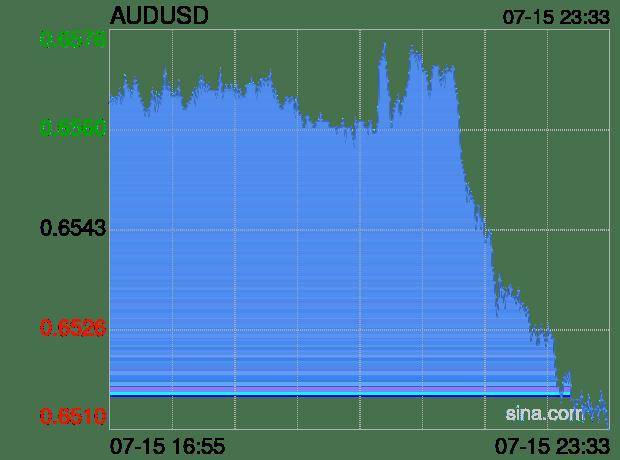
Core Insights - The Australian dollar (AUD) to US dollar (USD) exchange rate has sharply declined, breaking the key level of 0.6509, with a drop of 0.5196% [1] - This decline marks a new low for the AUD/USD exchange rate in nearly two months and indicates a significant retreat from a high point reached in the past seven months [1] - The exchange rate fluctuations are expected to have direct economic impacts on businesses and individuals involved in China-Australia trade [1] Exchange Rate Dynamics - As of the latest updates, 100 Chinese yuan can be exchanged for approximately 21.4100 AUD, while 100 AUD is equivalent to 467.0715 yuan [1] - The current exchange rates for USD as reported by the Bank of China show a stable position, with the buying price for both cash and spot at 716.7400 and selling price at 719.7500 [1] Market Sentiment and Analysis - The recent drop in the AUD/USD exchange rate may indicate a short-term shift in market sentiment, necessitating close monitoring of subsequent market dynamics and economic data [3] - Investors are advised to maintain a cautious and rational investment approach in the current complex economic environment [3]
2025年7月15日银行间外汇市场人民币汇率中间价
news flash· 2025-07-15 01:20
Core Viewpoint - The article provides an update on the interbank foreign exchange market's exchange rates for the Chinese Yuan against various currencies, indicating fluctuations in the value of the Yuan against these currencies as of July 15, 2025 [1] Exchange Rate Summary - The USD/CNY exchange rate is reported at 7.1498, reflecting an increase (devaluation of the Yuan) by 7 points [1] - The EUR/CNY exchange rate is reported at 8.3534, showing a decrease of 76 points [1] - The HKD/CNY exchange rate is at 0.91081, with an increase of 0.9 points [1] - The GBP/CNY exchange rate stands at 9.6212, down by 453 points [1] - The AUD/CNY exchange rate is reported at 4.6879, down by 248 points [1] - The CAD/CNY exchange rate is at 5.2264, down by 85 points [1] - The JPY/CNY exchange rate is reported at 4.8468, down by 191 points [1] - The CNY/RUB exchange rate is at 10.8846, reflecting an increase of 115 points [1] - The NZD/CNY exchange rate is reported at 4.2808, down by 239 points [1] - The CNY/MYR exchange rate is at 0.5941, with an increase of 2.2 points [1] - The CHF/CNY exchange rate is reported at 8.9768, down by 151 points [1] - The SGD/CNY exchange rate stands at 5.5838, down by 90 points [1]
【UNFX课堂】2025外汇市场新地图:美联储降息、中国制造与欧日 突围
Sou Hu Cai Jing· 2025-07-12 09:19
Group 1: Impact of Monetary Policy on Forex Market - Interest rate policy influences capital flows; rising rates attract foreign investment, increasing demand for local currency, while falling rates lead to capital outflows [1][2] - The Federal Reserve's aggressive rate hikes in 2022 resulted in a 15% increase in the US Dollar Index [1] - Japan's negative interest rate policy has led to the USD/JPY exchange rate surpassing 150 in 2023 [1] Group 2: Comparison of Major Economies' Policies - The US is the global financial cycle leader, using tools like federal funds rate and quantitative easing, with a projected increase in fiscal deficit by $3.3 trillion in 2025, weakening dollar credit [1][14] - The Eurozone balances trade and financial stability, with a projected increase in defense spending leading to a stronger Euro [1][17] - Japan's negative interest rate and yield curve control policies have mixed effects, with expectations of rate hikes in 2025 leading to a 4.7% appreciation of the Yen against the Dollar [2] Group 3: Emerging Markets Dynamics - Resource-exporting countries like Brazil and Chile benefit from a weaker dollar, with the Chilean Peso expected to appreciate by 3.88% in 2025 [7] - Countries with high external debt, such as Turkey and Argentina, face significant currency depreciation pressures due to US rate hikes [8] Group 4: Policy Spillover and Cross-Border Mechanisms - The US monetary policy significantly influences global financial cycles through risk asset prices and capital flows [9] - The European and Latin American regions show varying sensitivities to these policies, with Europe being more affected than Asia [10] Group 5: New Trends and Strategies - The weakening dollar is expected to accelerate the internationalization of the Renminbi, with offshore Renminbi appreciating by 1.4% in 2025 [6] - Investment strategies include going long on resource-rich currencies and shorting currencies from high-debt countries [18] Group 6: Conclusion and Market Response - Policymakers need to balance exchange rate stability, capital mobility, and monetary policy independence, especially in emerging markets [19] - Investors should focus on central bank policy expectations and consider currencies with strong economic resilience, such as the Renminbi and Swiss Franc [19]
【UNFX课堂】外汇市场新常态:宏观数据主导,通胀成关键变量
Sou Hu Cai Jing· 2025-07-12 07:26
Group 1 - The global foreign exchange market is experiencing a shift where macroeconomic data, particularly inflation indicators, are becoming the primary drivers of currency movements, overshadowing political rhetoric such as tariff threats [1] - The recent performance of the US dollar illustrates this data-driven characteristic, as its strength is more attributed to fundamental support like rising US Treasury yields rather than political statements [2] - The Canadian dollar is under multiple pressures, including political uncertainty from US tariff threats and upcoming domestic employment data that may reveal economic weaknesses, leading to potential downward risks [3] Group 2 - The euro is facing a unique challenge as its strength, while enhancing its status as a strategic asset, is also eroding the competitiveness of European exporters amid global demand weakness and new tariff risks [4] - The European Central Bank is in a delicate policy dilemma due to the rapid appreciation of the euro, which has implications for its monetary policy considerations [4][5] - The current foreign exchange market is in a cautious wait-and-see mode, with pricing strategies becoming more precise, and the next major movement will depend on whether inflation data alters Federal Reserve policy expectations [6]
【UNFX课堂】熔融周期:当美联储成为全球经济断层带上的“第一推动力”
Sou Hu Cai Jing· 2025-07-11 12:32
Group 1: Economic Cycle and Currency Performance - The economic cycle consists of four phases: recovery, overheating, stagflation, and recession, each affecting currency performance differently [1][2][3] - In the recovery phase, commodity currencies like AUD and CAD benefit from increased demand for resources, exemplified by China's infrastructure stimulus leading to an 18% rise in iron ore prices [1] - During the overheating phase, high-interest currencies such as USD and BRL gain from aggressive central bank rate hikes, with Brazil's rate reaching 13.75% and BRL yielding an annualized return of 21% [2] - Stagflation sees safe-haven currencies like JPY and CHF perform well due to capital flight to safer assets, with EUR/CHF hitting a ten-year low of 0.94 [3] - In recession, sovereign currencies like USD and SGD strengthen as global deleveraging occurs, with the DXY index rising amid a U.S. tech recession [3] Group 2: Impact of Cycle Transitions on Forex Market - Structural reshaping of interest rate expectations occurs, where USD may depreciate initially during a recession but often rebounds later due to safe-haven demand, with an average increase of 6.2% during recessions from 1970 to 2025 [4] - Cross-market volatility transmission is evident, with significant impacts on JPY and CHF during high VIX periods and a strong correlation between AUD and oil prices during oil price fluctuations [5] - Sovereign currency credit differentiation is highlighted, with strong currencies like USD and CHF attracting capital inflows, while weaker currencies like GBP and TRY face sell-offs when debt-to-GDP exceeds 100% [6] Group 3: Trading Strategies for Economic Cycles - A combination of leading, synchronous, and lagging indicators can be used to capture phases, such as a copper-to-gold ratio below 0.25 indicating a potential recession [7] - Arbitrage strategies can be designed based on mismatched cycles, such as going long on USD/JPY and USD/EUR during U.S. overheating against European and Japanese recession, with a projected annual return of 23% [7] - Tail risk hedging involves buying USD call options and gold futures if recession or stagflation probabilities exceed 65% [8] Group 4: Future Outlook and Currency Dynamics - New variables like digital currency interest rates and supply chain regionalization are expected to impact traditional models, with the digital dollar rate reaching 5% attracting capital back [9] - Climate inflation factors, such as El Niño affecting agricultural output, may increase food CPI and pressure the Australian central bank to raise rates, leading to increased AUD volatility [9] Group 5: Trading Principles for Cycle Strategies - Maintain a low position (<15%) during phase ambiguity, such as fluctuating PMI around the threshold [10] - Focus on policy discrepancies rather than economic discrepancies, as seen with the European Central Bank lagging behind the Federal Reserve by an average of four months [10] - Utilize options to create asymmetric risk profiles, such as buying deep out-of-the-money USD call options at low premiums for high potential returns [10] - Market misjudgments regarding cycle phases can significantly influence currency movements, as demonstrated by the EUR's 7% drop followed by a sharp rebound in June 2025 [10] Group 6: Conclusion - The influence of economic cycles on forex is complex, driven by policy expectations, capital flows, and market reflexivity [11] - Identifying early signals and utilizing a "volatility prism" can lead to sustained profitability in the evolving landscape of sovereign credit shaped by digital currencies [11]
周四(7月10日)纽约尾盘,美元兑日元跌0.05%,报146.248日元,日内交投区间为145.756-146.787日元。欧元兑美元跌0.21%,英镑兑美元跌0.04%,瑞郎兑美元跌0.31%。
news flash· 2025-07-10 20:57
Group 1 - The US dollar against the Japanese yen decreased by 0.05%, closing at 146.248 yen, with an intraday trading range of 145.756 to 146.787 yen [1] - The euro against the US dollar fell by 0.21% [1] - The British pound against the US dollar declined by 0.04% [1] - The Swiss franc against the US dollar dropped by 0.31% [1]
【UNFX课堂】美联储低语与关税杂音下的外汇市场
Sou Hu Cai Jing· 2025-07-09 13:56
Group 1 - The core narrative of the current foreign exchange market has shifted from trade war concerns to fundamental macroeconomic drivers, with the Federal Reserve's monetary policy at the center [1] - Market participants are closely examining the upcoming June FOMC meeting minutes to gauge the internal consensus on dovishness within the Federal Reserve [1][2] - If the minutes confirm a deeper dovish inclination, it would strengthen expectations for rate cuts in the summer, leading to downward pressure on the US dollar [2] Group 2 - The influence of tariff discussions from the Trump administration appears to be diminishing in the current foreign exchange market, with market participants interpreting these threats as negotiation tactics rather than a significant policy shift [2] - Tariffs may create asymmetric impacts in specific regions or asset classes, as seen with the recent surge in copper prices attributed to tariff expectations [2] - The EUR/USD currency pair is currently in a state of stagnation around 1.17, influenced by residual interest rate premiums and ongoing tariff uncertainties in the Eurozone [3] Group 3 - The foreign exchange market is characterized by a search for clarity, which is expected to come from the Federal Reserve's meeting minutes and upcoming CPI data [3] - The Japanese yen is perceived as vulnerable due to geopolitical and targeted tariff risks, while the Mexican peso may benefit indirectly from capital reallocation or safe-haven flows [4]
金十图示:2025年07月09日(周三)美盘市场行情一览
news flash· 2025-07-09 13:48
Group 1: Precious Metals - Spot platinum (XPTUSD) is priced at 1362.546, down by 16.228 or 1.18% [2] - Spot palladium (XPDUSD) is priced at 1120.423, up by 4.285 or 0.38% [2] - Gold (COMEX GC) is priced at 3304.200, down by 6.800 or 0.21% [2] - Silver (COMEX SI) is priced at 36.615, down by 0.310 or 0.84% [2] Group 2: Foreign Exchange - Euro to US Dollar (EURUSD) is at 1.171, down by 0.11% [3] - British Pound to US Dollar (GBPUSD) is at 1.359, up by 0.01% [3] - US Dollar to Japanese Yen (USDJPY) is at 146.488, down by 0.05% [3] - Australian Dollar to US Dollar (AUDUSD) is at 0.654, up by 0.11% [3] - US Dollar to Swiss Franc (USDCHF) is at 0.795, down by 0.06% [3] Group 3: Virtual Currency - Bitcoin (BTC) is priced at 109443.990, up by 521.010 or 0.48% [4] - Litecoin (LTC) is priced at 88.790, up by 1.030 or 1.17% [4] - Ethereum (ETH) is priced at 2664.260, up by 49.010 or 1.87% [4] - Ripple (XRP) is priced at 2.375, up by 0.064 or 2.77% [4] Group 4: Treasury Bonds - The yield on the 2-year US Treasury bond is 3.876, down by 0.033 or 0.84% [6] - The yield on the 5-year US Treasury bond is 3.953, down by 0.034 or 0.85% [7] - The yield on the 10-year US Treasury bond is 4.386, down by 0.030 or 0.68% [7] - The yield on the 30-year US Treasury bond is 4.916, down by 0.030 or 0.61% [7] - The yield on the 10-year UK Treasury bond is 4.610, down by 0.024 or 0.52% [7] - The yield on the 10-year German Treasury bond is 2.632, down by 0.012 or 0.45% [7] - The yield on the 10-year French Treasury bond is 3.355, down by 0.005 or 0.15% [7] - The yield on the 10-year Italian Treasury bond is 3.548, down by 0.013 or 0.37% [7] - The yield on the 10-year Japanese Treasury bond is 1.513, up by 0.027 or 1.82% [7]
