新消费

Search documents
潮涌城北 消费焕新——长沙市开福区新消费新场景新业态观察
Sou Hu Cai Jing· 2025-12-29 11:35
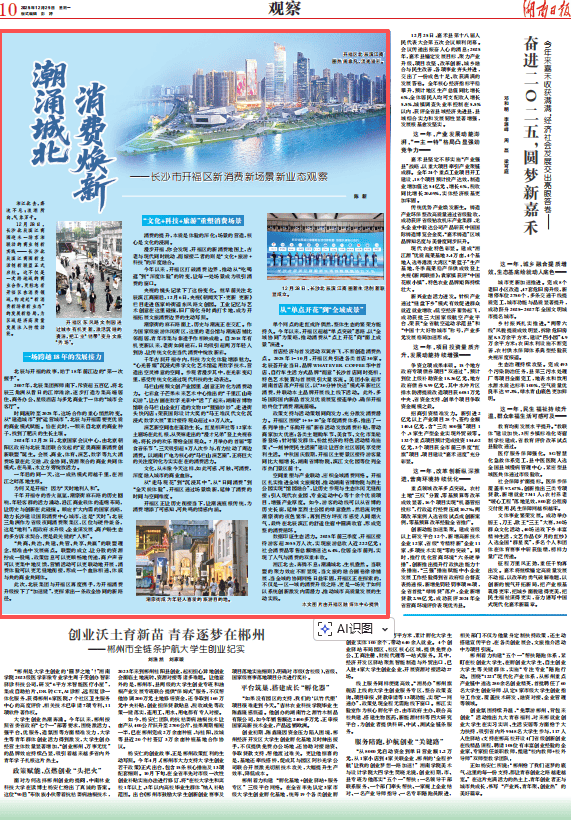
Core Insights - The establishment of the Changsha Beichen Riverside Business Circle New Life Innovation Alliance marks a significant cross-regional commercial collaboration, aiming to create a new development pattern in the consumption sector of the Kaifu District, thereby injecting continuous momentum into the high-quality development of the regional economy [3][17]. Group 1: Historical Context and Development - The partnership between Beichen Group and Kaifu District began 18 years ago, with an investment exceeding 50 billion yuan to transform the Beichen Delta into a comprehensive urban space [6]. - By 2025, the focus of this collaboration is shifting from "building cities" to "operating cities," necessitating a more refined commercial model [6]. - The "Asia-Olympic Business Circle New Consumption Innovation Alliance" was launched in December 2024, integrating nine major consumption scenarios, which serves as a model for collaboration between government and enterprises [6][7]. Group 2: Strategic Advantages - The choice of Kaifu District is attributed to favorable conditions: historical significance, vibrant young demographics, and a well-planned commercial layout along the river [8]. - The alliance's philosophy of "co-consultation, co-governance, co-construction, co-management, co-sharing, and co-winning" aims to consolidate resources and enhance communication among stakeholders [8]. Group 3: Cultural and Technological Integration - The enhancement of consumer experiences is driven by the deep integration of culture, tourism, and technology, transforming traditional consumption into immersive experiences [9][12]. - The Dongfeng Road Cultural and Creative Park exemplifies urban renewal, turning industrial spaces into vibrant cultural venues, attracting significant foot traffic [11]. - The integration of technology in cultural experiences, such as the immersive Buddhist cultural art museum, showcases how modern technology can enhance traditional cultural expressions [12]. Group 4: Economic Impact and Consumer Engagement - In 2025, Kaifu District attracted over 20.55 million visitors in the first three quarters, generating nearly 22.2 billion yuan in tourism revenue, with a retail sales growth rate of 6.4%, leading the city [20]. - The district's strategy of "full-area collaboration" aims to create a thriving consumption ecosystem, moving from isolated successes to a cohesive commercial landscape [15]. - Various promotional activities and policy support have been implemented to stimulate consumer spending, including subsidies and themed festivals [15]. Group 5: Future Prospects - The ongoing efforts in the Kaifu District are not just about local consumption upgrades but represent a broader initiative to stimulate domestic demand and promote high-quality urban development through systematic innovation [20].

2025年港股IPO融资2863亿港元登顶全球,硬科技与新消费双轮驱动
Sou Hu Cai Jing· 2025-12-29 10:01
Group 1 - The Hong Kong IPO market is projected to raise HKD 286.3 billion (approximately USD 36 billion) in 2025, surpassing Nasdaq and reclaiming the top position globally in fundraising [1] - A significant contribution to the IPO scale expansion comes from 19 A-share listed companies that successfully listed in Hong Kong, raising a total of HKD 139.993 billion, accounting for nearly half of the total new stock fundraising [2] - Major companies like CATL, Hengrui Medicine, and Haidilao have collectively raised HKD 1,033.2 billion, highlighting the trend of leading enterprises seeking internationalization and risk diversification through Hong Kong listings [2] Group 2 - The "hard technology" sector saw 88 companies listed in 2025, benefiting from the Hong Kong Stock Exchange's favorable regulations for biotech and specialized technology companies, creating a notable listing surge [3] - New consumption brands, including Mixue and Saturday's Fortune, have found success in the Hong Kong market, with 14 out of 19 consumer companies experiencing oversubscription rates exceeding 100 times [3] - The influx of international capital into Hong Kong stocks is driven by the appeal of "verifiable growth stories" and "scarcity," enriching the investment landscape with new business models and growth narratives [3] Group 3 - The IPO market in Hong Kong experienced a decline in the first-day loss rate to approximately 28.83%, the lowest in five years, with 18 new stocks doubling in price on their debut [4] - The net inflow of southbound funds reached HKD 1.41 trillion, setting a historical record, indicating a positive feedback loop between market sentiment and liquidity [4] - Forecasts for 2026 suggest around 160 new stocks will be listed, with fundraising expected to exceed HKD 300 billion, maintaining Hong Kong's status as a global fundraising leader [4]







一周新消费NO.341|蒙牛纯甄上新「冻梨口味风味酸奶」;刘昊然亮相VICUTU新年衣橱以马上行系列开启新年叙事
新消费智库· 2025-12-28 13:03
New Products - Mengniu launched "Frozen Pear Flavor Yogurt" which uses French imported dual-strain fermentation, suitable for various scenarios like breakfast and outdoor activities [8] - Shuanghui and Tmall Supermarket introduced "Spicy Beef Strips" with ≥90% beef content and ≥27g protein per 100g [8] - Bawang Tea Ji launched the "Return to Yunnan" series with three flavors, using a blend of 65% Menghai Pu'er and 35% Mengku Ice Island ripe Pu'er [11] - Heytea collaborated with Pop Mart to introduce a new product line featuring custom star-shaped drinks and themed stores [11] - Watsons launched a limited edition "Biquan Sweet Apricot Jasmine Green Tea" using high-quality apricot puree [12] Industry Events - McDonald's opened its first stores in Ningxia and Qinghai, completing its presence in all provincial-level administrative regions in China [16] - Anta officially joined Taobao Flash Sale, with plans to cover over 4,000 stores by 2026 [18] - JD Health and Ganhe Group signed a strategic cooperation agreement to enhance supply chain efficiency and user health management [18] Investment Trends - Zhongyan Alkali Industry received a strategic investment of 3.92 billion RMB for green mining expansion [22] - Safilo acquired 25% of Inspecs Group for £21.7 million [22] - Qianjue Technology completed a Pre-A++ round financing of nearly 100 million RMB for technology development [22] - Sequoia China acquired a controlling stake in Golden Goose [22] Food Industry Developments - Mixue Ice City opened its first flagship store in Hangzhou, featuring a wide range of drinks and cultural products [28] - Haidilao introduced a small portion menu with prices starting from 3.8 RMB [28] - Mengniu launched "Soft Milk" using EHT enzyme hydrolysis technology for better nutrient absorption [28] - Nestlé completed the sale of its remaining 40% stake in Herta Foods to Casa Tarradelas [32]


财信证券宏观策略周报(12.29-1.2):“春季躁动”行情开启,关注有色及科技-20251228
Caixin Securities· 2025-12-28 12:52
Group 1 - The report indicates that the market is likely entering a "spring rally" phase, with the overall market represented by the Wind All A Index breaking through moving averages and expected to reach new highs. This is supported by increased trading volume despite the suspension of northbound capital transactions [4][7][13] - The technology growth sector is identified as a long-term market focus, with a K-shaped economic recovery in China favoring technology growth performance. Opportunities are anticipated in previously lagging areas such as AI applications and humanoid robots [4][7][12] - The report highlights the ongoing expansion in the non-ferrous metals market, with prices for gold, silver, and copper reaching historical highs. This is attributed to a combination of factors including a loosening of dollar liquidity and supply-demand tightness [12][13] Group 2 - The report suggests that the domestic commercial aerospace industry is expected to develop rapidly, supported by new regulations that favor commercial rocket enterprises and the anticipated growth of the market, which is projected to exceed 2.5 trillion yuan [11][12] - The report emphasizes the importance of monitoring the non-ferrous metals sector for investment opportunities, particularly in strategic minor metals and industrial metals, as the market is currently in an expansion phase [12][13] - The report notes that monetary policy remains moderately accommodative, which supports a slow bull market in A-shares, with expectations of continued liquidity support for technology growth sectors [8][9]
今年,消费彻底变了
Ge Long Hui A P P· 2025-12-28 08:57
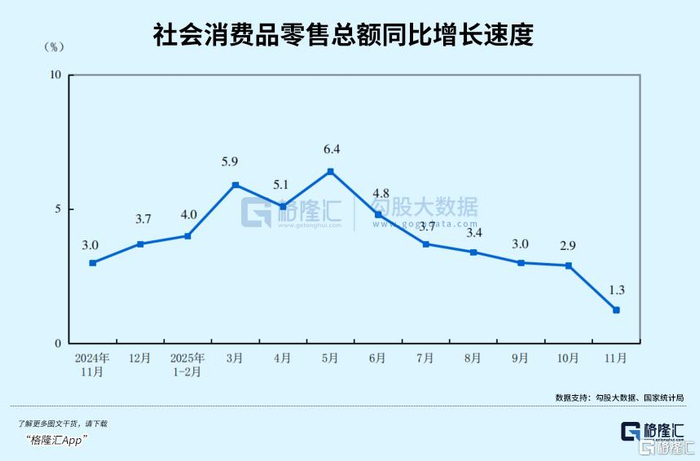
Core Insights - The consumption industry has undergone significant changes over the past year, with a shift in focus from traditional products like liquor to new consumption trends driven by emotional and social factors [1][10]. Group 1: Consumption Trends - Despite perceptions of a cooling consumption market, consumer demand has shown stability, with retail sales growing by 4.0% year-on-year in the first 11 months of this year, surpassing the 3.5% growth expected for the entire year of 2024 [4][5]. - The contribution of final consumption expenditure to economic growth reached 53.5% in the first three quarters of 2025, an increase of 9 percentage points compared to the entire year of 2024 [4]. - The concept of "new consumption" has emerged, characterized by emotional and social attributes, as seen in the popularity of brands like Bubble Mart and the rise of "self-reward" consumption [8][9]. Group 2: Consumer Behavior - Young consumers, particularly those from the Z generation, are becoming the main drivers of consumption, with 56.3% of them willing to spend on emotional value and interests, a 16.2 percentage point increase from 2024 [10][9]. - The trend of "rational consumption" is also evident, where consumers are increasingly focused on quality and value, with 47% of respondents indicating they only purchase essentials to avoid waste, while 68% are willing to spend more on products that help relieve stress [11][10]. Group 3: Market Opportunities - The second-hand economy is thriving, with platforms like Xianyu seeing a 30% year-on-year increase in transaction volume, reflecting young consumers' acceptance of "recycled consumption" [12]. - The health and wellness industry is benefiting from consumers' desire to invest in personal growth, with products like smart home devices and effective skincare gaining traction [14][13]. - The pet economy is emerging as a significant market, driven by the emotional support pets provide, with a wide range of related products and services [24]. Group 4: Future Outlook - The emotional consumption market in China is projected to reach 2.3 trillion yuan in 2024, with expectations to exceed 4.5 trillion yuan by 2029, indicating substantial growth potential [16]. - The consumption landscape is evolving into a complex ecosystem where rational and emotional consumption coexist, reshaping investment strategies and market dynamics [27].
郝波:2025宠物行业十大关键词
Xin Lang Cai Jing· 2025-12-27 14:34
Core Viewpoint - The pet economy is not an isolated sector but intersects with new consumption trends, the silver economy, and emotional companionship, highlighting its growth potential and the increasing interest from cross-industry enterprises and supportive policies [2] Industry Trends - The pet industry is experiencing significant growth, driven by the potential for new consumption and multi-industry collaboration [2] - Key terms in the pet industry are evolving from "involution" and "consumption downgrade" in 2023 to "going global," "innovation," and "AI" in 2024, with a notable reduction in "involution" references by 2025 [2] Future Projections - By 2025, key terms will include "Pet Fresh Life," "emotional needs," "AI," "reconstruction," "increased pet population," and "pet aging," based on surveys from hundreds of industry participants [2]

2025中国新消费发展洞察暨品牌力榜单
Sou Hu Cai Jing· 2025-12-27 05:30
Core Insights - The report highlights the resilience and vitality of the Chinese consumer market amidst global economic slowdown and uncertainty, indicating a shift from being the "world's factory" to a global leader in innovation and trends [1][5] - The concept of "new consumption" is redefined, driven by digital technology, online-offline integration, and new consumer relationships based on social networks, emphasizing digitalization, personalization, socialization, and quality [2][5] Market Overview - China's consumption structure is transitioning from material-based to service-oriented, with rapid growth in service consumption expenditures becoming a new engine for market growth [1][5] - Government policies are aimed at boosting consumption and expanding domestic demand through income distribution reforms and enhanced social security [1][5] Industry Insights - The restaurant industry is experiencing structural adjustments with increased chain rates and the rise of "satellite stores" due to the importance of delivery channels [3] - In the food and beverage sector, health and emotional value are key themes, with consumers becoming more rational about ingredient research and emotional value driving purchasing decisions [3] - The retail sector is facing disruption from "hard discount" models, while immersive experiences and business model integration are crucial for attracting foot traffic [3] - The consumer electronics industry is leveraging AI advancements, with rapid growth in AI smartphone penetration and the AI toy market driven by lower technology costs and educational upgrades [3] Brand Strategy - New consumption brands must focus on "adaptability" and "community" to enhance operational resilience and build deep relationships with consumers based on shared values [2][5] - The report introduces the "VIG Compass" brand strength evaluation model, assessing brands across three dimensions: brand voice, core strength, and growth potential [4][30] Future Outlook - The Chinese new consumption market is characterized by a continuous reshaping of rules, with growth logic shifting from external dividends to internal innovation and value creation [5] - Future winners will be those brands that deeply understand and integrate into local cultural dynamics while optimizing operational efficiency and establishing emotional connections with users [5]
数智化趋势下如何以新供给创造新消费?
Xin Lang Cai Jing· 2025-12-27 04:15
Core Insights - The article discusses the profound changes in consumer behavior and supply-demand mismatches in the context of evolving economic conditions and technological advancements [1] Group 1: Changes in Consumer Behavior - The transition from self-sufficiency in agricultural civilization to large-scale production and centralized distribution during the industrial revolution has led to unprecedented changes in consumption patterns in the digital age [1] - There is a significant shift from product-centric consumption to a balanced focus on both goods and services, with service consumption, particularly in leisure and entertainment, growing at a faster rate than goods consumption [1] - The proportion of upgraded goods characterized by intelligence, greenness, and convenience is rapidly increasing, with China becoming the largest market for wearable wrist devices, accounting for 30% of global shipments [1] Group 2: Supply-Side Challenges - Despite the acceleration of new technologies and business models, the supply side still requires a systematic approach to meet the complex demands of changing consumer needs and technological iterations [1] - Addressing deep-seated technical, structural, and institutional challenges is crucial for expanding effective consumer demand [1] Group 3: Technological Empowerment - The development of new information technologies is redefining product forms and content presentation, enabling customized and personalized supply based on consumer profiles [2] - Companies are encouraged to leverage cutting-edge technologies such as AI, quantum technology, and biotechnology to create tailored products and services [2] Group 4: Multi-Industry Integration - Promoting multi-industry integration can break down industry boundaries and create one-stop, composite consumption scenarios that integrate functional services and experiential value [3] - Upgrading consumption supply facilities and developing local cultural and ecological resources into distinctive tourism products can enhance consumer experiences [3] Group 5: Rural Market Development - The growth rate of consumption in rural areas has surpassed that in urban areas, presenting a "blue ocean" market opportunity [4] - There is a need to enhance the infrastructure and supply structure in rural markets to meet diverse consumer demands effectively [4] Group 6: Optimizing Consumption Environment - The consumption environment, encompassing both hardware and software aspects, is critical for market stability and consumer confidence [5] - Strengthening market regulation and improving quality standards and consumer rights protection are essential for enhancing the overall consumption experience [5][6]
抢滩1500亿市场,卡牌巨头的第二增长曲线
21世纪经济报道· 2025-12-27 03:06
Core Insights - The article highlights the successful entry of KAYOU, a leading card game manufacturer in China, into the stationery market with its neutral pen products, which have received positive user feedback and are seen as a reflection of consumer demand for quality and cultural value in everyday items [1][4][6] Group 1: Market Trends and Consumer Preferences - The Z generation's consumption preferences have shifted from "cost-performance ratio" to "emotional value," emphasizing the importance of aesthetics, functionality, and emotional satisfaction in products [2][3] - KAYOU's strategy involves leveraging its established IP card business to enhance the appeal of its stationery products, creating a multi-dimensional emotional value for consumers through aesthetic and functional design [3][4] Group 2: Product Quality and Manufacturing - KAYOU's neutral pen production involves a complex manufacturing process requiring 5-6 sets of molds and over 1,000 high-precision components, ensuring high product quality that can compete with leading brands [9][11] - The meticulous production process, including 24 production steps for the pen tip, is crucial for achieving a reliable writing experience, which has contributed to KAYOU's positive market reputation [11] Group 3: Distribution and Brand Strategy - KAYOU has established a robust distribution network through its card game business, allowing for effective market penetration and product visibility in both offline and online channels [11][12] - The brand's focus on high-quality, youthful, and companion-like products aligns with the preferences of the Z generation, fostering a strong emotional connection with consumers [11][12] Group 4: Market Position and Future Outlook - The stationery market in China is projected to reach 132.2 billion yuan in 2024, with KAYOU holding significant market shares in both collectible card and stationery sectors, at 71.1% and 24.3% respectively [4][7] - KAYOU aims to expand its market presence by integrating its product offerings with the evolving demands of consumers, focusing on aesthetics, functionality, and emotional engagement [12]

中年补品,困于千亿礼盒:谁在把“仙草”搬上Z世代的早餐桌?
新消费智库· 2025-12-26 13:04
Core Viewpoint - The article discusses the disconnect between traditional Chinese health supplements, like Dendrobium, and modern young consumers, highlighting the need for brands to adapt their products and communication strategies to meet the demands of this demographic [2][4][19]. Market Overview - The market for Dendrobium is projected to reach 40 billion, with significant investments from local governments and advancements in agricultural technology [2]. - There is a notable gap in brand recognition among young consumers, who are familiar with the category but struggle to identify specific brands [4][19]. Consumer Insights - The primary consumer group for health supplements has shifted from older generations to young professionals and mothers, who prioritize convenience, tangible benefits, and enjoyable experiences in their health routines [6][12]. - Young consumers prefer products that are easy to use, with clear, quantifiable benefits rather than abstract concepts [9][10]. Pain Points in the Market - The market faces five major pain points: 1. Lack of brand recognition and trust, with consumers often unsure about product quality based solely on origin [13]. 2. Ambiguous efficacy claims that are difficult for consumers to perceive [14]. 3. Communication barriers between brands and consumers, with brands using technical jargon that young consumers do not understand [15]. 4. Product forms that require extensive preparation, which do not align with the fast-paced lifestyles of young consumers [16]. 5. High prices that cater more to gift-giving rather than everyday consumption [17][18]. Brand Innovations - Three brands—Hua Mama, Xiao Xian Dun, and Guan Zhan—are highlighted for their innovative approaches to addressing these pain points: - **Hua Mama** focuses on convenience by transforming Dendrobium into a quick-dissolving powder, making it easy to incorporate into daily routines [24][25]. - **Xiao Xian Dun** creates a new category with fresh-cooked bird's nest products and a subscription model, emphasizing a luxurious experience [27]. - **Guan Zhan** invests in technology to improve product quality and transparency, ensuring traceability from source to consumer [28]. Strategic Recommendations - The article suggests that brands need to shift from selling raw materials to offering comprehensive health solutions and lifestyle experiences [42]. - Future strategies should include building trust through transparent data, using scientific evidence to validate efficacy, and creating emotional connections with consumers through thoughtful design and service [39][41]. Conclusion - The evolution of Dendrobium and similar products requires a fundamental shift in how they are perceived and marketed, moving from niche health products to mainstream lifestyle choices [45][46].