
汽车智能化

Search documents
有色金属行业研究:有色金属周报:宏观风险逐步落地,看好后续金属行情-20251221
SINOLINK SECURITIES· 2025-12-21 11:29
Investment Ratings - The report maintains a positive outlook on copper, aluminum, and precious metals, indicating a sustained high level of market activity and potential for price increases [11][30][55]. Core Insights - Copper prices have increased by 2.75% to $11,870.5 per ton on the LME, while domestic prices have slightly decreased. Supply constraints and weak demand are expected to lead to a slight reduction in inventory levels [12]. - Aluminum prices rose by 2.80% to $2,955.50 per ton on the LME, with domestic production remaining stable despite high inventory levels. The market is experiencing a seasonal downturn, but there are signs of recovery [13]. - Gold prices increased by 0.79% to $4,368.7 per ounce, driven by geopolitical risks and market volatility. The SPDR gold holdings have also increased, indicating a positive sentiment towards gold as a safe-haven asset [14]. - The rare earth sector is expected to see upward price movements due to supply constraints and favorable export conditions. Companies like China Rare Earth and Northern Rare Earth are highlighted as potential investment opportunities [31]. - Antimony prices have decreased by 2.37%, but the long-term outlook remains positive due to expected recovery in exports and stable demand [32]. - Tin prices have increased by 1.86%, supported by low inventory levels and strong demand from sectors like semiconductors and photovoltaics [33]. - Lithium prices have risen by 3.66% to 96,700 CNY per ton, with production levels stable and demand from the energy sector remaining strong [56]. - Cobalt prices have shown mixed trends, with a slight increase in some products, but overall market activity is subdued due to seasonal factors [59]. Summary by Sections Copper - LME copper price increased by 2.75% to $11,870.5 per ton, while domestic prices decreased slightly. Supply constraints and weak demand are expected to lead to a slight reduction in inventory levels [12]. - The smelting sector is experiencing a decrease in operational rates, with a forecasted decline in production due to year-end inventory control [12]. Aluminum - LME aluminum price rose by 2.80% to $2,955.50 per ton, with domestic production remaining stable despite high inventory levels. The market is experiencing a seasonal downturn, but there are signs of recovery [13]. - The operating rate of downstream processing enterprises has decreased, indicating a continuation of weak demand [13]. Precious Metals - Gold prices increased by 0.79% to $4,368.7 per ounce, driven by geopolitical risks and market volatility. The SPDR gold holdings have also increased, indicating a positive sentiment towards gold as a safe-haven asset [14]. Rare Earths - The rare earth sector is expected to see upward price movements due to supply constraints and favorable export conditions. Companies like China Rare Earth and Northern Rare Earth are highlighted as potential investment opportunities [31]. Antimony - Antimony prices have decreased by 2.37%, but the long-term outlook remains positive due to expected recovery in exports and stable demand [32]. Tin - Tin prices have increased by 1.86%, supported by low inventory levels and strong demand from sectors like semiconductors and photovoltaics [33]. Lithium - Lithium prices have risen by 3.66% to 96,700 CNY per ton, with production levels stable and demand from the energy sector remaining strong [56]. Cobalt - Cobalt prices have shown mixed trends, with a slight increase in some products, but overall market activity is subdued due to seasonal factors [59].
汽车行业周报:12月第二周国内乘用车市场有所回暖,出海持续加速-20251221
SINOLINK SECURITIES· 2025-12-21 09:38
Investment Rating - The report suggests a focus on themes of intelligentization and overseas expansion, indicating a positive outlook for companies like BYD and Geely Auto in the export sector, and Li Auto, Xpeng Motors, and others in the intelligentization and robotics sectors [1][18]. Core Insights - Short-term domestic demand is low, with retail sales of passenger vehicles declining year-on-year in November, while exports are expected to be a long-term theme with significant growth potential [1][12]. - The intelligentization and robotics sectors are accelerating, with advancements in autonomous driving and smart cockpit technologies becoming mainstream [15][16]. - The report highlights the importance of focusing on companies with strong export growth and those benefiting from intelligentization trends [1][18]. Summary by Sections Weekly Perspective - Domestic demand is currently weak, with November retail sales of passenger vehicles down 15.8% year-on-year. However, exports have shown strong growth, with a 50% increase in November compared to the previous year [1][11][12]. Industry Data Tracking - The Shanghai Composite Index decreased by 0.28%, while the automotive index increased by 0.10%. Notable stock performances included Zhejiang Shibao (+44.1%) and Haon Automotive (+28.4%) [2][19]. - In November, wholesale passenger vehicle sales reached 2.991 million units, a year-on-year increase of 1.7%, while new energy vehicle (NEV) sales rose by 17.6% [4][34]. Industry Dynamics - The report notes significant developments in the intelligentization of vehicles, with over 60% penetration of L2 and above autonomous driving systems in the market. The trend towards smart cockpits is also highlighted [15][16]. - Robotics technology is advancing rapidly, with new products being launched by domestic manufacturers and increased governmental focus on robotics technology in the U.S. [16][18].



均胜电子_ 汽车安全与电子解决方案全球龙头;恢复覆盖,维持买入评级
2025-12-20 09:54
Summary of the Conference Call Transcript Company Overview - **Company**: Joyson Electronics (均胜电子) - **Industry**: Automotive Safety and Electronics Solutions - **Rating**: Buy with a target price of Rmb 34.20, up from Rmb 21.10 [1][4] Key Points and Arguments Industry Trends - The global automotive industry is undergoing significant electrification and intelligence trends, expected to drive the automotive electronics market with a CAGR of 9.0% from 2025 to 2028 [2][9] - Key growth segments include smart cockpit solutions, intelligent driving solutions, new energy management systems, and intelligent connectivity systems [2][9] Financial Projections - Joyson's net profit is projected to grow at a CAGR of 17% from 2025 to 2028, driven by deepening collaborations with domestic automakers and benefiting from overseas automakers' transitions to electrification and intelligence [3][10] - Revenue is expected to grow at a CAGR of 6.5%, with gross and net profit margins improving from 18.3% and 2.4% in 2025 to 18.4% and 3.2% in 2028, respectively [3][10] Valuation - The valuation is based on a segmented approach: - Automotive safety and other parts: 21.0x 2026E PE - Automotive electronics: 27.5x 2026E PE - Robotics parts: 9.5x 2026E P/S [4][31] - The new target price reflects a 27.5x 2026E PE, indicating a 16% discount compared to peers [4][31] Market Position - Joyson is positioned as a global leader in automotive passive safety and electronics, with a comprehensive product portfolio and a global customer base [1][13] - The company has established over 25 R&D centers and more than 60 production bases worldwide, covering major automakers [13] Growth Opportunities - Joyson has secured projects with leading overseas automakers and a major humanoid robot manufacturer, indicating potential growth in the robotics sector [1][19] - The company is expected to benefit from the increasing demand for automotive electronics due to stricter safety standards and the transition to centralized electronic architectures [9][10] Additional Important Insights - The current stock price of Rmb 26.95 reflects a potential upside, with a risk-reward ratio of 3.1:1 [36] - The company has faced challenges in the past due to significant acquisitions and restructuring, but these impacts are expected to diminish by 2025 [14] - Joyson's revenue growth is primarily driven by the automotive electronics sector, which is anticipated to outperform the traditional automotive safety market [9][10] Conclusion - Joyson Electronics is well-positioned to capitalize on the ongoing transformation in the automotive industry, with strong growth prospects in both automotive electronics and robotics. The current valuation does not fully reflect the company's growth potential, making it an attractive investment opportunity.

【策略报告】2026年汽车行业总投资策略:坚定“破旧立新”
东吴汽车黄细里团队· 2025-12-19 16:52
Core Viewpoint - The automotive industry is at a new crossroads in 2026, with the end of the electric vehicle (EV) boom and the rise of smart technology. Investment opportunities lie in commercial vehicles and two-wheeled vehicles, focusing on finding resilient alpha varieties and embracing the next industrial trends of smart technology and robotics/AIDC [4][10]. Group 1: Automotive Sector Investment Strategy - The automotive industry should reference the years 2011 and 2018 for strategic insights. The focus is on finding resilient alpha varieties and embracing the next industrial trends, particularly in smart technology and robotics/AIDC [4][10]. - The total domestic demand for passenger vehicles in 2026 is expected to be 22 million units, a decrease of 3.5% year-on-year, while the demand for new energy vehicles is projected to reach 13.2 million units, an increase of 6.4% [5][10]. - The wholesale sales of heavy trucks are forecasted to be 1.16 million units in 2026, with a year-on-year increase of 1.5%. Domestic sales are expected to decline by 5.5% to 770,000 units, while exports are projected to rise by 18.8% to 390,000-400,000 units [5][27]. Group 2: Key Investment Opportunities - In the bus sector, the top picks are Yutong Bus and Jinlong Automobile. For motorcycles, the preferred choices are Chunfeng Power and Longxin General. In the heavy truck sector, China National Heavy Duty Truck and Weichai Power are favored. For passenger vehicles, BYD is the primary choice, with Jianghuai Automobile as a secondary option. In the parts sector, Fuyao Glass, Xingyu Co., and Minth Group are recommended [6][10]. - The L4 RoboX investment opportunities focus on the B-end software sector over C-end hardware. Preferred stocks include XPeng Motors, Horizon Robotics, and others in the H-share market, while A-share selections include Qianli Technology and Desay SV [7][10]. - The robotics and AIDC investment opportunities are highlighted, with a focus on the upcoming Optimus V3 overseas and the rapid development of domestic robotics. Key selections include Top Group for robotics and liquid cooling, and Junsheng Electronics for robotics [7][10]. Group 3: Market Forecasts - The passenger vehicle market is expected to see a total sales volume of 22 million units in 2026, with a year-on-year decrease of 3.5%. New energy vehicle sales are projected to reach 13.2 million units, an increase of 6.4% [5][17]. - The heavy truck market is forecasted to have a wholesale volume of 1.16 million units in 2026, with domestic sales declining by 5.5% to 770,000 units, while exports are expected to rise by 18.8% [5][27]. - The bus sector is anticipated to maintain a strong export growth rate of over 30%, with domestic sales expected to reach 81,000 units, a year-on-year increase of 3% [5][32]. Group 4: Motorcycle Market Insights - The motorcycle industry is projected to have total sales of 19.38 million units in 2026, a year-on-year increase of 14%. The large-displacement motorcycle segment is expected to reach 1.26 million units, a 31% increase [5][34]. - Domestic sales of large-displacement motorcycles are expected to reach 430,000 units, a 5% increase, while exports are projected to be 830,000 units, a 50% increase [5][35]. Group 5: Future Trends and Innovations - The penetration rate of smart driving technology in new energy vehicles is expected to rise to 40% by 2026, with significant growth in the use of domestic chips [22][23]. - The heavy truck export market is expected to recover, with significant growth in regions such as Southeast Asia and Africa, driven by local infrastructure and mining demands [28][29].




浙江华远:公司是一家专注于定制化汽车系统连接件研发、生产及销售的高新技术企业
Zheng Quan Ri Bao Zhi Sheng· 2025-12-19 15:17
Group 1 - The company, Zhejiang Huayuan, focuses on the research, development, production, and sales of customized automotive system connectors, with core products including special fasteners and seat locks [1] - Core products are widely used in automotive safety systems and intelligent electronic systems, making them an essential part of smart driving vehicles [1] - The company has entered the supply chain of several mainstream new energy vehicle manufacturers, indicating its deep involvement in the automotive intelligence sector [1] Group 2 - The company aims to continuously monitor industry trends and technological developments to seize market opportunities [1] - There is a commitment to enhance technical strength and market competitiveness to better meet customer needs and create value for shareholders [1]
进口豪车干不过中国车了,价格打“骨折”!30多万元买玛莎拉蒂,六五折买阿斯顿·马丁!曾“高攀不起”的进口豪车,找中国车企“求带”
Mei Ri Jing Ji Xin Wen· 2025-12-19 10:47
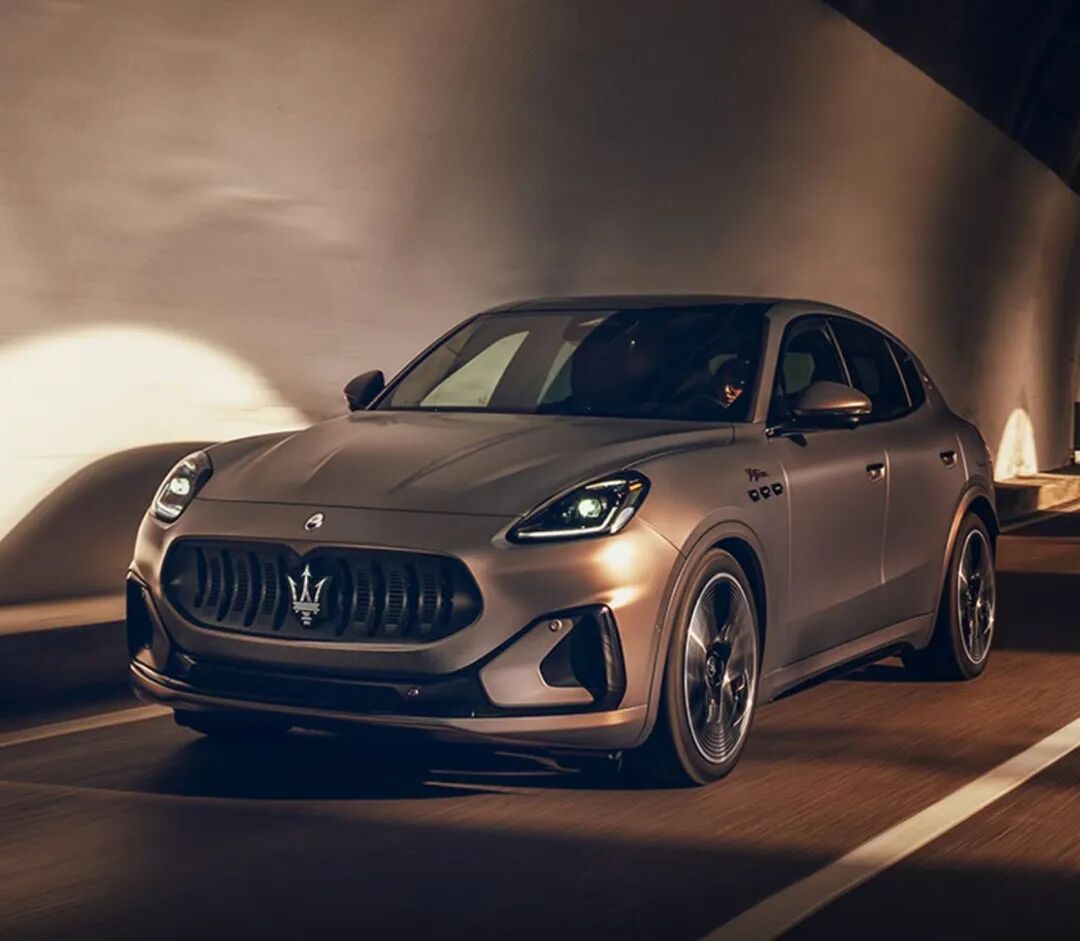
Group 1 - The luxury car market in China is experiencing significant price reductions, with brands like Maserati and Aston Martin offering substantial discounts on their models [1][3][5] - Maserati's Grecale electric SUV has seen its price drop from nearly 900,000 yuan to as low as 358,800 yuan, representing a discount of over 60% [1] - Aston Martin's DBX model is now priced between 1.6 million to 1.7 million yuan, down from a guide price of 2.448 million yuan, effectively a 35% discount [5] Group 2 - The overall import car market in China has been declining, with a reported 30% drop in imported vehicles from January to October 2025, marking the largest year-on-year decline in recent years [8][10] - Maserati's sales in China have plummeted over 70% from its peak in 2017, with only 1,228 units sold in 2024 [9] - The luxury car segment is facing increased competition from domestic brands, which have gained significant market share, particularly in the high-end segment [12][15] Group 3 - The market share of high-end vehicles priced over 300,000 yuan has decreased from 15% in 2017 to 13% in 2025, indicating a shift in consumer preferences [12] - Domestic brands are increasingly preferred due to their cost advantages and rapid improvements in product quality, impacting the sales of imported luxury vehicles [15][19] - Foreign luxury brands are now focusing on adapting to the Chinese market by enhancing their product offerings and integrating into local supply chains [17][19]
马斯克宣判燃油车死刑!2030年全球一半车将不烧油
Sou Hu Cai Jing· 2025-12-19 10:05
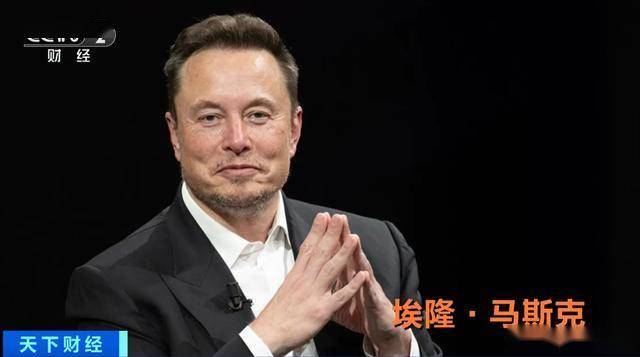
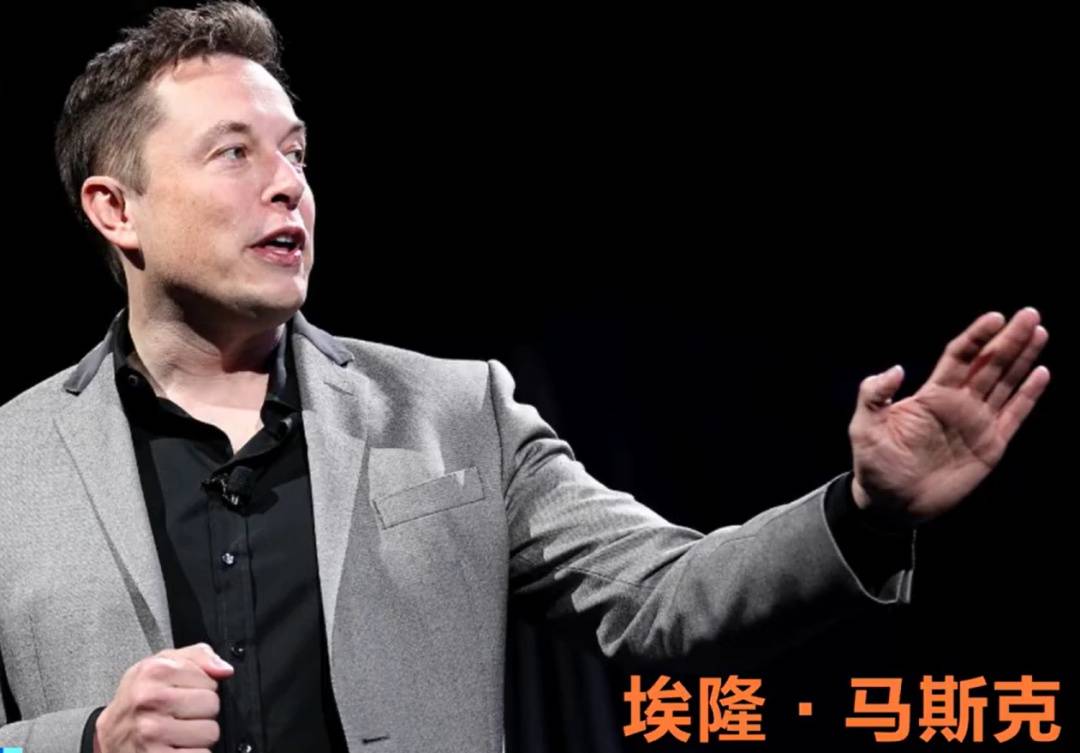
"今天买的燃油车剩余价值会比你想象的低得多,我们很快就会像看待蒸汽机车一样看待汽油车。" 当马斯克在X平台再次抛出这颗"炸弹"时,整个汽车圈都沉默了。这不是他第一次宣判燃油车的死刑, 但2025年12月18日的这次表态,伴随着福特撤资195亿美元的战略回调,让这个预言听起来更像是死亡 倒计时56。 你的燃油车,正在加速沦为"数字时代的翻盖手机"。 马斯克对燃油车的"诅咒"从来不是心血来潮。早在2022年9月,他就将燃油车比作蒸汽机车,直言其剩 余价值将崩塌23。三年过去,这个比喻正从修辞变成现实。 看看数据吧:2021年国内燃油车批发量已下降4%,零售销量下降6%,而新能源车批发量暴增181%,零 售增长169%4。这不是趋势,是雪崩。马斯克预言到2030年全球近一半汽车将是电动车210——现在 看,这个数字可能还是保守了。 更致命的是智能化维度。马斯克最新观点一针见血:油电之争是伪命题,最终竞争力来自智能化679。 一台没有自动驾驶的燃油车,在智能电动车面前,体验差距堪比功能机对iPhone。余承东2022年就 说"现在买燃油车如同智能手机时代买功能机"3,当时被骂营销话术,现在看,是残酷的预言。 一、"蒸 ...
马斯克:开油车像骑马用翻盖手机,燃油车将会逐渐消亡
Sou Hu Cai Jing· 2025-12-19 09:48
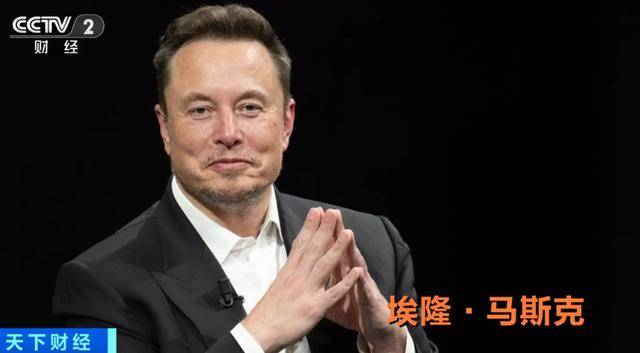
来源:央视网 近日,马斯克在社交媒体上称,驾驶非自动驾驶的燃油车,就像"骑马时使用翻盖手机"一样过时。他认 为传统燃油车只会逐渐消亡,最终汽车的竞争力将来源于智能化。 分析认为,这一表态与马斯克本人 的长期观点一致,他近期重申这一点可能与传统汽车行业战略回调有关。 ...
马斯克:传统燃油车将逐渐消亡,像“骑马时使用翻盖手机”一样过时
Sou Hu Cai Jing· 2025-12-19 09:26
Group 1 - Elon Musk stated that driving a non-autonomous gasoline car is as outdated as using a flip phone while riding a horse, indicating that traditional gasoline vehicles will gradually disappear and that the future competitiveness of cars will rely on intelligence [1][3] - Tesla's stock price has been on the rise, closing at $483.37 on December 18, with an intraday increase of over 3%. Since hitting a low of around $220 on April 8, Tesla's stock has surged approximately 120% [3] - Musk remains the richest person according to Forbes, with a personal wealth of around $684 billion, significantly ahead of the second-ranked Google co-founder Larry Page [3] Group 2 - Ford recently announced a shift in its business focus, reducing its investment in electric vehicles and expecting to incur approximately $19.5 billion in special project expenses, including halting production of the electric F-150 pickup [5] - This adjustment is part of Ford's "Ford+" transformation plan, which was initially launched in 2021 as an expansion strategy for electric models but has undergone multiple revisions since then [5]
浙江华远(301535.SZ):深耕汽车智能化领域,并已进入多家主流新能源汽车厂商的供应链体系
Ge Long Hui· 2025-12-19 08:36
Core Viewpoint - Zhejiang Huayuan (301535.SZ) is a high-tech enterprise focused on the research, development, production, and sales of customized automotive system connectors, with core products including special fasteners and seat locks [1] Group 1: Company Overview - The company’s core products are widely used in automotive safety systems and intelligent electronic systems, making them an essential part of smart driving vehicles [1] - The company has deepened its involvement in the automotive intelligence sector and has entered the supply chain of several mainstream new energy vehicle manufacturers [1] Group 2: Market Strategy - The company will continue to monitor industry trends and technological developments, actively seizing market opportunities [1] - The company aims to continuously enhance its technological capabilities and market competitiveness to better meet customer needs and create value for shareholders [1]