生成式AI

Search documents
深度|Loopit 预示的交互生成未来,比Sora更革命的一步
Z Potentials· 2026-02-11 04:08
Core Insights - The article discusses the evolution of AI-generated content, highlighting the transition from static content production to interactive experiences with the introduction of Loopit, which allows users to create dynamic, interactive environments rather than just viewing content [2][5][13]. Group 1: Evolution of AI Content Generation - In 2024, Sora demonstrated that AI could generate realistic worlds, but it remained limited to linear narratives [2]. - Loopit, set to launch before the 2026 Spring Festival, represents a significant advancement by enabling the creation of interactive scenes that respond to user input, moving beyond simple content generation [2][5]. - This shift allows users to become "lightweight developers," defining behavior logic with simple commands, thus changing the relationship between content and users [5][11]. Group 2: Interactive Generation and User Engagement - Loopit introduces a new content form where interaction is central, allowing users to influence and evolve the experience through their actions [14][20]. - The platform's design emphasizes immediate feedback, enhancing user engagement by providing a sense of control and agency over the created environment [15][17]. - This interactive model contrasts with traditional content consumption, where users were passive recipients, thus redefining the creator-user dynamic [14][20]. Group 3: Overcoming the "Impossible Triangle" - The article identifies a structural dilemma in interactive content creation, termed the "impossible triangle," which struggles to balance high freedom, high quality, and low barriers to entry [21]. - Loopit addresses this challenge by simplifying the creation process, allowing users to generate interactive scenes with minimal input, thus broadening creative possibilities [21][24]. - Advances in technology, such as cloud rendering and lightweight engines, enable high-quality visuals on mobile devices, further enhancing user experience [21]. Group 4: Future of Content and Experience - The future landscape suggests a shift from traditional content consumption to immersive experiences, where users actively participate in creating narratives [24]. - Loopit symbolizes a transition from static content to interactive systems, positioning users as "Prompt Engineers" who shape their experiences [24]. - This evolution indicates a potential decline in the relevance of traditional content formats, emphasizing the importance of user interaction and experience over passive consumption [24].


Runway完成3.15亿美元E轮融资,估值飙升至53亿美元,推动下一代AI世界模型
Tai Mei Ti A P P· 2026-02-11 02:14
Group 1 - Runway, a US-based AI video generation startup, completed a $315 million Series E funding round, achieving a valuation of approximately $5.3 billion, nearly doubling its previous round valuation [2] - The funding round was led by General Atlantic, with participation from notable investors including NVIDIA, Adobe Ventures, and Fidelity Management & Research Company [2] - Runway plans to use the funds to accelerate the pre-training and productization of its next-generation "world models," which are AI systems capable of understanding, predicting, and planning future events [2] Group 2 - Runway launched its world model in December 2025 and recently introduced the Gen 4.5 video generation model, which supports high-resolution video generation driven by text and includes advanced features [3] - The company's technology strategy indicates an expansion from traditional media and advertising into broader applications such as gaming and robotics, supported by a partnership with CoreWeave for computational resources [3] - The financing reflects strong market confidence in Runway's technological capabilities and the strategic value of AI world models as a core technology for the next generation of AI [3] Group 3 - From an industry perspective, Runway's advancements represent a trend towards higher levels of intelligence in generative AI, with world models enabling a shift from passive responses to proactive planning [4] - The global AI-generated content market is projected to reach hundreds of billions of dollars by 2026, with the maturation of world model technology expected to catalyze market growth [4] - Runway's increased funding and valuation demonstrate investor confidence in its technological leadership and commercialization potential [4] Group 4 - Looking ahead, if Runway can continue to optimize the generalization capabilities of its world models and multi-modal integration technologies, it will be well-positioned in AI application innovation [5] - The decline in computational costs and breakthroughs in algorithms suggest that world models could become the core engine for intelligent systems, driving advancements in autonomous driving, smart manufacturing, and virtual reality [5] - Runway's success may inspire more startups and capital to invest in AI foundational models and application ecosystems, fostering healthy competition and collaborative development within the industry [5]

达摩院开源具身大脑基模,港股科技30ETF(513160)近5日“吸金”累超3.6亿元
2 1 Shi Ji Jing Ji Bao Dao· 2026-02-11 02:08
Group 1 - The Hang Seng Index decreased by 0.03% as of February 11, while the Hang Seng Stock Connect China Technology Index (HSSCT.HK) increased by 0.24%, with notable gains in stocks such as SenseTime-W (up over 6%), Bilibili-W (up over 4%), and Dongfang Zhenxuan (up over 3%) [1] - The Hong Kong Technology 30 ETF (513160) saw a slight increase of 0.25% with a trading volume of 45.2016 million yuan, and it has experienced net inflows for two consecutive trading days, accumulating over 360 million yuan in the past five days [1] - The ETF closely tracks the Hang Seng Stock Connect China Technology Index, which includes mainland companies engaged in technology business and listed in Hong Kong, with top holdings including SMIC, Meituan-W, Tencent Holdings, Alibaba-W, and Xiaomi Group-W [1] Group 2 - Alibaba's DAMO Academy released the RynnBrain model, which introduces spatiotemporal memory and spatial reasoning capabilities, significantly enhancing the intelligence level of robots and setting new records in 16 embodied open-source evaluation benchmarks [2] - Guohai Securities noted that user traffic in the internet industry is stabilizing, with leading companies shifting their strategic focus towards high-quality growth, and generative AI becoming a new driving force for valuation reshaping [2] - The market is expected to show strong index performance with structural differentiation and increased concentration among leading companies, particularly in technology businesses and profit realization [2]
中国已错过“星链”,不可再错过太空算力
Guan Cha Zhe Wang· 2026-02-11 00:25
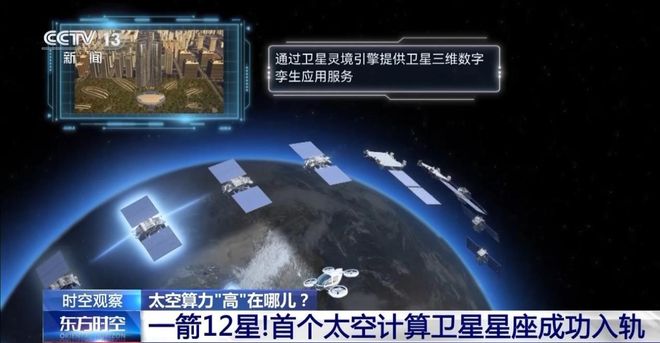
Core Viewpoint - The new space race has begun, driven by Elon Musk's push for SpaceX to acquire xAI and the application for deploying a low-Earth orbit satellite network of up to 1 million satellites, indicating a strategic positioning for future computational needs in space [1][2]. Group 1: Space Computing and Energy - The core issue of space computing is energy supply, as any computational facility ultimately relies on a stable power source [6]. - China is projected to have its electricity consumption exceed 10 trillion kilowatt-hours by 2025, establishing a robust energy supply system that supports high-intensity power loads [6][7]. - In contrast, the U.S. faces tighter constraints on energy supply, with its aging power grid struggling to meet the increasing demands of AI training and inference [8][10]. Group 2: Challenges of Space Computing - The challenges of space computing include heat dissipation and data throughput, which cannot be solved solely by improving chip performance [11][12]. - In space, heat must be released through radiation, creating engineering constraints that require larger heat dissipation systems [11][12]. - The need for a robust communication system is critical, as traditional satellite architectures may not support the high-frequency interactive tasks required for space computing [13][14]. Group 3: The Need for "Sky Computing" - The urgency for "sky computing" arises from the rapid explosion of computational demands that are beginning to exceed terrestrial capabilities [18][19]. - Complex systems in large satellite constellations require rapid decision-making capabilities that terrestrial systems cannot provide, necessitating computational power in orbit [19][20]. - The evolution of autonomous systems in space, such as space mining and robotic labor, further emphasizes the need for embedded computational capabilities in space [21][22]. Group 4: Strategic Implications - The development of "sky computing" is not merely a response to immediate needs but represents a strategic opportunity for countries to define the future of space computing [2][26]. - The year 2026 is poised to be significant for China's space ambitions, as it seeks to catch up while also positioning itself for future advancements in space technology [25][26]. - Major companies like NVIDIA, Amazon, and Blue Origin are entering the "sky computing" arena, indicating a competitive landscape that could redefine space capabilities [24][26].
对于2026年的苹果,我们该期待什么?
36氪· 2026-02-11 00:13
Core Viewpoint - Apple's Q1 FY2026 revenue reached a record high of $143.76 billion, representing a 16% year-over-year increase, driven primarily by strong iPhone sales and a recovery in the Chinese market [5][10][12]. Group 1: Financial Performance - Apple's gross margin for the last quarter was 48.2%, with a net profit of $42.097 billion, also reflecting a 16% year-over-year growth [6]. - iPhone revenue surged by 23% year-over-year to $85.27 billion, exceeding both market and internal expectations, with an estimated average selling price of $1,011 [10][9]. - The Greater China region saw a significant recovery, with revenue increasing by 38% year-over-year to $25.526 billion [12]. Group 2: Market Dynamics - The increase in memory prices is a concern, with DRAM contract prices expected to rise by 55%-60% and NAND flash prices by 33%-38% in Q1 2026 [16]. - The cost of memory in the bill of materials (BOM) for smartphones has increased from 10%-15% to 20%-30%, with mid-range devices seeing costs rise to 34% [17]. - The impact of rising memory prices is expected to affect Apple's gross margins more significantly in the upcoming quarters, with negotiations for memory prices shifting from biannual to quarterly [21]. Group 3: AI Strategy - Apple has been perceived as lagging in AI compared to competitors, focusing on privacy and device-side processing rather than cloud-based solutions [26][27]. - A partnership with Google has been established to enhance Apple's AI capabilities, particularly for the next-generation Siri, which will utilize Google's Gemini model for training [28]. - The new version of Siri, supported by Gemini, is expected to launch in late February 2024, with a more significant upgrade planned for June 2024 [29]. Group 4: Product Development and Future Outlook - Apple plans to launch over 20 new products in 2026, including the long-anticipated foldable iPhone and a more affordable MacBook aimed at expanding its user base [32][33]. - The upcoming iPhone Fold is expected to feature a wide foldable design and a battery capacity of 5,500mAh, marking a significant advancement in Apple's product lineup [32]. - Apple's acquisition of the Israeli AI startup Q.ai for nearly $2 billion aims to enhance the interaction experience of devices like AirPods and Vision Pro [34].


AI短剧乘风起
Mei Ri Shang Bao· 2026-02-10 22:23
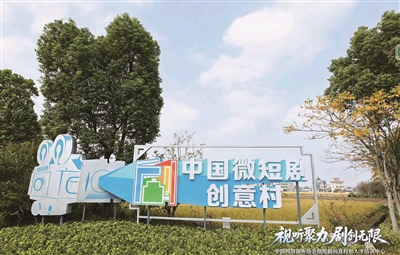
Core Insights - The article highlights the rapid success of the AI short drama "From the Lying Snake Begins to Devour Evolution," which achieved over 200 million views within a week of its release, marking a significant entry for the company Xinmeihongxing into the industry [2] - Xinmeihongxing aims to launch over 30 high-quality AI short dramas by the 2026 Spring Festival, showcasing its commitment to becoming a leader in the micro-short drama industry [5][7] Group 1: Company Overview - Xinmeihongxing, established in Hangzhou Qiantang, focuses on the production of AI-driven short dramas, leveraging AI technology for efficient and standardized production processes [3][4] - The company has a team of approximately 60 employees, with over 90% involved in content production and R&D, indicating a strong focus on talent in the creative process [6] Group 2: Technology and Production - The company employs a "dual-track parallel" technology strategy, collaborating with major tech firms while also developing its proprietary algorithms to enhance the quality and efficiency of AI-generated content [4] - Xinmeihongxing's production process includes market analysis, story design, AI-driven scene generation, and final quality checks, allowing for rapid development of high-quality content [3] Group 3: Market Strategy - The Spring Festival is identified as a critical period for content release, with Xinmeihongxing preparing to capitalize on this by launching a significant number of AI short dramas [5] - The company is actively recruiting talent from local universities, establishing partnerships to ensure a steady influx of skilled professionals in AI short drama production [6] Group 4: Industry Ecosystem - Qiantang's initiative to become the "National Micro-Short Drama Industry First District" is supported by the establishment of a comprehensive service system for the industry, including the "China Micro-Short Drama Creative Village" [7] - The local ecosystem has attracted over 70 micro-short drama companies, with significant revenue growth projected for core enterprises, indicating a thriving industry environment [7][8]
腾讯研究院AI速递 20260211
腾讯研究院· 2026-02-10 16:11
Group 1 - OpenAI officially tests advertising features in ChatGPT, promising no interference with response content, targeting free and $8/month Go subscription users, while Pro and Business plans remain ad-free [1] - Ads will be labeled as "sponsored content," intelligently matched based on conversation topics and history, with user chat content not shared with advertisers, only aggregated performance data provided [1] - The goal of the advertising model is to fund free services and promote AI accessibility [1] Group 2 - Tencent's Mixyuan launches the HY-1.8B-2Bit model, achieving an equivalent parameter count of only 0.3B through 2-bit quantization, with a memory footprint of just 600MB, marking it as the first industrial-grade 2-bit edge model [2] - Compared to the original precision model, parameter count is reduced by 6 times, with generation speed on real edge devices improved by 2 to 3 times, while maintaining full cognitive capabilities for switching between concise and detailed thought processes [2] - The model has been adapted for platforms like Arm, with future plans to further narrow the capability gap between low-bit quantized models and full-precision models through reinforcement learning and model distillation [2] Group 3 - Tongyi Qianwen releases the Qwen-Image-2.0 image generation model, supporting complex instructions of 1k tokens and native resolution of 2k, enabling direct output for professional PPTs, posters, and comics, integrating text-to-image and editing functionalities [3] - Text rendering features five characteristics: accuracy, diversity, beauty, truthfulness, and completeness, supporting various fonts and accurately rendering text on different media [3] - In AI Arena blind tests, the model demonstrated superior performance in both text-to-image and image-to-text benchmarks, utilizing a lightweight architecture with an 8B Qwen3-VL encoder and a 7B diffusion decoder [3] Group 4 - Byte's Seedream 5.0 Preview model launches, supporting 2K direct output and image retrieval capabilities, available on platforms like Jianying, Capcut, and Xiaoyunque [4] - The new model focuses on enhancing intelligent understanding rather than aesthetics, improving prompt comprehension, detail texture, and precision adjustment capabilities, positioned as a cheaper alternative to Nano Banana Pro [4] - Practical tests show the model can understand abstract requests like "serene technological feel," generating more diverse images, though the upgrade from version 4.5 is not considered a significant leap, and online search capabilities remain unstable [4] Group 5 - The AI girlfriend Clawra, based on OpenClaw, has been launched, featuring a complete life trajectory and digital personality, capable of chatting, sending selfies, and video calling, resembling scenes from the sci-fi movie "Her" [5][6] - Developed by a single Korean developer, Clawra is set as an 18-year-old trainee, with the project open-sourced on GitHub for users to deploy their own AI girlfriend [6] - The OpenClaw ecosystem is rapidly expanding, with the emergence of AI versions of Reddit communities and a "rent a human" market, with Musk describing it as "the initial stage of the singularity" [6] Group 6 - The Chinese team Feeling AI ranks second globally in the Terminal-Bench 2.0 leaderboard with a score of 72.9% using CodeBrain-1, being the only Chinese team in the top ten, following OpenAI's Simple Codex [7] - CodeBrain-1 enhances code generation and error localization through efficient context retrieval and feedback mechanisms, leveraging LSP functionality to improve information retrieval efficiency [7] - The team positions CodeBrain-1 as a dynamic brain capable of adjusting plans and strategies, demonstrating China's rising position in the global competition for "advanced operating systems" in the AI era [7] Group 7 - The world's first humanoid robot fighting league, URKL, has been launched, with the champion team receiving a pure gold belt weighing ten kilograms, valued at approximately 10 million yuan [8] - The event aims to create a comprehensive ecosystem integrating technology collaboration, resource integration, talent incubation, and capital linkage, promoting deep integration of "technology + sports + culture" [8] - URKL serves as a bridge for connecting Chinese culture with international pop culture, aiding the global development of embodied intelligence technology [8] Group 8 - A study published in Nature Medicine by a team from Oxford University reveals that while LLMs perform excellently in medical exams, their effectiveness in assisting ordinary people with medical decisions significantly declines, even underperforming compared to traditional search engines [9] - The research involved 1,298 public participants testing models like GPT-4o, finding that the proportion of participants identifying relevant symptoms dropped from 94.9% to below 34.5%, showing no significant advantage over the control group [9] - The root of the problem lies in the public's lack of knowledge about key diagnostic symptoms, while LLMs lack proactive inquiry capabilities, and existing medical benchmark tests fail to reflect real human-machine interaction performance [9] Group 9 - A team from the University of California, San Francisco, introduces the CellTransformer algorithm, completing the mapping and classification of 10.4 million cells in the brains of five mice in just a few hours [10] - The algorithm employs a Transformer self-attention mechanism and self-supervised learning, predicting based on neighboring cells while aligning known brain regions and discovering new ones [10] - The research unexpectedly addresses how the striatum executes different tasks, identifying four new brain regions in the midbrain reticular formation, with future goals to apply findings to human brain mapping [10] Group 10 - Anthropic releases an 18-page report on coding trends for 2026, concluding that software development is undergoing the largest paradigm shift since the invention of graphical interfaces, enabling anyone to become a developer [11] - The report predicts multi-agent systems will replace single-agent systems, long-running agents will be able to work continuously for days to build complete systems, and non-technical personnel, such as lawyers, will be able to create their own tools [11] - Developers currently use AI in 60% of their work, but the proportion of complete delegation remains at 0-20%, indicating that future software engineers will shift from coding to orchestrating groups of intelligent agents while maintaining human judgment and "taste" [11]


大厂AI硬件竞赛:软硬一体易成,生态入口难夺
Xin Lang Cai Jing· 2026-02-10 12:40
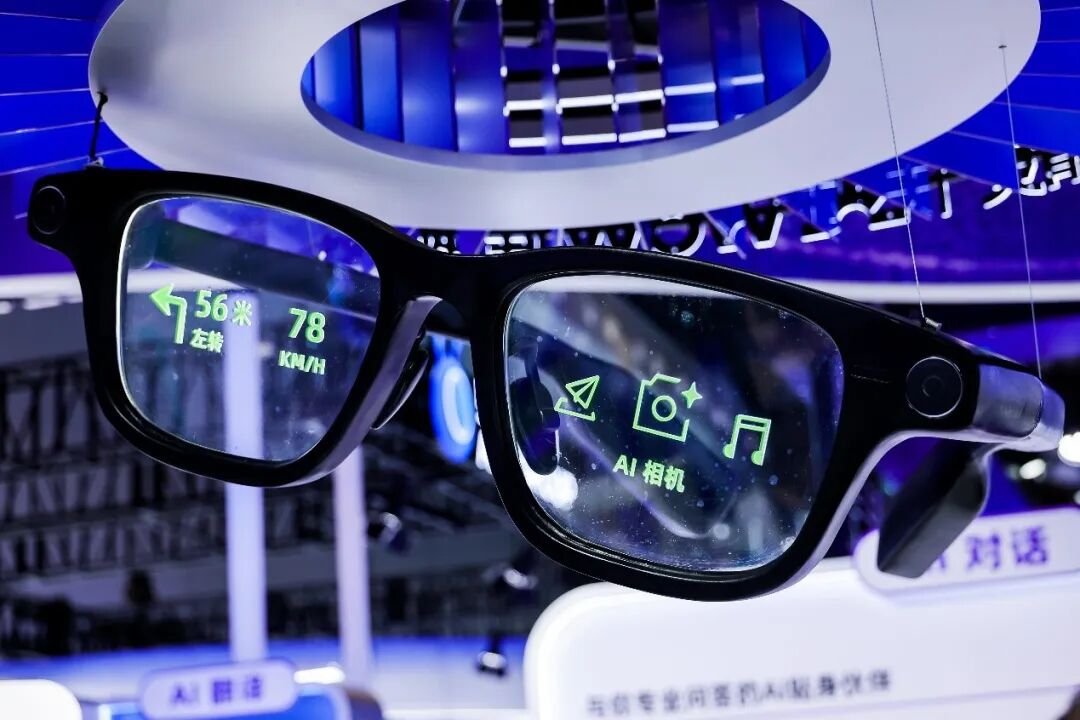
Core Insights - The next battleground for AI has shifted from the cloud to personal devices, with major tech companies exploring various forms of AI hardware, including glasses and pens [2][22] - OpenAI plans to launch a lightweight, screenless AI device in the second half of 2026, sparking speculation about its form factor [23] - The AI hardware market, particularly smart glasses, is entering a phase of scaled competition, with global shipments expected to exceed 10 million units by 2026 [3][24] Group 1: Market Dynamics - Meta has established itself as a leader in the smart glasses market, holding a 73% market share in early 2025 with its Ray-Ban collaboration [25] - Google is re-entering the smart glasses space with Project Aura, set to launch in 2026, aiming to create an open XR ecosystem [25][26] - In China, companies like Alibaba and Baidu are launching their own AI glasses, with Alibaba's Quark AI Glasses S1 topping sales charts upon release [26][27] Group 2: Product Innovations - Alibaba's Quark AI Glasses S1 features a lightweight design and advanced voice interaction capabilities, while Baidu's XiaoDu AI Glasses Pro focuses on AI voice photography [28][27] - ByteDance is preparing to launch its own AI glasses, leveraging its VR expertise from the PICO brand [27] - Other Chinese manufacturers, including XREAL and Rokid, are also developing competitive products in the global market [27] Group 3: Strategic Paths - OpenAI represents a "disruptive entry" strategy, focusing on a screenless AI pen that aims to redefine human-computer interaction [31][32] - Google is pursuing an "ecosystem platform" strategy with its Android XR operating system and Project Aura, aiming to replicate its success in the smartphone market [33] - Chinese giants like Alibaba and Baidu are adopting a "full-stack synergy" approach, integrating algorithms, chips, cloud, and terminal solutions [35][36] Group 4: Challenges Ahead - The AI hardware market faces significant challenges, including supply chain constraints and the need for robust production capabilities [39] - Privacy and ethical compliance issues are critical, as AI hardware collects extensive user data [40] - The business model may shift from selling devices to offering services, emphasizing the need for innovative revenue streams [41]



68岁北京大爷,干出2000亿超级IPO,公司人均年薪百万
Xin Lang Cai Jing· 2026-02-10 12:39
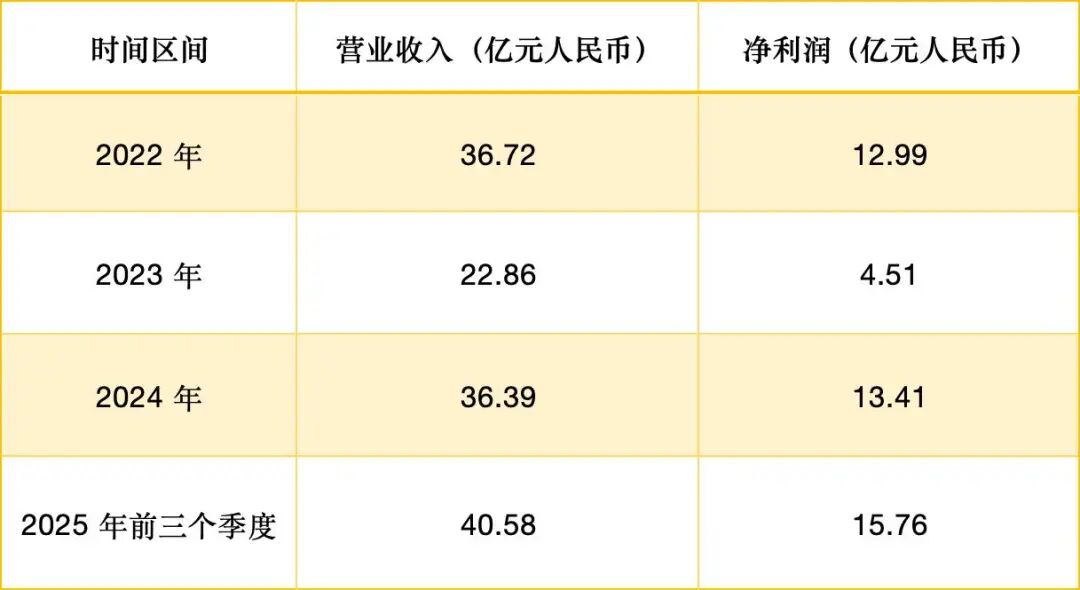
Core Viewpoint - The recent IPO of Lanqi Technology on the Hong Kong Stock Exchange has created significant market interest, with its market capitalization exceeding 210 billion HKD shortly after listing [2][22]. Company Overview - Lanqi Technology specializes in memory interface chips, which are crucial for enhancing the speed and stability of data access between CPUs and memory in servers [3][24]. - The company holds the largest global market share in the memory interface chip sector and has demonstrated strong profitability, with revenues of approximately 40.6 billion RMB and a net profit of 16 billion RMB for the first three quarters of 2025, resulting in an adjusted net profit margin of 52% [5][25]. Founders and Background - Founded in 2004 by Yang Chonghe, a semiconductor expert with a notable background, Lanqi Technology has evolved significantly since its inception [5][29]. - Yang Chonghe's career includes pivotal roles in the semiconductor industry, including founding China's first venture capital-style IC design company and leading it to a successful acquisition [8][28]. Financial Performance - The company has shown remarkable growth in revenue and profit over the years, with revenues of 36.72 billion RMB in 2022, 22.86 billion RMB in 2023, and projected revenues of 40.58 billion RMB for the first three quarters of 2025 [17][34]. - The net profits for the same periods were 12.99 billion RMB, 4.51 billion RMB, and 15.76 billion RMB respectively, indicating a strong recovery and growth trajectory [17][34]. Market Position and Competition - The global memory interface chip market is highly concentrated, with only three companies, including Lanqi Technology, capable of mass-producing DDR4/DDR5 chips, holding over 93% of the market share [18][34]. - The high technical barriers to entry have led to the exit of several competitors, solidifying Lanqi Technology's position in the market [18][34]. R&D Investment - Lanqi Technology has invested over 2 billion RMB in R&D from 2022 to 2024, focusing on enhancing its product offerings and maintaining competitive advantage [35]. - The company has also seen significant increases in employee compensation, reflecting its commitment to attracting and retaining talent in a competitive industry [35].
中国AI大战:“百模大战”已结束,最大的利润池归属大厂,智谱和MiniMax如何突围?
华尔街见闻· 2026-02-10 11:52
Core Insights - The core viewpoint of the article emphasizes that the ability to convert AI models into cash flow is becoming the true scarcity in the industry, as the Chinese AI market transitions from a "model war" phase to one where commercial viability and global positioning are key determinants of success [1][2]. Industry Overview - The report indicates that the number of capable and well-funded model developers in China has decreased from over 200 to less than 10, highlighting a significant consolidation in the AI market [1]. - The largest profit pool in the domestic AI industry is expected to shift towards platform giants that control distribution, while independent firms must find survival niches through "structural neutrality" [1][4]. Profit Distribution - The report asserts that the long-term profit pool of generative AI will likely be concentrated among large internet platforms like Tencent and Alibaba, which have established distribution and monetization channels [5][6]. - Platforms have high-frequency user touchpoints and mature application scenarios, making it easier to internalize AI capabilities as features rather than standalone products [6][7]. Independent Model Companies - Independent model companies like Zhipu and MiniMax are seen as having opportunities not through direct competition with platforms but by providing "structural neutrality" [11][12]. - These independent providers can monetize their models through APIs and enterprise licensing without creating competitive dependencies with their clients [14]. Financial Insights - Zhipu's revenue model is heavily focused on localized deployment, which accounted for 85% of its total revenue in the first half of FY2025, with a gross margin of 59.1% [16]. - MiniMax's revenue structure is notably global, with over 73% of its total revenue coming from markets outside China, providing it with significant economic flexibility [24]. Growth Projections - Zhipu is expected to achieve a revenue CAGR of 127% from 2026 to 2030, with profitability anticipated by 2029 and a normalized net profit margin of 20% by 2030 [19][20]. - MiniMax is projected to have a revenue CAGR of 138% during the same period, with profitability also expected by 2029 and a normalized net profit margin of 24% by 2030 [29][30]. Cost Structure Changes - The report highlights a significant shift in cost structure from "training-driven" to "inference-driven," with inference costs expected to dominate future expenditures [32][39]. - For Zhipu, the proportion of training costs is projected to drop from 93% in 2025 to 32% by 2030, while inference costs will rise from 7% to 68% [34][37]. Conclusion - The competitive landscape is shifting, with the focus moving from who can train larger models to who can achieve cheaper inference and higher utilization rates [40]. - The value of Zhipu and MiniMax lies not in challenging the platforms but in occupying indispensable positions outside of them [41].