
人车家全生态

Search documents
行业风向|警觉!一场“消耗战”的确开始了
Sou Hu Cai Jing· 2025-06-24 16:58
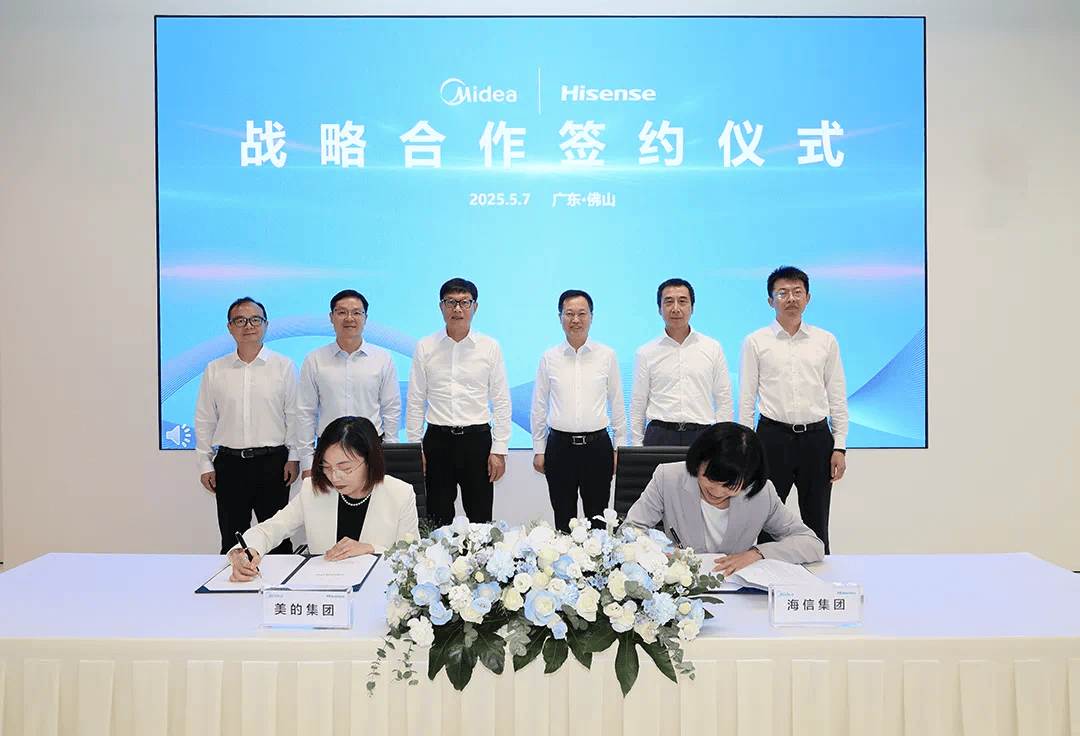
Core Viewpoint - The home appliance industry is entering a "war of attrition" characterized by intense competition and market saturation, exacerbated by Xiaomi's aggressive entry into the market [1][4][20] Industry Overview - The domestic home appliance market is currently in a deep stock competition phase, with penetration rates for major categories exceeding 90% [1] - Despite sales increases due to subsidy policies, there are concerns about overspending and rising sales pressures, compounded by uncertainties in tariffs [1][2] Competitive Landscape - Xiaomi's entry into the home appliance sector has raised concerns about increased competition, particularly as it aims to achieve significant market share in air conditioning by 2030 [7][18] - Xiaomi's strategy includes leveraging its ecosystem, supply chain, and low-margin approach, which poses challenges to established brands like Haier, Midea, and Gree [7][19] Strategic Responses - Major players are responding to the competitive landscape by focusing on cost reduction and efficiency improvements, with Haier and Midea forming strategic partnerships to enhance their competitive positions [12][15] - The emphasis on AI and smart home technology is becoming a key battleground, with companies investing in AI applications to improve operational efficiency and reduce costs [15][16] Market Dynamics - The competition is not limited to domestic markets; companies are increasingly looking to expand overseas, with Haier and Midea achieving significant revenue from international markets [16][18] - The entry of Xiaomi into the home appliance market is expected to intensify competition both domestically and internationally, as all players seek to capture high-value markets [18][20] Future Outlook - The ongoing "war of attrition" is likely to continue, with brand endurance and the ability to innovate becoming critical factors for success [19] - Companies must navigate the challenges of maintaining brand integrity while competing aggressively on price and market share [19][20]




小米集团-W(01810):YU7即将发布,增长动力持续加强
Guoyuan Securities2· 2025-06-24 12:59
Investment Rating - The report maintains a "Buy" rating with a target price of HKD 66.37 per share, indicating a potential upside of 21% from the current price of HKD 54.85 [6][39]. Core Insights - In Q1 2025, the company achieved a record revenue of RMB 111.3 billion, a year-on-year increase of 47.4%, and a net profit of RMB 10.7 billion, up 64.5% year-on-year, marking the highest figures for the same period in history [3][9]. - The SU7 series saw a delivery of 75,869 units in Q1 2025, an increase of 8.9% quarter-on-quarter, with cumulative deliveries exceeding 258,000 units by the end of March 2025 [4][11]. - The upcoming SUV model YU7 is expected to be launched on June 26, 2025, which could enhance market interest due to its competitive features and pricing strategy [5][19]. - The company is projected to achieve revenues of RMB 493.23 billion, RMB 600.31 billion, and RMB 715.69 billion for the years 2025, 2026, and 2027, respectively, with net profits of RMB 37.72 billion, RMB 51.70 billion, and RMB 66.76 billion [6][34]. Summary by Sections Financial Performance - Q1 2025 revenue reached RMB 111.3 billion, a 47.4% increase year-on-year, with the "Mobile × AIoT" segment contributing RMB 92.7 billion, up 22.8% [3][9]. - The adjusted net profit for Q1 2025 was RMB 10.7 billion, reflecting a 64.5% year-on-year growth [3][9]. Automotive Business - The SU7 series is expected to achieve profitability in H2 2025, with a significant reduction in operating losses due to increased delivery volumes [4][18]. - The company plans to expand its automotive sales network, having opened 235 sales centers across 65 cities by March 31, 2025 [15]. Product Launches - The YU7 SUV is anticipated to be launched soon, featuring a long range of 835 km and advanced safety technologies, which may lead to higher sales than market expectations [5][19]. Market Position - The company continues to rank among the top three global smartphone manufacturers, with a market share of 14.1% in Q1 2025, and has seen a significant increase in its market share in mainland China [22][29]. - The average selling price (ASP) of smartphones reached RMB 1,211, marking a historical high with a year-on-year increase of 5.8% [23]. Future Projections - Revenue forecasts for 2025 to 2027 indicate strong growth, with expected increases of 34.8%, 21.7%, and 19.2% respectively, alongside substantial net profit growth [6][34].
模型即 Agent 的含金量:Kimi深度研究功能详评
歸藏的AI工具箱· 2025-06-24 04:17
Core Viewpoint - Kimi's deep research capabilities have been significantly enhanced, demonstrating high content richness, accuracy, and logical rigor, distinguishing it from similar products through its end-to-end self-reinforcement learning technology [2][4]. Group 1: Kimi's Deep Research Capabilities - Kimi's deep research model is trained using a self-reinforcement learning technique, and it will open-source both the basic pre-trained model and the subsequent reinforced model, which is highly anticipated [2]. - The model has shown strong performance in tests such as HLE (Humanity's Last Exam) and Sequoia's Agent tests [2]. - Kimi's deep research has the ability to autonomously identify credible information by planning multiple search keywords and reviewing numerous web pages, ensuring high-quality sources and comprehensive coverage [4]. Group 2: Labubu's Popularity Analysis - Labubu, a character under Pop Mart, has recently gained significant popularity, although its heat has slightly decreased in recent days [7]. - The analysis of Labubu's rise includes its design philosophy, product evolution, operational strategies, and the impact of fan economy and secondary market speculation [26][20]. - The report generated by Kimi on Labubu reached approximately 19,000 words, showcasing a complete logical chain and covering various aspects such as IP design, marketing strategies, and the secondary market [11][26]. Group 3: Xiaomi's Upcoming Product Launch - Kimi conducted a detailed search and analysis for Xiaomi's upcoming launch event on June 26, 2025, categorizing products and estimating specifications while comparing them with competitors [39]. - The report for Xiaomi's launch also reached around 17,000 words, indicating thoroughness in addressing the requested content [40]. - Kimi's analysis included a sales forecast for Xiaomi's YU7 SUV, with conservative, baseline, and aggressive estimates based on market trends and competitive analysis [55][58]. Group 4: Visual Presentation and User Experience - Kimi generates a visual web page alongside the research report, ensuring that the content is detailed and well-structured, enhancing user experience [70][75]. - The visual presentation includes interactive elements such as charts and highlights, making complex information easily digestible [75]. - The design adapts to the brand's theme, providing a tailored experience for users [73].
雷军官宣:周四晚7点!
天天基金网· 2025-06-23 06:15
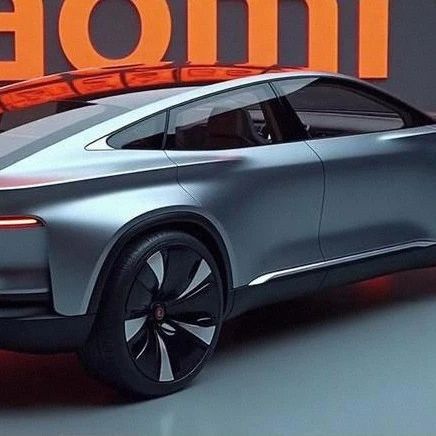
Core Viewpoint - Xiaomi is set to officially launch its first electric SUV, the YU7, on June 26, 2023, alongside other products such as the Xiaomi Flip2 foldable phone and the Xiaomi Pad 7S Pro [1][2]. Group 1: Product Details - The Xiaomi YU7 is a pure electric SUV with a length close to 5 meters, featuring a dual-motor design for acceleration from 0 to 100 km/h in approximately 3 seconds, equipped with lidar for advanced driver assistance, and powered by a battery from CATL with over 100 kWh capacity [1][2]. - Price predictions for the YU7 range from 250,000 to 320,000 yuan, with expected sales of 85,000 units in 2025 and 260,000 units in 2026 [2]. Group 2: Market Positioning - The YU7 is positioned as a high-end product, competing directly with models like Tesla Model Y, NIO EC6, and XPeng G7, with Xiaomi emphasizing that the YU7's standard version will have higher specifications than the SU7 Pro [2]. - Analysts believe that the YU7's success will depend on its configuration options and overall value proposition, suggesting it may exceed market expectations in sales [2][3]. Group 3: Strategic Vision - Xiaomi aims to create an integrated ecosystem connecting people, vehicles, and homes, leveraging its technology across various product categories to establish a competitive edge in the smart living space [3]. - The company's strategy is shifting from being a disruptor to fostering collaboration within the automotive ecosystem, focusing on expanding its automotive business and enhancing technological capabilities [3][4].
爆款预定!小米YU7六月底正式上市,有望联手SU7冲击百万辆大关
Xuan Gu Bao· 2025-06-20 06:32
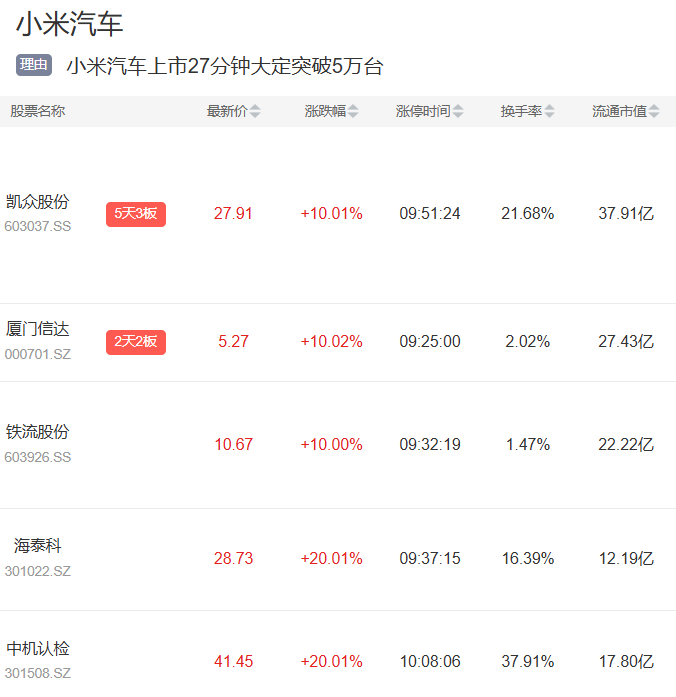
Group 1 - Xiaomi's Yu7 is set to launch at the end of June, with a starting price of around 250,000 RMB and expected monthly sales of 30,000 to 40,000 units [1][2] - The Yu7 features a 800V silicon carbide platform, a 96.3 kWh lithium iron phosphate battery with a CLTC range of 835 km, and advanced driver assistance systems [1] - The Yu7 has already attracted significant interest, with three times the number of user inquiries compared to the SU7 at the same stage, indicating a potential for greater market impact [1] Group 2 - The launch of the SU7 saw over 50,000 pre-orders within 27 minutes, leading to a surge in stock prices for related companies [3] - Companies such as Huayang Group and Longli Technology are set to supply components for the Yu7, indicating a robust supply chain [5][6] - Various suppliers, including Fuyou Glass and Baowu Magnesium, are providing essential parts for Xiaomi's automotive products, showcasing a diverse supplier network [7][8]
丰田董事长年薪曝光!中国车企掌门人薪酬普遍不足其零头;小米卢伟冰:未来与美的海尔一起做家电头部;MiniMax考虑赴港IPO
雷峰网· 2025-06-20 00:33
Key Points - Toyota's chairman Akio Toyoda's annual salary is revealed to be 1.949 billion yen (approximately 96.58 million RMB), marking a 20% increase year-on-year and a historical high for four consecutive years [4] - In contrast, the salaries of Chinese automotive executives are significantly lower, with Geely's Li Shufu earning only 376,000 RMB, which is equivalent to just 1.5 days of Toyoda's income [4][5] - The highest-paid individuals in Chinese car companies are often not the CEOs, as seen in Geely where CEO Gui Shengyue earns 32.01 million RMB, while Li Shufu's salary ranks much lower [5][6] Domestic News - Xiaomi's president Lu Weibing stated that Xiaomi does not engage in price wars and aims to collaborate with leading companies like Midea and Haier to advance the home appliance industry [8][9] - The domestic GPU company Moore Threads has completed its IPO counseling, potentially becoming the first GPU stock in China [9][10] - Bilibili reported that its monthly revenue from animated short dramas reached over 10 million RMB in Q1 2025, a 50-fold increase from the previous year [30] International News - OpenAI's CEO announced that GPT-5 is expected to be released this summer, promising significant advancements in AI capabilities [36][37] - Samsung is facing a crisis with reports of data falsification and employee turnover due to poor working conditions, leading to a decline in its semiconductor business [34][35] - Volvo plans to increase prices of its models in the US by up to 6% next year, which could result in price hikes of several thousand dollars for certain models [42][43]





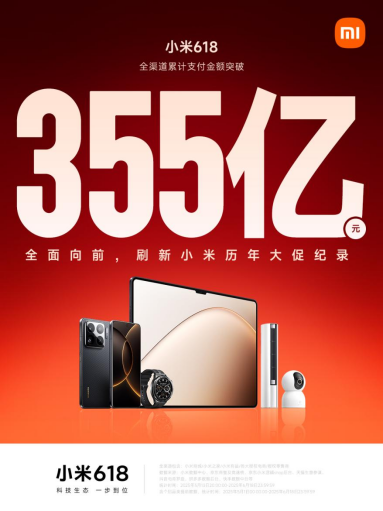
小米正式晒出“618”成绩单:全渠道累计支付金额突破355亿元
news flash· 2025-06-19 08:20
6月19日凌晨,小米正式晒出"618"成绩单:全渠道累计支付金额突破355亿元,刷新历年大促纪录。在 业内人士看来,这一成绩不仅预示了小米在消费电子领域的强劲竞争力,更标志着其"人车家全生态"战 略在市场端的全面落地。小米创始人、董事长兼CEO雷军6月19日清晨通过其微博转发了这份"亮眼"成 绩单,并表达了对米粉的感谢。(上证报) ...
小米618全渠道支付金额超355亿,刷新历年大促纪录
Cai Jing Wang· 2025-06-19 06:45
Core Insights - Xiaomi achieved a record-breaking total payment amount of over 35.5 billion yuan during the 2025 618 shopping festival, marking a new high [1] Group 1: Sales Performance - Xiaomi's flagship models dominated sales across various price segments, with the Xiaomi 15 Ultra leading in the 6000-8000 yuan range and the Xiaomi 15 securing the top spot in the 4000-5999 yuan range [2] - The REDMI K80 maintained its strong performance, winning the sales championship in the 2000-2999 yuan segment across multiple platforms [2] - Other models like REDMI K80 Pro, REDMI Turbo 4 Pro, REDMI Note 14 Pro, REDMI Note 13 5G, and REDMI 14C also achieved top sales positions in their respective price brackets [2] Group 2: Ecosystem and Product Categories - Xiaomi's success during the 618 festival was attributed to its "people, vehicles, and home ecosystem," which demonstrated strong momentum and significant synergy [3] - In various product categories, Xiaomi secured 158 first-place rankings, including in monitors, smart speakers, water purifiers, humidifiers, and dishwashers [3] - The Xiaomi Pad 7 Ultra led in the high-end tablet segment, while the Xiaomi Band 9 Pro and REDMI Watch 5 topped the sales charts in their respective wearable categories [3] Group 3: Service Upgrades - Xiaomi's service offerings saw significant enhancements, with a 38% year-on-year increase in on-site installation services and a 192% growth in integrated delivery and installation services [3] - The range of services expanded to 12 categories, and the number of stores supporting IP68 protection increased to 500 [3]
从SU7到芯片,小米商业化闭环的野心
Bei Jing Shang Bao· 2025-06-16 15:02
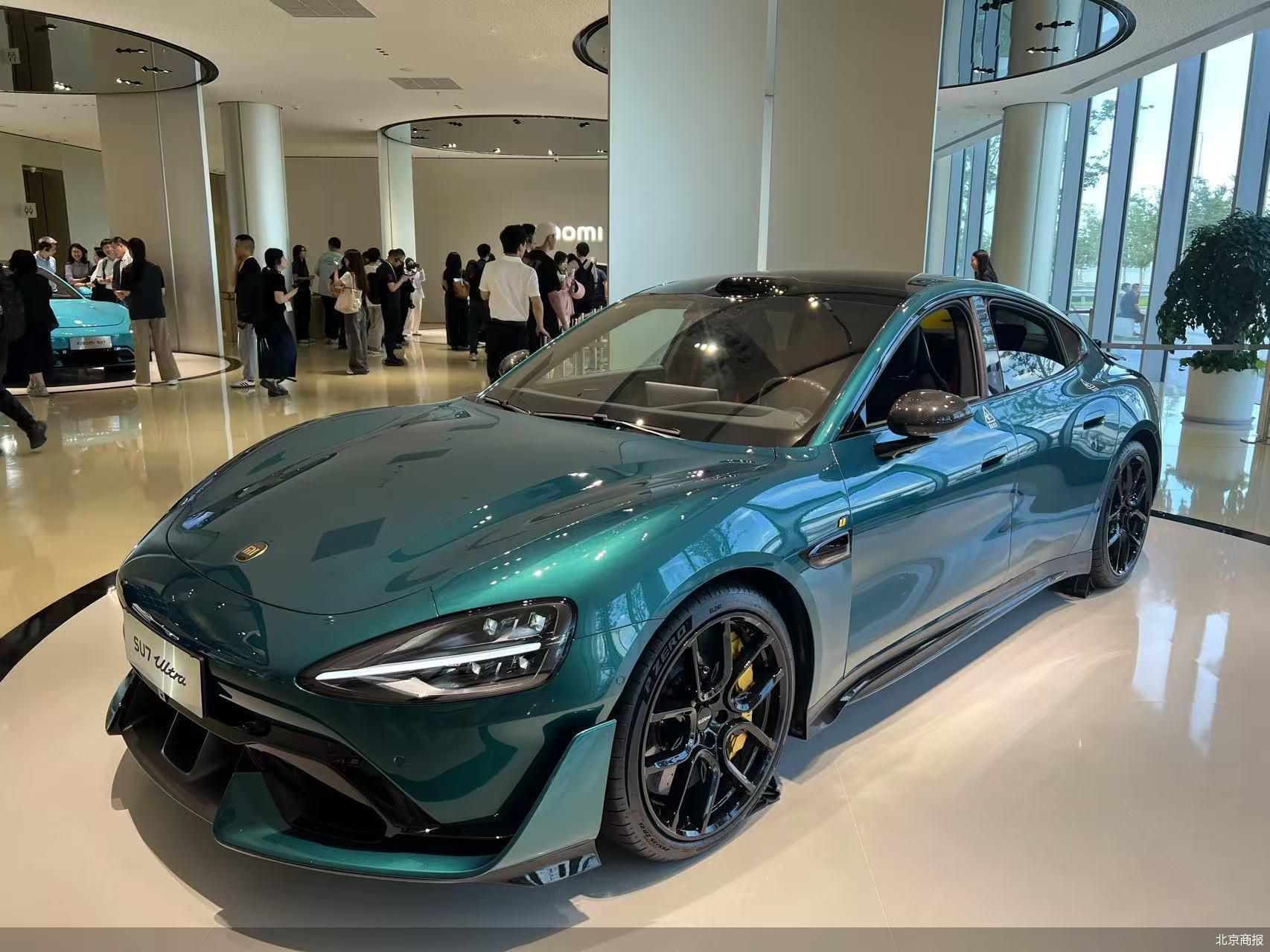
Group 1: Core Insights - Xiaomi's launch of the Xuanjie O1 chip marks a significant milestone in its ambition to create a comprehensive "human-vehicle-home ecosystem" [1][6] - The company has invested 13.5 billion yuan over the past four and a half years in developing the Xuanjie O1, which is part of a broader strategy to enhance its technological capabilities [1][6] - Xiaomi's SU7 vehicle has achieved remarkable sales, becoming the best-selling model in the 200,000 yuan and above category, with 250,000 units sold within 14 months [4][6] Group 2: Manufacturing and Production - Xiaomi's super factory employs over 700 robots, achieving 100% automation in key manufacturing processes, including die-casting and assembly [3] - The factory's integrated die-casting production line simplifies 72 parts into one, reducing production time by 74% [3] - Once fully operational, the factory can produce a new SU7 vehicle every 76 seconds, with a monthly capacity of 28,000 to 29,000 units [4] Group 3: Research and Development - Xiaomi plans to invest an additional 200 billion yuan in R&D over the next five years, building on its previous commitment of 102 billion yuan from 2021 to 2025 [7] - The company has seen a 30.1% year-on-year increase in R&D investment, reaching 6.7 billion yuan in Q1 2025, with total R&D personnel rising to 21,731 [7] - Xiaomi's focus on long-term investment in core technologies aims to establish itself as a leading hard-tech company globally [6][7] Group 4: Strategic Importance of Chip Development - The re-launch of Xiaomi's "big chip" strategy is crucial for building a self-sufficient technological moat and reducing supply chain dependencies [8] - Self-developed chips are expected to enhance product performance and user experience, supporting Xiaomi's high-end market penetration [8] - The integration of chips, operating systems, and AI is seen as essential for creating a cohesive ecosystem across devices [7][8]
如何看待小米大家电的崛起和影响?
Changjiang Securities· 2025-06-16 01:11
Investment Rating - The report maintains a "Positive" investment rating for the home appliance industry [12] Core Insights - Xiaomi Group's 2023 "Human-Vehicle-Home Ecosystem" strategy integrates mobile phones, home appliances, and automobiles through the Surge OS system, promoting seamless connectivity of smart hardware [4][24] - Xiaomi's home appliance business has achieved significant growth, particularly in air conditioning, with sales volume ranking among the industry leaders [4][7] - The IoT and consumer products segment is projected to account for 28.45% of Xiaomi's total revenue in 2024, with air conditioning sales expected to exceed 6.8 million units, a year-on-year growth of over 50% [7][21] Summary by Sections Overview: Building the Human-Vehicle-Home Ecosystem - Xiaomi has rapidly expanded its home appliance market share by leveraging its competitive pricing strategy and innovative technology [7][8] - The company has increased its offline retail presence, with plans to open over 100 "Human-Vehicle-Home" integrated stores in 2024 [27][29] Rise: Three Strategies Driving High Growth in Home Appliances - Xiaomi's market share has surged due to its focus on creating popular products, differentiated competition, and enhancing user loyalty through an integrated ecosystem [8][54] - The company has adopted a low-price strategy similar to that of its competitors, attracting price-sensitive consumers while maintaining a focus on quality [9][62] Impact: Leading Brands Maintain Advantage, Xiaomi's Entry Sparks Change - Xiaomi's entry into the air conditioning market has prompted established brands to adapt their strategies, although the latter still hold significant market share [9][62] - The competitive landscape is evolving, with Xiaomi's low-price strategy posing challenges to traditional leaders like Gree and Midea [9][63] Investment Recommendations: Focus on Certainty Growth Leaders - The report suggests investing in quality leaders with low exposure to the U.S. market, such as Gree Electric, Midea Group, and Hisense Home Appliances, which are expected to benefit from domestic demand trends [10][13]