消费降级

Search documents
消费降级有多严重?
Sou Hu Cai Jing· 2025-08-25 01:45
Group 1 - Consumer spending has significantly decreased this year, leading to a rise in street vendors and a decline in traditional retail stores [1][2] - The shift to street vending is a response to economic challenges, with vendors reporting lower-than-expected sales despite lower overhead costs [2][3] - The overall economic environment has deteriorated, with many individuals experiencing reduced incomes and job losses, resulting in a return to more frugal spending habits reminiscent of a decade ago [3][4] Group 2 - The contrast between past and present consumer behavior highlights a significant decline in disposable income, affecting spending on both luxury and everyday items [3] - The current economic climate has led to a sense of confusion and despair among consumers, questioning the effectiveness of their efforts in improving their financial situations [4]


真离谱!那些原本免费的东西,现在全要收费了?
Sou Hu Cai Jing· 2025-08-24 08:11
Group 1 - The article discusses the phenomenon of rising fees in various sectors, highlighting a shift from free services to paid ones, which is causing financial strain on consumers [1][16][20] - Schools are increasingly charging for services that were previously free, such as air conditioning and nap areas, leading to concerns about accessibility for students [3][5] - Public spaces are also adapting to this trend, with amenities like massage chairs replacing regular seating in high-traffic areas, generating significant profits for operators [7][9] Group 2 - Tourist attractions are implementing fees for viewing natural sights, effectively monetizing access to scenic locations, which raises questions about the commercialization of public spaces [12][14] - Public transportation is experiencing reduced discounts and increased fees, reflecting a broader trend of cost-cutting measures impacting everyday commuters [14][16] - The article emphasizes that the era of free services is fading, as companies shift towards charging for previously complimentary offerings, often without clear communication to consumers [16][18]

低价外卖,正在“杀死”实体餐饮
Sou Hu Cai Jing· 2025-08-23 23:46
Core Viewpoint - The article discusses the phenomenon of price reduction in the food delivery industry, driven by supply-side initiatives rather than consumer demand, leading to a significant shift in consumer behavior and impacting traditional dining establishments [1][5][36]. Group 1: Supply-Side Price Reduction - The supply side is actively initiating lower prices, which can exceed consumer expectations [2][4]. - The competition among delivery platforms has resulted in a dramatic increase in daily orders, from 100 million to 200 million, indicating a doubling of demand [9][11]. - The aggressive pricing strategies of delivery platforms have led to substantial losses for companies like JD, which reported losses exceeding 10 billion in a single quarter [9]. Group 2: Impact on Traditional Dining - As online food delivery becomes cheaper, traditional dining establishments face significant challenges, with many forced to close due to decreased patronage [12][14]. - The article highlights a friend’s experience in the second-hand restaurant equipment recovery business, noting a sharp increase in closures, with over 100 restaurants shutting down in July alone [14]. - Consumers are increasingly opting for cheaper online options over traditional dining, leading to a decline in foot traffic for restaurants that rely heavily on in-person dining [15][30]. Group 3: Consumer Behavior Changes - The low prices offered by delivery platforms have conditioned consumers to expect lower prices, which could lead to a significant drop in demand if prices return to normal levels [20][22]. - The article emphasizes that consumers are now more price-sensitive, with many choosing online delivery over dining out, even for meals that were previously considered special [34][35]. - The normalization of low prices in the food delivery sector may hinder the long-term quality development of the restaurant industry [36].

游客挤爆京沪!酒店餐馆却集体哭穷,利润暴跌92%真相太扎心
Sou Hu Cai Jing· 2025-08-23 20:06
Core Insights - The tourism industry is experiencing a surge in visitor numbers and spending, but the accommodation and dining sectors are facing severe profit declines, indicating a disconnect between revenue growth and actual profitability [1][3][4] Group 1: Profit Discrepancies - Beijing's tourism saw 180 million visitors and 338.1 billion yuan in spending, yet the accommodation sector's profits plummeted by 92.9%, with only 5.98 million yuan in total profit from 1,613 enterprises [1][4] - Shanghai reported a 9.5-fold increase in profits for the second quarter, but this was misleading as the first quarter's losses were not accounted for, leading to a 4.3% revenue decline when combined [3][4] Group 2: Changing Consumer Behavior - Despite increased visitor numbers, average spending per visitor in Beijing rose only 6.2%, indicating a trend towards more budget-conscious travel [4][5] - The disappearance of business travelers has significantly impacted high-end hotels, with a 28% drop in business bookings, as companies cut costs and employees opt for budget accommodations [5][6] Group 3: Rising Costs and Competition - The accommodation and dining sectors are grappling with rising operational costs, including rent and wages, while revenues are declining, leading to unsustainable business models [6][7] - The restaurant industry is facing intense competition, with a significant increase in the number of establishments leading to aggressive pricing strategies that further erode profitability [6][7] Group 4: Strategies for Recovery - To overcome the current challenges, the industry must shift from a reliance on foot traffic to creating unique value propositions, such as differentiated experiences and offerings [7][8] - Government support measures, such as rent reductions and digital transformation subsidies, are essential to help struggling businesses survive the current downturn [7][8]

双桦控股(01241)发盈警 预期上半年税后净亏损收窄至约210万元
智通财经网· 2025-08-22 09:19
Core Viewpoint - The company anticipates a decline in revenue for the first half of 2025, projecting approximately RMB 12.8 million, compared to RMB 60.6 million for the first half of 2024, alongside a reduction in net loss after tax [1] Revenue Expectations - Projected revenue for the first half of 2025 is approximately RMB 12.8 million [1] - Revenue for the first half of 2024 was approximately RMB 60.6 million [1] - The expected decrease in revenue is attributed to a sluggish overall economic outlook in China and a downgrade in consumer spending [1] Net Loss Projections - Anticipated net loss after tax for the first half of 2025 is approximately RMB 2.1 million [1] - The net loss after tax for the first half of 2024 was approximately RMB 3.2 million [1] - The reduction in net loss is primarily due to the reversal of impairment losses on trade receivables [1] Strategic Adjustments - The company is actively adjusting its product and service mix to adapt to changes in supply and demand in the market [1] - Cost and risk control measures are being implemented in response to the economic challenges [1]
双桦控股(01241.HK)预计上半年预估税后净亏损约210万元
Ge Long Hui· 2025-08-22 09:19
Core Viewpoint - The company expects a significant decline in revenue and a reduction in net loss for the six months ending June 30, 2025, primarily due to a sluggish overall economic outlook in China and changes in consumer behavior [1] Revenue Summary - The estimated revenue for the six months ending June 30, 2025, is approximately RMB 12.8 million, a decrease from RMB 60.6 million for the same period in 2024 [1] - The revenue decline is attributed to a general economic downturn in China, leading to downgraded consumer spending, which has impacted both the sales prices and volumes of the company's products and services [1] Net Loss Summary - The expected net loss after tax for the six months ending June 30, 2025, is approximately RMB 2.1 million, an improvement from a net loss of RMB 3.2 million for the same period in 2024 [1] - The reduction in net loss is primarily due to the reversal of impairment losses on trade receivables [1] Strategic Adjustments - The company is actively adjusting its product and service mix to adapt to changes in supply and demand dynamics, focusing on cost and risk control measures [1]
一个反常识的社会现实:大多数人都在计划变穷
洞见· 2025-08-21 12:36
Core Viewpoint - The article discusses the concept of "downgrading" in various aspects of life, including consumption, education, and social interactions, as a strategy to cope with economic uncertainties and personal financial stability [14][101]. Consumption Downgrade - A new term "poor shopping" has emerged, indicating that people are now browsing stores without the intention to buy, reflecting a shift in consumer behavior towards more mindful spending [16][19]. - Individuals are becoming more conscious of unnecessary purchases, opting for alternatives and prioritizing savings over impulse buys [22][24]. - The article highlights a case of a high-income individual who, after facing financial strain, shifted from luxury spending to more frugal choices, leading to a sense of security and happiness [32][36]. Education Downgrade - The narrative includes a story of a parent who invested heavily in their child's education, only to find that the degree lost value, resulting in a low-paying job for the child [52][53]. - It emphasizes that excessive spending on education does not guarantee success, and many parents are now reconsidering their approach to educational investments [70][72]. - The article advocates for a more balanced approach to education, focusing on the child's well-being rather than solely on financial investment [73]. Social Downgrade - The article reflects on the futility of excessive socializing, where individuals spend significant amounts on maintaining relationships without tangible benefits [76][81]. - It cites a statistic indicating that over half of young people allocate more than 30% of their expenses to social activities, which can lead to financial strain [94]. - The conclusion encourages individuals to simplify their social lives, focusing on a few meaningful relationships rather than broad, costly social networks [98].

消费降级还是升级?于东来揭示产品与服务质量的消费真相
Sou Hu Cai Jing· 2025-08-21 10:35
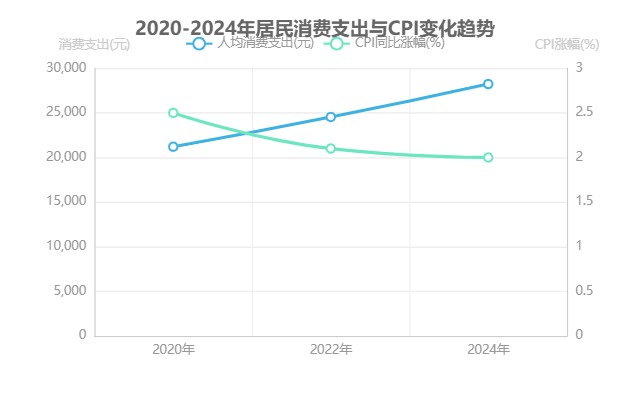
Core Viewpoint - The current market performance reflects a shift in consumer behavior towards valuing quality and practicality over brand prestige, rather than a simple downgrade in consumption [1][2][3] Group 1: Consumer Behavior Changes - The term "consumption downgrade" has sparked discussions, but it may actually indicate a more discerning consumer base that prioritizes true value [1] - Consumers are increasingly moving from high-priced, low-quality products to options that offer better cost-performance ratios, driven by rational judgment rather than economic pressure [1][2] - There is a notable shift from passive acceptance of brands to active selection based on personal needs and value alignment [2][3] Group 2: Market Trends and Data - National per capita consumption expenditure has shown a compound annual growth rate of 6.8% from 2020 to 2024, significantly outpacing the average CPI growth during the same period [2] - E-commerce platforms like Pinduoduo have successfully challenged the notion that low prices equate to low quality, capturing consumer interest in practical value [2][3] Group 3: Competitive Landscape - Mid-to-high-end e-commerce platforms like JD.com face challenges as consumer sensitivity to brand premiums decreases, necessitating improvements in supply chain efficiency and service quality [3] - JD.com has managed to improve its operating profit margins through investments in logistics, quality control, and after-sales service [3] Group 4: Implications for Businesses - Companies must adapt to changing consumer demands by innovating products and services to enhance competitiveness [5] - A rational consumer mindset is essential for sustainable market development, avoiding blind pursuit of brand prestige and material accumulation [5]

听说大量商场正在倒闭?
投中网· 2025-08-21 06:48
Core Viewpoint - The retail landscape in China is undergoing a profound transformation, with traditional shopping malls facing significant decline while new commercial formats and county-level shopping centers are emerging and thriving [30]. Group 1: Decline of Traditional Malls - Many shopping malls across China are experiencing closures, with at least 38 malls shutting down in 2024, 76% of which had been operating for over 10 years [11]. - Major cities like Shanghai and Beijing are witnessing negative growth in retail sales, with Shanghai's social retail sales declining by 3.1% and Beijing by 2.7% in 2024 [12]. - High-end malls, such as Beijing SKP, have seen significant drops in sales, with a 17% decrease reported in 2024 [13]. Group 2: Factors Contributing to Decline - Consumer downgrade is a primary factor, as middle and lower-income groups face reduced income and spending power, leading to a decline in high-end mall patronage [12][13]. - The rise of new retail formats, particularly instant retail, is capturing market share from traditional malls, with the instant retail market projected to exceed 2 trillion yuan by 2030 [14]. - Internal issues such as lack of differentiation and oversaturation of similar brands in malls contribute to their declining attractiveness [16]. Group 3: Emergence of New Commercial Formats - Despite the decline of traditional malls, some shopping centers are thriving by innovating and adapting to consumer preferences, with over 73% of shopping centers reporting sales growth in 2024 [22]. - Unique shopping experiences, such as those offered by high-end centers like Chengdu's Taikoo Li and Beijing's SKP, are attracting consumers [22]. - The rise of independent supermarkets and convenience stores is also reshaping the retail landscape, with convenience store sales increasing by 4.7% in 2024 [24]. Group 4: Growth of County-Level Commercial Centers - In contrast to urban malls, county-level commercial centers are proliferating, driven by rising consumer demand and urbanization, with retail sales in rural areas growing faster than in urban centers [28][29]. - Developers are increasingly investing in county-level commercial projects, recognizing the potential for growth in these markets [29]. - The shift in consumer behavior towards experiential and brand-oriented shopping is evident in the success of county-level malls that cater to these needs [30].

于东来谈消费降级:产品与服务质量如何影响消费意愿?
Sou Hu Cai Jing· 2025-08-21 04:58
Core Insights - The article discusses the rising debate around "consumption downgrade," suggesting that it may actually reflect a shift in consumer behavior towards valuing quality and practicality over brand prestige [2][3][5] - The perspective of Yu Donglai, founder of the supermarket chain "Pang Donglai," challenges the notion of consumption downgrade, arguing that consumers are becoming more discerning and are voting with their wallets against inferior products [3][4][5] Group 1: Consumer Behavior Changes - Consumers are increasingly prioritizing value for money, leading to a preference for lower-priced yet quality products, as evidenced by the success of platforms like Pinduoduo [15][16] - The shift in consumer behavior is characterized by a transition from passive acceptance of brands to active selection based on actual needs and value [5][6] - The concept of "consumption cognitive upgrade" indicates that consumers are now more focused on the practical benefits of products rather than being swayed by marketing or brand prestige [5][6][10] Group 2: Market Dynamics - Data shows that from 2020 to 2024, the average per capita consumption expenditure in China increased from 21,210 yuan to 28,227 yuan, reflecting a compound annual growth rate of 6.8%, outpacing the CPI growth [7][9] - The structure of consumption is evolving, with a notable decline in survival-type expenditures and a rise in service and experiential consumption, indicating a shift towards quality and experience [11][13] - The rise of platforms like Pinduoduo illustrates a successful model that combines low prices with quality assurance, challenging the traditional view that low prices equate to low quality [15][16] Group 3: Implications for Businesses - Companies must adapt to the changing consumer landscape by either offering exceptional value through low prices or providing superior experiences through enhanced service and quality [18][29] - Large brands are facing pressure to move away from reliance on brand prestige and instead focus on delivering tangible value and quality to consumers [28] - Small and medium enterprises can leverage localized operations and exceptional service to build customer loyalty and differentiate themselves from larger competitors [29][30] Group 4: International Perspectives - The article draws parallels between the current Chinese consumption trends and Japan's fourth consumption era, where consumers shift from materialism to valuing simplicity and quality [19][20] - This transition in consumer behavior suggests a broader global trend towards more rational and meaningful consumption choices, moving away from mere brand loyalty [21][22] Group 5: Future Outlook - The future of consumption is likely to be defined by a balance between quality and price, with consumers increasingly seeking products that offer real value [30][31] - Companies that can effectively communicate and deliver on the value proposition will be better positioned to thrive in this evolving market landscape [31]