
AR

Search documents
全球唯一Google AR伙伴亮剑!XREAL徐驰:还有一批中国企业也在飞速发展
Guang Zhou Ri Bao· 2025-07-27 16:54
Group 1 - The core viewpoint highlights the rapid development of Chinese companies in the smart glasses industry, with XREAL positioned to lead and define the next generation of smart terminals [1] - XREAL has launched its new flagship product, XREAL One Pro, which has already garnered significant interest with 26,000 online reservations on JD.com on the day of its release [1] - The XREAL One Pro features a groundbreaking 57-degree field of view (FoV), setting a new global benchmark for consumer AR glasses, achieved through the innovative X Prism optical engine technology [3] Group 2 - In May 2025, Google announced a strategic partnership with XREAL to jointly release the next-generation smart glasses, Project Aura, marking a significant collaboration between a Chinese company and an international tech giant [5] - The Project Aura will be the first flagship smart glasses equipped with XREAL's self-developed X1S chip, specifically designed for the Android XR platform, representing a deep integration of Chinese AR technology with a global ecosystem [5] - The X1S chip offers a 25% performance improvement over its predecessor, integrating perception algorithms and system-level optimizations at the chip level, which has garnered high recognition from Google [6]



报告:AI重塑运营逻辑 中国新电商成经济快速发展引擎
Sou Hu Cai Jing· 2025-07-27 06:22
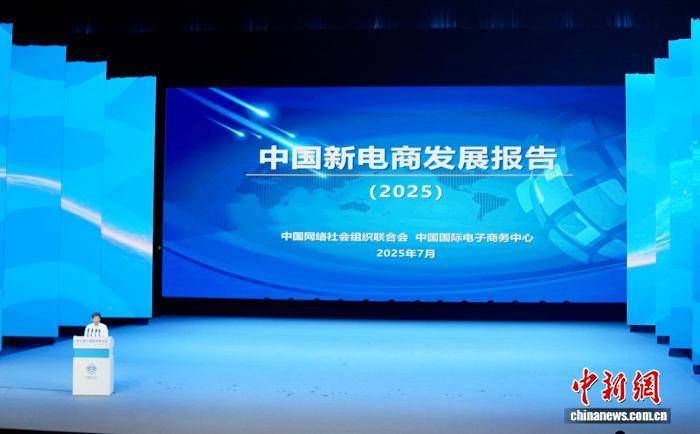
Group 1 - The report highlights that China's new e-commerce is driving consumption upgrades and industrial transformation through technological empowerment and model innovation [1][2] - Generative AI, represented by large models, is reshaping the operational logic of new e-commerce, with applications in live streaming product selection, intelligent customer service, and precision marketing [2] - The report identifies key trends such as green consumption, instant retail, and the silver economy, with instant retail GMV growth projected at 19.5% in 2024, significantly outpacing overall online shopping growth [2][3] Group 2 - China remains the largest online retail market globally, with online retail sales expected to reach 15.5 trillion yuan in 2024, a year-on-year growth of 7.2% [3] - The new e-commerce platforms have created over 40 million jobs, encompassing new roles such as assistants, content creators, and AI trainers [5] - Rural online retail sales are projected to reach 2.56 trillion yuan in 2024, with agricultural product online sales growing by 15.8% [5]
“百镜大战”?早着呢!明星创企揭开智能眼镜真相
2 1 Shi Ji Jing Ji Bao Dao· 2025-07-27 02:52
Core Insights - The smart glasses market is experiencing significant interest and investment, but actual product sales remain low, with no single product achieving over one million units sold, except for Ray-Ban Meta, which relies on subsidies [2][9] - Industry leaders emphasize the need for long-term investment in core technologies such as chips, optics, and algorithms to overcome current challenges in user experience and product delivery [2][3][10] - The industry is still in its early stages, with expectations for a breakthrough moment akin to the "iPhone moment" projected for 2027 or 2028, when AI and AR technologies can effectively integrate [5][7][13] Industry Challenges - Current smart glasses products face high return rates, inconsistent user experiences, and difficulties in achieving mass adoption due to technical limitations [2][3][10] - The market is not yet ready for a price war, as the focus should be on developing a single product that can achieve significant sales before expanding to multiple offerings [10][11] - The AI capabilities of current smart glasses are limited, likened to a "5-year-old's intelligence," indicating a need for substantial improvements before they can become a daily wearable device [7][9] Future Directions - The combination of advanced AI and AR glasses is seen as essential for creating a new generation of devices that can surpass smartphones in functionality [5][13] - Companies are exploring different paths, such as creating lightweight AR glasses that can be used effectively without requiring all-day wear [11][12] - Collaboration with major tech firms like Google and Qualcomm is crucial for developing a robust ecosystem and advancing technology in the smart glasses space [14][15]

佳禾智能(300793) - 300793佳禾智能投资者关系管理信息20250725
2025-07-25 09:48
Group 1: Acquisition and Business Synergy - The company is progressing with the acquisition of Baia, having signed a conditional acquisition agreement on June 6, 2025, and is currently conducting audits and evaluations with intermediary agencies [1] - Post-acquisition, the company aims to leverage Baia's brand strength in the high-end audio sector to enhance brand operation capabilities and profitability [3] - The collaboration is expected to combine consumer and professional audio product strengths, broadening the customer base and meeting diverse market demands [3] Group 2: AI and AR Glasses Development - The company is actively producing and shipping AI/AR glasses for existing clients while maintaining close ties with new customers to facilitate product development [4] - Various configurations of glasses have been developed, providing comprehensive hardware and software solutions to the market [4] - The company plans to promote these solutions to accelerate commercialization [4] Group 3: Impact of Tariffs on Overseas Business - The company acknowledges that changes in tariff policies in certain countries introduce uncertainties for export businesses [5] - It will utilize its production bases in Dongguan, Vietnam, and Jiangxi to adapt to customer needs and order situations flexibly [5] Group 4: Future Strategy in Traditional Acoustics - The company will continue to focus on electroacoustic products and smart wearable devices, increasing R&D investment and nurturing high-end research talent [6] - It aims to explore new product categories in line with market demands while leveraging capital market resources to enhance profitability [7]
AR普及临门一脚差在哪?XREAL创始人徐驰三维度剖析行业卡脖子难题
Hua Xia Shi Bao· 2025-07-24 02:05
Core Insights - The AR industry is on the brink of a breakthrough but faces challenges in consumer adoption and market readiness, with expectations for a significant turning point around 2027 or 2028 [1] Pricing Strategy - AR glasses have a wide price range, with high-end models like Meta's Orion priced at $10,000 and more affordable options like 雷鸟创新's models starting below 2000 yuan [2][4] - XREAL's latest model, XREAL One Pro, is priced at 4299 yuan, which is competitive but not the cheapest in the market [2][4] User Engagement - Building user loyalty is crucial at this stage, as premature market stimulation through subsidies can lead to unsustainable user data [4] - The current price range for AR glasses (2000 to 5000 yuan) is not a major barrier for enthusiasts, but issues like weight, battery life, and application scenarios remain significant challenges [4][6] Product Development - XREAL One Pro features enhancements over its predecessor, including a lightweight design and improved display technology, allowing seamless connectivity with various devices [5] - The collaboration with Google on Project Aura aims to create a flagship smart glasses product, expected to launch in 2026, integrating a self-developed Chinese chip [6][7] Market Positioning - XREAL holds a strong position in the global AR/VR market, ranking second after Meta, with a 21.8% market share in China, while 雷鸟创新 leads with 50% [7][8] - The industry is currently characterized by a "battle of hundreds of glasses," with a notable shift towards AI glasses, which are lighter and more consumer-friendly compared to traditional AR glasses [9][10] Future Outlook - The AR industry is seen as having a clear end goal, but the path to achieving it remains uncertain, presenting opportunities for startups [10] - XREAL aims to gradually build its product offerings, focusing on creating high-volume products before scaling further, with a belief that glasses could eventually replace smartphones as the primary device [10]

AI功能是噱头吗?测评小米、Rokid等10款AI眼镜
Nan Fang Du Shi Bao· 2025-07-19 03:03
Core Insights - The smart glasses market is experiencing renewed interest, with major players like Alibaba and Xiaomi launching new products, indicating a competitive landscape [1][6] - Xiaomi's AI glasses have gained significant consumer attention, selling out quickly after their launch, highlighting strong market demand [1][4] - The introduction of AI features in smart glasses, such as translation and image recognition, is becoming a key selling point for manufacturers [9][12] Company Developments - Alibaba is reportedly developing AR glasses based on waveguide technology, expected to launch within the year [1] - Xiaomi's AI glasses were launched at a starting price of 1999 yuan, featuring capabilities like photo and video recording, translation, and payment functions [4][12] - Other companies like Rokid, Huawei, and Lenovo are also entering the AI glasses market, with various models offering different functionalities and price points [6][12] Market Trends - The price range for AI glasses varies significantly, from 799 yuan to 8999 yuan, with higher prices typically associated with models that include display capabilities [7][8] - The market is seeing a trend towards the integration of AI capabilities, with many glasses featuring functions like real-time translation and AI-assisted navigation [10][11] - The overall smart glasses market in China is projected to grow, with a significant increase in shipments expected in the coming years [15][16] Consumer Insights - Initial consumer feedback indicates a strong interest in AI functionalities, although there are concerns regarding battery life and comfort [6][15] - The ability to perform tasks such as real-time translation and payment through smart glasses is appealing to consumers, suggesting a shift towards practical applications of the technology [10][12] - The competitive landscape is evolving, with established brands like Xiaomi potentially lowering entry barriers for new users and expanding the overall market [16]
影目CEO杨龙昇:小米入局AI眼镜是好事,大家销量翻了两三倍
3 6 Ke· 2025-07-17 00:03
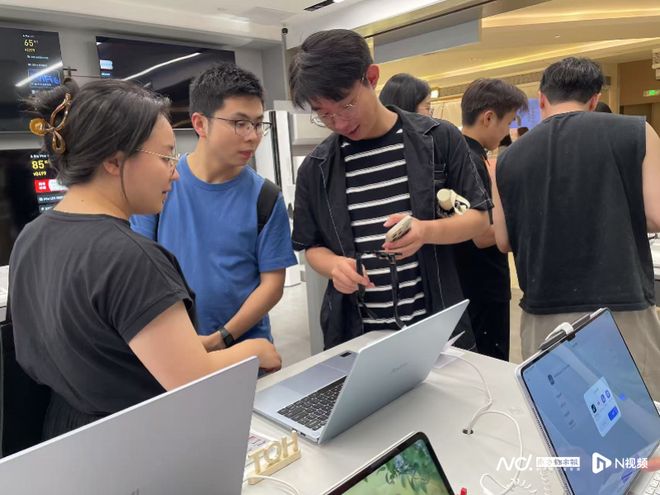
Core Insights - The AI glasses market is experiencing significant growth, with major players entering the field and increasing investment interest, particularly following the success of Meta's collaboration with Ray-Ban in 2024 [3][5][13] - The entry of Xiaomi into the AI glasses market has sparked optimism, leading to a tenfold increase in market traffic and a projected two to three times increase in sales for various manufacturers [5][11][12] - The competition landscape consists of three main types of players: internet giants like Xiaomi and Baidu, established AR glasses manufacturers (referred to as the "AR Four Dragons"), and new entrants without prior experience in glasses manufacturing [7][8] Investment and Market Dynamics - The recent financing round for Yingmu Technology, a key player in the AI glasses sector, raised 150 million yuan (approximately 21.5 million USD) in just two months, indicating strong investor interest [1][13] - The overall market for smart glasses in China is expected to reach 600,000 to 700,000 units this year, representing a growth of 2.5 to 3 times compared to the previous year [22] Competitive Landscape - The competition in the AI glasses sector is characterized by a "hundred glasses battle," with many companies vying for market share, although only a few have achieved product maturity and clear business paths [6][11] - Key competitive factors for AI glasses include hardware miniaturization, optical display quality, and effective integration of AI capabilities to enhance user experience [8][26] Product Development and Technology - The cost structure of AI glasses is heavily influenced by components such as chips and sensors, with the BOM (Bill of Materials) for basic models estimated at around 1,200 yuan (approximately 170 USD) [12] - The industry is witnessing a trend towards domestic production, with Yingmu Technology achieving an 80% localization rate in its supply chain, which helps reduce costs [20] Future Outlook - The long-term competitive barriers in the AI glasses market will focus on miniaturization, optical display advancements, and the development of an integrated OS that leverages AI for enhanced functionality [26][30] - The market is expected to evolve towards more complex applications in entertainment and social interaction, moving beyond basic utility functions [31][32]


苹果迎来重磅会议,全球开发者大会将举行
2025-07-16 06:13
Summary of Conference Call Records Industry or Company Involved - The discussion primarily revolves around the **A-share market** and **technology sector**, with a specific focus on **Apple Inc.** and the **innovation drug industry**. Core Points and Arguments 1. The A-share market has shown a recovery trend since late May, with the index rising from approximately 3,332 points to over 3,400 points, indicating a gain of over 70 points during this period [1] 2. New consumption sectors, particularly in Hong Kong-listed companies, have experienced significant stock price increases, reflecting the vast opportunities in the domestic consumer market [2] 3. The upcoming **Apple Worldwide Developers Conference (WWDC)** is expected to showcase important advancements in technology, particularly in AR and AI, which could impact Apple's stock and its supply chain [3][4] 4. The overall market sentiment has improved, influenced by international economic factors and expectations regarding the Federal Reserve's interest rate decisions, which could lead to a bullish trend in the A-share market [11][12] 5. The white liquor sector has shown weakness, with a decline of nearly 1%, indicating potential challenges from policy changes and market dynamics [8][9] 6. The technology sector, while experiencing some positive movements, has not matched the strength seen earlier in the year, particularly in sub-sectors like gaming [2] 7. The innovation drug sector is gaining traction, with significant developments presented at the **ESC (European Society of Cardiology) conference**, highlighting the potential for domestic innovative drugs [34] Other Important but Possibly Overlooked Content 1. The market is currently facing a critical resistance level at 3,400 points, and the ability to break through this level will be crucial for future trends [7][25] 2. The performance of the banking sector, particularly state-owned banks, has a substantial impact on the overall market, as their weakness can hinder market gains [17] 3. The discussion emphasizes the importance of identifying investment opportunities in sectors that may perform independently of the broader market trends, particularly during periods of volatility [13][22] 4. The potential for a "super pig cycle" in the pig farming industry is noted, with signs of recovery in the sector after a significant downturn [20] 5. The conference highlights the need for investors to remain vigilant about market dynamics and to seek out sectors that may offer better risk-reward profiles during market fluctuations [26][28]
康耐特光学(02276):25H1利润高增,XR业务兑现在即
Huafu Securities· 2025-07-10 13:45
Investment Rating - The report maintains a "Buy" rating for the company, indicating an expected relative price increase of over 20% within the next six months [6][18]. Core Insights - The company has issued a positive profit forecast for the first half of 2025, expecting a year-on-year increase of no less than 30% in net profit attributable to shareholders, driven by strong sales of high refractive index and functional products, as well as favorable product mix enhancing average selling prices [2][6]. - The traditional business is undergoing structural upgrades, with continuous improvement in profitability. The company is one of the few in China capable of producing 1.74 high refractive index lenses, benefiting from strong ties with upstream suppliers and significant technical barriers [4][6]. - The XR business is poised for growth, with ongoing collaborations with leading global tech and consumer electronics companies, preparing for potential mass production of AR or AI glasses [5][6]. Financial Performance and Projections - The company expects revenue growth rates of 19%, 18%, and 18% for 2025, 2026, and 2027 respectively, with net profit growth rates of 29%, 22%, and 21% for the same years [6][8]. - The projected earnings per share (EPS) are expected to increase from 0.89 in 2025 to 1.71 in 2027, reflecting a strong upward trend in profitability [8][12]. - The company’s main revenue for 2025 is estimated at 2,457 million RMB, with a net profit of 555 million RMB, indicating a robust growth trajectory [8][11].
康耐特光学(02276):业绩盈喜,产品结构优化
Tianfeng Securities· 2025-07-10 09:25
Investment Rating - The report maintains a "Buy" rating for the company, with a target price not specified [4]. Core Viewpoints - The company expects a year-on-year increase of no less than 30% in net profit attributable to shareholders for the first half of 2025, driven by strong sales growth of high refractive index and functional products, leading to an increase in average selling prices [1]. - The company is one of the few manufacturers capable of producing resin lenses with a refractive index of 1.74, and its C2M model effectively ensures the delivery efficiency of customized glasses [1]. - The company plans to invest approximately $4 million to build an automated resin lens production line in Japan, aimed at enhancing its production capacity for high-end customized lenses and improving supply chain resilience [2]. - The new production line is expected to increase annual production capacity by 20% compared to existing facilities and will help mitigate risks associated with trade tensions between China and the U.S. [2]. - The company is actively engaging with leading global technology and consumer electronics firms in its XR (Extended Reality) business, preparing for potential mass production of AR and AI glasses [3]. - The establishment of a national-level R&D center will further strengthen the company's innovation capabilities and project management [3]. Summary by Sections Financial Performance - The company forecasts a net profit of no less than 271 million yuan for the first half of 2025, reflecting a robust growth trajectory [1]. - Revised profit forecasts for 2025-2027 are 560 million, 670 million, and 790 million yuan, respectively, with corresponding P/E ratios of 31X, 26X, and 22X [4]. Production and Supply Chain - The new Japanese production line is expected to enhance the company's ability to respond to customer needs in the Asia-Pacific region and improve overall production cost efficiency [2]. - The diversified production base is anticipated to strengthen the company's resilience against geopolitical uncertainties and currency fluctuations [2]. Research and Development - The company is committed to continuous investment in R&D, focusing on innovative products with varying refractive indices and functionalities [3]. - The establishment of an XR R&D center is part of the company's strategy to enhance its technological capabilities and foster collaboration with industry leaders [3].