物理AI

Search documents
汽车行业周报:吉利集团2025年总销量首次突破400万辆,智元机器人登顶全球人形机器人出货量榜首-20260111
KAIYUAN SECURITIES· 2026-01-11 13:47
Investment Rating - The investment rating for the automotive industry is "Positive" (maintained) [1] Core Insights - The automotive sector is experiencing significant growth, with notable performances from companies like Xpeng and Geely, which have reported substantial year-on-year increases in deliveries and sales [5][14] - The market is witnessing a shift towards electric vehicles (EVs), with a strong emphasis on autonomous driving technology and AI integration [13][14] - The overall automotive market in China is projected to continue its upward trajectory, with increasing penetration of new energy vehicles [19] Industry News - Xpeng delivered over 420,000 vehicles in 2025, marking a 126% year-on-year increase, and is focusing on full autonomous driving and physical AI production in 2026 [5][13] - Geely's total sales surpassed 4 million vehicles for the first time in 2025, achieving a 26% increase, with a 56% penetration rate for new energy vehicles [5][14] - GAC Group's sales fell by 14.06% in 2025, with GAC Toyota being the only brand to show growth [5][15] - Xiaomi's SU7 model became a bestseller in the 200,000+ yuan category, with over 360,000 units delivered [5][16] - Tesla's Shanghai Gigafactory produced its 5 millionth electric drive system, highlighting its significant role in global EV production [5][18] Market Performance - The automotive sector's performance in the A-share market showed a 2.73% increase, ranking 20th among primary industries [6][28] - The passenger vehicle index rose by 0.71%, while the commercial vehicle index increased by 3.14% [6] - The automotive parts index saw a 3.87% rise, with specific segments like electric control systems and bearings showing notable gains [6][38] Investment Recommendations - For passenger vehicles, there is a strong demand for high-end domestic luxury cars, with recommendations for companies like JAC Motors and Seres, while Geely is identified as a beneficiary [7] - In the automotive parts sector, profitability is expected to improve, with recommendations for companies such as Desay SV and Zhejiang Xiantong, and beneficiaries including Weichai Power and Fuyao Glass [7]

2026CES(国际消费类电子产品展览会)系列跟踪:AI+加速落地,物理AI+Rubin+机器人多项重要发布
Shenwan Hongyuan Securities· 2026-01-11 13:45
Investment Rating - The report maintains a positive outlook on the sectors of physical AI, overseas computing power, robotics, and intelligent connected vehicles [4][10]. Core Insights - The report highlights significant advancements in physical AI, including NVIDIA's comprehensive suite for physical AI, which encompasses models, frameworks, and infrastructure, marking a pivotal moment in AI development [4][10]. - The robotics sector is showcased as a competitive arena, with numerous Chinese companies demonstrating their technological capabilities at CES 2026, alongside international competitors like Boston Dynamics [4][10]. - The intelligent connected vehicle industry is undergoing a comprehensive upgrade, with companies like Geely enhancing their AI capabilities and setting ambitious sales targets for 2026 [4][10]. Summary by Sections 1. NVIDIA: Launch of Physical AI Suite and Rubin - NVIDIA introduced a comprehensive suite for physical AI, termed the "Cosmos" model, which integrates various data sources for training and application [10][11]. - The Rubin platform was unveiled, featuring a new memory storage system to address KV Cache expansion issues and doubling bandwidth capabilities [29][30]. 2. AMD: Need to Enhance Scale-up Capabilities - AMD showcased its MI455X Helios rack, which includes new GPU and CPU technologies aimed at competing with NVIDIA's offerings [61][66]. - The report notes that AMD's scale-up network capabilities are still in development, with future enhancements expected from partnerships with ecosystem players [64][66]. 3. Robotics: Global Competition and Technological Showcases - The report emphasizes the rapid development of the Chinese robotics industry, with numerous companies presenting their latest advancements at CES 2026 [67][68]. - Internationally, Boston Dynamics introduced the latest version of its Atlas robot, which is set for mass production and aims to integrate advanced AI capabilities [82][83]. 4. Intelligent Connected Vehicles: Comprehensive Upgrades - Geely is enhancing its AI-driven vehicle capabilities, aiming for significant sales growth and the introduction of advanced driving features by 2026 [91].

券商首席带你看“科技界春晚”
中国基金报· 2026-01-11 13:07
Core Insights - The article highlights "Physical AI" as a significant trend at the 2026 CES, with a focus on robotics applications, indicating a consensus on the global development of robotics despite early-stage product challenges [2][3] - NVIDIA's CEO emphasized "Physical AI" during his keynote, shifting the company's focus towards building global AI infrastructure to integrate intelligent agents into the real world [2] - The article suggests that 2026 may mark the year for the realization of Agentic AI, supported by acquisitions and technological advancements in both software and hardware [4] Summary by Sections Physical AI Concept - "Physical AI" is defined as models that use motion skills to understand and interact with the real world, typically encapsulated in robots and autonomous vehicles [3] - A fundamental challenge in training such AI is enabling it to comprehend physical world commonalities, such as object permanence and causal relationships [3] - NVIDIA's solution includes a new computing architecture and open-source models to accelerate the development of autonomous driving and Physical AI [3] Future Trends and Opportunities - The article predicts that 2026 will be a pivotal year for consumer technology, driven by AI-enabled product innovations and potential valuation re-evaluations in the tech consumption sector [4] - AI applications in consumer scenarios, from indoor cleaning to smart wearables, are highlighted as key trends observed at CES [4] - Companies with comprehensive product portfolios and ecosystem integration capabilities are expected to gain market share rapidly, while some tech consumption firms may experience systematic valuation re-evaluations due to AI catalysts and performance confirmations [6]


券商首席带你看“科技界春晚”
Zhong Guo Ji Jin Bao· 2026-01-11 12:57
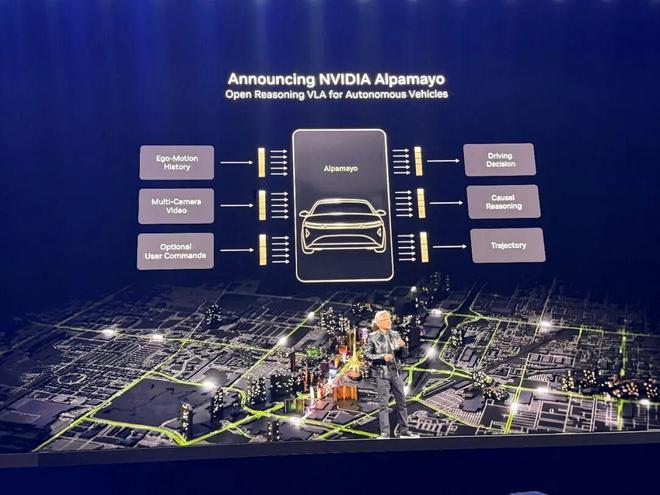
Core Insights - The main highlight of CES 2026 is "Physical AI," particularly applications involving robotics, which is seen as a potential turning point similar to the early days of autonomous driving [1][3] - NVIDIA's CEO emphasized "Physical AI" during his keynote, indicating a shift towards building global AI infrastructure that integrates intelligent agents into the physical world [1][3] Group 1: Definition and Challenges of Physical AI - "Physical AI" refers to models that use motion skills to understand and interact with the real world, typically encapsulated in autonomous machines like robots and self-driving cars [3][4] - A fundamental challenge in training such AI is enabling it to comprehend common physical world concepts, such as object permanence and causality, which are intuitive for humans but not for AI [4] Group 2: Technological Developments and Future Trends - NVIDIA's new computing architecture, Rubin, and the release of the open-source model Alpamayo aim to accelerate advancements in autonomous driving and Physical AI [4] - The year 2026 is anticipated to mark the emergence of Agentic AI, supported by acquisitions and deployments from companies like Meta and NVIDIA, which are enhancing AI training and large-scale reasoning capabilities [4] Group 3: Consumer Applications and Market Opportunities - The application of AI in consumer scenarios is a key focus of CES, with innovations in products ranging from indoor cleaning to smart wearables, indicating a significant acceleration in product development [4] - AI glasses are expected to enter a phase of widespread adoption, with notable products from Chinese companies like Alibaba and Rokid showcasing advanced features and ecosystem integration [5] - The technology consumer sector is projected to experience a new growth cycle driven by technological innovation and valuation reassessment, particularly for companies with strong ecosystem capabilities [5]
剑指“AI时代的安卓”,千问抢滩AI硬件核心入口
Di Yi Cai Jing Zi Xun· 2026-01-11 12:57
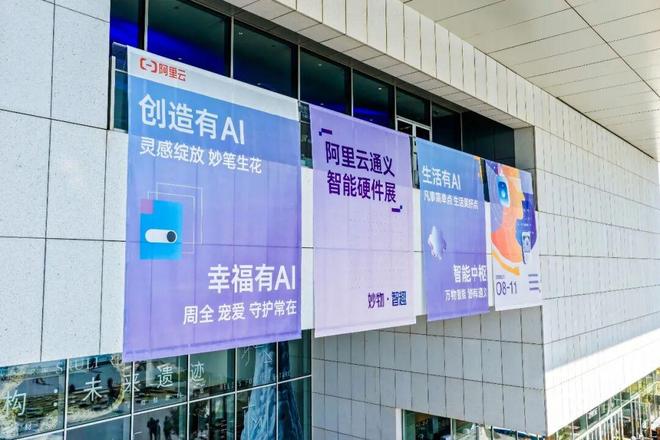
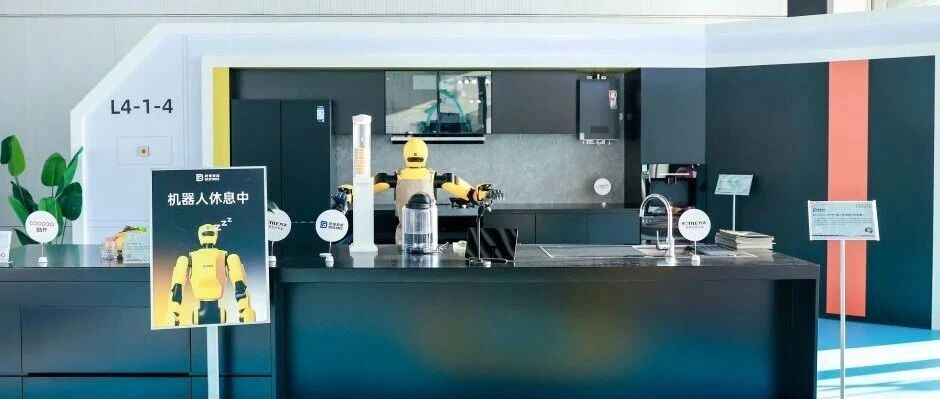
Core Insights - The emergence of "Physical AI" is accelerating, with significant developments showcased at the 2026 CES and Alibaba Cloud's event in Shenzhen, indicating a shift towards AI integration in physical devices [1][3][4] Group 1: AI Hardware Transformation - AI hardware is evolving from mere marketing gimmicks to genuine intelligent devices capable of perception, understanding, and decision-making, marking a significant step in AI's practical application [3][4] - The Pettichat pet translator, which translates pet sounds into human language with a 94.6% accuracy rate, exemplifies the innovative capabilities of AI hardware [4] - The market for AI hardware is expanding rapidly, with over 1,000 smart hardware products showcased at Alibaba Cloud's event, indicating a growing demand and the entry of numerous brands [6] Group 2: Industry Dynamics - Alibaba Cloud's "Qianwen" model aims to become the Android of the AI hardware sector, facilitating a diverse range of devices to adopt intelligent systems through open-source and adaptable solutions [7][10] - The shift from hardware sales to service-oriented models is becoming prevalent, as companies leverage AI capabilities to enhance user experience and create sustainable profit models [10][11] - The introduction of a licensing fee model for AI services is expected to alleviate cost concerns for hardware manufacturers, encouraging mass production and competitive pricing [10][12] Group 3: Market Outlook - The Chinese AI hardware market is projected to exceed 1.1 trillion yuan by 2025, with a year-on-year growth of 13.4%, indicating a robust growth trajectory for the industry [12]
剑指“AI时代的安卓”,千问抢滩AI硬件核心入口
第一财经· 2026-01-11 12:54
Core Viewpoint - The article emphasizes the rapid advancement of AI hardware, transitioning from novelty to practical applications, particularly in the realm of "Physical AI" as highlighted at major tech events like CES 2026 and Alibaba's cloud exhibition [1][3][4]. Group 1: AI Hardware Transformation - AI hardware is evolving into intelligent entities capable of perception, understanding, and decision-making, marking a significant shift from mere marketing gimmicks to functional devices [3]. - The demand for AI hardware is increasing, with new applications being rapidly developed, as evidenced by the diverse range of products showcased at the Alibaba cloud exhibition, including over 1,000 smart hardware items from more than 200 brands [8][9]. Group 2: Innovations in AI Hardware - Notable innovations include the Pettichat pet translator, which achieves a 94.6% translation accuracy for pet sounds, demonstrating the potential of AI in everyday applications [6]. - The AI hardware ecosystem is expanding, with various products like smart glasses, AI companions, and training devices becoming mainstream, indicating a robust market for AI-integrated solutions [8]. Group 3: Competitive Landscape - Major players in the AI hardware space, such as Alibaba's Qianwen, are positioning themselves similarly to Android by providing open-source and adaptable solutions that lower barriers for hardware manufacturers [9][14]. - The shift from hardware sales to service-oriented models is becoming prevalent, allowing manufacturers to enhance user experience and establish sustainable profit models [14][15]. Group 4: Future Outlook - The Chinese AI hardware market is projected to exceed 1.1 trillion yuan by 2025, with a year-on-year growth of 13.4%, indicating a strong and ongoing expansion in this sector [16]. - Companies like Alibaba are focused on fostering an ecosystem that encourages innovation and collaboration among hardware manufacturers, aiming to enhance the overall market potential for AI hardware [16].

行业周报:英伟达开源Alpamayo,禾赛加入“朋友圈”-20260111
KAIYUAN SECURITIES· 2026-01-11 10:44
Investment Rating - The industry investment rating is "Overweight" [1] Core Insights - The report highlights significant advancements in the automotive and autonomous driving sectors, particularly with NVIDIA's release of the Alpamayo model and its strategic shift towards becoming a full-stack autonomous driving ecosystem leader [5][18] - The semiconductor industry is witnessing consolidation, with Huahong Semiconductor planning to acquire a majority stake in Huali Micro, which is expected to enhance long-term capacity and technology collaboration [6][24] Automotive & Autonomous Driving - NVIDIA has introduced the Alpamayo model, a reasoning-capable end-to-end autonomous driving AI, which utilizes the Cosmos world model for training and simulation, addressing the scarcity of real-world data [14][21] - The company is implementing a global deployment plan with Mercedes-Benz as a key partner, aiming to create an inclusive open business ecosystem [21] - Hesai Technology plans to double its production capacity for lidar sensors from 2 million units in 2025 to 4 million units in 2026, with a new factory in Bangkok expected to start production in early 2027 [21][22] Electronics - Huahong Semiconductor's acquisition of a 97.4988% stake in Huali Micro for a total consideration of 8.27 billion yuan is aimed at expanding production capacity, adding 38,000 wafers per month in 65/55nm and 40nm processes [6][26] - The acquisition is part of a broader strategy to enhance technology and production capabilities in the semiconductor sector [24][27] Weekly Data Update - The Hang Seng Technology Index and the Hang Seng Index experienced slight declines of 0.9% and 0.4% respectively, while the electronics index rose by 4.0% [6][28] - The report notes a significant increase in net buying through the Hong Kong Stock Connect, amounting to 29.32 billion yuan, indicating strong investor interest [28][37] Investment Recommendations - In the automotive and autonomous driving sector, companies such as Pony.ai, Horizon Robotics, and XPeng Motors are recommended as beneficiaries of the advancements in AI and autonomous driving technologies [7][36] - For the electronics sector, the report suggests focusing on companies like Samsung, SK Hynix, and Micron, which are expected to benefit from rising NAND and DRAM prices [7][39]
CES访谈|盖茨、亚马逊抢投硅谷黑马,光学芯片如何驱动物理AI
Di Yi Cai Jing Zi Xun· 2026-01-11 07:19
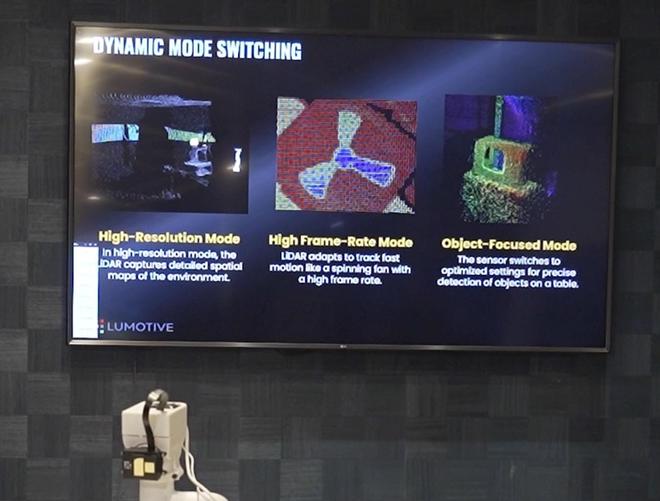
Core Insights - The focus of the 2026 CES is shifting from large language models (LLMs) to robotics and physical AI, emphasizing the importance of sensors, particularly optical semiconductors, in making AI applicable in the real world [1] - Lumotive's programmable optical chip, which operates without moving parts, is gaining attention for its ability to redefine laser radar (LiDAR) technology, making it smaller, more efficient, and easier to produce [1] Group 1: Technological Advancements - The bottleneck for physical AI is not in the models but in perception, highlighting the need for advanced sensors to enable robots to effectively interact with the real world [4] - Lumotive's optical semiconductors significantly enhance sensor performance by improving size, cost, durability, reliability, and efficiency, which are crucial for long-term operation in complex environments [4][5] - The software configurability of Lumotive's optical chip allows for the creation of multiple "virtual sensors," enabling dynamic switching between different perspectives, resolutions, and scanning strategies, thus fostering algorithm innovation [5] Group 2: Application Scenarios - Lumotive is actively collaborating in three main sectors: robotics, industrial automation, and smart infrastructure, all of which require high precision, safety, and reliability in sensors while being sensitive to cost and size [6] - The company is also exploring opportunities in commercial vehicles, heavy machinery, and forklifts, with a long-term vision for consumer vehicles and electronics [6] - The integration of LiDAR technology into high-end consumer devices, such as Apple smartphones, opens up possibilities for more consumer-grade 3D perception applications [6] Group 3: Investment Landscape - Notable investors in Lumotive include Bill Gates, Samsung, and Amazon, indicating strong confidence in the foundational technology rather than specific products [8] - The investment from strategic partners like Samsung and Amazon reflects their interest in the technology's applicability across consumer electronics, cloud computing, and smart devices [8] - Lumotive represents a paradigm shift where light is evolving from a physical component to a programmable, calculable, and scalable resource, similar to how CMOS cameras revolutionized smartphones [8]
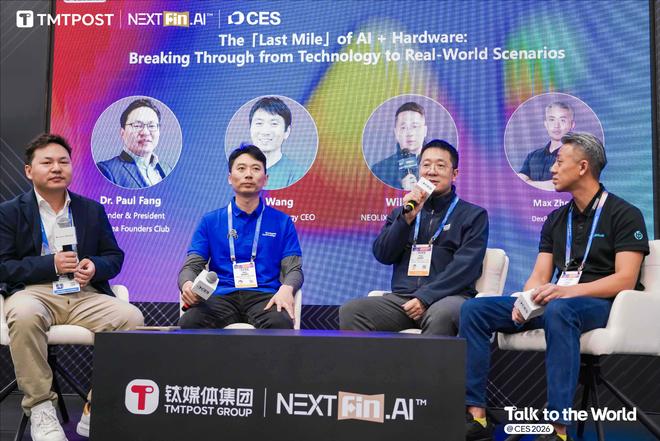
AI+硬件的"最后一公里":从技术到场景,如何破局?| CES 2026
Tai Mei Ti A P P· 2026-01-11 05:39
Core Insights - The CES 2026 showcased over 4,112 companies from more than 150 countries, with a significant focus on technology that is now tangible and experiential rather than just conceptual [2] - The event highlighted advancements in physical AI, emphasizing the importance of real-world applications and emotional connections between humans and robots [4][6][8] Company Highlights - **Sentigent Technology**: Focuses on outdoor companion robots that utilize AI to build emotional connections with users, starting with simple tasks to gain trust before tackling more complex responsibilities [4][15] - **New Stone Technology**: Specializes in B2B logistics with the launch of the RoboVan product family, addressing the "last 100 meters" delivery challenge. The company has deployed over 16,000 L4 autonomous vehicles, covering nearly 80 million kilometers [6][10][19] - **Agile Intelligence**: Concentrates on developing dexterous hands for robots, emphasizing the importance of tactile sensors and flexibility in robotic applications. The company aims to invest long-term in this technology to enhance human-robot interaction [8][16] Industry Trends - The trend towards physical AI is expected to grow, with companies focusing on practical applications that enhance daily life and reduce the burden of undesirable tasks on humans [9][14] - Data collection and real-world human interaction are seen as critical for the advancement of robotics, particularly in the context of human-like capabilities and decision-making [12][18] - The global landscape for robotics is shifting, with significant participation from Chinese companies at CES, indicating a strong potential for collaboration between the US and China in AI and robotics [18][19] Future Vision - The panelists expressed a vision for the next decade where robots will take over tedious and dangerous jobs, allowing humans to engage in more meaningful activities. This shift is expected to enhance quality of life and foster emotional connections with robots [23][27] - There is a belief that advancements in AI will lead to robots becoming trusted companions in households, capable of performing various tasks as they learn and evolve [15][27]
三星晶圆厂,终于要翻身?
半导体行业观察· 2026-01-11 04:23
Core Viewpoint - Samsung's semiconductor foundry business is crucial for its overall strategy, facing challenges and opportunities as it transitions from 3nm to 2nm technology, aiming to regain market share against TSMC [1][2][21] Group 1: Historical Context and Challenges - Samsung entered the foundry market in 2005 with minimal revenue, initially overshadowed by TSMC's nearly $10 billion revenue [1] - The company achieved a significant milestone in 2014 by producing 14nm FinFET technology, surpassing TSMC at that time [1] - However, Samsung faced setbacks with its 5nm node due to yield issues and misrepresentation, leading to a loss of trust among fabless companies [1][2] Group 2: Transition to 2nm Technology - Starting in 2024, Samsung is focusing all resources on 2nm technology, shifting its strategy to prioritize stability and yield improvement [3] - The new 2nm process utilizes an upgraded MBCFET architecture, improving transistor performance by 11% to 46% and reducing leakage by approximately 50% [3][4] - Initial yield rates for the 2nm process were low, starting at 30% in February 2024, but improved to 40% by April 2024 [4] Group 3: Production Capacity and Market Strategy - By 2025, Samsung's 2nm yield stabilized between 50% and 60%, meeting commercial production requirements [5] - The company plans to establish a 2nm production line in its Taylor, Texas facility, aiming for a monthly output of 21,000 wafers by the end of 2026 [5] - Samsung is diversifying its 2nm product roadmap to cater to various markets, including high-performance computing and automotive electronics [5][6] Group 4: Strategic Shift to Physical AI Market - Samsung is pivoting towards the emerging physical AI market, where competition is less established compared to the data center AI market dominated by TSMC [7][8] - The company aims to leverage its flexible pricing and supply strategies to attract clients in the cost-sensitive physical AI sector [8] - Automotive semiconductors are identified as a key entry point for Samsung into the physical AI market, with significant partnerships already established [9][10] Group 5: Customer Ecosystem and Competitive Positioning - Samsung is restructuring its customer base to include a wider range of clients, moving away from reliance on a few large customers [12][13] - The company is enhancing its support systems and technical teams to improve responsiveness and service quality for diverse clients [15] - Samsung's vertical integration across semiconductor manufacturing, packaging, and memory production provides a competitive edge in total cost of ownership (TCO) [19][20] Group 6: Differentiation Strategy - Samsung is focusing on niche markets where TSMC has less presence, such as mature process technologies and advanced packaging solutions [17][18] - The company has established partnerships to enhance its capabilities in mature process nodes, particularly in automotive and aerospace applications [18] - Samsung's advanced packaging solutions, including the SAINT series, aim to improve performance and reduce power consumption, further solidifying its market position [19][20]