缩表

Search documents
美联储再次暂停降息,示警滞胀风险,重申“不确定性”增加
Sou Hu Cai Jing· 2025-05-07 19:53
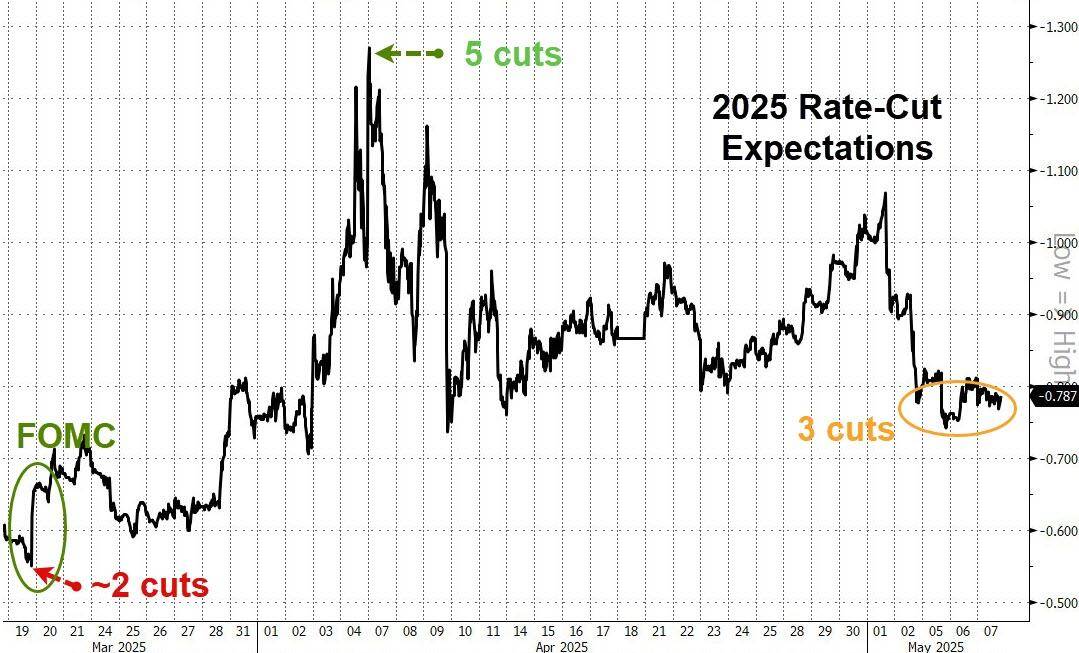
继续缩表。 要点: 美联储连续三次会议暂停降息,符合市场预期。 声明称,经济不确定性"进一步"增加,新增语句"失业率上升和通胀上升的风险已增加"。 声明重申最近指标显示经济活动仍稳健扩张,但指出净出口波动已影响数据。 本次决议得到全体FOMC票委支持,未像上次有一人反对。 "新美联储通讯社":联储官员在考虑重点是就业的风险还是通胀的风险。 美国总统特朗普再次失望。尽管他一再喊话呼吁降息,美联储还是选择观望,并未降息,还暗示特朗普的政策有引发滞胀的风险。 美东时间5月7日周三,美联储在货币政策委员会FOMC会后宣布,联邦基金利率的目标区间保持4.25%至4.5%不变。这是美联储连续第三次货币政策会议 决定暂停行动。联储自去年9月起连续三次会议降息,合计降幅100个基点,自今年1月特朗普上任以来,联储一直暂停行动。 本次美联储暂停降息完全在市场意料之中。到本周二收盘,芝商所(CME)的工具显示,期货市场预计联储本周保持利率不变的概率超过95%,6月也不 降息的概率超过68%,7月约有77%的概率降息。周三美联储决议公布前,衍生品市场定价显示,交易员削减降息押注,预计从7月开始,今年约有三次25 个基点的降息。 上 ...

【美联储维持缩表步伐不变】5月8日讯,美联储FOMC声明:将继续以当前速度减少国债和MBS持有量。
news flash· 2025-05-07 18:06
美联储维持缩表步伐不变 金十数据5月8日讯,美联储FOMC声明:将继续以当前速度减少国债和MBS持有量。 ...
【UNFX课堂】央行政策对外汇价格的影响
Sou Hu Cai Jing· 2025-05-01 06:35
Group 1 - Central bank policies are a primary driver of foreign exchange markets, influencing currency supply and demand, market expectations, and economic fundamentals, which in turn affect exchange rate fluctuations [1] - Interest rate adjustments directly impact borrowing costs, influencing capital flows and currency values; for instance, aggressive rate hikes by the Federal Reserve in 2022 led to a nearly 20% surge in the US dollar index, reaching a 20-year high [4][24] - Quantitative easing (QE) increases money supply and can lead to currency depreciation, as seen when the Federal Reserve's unlimited QE during the pandemic caused a 12% drop in the dollar index [7][6] Group 2 - Central banks can intervene directly in the foreign exchange market by buying or selling currencies to influence exchange rates; for example, Japan's Ministry of Finance warned about potential intervention to stabilize the yen [11][9] - Forward guidance from central banks can shape market expectations regarding future policy directions, with hawkish signals typically strengthening the currency and dovish signals weakening it [12][13] Group 3 - The transmission of central bank policies to the foreign exchange market occurs through various channels, including interest rate parity, capital flows, inflation expectations, and risk sentiment [16][22] - The Federal Reserve's dual mandate focuses on employment and inflation, making the US dollar a global safe-haven currency, while the European Central Bank's policies are primarily aimed at inflation control, impacting the euro's value [24][25] Group 4 - Recent policy shifts, such as the Federal Reserve's transition to aggressive rate hikes from late 2021, have led to significant market reactions, including a rise in the dollar index and a peak exchange rate against the yen [24][1] - The Bank of Japan's unexpected adjustment of its yield curve control policy in December 2022 resulted in a 4% appreciation of the yen against the dollar, breaking a long-term depreciation trend [26][2] Group 5 - Future challenges for central banks include the rise of digital currencies and geopolitical factors that may influence monetary policy and currency dynamics, such as the trend of "de-dollarization" among various nations [32][34] - The interconnectedness of markets necessitates that traders consider policy analysis alongside technical factors and liquidity management to navigate extreme market conditions effectively [38][37]
美联储会议纪要:大多数官员担心关税对通胀影响持续更久,一些人怕面临“艰难取舍”
华尔街见闻· 2025-04-10 00:05
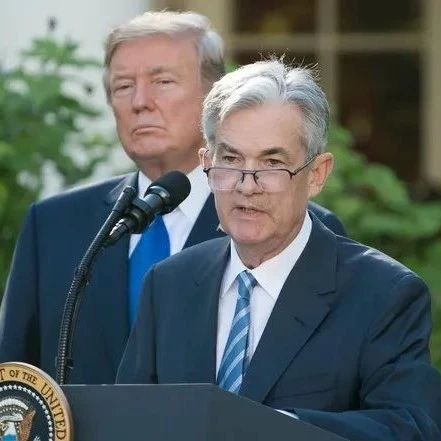
会议纪要显示,三周前的最近一次美联储货币政策会议上,联储决策者一致认为,特朗普政府的关税等政策导致经济不确定很高,因此联储要继续暂停降息。 他们担心关税等因素推升通胀的影响会持续更久。 有评论称,本次纪要确认了,美联储决策者害怕特朗普贸易政策的不确定性。华尔街见闻注意到,纪要全篇有21处提到"不确定性"一词,其中直接提及不确定 性高或不确定性增加的就有超过十处。 有"新美联储通讯社"之称的资深美联储报道记者Nick Timiraos 发文称,纪要中,美联储官员强调了关税所引发通胀会"更持久"的风险。虽然联储官员认为货币 政策可以根据形势变化调整,应对潜在的风险,但数名决策者指出,若通胀更持久,经济增长和就业的前景恶化,他们可能要在就业和通胀之间作出"艰难的取 舍"。 决策者全体认为经济前景不确定性很高 通胀面临上行风险 上月美联储连续第二次货币政策会议决定保持利率不变,会后公布的 联储声明 删除了就业和通胀目标风险大体均衡的说辞,称经济前景不确定性增加。美东 时间4月9日周三公布的会议纪要显示,在上月会上讨论货币政策时, "与会者指出通胀率仍然有所高企(somewhat elevated),还指出,近期指标显 ...
资产配置周报(2025-4-5):重回缩表-2025-04-05
Huaxin Securities· 2025-04-05 12:58
Report Industry Investment Rating No relevant content provided. Core Viewpoints of the Report - The overall economic situation shows that the debt - to - GDP ratio of the real - economic sector will decline, and the fiscal policy front - loading will end around the end of March and early April. The stock - bond ratio is trending towards bonds, and the value style is more dominant. The recommended investment portfolio includes 30 - year Treasury bond ETF, Shanghai Composite 50 Index, and CSI 1000 Index. The recommended industries are mainly A + H dividend - type stocks in sectors such as banking, telecommunications, and oil and petrochemicals [2][7][24] - The Chinese economy is in a marginal de - leveraging process. The growth rate of the real - economic sector's debt will decline, and the asset side is expected to operate stably. The investment strategy should focus on the allocation of assets with stable returns and appropriately take on high - risk assets to obtain high returns [22] Summary by Directory 1. National Balance Sheet Analysis - **Liability Side**: In February 2025, the debt growth rate of the real - economic sector was 8.4%, slightly lower than expected. It is expected to rebound to around 8.6% in March and then decline. The government's debt growth rate is expected to reach a high point around the end of March and early April and then decline. By the end of the year, the debt growth rate of the real - economic sector is expected to drop to around 8%, and that of the government sector to around 12.6% [2][18][19] - **Fiscal Policy**: Last week, the net increase of government bonds was 495.5 billion yuan, higher than the plan. This week, it is planned to have a net reduction of 435.7 billion yuan. The fiscal policy front - loading started around mid - January and will basically end around the end of March and early April [3][19] - **Monetary Policy**: Last week, the money market showed a marginal relaxation. The yield of the one - year Treasury bond closed at 1.48% at the weekend, and the term spread between the ten - year and one - year Treasury bonds narrowed to 24 basis points. The asset side may operate stably in the future, and it is necessary to observe whether the nominal economic growth rate of about 5% will become the central target for the next 1 - 2 years [4][20] 2. Stock - Bond Cost - Effectiveness and Stock - Bond Style - The stock - bond market continued the trend of a weak stock market and a strong bond market last week, with the value style remaining dominant. The yields of short - and long - term bonds declined significantly. Although there may be short - term fluctuations, the stock - bond cost - effectiveness is trending towards bonds, and the equity style is gradually shifting to value. This week, the recommended investment portfolio includes 30 - year Treasury bond ETF (20% position), Shanghai Composite 50 Index (60% position), and CSI 1000 Index (20% position) [7][23][24] - Since 2016, China has entered a period of marginal contraction of the national balance sheet. The investment strategy should focus on the allocation of stable - return assets and appropriately take on high - risk assets. The stock - bond cost - effectiveness is biased towards bonds, and specific allocation strategies are proposed for stocks and bonds [22] 3. Industry Recommendation 3.1 Industry Performance Review - This week, the A - share market declined with shrinking trading volume. Among the Shenwan primary industries, public utilities, agriculture, forestry, animal husbandry, and fishery, pharmaceutical biology, beauty care, and banking had the largest increases, while automobile, power equipment, household appliances, non - ferrous metals, and electronics had the largest decreases [31] 3.2 Industry Crowding and Trading Volume - As of April 3, the top five crowded industries were electronics, machinery and equipment, computer, power equipment, and pharmaceutical biology, while the bottom five were comprehensive, beauty care, coal, building materials, and oil and petrochemicals. The trading volume of the entire A - share market decreased this week, with non - bank finance, banking, pharmaceutical biology, beauty care, and retail trade having the largest increases in trading volume, and national defense and military industry, coal, oil and petrochemicals, power equipment, and non - ferrous metals having the largest decreases [34][36] 3.3 Industry Valuation and Profitability - This week, among the Shenwan primary industries, the PE (TTM) of social services, computer, public utilities, retail trade, and national defense and military industry increased the most, while that of comprehensive, automobile, household appliances, power equipment, and non - bank finance decreased the most. Industries with high profit forecasts in 2024 and relatively low current valuations compared to history include banking, insurance, oil and petrochemicals, non - ferrous metals, transportation, food and beverage, liquor, household appliances, telecommunications, and consumer electronics [39][40] 3.4 Industry Prosperity - In terms of external demand, there were mixed trends. The global manufacturing PMI declined in March, and the CCFI index decreased. However, the port throughput increased, and the export growth rates of South Korea and Vietnam rose. In terms of domestic demand, the second - hand housing price increased slightly, and quantity indicators showed mixed trends. The capacity utilization rate of ten industries rebounded in March, and the automobile trading volume was at a historically high level [44] 3.5 Public - Fund Market Review - In the fourth week of March (March 24 - 28), most active public - fund equity funds underperformed the CSI 300. As of March 28, the net asset value of active public - fund equity funds was 3.56 trillion yuan, slightly lower than 3.66 trillion yuan in Q4 2024 [59] 3.6 Industry Recommendation - In the de - leveraging cycle, the stock - bond cost - effectiveness is only slightly biased towards equities, and the value style is more likely to be dominant. The recommended A + H dividend portfolio includes 20 A + H stocks, and the A - share portfolio includes 20 A - share stocks, mainly concentrated in industries such as banking, telecommunications, oil and petrochemicals, and transportation [9][64]
独家洞察 | 以不变应万变,美联储防通胀与稳增长陷两难
慧甚FactSet· 2025-03-27 09:20
自特朗普上台执政后,美国政府的关税政策如同高悬的达摩克利斯之剑,不仅加剧了国内的通货膨胀,更 对美国经济发展构成威胁。如何在刺激经济增长与控制通货膨胀之间找到平衡点,成为美联储亟待解决的 棘手难题。上周三,美联储在最新一次的议息会议中做出决定,将联邦基金利率保持在4.25%至4.5%区间 不变,这一举措符合市场预期。这也是美联储连续第二次在货币政策会议上选择暂停降息行动。 根据广开首席产研院的报告,近期美国一系列关键数据表现疲软,消费、就业、投资等领域的负面影响已 不断显现。美国2月零售销售额增幅低于预期,且1月数据被向下修正;3月份消费者信心指数为57.9,连 续三个月下滑,是自2022年11以来该指数的最低水平;美国2月份季调后非农就业人口增加15.1万人,低 于市场预期的16万人,1月数据从14.3万人下修至12.5万人,2月失业率也升至4.14%,接近一年来的上 限;随着美国衰退预期不断发酵,资金大量正从美国股市流出。此次美联储将2025年美国国内生产总值 增速的预测中值从去年底预测的2.1%下调为1.7%,也反映出对经济前景的担忧。 年和2023年接近3%的水平明显放缓。 另一方面,美联储又不得不高 ...
深夜,全线大涨!特朗普关税政策有变?
证券时报· 2025-03-24 15:00
Core Viewpoint - The article discusses the positive market reaction to news regarding potential changes in U.S. tariff policies and highlights significant movements in the stock market, particularly in technology stocks. Market Performance - U.S. stock markets opened strongly, with the Dow Jones Industrial Average, S&P 500, and Nasdaq Composite rising by 1.24%, 1.51%, and 1.96% respectively [3][4]. - Technology stocks performed exceptionally well, with Tesla rising over 10%, Meta up 4%, Amazon increasing by over 3%, and Nvidia and Google A both rising over 2% [5]. Tariff Policy Changes - Reports indicate that President Trump's upcoming reciprocal tariff policy, set to begin on April 2, may have a narrower scope, potentially excluding certain industries from tariffs [2][8]. - A government official suggested that the expected tariffs would be more limited, which could alleviate some investor concerns regarding a trade war [8][9]. - Trump's previous comments hinted at flexibility in the tariff plans, which could significantly reduce the overall scale and impact of the tariffs [9][10]. Economic Outlook - The article notes that investor concerns about the U.S. economy have been rising, particularly following a more than 5% decline in major stock indices since February [10]. - Federal Reserve Chairman Jerome Powell's recent statements have somewhat eased these concerns, indicating a slower pace of balance sheet reduction and a strong labor market [10][11]. - Powell emphasized the uncertainty surrounding the impact of proposed tariffs on inflation, suggesting that while tariffs are a factor, their long-term effects on inflation expectations are not expected to be significant [11].




当心,比特币跌势或未结束!
Jin Shi Shu Ju· 2025-03-24 06:41
Group 1 - Bitcoin has fallen over 20% from its historical high two months ago, with analysts warning that the downtrend may not be over [1] - As of Monday, Bitcoin was trading around $86,200, down approximately 22% from the peak of $109,225 on January 20 [1] - Concerns over tariffs have led to a drop in Bitcoin, which fell below $80,000 on March 11, marking a new low since November of the previous year [1] Group 2 - The slowing of the Federal Reserve's balance sheet reduction has allowed Bitcoin to rebound over 5% from below $83,000, briefly surpassing $87,000 [1] - Analysts from QCP Capital noted a shift in trader sentiment towards bullishness, as the demand for call options has increased compared to put options [1] - However, macroeconomic uncertainties remain, and the options skew may revert to bearish [1] Group 3 - Concerns regarding the unpredictability of Trump's tariff policies continue to suppress both the stock market and cryptocurrencies, indicating that these assets may not have hit bottom yet [2] - The CME FedWatch Tool shows a 89.1% probability of at least two rate cuts by the Federal Reserve this year [2] - Technical analysis suggests Bitcoin may need to drop to $70,000 before a bullish trend can resume [2] Group 4 - The Bull Score Index from CryptoQuant has fallen to 20, the lowest since January 2023, indicating potential continued bear market conditions [2] - Historical data suggests that Bitcoin typically requires the Bull Score Index to exceed 60 for sustained price increases [2]
FOMC议息会议:通胀“暂时”论回归?
Tai Ping Yang· 2025-03-21 15:23
Economic Outlook - The Federal Reserve has revised its economic growth forecast for 2025 from 2.1% to 1.7%[1] - The unemployment rate for 2025 is projected to increase from 4.3% to 4.4%[1] - PCE inflation for 2025 has been adjusted upward from 2.5% to 2.7%, while core PCE inflation is raised from 2.5% to 2.8%[1] Monetary Policy Adjustments - The Fed will slow down the balance sheet reduction starting April 1, reducing the cap on Treasury securities from $25 billion to $5 billion, while maintaining the pace for agency debt and mortgage-backed securities at $35 billion[3] - The overnight reverse repurchase agreement (ONRRP) usage has significantly decreased to below $20 billion, indicating a need to slow down the balance sheet reduction[3] Market Reactions - The market responded positively to the Fed's meeting, with a significant drop in the 1-year SOFR OIS indicating a dovish expectation[8] - Powell's dismissal of recession risks and inflation concerns has boosted risk appetite across various asset classes, reminiscent of the "transitory" inflation narrative from 2021[8] Risks - Potential risks include unexpected increases in U.S. inflation, surging oil prices, and possible interventions by the Trump administration in Fed policies[9]
国内降息逼近
和讯· 2025-03-21 09:35
Group 1: Federal Reserve's Monetary Policy - The Federal Reserve maintained the federal funds rate target range at 4.25%-4.5% during the March meeting, with a slight reduction in the number of members expecting rate cuts this year, indicating a decrease in overall rate cut expectations [3][4] - The Fed's updated economic forecasts show a significant downgrade in the U.S. economic growth rate for 2025 from 2.1% to 1.7%, alongside an increase in core PCE inflation expectations from 2.5% to 2.8% [3][4] - The Fed announced a slowdown in balance sheet reduction starting in April, which is expected to have a positive effect on the economy and stock market, akin to a partial rate cut [2][5] Group 2: Domestic Monetary Policy in China - The People's Bank of China (PBOC) announced that the one-year Loan Prime Rate (LPR) remains unchanged at 3.1% and the five-year LPR at 3.6%, marking the fifth consecutive month of stability [2][7] - There are expectations for a potential interest rate cut in the second quarter of this year, driven by the need to support economic growth amid external uncertainties [7][10] - The recent stabilization of the RMB against the backdrop of a declining U.S. dollar index may create favorable conditions for the PBOC to consider rate cuts [7][8] Group 3: Economic Outlook and Risks - The U.S. economy is showing signs of cooling, with increasing downward pressure that may prompt the Fed to consider rate cuts in the second half of the year, particularly around June or July [6][10] - The Chinese economy is expected to face challenges in the second quarter, with potential declines in exports to the U.S., which may necessitate monetary easing to bolster domestic demand [10]