
金融创新

Search documents
交通银行 上半年实现营收1333.68亿元
Jin Rong Shi Bao· 2025-09-01 01:59
Group 1 - The core viewpoint of the news is that Bank of Communications reported its financial performance for the first half of 2025, showing steady growth in assets, revenue, and net profit [1] - As of the reporting period, the total assets of Bank of Communications reached 15.44 trillion yuan, an increase of 3.59% compared to the end of the previous year [1] - The bank achieved operating income of 133.368 billion yuan and a net profit attributable to shareholders of 46.016 billion yuan, representing year-on-year growth of 0.77% and 1.61% respectively [1] Group 2 - The non-performing loan ratio of Bank of Communications was 1.28%, a decrease of 0.03 percentage points from the end of the previous year [1] - The provision coverage ratio increased to 209.56%, up by 7.62 percentage points compared to the end of the previous year [1] - The bank disposed of non-performing loans totaling 37.83 billion yuan during the reporting period, a year-on-year increase of 27.9%, with substantial recoveries amounting to 20.37 billion yuan, up by 54.3% year-on-year [1] Group 3 - The customer loan balance of Bank of Communications reached 9.00 trillion yuan, reflecting a growth of 5.18% compared to the end of the previous year [1] - The growth rates of technology loans, inclusive small and micro loans, and loans for the elderly care industry all exceeded the bank's average loan growth rate [1] Group 4 - During the reporting period, Bank of Communications played a significant role in supporting the construction of Shanghai's "Five Centers" and innovated in financial market services [2] - The bank achieved full coverage as a primary dealer, market maker, and custodian for the "Southbound Bond Connect" [2] - The bank also supported major projects, collaborating with 60 municipal and 118 district-level major projects [2]

深化跨境合作 加快金融开放
Sou Hu Cai Jing· 2025-09-01 01:04
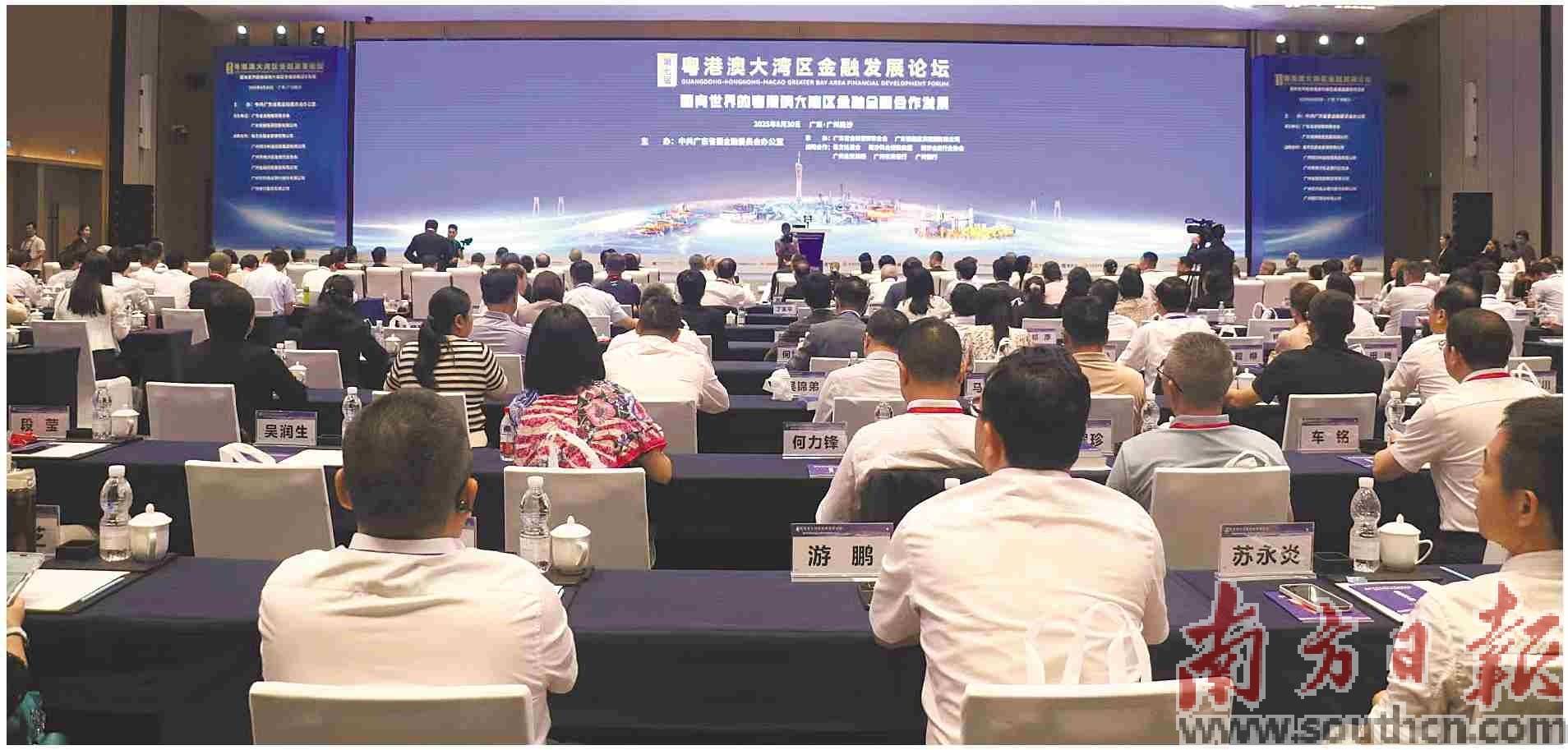
Group 1 - The seventh Guangdong-Hong Kong-Macao Greater Bay Area Financial Development Forum was held in Guangzhou, focusing on comprehensive financial cooperation and development aimed at high-quality growth [2] - Experts discussed actionable strategies for enhancing consumer confidence, stabilizing the real estate market, and promoting technological innovation as key areas for high-quality economic development [3][4] Group 2 - The construction of an international technology innovation center in the Greater Bay Area faces new challenges, necessitating a shift in approach towards original innovation and collaborative innovation clusters [4][5] - Financial services should support high-quality development, technological innovation, consumer spending, and the growth of the service sector [5][6] Group 3 - Enhancing the financial competitiveness and international influence of the Greater Bay Area requires deepening cross-border cooperation, accelerating financial openness, and optimizing service innovation [5][6] - The region's financial industry is already among the top globally, and further internal financial openness is essential for high-quality development [6] Group 4 - The financial interconnectivity among Guangdong, Hong Kong, and Macao is accelerating, injecting new momentum into the Greater Bay Area [7] - Recent initiatives include expanding the "Southbound Bond Connect" and improving the "Wealth Management Connect" framework to better serve investors [7][8] Group 5 - Macau aims to enhance its role as a financial service platform for the Greater Bay Area, encouraging more enterprises to issue bonds and seek financing there [8] - The upcoming implementation of the Investment Fund Law will facilitate the development of the investment fund industry across the Greater Bay Area and Macau [8]

锦上添花,更要雪中送炭
Ren Min Ri Bao· 2025-09-01 00:58
Group 1 - The core viewpoint emphasizes the importance of financial support for rural revitalization and the establishment of a modern rural financial service system in China [8] - The People's Bank of China and the Ministry of Agriculture and Rural Affairs issued guidelines to enhance financial services for rural reform and promote comprehensive rural revitalization [8] - Agricultural Bank of China has significantly increased loan disbursements to farmers, with a loan balance exceeding 2.4 trillion yuan in 832 poverty-stricken counties as of June 2023 [11] Group 2 - In Gansu Province, the cultivation of traditional Chinese medicinal herbs has become a key industry for poverty alleviation, with over 230 acres planted and annual income exceeding 2.6 million yuan for the village [9][11] - The Agricultural Bank of China provided various loans to support the establishment of a standardized medicinal herb industry, with a total loan amount of 1.6 million yuan from 2018 to 2025 [11] - The bank's financial services have helped over 1,800 farmers increase their income, with more than 70% being former poverty-stricken households [11] Group 3 - In Chongqing, financial support has enabled significant improvements in rural infrastructure, including roads and sewage systems, benefiting 16,000 villagers [12][13] - The National Development Bank provided a long-term credit of 220 million yuan for rural construction projects, enhancing the financial sustainability of these initiatives [13][14] Group 4 - The Agricultural Bank of China has implemented a "whole village credit" model, allowing farmers to obtain loans based on their credit profiles without collateral, significantly increasing access to financing [15][16] - Over 400 households in Meirong Village have benefited from this model, with a loan balance exceeding 7 million yuan [16][17] Group 5 - In Hainan, innovative financial products like the "Park Guarantee Loan" allow agricultural enterprises to secure funding based on patent value, facilitating access to capital for research and development [18][19] - The loan balance for breeding-related industries in Sanya reached 3.024 billion yuan by the first quarter of 2024, reflecting a year-on-year growth of 3.35% [20]


稳定币成金融新基建
Sou Hu Cai Jing· 2025-08-28 21:42
Core Insights - The emergence of stablecoins is reshaping the financial landscape, bridging traditional finance and the cryptocurrency world [2] - Major traditional financial institutions and payment giants are entering the stablecoin arena, indicating a significant shift in the financial ecosystem [2] - Stablecoins are evolving from mere trading tools to essential infrastructure for cross-border payments, DeFi finance, and national digital currency strategies [2] Industry Developments - Regulatory frameworks for stablecoins are being developed and refined across various economies, highlighting the growing importance of this financial instrument [2] - The boundaries between traditional finance and cryptocurrency are diminishing, leading to a new phase of competition in the financial system [2] - The rise of stablecoins represents a resurgence of financial innovation and a potential battleground for international currencies [2]
建设银行盐城分行成功落地系统内首笔资产收益支持贷款
Jiang Nan Shi Bao· 2025-08-28 10:28
Core Insights - The Construction Bank's Yancheng branch successfully launched its first asset income support loan, showcasing financial innovation and support for the real economy [1][2] Group 1: Business Development - The bank quickly responded to customer needs after the launch of the asset income support loan product on July 18, conducting a thorough demand survey [1] - A specialized team was formed to design the loan proposal efficiently, addressing customer pain points and expediting the approval process [1] - The approval process was streamlined, allowing the loan to be granted in just two working days, with the first disbursement occurring on July 30 [1] Group 2: Impact and Future Plans - This loan not only helped the client revitalize existing assets and optimize debt structure but also strengthened the bank-enterprise relationship [2] - The Yancheng branch plans to replicate and promote this successful experience, aiming to enhance its market competitiveness in asset revitalization [2]

落实金融支持新型工业化政策 银行加码“科创人才贷”
Zhong Guo Jing Ying Bao· 2025-08-27 15:35
Core Viewpoint - The introduction of "Talent Loans" by multiple banks aims to address the financing challenges faced by high-level talent in the technology and innovation sectors, facilitating a cycle of talent aggregation, innovation breakthroughs, financial support, and industrial upgrades [1][2]. Group 1: Financial Innovation and Support - The People's Bank of China and several ministries issued guidelines to provide tailored financial services for high-level talent, including credit financing and management consulting [1]. - "Talent Loans" focus on high-level talent, creating a credit channel that accelerates the transformation of technological achievements and supports the construction of new productive forces [1][3]. Group 2: Addressing Financing Challenges - Banks are enhancing "Talent Loans" to solve the financing difficulties of research teams that lack assets and collateral, with limits reaching up to 10 million yuan for certain programs [2]. - The loans are designed to evaluate credit based on talent qualifications, technical patents, and R&D capabilities rather than traditional asset-based metrics, thus addressing the "light asset, difficult financing" issue [3][4]. Group 3: Evaluation and Risk Management - A comprehensive evaluation system is being developed to assess talent value, incorporating non-financial indicators and dynamic information to reduce subjective bias in credit assessments [6]. - A three-dimensional evaluation system is proposed to prevent overestimation of talent value, including quantitative models and technology maturity assessments [6][7]. Group 4: Future Policy Recommendations - Recommendations for future policy support include establishing a unified talent credit conversion mechanism, creating risk compensation funds, and enhancing dynamic supervision of talent loan projects [7].


证券ETF龙头: 鹏华国证证券龙头交易型开放式指数证券投资基金2025年中期报告
Zheng Quan Zhi Xing· 2025-08-27 13:38
Fund Overview - The fund is named Penghua Guozheng Securities Leading Exchange-Traded Open-Ended Index Fund, managed by Penghua Fund Management Co., Ltd. and custodied by CITIC Securities Co., Ltd. [1][3] - The fund was listed on February 7, 2020, and aims to closely track the underlying index with minimal tracking deviation and error [2][3]. Investment Strategy - The fund employs a passive index investment strategy, constructing an investment portfolio based on the benchmark weights of the constituent stocks in the underlying index [2][4]. - The fund aims to keep the average daily tracking deviation within 0.2% and the annual tracking error within 2% [2][4]. Financial Performance - As of June 30, 2025, the fund's total net asset value was approximately RMB 2.05 billion, with a total of 1,693,197,982 fund shares outstanding [8][3]. - The fund reported a realized income of RMB 27.34 million and a profit of -RMB 23.75 million for the reporting period [8][7]. - The fund's net asset value per share at the end of the reporting period was RMB 1.2095, with a cumulative net value growth rate of 20.95% [8][7]. Market Context - The report indicates that the securities market is in a recovery phase, with significant capital inflow expected due to improved market sentiment and policy support [23][24]. - The fund's performance is influenced by macroeconomic factors, including GDP growth of 5.4% in Q1 2025, driven by consumption stimulus policies and real estate stabilization [22][23]. Management and Compliance - The fund management strictly adheres to relevant laws and regulations, ensuring compliance and protecting the interests of fund shareholders [19][20]. - The fund management has established a complete ETF tracking mechanism to minimize tracking errors and optimize adjustments based on market conditions [20][21].

金融四十五载助力书写“深圳奇迹”
Jin Rong Shi Bao· 2025-08-26 01:44
Group 1: Shenzhen's Financial Innovation - Shenzhen has transformed from a remote town to a financial innovation leader, marking 45 years of achievements in financial development [1][2] - The city has consistently focused on serving the real economy, breaking barriers with a spirit of innovation and openness [1][2] Group 2: Support for Startups and Innovation - Shenzhen's entrepreneurial policies and early financial support have been crucial for startups like Zhenmai Biotech, which developed a competitive gene sequencing product [2][3] - The city has over 2.6 million private enterprises, with a significant portion being innovative companies supported by financial institutions [4] Group 3: Financial Services and Accessibility - Shenzhen's financial institutions provide not only capital but also strategic guidance and market insights, fostering a supportive environment for tech entrepreneurs [4] - As of June 2025, Shenzhen's loans for technology innovation reached 2.1 trillion yuan, with nearly 2 trillion yuan allocated to small and micro enterprises [4] Group 4: Evolution of Digital Banking - The establishment of WeBank in 2014 marked a significant milestone in China's digital banking landscape, focusing on serving underserved businesses [6][7] - WeBank's innovative use of technology has allowed it to achieve low operational costs and high transaction volumes, setting a precedent for the industry [7][8] Group 5: Cross-Border Financial Services - Shenzhen has evolved its cross-border financial services from rudimentary methods to advanced digital solutions, enhancing the efficiency of international transactions [9][10] - The city has implemented various financial reforms and pilot programs to facilitate cross-border loans, investments, and asset transfers [11] Group 6: Payment Innovations - The development of electronic payment systems in Shenzhen has significantly improved transaction efficiency, moving from manual processes to digital solutions [12][13] - The rise of mobile payment, particularly through platforms like WeChat Pay, has transformed consumer behavior and payment methods in the city [12][14] Group 7: Future Directions - Shenzhen's financial sector is poised for further innovation, with a focus on becoming a leader in AI-driven financial services and continuing to support emerging technologies [15]
金融创新扎根实体土壤
Qi Huo Ri Bao Wang· 2025-08-26 01:00
Group 1 - The core viewpoint is that the integration of financial tools with the traditional pig industry is transforming operational methods and risk management practices, enhancing the industry's ability to withstand risks [1] - The introduction of basis trading allows companies to lock in profits and reduce financial pressure, enabling them to focus on production rather than market fluctuations [2] - The successful implementation of digital models to connect small family farms with larger markets demonstrates the potential for financial resources to flow to smaller entities, providing solutions to mitigate cyclical volatility [3] Group 2 - The introduction of tiered service upgrades by Zhongji Commerce (Zhejiang) Co., Ltd. addresses diverse risk management needs of pig farming enterprises through innovative futures and spot business models [4] - The 1.0 version of the forward price locking order has successfully completed the delivery of 208,000 pigs in 2024, with contracts for 1.191 million pigs in 2025, covering 32 enterprises across 20 provinces [4] - The 2.0 version enhances flexibility through financial tools, allowing for dynamic adjustments in contract volumes based on market conditions, and introduces a "pig bank" service to lower hedging thresholds for high-cost enterprises [4][5] Group 3 - The 2.5 version optimizes delivery mechanisms, allowing clients to flexibly price based on pre-sale or repurchase needs, thus enabling timely realization of hedging profits [5] - The three-tiered model creates a comprehensive risk management system that covers basic price locking, dynamic hedging, and flexible delivery, empowering farming enterprises to tackle price volatility challenges [5]

计算机行业周报:重点关注AI应用与金融创新两大主线-20250826
Changjiang Securities· 2025-08-25 23:30
Investment Rating - The industry investment rating is "Positive" and maintained [8] Core Insights - The report emphasizes two main themes: AI applications and financial innovation. It highlights the strengthening investment logic around AI agents and the potential for a new wave of financial innovation driven by blockchain technology. The report anticipates a significant turning point in Q4 for domestic AI models and applications, with improved model capabilities and reduced costs [7][52]. Summary by Sections Market Performance - Last week, the computer sector experienced a significant increase of 7.84%, ranking third among major industries in the Yangtze River region. The total trading volume accounted for 11.49% of the market [2][5][16]. Key Recommendations - The report suggests focusing on: 1. AI agent-related companies 2. The domestic inference computing power industry chain, particularly recommending leading AI chip company Cambrian [7][52] 3. Cloud service providers where agent applications are expected to materialize 4. Companies with blockchain technology reserves and financial IT-related enterprises [7][52]. Recent Developments - The report notes the release of security assessment results by the China Information Security Testing Center and the National Confidential Technology Testing Center, indicating ongoing advancements in the domestic information security sector [21][26]. - The 2025 China Computing Power Conference was held, emphasizing the importance of collaboration among various industry stakeholders to enhance the quality of the computing power industry [27][34]. AI and Computing Power Trends - The report highlights a rapid increase in AI application adoption, with a significant rise in daily token consumption from 1 trillion at the beginning of 2024 to over 30 trillion by mid-2025, indicating a strong demand for computing power [30][34]. - The current state of the computing power industry is characterized by a need for high-quality, scalable development, with a focus on improving technology and infrastructure [30][34]. Financial Innovation - The report discusses the potential of blockchain technology to drive a new wave of financial innovation, emphasizing its role in ensuring data integrity and transaction authenticity [49][54].
