马太效应

Search documents
助贷新规“前哨战”已至 多家机构披露助贷业务白名单
Di Yi Cai Jing· 2025-05-15 01:01
Core Viewpoint - The implementation of the new regulations for internet lending by commercial banks will lead to a significant reshaping of the industry, favoring leading institutions while squeezing the survival space of smaller platforms [1][4][9] Group 1: New Regulations - The new regulations, effective from October 1, 2025, require commercial banks to manage cooperative institutions through a "whitelist" system, prohibiting partnerships with unlisted entities [1][2] - Several banks, including Guangzhou Bank and Chengde Bank, have already disclosed their whitelist of cooperative lending institutions ahead of the regulations' implementation [2][3] Group 2: Characteristics of the Whitelist - The disclosed whitelist predominantly features leading companies in the industry, such as Ant Group and JD.com, indicating a concentration of partnerships among top-tier platforms [3][6] - The whitelist includes various types of institutions, such as pure lending platforms, licensed financial institutions, and guarantee companies, showcasing a diverse range of cooperative entities [3][4] Group 3: Industry Impact - The new regulations are expected to enhance transparency in the lending process and compel banks to adopt stricter entry mechanisms for cooperative institutions [4][9] - The regulations will likely exacerbate the "Matthew Effect," where larger, compliant institutions will thrive while smaller, less compliant platforms face increased challenges [5][6][9] Group 4: Financial Performance of Key Players - Several listed financial technology companies, including QFIN, LX, and others, reported a combined revenue of 61.9 billion yuan in 2024, reflecting an 8.48% increase from 2023 [8] - Notably, QFIN achieved a revenue of 17.166 billion yuan, marking a 5.38% year-on-year growth, while LX reported a revenue of 14.204 billion yuan, up 8.8% [8] Group 5: Market Dynamics - The new regulations are anticipated to further differentiate the market, with smaller platforms that previously targeted high-risk clients facing significant operational constraints [9] - Leading internet companies like JD.com and ByteDance are leveraging their substantial traffic to expand their financial services, positioning themselves advantageously in the evolving landscape [7]
助贷新规开启倒计时,多家机构披露助贷业务“白名单”
Di Yi Cai Jing· 2025-05-14 11:48
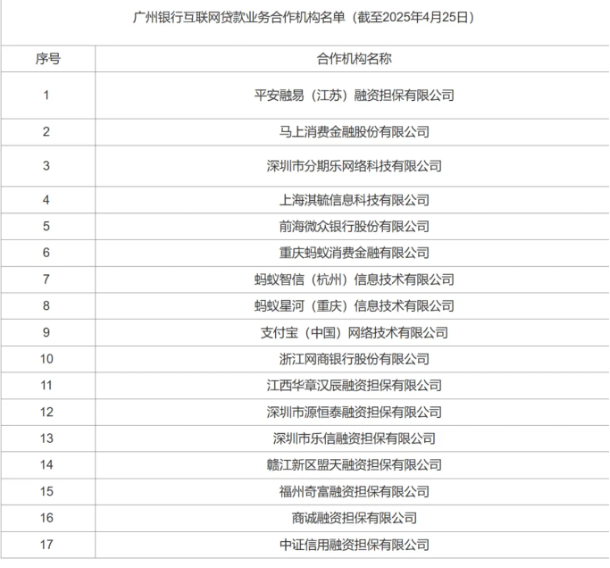
严禁与名单外机构合作。 2025年10月1日起,国家金融监督管理总局发布的《商业银行互联网助贷业务管理办法》(下称"助贷新规")将正式 实施。新规要求商业银行对合作机构实行"白名单"管理,并严禁与名单外机构合作。 离正式实施还有不到5个月,广州银行、承德银行等多家金融机构已提前行动,披露助贷业务合作机构。第一财经记 者注意到,当前披露的名单呈现两大特征:合作方高度集中于蚂蚁、京东、字节跳动等头部平台,且涵盖持牌金融机 构及担保公司等多类主体。 业内人士指出,助贷新规将加速行业洗牌,头部机构因合规优势进一步受益,而依赖"嵌套导流"的中小平台生存空间 将被挤压。目前,京东、字节跳动等流量巨头手握"入场王牌",奇富科技、乐信等金融科技公司凭借先发优势构建放 贷"护城河",行业马太效应日益凸显。 多家机构披露白名单 根据助贷新规要求,商业银行总行应当对平台运营机构、增信服务机构实行名单制管理,通过官方网站、移动互联网 应用程序等渠道披露名单,及时对名单进行更新调整。商业银行不得与名单外的机构开展互联网助贷业务合作。 离新规实施还有不足5个月,广州银行、承德银行、尚诚消费金融等多家机构已经披露合作助贷机构"白名单"。记 ...

断层式领先VS盈利承压:民营银行冰火两重天生存实录
Zhong Guo Zheng Quan Bao· 2025-05-13 21:49
Core Viewpoint - The private banking sector is experiencing a stark contrast, with leading institutions lowering deposit rates while maintaining competitiveness, whereas smaller institutions are compelled to offer higher rates to attract deposits [1][2][3] Deposit Rate Differentiation - Recent adjustments in deposit rates among private banks show significant differentiation, with leading banks like WeBank lowering rates to 1.6% for various terms, even below some state-owned banks [1][2] - In contrast, other private banks, such as Fujian Huatong Bank, maintain relatively high deposit rates, with rates for different terms ranging from 1.3% to 2.7% [2] - The differentiation in deposit rates is attributed to varying business models, with leading banks leveraging unique ecosystems for competitive advantages [2][3] Industry Structure and Performance - The performance of private banks in 2024 highlights a "Matthew Effect," where WeBank and MyBank lead significantly, while regional banks face profitability pressures [3][4] - WeBank reported revenues of 38.128 billion and net profits of 10.903 billion, while MyBank followed with 21.314 billion in revenue and 3.166 billion in net profit [4] - Nearly half of the private banks reported a year-on-year decline in revenue, with some experiencing significant losses due to rising asset impairment losses [4][5] Challenges and Strategic Focus - Private banks face structural challenges, heavily relying on interest income, with over 80% of revenue coming from interest for many banks [5][6] - The competitive landscape is intensifying as state-owned banks increase their focus on inclusive finance, diminishing the advantages of private banks [6] - To navigate these challenges, private banks are encouraged to adopt diversified strategies, optimize asset structures, and enhance liquidity management [6][7] Technological and Sectoral Focus - Private banks are advised to focus on vertical sectors such as biomedicine and renewable energy, utilizing industry expertise and data-driven risk management to build competitive barriers [7] - Enhancing technological capabilities through big data and intelligent risk control can improve service efficiency for small and micro-enterprises [7]
果子熟了、三得利相继官宣代言人,无糖茶提前打响夏季营销战
Bei Jing Shang Bao· 2025-05-11 13:19
Group 1 - The announcement of celebrity endorsements by both new and established sugar-free tea brands highlights the competitive landscape and sales anxiety in the market as summer approaches [1][4] - Suntory's partnership with actor Cheng Yi resulted in a significant spike in sales, with flagship store sales reaching between 2.5 million to 5 million yuan on the day of the announcement, marking a 100-fold increase from the previous day [3] - The brand "Guo Zi Shu Le" reported selling 400 million bottles of sugar-free tea in a year, indicating strong market performance [4] Group 2 - The sugar-free tea market has seen a slowdown in growth after two years of rapid expansion, with negative year-on-year sales growth reported in February and March [5] - Major players like Nongfu Spring and Suntory dominate the market, holding 85% of the market share, leaving limited space for other brands [5] - The rise of new product categories, such as health water, is taking a portion of the market share, with the health water market expected to grow at a compound annual growth rate of approximately 88.9% from 2024 to 2028 [5][6] Group 3 - Analysts suggest that the growth of sugar-free tea brands is becoming increasingly difficult due to market saturation and the need for brands to establish scale, brand, and fan effects [6] - Despite the dominance of major brands, there are still opportunities for new brands to capture market share through precise market positioning and innovative products [6][7]

34家保险资管公司净赚184亿元:3家净利润均超20亿元,1家亏损 业内:头部保险资管机构竞争优势明显
Mei Ri Jing Ji Xin Wen· 2025-05-09 11:41
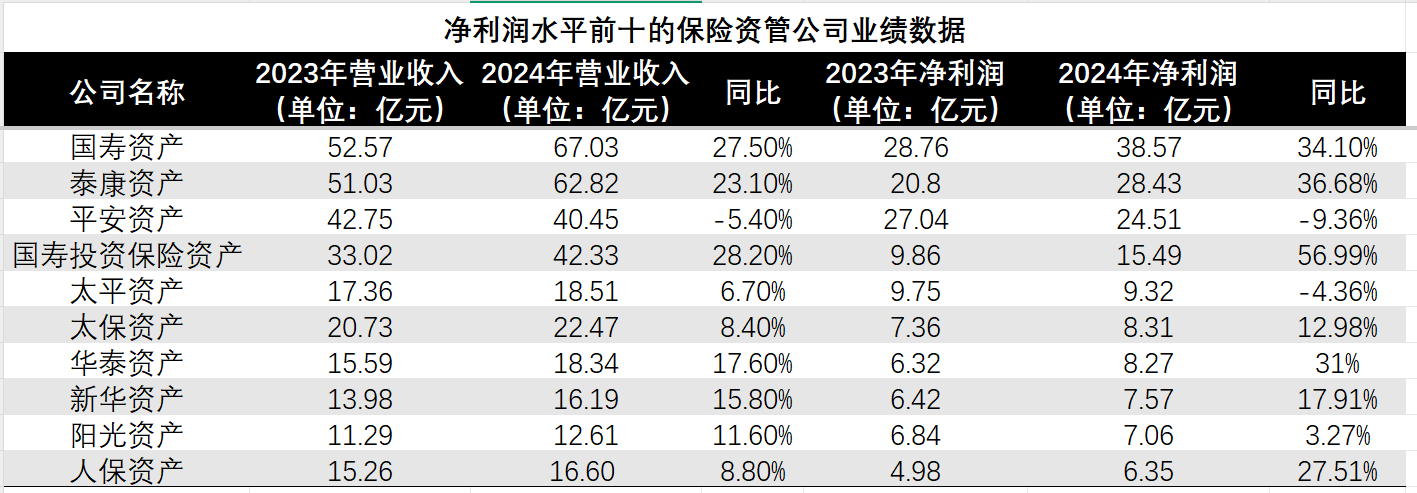
每经记者|袁园 每经编辑|张益铭 随着5月的到来,保险资管公司2024年的业绩逐步浮出水面。 目前,除华夏久盈资产暂缓披露外,其余34家保险资管机构(含1家养老险公司)均已披露2024年年报。2024年,这34家保险资管机构合计实现营业收入416 亿元,同比增长14.4%;实现净利润184亿元,同比增长18.08%。 具体到机构方面,各家保险资管机构的业绩分化明显,就净利润来看,有的机构净利润同比上涨近九成,而有的机构净利润则同比下滑超八成。为何保险资 管机构的业绩分化会如此明显?业内人士在接受《每日经济新闻》记者微信采访时表示,保险资管机构跟公募基金一样,盈利主要靠管理费,这与其服务能 力和核心投资能力息息相关。 34家保险资管公司合计实现净利润184亿元 2024年,34家保险资管机构合计实现净利润184亿元,同比增长18.08%。具体来看,国寿资产、泰康资产、平安资产净利润水平位居市场前三,均超20亿 元。其中,国寿资产实现净利润38.57亿元,同比增长34.1%;泰康资产实现净利润28.43亿元,同比增长36.68%;平安资产实现净利润24.51亿元,同比下滑 9.36%。 紧随其后的是国寿投资、太平 ...
美的、海尔、海信筑起千亿护城河 惠而浦断臂 澳柯玛流血 二三线品牌如何破局?
Xi Niu Cai Jing· 2025-05-09 07:08
Core Viewpoint - The white goods industry is entering a "folding era," where major players like Midea Group, Haier Smart Home, and Hisense dominate 95% of industry profits, leaving smaller brands struggling for survival [2][3]. Group 1: Industry Overview - The white goods sector is characterized by a significant concentration of profits among a few large companies, with Midea, Haier, and Hisense leading the market [2]. - Smaller brands face challenges due to cost pressures and technological gaps, leading to a "survival of the fittest" scenario [2][3]. - The competition is intensifying with a focus on smart and scenario-based ecosystems, which raises the entry barriers for smaller players lacking technological depth [2]. Group 2: Financial Performance of Major Players - Midea Group reported a revenue of 407.15 billion yuan and a net profit of 38.54 billion yuan in 2024, marking a 9.44% increase in revenue and a 14.29% increase in net profit compared to 2023 [4][5]. - Haier Smart Home achieved a revenue of 285.98 billion yuan and a net profit of 18.74 billion yuan, with a strong presence in the high-end market [5]. - Hisense's revenue reached 92.75 billion yuan with a net profit of 3.35 billion yuan, but it faces cash flow challenges and increasing debt levels [6]. Group 3: Challenges Faced by Smaller Brands - Whirlpool's revenue declined by 8.85% to 3.65 billion yuan, but its net profit surged by 148.72% due to drastic cuts in marketing expenses [8][16]. - Aucma reported a revenue drop of 15.99% to 7.82 billion yuan, with a net loss of 48.53 million yuan, highlighting its precarious position in the market [18][22]. - Long-term survival for smaller brands is threatened by rising costs and a lack of competitive advantages, as evidenced by their low profit margins and market share erosion [7][8]. Group 4: Market Dynamics and Future Outlook - The white goods industry is witnessing a "Matthew effect," where the rich get richer, and smaller players are increasingly marginalized [2][22]. - The competition is not merely about size but also about technological advancement and operational efficiency, leading to a scenario where "smart manufacturing" outpaces traditional methods [22]. - By 2025, the list of survivors in the white goods industry is expected to shrink further, emphasizing the need for technological depth and strategic focus to avoid obsolescence [22].





酒业“前三甲之争”尘埃落定?
Sou Hu Cai Jing· 2025-05-09 03:21
行业承压背景下,酒企调整频繁、白酒新格局的形成亦按下了"加速键"。 近日,随着山西汾酒财报的发布,白酒行业多年的"高热话题"——"白酒前三甲之争"结果似乎变得明朗。此前"茅五洋"、"茅五泸"的争论似乎有 了不一样的答案。 以2024年财报数据为依据,国内白酒企业呈现出酱、浓、清三大香型代表企业贵州茅台(1708.99亿元)、五粮液(891.75亿元)、山西汾酒 (360.11亿元)盘踞酒业"前三甲"的酒业格局。此外,泸州老窖营收311.96亿元,洋河股份营收为288.76亿元。 值得关注的是,在营收上位列"探花"的山西汾酒,其在2024年的净利(122.42亿元)逊于泸州老窖(134.72亿元),不过其净利增速实现双位数 增长,表现优于泸州老窖。 目前来看,由于不同酒企间营收数据有着较大差距、以及行业进入调整期业绩数据增速放缓等原因,酒业在经历"三甲之争"多年后,头部酒企格 局或在当下已被重塑。不过,"茅五汾"新格局稳定性如何呢? 01 2025Q1: 不过,洋河股份业绩依然备受考验。其在2025年Q1营收为110.66亿元,同比下滑31.92%;净利为36.37亿元,同比下滑39.93%。 整个行业来看,2 ...




85家财险公司一季度“成绩单”揭晓:70家盈利15家亏损 合计实现净利超256亿元
Zheng Quan Ri Bao· 2025-05-07 15:56
本报记者 冷翠华 见习记者 杨笑寒 随着险企一季度偿付能力报告陆续披露,财险公司的经营情况也随之揭晓。记者根据中国保险行业协会数据统计,截至5 月7日记者发稿时,已公布今年一季度经营情况的85家财险公司,合计实现保险业务收入约5161.45亿元,合计实现净利润约 256.04亿元。 受访专家表示,财险行业今年以来表现较好,主要受行业车险业务优化、去年投资收益逐渐释放等因素影响。 4家财险公司净利均超10亿元 具体来看,上述85家财险公司中,中国人民财产保险股份有限公司(以下简称"人保财险")以1816.75亿元的保险业务收入 居首,也是一季度唯一一家保险业务收入超千亿元的财险公司;中国平安财产保险股份有限公司(以下简称"平安产险")、中 国太平洋财产保险股份有限公司(以下简称"太保产险")紧随其后,分别以852.83亿元、633.16亿元保险业务收入暂列第二、 第三位。 行业马太效应显著 值得注意的是,财险行业的马太效应仍然较为显著。从已披露偿付能力报告的险企来看,一季度净利润排名前五的财险公 司合计盈利208.80亿元,占所有财险公司净利润的82%。此外,在85家盈利的财险公司中,有53家的净利润在1亿元以 ...



65家公募去年盈利超340亿,费率改革下“贫富分化”
Di Yi Cai Jing Zi Xun· 2025-05-06 11:47
Core Insights - The ongoing public fund fee rate reform is significantly impacting the industry, with 65 fund companies projected to achieve a combined net profit exceeding 34 billion yuan in 2024, and over 80% of these companies maintaining profitability [1][2] - There is a notable divergence in profitability among fund companies, with leading firms leveraging scale, brand influence, and diversified business models to mitigate the impact of fee reforms, while smaller firms face challenges [1][2][8] Profitability Trends - Approximately 60% of fund companies reported net profit growth despite a backdrop of declining fee rates and intensified competition [2] - E Fund remains the top performer with a revenue of 12.11 billion yuan, marking a slight revenue decline of 3.13% but a net profit increase of 15.33% to 3.9 billion yuan [2] - Other leading firms like Southern Fund, Huaxia Fund, and GF Fund also reported revenues exceeding 7 billion yuan and net profits above 2 billion yuan, showing varying degrees of growth compared to the previous year [2] Impact of Fee Rate Reform - The fee rate reform initiated in July 2023 has led to a collective reduction in management fees, particularly affecting companies with a high proportion of equity products [3][4] - Nearly 56% of fund managers with data over the past three years experienced a decline in management fee income, with over 75% of the 30 companies earning more than 1 billion yuan in management fees facing similar declines [3] Performance Disparities - Among the 11 companies in the "10 billion club," only two, Fuquan Fund and China Merchants Fund, reported declines in net profit, while the remaining nine saw varying increases, with Tianhong Fund's net profit rising over 19% [3][4] - Companies like Yongying Fund and Zhongjin Fund achieved significant growth in net profit due to increased fund management scale and effective product diversification strategies [6] Challenges for Smaller Firms - Smaller fund companies are struggling, with nine firms reporting operational losses, often due to limited product offerings and weak brand recognition [7][8] - Companies like Fuan Fund and Huaxi Fund have consistently reported negative net profits, highlighting the difficulties faced by smaller players in the current market environment [7] Industry Outlook - The public fund industry is undergoing profound changes due to the fee rate reform, with leading firms capitalizing on their advantages to find growth opportunities, while smaller firms must enhance their competitiveness through improved research capabilities and product differentiation [8]
漫展,五一最年轻的“流量景区”
Xin Lang Cai Jing· 2025-05-06 09:54
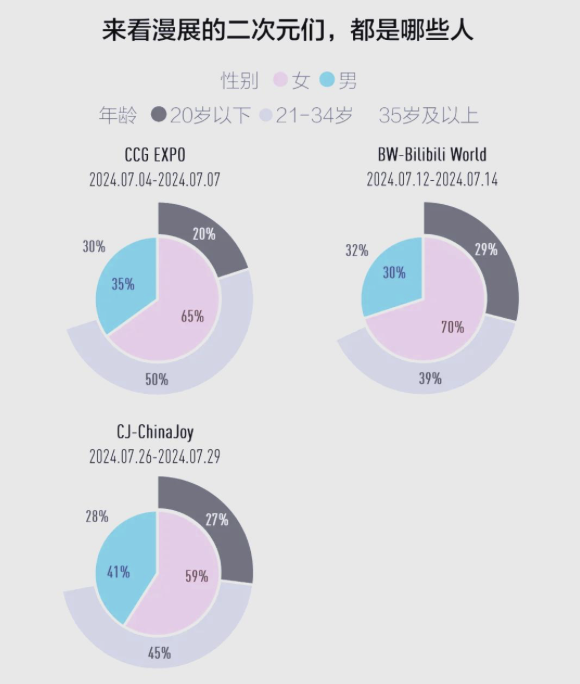
Core Insights - The number of anime conventions and related events in China has surged, with over 1000 events held this year, indicating a significant shift from niche to mainstream culture [1] - The trend of "star chasing" is becoming a new phenomenon at these conventions, with a notable increase in celebrity guest appearances and fan interactions [2][3] - The audience's motivations have shifted from traditional content consumption to emotional interactions with characters and cosplayers, reflecting a broader cultural change [4] Industry Growth - The number of anime conventions has increased significantly, with 95 events in Jiangsu, 74 in Zhejiang, 80 in Guangdong, and 67 in Sichuan, nearing one-third of the total events held a decade ago [1] - The rise in events correlates with a growing demand for emotional engagement over traditional ACG content, leading to a transformation in the convention experience [4][12] Celebrity Influence - Celebrity guest appearances now dominate convention schedules, with events like the Weibo ACG World featuring over 100 guests, including esports players and popular cosplayers [2] - The pricing for interactions with celebrities has escalated, with VIP tickets reaching up to 694 yuan, mirroring the entertainment industry's pricing structures [2][6] Audience Engagement - The demographic of convention attendees is evolving, with female attendees now making up 70% of the audience, and many fans prioritizing interactions with cosplayers [4][11] - Fans are increasingly willing to pay for services such as queueing for autographs or personalized video messages, indicating a shift towards a more service-oriented model [3][4] Economic Impact - The economic model of conventions is shifting towards a combination of signing events, retail, and interactive experiences, with guest fees rising significantly, now accounting for up to 50% of event costs [6][7] - The average spending per attendee at events like the Firefly Anime and Game Carnival has reached 641 yuan, highlighting the growing economic significance of these conventions [8] Market Dynamics - The competition among conventions is intensifying, with organizers focusing on attracting high-profile guests to drive attendance and revenue [7][10] - The emergence of niche conventions and localized events is expanding the market, allowing for greater diversity in offerings and audience engagement [12][13] Cultural Shift - Conventions are increasingly seen as mainstream social activities, with families attending together, indicating a broader acceptance of anime culture in society [11] - The evolution of conventions reflects a deeper cultural integration of anime and related fandoms into everyday life, moving beyond traditional perceptions of subculture [11][12]