产能出清

Search documents
亚玛顿回应:行业减产消息属实,海外市场需求巨大
news flash· 2025-07-01 11:03
Group 1 - The news regarding the collective production cut of 30% by leading domestic photovoltaic glass companies starting in July is confirmed, which will accelerate capacity clearance and promote sustainable and healthy development of the industry [1] - The competition in the domestic photovoltaic glass industry is intensifying, while the significant demand in overseas markets provides a broad development space for photovoltaic glass companies [1] - The company’s board has recently approved a proposal to invest in a production line project in the UAE with an annual capacity of 500,000 tons of photovoltaic glass, aiming to leverage local resource advantages and enhance its core technological strengths in the photovoltaic glass sector [1]

硅料上半年减产不及预期,市场盼后续政策呵护周期底部
Di Yi Cai Jing· 2025-06-30 12:41
2025年上半年多晶硅价格虽有所下跌,但整体供应并未大幅缩减,系减产力度与有效性不足所致 市场博弈光伏减产政策预期升温。6月30日,多晶硅期货主力合约2507收涨3.46%,光伏板块同步触底 反弹,欧晶科技(001269.SZ)涨停,通威股份(600438.SH)涨逾7%,大全能源(688303.SH)收涨近 7%。 6月中旬以来,硅料企业当月产能置换情况逐渐展开,短期内下游压价严重,一线大厂几近无法成交, 二三线企业价格松动严重,呈现产量增加的态势,令市场认为减产不及预期,多晶硅期货现货价格再度 走跌。 上周周中,多晶硅期货主力合约创下上市后最低价,报31185元,现货市场亦成交低迷。当周,市场传 言多家企业多个基地新增复产计划,有统计显示,仅考虑已复产企业的生产情况,预期7月排产10.7万 吨,此水平的复产也足以带动多晶硅进入单月过剩。根据SMM,截至6月26日,中国多晶硅厂库存27万 吨,环比增加0.8万吨。 硅料价格下半年如何演绎?供需层面来看,4月光伏抢装潮结束后,国内光伏需求整体偏弱,海外方 面,欧洲7、8月进入暑休,短期内需求端难以支撑光伏产业链价格企稳。 对于硅料供给端变化影响,中信建投电新团 ...


玻璃:现货市场走货转好 短期盘面存支撑
Jin Tou Wang· 2025-06-26 02:21
Supply and Demand - As of June 19, 2025, the national float glass daily production is 155,400 tons, a decrease of 0.16% compared to June 12 [2] - For the week of June 13-19, 2025, the total float glass production reached 1,093,500 tons, an increase of 0.21% week-on-week, but a decrease of 7.88% year-on-year [2] - The total inventory of sample enterprises for float glass as of June 19, 2025, is 69.887 million heavy boxes, an increase of 202,000 heavy boxes week-on-week, which is a 0.29% increase, and a year-on-year increase of 16.82% [2] - The inventory days stand at 30.8 days, remaining stable compared to the previous period [2] Market Analysis - The glass market shows a strong performance, supported by the rise in prices of related commodities like coking coal, and improved sales in the spot market [3] - Demand is currently supported by strong purchasing from essential needs, but the market is expected to face limitations due to the seasonal slowdown during the summer rainy season [3] - The industry is experiencing excess capacity, and a resolution will require capacity reduction, with expectations for more cold repairs to bring about a genuine market reversal [3] - The price is expected to fluctuate within the range of 950 to 1050 points in the short term, with current support from improved spot market conditions [3]
壹快评| “光伏春晚”落幕,产能出清前夜,三大现象值得警惕
Di Yi Cai Jing· 2025-06-20 07:14
Core Viewpoint - The photovoltaic industry must remain vigilant against potential technological devaluation and over-investment due to new technology spillover, as well as the risk of low-price competition being replicated in the energy storage sector [1][2][3]. Group 1: Industry Trends - The SNEC Shanghai Photovoltaic Exhibition showcased a significant number of companies presenting perovskite tandem cells/components and BC technology, indicating a trend towards embracing new technologies [2]. - Major companies like LONGi Green Energy, GCL-Poly, JinkoSolar, and others are investing heavily in upgrading their production lines, with costs reaching tens of millions of yuan per GW to maintain competitiveness [3]. - The exhibition saw a notable increase in foreign participation, with approximately 500,000 attendees, reflecting a growing international interest in the photovoltaic sector [5]. Group 2: Market Dynamics - The industry is experiencing a shift where the low-price competition model from the photovoltaic sector is being adopted in the energy storage market, leading to a significant drop in profit margins [4]. - The energy storage market is witnessing a trend of price reductions, with some products priced below $120 per KWh, which has decreased profit margins from 40% to 20-30% [4]. - Despite a perceived recovery in the market, the industry is still on the brink of capacity clearance, with production rates in the downstream component sector dropping below 50% [6]. Group 3: Regulatory Environment - Regulatory bodies are actively seeking solutions to mitigate "involutionary competition" within the photovoltaic industry, indicating a proactive approach to industry challenges [6].



1分钟“20CM”涨停,301292“两连板”
新华网财经· 2025-06-20 04:30
Group 1: Liquor Industry - The liquor sector has shown a strong rebound, with major brands like "Moutai, Wuliangye, and Luzhou Laojiao" all experiencing significant gains [3][4] - The China Alcoholic Drinks Association's report indicates that the liquor industry is undergoing a deep structural adjustment, characterized by "declining volume and rising profits," with a notable shift in consumer demographics and purchasing behavior [6][7] - The report highlights a decrease in the share of business banquets, prompting companies to adjust their product strategies, with a focus on mid-to-low-end products priced between 100 to 300 yuan [6][7] Group 2: New Energy Sector - The new energy sector has rebounded, particularly in the photovoltaic segment, with significant gains in stocks related to BC batteries and photovoltaic equipment [8][9] - Leading stock Haike New Source (301292) surged to a "20CM" limit-up shortly after market opening, indicating strong investor interest [9][12] - The photovoltaic industry is expected to see improved supply-demand dynamics by 2025, with global installation demand projected to reach 492GW to 568GW, reflecting a year-on-year growth of approximately 5% to 7% [13]



光伏股集体走强,资金年内抄底光伏ETF、光伏50ETF
Ge Long Hui· 2025-06-20 02:48
Group 1 - The photovoltaic sector in the A-share market is experiencing a collective surge, with companies like GCL-Poly Energy and JA Solar seeing significant gains, while various photovoltaic ETFs have also increased by over 1% [1] - Despite a decline of over 15% in photovoltaic ETFs this year, there has been a net inflow of funds, with notable amounts flowing into specific ETFs such as Huatai-PB and Tianhong [1] - The China Photovoltaic Industry Association is focusing on "production limits to maintain prices," with expectations of a 10%-15% reduction in operating rates in Q3, alongside strict controls on "below-cost sales" [1] Group 2 - CITIC Securities anticipates that the photovoltaic industry, as a representative of "anti-involution competition," will see policy support in the future, with a focus on the need for capacity clearance and technological advancements for a mid-to-long-term industry recovery [2] - Zhongyuan Securities highlights that by mid-2025, photovoltaic companies will face severe operational challenges due to excess manufacturing capacity and low product prices, leading to increased bankruptcies among small and medium enterprises [3] - The report emphasizes the importance of "capacity clearance" and "new technology iteration" as key themes for the industry, recommending attention to leading companies in the polysilicon and photovoltaic glass sectors [3]
“限产保价”预期再起?光伏50ETF(159864)涨近2%
Mei Ri Jing Ji Xin Wen· 2025-06-20 02:14
Group 1 - The core theme of the recent meeting held by the China Photovoltaic Industry Association is "production limits to maintain prices," with expectations of a 10%-15% reduction in operating rates in the third quarter [1] - The photovoltaic 50 ETF (159864) has seen an increase of nearly 2% due to favorable catalysts [2] - Dongxing Securities indicates that the rush for photovoltaic installations will lead to a recovery in Q1 2025 performance, although the entire industry is still in a loss phase, and capacity clearance is ongoing [2] Group 2 - Industry self-discipline and technological innovation are deemed crucial for breaking the current deadlock, with leading companies potentially establishing a capacity planning coordination mechanism to avoid vicious competition [2] - New battery technology is improving mass production efficiency, and breakthroughs in silver-free technology are accelerating the upgrade of production lines [2] - With the improvement of self-discipline mechanisms and technological advancements, the photovoltaic industry is expected to accelerate the elimination of outdated capacity and optimize the supply structure [2]
南华期货硅产业链企业风险管理日报-20250620
Nan Hua Qi Huo· 2025-06-20 02:02
南华期货硅产业链企业风险管理日报 2025年6月19日 夏莹莹(投资咨询证书:Z0016569 ) 余维函 (期货从业证号:F03144703) 投资咨询业务资格:证监许可【2011】1290号 工业硅&多晶硅期货价格区间 | 品种 | 价格区间预测 | 当前波动率(20日滚动) | 日涨跌 | 当前波动率历史百分位(3年) | 日涨跌 | | --- | --- | --- | --- | --- | --- | | 工业硅主力合约 | 震荡区间7200-7700 | 28.0% | 0.09% | 84.4% | 0.4% | | 多晶硅主力合约 | 强压力位35000 | 24.45% | -0.27% | 57.01% | -0.5% | source: 南华研究,同花顺 工业硅&多晶硅风险管理策略建议 | 行为 导向 | 情景分析 | 策略推荐 | 套保工具 | 买卖方向 | 套保比例 | | --- | --- | --- | --- | --- | --- | | 库存 | 产品库存偏高,有存 | 为了防止存货减值,根据企业库存情况,做空期货来 锁定利润,弥补企业的生产成本 | SI2509/P ...

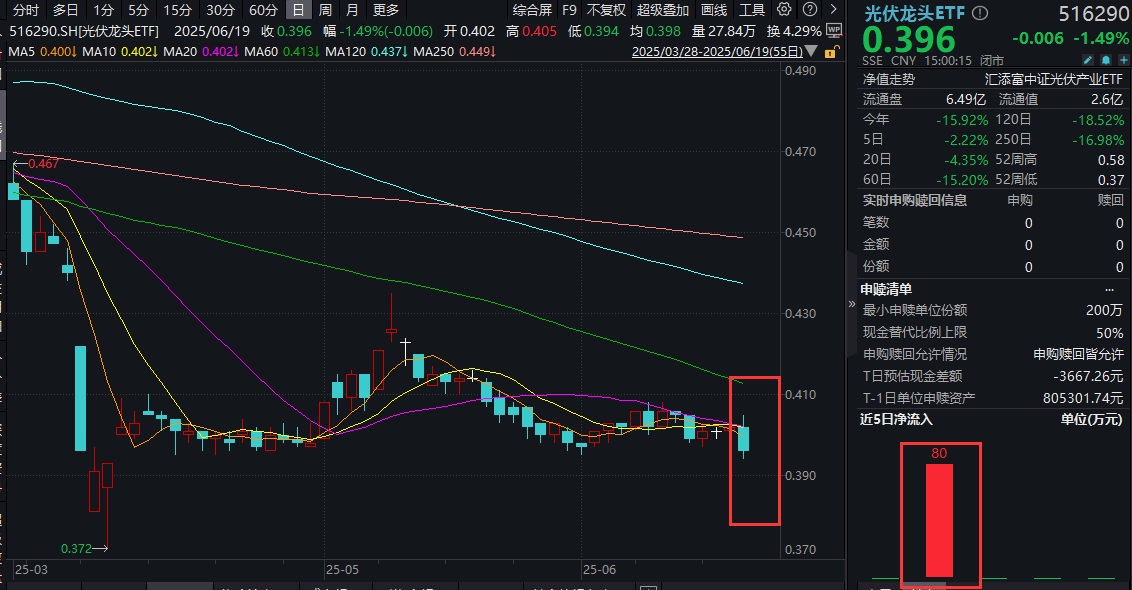
光伏三季度“减产令”升级!“反内卷”呼声再加大,低费率的光伏龙头ETF(516290)跌1.49%,光伏产业出清走到哪里了?
Sou Hu Cai Jing· 2025-06-19 10:27
Core Viewpoint - The Chinese photovoltaic (PV) industry is facing a critical supply-side reform, with expectations of production cuts and stricter policies to curb below-cost sales, aiming to improve industry profitability and stability [3][4][5]. Industry Summary - A significant decline was observed in the A-share market on June 19, with a total trading volume of 1.28 trillion yuan and over 4,600 stocks falling [1]. - The photovoltaic sector, particularly low-fee ETFs, experienced a downturn, with the leading ETF (516290) dropping by 1.49% [1][6]. - Major companies in the PV sector, such as 阳光电源 (Sungrow Power), 德业股份 (Deye), and 晶澳科技 (JA Solar), reported declines exceeding 3% in their stock prices [6]. Production and Policy Changes - The China Photovoltaic Industry Association held a meeting focusing on "production limits to maintain prices," indicating a projected reduction in operating rates by 10%-15% in Q3 [2][3]. - A third-party audit group will conduct comprehensive audits to identify evidence of below-cost sales, with various measures planned against non-compliant companies [2][3]. Technological Advancements - The industry is witnessing a push for supply-side reform, with leading companies advocating for market-driven consolidation and technological upgrades to phase out outdated capacities [4][5]. - New technologies, such as TOPCon and perovskite, are gaining attention, with several companies showcasing advancements in efficiency and production capabilities at the SNEC conference [5]. Market Outlook - The PV sector is expected to experience a fundamental recovery, with signs of a potential turning point in market sentiment as production cuts and technological advancements take effect [7]. - The low-fee photovoltaic ETF (516290) is highlighted as a favorable investment option, with management fees significantly lower than the market average [7].



锂价持续下探,行业谋求破局
Zhong Guo Chan Ye Jing Ji Xin Xi Wang· 2025-06-18 23:32
Group 1: Market Trends - Lithium carbonate futures have seen a significant decline, with the main contract LC2507 dropping below 60,000 yuan/ton for three consecutive days, reaching a low of 59,500 yuan/ton and closing at 60,400 yuan/ton on May 26-28 [1] - On June 3, the average price of battery-grade lithium carbonate fell to 60,800 yuan/ton, indicating a continuous downward trend in the market [1] - The oversupply of lithium salts is becoming increasingly evident, with the supply-demand imbalance expected to persist into 2025, keeping prices around 60,000 yuan/ton [2][3] Group 2: Impact on Companies - Companies like Ganfeng Lithium and Tianqi Lithium have reported significant impacts on their cash flow due to falling lithium prices, with Ganfeng's net cash flow from operating activities plummeting from 118 million yuan to -1.571 billion yuan year-on-year, a decline of 1422.07% [2] - The ongoing price decline has led to reduced investment enthusiasm among companies, as seen with Fangyuan Co. deciding to terminate a 3 billion yuan investment project in battery-grade lithium carbonate production [2] Group 3: Supply Chain Dynamics - The high production levels of lithium carbonate continue, while the growth rate of the downstream electric vehicle market has not met expectations, leading to low purchasing willingness among battery and vehicle manufacturers [3] - The slow pace of capacity clearance is evident, with some high-cost Australian mines announcing production cuts, but the overall reduction in supply has not been significant enough to rebalance the market [4][5] Group 4: Cost Management Strategies - Companies are focusing on cost reduction and efficiency improvements to navigate the pressures of declining lithium prices, with Salt Lake Co. enhancing production processes and optimizing supply chains [7] - Ganfeng Lithium is developing multiple resource projects with long-term cost advantages, aiming to mitigate the impact of falling lithium prices on its business [7][8] Group 5: Future Outlook - Analysts suggest that a significant turnaround in the lithium market may require key catalysts such as substantial production cuts from large-scale mines or increased downstream demand [7] - The forecast for lithium prices in the second half of 2025 is expected to range between 60,000 to 70,000 yuan/ton, indicating potential stabilization [5]