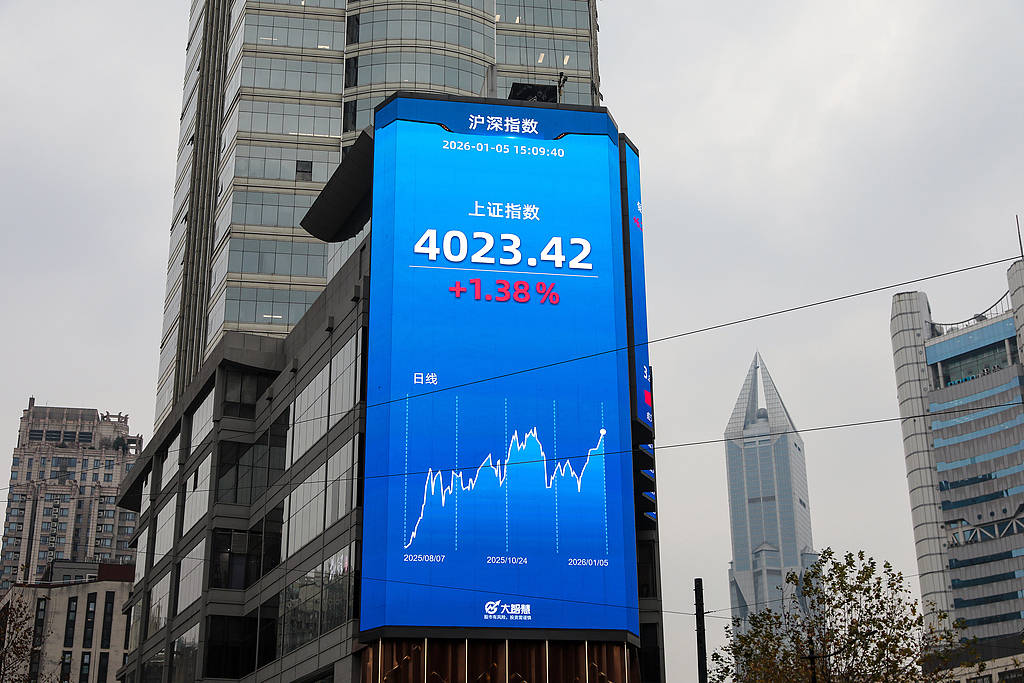
春季行情

Search documents
突破前期高点!上证指数,十年新高
Zhong Guo Zheng Quan Bao· 2026-01-06 03:29
光大证券表示,2025年12月下旬的上涨或许就是本轮春季行情的起点,消费与成长有望成为春季行情的 两条主线。 1月6日早盘,A股市场走强。数据显示,截至11:10,上证指数、深证成指分别上涨0.91%、0.62%。上 证指数突破2025年11月14日的阶段高点——4034.08点,创逾十年新高,最新报4060.17点。A股市场超 3400只股票上涨。 从盘面上来看,炒股软件、钛白粉、脑机接口等板块表现活跃。申万一级行业中,有色金属、非银金 融、石油石化行业领涨。 ...
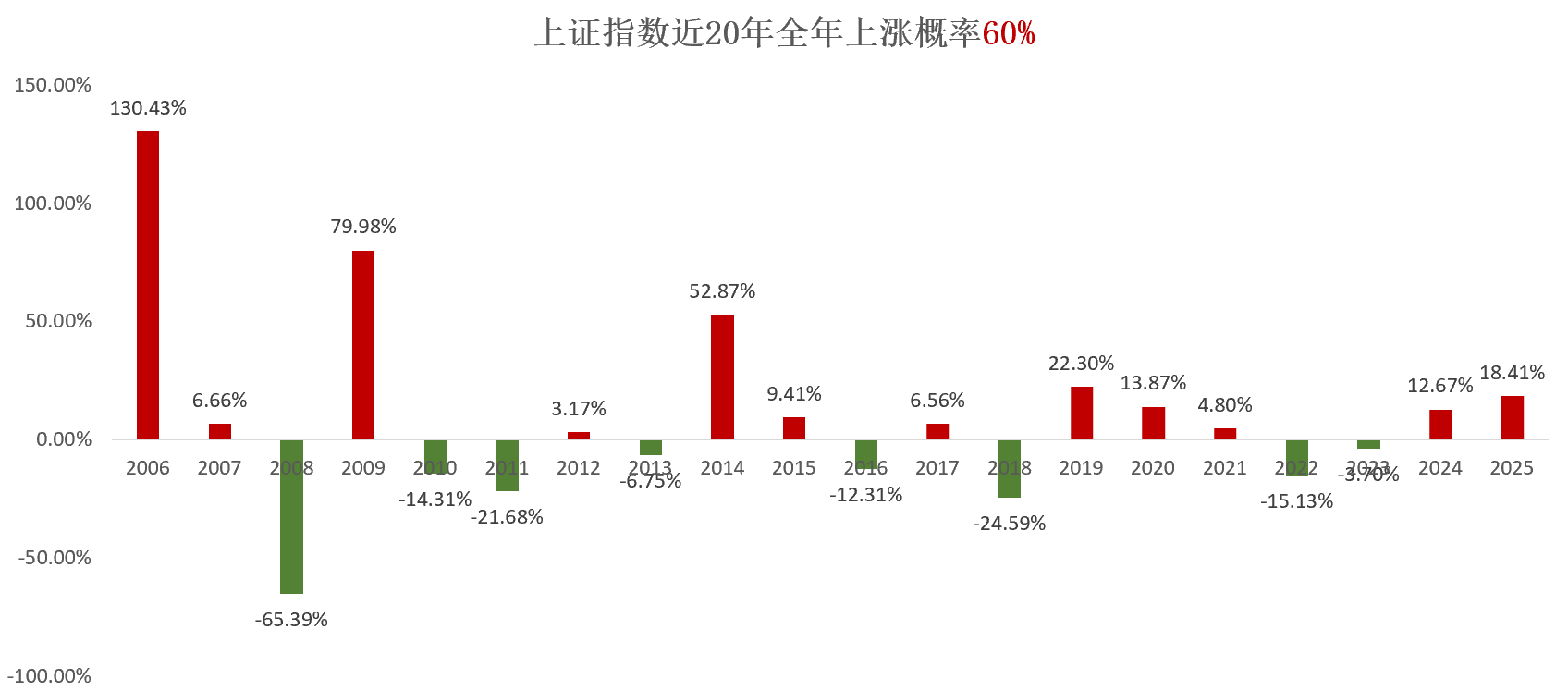
高盛唱多中国股票!近20年上证指数全年上涨概率60%,2026年怎么投?
Jin Rong Jie· 2026-01-06 03:19
政策预期、流动性与基本面共振上修,A股市场迎来春季"开门红"。1月6日,上证指数再度走高,在4000点上方震荡上扬,此前已录得12连阳,上证增强 ETF(563930)盘中上涨0.40%。 板块来看,商业航天、脑机接口、半导体产业链表现较好,证券、红利方向不遑多让,高成长与高股息方向齐头并进。市场风格看似轮动,实则呼应了"新 五年"规划中先进制造、科技创新与安全发展并重的主线。而能够全面覆盖这些产业机遇的,正是有"经济晴雨表"之称的上证综合指数。 华安证券指出,开年积极因素不断增多。一是消费和地产方面政策接续发力。二是建筑业PMI大幅改善、建材价格现企稳迹象指向投资止跌回稳值得期待。 三是1月降准可期。四是汇率持续升值有望带来外资流入,叠加公募基金新一轮配置启动,微观流动性备受呵护。整体来看,开年利好因素持续累积,春季 行情有望徐徐展开。 回归过去20年表现,2006-2025年间上证指数有12个完整年度录得正收益,全年上涨概率为60%。 但时间维度缩短至1月来看,过去20年上证指数1月上涨概率下降到55%,赚钱难度有所增加。 风险提示:基金有风险,投资需谨慎。 资讯所属栏目还有更多独家策划、专家专栏,免费查 ...


有色牛气冲天,再刷十年新高!有色ETF华宝(159876)涨逾3%,获资金实时净申购3300万份
Mei Ri Jing Ji Xin Wen· 2026-01-06 03:02
Group 1 - The core viewpoint of the news is that the non-ferrous metal sector continues to show strong performance, with the Huabao Non-Ferrous ETF (159876) reaching a new high and significant capital inflow expected in the future [1] - The macroeconomic environment is projected to influence commodity markets through three main themes by 2026: green inflation, anti-involution, and a rate-cutting trend, which are expected to drive price increases in commodities like copper and aluminum [1] - The sustainability of the super cycle in non-ferrous metals is contingent on three factors: the recovery of US dollar credit, the progress of strategic reserves, and the effectiveness of anti-involution policies, suggesting that the super cycle is likely to continue until 2026 [1] Group 2 - The Huabao Non-Ferrous ETF (159876) and its linked fund (017140) cover a wide range of sectors including copper, aluminum, gold, rare earths, and lithium, providing a diversified investment option compared to single metal investments [2] - As of January 5, the latest scale of the Huabao Non-Ferrous ETF (159876) is 879 million yuan, making it the largest ETF tracking the same index among three similar products in the market [2]
早盘直击|今日行情关注
申万宏源证券上海北京西路营业部· 2026-01-06 02:56
Group 1 - The PMI index has returned to the expansion zone, which is favorable for the spring market trend. The manufacturing PMI for December is reported at 50.1%, up from the previous value of 49.2%. This marks the first return to the expansion zone in nine months, indicating a marginal improvement in the economic fundamentals [1] - On Monday, both stock markets opened high and continued to rise, with trading volume increasing significantly. The Shanghai Composite Index closed near its daily high, marking the twelfth consecutive bullish day. The Shenzhen Component Index outperformed, surpassing the high from early October last year. Total trading volume exceeded 2.5 trillion yuan, a substantial increase from the previous trading day [1] - Market hotspots were primarily concentrated in the TMT (Technology, Media, and Telecommunications) and pharmaceutical sectors, with a leading performance from the technology sector. The Shanghai Composite Index has formed a small double bottom pattern and is currently challenging previous high points [1]

沪指突破阶段高点,再次创下10年来新高,A500ETF易方达(159361)标的指数涨超1%
Sou Hu Cai Jing· 2026-01-06 02:37
1月6日,市场早盘再度走强,沪指突破前期高点4034.08点,再次创下10年来新高。盘面上,脑机接 口、证券、光伏设备、电池、保险、存储芯片等板块领涨。截至9:53,中证A500指数涨超1%。相关 ETF成交活跃,其中A500ETF易方达(159361)盘中成交额突破10亿元。 Wind数据显示,A500ETF易方达(159361)近一个月"吸金"超100亿元,最新规模达347亿元、创历史 新高,费率低且流动性较好,可助力投资者便捷布局"春季行情"。 每日经济新闻 中国银河证券指出,展望2026年,"十五五"开局之年改革政策预期强化,人民币汇率向上等价格因素支 撑流动性向好,市场信心有望得到提振,关注盈利修复逻辑下,具备业绩兑现能力的科技龙头、受益于 价格水平回暖预期的周期板块。 中证A500指数由各行业市值较大、流动性较好的500只股票组成,聚焦A股各行业龙头公司,兼顾市值 代表性和行业均衡性,其中信息技术、医药卫生等新兴产业权重较高,兼顾"核心资产"与"新质生产 力"。 ...
沪指刷新逾10年新高!突破2025年11月14日阶段高点,脑机接口概念延续强势、智能驾驶概念表现活跃
Jin Rong Jie· 2026-01-06 01:56
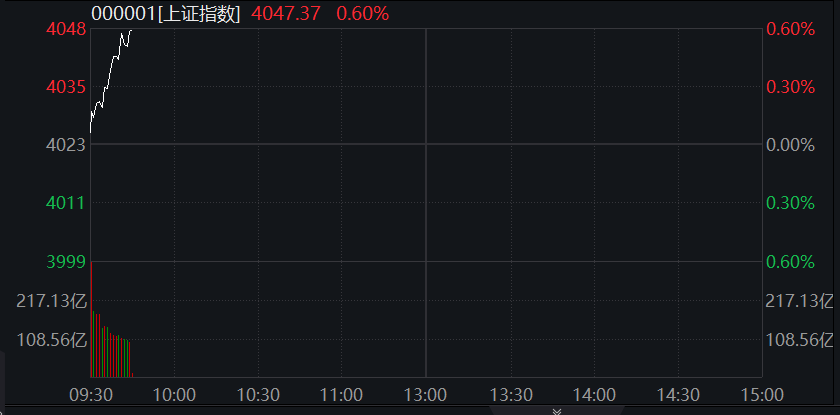
Market Performance - The Shanghai Composite Index surged after the opening, breaking the high point from November 14, 2025, and reaching the highest level since July 2015, closing at 4047.37 points, up 0.6% [1] - The Shenzhen Component Index rose by 0.69% to 13923.61 points, while the ChiNext Index increased by 0.46% to 3309.76 points, and the Sci-Tech 50 Index jumped 1.85% to 1429.42 points [1] - The total trading volume in the Shanghai and Shenzhen markets reached 567.525 billion yuan, with over 3500 stocks rising [1] Sector Highlights - The brain-computer interface sector continued to perform strongly, with several companies hitting the daily limit up, following a breakthrough in implant technology at Fudan University [3] - Semiconductor equipment stocks showed resilience, with companies like Jin Hai Tong hitting the daily limit up and others like Bei Fang Hua Chuang and Zhong Ke Fei Ce rising over 5%, reaching historical highs [3] - The solid-state battery concept saw significant gains, with Jin Long Yu hitting the daily limit up, as a Finnish company announced the launch of the world's first commercially viable all-solid-state battery [4] - The commercial aerospace sector experienced a rebound, with Lei Ke Defense achieving five consecutive limit-ups, following a capital increase announcement from China Aerospace Science and Technology Corporation [4] Institutional Insights - Huatai Securities expressed optimism about the spring market, suggesting a focus on growth sectors like electric equipment and renewable energy, as well as domestic demand improvement themes [5] - CITIC Securities noted that the cross-year market may exhibit characteristics of "growth leading and liquor accumulating," with a focus on sectors like snacks and dairy [5] - Huaxi Securities highlighted 2026 as a year of multiple positive factors, with a solid foundation for a bull market, driven by macro policies and improving corporate earnings [6] - Guojin Securities projected 2026 to be the year of recoverable commercial rockets, emphasizing the importance of cost reduction through recoverable technology in the aerospace sector [7] - Tianfeng Securities recommended focusing on cosmetics, gold jewelry, and duty-free sectors, which are expected to grow amid the recovery of high-end consumption [7]
A股指数涨跌不一:创业板指跌0.45%,商业航天、CPO等板块跌幅居前
Feng Huang Wang Cai Jing· 2026-01-06 01:36
Market Overview - The three major indices opened mixed, with the Shanghai Composite Index up 0.06% and the Shenzhen Component Index up 0.01%, while the ChiNext Index opened down 0.45% [1] - The human brain engineering and lithium mining sectors showed significant gains, while commercial aerospace and CPO sectors experienced declines [1] Index Performance - Shanghai Composite Index: 4026.02, up 0.06%, with 1018 gainers and 808 losers [2] - Shenzhen Component Index: 13830.30, up 0.01%, with 1318 gainers and 1066 losers [2] - ChiNext Index: 3279.81, down 0.45%, with 650 gainers and 552 losers [2] External Market - U.S. stock indices closed higher, with the Dow Jones reaching a record high, driven by strong financial stocks [3] - The Dow Jones increased by 594.79 points (1.23%) to 48977.18, the Nasdaq rose by 160.19 points (0.69%) to 23395.82, and the S&P 500 gained 43.58 points (0.64%) to 6902.05 [3] - Most Chinese concept stocks saw gains, with the Nasdaq Golden Dragon China Index up 0.49% [3] Institutional Insights - Huatai Securities anticipates a strengthening spring market, recommending investments in growth sectors such as electric equipment and renewable energy, as well as sectors related to domestic demand improvement [4] - CITIC Securities highlights a "growth first, liquor accumulation" trend in the cross-year market, with a focus on sectors like snacks and dairy that show clear growth potential [5] - Huaxi Securities predicts 2026 will be a significant year for the market, supported by favorable macro policies and improving corporate earnings [6] - Guojin Securities expects 2026 to be the year of recoverable commercial rockets, emphasizing the importance of cost reduction through recoverable technology [7][8] - Tianfeng Securities sees growth potential in cosmetics, gold jewelry, and duty-free sectors amid the recovery of high-end consumption [9]





华泰证券:春季行情预期或进一步强化 建议沿两条主线布局
Xin Lang Cai Jing· 2026-01-06 00:08
Core Viewpoint - The report from Huatai Securities is optimistic about the spring market, indicating a strengthening trend with most broad-based indices showing a rebound in scores and the Shanghai Composite Index entering a bullish zone [1] Group 1: Market Outlook - The macroeconomic environment suggests that the all-weather strategy in January is betting on growth exceeding expectations and increasing stock allocations [1] Group 2: Investment Recommendations - The report recommends two main investment themes: 1. Growth style, with a positive outlook on the electric equipment and new energy sectors [1] 2. Focus on the improvement of domestic demand in the context of the 14th Five-Year Plan, recommending sectors such as social services, real estate, home appliances, and beverages [1]
华泰证券:春季行情预期或进一步强化,建议沿两条主线布局
Sou Hu Cai Jing· 2026-01-05 23:59
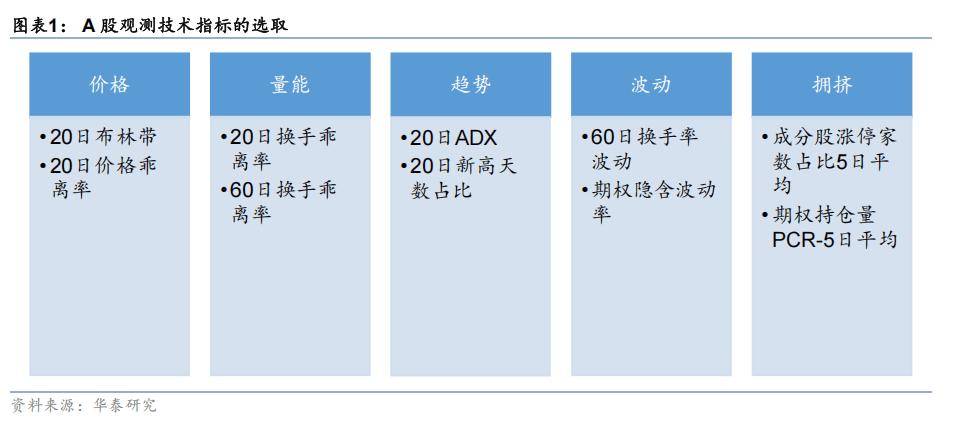
Core Viewpoint - The expectation for the spring market may further strengthen, with A-share indices showing signs of recovery and entering a bullish phase [2][3] Technical Analysis - The A-share technical scoring model indicates that most broad indices have seen a slight rebound in technical scores, with the Shanghai Composite Index surpassing the bullish threshold [3][10] - The model's performance for 2025 shows a timing return of 12.54%, while the overall return for the Wind All A index is 27.65%, resulting in an underperformance of -15.11% [10] Market Strategy - The macro strategy for January is focused on an optimistic growth outlook, with an increased allocation to equities [2][6] - Recommended investment themes include: - Growth style, particularly in the electric equipment and new energy sectors - Domestic demand improvement themes, focusing on consumer services, real estate, home appliances, and beverages [2][5] Style Timing Model - The style timing model has shifted from neutral to bearish on dividend style since December 22, 2025, favoring growth style instead [4][14] - The model indicates a preference for small-cap stocks, operating in a low crowding zone, which suggests a bullish outlook for small-cap stocks [20][23] Industry Rotation Model - The industry rotation model, which utilizes genetic programming techniques, has identified consumer services, electric equipment and new energy, real estate, home appliances, and beverages as favorable sectors [5][24] - The model achieved an absolute return of 40.34% in 2025, outperforming the industry equal-weight benchmark by 15.88 percentage points [24] All-Weather Strategy - The all-weather enhanced portfolio strategy for 2025 has yielded an absolute return of 13.86%, with a Sharpe ratio of 2.22 and a maximum drawdown of 2.67% [6][34] - The strategy has significantly over-allocated to the "growth exceeding expectations" quadrant and slightly to the "inflation below expectations" quadrant [34][35]
沪指12连阳创33年最长纪录,“开门红”能否延续?
Sou Hu Cai Jing· 2026-01-05 23:44
"5日线不破,技术上是没有看空理由的,很多投资者看到指数中阳后有高抛做差价的想法,但在多头行情中这种做法是非常容易卖飞的,目前最 好的操作策略就是顺势持股不动,别去频繁操作,让利润自己滚动起来。"该券商投顾表示。 广发基金指出,考虑到年初保险开门红、流动性宽松等因素,春季行情或仍然是大概率。国内出海方向中的资源品(有色、化工)或仍然是弹性 最好的顺周期方向,此外可关注部分出海制造业(工程机械等)。同时,委内瑞拉事件短期对油价的影响或较为有限,委内瑞拉事件也强化了当 前的资源民族主义叙事,可关注全球定价的资源品,特别是部分有色金属(铜铝金锂)及能化的配置价值。 展望2026年,华夏基金表示,A股市场"慢牛长牛"的中期趋势有望在深化与平衡中延续。从宏观环境看,"十五五"规划的开局为政策提供了充足空 间,而中美对等关税的暂缓及海外风险回落,共同营造了更为友善的外部环境。市场驱动力正从单纯的估值修复向盈利与结构再平衡过渡。 A股2026年首个交易日喜迎"开门红",三大股指全线走高。 截至1月5日收盘,沪指强势收复4000点整数关口,报4011.45点;科创50指数涨4.41%,深证成指上涨2.24%,创业板指涨2.8 ...