
马太效应

Search documents
74家公募年度合赚377.74亿元!27家营收净利双增
Bei Jing Shang Bao· 2025-05-05 14:42
Core Insights - The 2024 annual reports of public fund companies reveal a mixed performance, with nearly half of the companies experiencing revenue growth, while 74 fund companies collectively earned a net profit of 37.774 billion yuan [1][3]. Group 1: Revenue Performance - A total of 64 fund companies reported a combined revenue of 114.148 billion yuan in 2024, with E Fund leading at 12.109 billion yuan, although it saw a slight decline of 3.13% year-on-year [2]. - Six other companies, including Huaxia Fund and Southern Fund, reported revenues exceeding 5 billion yuan, with figures of 8.031 billion yuan and 7.523 billion yuan respectively [2]. - Among the 63 companies with year-on-year data, 31 achieved revenue growth, accounting for 49.21%, with 13 companies seeing growth exceeding 20% [2]. Group 2: Net Profit Performance - The net profit of 74 fund companies totaled 37.774 billion yuan, with E Fund, Southern Fund, and Huaxia Fund leading the rankings with net profits of 3.9 billion yuan, 2.352 billion yuan, and 2.158 billion yuan respectively [3]. - Eleven companies entered the "10 billion club" for net profit, with notable growth from Tianhong Fund, which increased by 19.29% to 1.679 billion yuan [3]. - Two companies, China Ocean Fund and Hongta Hongtu Fund, turned losses into profits, while seven companies, including Nanhua Fund, reported losses [3]. Group 3: Company Strategies and Market Dynamics - The performance disparity among fund companies is attributed to factors such as product strategy iterations and market recognition of flagship products [6]. - Leading fund companies have leveraged brand reputation and comprehensive strength to better attract customers amid a fee reduction trend, while smaller firms face increased competition [7]. - Companies achieving revenue and profit growth have benefited from scale advantages, innovation capabilities, and enhanced service quality, allowing them to capture greater market share [7][8].
券业2024年业绩全拆解!头部券商盈利强劲,投行等业务持续承压
券商中国· 2025-05-02 03:35
随着4月结束,券商的业绩也披露完毕。券商中国记者梳理了全行业的经营情况。 从数据上来看,券商行业"马太效应"持续强化,头部券商赚取了行业大部分利润。中信证券、华泰证券、国泰海通、招商证券和银河证券5家头部 券商净利润总额超过700亿元,占全行业总利润的比例超过40%。部分中小券商仍然在盈亏线徘徊,有29家券商全年净利润不足1亿元,其中14家券 商2024年亏损。 从利润贡献角度来看,自营业务和经纪业务仍然是券商的生命线,"炒股养家"和"靠天吃饭"是大多数券商的核心标签。从业务结构来看,自营业 务、经纪业务、利息净收入、投行业务、资管业务等五项收入的占比保持平稳,分别为38.6%、28.4%、11.1%、7.8%和5.3%,自营业务继续占据 第一大收入来源。 头部券商赚取大部分利润 2024年,资本市场主要指数呈现先抑后扬态势,上证综指上涨12.7%,深证成指上涨9.3%,沪深交易所日均股票成交额为1.1万亿元,同比增长 20.1%,市场交投活跃度显著提升。在此背景下,券商行业的整体利润也出现了明显的抬升。 根据中证协此前向券商下发的证券公司2024年度经营情况分析,2024年,全行业实现营业收入4511.7亿 ...





Goheal:行业风云变化!上市公司并购重组如何改变行业格局?
Sou Hu Cai Jing· 2025-04-30 08:55
Group 1 - The core viewpoint of the article emphasizes that mergers and acquisitions (M&A) are reshaping industry landscapes rapidly, driven by policy support and technological advancements [1][3][4] - The new "National Nine Articles" policy encourages listed companies to enhance resource allocation efficiency through M&A, particularly in strategic emerging industries like semiconductors and artificial intelligence, with M&A transaction amounts in these sectors increasing by over 50% compared to historical averages [4][5] - State-owned capital is actively participating in this M&A wave, leading to a significant increase in industry concentration, with the CR5 (market share of the top five companies) in sectors like military and energy rising from 50% to over 70% within a year [4][5] Group 2 - Technology plays a crucial role in the ongoing industry transformation, with 85% of M&A cases in the AI sector focusing on enhancing foundational modules such as algorithms and computing power [5][6] - The article highlights a trend where traditional manufacturing companies are diversifying into high-value sectors like semiconductors and renewable energy, accounting for nearly 27% of transactions in 2024 [5][6] - The "Matthew Effect" is becoming more pronounced, where top companies are increasingly dominating the market, as evidenced by the top 10 companies in the computer industry acquiring 82% of new patents in 2024 [6][7] Group 3 - Cross-border M&A is gaining momentum, with Chinese listed companies increasing overseas acquisition amounts by 68% year-on-year, particularly in high-tech sectors [7][8] - However, cross-border M&A carries high risks due to geopolitical uncertainties, necessitating robust compliance systems and strategic endurance [7][8] - The article concludes that M&A is not merely about scale but involves a comprehensive reconfiguration of resource flow, competition, and growth logic, with potential downsides such as reduced innovation and the risk of oligopoly [8][10]


新茶饮市场 进入“精细化管理”下半场
Zheng Quan Shi Bao· 2025-04-29 20:59
古茗、蜜雪集团、霸王茶姬、沪上阿姨集体冲击IPO的热闹景象背后,是新茶饮行业在全球经济下行期 的艰难抉择。此外,行业还面临市场准入门槛不高、产品迭代迅速、品牌层出不穷等问题。 至于拓展海外市场,虽然已有蜜雪集团、霸王茶姬充当"吃螃蟹的人",但这一选项仍然充满了冒险和未 知。一是茶饮文化在全球多数文化中仍属小众,市场前景不明朗;二是茶饮产品种类繁多,原料供应成 为难题。因此,即便是到了市场竞争更加残酷的2025年,新茶饮赛道的主流打法仍是争取加盟商、提高 品牌势能、抢跑上市的"老三样"。 上市为何成为众多新茶饮公司共同选择?万联证券分析师叶柏良认为,新茶饮企业集体冲击上市,既有 短期资金的需求,也有品牌宣传的需要。 然而,有人走阳关道,就有人走独木桥。2月10日,喜茶发布了一封主题为《不参与数字游戏与规模内 卷,回归用户与品牌》的全员内部邮件,并提出三点战略选择:2025年喜茶会继续坚持"不做低价内 卷",不玩"数字游戏";拒绝门店规模内卷,暂时停止接受事业合伙申请,携手并支持现有事业合伙人 更好地服务用户;强化品牌与用户的深度连接,回归用户与品牌。 新茶饮市场的竞争,已经由"跑马圈地"的上半场,进入"精细化管 ...
最新!基金公司规模“座次”出炉,百亿基金经理名单也有调整(附排名)
Mei Ri Jing Ji Xin Wen· 2025-04-23 06:18
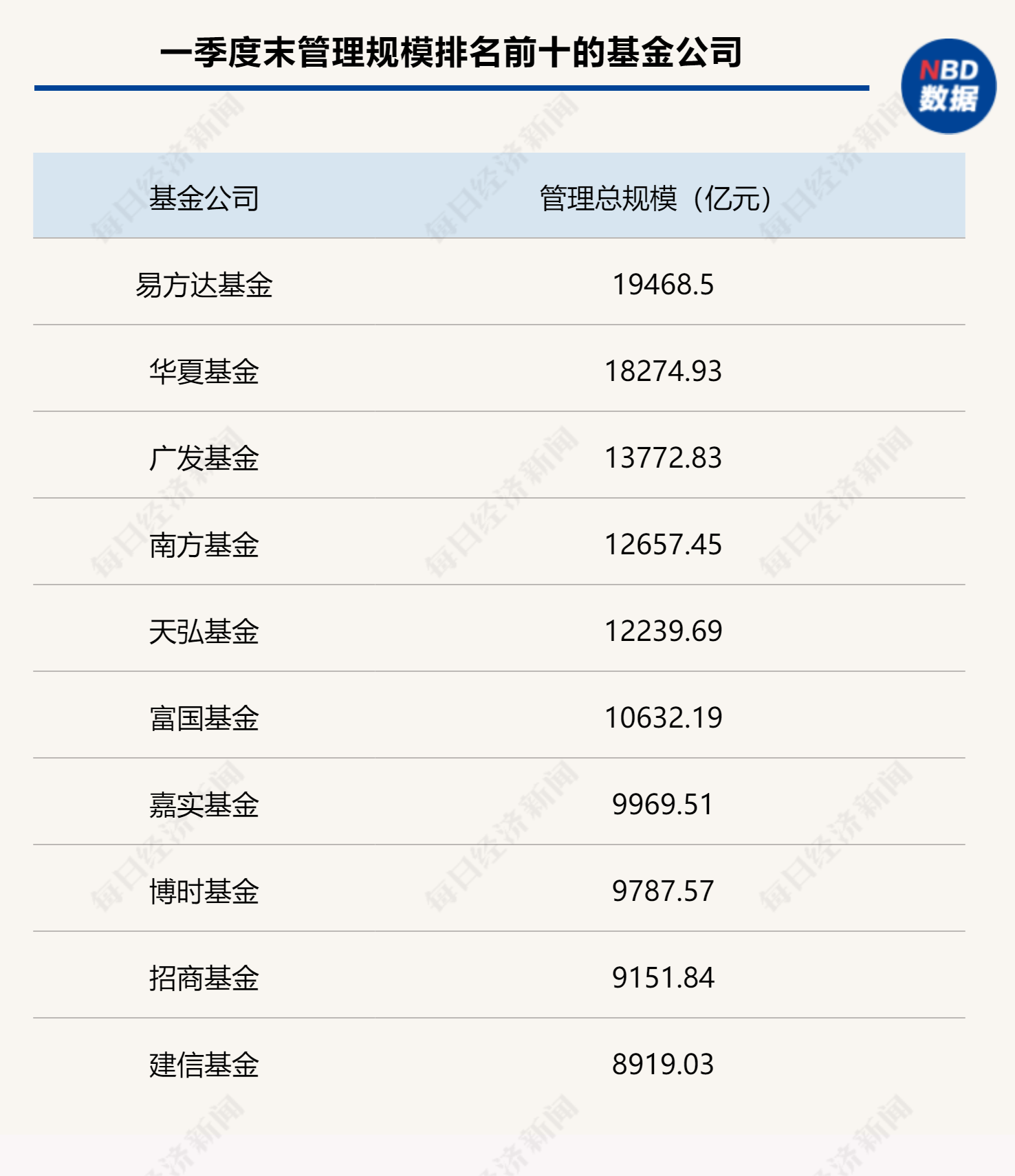
随着公募基金一季报披露完毕,各家基金公司和基金经理的管理规模也浮出水面。 《每日经济新闻》记者通过Wind统计发现,截至今年一季度末,全市场162家公募持牌机构的管理总规模为31.05万亿元。其中,管理总规模排在前十名的公 司分别为易方达基金、华夏基金、广发基金、南方基金、天弘基金、富国基金、嘉实基金、博时基金、招商基金和建信基金。易方达基金依然在管理总规模 和非货基规模都位列第一,截至一季度末的管理总规模为1.95万亿元,非货基管理规模也达到1.31万亿元。 除此之外,截至一季度末,百亿基金经理的名单也有变化,目前全市场管理规模超过100亿元的主动权益基金经理已不足百人。 每经记者 李蕾 每经编辑 彭水萍 基金公司最新规模"座次"出炉,排名前十阵容有变 根据Wind数据,截至今年一季度末,全市场162家公募持牌机构的管理总规模为31.05万亿元,非货基管理总规模为18.21万亿元。去年年末,这两项数字分 别为31.69万亿元和18.60万亿元;而在去年一季度末,这两项数字分别为28.36万亿元和16.23万亿元,可以看到明显的增长趋势。 从基金公司的管理总规模来看,排名前十的公司及管理资产情况如下: | 博 ...
ETF规模首破4万亿:12家基金公司占据8成以上市场份额
Sou Hu Cai Jing· 2025-04-22 10:58
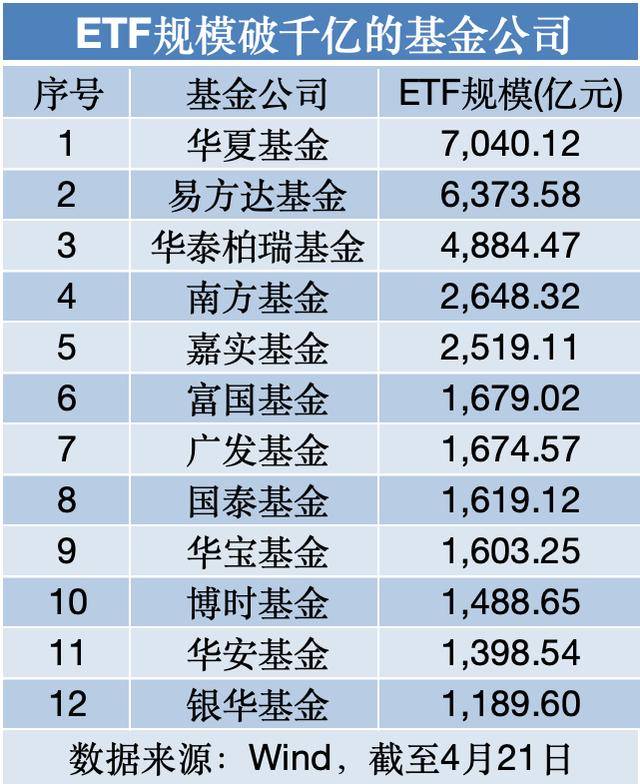
作者 | 蒋金丽 编辑 | 蒋诗舟 国家队等护盘资金亮出"明牌"后,ETF规模迅速突破4万亿元大关。 护盘资金借ETF入市的行动始于4月7日。当日受"对等关税"冲击,全球股市震荡,国内ETF规模回落至 3.59万亿元,较前一个交易日缩水2220亿元。 随着多路护盘资金宣布入市,叠加A股反弹回暖,4月17日,ETF规模首次站上历史性的4万亿元。 尽管最近两年国内ETF迎来爆发式增长,能从中分得一杯羹的基金公司并不多。当曾经的蓝海变成红 海,马太效应也进一步凸显,最新数据显示,12家基金公司占据了84.41%的ETF份额。 跨越万亿关口,用时再缩短 ETF规模从3万亿到4万亿,用时不到7个月。 回顾国内ETF发展史,第一只产品——华夏上证50ETF,于2004年12月30上市。起初这类产品水花不 大,直到2006年3月24日,才迎来第二只ETF上市。 走到万亿时代,更是花了近16年时间。2020年10月12日,ETF规模突破万亿,达到1.02万亿元。 换言之,6%的公募管理人,占据了84.41%的ETF份额。 即便是"千亿ETF玩家",首尾的差距也很悬殊。 华夏基金和易方达基金位列第一梯队,ETF规模分别为704 ...
分众传媒为何收购新潮?
Hu Xiu· 2025-04-14 02:14
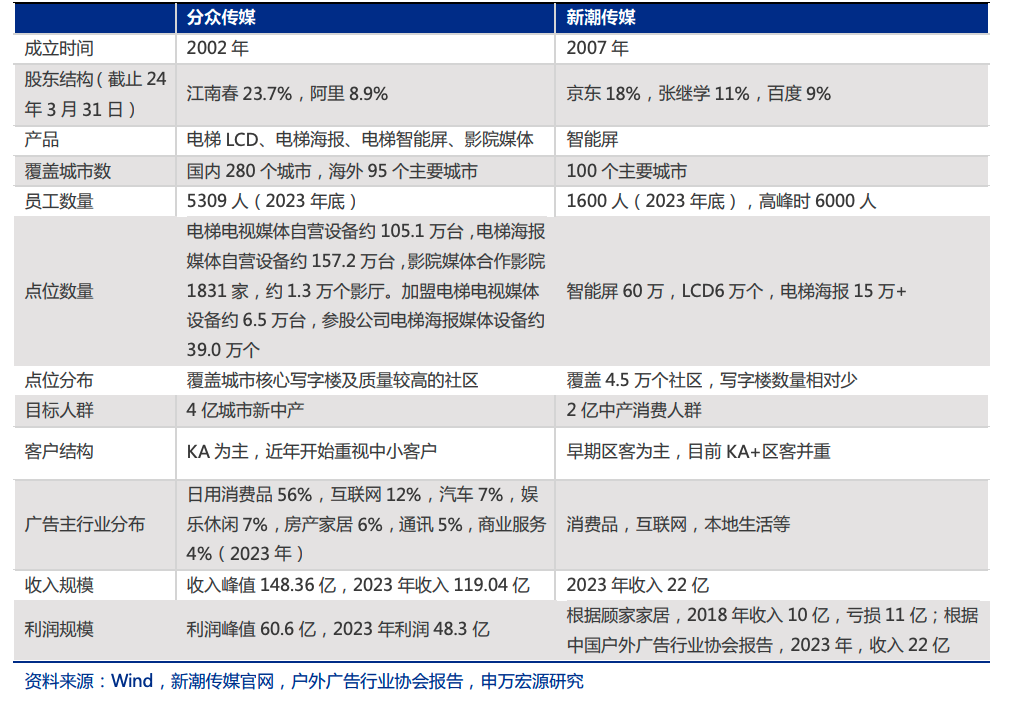
Group 1 - The core point of the article is the significant merger in the elevator advertising industry, where the leading company, Focus Media, acquires the second-largest company, New Trend Media, for an estimated valuation of 8.3 billion yuan, using a combination of stock and cash [1][27] - The merger is seen as a strategic move to address the competitive landscape, where both companies have been engaged in a prolonged battle for market share, leading to a "prisoner's dilemma" scenario [26][31] - The elevator advertising industry is characterized by a high market concentration, with Focus Media holding approximately 60% market share and New Trend Media holding 15-20%, together accounting for over 80% of the market [29][34] Group 2 - The merger is expected to enhance the competitive position of the new Focus Media Group, providing a stronger industry moat and increased marketing synergy through the acquisition of New Trend's valuable resources [34][35] - The strategic rationale behind the merger includes the recognition of the need for digital transformation in outdoor advertising, as articulated by New Trend's CEO, who expressed a desire to collaborate with Focus Media to achieve this vision [32][33] - The industry is anticipated to stabilize with the merger, potentially leading to a more favorable environment for growth and profitability as the scale effects are expected to increase post-merger [34][35]

数智时代企业竞争法则:抢首发,占先机
红杉汇· 2025-04-01 12:29
Core Viewpoint - Companies should prioritize launching new products, services, and technologies to gain first-mover advantages, which can create favorable competitive conditions and strategic advantages in the market [2][3]. Group 1: Importance of First-Mover Advantage - The digital transformation is reshaping traditional competitive dynamics, impacting both incumbent and new entrants in the market [3]. - Incumbent companies have established customer bases and stable profits, while new entrants struggle to gain market share [3]. - The Matthew Effect indicates that larger companies can create significant competitive barriers through digital capabilities, leading to rapid expansion and reinforcing their market position [3][4]. - Gaining first-mover advantages in niche and long-tail markets is essential for both new entrants and smaller incumbents to secure competitive positions [5]. Group 2: Strategic Shift from Adaptation to Shaping - Companies can actively influence their competitive environment rather than merely adapting to it, allowing for the creation of favorable conditions for their competitive advantages [5][6]. - The focus should be on proactive strategies that guide industry segments in beneficial directions, ensuring sustained competitive advantages [5][6]. Group 3: Transition from First-Mover to First-Launch - The rapid pace of technological and industrial change has made traditional competitive advantages less relevant, necessitating a focus on temporary competitive advantages [7]. - The speed of strategic decision-making and execution is critical in maintaining competitive positions, making first-launch advantages more relevant than first-mover advantages [7]. Group 4: Capabilities for Gaining First-Launch Advantage - Implementing first-launch strategies can create temporary competitive advantages, while ongoing execution can lead to sustainable competitive barriers [8]. - Key capabilities include: - **Preemptive Capability**: Understanding where to achieve first-launch and translating visions into actionable goals [9][10]. - **Dynamic Capability**: Adapting strategies in real-time to align with market perceptions of first-launch [11]. - **Core Capability**: Efficiently executing strategies to meet first-launch requirements, focusing on technology, market, and supply chain capabilities [12]. Group 5: Types of First-Launch Strategies - First-launch strategies can be categorized into three types: - **Technological First-Launch**: Focused on innovative technologies that disrupt existing paradigms [13][14]. - **Market First-Launch**: Involves creating new business models and market segments [16][17]. - **Social First-Launch**: Aims at enhancing social value and addressing societal issues to build legitimacy [18][19]. Group 6: Decision-Making Process for First-Launch Strategies - The decision-making process involves analyzing market conditions and innovation capabilities, followed by strategy formulation and evaluation using the PDCA cycle [20][22]. - Companies should consider their market position and innovation strength when developing first-launch strategies [23]. Group 7: Key Points for Implementing First-Launch Strategies - **Identify Scene Needs**: Understanding user recognition of first-launch is crucial for converting it into competitive advantages [31]. - **Maintain Strategic Rhythm**: The coherence and timing of strategic actions are essential for achieving competitive advantages [32]. - **Adapt to Local Conditions**: Companies must consider the specific characteristics of their industry and market environment when implementing strategies [33]. - **Enhance Design Thinking**: A user-centered approach in strategy design is vital to avoid potential pitfalls associated with first-launch initiatives [34].

招商证券:“酒企煎熬期”已至 底部信号明显
智通财经网· 2025-03-31 23:22
Group 1 - The core viewpoint is that while demand has not shown signs of reversal, there is a clear trend of supply contraction, indicating that the industry is entering a "distress period" for liquor companies [1] - Demand remains weak but is in line with expectations, with companies controlling inventory to maintain prices, leading to improved dealer sentiment [1] - The current market conditions suggest that although the performance of the sector may continue to be under pressure for the next 1-2 quarters, the health of the distribution channels is beginning to improve, signaling a potential bottoming out of stock prices ahead of the fundamentals [1] Group 2 - Liquor companies are adopting a more pragmatic and stable approach to operations, with a notable "Matthew effect" in the industry [2] - Moutai emphasizes the importance of stabilizing the price of its flagship product, while Wuliangye is undergoing necessary reforms to enhance direct consumer engagement [2] - Other companies like Laojiao and Fenjiu are also improving their operational strategies, focusing on digital transformation and enhancing consumer connections to drive sales [2]
农林牧渔行业周报:生猪2月第三方能繁下降,白鸡价格环比持续回暖-2025-03-17
Hua Yuan Zheng Quan· 2025-03-17 05:57
Investment Rating - The industry investment rating is "Positive" (maintained) [1] Core Viewpoints - The report emphasizes the need to shift from "cyclical thinking" to focusing on financial performance, highlighting the significant differences in operational efficiency among companies in the industry [5][22] - The report suggests that the current low market attention on the pig farming sector and its relatively low valuation present investment opportunities, particularly in leading companies like Muyuan Foods and Wens Foodstuff Group [5][22] - The report indicates that the overall supply of pigs is expected to be high in the long term, leading to a weak price outlook for pigs [4][21] Summary by Sections 1.1. Swine - In February, the sample of breeding sows decreased by 0.05% month-on-month, primarily due to increased culling by leading enterprises [4][21] - The latest pig price reached 14.62 CNY/kg, with an average slaughter weight of 127.92 kg [4][21] - The report anticipates downward pressure on pig prices in the short term due to rising feed costs and increased willingness to sell among farmers [4][21] 1.2. Poultry - The price of broilers has rebounded, with chick prices increasing by 7.41% month-on-month [6][23] - The report highlights the concentration of industry profits towards upstream breeding sources, indicating a new normal in the industry [6][23] - Key investment targets include leading companies in imported breeding sources and full-chain leaders like Yisheng and Shengnong Development [6][23] 1.3. Feed - The report recommends Haida Group due to its cash flow turning point and overseas growth potential [7][26] - Fish prices have shown positive trends, with various species experiencing significant year-on-year price increases [7][24] - The report notes that the capital expansion phase has ended, and leading companies are now focusing on improving market share and cash flow [9][24] 1.4. Pets - The pet industry is expected to see significant growth driven by the post-2000 generation, with a projected doubling of market space [11][27] - The report suggests focusing on high-performing brands like Guibao Pet and Zhongchong Co., which are entering a growth phase [11][28] 1.5. Agricultural Products - The USDA's March report indicates a continued upward trend in agricultural prices, with significant reductions in corn imports expected [13][29] - The report highlights that corn and soybean prices are at historical lows, with a marginal improvement in supply-demand balance expected [13][29] Market and Price Situation - The Shanghai and Shenzhen 300 Index rose by 1.59% last week, while the Agricultural Index increased by 2.84% [30][30] - The animal health sector performed the best with a 4.20% increase [30][30]