
储备多元化

Search documents
印度黄金储备大挪移:超65%本土存放!
Jin Shi Shu Ju· 2025-10-29 09:40
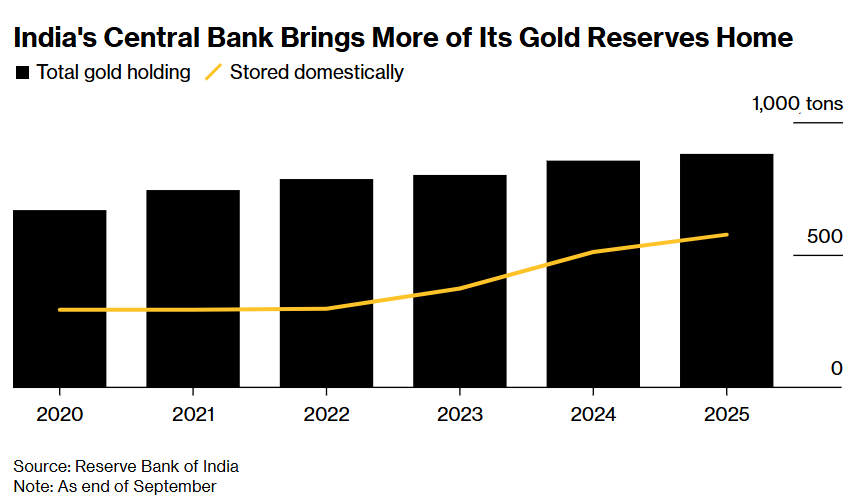
Core Insights - The Reserve Bank of India (RBI) has significantly increased its domestic gold reserves, with over 65% stored locally as of September 2025, nearly doubling from four years ago [1][4] - The total gold reserves of the RBI currently stand at 880 tons, with 576 tons stored domestically, marking a historical high [4] - The strategic shift towards repatriating gold is largely attributed to concerns over the safety of overseas assets following the freezing of Russian assets by Western nations [4][5] Group 1: Gold Repatriation Strategy - The RBI has repatriated nearly 64 tons of gold from overseas in the first six months of the fiscal year starting April 2025, indicating a clear trend towards accelerating gold repatriation [1] - The proportion of gold stored domestically rose from approximately 38% in September 2022 to a record high of 65% by September 2025 [4] - The RBI's actions are seen as a move to enhance direct control over national gold assets and avoid the risk of asset freezes similar to those experienced by Russia [4][5] Group 2: Diversification and De-dollarization - The RBI's strategy aligns with a broader trend of de-dollarization, as the central bank aims to reduce reliance on the US dollar and dollar-denominated assets [5] - Since 2018, India has cumulatively increased its gold holdings by 279.54 tons, reflecting a commitment to raising the gold's share in its reserves [5] - The value of gold in India's foreign exchange reserves increased from 11.70% in March 2025 to 13.92% by September 2025, with plans to further increase this to 20% [5] Group 3: Global Context - The global central bank gold purchases reached 415 tons in the first half of 2025, maintaining a historical high, with emerging market countries like China, Russia, and Turkey accelerating their gold buying [5] - 95% of surveyed central banks expect an increase in global official gold reserves over the next 12 months, highlighting gold's renewed strategic importance as a safe-haven asset amid rising geopolitical risks [5] - As of October 17, 2025, India's foreign exchange reserves totaled $702.3 billion, sufficient to cover over 11 months of import needs, supporting its diversification strategy [6]

黄金暴涨暴跌! 牛市真见顶了吗?
Jin Tou Wang· 2025-10-22 09:37
Core Insights - The gold market has experienced a significant adjustment, with prices showing a V-shaped recovery after a sharp decline of up to 3% [1][2] - The recent sell-off was primarily driven by technical overbought conditions and profit-taking after substantial gains earlier in the year, with gold prices still up nearly 60% year-to-date [2] - Geopolitical tensions and economic factors, including trade issues and potential U.S. interest rate cuts, have contributed to the volatility in gold prices [2][3] Market Dynamics - The recent decline in gold prices ended a rapid upward cycle that began in mid-August, influenced by a prevailing "devaluation trade" strategy and expectations of significant interest rate cuts by the Federal Reserve [2] - The end of the Diwali festival in India, a major gold consumer, has led to reduced physical demand, further impacting prices [2] - Reports of a potential U.S.-India trade agreement, which may lower tariffs, suggest a decrease in safe-haven demand for gold [2] Technical Analysis - Following a significant drop, gold prices are expected to consolidate around the $4,000 per ounce mark, with immediate resistance at $4,190 and support at $4,128 [4] - The price action indicates a potential bullish outlook if gold remains above the support level of $4,083, which coincides with the recent low and the ascending channel [4] - The maximum pressure point for gold is identified at $4,239.70, which corresponds to a 50% retracement level of the recent decline [4]
中抛美债停不下来!不是瞎操作,是防美国冻资产的后手
Sou Hu Cai Jing· 2025-10-22 04:58
Group 1 - The core point of the article highlights a significant decline in foreign holdings of U.S. Treasury bonds, particularly by China, which has dropped to $730.7 billion, the lowest level since 2008, indicating a directional withdrawal from U.S. debt [1][3][11] - The U.S. fiscal report for the first half of fiscal year 2025 shows a deficit of $1.307 trillion and net interest payments of $582 billion, reflecting increasing debt costs and raising concerns about fiscal sustainability [5][17][34] - The trend of decreasing U.S. Treasury holdings is accompanied by a simultaneous increase in gold reserves, with central banks globally net buying over 400 tons of gold, indicating a shift towards physical assets as a hedge against risks [9][21][28] Group 2 - The European Union's decision to use frozen Russian central bank assets for loans to Ukraine marks a significant shift in international financial practices, suggesting that political factors are increasingly influencing financial security [7][15][34] - The overall structure of foreign holdings in U.S. Treasury bonds is changing, with countries like Japan and the UK showing fluctuating positions while China continues to reduce its holdings [9][19][30] - The rising gold prices, which have surpassed $2,400 per ounce, contrast with the declining U.S. Treasury bond prices, indicating a market preference for gold as a safer asset amid increasing geopolitical tensions and financial uncertainties [24][26][36]
FPG财盛国际:黄金突然暴力回调的原因在这!如何交易?
Sou Hu Cai Jing· 2025-10-10 02:21
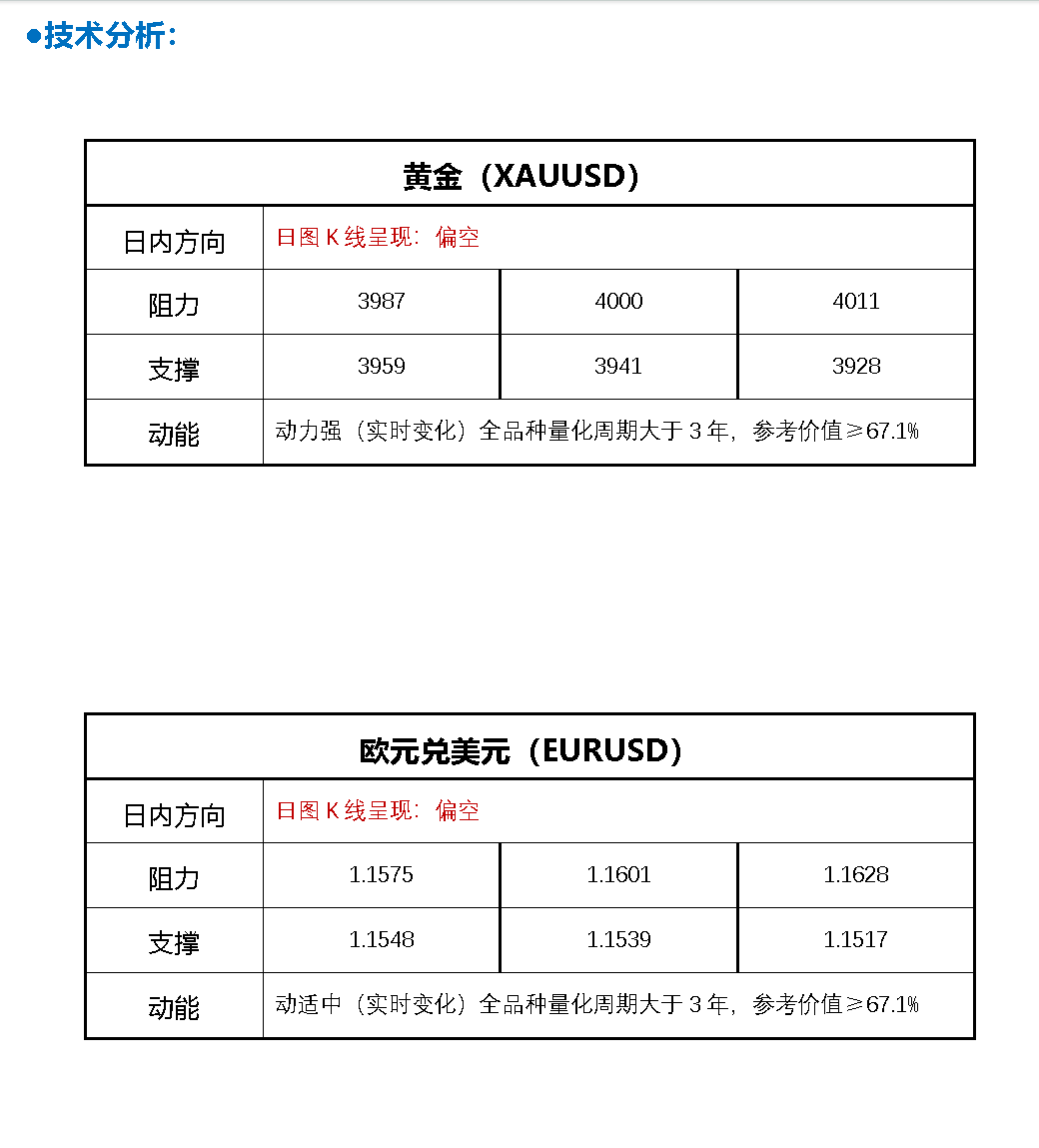
Group 1 - The US dollar index rose by 0.6%, approaching a two-month high, making gold priced in dollars relatively expensive for overseas buyers [1] - Daily bullish structured trading volume for the dollar has exceeded bearish positions, indicating a swift shift in market confidence towards supporting the dollar [2] - Geopolitical tensions, strong central bank purchases, increased ETF inflows, and expectations of Federal Reserve rate cuts have contributed to a year-to-date increase of approximately 52% in gold prices [3] Group 2 - Gold prices have dropped below $4000 per ounce, with the Relative Strength Index (RSI) declining from around 86.13 to 75.40, indicating a potential bearish momentum [4] - If gold prices rise above $4000 per ounce, they are expected to test historical highs of $4059, followed by $4100 and $4150 [4] - Key support for gold is at $3950 per ounce, with further declines possible if the daily closing price falls below this level [4] Group 3 - The daily chart for gold (XAUUSD) shows a bearish trend, with resistance at $3987 and support at $3950 [5] - The daily chart for the euro against the dollar (EURUSD) also indicates a bearish trend, with resistance at 1.1575 and support at 1.1548 [6] Group 4 - Key economic indicators to watch include the Swiss consumer confidence index for September, Canadian employment numbers, and US inflation expectations for October [6]
国际金价跳水跌破4000美元整数关口,外媒纷纷表态
Huan Qiu Wang· 2025-10-10 00:53
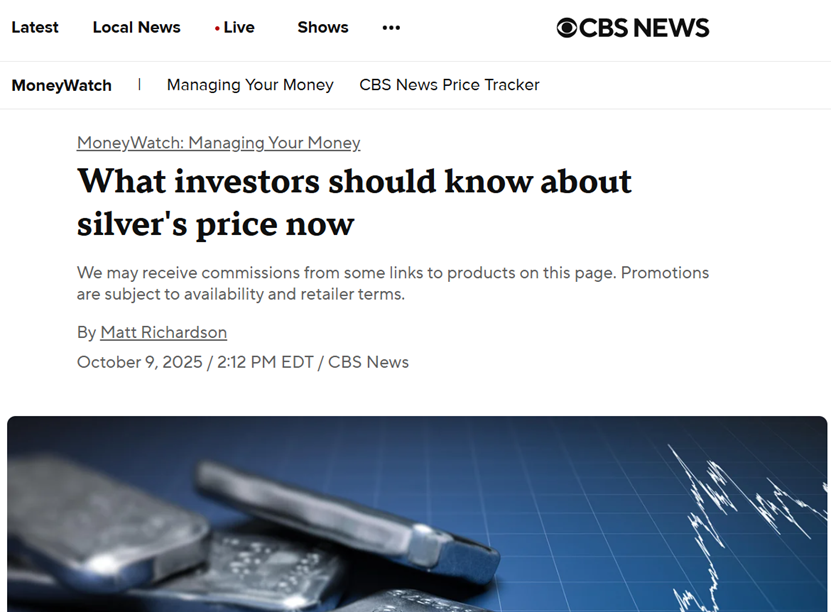
Group 1 - The core viewpoint of the articles highlights the recent decline in international precious metal futures, with COMEX gold futures dropping 1.95% to $3991.10 per ounce and COMEX silver futures falling 2.73% to $47.66 per ounce, influenced by geopolitical and economic uncertainties [1] - The SPDR Gold ETF has seen an increase of nearly 50% this year, while smaller mining ETFs like MicroSectors Gold Miners 3X Leveraged ETNs have surged over 740%, marking them as the best-performing ETFs tracked by VettaFi [1] - Factors driving the recent rise in gold prices include geopolitical tensions, central bank policies, increased inflows into ETFs, expectations of interest rate cuts, and economic uncertainties stemming from tariff and trade policy changes [1] Group 2 - CBSNEWS suggests that precious metal investments should not completely replace income-generating assets like stocks and bonds in an investment portfolio, but should not be ignored either, especially given the evident economic benefits of silver and gold investments [4] - It is recommended that precious metal investments should not exceed 10% of an investment portfolio, allowing investors to benefit from gold and silver while retaining a portion of their investments in potentially higher-yielding assets [4]
东方正在加紧抛售;而日本只能等待结束?还以为东方抛售美债,只是普通操作?错了!
Sou Hu Cai Jing· 2025-10-07 04:39
Core Insights - The geopolitical conflict that erupted in February 2022 led to Western sanctions against Russia, freezing nearly $300 billion of its overseas assets and cutting off the SWIFT payment system, raising deep concerns about asset security in the international community [1] - In response to these sanctions, a major Asian country began adjusting its foreign exchange reserve structure in April 2022, reducing its holdings of U.S. Treasury bonds to $730.7 billion by July 2025, a 15-year low, and nearly $400 billion lower than its peak [1] - This country also increased its gold purchases to account for 15% of global annual production in 2024, indicating a dual strategy of "de-dollarization" and reserve diversification to mitigate sanction risks and proactively respond to changes in the international financial system [1] Comparative Analysis - In contrast, Japan continues to hold $1.15 trillion in U.S. Treasury bonds, having added $3.8 billion in July 2025, which highlights the risk of a singular asset allocation strategy [2] - Countries overly reliant on dollar-denominated assets may face asset freezing risks similar to those experienced by Russia, making reserve diversification a common strategy among major global economies [2] International Financial Dynamics - Despite years of Western sanctions aimed at undermining its economy, Russian leadership still expresses a desire to integrate with the West, reflecting the complexities of international financial competition [3] - This situation serves as a warning for all nations to seek a balance between open cooperation and risk prevention in their economic strategies [3]
资金流入太猛,高盛上调明年底金价目标价至4900美元
Hua Er Jie Jian Wen· 2025-10-07 02:56
Core Viewpoint - Goldman Sachs has significantly raised its gold price forecast for the end of 2026 to $4,900 per ounce, an increase of $600 or nearly 14% from the previous estimate of $4,300, driven by a 17% rise in gold prices since August 26 due to "sticky" fund inflows, primarily from Western ETFs and central bank purchases [1][2] Group 1: Fund Inflows - The recent surge in gold prices is mainly attributed to two types of "sticky" fund inflows: Western ETF investments and central bank purchases, contrasting with stable speculative positions [2] - Western ETF holdings have fully reached Goldman Sachs' implied valuation level based on U.S. interest rates, indicating that the recent strong performance of ETFs is not an overreaction [2] - Central bank purchases have rebounded, reflecting a recovery after the summer lull, with expectations of continued growth in central bank buying [2][3] Group 2: Price Forecast and Risks - Despite the higher starting point, Goldman Sachs maintains its forecast for a 23% price increase by the end of 2026, with central bank purchases contributing 19 percentage points and ETF inflows from Federal Reserve rate cuts contributing 5 percentage points [3][4] - The risk for the upgraded gold price forecast remains skewed to the upside, driven by private sector diversification into the relatively small gold market, which may push ETF holdings beyond implied valuations based on interest rates [3] - Structural growth in central bank purchases is expected to continue, particularly from emerging market central banks diversifying their reserves into gold [3][4]

金荣中国:白银早盘高位震荡微涨,关注上方压力空单布局
Sou Hu Cai Jing· 2025-09-22 04:19
Core Viewpoint - The silver market is experiencing a complex interplay of factors, including rising U.S. Treasury yields, a strengthening dollar, and geopolitical tensions, which are influencing both gold and silver prices [1][3][4]. Fundamental Analysis - Silver prices have shown slight increases amidst high volatility, with the Federal Reserve's interest rate cuts not leading to significant price surges [1]. - U.S. Treasury yields have risen, with the 10-year yield reaching 4.141%, marking an 8.1 basis point increase over the week, reversing a previous downward trend [1]. - Strong economic data, such as initial jobless claims and manufacturing activity, has alleviated concerns about a weakening labor market, contributing to the rise in yields [1]. Dollar and Gold Dynamics - The rise in U.S. Treasury yields enhances the attractiveness of the dollar, which in turn exerts downward pressure on gold prices [3]. - The dollar index increased by 0.3% to 97.662, reflecting a rebound against major currencies following the Federal Reserve's mixed signals [3]. - Despite potential short-term risks for gold due to a stronger dollar, global monetary policy divergence and ongoing geopolitical tensions may support gold as a safe-haven asset [3][4]. Global Demand and Geopolitical Factors - There is a notable divergence in gold demand, with Indian premiums reaching a 10-month high due to strong buying ahead of festivals, while Chinese gold prices are at a five-year discount, indicating weaker demand [3]. - Central banks continue to purchase gold as a strategy for de-dollarization and reserve diversification, leading to a 43% increase in ETF holdings, reaching a historical high [3]. - Geopolitical risks, including tensions in Ukraine, Poland, and the Middle East, are contributing to a favorable environment for gold and silver, with predictions of gold prices potentially reaching $3960 to $4000 by year-end if uncertainties persist [4].

惊天警告!各国央行都开始担心美国“赖账”
Jin Shi Shu Ju· 2025-07-08 06:07
Group 1 - A survey commissioned by UBS found that nearly half of the central bank reserve managers believe a U.S. debt restructuring is a possible scenario [1] - Two-thirds of respondents expressed concerns about the independence of the Federal Reserve, and nearly half were uneasy about the quality of U.S. economic data and the weakening of the rule of law [1] - Despite concerns, 80% of respondents predict that the dollar will remain the world's reserve currency, although there is a growing drive for reserve diversification [1] Group 2 - Geopolitical issues remain a primary concern for central banks, but the potential impact of the Trump administration's trade and international alliance policies has become the top risk, with 74% of respondents mentioning it [2] - There is a significant increase in pessimism regarding the global economic outlook, with an equal number of respondents now expecting "stagflation" as the most likely outcome [2] - Nearly all reserve managers maintain a belief in diversification, with 67% considering gold to be the best-performing asset class until the end of the decade, a significant drop from 21% in the previous year's survey [2] Group 3 - Only one participant indicated that their central bank is considering investing in Bitcoin, although 13% believe Bitcoin will be the best-performing asset over the next five years [3]
