关税威胁

Search documents
Dow Futures Rise Over 100 Points Following Worst Session in Months Amid Trump Tariff Threats, Gold Hits New All-Time High - Citizens Financial Group (NYSE:CFG), Johnson & Johnson (NYSE:JNJ)
Benzinga· 2026-01-21 02:37
Market Overview - U.S. stock futures rose after a significant pullback, with S&P 500 Futures up 0.29% to 6,849.50, Nasdaq Futures up 0.30% to 25,205.25, and Dow Futures up 0.21% to 48,769.00 [1] - The previous trading session saw the S&P 500, Nasdaq, and Dow Jones drop by 2.06%, 2.39%, and 1.76% respectively [2] Political and Economic Tensions - President Trump threatened new tariffs against Europe starting at 10% on February 1, increasing to 25% by June, unless the U.S. gains control over Greenland [2] - European leaders, including French President Macron, responded by urging the EU to utilize its anti-coercion tool, potentially affecting up to €93 billion in U.S. exports [3] Global Market Reactions - Asian markets declined, with Japan's Nikkei 225 down 0.55% to 52,699.53, influenced by semiconductor and engineering stocks [3] - China's SSE Composite Index increased by 0.05% to 4,115.85, while Hong Kong's Hang Seng Index decreased by 0.02% to 26,482.24 [4] Precious Metals and Currency - Rising uncertainty led to a surge in precious metals, with gold reaching a record high of $4,843 per ounce, currently trading at $4,841, up 1.61% [4] - The spot price of silver also hit a new high of $95.87 per ounce, currently trading at $94.28, down 0.32% [4] - The U.S. Dollar Index (DXY) fell by 0.07% to 98.492, marking a third consecutive session of decline [5] Upcoming Earnings Reports - Investors are anticipating earnings releases from Johnson & Johnson, Charles Schwab Corp., and Citizens Financial Group, along with reports on Pending Home Sales and Construction Spending [5]


Asia-Pacific markets set for lower open, tracking Wall Street losses after Trump escalates Greenland tariff rhetoric
CNBC· 2026-01-20 23:57
Market Overview - Hong Kong's Hang Seng index futures are at 26,341, below the last close of 26,487.51, indicating a decline in market sentiment [1] - Asia-Pacific markets fell, reflecting losses on Wall Street due to escalating tensions from President Trump's tariff threats [1] U.S. Tariff Threats - President Trump announced that exports from eight European countries would face a 10% tariff starting February 1, increasing to 25% by June 1 if negotiations fail regarding Greenland [2] - Trump threatened a 200% tariff on French wine and champagne, criticizing President Macron's refusal to join his proposed "Board of Peace" [3] International Reactions - European leaders have deemed Trump's tariff threats "unacceptable" and are considering retaliatory measures, with France advocating for the EU to use the Anti-Coercion Instrument [4] - U.S. stock futures saw a slight rise after a significant drop in major averages, which experienced their worst day in three months [4] U.S. Market Performance - The Dow Jones Industrial Average fell by 870.74 points, or 1.76%, closing at 48,488.59, while the S&P 500 and Nasdaq Composite also saw declines of 2.06% and 2.39%, respectively [5] - This marked the worst session for all three major U.S. indices since October, with U.S. Treasury yields spiking and the dollar declining as investors moved away from U.S. assets [5]

花旗高管:面对特朗普新关税威胁 理智应会占上风
Xin Lang Cai Jing· 2026-01-20 15:23
Group 1 - The core viewpoint is that investors are expected to overcome the initial shock and fear caused by President Trump's new tariff threats against Europe, with hopes for a compromise and positive resolution in the future [1][3] - Vis Raghavan mentioned that historical precedents suggest that the market will eventually adjust and digest the tariff measures, which were modified after their initial announcement [1][3] Group 2 - Despite headwinds, the banking industry is still focused on the U.S., where capital formation is occurring, as indicated by Citigroup's report of an 84% year-over-year increase in merger and acquisition fee income [2][4] - Citigroup warns that if Trump follows through on his promise to set a credit card interest rate cap at 10%, it could lead to an economic downturn, with a deadline for compliance set for January 20 [2][4] - Raghavan emphasized ongoing communication with policymakers regarding the interest rate cap, expressing concerns that any cap would restrict lending to those who need credit the most [2][4]

美国贸易代表:与欧盟的贸易协议未解决美国的诸多不满
Yang Shi Xin Wen· 2026-01-20 15:11
Core Viewpoint - The U.S. is preparing to negotiate over Greenland, with President Trump asserting that tariffs on imports from certain European countries are a proper use of tariffs [1] Group 1: Trade Relations - U.S. Trade Representative Lighthizer stated that the European Union has not taken any action to implement trade agreements with the U.S. [1] - The trade agreement between the U.S. and the EU has failed to address U.S. grievances regarding agriculture and regulatory issues in Europe [1] Group 2: Tariff Implementation - President Trump announced a 10% tariff on imports from Denmark, Norway, Sweden, France, Germany, the UK, the Netherlands, and Finland starting February 1 [1] - The tariff rate is set to increase to 25% on June 1, contingent upon reaching an agreement for the "complete and total purchase of Greenland" [1]
格陵兰岛风波持续发酵,美股准备先跌为敬?
Xin Lang Cai Jing· 2026-01-20 13:20
Core Viewpoint - The ongoing dispute between the US and Europe over Greenland is impacting the market, prompting Wall Street to prepare for stock sell-offs before understanding the reasons behind them [1][5]. Group 1: Market Reactions - US Treasury Secretary Scott Bessent urges global calm amid rising tensions, but rational voices are not prevailing [1][5]. - Citigroup downgraded European stock ratings due to potential corporate profit impacts, marking the first downgrade in a year, despite European stocks previously outperforming US stocks by 2025 [1][5]. - Morgan Stanley's Mike Wilson notes that the direct cost impact of President Trump's new tariff threats on major US indices is limited, but sectors with lower weight in indices, such as automotive, consumer staples, materials, and healthcare, face the greatest risks [1][5]. Group 2: Potential Risks - Wilson warns that the most significant risk from the Greenland crisis is whether the EU will activate its "anti-coercion tool" targeting the service sector, which could pose greater challenges for major US tech stocks [1][5]. - The EU's "anti-coercion tool," introduced in 2021, serves as a deterrent and encompasses measures beyond tariffs, including investment restrictions and taxes on US assets and services [2][6]. Group 3: Market Sentiment and Asset Preferences - Concerns about US tech companies being primary targets of EU countermeasures are reflected in the Nasdaq 100 futures, which are declining ahead of upcoming earnings reports from major US tech firms [2][6]. - TS Lombard's Christopher Granville suggests that significant market declines will only occur if US-EU tensions escalate beyond tariff increases to more aggressive confrontations, such as using LNG exports as leverage or restricting US tech companies' market access [2][6]. - Wilson expresses a favorable outlook on small-cap stocks, noting that their fundamentals are improving, which is driving their relative outperformance despite a cooling market expectation for Fed rate cuts [2][6][7]. Group 4: Recommended Small-Cap Sectors - Morgan Stanley identifies preferred small-cap sectors, including consumer discretionary, regional/mid-sized banks, short-cycle industrials, and biotechnology [3][7].

斯塔默:英国不应在美欧之间做选择,不会对美国采取报复性关税措施
Sou Hu Cai Jing· 2026-01-20 12:37
Core Viewpoint - UK Prime Minister Starmer emphasizes the need for calm discussions regarding the Greenland issue to avoid a trade war with the US, while urging President Trump to respect NATO alliances rather than undermine them [1][5]. Group 1: Starmer's Position and Statements - Starmer has ruled out retaliatory tariffs in response to Trump's threats, aiming to de-escalate the situation and maintain a pragmatic approach [1][5]. - He insists that the UK should not choose between the US and Europe, maintaining a consistent stance held by previous governments [1][5]. - Starmer's approach is characterized as "pragmatic" and not passive, focusing on preventing a trade war that could harm already struggling households [5][6]. Group 2: Reactions to US Tariff Threats - Trump's threat to impose tariffs on eight European countries opposing the Greenland acquisition has been met with strong condemnation, with EU leaders warning of a "dangerous vicious cycle" [4][5]. - The EU is considering a response that includes tariffs on $1.1 trillion worth of US imports, indicating a potential for significant economic repercussions [5][6]. - European Parliament members are advocating for the use of the EU's "anti-coercion instrument" to counteract US threats, which could involve punitive measures against US investments and public procurement [6][7]. Group 3: Broader Implications for UK and EU Relations - Analysts suggest that the UK may be the weakest link in Europe's efforts to confront Trump over Greenland, highlighting the challenges faced by the UK in maintaining its position [2]. - The potential for a trade war could lead to a detrimental cycle affecting the UK's trade and alliance relationships, emphasizing the importance of diplomatic solutions [5][6]. - The situation underscores the fragility of transatlantic relations, with the UK needing to balance its security ties with the US against the need to oppose aggressive trade measures [5][6].

美国对欧洲发出关税威胁 遭德国工商界及智库驳斥
Zhong Guo Xin Wen Wang· 2026-01-20 08:13
Group 1 - The German industry associations and the Kiel Institute for the World Economy criticized the U.S. government's threat to impose tariffs on European countries, arguing that such actions would harm both European industries and the U.S. economy itself [1][2] - The President of the German Automotive Industry Association, Hildegard Müller, stated that new tariffs on European exports would incur high costs for Germany and Europe, urging Brussels to coordinate a "wise" response [2] - The President of the German Industrial Association, Peter Leibinger, emphasized that additional tariffs would not only impact European businesses but also severely damage the U.S. economy and consumer interests [2][3] Group 2 - A study by the Kiel Institute for the World Economy revealed that the costs of U.S. tariffs are primarily borne by American importers and consumers, contradicting the U.S. government's claim that foreign exporters would bear the burden [4] - The research analyzed over 25 million shipping data from January 2024 to November 2025, indicating that the additional $200 billion in tariffs expected by 2025 would be almost entirely shouldered by Americans [4][5] - The study further noted that the tariff costs first impact U.S. importers and wholesalers, then manufacturers and retailers, ultimately leading to price increases for American consumers and a more limited supply of goods in the U.S. market [5]
美国关税施压,欧洲汽车制造商股价集体下滑
Xin Lang Cai Jing· 2026-01-20 06:32
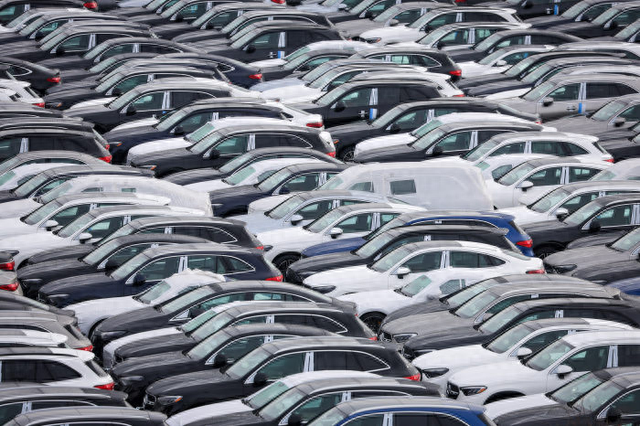
Group 1 - The European automotive sector experienced a collective sell-off due to the threat of new tariffs from the U.S., with major automakers' stock prices declining significantly during early trading [1][3] - President Trump announced a plan to impose a 10% tariff on goods from Denmark, Norway, Sweden, France, Germany, the UK, the Netherlands, and Finland starting February 1, with a potential increase to 25% on June 1 [3] - Following the announcement, stocks of major automotive companies such as BMW, Mercedes-Benz, and Porsche fell by over 3%, while Volkswagen and Ferrari saw declines exceeding 2% [3] Group 2 - The market is concerned that the new tariffs will increase operational uncertainty for European automakers in the North American market, putting long-term pressure on their profit expectations [3] - Previously, the Trump administration had announced a 25% tariff on EU automobiles, which was later adjusted to 15% under certain conditions, reflecting a history of fluctuating trade policies affecting the automotive industry [3] - The UK has implemented a tiered tariff system, with the first 100,000 cars subject to a 10% tariff and any additional units incurring a 27.5% tariff [3]


刚刚,200%关税!特朗普,最新警告!“刚与北约秘书长通电话”
券商中国· 2026-01-20 06:10
美国总统特朗普,发布最新关税警告! 北京时间1月20日中午,有报道指,特朗普再度发出关税威胁:将针对法国葡萄酒和香槟征收200%的关税。 法国媒体曾引述幕僚人士说法指出,法国总统马克龙敦促其他领袖,若特朗普持续其关税威胁,应启动欧盟强 而有力的"大炮级"反胁迫工具。欧盟的反胁迫工具迄今从未动用,一旦启动,将允许欧盟对试图透过经济压力 迫使政策转向的国家,祭出广泛且严厉的惩罚性措施。 此前,特朗普表示,会对欧洲加征关税并夺取格陵兰岛。根据《BBC》报导,欧洲盟友纷纷表态力挺格陵兰岛 主权。丹麦外交部长强调,特朗普不能以关税或政治威胁方式,取得这块具高度自治地位、隶属丹麦王国的领 土。英国国会议员Yvette Cooper也重申英国立场,指出格陵兰岛的未来应由格陵兰岛人民与丹麦自行决定,美 国无权介入。 特朗普周一(19日)接受《NBC》专访时,拒绝排除以武力夺取格陵兰岛的可能性,仅回应"不予置评"。不 过,他明确表示,美国将推动对英国及其他七个北约盟国的关税措施,以迫使相关国家让步。 据外媒报道,北京时间1月20日中午,特朗普的最新言论再度传来。他表示,将针对法国葡萄酒和香槟征收 200%的关税,而马克龙将加入 ...

刚刚,见证历史!又新高!
天天基金网· 2026-01-20 01:01
上天天基金APP搜索777注册即可领500元券包,优选基金10元起投!限量发放!先到先得! 大家好,一起来关注昨夜今晨的海外股市市场情况。 美东时间1月 19 日 星期一 ,美股因假期休市,但美股期指跌势明显 。其中, 道琼斯指数 期货跌0.83%,标普500指数期货跌0.88%,纳斯达克100指数期货跌1.09%。 欧洲主要股指集体下跌,欧洲斯托克50指数跌1.7 2 %,英国富时100指数跌0. 39 %,法国 CAC40指数跌1.78%,德国DAX30指数跌1. 34 %,富时意大利MIB指数跌1.32%。 黄金和白银价格双双触及历史新高 特朗普对欧洲的关税威胁 等因素 引发避险需求,黄金和白银价格双双触及历史新高。 根据世界银行对英国经济增长的评估,如果特朗普将关税自6月起提高至25%,英国经济可能 遭受216亿英镑的 损失 。 凯投宏观英国首席经济学 家 保罗·戴尔斯表示:"目前英国经济每季度仅增长0.2%至0.3%, 若冲击一次性到来,可能引发经济衰退。" 鲍威尔将出席关于美联储理事库克的听证会 据美联社报道,美联储主席鲍威尔将于周三出席美国最高法院关于美联储理事库克的口头辩 论,这是美国央行 " ...