工业需求

Search documents
黄金破4700!白银狂飙,全民陷入“金银焦虑”
Sou Hu Cai Jing· 2026-01-20 02:05
Group 1 - International gold prices surged past $4,690 per ounce, while domestic gold jewelry prices reached 1,451 yuan per gram, with a pendant's premium increasing by nearly 20,000 yuan in a single day [1] - Silver prices experienced a dramatic increase of over 5% in one day, reaching $94.7, with a staggering 82% rise over the past 50 days [1] - The gold-silver ratio has halved to a 13-year low, indicating a significant market reaction [1] Group 2 - The recent price surge is attributed to a combination of geopolitical conflicts, expectations of Federal Reserve interest rate cuts, and industrial demand, particularly in the context of Middle Eastern tensions and the Trump tariff war raising risk aversion [1] - Central banks have been increasing gold reserves for 18 consecutive months, with significant purchases from China and India, leading to a squeeze in the London spot market [1] - The consumer market is facing challenges, with wedding jewelry costs doubling, prompting couples to consider renting jewelry instead [3] Group 3 - Investment dynamics are polarized, with gold hoarders earning millions while leveraged silver traders face significant losses, leading banks to issue warnings about risks [3] - Institutional opinions are divided, with UBS predicting gold could reach $5,000, while Goldman Sachs warns of a potential 20% correction in silver prices [3] - Experts advise caution for ordinary investors, recommending specific strategies for gold and silver investments, highlighting the volatility of silver akin to historical downturns [3]

Silver and Gold Prices Soar on Fundamentals and FOMO. Why Investors Should Be Wary.
Barrons· 2026-01-14 15:02
Global metals prices extended their searing rally Wednesday, with gold, silver, and copper all hitting all-time highs amid a surge in demand tied to geopolitical risks, currency debasement and industrial demand. ...
Silver, Gold Prices Soar on Fundamentals and FOMO. Why Investors Should Be Wary.
Barrons· 2026-01-14 12:27
Global metals prices extended their searing rally Wednesday, with gold, silver, and copper all hitting fresh all-time highs amid a surge in demand tied to geopolitical risks, currency debasement and industrial demand. ...

帮主郑重复盘分享:中长线贵金属龙头标的清单
Sou Hu Cai Jing· 2026-01-12 14:08
这里是帮主郑重为你整理的中长线贵金属龙头标的清单,全部用大白话讲透核心逻辑、布局区间和实操 策略,方便你直接照着做(数据截至2026.1.12,仅作参考,不构成投资建议) 黄金组(压舱石,适合分批建仓,控制总仓位) 山东黄金(600547) 核心逻辑:国内黄金开采绝对龙头,矿产金产量连续多年居首,矿山储备和产能都很稳。美联储降息预 期+央行持续购金,金价中长期有支撑,公司业绩会跟着金价稳步兑现。前几天和矿业圈老伙计聊,他 们都觉得这类龙头的抗波动能力最强。 布局区间:当前股价45元左右,回调至40-42元区间分批建仓,首次仓位控制在总资金的3%-5%,不追 高;若跌破38元,结合金价趋势再评估加仓。 实操提示:适合作为资产组合里的"底仓",拿住不放,别频繁交易。 盛达资源(000603) 核心逻辑:A股里纯正的白银龙头,核心资产是7座高品位银矿,白银业务占比高。白银兼具金融避险 和工业属性,光伏银浆、新能源汽车等需求持续增长,双轮驱动下,弹性比黄金大。 布局区间:当前股价(参考板块估值),回调至20%左右(比如从高点回落)分批建仓,首次仓位不超 过总资金的2%;白银波动大,一定要设好止损。 实操提示:适合在金 ...




金价破千,银价飞天!背后推手浮出水面
Sou Hu Cai Jing· 2025-12-29 16:32
Group 1 - The core point of the article is the unprecedented surge in gold and silver prices, with silver experiencing a particularly dramatic increase due to various market factors [1][3][30] - On December 22, the international gold price broke through 997 yuan per gram, reaching a historical high, and stabilized around 1000 yuan per gram by December 29 [1][2] - Silver prices saw a significant increase, with a 36.59% rise over 23 trading days from November 21 to December 23, and reaching 17.1 yuan per gram by December 29 [3][4] Group 2 - The cumulative increase in international gold prices this year is approximately 70%, while silver has exceeded 170%, significantly outperforming gold [4] - The surge in gold and silver prices is attributed to a weakening dollar and expectations of continued interest rate cuts, leading to a more accommodative global monetary environment [6][7][8] - The decline in interest rates reduces the opportunity cost of holding gold and silver, making them more attractive compared to cash [10][11] Group 3 - Domestic capital inflows have intensified, driven by a stagnant A-share market, prompting investors to seek certainty in gold and silver as safe-haven assets [14] - The global geopolitical landscape, including tensions in various regions, has heightened risk aversion, further driving investment into gold and silver [15][16] Group 4 - The industrial demand for silver is surging, particularly in emerging sectors like photovoltaics and electric vehicles, while supply is constrained, leading to a structural shortage [19][22][23] - By 2025, the global silver supply is projected to face a significant shortfall of approximately 3600 tons, the largest in recent years [24] Group 5 - Recent policy changes in India allowing citizens to use silver as collateral for loans have led to a surge in silver imports, further driving up prices [27][28] - The tightness in the London silver market has created upward pressure on prices, as short positions face significant delivery challenges [29]
ZFX山海证券:白银波动如加密资产
Xin Lang Cai Jing· 2025-12-29 10:28
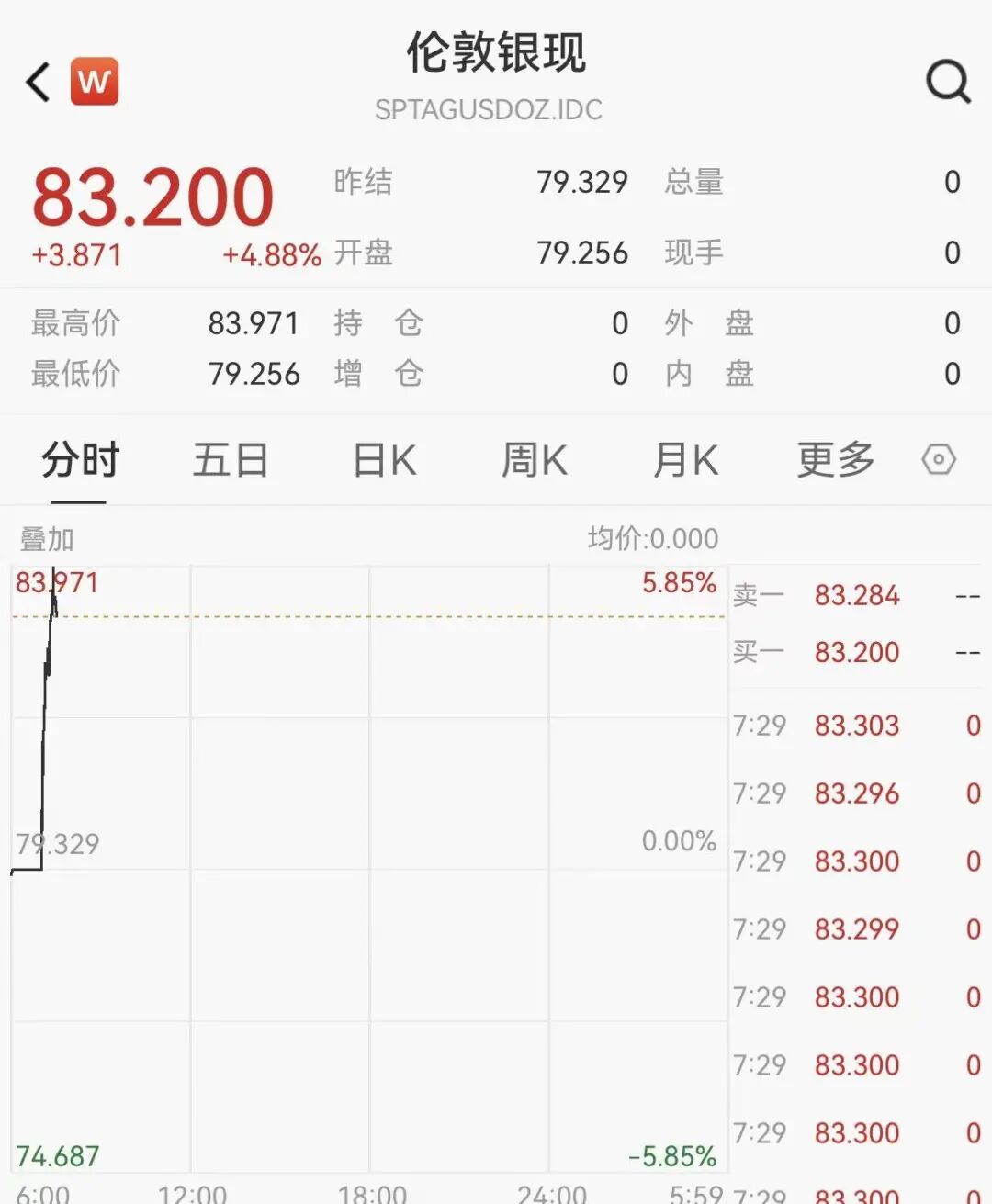
Group 1 - Recent silver price volatility has shown characteristics similar to Bitcoin, influenced by expectations of interest rate cuts and changes in industrial demand [1][2] - Silver experienced extreme volatility over the weekend, with rapid price increases and decreases indicating heightened speculative activity and investor sentiment fluctuations [1][2] - On Sunday, silver prices reached approximately $84, while gold prices rose to about $4530, reflecting significant market sensitivity to interest rate changes and the dollar's performance [3][4] Group 2 - The volatility in silver prices was particularly pronounced within a short time frame, with a 6% increase to $83.75 within 20 minutes, followed by a drop to $75.15, representing a loss of about 10% [3][4] - The anticipated appointment of a new Federal Reserve chair in 2026 is expected to lead to substantial interest rate cuts, which could drive more funds into the precious metals market [4] - Silver's industrial demand remains robust, with applications in electronics, photovoltaic devices, and medical equipment, providing a solid fundamental support for its price [4]

白银继续大涨,一度狂飙近6%,逼近84美元关口
2 1 Shi Ji Jing Ji Bao Dao· 2025-12-28 23:53
Group 1 - The announcement from Guotou Ruijin Silver Futures Securities Investment Fund (LOF) states that the Class C fund shares will suspend subscription starting December 29, 2025, to protect the interests of fund shareholders [1] - The Class A fund shares will be suspended from trading on December 29, 2025, until 10:30 AM, with a limit on regular investment amounts set at 100.00 yuan starting from the same date [2] - The Shanghai Futures Exchange issued two notices to remind the market to manage risks and to outline trading margin ratios and price fluctuation limits for related products during the New Year period [2] Group 2 - The silver market is significantly smaller than the gold market, with the total value of London silver stocks around 50 billion USD compared to gold's 1.2 trillion USD, leading to more volatile price movements with the same capital inflow [3] - Current silver price increases are supported not only by a loose monetary environment and geopolitical risks but also by industrial demand, particularly from the solar energy sector and the rise of electric vehicles [3] - Analysts warn that precious metal prices are at a precarious level, with expectations that silver prices may drop to around 42 USD by the end of next year as enthusiasm for gold wanes [3]
白银继续大涨,一度狂飙近6%,逼近84美元关口
21世纪经济报道· 2025-12-28 23:51
Core Viewpoint - The article discusses the recent surge in silver prices, highlighting the factors driving this increase and the potential risks associated with it [3]. Group 1: Silver Price Surge - On December 29, spot silver prices rose nearly 6%, approaching the $84 mark, setting a new historical high [1]. - The current market dynamics for silver are influenced by a combination of a loose monetary environment, geopolitical risks, and increased industrial demand, particularly from the solar energy and electric vehicle sectors [3]. Group 2: Market Regulations and Fund Adjustments - On December 26, the Guotai Asset Management announced that the Guotai Ruijin Silver Futures Securities Investment Fund (LOF) would suspend subscriptions for Class C shares starting December 29, 2025, to protect the interests of fund shareholders [2]. - The Shanghai Futures Exchange issued notifications on December 26 to remind the market to manage risks and provided arrangements for margin ratios and price limits during the New Year period [3]. Group 3: Market Risks and Predictions - Analysts have warned that the current prices of precious metals, including silver, may be unsustainable and could face a significant correction, with predictions suggesting silver prices could drop to around $42 by the end of next year as enthusiasm wanes [3].
白银史诗级暴涨 有人一觉醒来赚18万!本轮白银为何疯涨
2 1 Shi Ji Jing Ji Bao Dao· 2025-12-27 23:41
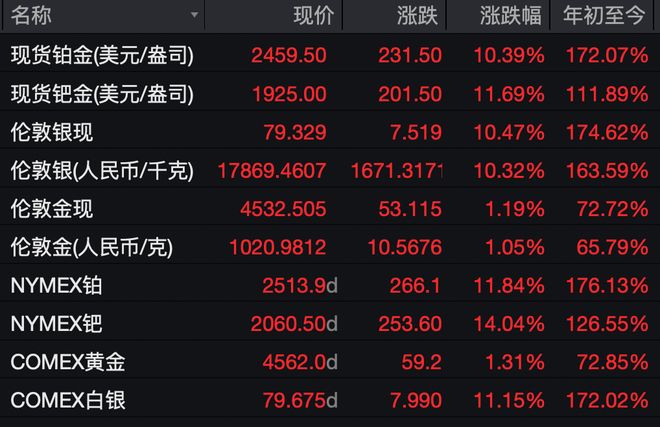
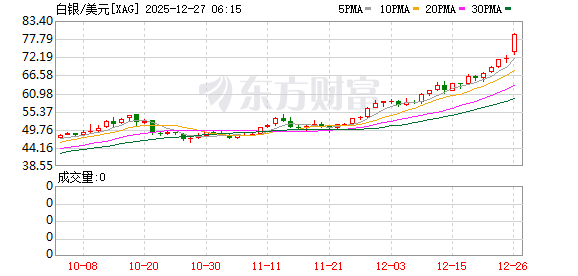
Core Viewpoint - The global precious metals market experienced a historic surge, with silver prices rising significantly and setting new records, indicating a strong speculative interest and underlying industrial demand [2][4][13]. Group 1: Price Movements - Silver surged by 10%, reaching a peak of $79.405 per ounce, with an annual increase exceeding 170% [4]. - Spot gold hit a record high of $4549 per ounce, while NYMEX platinum rose by 11.84%, also achieving a historical peak [4]. Group 2: Market Behavior - A notable increase in trading activity was reported, with a jeweler in Hangzhou stating that customer transactions for silver have surged, reflecting a "frenzy" in buying behavior [12]. - A customer reportedly bought 5 kilograms of silver at 15 yuan per gram and sold it for 19 yuan per gram within a week, making a profit of 20,000 yuan [12]. Group 3: Underlying Factors - The current surge in silver prices is attributed to a combination of a loose monetary environment, geopolitical risks, and increased industrial demand, particularly from the solar energy and electric vehicle sectors [13]. - The World Silver Association reported a continuous supply shortage in the market, with a projected cumulative shortfall of approximately 25,500 tons from 2021 to 2025 [13]. Group 4: Market Risks - Despite the long-term support from green energy demand, silver prices are at historical highs, which may suppress future demand. The current price levels may have already factored in optimistic expectations, leading to potential risks of a price correction [13].
白银史诗级暴涨,有人一觉醒来赚18万
2 1 Shi Ji Jing Ji Bao Dao· 2025-12-27 15:13
Market Overview - The global precious metals market experienced a historic surge, with silver rising by 10% to a peak of $79.405 per ounce, marking an annual increase of over 170% [1] - Spot gold reached $4549 per ounce, setting a new historical high, while NYMEX platinum rose by 11.84%, also achieving a record [1] Price Movements - Current prices and changes for key metals include: - Spot platinum: $2459.50, up 10.39% with a year-to-date increase of 172.07% [1] - Spot lithium: $1925.00, up 11.69% with a year-to-date increase of 111.89% [1] - London silver: $79.329, up 10.47% with a year-to-date increase of 174.62% [1] - London gold: $4532.505, up 1.19% with a year-to-date increase of 72.72% [1] - NYMEX aluminum: $2060.50, up 14.04% with a year-to-date increase of 126.55% [1] Market Dynamics - The recent surge in silver prices is attributed to a combination of factors, including a loose monetary environment, geopolitical risks, and increased industrial demand, particularly from the solar energy sector [1][15] - The World Silver Association reports a continuous supply shortage in the market, with a projected cumulative shortfall of approximately 25,500 tons from 2021 to 2025 [15] Investor Behavior - There has been a notable increase in retail trading activity, with reports of customers profiting significantly from recent price movements in silver [11][13] - Some investors express concerns about the sustainability of the current price levels, indicating a potential for market corrections [13][15]